Tag: spacecraft

  • LISA Pathfinder results

    LISA Pathfinder results

    Launched in December 2015, LISA Pathfinder travelled to its operational orbit, 1.5 million km from earth towards the Sun, where it started its scientific mission on 1 March.

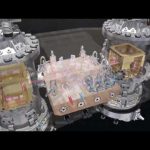
    At the core of the spacecraft, two identical gold-platinum cubes, are being held in the most precise free-fall ever produced in space.

    Placing the test masses in a motion subject only to gravity is the challenging condition needed to build and operate a future space mission to observe gravitational waves. Predicted by Albert Einstein a century ago, gravitational waves are fluctuations in the fabric of space-time, which were recently detected directly for the first time by the Laser Interferometer Gravitational-Wave Observatory.

    Over the first two months of scientific operations, the LISA Pathfinder team has performed a number of experiments on the test masses to prove the feasibility of gravitational wave observation from space.

    These results are explained in this video with interviews of Paul McNamara, LISA Pathfinder Project scientist, ESA and two LISA Pathfinder Principal investigators : Rita DOLES, University of Trento and Martin Hewitson, University of Hannover.

    Read more in LISA Pathfinder exceeds expectations: http://www.esa.int/Our_Activities/Space_Science/LISA_Pathfinder_exceeds_expectations

  • ExoMars is on its way

    ExoMars is on its way

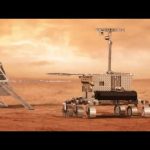
    After a successful launch from Kazakhstan’s Baikonur Cosmodrome in March, the ExoMars spacecraft is making good progress on its 500 million km trip to Mars.

    The joint European and Russian mission will perform science, test lander and descent technology, and may help solve the mystery of why there is methane on Mars. The gas could indicate a geological origin or past or present life – most likely from microbes. The mission carries four scientific packages with Russia developing one of the three spectrometers on board the orbiter’s Atmospheric Chemistry Suite.

    This film provides an update of ExoMars’ journey. It includes the first test image from the Trace Gas Orbiter’s high-resolution camera and looks ahead to a major course correction manoeuvre in July. The spacecraft will then be lined up for arrival at Mars on 19 October 2016.

    Includes interviews with Thomas Passvogel, Head of Science Projects, ESA (English); Oleg Korablev, ACS Experiment Principal Investigator (Russian); Nicolas Thomas, CaSSIS Experiment Principal Investigator, University of Bern (English).

    More about ExoMars:
    http://www.esa.int/exomars

  • ExoMars – building on past missions to Mars

    ExoMars – building on past missions to Mars

    The ExoMars 2016 spacecraft will build on past missions to Mars. From the pioneering Viking missions onwards, our knowledge of Mars has been transformed and we now have an extraordinarily detailed picture of the planet. There are dust storms, polar ice caps and four distinct seasons. Mars has the largest volcanic mountain in our solar system and a canyon stretching over 5000 kilometres.

    This film covers what we have learnt in particular from Europe’s Mars Express mission. Since its arrival in 2003, it has found evidence of water on Mars, discovered methane in the planet’s atmosphere, mapped the structure and composition of the south polar ice cap, discovered auroras and made the closest ever flybys of Phobos, one of Mars’ two moons. Mars Express also helped scientists select the landing site for the NASA Mars Curiosity rover, which arrived in Gale crater in 2012.

    More remains to be learnt from Mars. Not least, whether the methane results from geological activity or past or present life.

    Read more about ExoMars:
    http://www.esa.int/exomars

  • ExoMars prepares for launch

    ExoMars prepares for launch

    The ExoMars 2016 spacecraft – consisting of the Trace Gas Orbiter (TGO) and the Schiaparelli entry, descent and landing demonstrator – is in Baikonur, Kazakhstan, preparing for its mid-March launch on a Russian Proton rocket.

    This joint European and Russian mission will test key exploration technologies and search for evidence of methane and other rare gases in the martian atmosphere. These gases could result from geological processes or they could be signatures of current biological activity on the planet. Three days before reaching Mars in October, Schiaparelli will separate from the orbiter and coast towards the planet in hibernation mode to reduce power consumption.

    This video covers the journey, the orbit of the Trace Gas Orbiter, the separation of the Schiaparelli lander and its 20 000 km/hour descent and eventual landing. It also contains filming at ESA’s European Space and Technology Centre (ESTEC) Mars Yard in the Netherlands. 

    Learning more about Mars’ water and environment will shed further light on this planet – while knowing the origin of its methane could finally answer the exciting question of whether there is life on Mars.

    Read more about ExoMars:
    http://www.esa.int/exomars

  • NASA 2016 Look Ahead

    NASA 2016 Look Ahead

    The work NASA does, and will continue in 2016, helps the United States maintain its world leadership in space exploration and scientific discovery. The agency will continue investing in its journey to Mars, returning human spaceflight launches from American soil, fostering groundbreaking technology development, breakthroughs in aeronautics and bringing to every American the awe-inspiring discoveries and images captured by NASA’s missions in our solar system and beyond.

    For more about NASA’s missions, research and discoveries, visit:

    http://www.nasa.gov

  • NASA’s New Horizons spacecraft arrives at Pluto on July 14th

    NASA’s New Horizons spacecraft arrives at Pluto on July 14th

    NASA’s New Horizons spacecraft arrives at Pluto on July 14th; a journey lasting nearly 10 years and traveling over 3 billion miles. Watch coverage of the historic flyby of Pluto on NASA Television as NASA counts down to the Pluto encounter of a lifetime.

  • Soyuz TMA-15M spacecraft transfer and liftoff

    Soyuz TMA-15M spacecraft transfer and liftoff

    This timelapse video shows the Soyuz TMA-15M spacecraft during transfer from the MIK 40 integration facility to Baikonur Cosmodrome launch pad 31, as well as the launch on 23 November 2014 with ESA astronaut Samantha Cristoforetti and her crewmates to the International Space Station where they will live and work for five months.

    With Samantha are Russian Soyuz commander Anton Shkaplerov and NASA astronaut Terry Virts. All three are part of the Station’s Expedition 42/43 crew.

    On this mission, Samantha is flying as an ESA astronaut for Italy’s ASI space agency under a special agreement between ASI and NASA.

    Directed by Stephane Corvaja, ESA
    Edited by Manuel Pedoussaut, Zetapress
    Music: MZB

  • Rosetta Spacecraft at ESA’s ESTEC Test Centre

    Rosetta Spacecraft at ESA’s ESTEC Test Centre

    The road to humankind’s first rendezvous with a comet began at ESA’s technical centre in the Netherlands. The pioneering Rosetta spacecraft and its Philae lander were tested in simulated space conditions to ensure they could withstand the difficult journey.

    Credits: ESA

  • Rosetta wakes up from deep space hibernation

    Rosetta wakes up from deep space hibernation

    Replay of Part 3 of the Rosetta wake-up media briefing at the ESA Operations Centre ESOC, in Darmstadt, Germany, on 20 January 2014.

    Waiting for the signal from Rosetta. View inside the Mission Control Room at ESOC as the team waits for a first signal that Rosetta has successfully come out of deep space hibernation.

    Rosetta was launched in 2004 and has since travelled around the Sun five times, picking up energy from Earth and Mars to line it up with its final destination: comet 67P/Churyumov–Gerasimenko. For the coldest, loneliest leg of the mission, as Rosetta travelled out towards the orbit of Jupiter, the spacecraft was put into deep-space hibernation.

    In 2014, Rosetta will complete its cruise towards the comet, rendezvousing with it in August, before putting its Philae lander onto the comet’s surface in November, as it begins its journey closer to the Sun.

    The spacecraft’s internal alarm clock is set for 10:00 GMT (11:00 CET) on 20 January. Once it has warmed itself up, it should re-establish communication with Earth several hours later.

  • Timelapse film Soyuz flight VS06, with Gaia

    Timelapse film Soyuz flight VS06, with Gaia

    Soyuz flight VS06, with the Gaia space observatory, lifted off from Europe’s Spaceport, French Guiana, on 19 December 2013. This timelapse movie shows Gaia sunshield deployment test, the transfer of the Soyuz from the assembly building to the launch pad and the lift off.

    ESA–S. Corvaja, M. Pedoussaut, 2013

  • Tracking spacecraft deep across the void

    Tracking spacecraft deep across the void

    ESA operates some of the world’s most sophisticated deep-space tracking stations, enabling spacecraft to maintain contact with Earth while voyaging deep into our Solar System. The essential task of all ESA stations is to communicate with our missions, sending telecommands and receiving vital scientific data and spacecraft status information.

    The Agency’s three Deep Space Antenna (DSA) stations are located in Australia, Spain and Argentina, and are centrally controlled from the ESOC Operations Centre in Germany. They are equipped with large, 35 m-diameter parabolic dish reflectors, weighing in at 610 tonnes, that can be rotated and pointed with extreme accuracy.

    Using signal data from the stations and an advanced navigational technique known as ‘delta-DOR’, engineers can pinpoint the orbit of a spacecraft exploring Mars or Venus – a distance of over 100 million kilometres from Earth – to an accuracy within 1 kilometre.

  • Full orbit: How an astronaut will view Mars from orbit – with distance counter

    Full orbit: How an astronaut will view Mars from orbit – with distance counter

    This movie was generated from 600 individual still images captured by the Visual Monitoring Camera (VMC) on board Mars Express during the 8194th orbit on 27 May 2010 between 02:00 and 09:00 UTC (04:00-11:00 CEST) and were transmitted to Earth a few hours later via ESA’s 35m New Norcia deep space station in Australia.

    The portion of the movie where the planet beneath the spacecraft was dark has been largely removed since no detail was visible.

    The images show the spacecraft’s slow descent from high above the planet, speeding up as closest approach is passed and then slowing down again as the distance increases. Towards the start of the video, the giant Martian volcanoes can be seen followed by the beginning of the ice coverage around the South Pole as the spacecraft crosses over to the night side of the planet. Shortly after emerging back onto the day side of the planet, the beautiful North Pole can be observed, followed by the long climb away from the planet over the equator. Finally, at the end of the movie, the disk of Phobos can be seen crossing from top to bottom of the image.

    Credit: ESA – European Space Agency, CC BY-SA 3.0 IGO

    Copyright Notice:

    This work is licenced under the Creative Commons Attribution-ShareAlike 3.0 IGO (CC BY-SA 3.0 IGO) licence. The user is allowed to reproduce, distribute, adapt, translate and publicly perform this publication, without explicit permission, provided that the content is accompanied by an acknowledgement that the source is credited as ‘ESA/DLR/FU Berlin’, a direct link to the licence text is provided and that it is clearly indicated if changes were made to the original content. Adaptation/translation/derivatives must be distributed under the same licence terms as this publication. To view a copy of this license, please visit http://creativecommons.org/licenses/by-sa/3.0/igo/

  • Rosetta’s view of Lutetia, July 2010

    Rosetta’s view of Lutetia, July 2010

    This movie shows a sequence of images taken as ESA’s Rosetta spacecraft flew past the main-belt asteroid (21) Lutetia, during the spacecraft’s 10-year journey towards comet 67P/Churyumov-Gerasimenko.

    The flyby took place on 10 July 2010, when Rosetta flew past the asteroid at a distance of 3168.2 km and at a relative speed of 15 km/s. The first image shown in the sequence was taken nine and a half hours before closest approach, from a distance of 500 000 km to Lutetia; the last image was taken six minutes after closest approach, at 6300 km from the asteroid.

    The OSIRIS camera on board Rosetta has surveyed the part of Lutetia that was visible during the flyby – about half of its entire surface, mostly coinciding with the asteroid’s northern hemisphere. These unique, close-up images have allowed scientists to study the asteroid’s surface morphology, composition and other properties in unprecedented detail.

  • Transiting the midnight sun

    Transiting the midnight sun

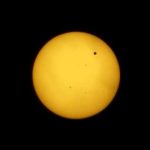
    Time lapse movie of the transit of Venus, as seen from the land of the midnight sun in Svalbard. Interference from cloud gives an eerie feel to the scene.

    Credits: ESA – Andy Oates

  • Venus Express and transit of Venus

    Venus Express and transit of Venus

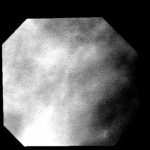
    This movie was compiled from images taken by the Venus Monitoring Camera on Venus Express as it approached the planet on its elliptical orbit on 1 June 2012. Initially, the spacecraft is looking at the south side of the planet from a distance of 63 000 km and clouds can be seen moving below. As the spacecraft draws closer, Venus starts filling the field of view and the equatorial regions can be seen. The sequence finishes with observations of cloud features at high latitudes.

    Copyright: ESA/MPS/DLR/IDA

  • PromISSe launch campaign – now in 3D!

    PromISSe launch campaign – now in 3D!

    Follow ESA astronaut André Kuipers and his crewmates, NASA astronaut Donald Pettit and Roscosmos cosmonaut Oleg Kononeko, on their journey from Baikonur cosmodrome, in Kazakhstan, up to their launch onboard a Soyuz TMA-03M spacecraft to the International Space Station (ISS).

    On 21 December 2011, André embarked on ESA’s fourth long-duration mission to the ISS, “PromISSe”. During his five months onboard this human outpost in space, Andre is serving as a flight engineer for Expedition 30.

    This exceptional 3D video shows some of the main events before launch, including: the city of Baikonur, the avenue of cosmonauts with the tree once planted by Yuri Gagarin, the Gagarin Museum, the roll-out of Soyuz in the early morning hours, the vertical erection of the rocket on the launch pad, the pre-launch press conference, the ready-to-fly report of the crew commander, and of course – the amazing light show of a night launch from the Gagarin launch pad in Baikonur.

    Stereoscopic 3D glasses are required to properly enjoy the full 3D effect of this footage.

    André and his fellow crew members will return to Earth by the end of May 2012.

  • NASA’s Orion: From Factory to Flight

    NASA’s Orion: From Factory to Flight

    NASA is making steady progress on building the Orion spacecraft, which will take astronauts deeper into space than ever before. Take a look at the latest achievements and milestones in “Orion: From Factory to Flight” as Orion gets ready for its first orbital test flight in 2014.

  • NASA’s GRAIL Spacecraft Launches on Lunar Mission

    NASA’s GRAIL Spacecraft Launches on Lunar Mission

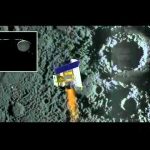
    NASA’s GRAIL spacecraft launched to the moon aboard a United Launch Alliance Delta II rocket on Sept. 10, 2011, from Cape Canaveral Air Force Station, Fla.

    GRAIL’s primary science objectives are to determine the structure of the lunar interior, from crust to core, and to advance understanding of the thermal evolution of the moon.

  • Welcome home, Paolo!

    Welcome home, Paolo!

    ESA astronaut Paolo Nespoli landed back on Earth this morning to conclude his 159-day mission to the International Space Station.
    Paolo had been serving as the flight engineer for Expeditions 26 and 27 since December. Paolo’s MagISStra mission, the third long mission by a European astronaut on the Station, came to end at 04:27 CEST (02:27 GMT) on the steppes of Kazakhstan as the Soyuz TMA-20 spacecraft fired its retrorockets for a soft landing.
    ESA astronaut Paolo Nespoli landed back on Earth this morning to conclude his 159-day mission to the International Space Station.
    Paolo had been serving as the flight engineer for Expeditions 26 and 27 since December. Paolo’s MagISStra mission, the third long mission by a European astronaut on the Station, came to end at 04:27 CEST (02:27 GMT) on the steppes of Kazakhstan as the Soyuz TMA-20 spacecraft fired its retrorockets for a soft landing.
    Paolo and crewmates Soyuz Commander Dmitri Kondratyev and NASA’s Cady Coleman boarded the Soyuz on Monday night and undocked from the Station’s nadir
    Rassvet port at 23:35 CEST (21:35 GMT).

  • NASA’S MESSENGER Spacecraft Begins Historic Orbit of Mercury

    NASA’S MESSENGER Spacecraft Begins Historic Orbit of Mercury

    NASA’s MErcury Surface, Space ENvironment, Geochemistry, and Ranging, or MESSENGER spacecraft successfully achieved orbit around Mercury at approximately 9 p.m. EDT Thursday. This marks the first time a spacecraft has accomplished this engineering and scientific milestone at our solar system’s innermost planet. Shown is reaction in MESSENGER mission control at the Johns Hopkins University Applied Physics Laboratory in Laurel, Md., as engineers received telemetry data confirming orbit insertion, plus animated depiction of the event. Among other goals, MESSENGER is expected to detect whether ice exists at Mercury’s poles.

  • NASA’s Kepler Spacecraft Discovers Its First Rocky Exoplanet

    NASA’s Kepler Spacecraft Discovers Its First Rocky Exoplanet

    NASA’s Kepler spacecraft has discovered Kepler-10b, its first confirmed rocky planet and the smallest transiting exoplanet discovered to date. Kepler-10b is only 1.4 times the size of Earth and has an average density of 8.8 grams per cubic centimeter, similar to that of an iron dumbbell. The planet orbits its star in only 0.84 days and is not in the habitable zone, where liquid water could exist.

  • NASA Spacecraft Reveals Changes at Solar System’s Edge

    NASA Spacecraft Reveals Changes at Solar System’s Edge

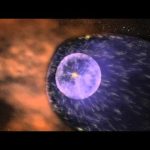
    For the first time, NASA’s Interstellar Boundary Explorer, or IBEX, spacecraft reveals changing conditions at the edge of our solar system. The heliosphere changes size through the solar cycle, which affects the number of cosmic rays that reach Earth. Scientists now have a better understanding of the dynamic nature of our home in the galaxy.

  • ESA Space Scientist Detlef Koschny explains why he originally built Rosetta in LEGO®

    ESA Space Scientist Detlef Koschny explains why he originally built Rosetta in LEGO®

    Space missions are complicated pieces of orbital choreography. When planning a mission, spacecraft engineers must calculate how to point the solar panels towards the Sun, the main antenna towards Earth and the instruments towards the target. ESA Space Scientist Detlef Koschny build a LEGO model of Rosetta mission in order to visualise these precise orientations.

    Copyright © Lightcurve Films/Maarten Roos, ESA, DLR, Europlanet, LEGO

  • ESA Space Scientist Detlef Koschny demonstrates the prototype LEGO®  Philae lander

    ESA Space Scientist Detlef Koschny demonstrates the prototype LEGO® Philae lander

    Built using LEGO Mindstorms, the Philae lander model can be controlled using a home computer. It can rotate and move the drill up and down to simulate the behaviour of the real lander. As part of ESA’s Rosetta space mission, Philae will land on comet Churyumov-Gerasimenko in November 2014 to study its composition.

    Copyright © Lightcurve Films/Maarten Roos, ESA, DLR, Europlanet, LEGO

  • Most Advanced Spacecraft Studies the Sun

    Most Advanced Spacecraft Studies the Sun

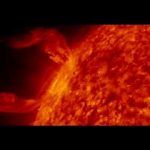
    The first images of NASAs Solar Dynamics Observatory (SDO) have been revealed, astonishing heliophysicists with their brilliant clarity. Launched Feb. 11, 2010, SDO is the most advanced spacecraft ever designed to study the sun and its dynamic behavior. The spacecraft can produce images with clarity ten times better than high definition television and provide more comprehensive science data faster than any solar observing spacecraft in history. SDO will help scientists study solar activity to improve forecasts of how the suns weather affects Earth. www.nasa.gov/sdo

  • ESA’s space ferry: The Automated Transfer Vehicle

    ESA’s space ferry: The Automated Transfer Vehicle

    The International Space Station (ISS) depends on regular deliveries of equipment, food, air and water for its crews. Since the arrival of the first Automated Transfer Vehicle in April 2008, it has become one of the Stations indispensable supply ships.