Tag: splashdown

  • Splashdown | Ax-4 mission with Sławosz Uznański-Wiśniewski

    Splashdown | Ax-4 mission with Sławosz Uznański-Wiśniewski

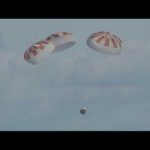
    Tune in on Tuesday, 15 July, from 09:30 BST (10:30 CEST), to watch ESA project astronaut Sławosz Uznański-Wiśniewski and crew splash down off the coast of California, USA at 10:31 BST (11:31 CEST).

    During the Ignis mission, Sławosz conducted 13 experiments proposed by Polish companies and institutions and developed in collaboration with ESA, along with three additional ESA-led experiments. These covered a broad range of areas including human research, materials science, biology, biotechnology and technology demonstrations. 

    Ax-4 marks the second commercial human spaceflight mission for an ESA project astronaut. Sponsored by the Polish government and supported by ESA, the Polish Ministry of Economic Development and Technology (MRiT) and the Polish Space Agency (POLSA), the mission featured an ambitious programme of technological and scientific research.

    Follow Sławosz’s journey to space on the Ignis mission website.
    Ignis website: https://www.esa.int/Science_Exploration/Human_and_Robotic_Exploration/ignis

    Credit: Axiom Space/SpaceX
    📸 SpaceX

    ★ Subscribe: http://bit.ly/ESAsubscribe and click twice on the bell button to receive our notifications.

    Check out our full video catalog: http://bit.ly/SpaceInVideos
    Follow us on Twitter: http://bit.ly/ESAonTwitter
    On Facebook: http://bit.ly/ESAonFacebook
    On Instagram: http://bit.ly/ESAonInstagram
    On LinkedIn: https://bit.ly/ESAonLinkedIn
    On Pinterest: https://bit.ly/ESAonPinterest
    On Flickr: http://bit.ly/ESAonFlickr

    We are Europe’s gateway to space. Our mission is to shape the development of Europe’s space capability and ensure that investment in space continues to deliver benefits to the citizens of Europe and the world. Check out https://www.esa.int/ to get up to speed on everything space related.

    Copyright information about our videos is available here: https://www.esa.int/ESA_Multimedia/Terms_and_Conditions
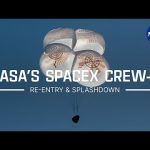
  • NASA’s SpaceX Crew-9 Re-Entry and Splashdown

    NASA’s SpaceX Crew-9 Re-Entry and Splashdown

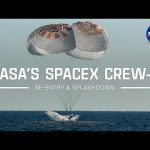
    Watch with us as the four members of NASA’s SpaceX Crew-9 mission—NASA astronauts Nick Hague, Suni Williams, Butch Wilmore, and cosmonaut Aleksandr Gorbunov—return to Earth.

    Suni Williams and Butch Wilmore began their mission at the International Space Station on June 6, 2024, arriving aboard Boeing’s Starliner spacecraft. Nick Hague and Aleksandr Gorbunov arrived at the station on Sept. 29, 2024. Hague and Gorbunov launched to space aboard SpaceX’s Dragon Freedom spacecraft, which was docked to the station since its arrival in September, and has since brought Crew-9 back home.

    2:24 Return coverage begins
    6:41 Meet the crew
    28:14 Deorbit burn start
    1:05:20 First views from WB-57 aircraft
    1:09:37 Drogue chutes deploy
    1:10:31 Main chutes deploy
    1:12:00 Splashdown
    1:33:56 Dolphins
    1:38:33 Hoist
    1:53:45 Hatch open
    1:57:09 Crew egress

    See the full schedule for Crew-9’s return to Earth: https://go.nasa.gov/4iWeg8N
    Learn more about Crew-9’s scientific mission: https://go.nasa.gov/4bWdt5u
    Follow the latest Crew-9 mission updates: https://www.nasa.gov/blogs/commercialcrew

    Credit: NASA

  • NASA’s SpaceX Crew-8 Re-entry and Splashdown

    NASA’s SpaceX Crew-8 Re-entry and Splashdown

    Watch Crew-8 return to Earth, concluding their mission to the International Space Station. Their SpaceX Dragon spacecraft is scheduled for splashdown off the coast of Florida on Friday, Oct. 25 at approximately 3:29 a.m. EDT (0729 UTC).

    NASA astronauts Michael Barratt, Matthew Dominick, and Jeanette Epps and Roscosmos cosmonaut Alexander Grebenkin are coming home after seven months aboard the orbiting lab, conducting scientific experiments and technology demonstrations.

    Astronauts Butch Wilmore and Suni Williams, who launched to the station aboard NASA’s Boeing Crew Flight Test (CFT) this summer, will return to Earth with the two members of NASA’s SpaceX Crew-9 mission in the spring of 2025. Learn more about CFT: https://nasa.gov/starliner-faq

    Crew-8’s science highlights: https://www.nasa.gov/missions/station/iss-research/crew-8-concludes-space-station-scientific-mission/

    Credit: NASA

  • NASA’s SpaceX Crew-7 Re-entry and Splashdown

    NASA’s SpaceX Crew-7 Re-entry and Splashdown

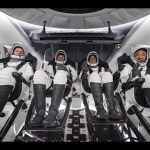
    After six months in orbit, the four members of NASA’s SpaceX Crew-7 mission—NASA astronaut Jasmin Moghbeli, ESA (European Space Agency) astronaut Andreas Mogensen, JAXA (Japan Aerospace Exploration Agency) astronaut Satoshi Furukawa, and Roscosmos cosmonaut Konstantin Borisov—are heading home.

    Crew-7 is scheduled to splash down off the coast of Florida at approximately 5:50 a.m. EDT (0950 UTC) on Tuesday, March 12, after undocking from the International Space Station on Monday, March 11. While aboard the orbiting laboratory, Crew-7 contributed to a number of studies to help us learn how to live in space while making life better back on Earth: https://go.nasa.gov/3UWWIAF

    Follow the latest mission updates on our NASA blogs: https://blogs.nasa.gov/

    Credit: NASA

  • Splashdown of Axiom 3 Mission with Marcus Wandt

    Splashdown of Axiom 3 Mission with Marcus Wandt

    After almost 20 days on the International Space Station, ESA project astronaut Marcus Wandt is coming home.

    The trip back to Earth will take the Axiom Mission 3 crew around 47 hours. Marcus will serve as a mission specialist during the journey, sharing the ride with Walter Villadei from Italy, Alper Gezeravcı from Türkiye and Michael López-Alegría, a dual US-Spanish citizen.

    After a series of burns to lower its orbit, the spacecraft will enter Earth’s atmosphere and deploy its parachutes for a water-landing. Marcus and crew are expected to splash down off the coast of Florida, USA, on 9 February 2024 at 13:30 GMT/14:30 CET. This will mark the end of Marcus’s mission, called Muninn.

    Muninn website: https://www.esa.int/Science_Exploration/Human_and_Robotic_Exploration/muninn
    Marcus Wandt’s Instagram: https://www.instagram.com/esaastro_marcus/
    Marcus Wandt’s X: https://twitter.com/astro_marcus

    Timestaps of the video:
    00:00:00 – 00:14:30 – Pre-Splashdown programme
    00:14:31 – 00:20:50 – Trunk Jettison / Claw Separation
    00:20:51 – 00:36:00 – Deorbit Burn
    00:36:01 – 01:02:40 – Nosecone Closed
    01:02:41 – 01:03:30 – Drogue Parachutes Deploy
    01:03:31 – 01:06:30 – Main Parachutes Deploy
    01:06:31 – 01:53:10 – Splashdown
    01:53:11 – 02:00:00 – Hatch Opening
    02:00:01 – 02:09:16 – Axiom 3 Mission Crew Egress

    📸 SpaceX

    ★ Subscribe: http://bit.ly/ESAsubscribe and click twice on the bell button to receive our notifications.

    Check out our full video catalog: http://bit.ly/SpaceInVideos
    Follow us on Twitter: http://bit.ly/ESAonTwitter
    On Facebook: http://bit.ly/ESAonFacebook
    On Instagram: http://bit.ly/ESAonInstagram
    On LinkedIn: https://bit.ly/ESAonLinkedIn
    On Pinterest: https://bit.ly/ESAonPinterest
    On Flickr: http://bit.ly/ESAonFlickr

    We are Europe’s gateway to space. Our mission is to shape the development of Europe’s space capability and ensure that investment in space continues to deliver benefits to the citizens of Europe and the world. Check out https://www.esa.int/ to get up to speed on everything space related.

    Copyright information about our videos is available here: https://www.esa.int/ESA_Multimedia/Terms_and_Conditions
    #ESA #Axiom3 #MarcusWandt

  • NASA’s SpaceX Crew-5 Mission Splashdown (Official NASA Broadcast)

    NASA’s SpaceX Crew-5 Mission Splashdown (Official NASA Broadcast)

    NASA astronauts Josh Cassada and Nicole Mann, JAXA astronaut Koichi Wakata, and Roscosmos cosmonaut Anna Kikina—the four members of NASA’s SpaceX Crew-5 mission—are scheduled to splash down off the coast of Florida at 9:02 p.m. EST on Saturday, March 11 (0202 UTC March 12), concluding their five-month stay in low-Earth orbit.

    Join NASA and SpaceX for live coverage of Crew-5 and their Dragon Endurance spacecraft from reentry through recovery. Crew-5 spent five months aboard the International Space Station, conducting scientific research to help us learn how to live in space while making life better back on Earth: https://go.nasa.gov/3T2gbgw

    Follow the latest mission updates on our Crew-5 blog: https://blogs.nasa.gov/Crew-5/

    Credit: NASA

    #NASA #SpaceX #Astronauts #Crew5

  • Artemis I | Liftoff to splashdown

    Artemis I | Liftoff to splashdown

    The uncrewed Artemis I test flight saw Orion travel around the Moon and farther than any spacecraft designed to carry humans and return them to Earth. Artemis is the international lunar exploration programme that is taking humankind to the Moon. This first mission provided a first test of both NASA’s Space Launch System (SLS) and the Orion moonship that was propelled by the European Service Module’s 33 engines beyond the Moon and into deep space. Future European Service Modules will provide electricity, propulsion and cabin thermal control for astronauts on lunar missions as well as breathable atmosphere and drinking water.

    Launched by the first SLS on 16 November at 06:47 GMT/07:47 CET (01:47 local time) from NASA’s Kennedy Space Center, Florida, Orion flew a 25-day mission that saw it fly by the Moon twice. Passing as close as 130 km from the lunar surface, the spacecraft used the Moon’s gravity to sling it into lunar orbit and then later return it on course to Earth.

    The first lunar flyby occurred on 21 November at 12:44 GMT/13:44 CET, with the ESM firing its main engine to send Orion behind and around the Moon. Ten days after liftoff, Orion entered the Moon’s orbit at 12:44 GMT/13:44 CET on 25 November when the ESM fired its main engine.

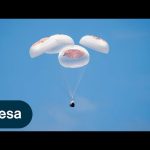
    NASA’s Orion spacecraft splashed down in the Pacific Ocean at 17:40 GMT/18:40 CET on 11 December, after travelling around the Moon and farther than any spacecraft designed to carry humans and return them to Earth. Just 40 minutes before splashdown, and having delivered Orion safely back to Earth, ESA’s European Service Module (ESM) with its Crew Module Adapter detached from the capsule. As planned, the ESM burned up harmlessly in the atmosphere as the Orion Crew Module guided itself through re-entry, orienting the capsule with its own thrusters, releasing its three parachutes and gracefully splashing down off the coast of San Diego, USA.

    ★ Subscribe: http://bit.ly/ESAsubscribe and click twice on the bell button to receive our notifications.

    Check out our full video catalog: http://bit.ly/SpaceInVideos
    Follow us on Twitter: http://bit.ly/ESAonTwitter
    On Facebook: http://bit.ly/ESAonFacebook
    On Instagram: http://bit.ly/ESAonInstagram
    On LinkedIn: https://bit.ly/ESAonLinkedIn
    On Pinterest: https://bit.ly/ESAonPinterest
    On Flickr: http://bit.ly/ESAonFlickr

    We are Europe’s gateway to space. Our mission is to shape the development of Europe’s space capability and ensure that investment in space continues to deliver benefits to the citizens of Europe and the world. Check out https://www.esa.int/ to get up to speed on everything space related.

    Copyright information about our videos is available here: https://www.esa.int/ESA_Multimedia/Terms_and_Conditions
    #ESA
    #NASA
    #Artemis

  • NASA’s SpaceX Crew-2 Returns Home: Splashdown

    NASA’s SpaceX Crew-2 Returns Home: Splashdown

    Their spacecraft has undocked from the International Space Station, and four astronauts are on the journey home to Earth. Watch live as the SpaceX Crew Dragon Endeavour re-enters the atmosphere, and parachutes to splashdown in a landing zone off the coast of Pensacola, Florida. Splashdown is targeted for 10:33 p.m. EST Nov. 8 (03:33 UTC Nov. 9).

    Shane Kimbrough and Megan McArthur of NASA, Thomas Pesquet of the European Space Agency, and Akihiko Hoshide of the Japan Aerospace Exploration Agency spent over six months living and working on the space station. They contributed to hundreds of scientific investigations and technology demonstrations to help prepare for future exploration missions and generate innovations to benefit life on Earth: https://youtu.be/AtjR-gHufxg

  • Welcome Home Bob & Doug: Social Media Welcomes #LaunchAmerica Astronauts Home

    Welcome Home Bob & Doug: Social Media Welcomes #LaunchAmerica Astronauts Home

    NASA Astronauts Robert Behnken and Douglas Hurley splashed down in the Dragon Endeavour capsule at 2:48 p.m. EDT on Sunday, Aug. 2, off the coast of Pensacola, Florida.

    Demo-2 is SpaceX’s final test flight and is providing data on the performance of the Falcon 9 rocket, Crew Dragon spacecraft and ground systems, as well as in-orbit, docking, splashdown, and recovery operations. The data will inform NASA’s certification of the SpaceX crew transportation system for regular flights carrying astronauts to and from the space station. SpaceX is readying the hardware for the first rotational mission that will occur following NASA certification, which is expected to take about six weeks.

    Download Link: https://images.nasa.gov/details-NHQ_2020_0804_Welcome%20home%20Bob%20&%20Doug

  • A Safe Splashdown for an Historic Test Flight on This Week @NASA – August 7, 2020

    A Safe Splashdown for an Historic Test Flight on This Week @NASA – August 7, 2020

    A safe splashdown for an historic test flight, a major milestone for a future mission, and remembering a champion for Earth Science … a few of the stories to tell you about – This Week at NASA!

    Download Link: https://images.nasa.gov/details-A%20Safe%20Splashdown%20for%20an%20Historic%20Test%20Flight%20on%20This%20Week%20@NASA%20August%207,%202020

  • Splashdown Recap: Bob & Doug Come Home

    Splashdown Recap: Bob & Doug Come Home

    NASA Astronauts Robert Behnken and Douglas Hurley splashed down in the Dragon Endeavour capsule at 2:48 p.m. EDT on Sunday, Aug. 2, off the coast of Pensacola, Florida.

    The Crew Dragon hatch was opened at 3:59 p.m., and Behnken and Hurley exited the spacecraft onto the Go Navigator for initial medical checks before returning to shore by helicopter. Once returned to shore, both crew members will immediately board a waiting NASA plane to fly back to Ellington field in Houston.

    Hurley and Behnken arrived to the International Space Station May 31 and spent 62 days supporting science and research aboard the orbiting laboratory as part of Expedition 63.

    Demo-2 is SpaceX’s final test flight and is providing data on the performance of the Falcon 9 rocket, Crew Dragon spacecraft and ground systems, as well as in-orbit, docking, splashdown, and recovery operations. The data will inform NASA’s certification of the SpaceX crew transportation system for regular flights carrying astronauts to and from the space station. SpaceX is readying the hardware for the first rotational mission that will occur following NASA certification, which is expected to take about six weeks.

    Download link: https://images.nasa.gov/details-Splashdown%20Recap%20-%20Bob%20&%20Doug%20Come%20Home

  • Splashdown of SpaceX Crew Dragon, Completing Demo-1 Flight Test

    Splashdown of SpaceX Crew Dragon, Completing Demo-1 Flight Test

    After undocking from the International Space Station at 2:32 a.m. EST on Friday, March 8, the SpaceX Crew Dragon completed a deorbit burn to reenter Earth’s atmosphere, deployed parachutes and splashed down in the Atlantic Ocean at 8:45 a.m. EST. These are the final milestones of the Demo-1 flight test, in which SpaceX demonstrated systems which will be used to carry astronauts aboard the Crew Dragon to the space station.

  • Orion’s first flight on This Week @NASA – December 8, 2014

    Orion’s first flight on This Week @NASA – December 8, 2014

    The successful first flight test of NASA’s Orion spacecraft on Dec. 5 not only was a historic moment for the agency – but also was a critical step on NASA’s Journey to Mars. Orion rode to space from Cape Canaveral Air Force Station on a Delta IV heavy rocket with no crew, but loaded with about 1,200 sensors. The flight test basically was a compilation of the riskiest events that will happen when astronauts fly on Orion on deep space missions. Also, Journey to Mars briefing, 1st SLS flight barrel and Commercial crew milestone.