For over a decade, ESA’s Gaia mission has mapped our galaxy with stunning precision—rewriting the story of the Milky Way. As its mission enters a new phase, we look back at its most groundbreaking discoveries.
Credit: ESA – European Space Agency
Chapters: 00:23 – Mapping the Milky Way and beyond 00:58 – Structure of the Milky Way 01:40 – Galactic family tree 02:27 – Mapping star-forming regions 03:00 – Ancient star streams 03:19 – Cosmic encounters 04:07 – Black holes and hidden giants
★ Subscribe: http://bit.ly/ESAsubscribe and click twice on the bell button to receive our notifications.
We are Europe’s gateway to space. Our mission is to shape the development of Europe’s space capability and ensure that investment in space continues to deliver benefits to the citizens of Europe and the world. Check out https://www.esa.int/ to get up to speed on everything space related.
Skip the waitlist and invest in blue-chip art for the very first time by signing up for Masterworks: https://www.masterworks.art/historymarche Purchase shares in great masterpieces from artists like Pablo Picasso, Banksy, Andy Warhol, and more. See important Masterworks disclosures: https://www.masterworks.com/cd
🚩 If you like what you see, consider supporting my work on Patreon and you get ad-free early access to my videos for as little as $1 https://www.patreon.com/historymarche — You can also show your support by subscribing to the channel and liking the video. Thank you for watching.
📢 Narrated by David McCallion
🎼 Music: EpidemicSound Filmstro
📚 Sources: The Battle of the Golden Spurs (Courtrai, 11 July 1302) – J.F. Verbruggen (2001) The Golden Spurs of Kortrijk: How the Knights of France Fell to the Foot Soldiers of Flanders in 1302 – Randall Fegley (2002)
Disclosures: This is not an offer of a security or investment advice. See important disclosures at masterworks.com/cd. Past performance is not indicative of future returns. View all past offerings here. No money is being solicited or will be accepted until the offering statement for a particular offering has been qualified by the SEC. Offers may be revoked at any time. Contacting Masterworks involves no commitment or obligation. Price appreciation data based on repeat-sales index of historical Post-War & Contemporary Art market prices from 1995 to 2023, developed by Masterworks. There are significant limitations to comparative asset class data. Indices are unmanaged and a Masterworks investor cannot invest directly in an index. Aggregate net investor proceeds represents the total liquidation proceeds distributed back to investors, net of all fees, expenses and proceeds reinvested in Masterworks offerings, of all works Masterworks has exited to date. This metric is not considered a presentation of performance but rather a mathematical figure that displays a platform metric on size, scale, and operation of the platform. Art sales price data is comparative only. Each painting is unique and historical data is not a direct proxy for any specific painting or investment. Data represents whole art not an investment into our offerings which includes fees and expenses. Past sales are not indicative of future results.
“When you look at the team that put this robot together, and the team that put this launch vehicle together, that’s what they’ve done. They’ve persevered.” Go behind the scenes of our Perseverance Mars rover’s July 30, 2020 launch with NASA Administrator Jim Bridenstine. On Feb. 18, 2021, the rover will land in Jezero Crater, Mars, where it will search for signs of ancient life.
📜 Michael the Brave united all Carpathian principalities inhabited by Romanians for the first time in history. Battles in this documentary follow his journey, as he fought to carve out his realm.
👇 Push down for more cool stuff 👇
🟥 EPISODE TIMESTAMPS 🟥
🕐 Battle of Calugareni ⚔️ Challenging the Ottoman supremacy 00:00
🕑 Battle of Giurgiu ⚔️ Winnin independence for Wallachia 25:24
🕒 Battle of Selimbar ⚔️ Unification of the Three Principalities 44:30
🕓 Battle of Miraslau ⚔️ Dominion Struggles 01:01:47
🕔 Battle of Guruslau ⚔️ Final Victory 01:17:00
🚩 Many thanks to Albert Weber and his team for providing us with authentic contemporary sources, translated in English, which helped greatly in the creation of this series. Make sure to check out their books: https://amzn.to/3axGmVB https://amzn.to/2RIiQMP
🚩 Many thanks to Calin Cretu, who helped us with Romanian name pronunciations! Without him we would’ve butchered Romanian names much more than we did 🙂
➤ Get 75% off NordVPN! Only $2.99/mo, plus you get an additional month FREE at https://nordvpn.com/historymarche – Sign up with the promo code “historymarche”
➤ Sources:
Deepest thanks to Albert Weber, MA for allowing me to use his own research on this topic, and for pointing me towards most of the sources used for this video. His contribution is truly invaluable.
Europe and the ‘Ottoman World’ – Gábor Kármán, Radu G. Păun, Ovidiu Cristea
Ottoman Plans of Expansion in Hungary in the Fifteen Years’ War – Sándor László Tóth
The History of the Romanians – Constantin C. Giurescu
The Ottoman Empire 1300-1650. The structure of power – Colin Imber
Rising up to the Turkish challenge – Ion Florescu (article)
Conquered by the (S)word: Governing the Tributary Principalities of Wallachia and Moldovia (16th-17th Centuries) – Radu G. Păun
Critical chronology of the rulers of Wallachia and Moldova, 1324 -1881 – Constantin Rezachevici
Roumania. Past and present – James Samuelson
➤ Watch awesome documentaries on CuriosityStream: https://curiositystream.com/historymarche
Register with the promo code “historymarche” to get a 30-day free trial!
➤ Many thanks to Albert Weber, MA, for providing invaluable research material for this video. I highly recommend his books Corpus Draculianum. It’s an outstanding work of research on medieval Romanian history.
➤ Narrated by Alexander Doddy: www.alexanderdoddy.com
➤ Script co-author Albert Weber, MA
➤ Sources:
Deepest thanks to Albert Weber, MA for allowing me to use his own research on this topic, and for pointing me towards most of the sources used for this video. His contribution is truly invaluable.
Europe and the ‘Ottoman World’ – Gábor Kármán, Radu G. Păun, Ovidiu Cristea
Ottoman Plans of Expansion in Hungary in the Fifteen Years’ War – Sándor László Tóth
The History of the Romanians – Constantin C. Giurescu
The Ottoman Empire 1300-1650. The structure of power – Colin Imber
Rising up to the Turkish challenge – Ion Florescu (article)
Conquered by the (S)word: Governing the Tributary Principalities of Wallachia and Moldovia (16th-17th Centuries) – Radu G. Păun
Critical chronology of the rulers of Wallachia and Moldova, 1324 -1881 – Constantin Rezachevici
Roumania. Past and present – James Samuelson
Throughout the series, you heard memories of the first Moon landing from people all over the world. In this bonus episode, we share a few more stories: a trip to Rome, a girl with binoculars and a reel-to-reel tape recorder.
Elizabeth Tammi (GSFC Interns): Producer
Katie Atkinson (GSFC Interns): Narrator
Katie Atkinson (GSFC Interns): Producer
Haley Reed (ADNET): Producer
Micheala Sosby (NASA/GSFC): Producer
Aaron E. Lepsch (ADNET): Technical Support
Music by Lee Rosevere and Daniel Wytanis
This video is public domain and along with other supporting visualizations can be downloaded from the Scientific Visualization Studio at: https://svs.gsfc.nasa.gov/13204
Pollyanna is a best-selling 1913 novel by Eleanor H. Porter that is now considered a classic of children’s literature, with the title character’s name becoming a popular term for someone with the same very optimistic outlook:[1] a subconscious bias towards the positive is often described as the Pollyanna principle. The book was such a success that Porter soon produced a sequel, Pollyanna Grows Up (1915). Eleven more Pollyanna sequels, known as “Glad Books”, were later published, most of them written by Elizabeth Borton or Harriet Lummis Smith. Further sequels followed, including Pollyanna Plays the Game by Colleen L. Reece, published in 1997.
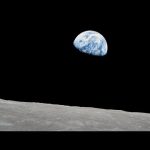
50 years ago, three NASA astronauts embarked on a journey that would take them “Round the moon and back”. The Apollo 8 mission proved the performance of the command and service module. This historic mission launched on December 21, 1968 to demonstrate a lunar trajectory and was the first manned launch of the Saturn V rocket. On Christmas Eve, Frank Borman, Jim Lovell, and Bill Anders were the first humans to orbit the Moon and the first to see an Earthrise above its surface. NASA Administrator Jim Bridenstine remembers the bravery and dedication of the Apollo 8 mission.
This short movie shares an impression of some of the scientific highlights from Rosetta’s mission at Comet 67P/Churyumov–Gerasimenko, as told through the voices of scientists working with Rosetta’s vast dataset, two years after the mission ended.
Rosetta launched in 2004 and travelled for ten years to its destination before deploying the lander Philae to the comet’s surface. Following the comet along its orbit around the Sun, Rosetta studied the comet’s surface changes, its dusty, gassy environment and its interaction with the solar wind. Even though scientific operations concluded in September 2016 with Rosetta’s own descent to the comet’s surface, analysis of the mission’s data will continue for decades.
Credits: This is an ESA Web TV production. The video contains artist impressions of the spacecraft (credit: ESA/ATG medialab) and animations/infographics by ESA. Images of the comet are from Rosetta’s OSIRIS and NAVCAM cameras, as well as Philae’s CIVA camera (credits: ESA/Rosetta/MPS for OSIRIS Team MPS/UPD/LAM/IAA/SSO/INTA/UPM/DASP/IDA – CC BY SA 4.0; ESA/Rosetta/NavCam – CC BY-SA IGO 3.0; ESA/Rosetta/Philae/CIVA). Ground-based images were provided by Colin Snodgrass/Alan Fitzsimmons/Liverpool Telescope. The plasma visualisation is based on modelling and simulation by Technische Universität Braunschweig and Deutsches Zentrum für Luft- und Raumfahrt, and visualised by Zuse-Institut Berlin. The animation of Philae’s flight across the surface is based on data from Philae’s ROMAP, RPC-MAG, OSIRIS, ROLIS, CIVA CONSERT, SESAME and MUPUS instrument teams, the Lander Control Centre at DLR and the Science Operation and Navigation Center at CNES.
ESA is Europe’s gateway to space. Our mission is to shape the development of Europe’s space capability and ensure that investment in space continues to deliver benefits to the citizens of Europe and the world. Check out http://www.esa.int/ESA to get up to speed on everything space related.
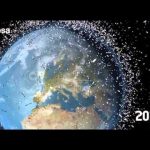
The story of space debris highlighting how the unintended consequences of intense spaceflight activity during the past 60 years has resulted in a growing population of debris objects that pose hazards to safe space navigation. In 2013, experts estimate that 29 000 objects larger than 10 cm were orbiting Earth.
The video also highlights the current state of debris mitigation measures and presents several concepts for removing defunct satellites from economically vital orbits now being studied by space agencies and industry across Europe.
This video was produced for the 6th European Conference on Space Debris, 22-25 April 2013.
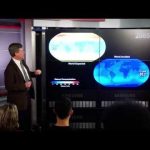
Dr. Paul Newman, chief scientist for atmospheric sciences at NASA’s Goddard Space Flight Center in Greenbelt, Maryland, discusses the ozone layer’s past, present and potential future.
This short movie tells the story of Rosetta’s journey through the Solar System so far, through the voices of some of the many people involved in this exciting mission. ESA’s Rosetta spacecraft launched in March 2004 and has since been chasing down comet 67P/Churyumov-Gerasimenko, where it will become the first space mission to orbit a comet, the first to attempt a landing on a comet’s surface, and the first to follow a comet as it swings around the Sun. In the last ten years Rosetta has made 3 flybys of Earth and 1 of Mars, and passed by and imaged asteroids Steins and Lutetia. Operating on solar energy alone, in June 2011 Rosetta was placed into deep space hibernation as it cruised nearly 800 million kilometres from the warmth of the Sun, close to the orbit of Jupiter. On 20 January, Rosetta will wake up at 673 million kilometres from the Sun and about 9 million km from the comet, ready for the next leg of its epic adventure.
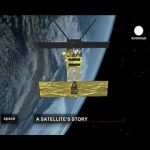
Everything must come to an end — including satellites. After 16 years of loyal service observing Earth, the ERS-2 satellite has retired. This edition of Space tells the life story of the venerable satellite.