Tag: supernova

  • 𝐅𝐑𝐔𝐌𝐔𝐒𝐄𝐓̦𝐄𝐀 𝐂𝐎𝐒𝐌𝐎𝐒𝐔𝐋𝐔𝐈!

    𝐅𝐑𝐔𝐌𝐔𝐒𝐄𝐓̦𝐄𝐀 𝐂𝐎𝐒𝐌𝐎𝐒𝐔𝐋𝐔𝐈!

    Accesează https://surfshark.com/presura sau folosește codul PRESURA la finalizarea comenzii pentru a primi 4 luni extra de Surfshark VPN!

    ❗Primește răspunsuri direct pe whatsapp ► https://patreon.com/cristianpresura
    ❗Devino membru ► https://tinyurl.com/membruyoutube

    🔸 PAYPAL ► paypal.me/cristianpresura
    🔸 DONORBOX ► https://donorbox.org/cristianpresura

    ❗Alege TU următorul subiect! ► https://tinyurl.com/cristianpresura
    ❗TikTok ► https://www.tiktok.com/@cristian.presura
    ❗Facebook ► https://www.facebook.com/presura
    ❗Facebook page ► https://www.facebook.com/stiintaclub
    ❗Instagram ► https://www.instagram.com/cristianpresura/
    ❗Twitch ► https://www.twitch.tv/cristian_presura
    ❗Discord ► https://www.discord.gg/presura
    ❗Reddit ► https://www.reddit.com/r/presura/

    📙 Carte ► “Fizica Povestita”: https://bit.ly/2YsKaAc
    📙 Carte ► “O calatorie prin Univers”: https://bit.ly/3pdOfGp
    📙 Carte ► “Care e diferența dintre un copil și un laptop?” https://bit.ly/3h4auLZ

    🔊 Spotify Podcast ► https://spoti.fi/3dbvYo6
    🔊 MixCloud Podcas ► https://www.mixcloud.com/StiintaClub/
    ❗Asociația “Știinta pentru toți” ► https://www.presura.ro/

    Seria Fizica Cool #seriacool https://tinyurl.com/2s437srj
    Seria shorts: https://tinyurl.com/yw8b4sab
    Seria carte “Fizica Povestită” #fizicapovestita https://tinyurl.com/966kzam9
    Seria „Dicţionarul de idei şi ideologii (#2i)”: https://tinyurl.com/muryddb5
    Seria “Deschis la cercetare”: https://tinyurl.com/2p9dtb6k
    Fizica pentru începători: https://tinyurl.com/4xbc67c2
    Fizica cuantică: https://tinyurl.com/mr2d7acu
    Fizica nucleara: https://tinyurl.com/3yv3kr5r
    Fizica spațiului: https://tinyurl.com/3kc5jz95
    Călătorie prin Univers: https://tinyurl.com/mv6sxxrb
    Teoria relativității: https://tinyurl.com/2m8umyew
    Fizica simplă: https://tinyurl.com/24j6ekje
    Fizica avansată: https://tinyurl.com/39chd56e
    Fizica mediului inconjurator: https://tinyurl.com/5n86xdzc
    Cum sa ne protejam? https://tinyurl.com/mmyvr3n7
    Fizica 5G: https://tinyurl.com/2p9b3j6r
    Podcast “Întâlnirea cu fizica”: https://tinyurl.com/5n8hsswe
    algoritm:”Pământul, văzut din spațiu, pare liniștit, ascuns de zgomotul civilizației. Atmosfera sa subțire menține viața, ridicând apa în nori și punând în mișcare vânturile, uneori până la formarea uriașelor cicloane. Astronauții de pe Stația Spațială Internațională, care ocolește planeta într-o oră și jumătate, privesc răsăriturile peste oceane, curburile albastre ale Pământului și aurorele polare dansând la poli.

    Dincolo de atmosferă începe vidul cosmic, rece până la câțiva Kelvin, în timp ce în adâncurile planetei temperaturile ating mii de grade. Locul nostru de existență rămâne doar o fâșie fragilă, câteva zeci de kilometri de aer și lumină.

    Privirea se ridică apoi spre instrumentele care ne-au deschis universul. Telescopul Hubble, reparat în 2009 de astronauții navetei Atlantis, a devenit ochiul nostru veșnic spre stele. Saturn V, colosul creat de Wernher von Braun, a purtat omenirea până pe Lună, unde astronauții au făcut primii pași și au adunat probe cu bucuria copilăriei.

    În spațiu strălucesc stele reci și fierbinți: roșiaticele giganti ca Betelgeuse abia ating 3000 °C, în timp ce albastrele ca Rigel depășesc 20.000 °C. În nebuloasele colorate – Clepsidra, Stâlpii Creației, Carina sau Laguna – gazul și praful cosmic nasc noi sori. Supernove precum Nebuloasa Crab lasă în urmă pulsați neutronici și filamente strălucitoare.

    Telescopul James Webb, urmașul lui Hubble, ne arată în infraroșu detalii ascunse: norii lui Neptun, aurorele lui Jupiter, inelele lui Uranus, roiuri de galaxii și primele structuri formate la câteva sute de milioane de ani după Big Bang. Lentilele gravitaționale măresc galaxii îndepărtate, dezvăluind coliziuni, stele tinere și găuri negre supermasive.

    Aceasta este povestea Pământului și a cerului: o fâșie subțire de viață, înconjurată de infinit, explorată cu ochii noștri mecanici, dar înțeleasă prin uimirea omului care privește în sus.”

    #stiinta #fizica #science #tehnologie #technology #cristianpresura #ad

  • Hubble finds hungry black hole twisting captured star into donut shape #shorts

    Hubble finds hungry black hole twisting captured star into donut shape #shorts

    These are termed “tidal disruption events.” But the wording belies the complex, raw violence of a black hole encounter. There is a balance between the black hole’s gravity pulling in star stuff, and radiation blowing material out. In other words, black holes are messy eaters. Astronomers are using Hubble to find out the details of what happens when a wayward star plunges into the gravitational abyss.

    Learn more: https://esahubble.org/images/opo2301a/

    ★ Subscribe: http://bit.ly/ESAsubscribe and click twice on the bell button to receive our notifications.

    Check out our full video catalog: http://bit.ly/SpaceInVideos
    Follow us on Twitter: http://bit.ly/ESAonTwitter
    On Facebook: http://bit.ly/ESAonFacebook
    On Instagram: http://bit.ly/ESAonInstagram
    On LinkedIn: https://bit.ly/ESAonLinkedIn
    On Pinterest: https://bit.ly/ESAonPinterest
    On Flickr: http://bit.ly/ESAonFlickr

    We are Europe’s gateway to space. Our mission is to shape the development of Europe’s space capability and ensure that investment in space continues to deliver benefits to the citizens of Europe and the world. Check out https://www.esa.int/ to get up to speed on everything space related.

    Copyright information about our videos is available here: https://www.esa.int/ESA_Multimedia/Terms_and_Conditions

    #ESA
    #Hubble
    #BlackHole

  • Three faces of a supernova 💥 #shorts

    Three faces of a supernova 💥 #shorts

    Three different moments in a far-off supernova explosion were captured in a single snapshot by the NASA/ESA Hubble Space Telescope. The progenitor star exploded more than 11 billion years ago, when the Universe was less than a fifth of its current age of 13.8 billion years.

    📹 @EuropeanSpaceAgency

    📸 @NASA, ESA, STScI, Wenlei Chen (UMN), Patrick Kelly (UMN), Hubble Frontier Fields

    ★ Subscribe: http://bit.ly/ESAsubscribe and click twice on the bell button to receive our notifications.

    Check out our full video catalog: http://bit.ly/SpaceInVideos
    Follow us on Twitter: http://bit.ly/ESAonTwitter
    On Facebook: http://bit.ly/ESAonFacebook
    On Instagram: http://bit.ly/ESAonInstagram
    On LinkedIn: https://bit.ly/ESAonLinkedIn
    On Pinterest: https://bit.ly/ESAonPinterest
    On Flickr: http://bit.ly/ESAonFlickr

    We are Europe’s gateway to space. Our mission is to shape the development of Europe’s space capability and ensure that investment in space continues to deliver benefits to the citizens of Europe and the world. Check out https://www.esa.int/ to get up to speed on everything space related.

    Copyright information about our videos is available here: https://www.esa.int/ESA_Multimedia/Terms_and_Conditions

    #ESA
    #Hubble
    #Supernova

  • Hubble sees supergiant star Betelgeuse recovering after blowing its top #shorts

    Hubble sees supergiant star Betelgeuse recovering after blowing its top #shorts

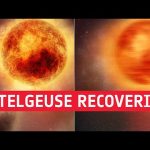
    The first clue came when the star mysteriously darkened in late 2019. An immense cloud of obscuring dust formed from the ejected surface as it cooled. Astronomers have now pieced together a scenario for the upheaval. And the star is still slowly recovering; the photosphere is rebuilding itself. And the interior is reverberating like a bell that has been hit with a sledgehammer, disrupting the star’s normal cycle. This doesn’t mean the monster star is going to explode any time soon, but the late-life convulsions may continue to amaze astronomers.

    Learn more: https://esahubble.org/images/opo22037a/

    ★ Subscribe: http://bit.ly/ESAsubscribe and click twice on the bell button to receive our notifications.

    Check out our full video catalog: http://bit.ly/SpaceInVideos
    Follow us on Twitter: http://bit.ly/ESAonTwitter
    On Facebook: http://bit.ly/ESAonFacebook
    On Instagram: http://bit.ly/ESAonInstagram
    On LinkedIn: https://bit.ly/ESAonLinkedIn
    On Pinterest: https://bit.ly/ESAonPinterest
    On Flickr: http://bit.ly/ESAonFlickr

    We are Europe’s gateway to space. Our mission is to shape the development of Europe’s space capability and ensure that investment in space continues to deliver benefits to the citizens of Europe and the world. Check out https://www.esa.int/ to get up to speed on everything space related.

    Copyright information about our videos is available here: https://www.esa.int/ESA_Multimedia/Terms_and_Conditions

    #ESA
    #Hubble
    #Betelgeuse

  • The James Webb Space Telescope reveals complex structures #shorts

    The James Webb Space Telescope reveals complex structures #shorts

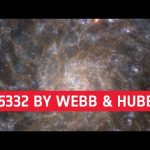
    These spectacular images feature the spiral galaxy IC 5332, taken by the @NASA/ESA Hubble Space Telescope and the NASA/ESA/ @Canadian Space Agency James Webb Space Telescope. The images display the powerful capabilities that both world-leading space telescopes provide, especially when combining their data.

    Download images: https://www.esa.int/ESA_Multimedia/Images/2022/09/Webb_s_icy_instrument_reveals_complex_structures

    ★ Subscribe: http://bit.ly/ESAsubscribe and click twice on the bell button to receive our notifications.

    Check out our full video catalog: http://bit.ly/SpaceInVideos
    Follow us on Twitter: http://bit.ly/ESAonTwitter
    On Facebook: http://bit.ly/ESAonFacebook
    On Instagram: http://bit.ly/ESAonInstagram
    On LinkedIn: https://bit.ly/ESAonLinkedIn
    On Pinterest: https://bit.ly/ESAonPinterest
    On Flickr: http://bit.ly/ESAonFlickr

    We are Europe’s gateway to space. Our mission is to shape the development of Europe’s space capability and ensure that investment in space continues to deliver benefits to the citizens of Europe and the world. Check out https://www.esa.int/ to get up to speed on everything space related.

    Copyright information about our videos is available here: https://www.esa.int/ESA_Multimedia/Terms_and_Conditions

    #ESA
    #Webb
    #Hubble

  • Spiralling stars provide a window into the early Universe #shorts

    Spiralling stars provide a window into the early Universe #shorts

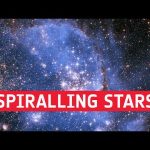
    The Small Magellanic Cloud has a simpler chemical composition than the Milky Way, making it similar to the galaxies found in the younger Universe, when heavier elements were more scarce. Because of this, the stars in the Small Magellanic Cloud burn hotter and so run out of their fuel faster than in our Milky Way. Though a proxy for the early universe, at 200 000 light-years away the Small Magellanic Cloud is also one of our closest galactic neighbours.

    Download this image: https://www.esa.int/ESA_Multimedia/Images/2022/09/Spiralling_stars_provide_a_window_into_the_early_Universe

    ★ Subscribe: http://bit.ly/ESAsubscribe and click twice on the bell button to receive our notifications.

    Check out our full video catalog: http://bit.ly/SpaceInVideos
    Follow us on Twitter: http://bit.ly/ESAonTwitter
    On Facebook: http://bit.ly/ESAonFacebook
    On Instagram: http://bit.ly/ESAonInstagram
    On LinkedIn: https://bit.ly/ESAonLinkedIn
    On Pinterest: https://bit.ly/ESAonPinterest
    On Flickr: http://bit.ly/ESAonFlickr

    We are Europe’s gateway to space. Our mission is to shape the development of Europe’s space capability and ensure that investment in space continues to deliver benefits to the citizens of Europe and the world. Check out https://www.esa.int/ to get up to speed on everything space related.

    Copyright information about our videos is available here: https://www.esa.int/ESA_Multimedia/Terms_and_Conditions

    #ESA
    #Hubble
    #Astronomy

  • Webb and Hubble inspect the Phantom Galaxy #shorts

    Webb and Hubble inspect the Phantom Galaxy #shorts

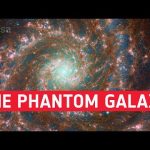
    New images of the spectacular Phantom Galaxy, M74, showcase the power of space observatories working together in multiple wavelengths. In this case, data from the @NASA / ESA / @canadianspaceagency James Webb Space Telescope and the NASA/ESA Hubble Space Telescope compliment each other to provide a comprehensive view of the galaxy.

    Download these images: https://www.esa.int/Science_Exploration/Space_Science/Webb/Webb_inspects_the_heart_of_the_Phantom_Galaxy

    ★ Subscribe: http://bit.ly/ESAsubscribe and click twice on the bell button to receive our notifications.

    Check out our full video catalog: http://bit.ly/SpaceInVideos
    Follow us on Twitter: http://bit.ly/ESAonTwitter
    On Facebook: http://bit.ly/ESAonFacebook
    On Instagram: http://bit.ly/ESAonInstagram
    On LinkedIn: https://bit.ly/ESAonLinkedIn
    On Pinterest: https://bit.ly/ESAonPinterest
    On Flickr: http://bit.ly/ESAonFlickr

    We are Europe’s gateway to space. Our mission is to shape the development of Europe’s space capability and ensure that investment in space continues to deliver benefits to the citizens of Europe and the world. Check out https://www.esa.int/ to get up to speed on everything space related.

    Copyright information about our videos is available here: https://www.esa.int/ESA_Multimedia/Terms_and_Conditions

    #ESA
    #Webb
    #Hubble

  • Cosmic manatee accelerates particles from head #shorts

    Cosmic manatee accelerates particles from head #shorts

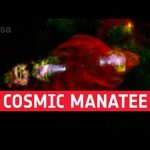
    ESA’s XMM-Newton has X-rayed this beautiful cosmic creature, known as the Manatee Nebula, pinning down the location of unusual particle acceleration in its ‘head’.

    The Manatee Nebula, or W50, is thought to be a large supernova remnant created when a giant star exploded around 30 000 years ago, flinging its shells of gases out across the sky. It is one of the largest such features known, spanning the equivalent size of four full Moons.

    Unusually for a supernova remnant, a black hole remains in its core. This central ‘microquasar’, known as SS 433, emits powerful jets of particles travelling at speeds close to a quarter the speed of light that punch through the gassy shells, creating the double-lobed shape.

    SS 433 is identified by the red dot in the middle of the image. The X-ray data acquired by XMM-Newton are represented in yellow (soft X-rays), magenta (medium energy X-rays) and cyan (hard X-ray emission), while red is radio and green optical wavelengths imaged by the Very Large Array and the Skinakas Observatory in Greece, respectively. @NASA NuSTAR and Chandra data were also used for the study (not shown in this image).

    The nebula attracted attention in 2018 when the High-Altitude Water Cherenkov Observatory, which is sensitive to very high energy gamma-ray photons, revealed the presence of highly energetic particles (hundreds of tera electron volts), but could not pinpoint from where within the Manatee the particles were originating.

    XMM-Newton was crucial in homing in on the region of particle acceleration in the X-ray jet blasting from the Manatee’s head, which begins about 100 light years away from the microquasar (represented by the magneta and cyan colours towards the left side SS 433) and extends to approximately 300 light years (coinciding with the radio ‘ear’ where the shock terminates).

    Samar Safi-Harb of the University of Manitoba, Canada, who led the study, says “thanks to the new XMM-Newton data, supplemented with NuSTAR and Chandra data, we believe the particles are getting accelerated to very high energies in the head of the Manatee through an unusually energetic particle acceleration process. The black hole outflow likely made its way there and has been re-energized to high-energy radiation at that location, perhaps due to shock waves in the expanding gas clouds and enhanced magnetic fields.”

    The nebula acts as a nearby laboratory for exploring a wide range of astrophysical phenomena associated with the outflows of many galactic and extragalactic sources and will be subject to further investigation. Furthermore, follow-up studies by ESA’s future Athena X-ray observatory will provide even more sensitive details about the inner workings of this curious cosmic Manatee.

    Credits: S. Safi-Harb et al (2022)

    ★ Subscribe: http://bit.ly/ESAsubscribe and click twice on the bell button to receive our notifications.

    Check out our full video catalog: http://bit.ly/SpaceInVideos
    Follow us on Twitter: http://bit.ly/ESAonTwitter
    On Facebook: http://bit.ly/ESAonFacebook
    On Instagram: http://bit.ly/ESAonInstagram
    On LinkedIn: https://bit.ly/ESAonLinkedIn
    On Pinterest: https://bit.ly/ESAonPinterest
    On Flickr: http://bit.ly/ESAonFlickr

    We are Europe’s gateway to space. Our mission is to shape the development of Europe’s space capability and ensure that investment in space continues to deliver benefits to the citizens of Europe and the world. Check out https://www.esa.int/ to get up to speed on everything space related.

    Copyright information about our videos is available here: https://www.esa.int/ESA_Multimedia/Terms_and_Conditions

    #ESA
    #XmmNewton
    #ManateeNebula

  • Hubble’s Collection of Anniversary Images

    Hubble’s Collection of Anniversary Images

    Each year, the NASA/ESA Hubble Space Telescope dedicates a small portion of its precious observing time to taking a special anniversary image, showcasing particularly beautiful and meaningful objects. These images continue to challenge scientists with exciting new surprises and to enthral the public with ever more evocative observations.

    To celebrate Hubble’s 30th anniversary, let’s look back at the beauty and science behind each of the anniversary images unveiled as of 2005. In this video, we will also feature the very special 2020 Hubble Space Telescope 30th anniversary image.

    Learn more: http://bit.ly/HubbleCelebratesIts30thAnniversaryWithATapestreOfBlazingStarbirth

    Credit:
    Directed by: Bethany Downer
    Visual design and editing: Martin Kornmesser
    Written by: Bethany Downer
    Narration: Sara Mendes da Costa
    Images & VIdeos: NASA, ESA, M.Kornmesser, L. Calçada, ESO, NAOJ, G. Bacon, L. Frattare, Z. Levay and F. Summers (STScI/AURA), D. Lennon and E. Sabbi (ESA/STScI), J. Anderson, S.E. de Mink, R. van der Marel, T. Sohn, and N. Walborn (STScI), L. Bedin (INAF, Padua), C. Evans (STFC), H. Sana (Amsterdam), N. Langer (Bonn), P. Crowther (Sheffield), A. Herrero (IAC, Tenerife), N. Bastian (USM, Munich), and E. Bressert (ESO), the Hubble Heritage Team, T. Davis, L. Frattare, Z. Levay, (Viz 3D team, STScI), J. Anderson (STScI), the Hubble Heritage Team (STScI/AURA), A. Nota (ESA/STScI), and the Westerlund 2 Science Team, Eckhard Slawik (e.slawik@gmx.net).
    Music: Johan B. Monell (www.johanmonell.com
    Web and technical support: Raquel Yumi Shida
    Executive producer: Mariya Lyubenova

    ★ Subscribe: http://bit.ly/ESAsubscribe and click twice on the bell button to receive our notifications.

    Check out our full video catalog: http://bit.ly/SpaceInVideos
    Follow us on Twitter: http://bit.ly/ESAonTwitter
    On Facebook: http://bit.ly/ESAonFacebook
    On Instagram: http://bit.ly/ESAonInstagram
    On Flickr: http://bit.ly/ESAonFlickr

    We are Europe’s gateway to space. Our mission is to shape the development of Europe’s space capability and ensure that investment in space continues to deliver benefits to the citizens of Europe and the world. Check out http://www.esa.int/ESA to get up to speed on everything space related.

    Copyright information about our videos is available here: http://www.esa.int/spaceinvideos/Terms_and_Conditions

    #ESA
    #Hubble
    #Hubble30

  • 30 Years of Science with the Hubble Space Telescope

    30 Years of Science with the Hubble Space Telescope

    On 24 April 1990 the NASA/ESA Hubble Space Telescope was sent into orbit aboard the space shuttle Discovery, the first space telescope of its kind. It offered a new view of the Universe and has, for 30 years, reached and surpassed all expectations, beaming back data and images that have changed scientists’ understanding of the Universe and the public’s perception of it. Hubble’s discoveries have revolutionised nearly all areas of current astronomical research, from planetary science to cosmology, and its pictures are unmistakably out of this world.

    This video revisits some of Hubble’s biggest science discoveries throughout its three decades of operation to celebrate the telescope’s 30th anniversary.

    Learn more: http://bit.ly/HubbleCelebratesIts30thAnniversaryWithATapestreOfBlazingStarbirth

    Credit:
    Directed by: Bethany Downer
    Visual design and editing: Martin Kornmesser
    Written by: Bethany Downer
    Narration: Sara Mendes da Costa
    Images & Videos: NASA, ESA, M.Kornmesser, L. Calçada, ESO, G. Bacon (STScI), theHubble Heritage Team (STScI/AURA)-ESA/Hubble Collaboration, and H. Bond (STScI and Pennsylvania State University), A. Feild (STScI), and A. Riess (STScI/JHU), D. Jewitt (UCLA), F. Summers, Z. Levay, J. DePasquale, L. Hustak, L. Frattare, M. Robberto (STScI), R. Hurt (Caltech/IPAC) Acknowledgement: R. Gendler, spaceengine.org.
    Music: Johan B. Monell (www.johanmonell.com)
    Web and technical support: Raquel Yumi Shida
    Executive producer: Mariya Lyubenova

    ★ Subscribe: http://bit.ly/ESAsubscribe and click twice on the bell button to receive our notifications.

    Check out our full video catalog: http://bit.ly/SpaceInVideos
    Follow us on Twitter: http://bit.ly/ESAonTwitter
    On Facebook: http://bit.ly/ESAonFacebook
    On Instagram: http://bit.ly/ESAonInstagram
    On Flickr: http://bit.ly/ESAonFlickr

    We are Europe’s gateway to space. Our mission is to shape the development of Europe’s space capability and ensure that investment in space continues to deliver benefits to the citizens of Europe and the world. Check out http://www.esa.int/ESA to get up to speed on everything space related.

    Copyright information about our videos is available here: http://www.esa.int/spaceinvideos/Terms_and_Conditions

    #ESA
    #Hubble
    #Hubble

  • Hubble: 30 years unveiling the universe

    Hubble: 30 years unveiling the universe

    This month marks the 30th anniversary of the international Hubble Space Telescope.

    Launched on 24 April 1990, and deployed from the Space Shuttle Discovery cargo bay a day later (25 April 1990), the telescope has given us a new perspective on the Universe.

    The joint NASA/ESA mission has shown us distant galaxies and spectacular nebulae. It has revealed supermassive black holes and planets in distant solar systems; and has proved that the Universe is not only expanding, the expansion is accelerating.

    Hubble’s mission has also been eventful. When it was first launched, a defect in the mirror meant it sent back blurry images. Since then, five servicing missions have enabled the telescope to be improved and upgraded. Today, it is still going strong.

    Learn more: http://bit.ly/HubbleCelebratesIts30thAnniversaryWithATapestreOfBlazingStarbirth

    ★ Subscribe: http://bit.ly/ESAsubscribe and click twice on the bell button to receive our notifications.

    Check out our full video catalog: http://bit.ly/SpaceInVideos
    Follow us on Twitter: http://bit.ly/ESAonTwitter
    On Facebook: http://bit.ly/ESAonFacebook
    On Instagram: http://bit.ly/ESAonInstagram
    On Flickr: http://bit.ly/ESAonFlickr

    We are Europe’s gateway to space. Our mission is to shape the development of Europe’s space capability and ensure that investment in space continues to deliver benefits to the citizens of Europe and the world. Check out http://www.esa.int/ESA to get up to speed on everything space related.

    Copyright information about our videos is available here: http://www.esa.int/spaceinvideos/Terms_and_Conditions

    #ESA
    #Hubble
    #Hubble30

  • Ce este un pulsar?

    Ce este un pulsar?

    Secventa din emisiunea Jurnalul de stiinte de la Divi TV.

  • Black Hole Star Cake

    Black Hole Star Cake

    NOVA has teamed up with Cook’s Illustrated to cook up a recipe for stars and black holes – a culinary “course” on how the most mysterious objects in the universe are created.

    Watch “Black Hole Apocalypse” Here: http://www.pbs.org/wgbh/nova/space/black-hole-apocalypse.html

    Subscribe: https://www.youtube.com/WhatThePhysics?sub_confirmation=1

    Have questions, ask me:
    twitter @gkestin

    Writer, Host, Producer: Greg Kestin

    Cinematography: Brian Kantor and Ari Daniel

    Editorial Input form: Julia Cort

    Editor in Chief, Cook’s Illustrated: Dan Souza

    Senior Editor, Cook’s Illustrated: Lan Lam

    Scientific Consultants: Scott Kenyon

    Animation: Edgeworx

    Editing and Animation: Greg Kestin

    Special thanks: Entire NOVA and Cook’s Illustrated teams

    From the producers of PBS NOVA © WGBH Educational Foundation

    Funding provided by FQXi

    Music provided by APM

  • How to Build the Universe

    How to Build the Universe

    Don’t build a universe at home before watching this!
    SUBSCRIBE: http://youtube.com/whatthephysics?sub
    ↓Want more info?↓

    Scientific notes:
    Stellar mass black holes vs. supermassive black holes
    * Stellar mass black holes form from the collapse of massive stars at the ends of their lives, so they have roughly the same mass as a star. Supermassive black holes are physically identical to their smaller counterparts, except they are 10 thousand to a billion times the size of the sun. However, their formation is more of a mystery. They may form from the merging of smaller black holes.
    http://astronomy.swin.edu.au/cosmos/S/Supermassive+Black+Hole

    Supermassive black holes at the center of galaxies
    * Almost every large galaxy has a supermassive black hole at its center, but researchers are not yet sure (https://jila.colorado.edu/research/astrophysics/black-holes-galaxies) why that’s the case, how they originate, and what their role is in the creation and evolution of galaxies.

    Why are stars different colors?
    * The color of a star depends on its temperature (http://www.atnf.csiro.au/outreach/education/senior/astrophysics/photometry_colour.html). The hotter a star, the higher energy its light will be. Higher energy/temperature corresponds with the blue end of the visible spectrum and lower energy/temperature corresponds with the red end.

    How does dark matter make stars spin faster?
    * In the 1960s, astronomers Vera Rubin and Kent Ford noticed that stars at the edges of galaxies were moving just as fast as stars at the center, which surprised them: it appeared that the force of gravity causing stars to orbit the center of the galaxy was not weakening over distance. Their observation implied that something else, distributed throughout the galaxy, was exerting a gravitation pull. We now know that that “something else,” now named dark matter, accounts for about 85% of the matter in the universe. (It existence was inferred in the 1930s, when the astronomer Fritz Zwicky(http://www2.astro.psu.edu/users/rbc/a1/week_10.html) noticed that galaxies in clusters were moving faster than they should.)

    Size of the universe
    * The universe is only 13.8 billion years old, but has a radius of about 46 billion light-years. If nothing can travel faster than the speed of light, how can that be? The expansion of the universe, driven by dark energy, is causing distances between objects to grow. Note that it is not moving those objects apart; rather, it is increasing the amount of space between them. https://phys.org/news/2015-10-big-universe.html

    Cosmic webs
    * Galaxies are not distributed randomly (http://skyserver.sdss.org/dr1/en/astro/structures/structures.asp) in space; instead, clusters of galaxies form web-like patterns. These webs consist of filaments, where dark matter and ordinary (baryonic) matter are concentrated, and voids, where galaxies are scarce. Researchers believe that these large-scale structures grew out of minor fluctuations in density at the beginning of the universe.

    Composition of the early universe
    * Moments after the Big Bang, the universe formed the nuclei for what would be come the universe’s hydrogen and helium atoms, with one helium nucleus for every 10 or 11 hydrogen (http://umich.edu/~gs265/bigbang.htm). When the first stars formed, there were no heavier elements — those elements formed inside stars.

    String Theory Landscape
    * The String Theory Landscape is a theory that the universe we live in is one of many universes. It attempts to explain how certain constants of nature seem “fine-tuned” for life, which contradicts the anthropic principle, or the notion that we humans hold a special place in the universe. https://www.scientificamerican.com/article/multiverse-the-case-for-parallel-universe/%0A

    Disintegration of the universe
    * In the future Degenerate Era of the universe, as space-time expands and stars burn up, all of the matter in stars will be consumed by black holes. But even black holes are not forever. Stephen Hawking theorized that black holes will slowly radiate away their mass in what is now called Hawking radiation until they too dissipate away. http://www.nytimes.com/books/first/a/adams-universe.html
    ______
    MEDIA CREDITS:
    Music provided by APM
    Sound effects: Freesound.org
    Additional Animations:
    – Galaxy within Universe: Edgeworx;
    – Stars at center of Milky Way – NASA/NCSA University of Illinois Visualization by Frank Summers, Space Telescope Science Institute, Simulation by Martin White and Lars Hernquist, Harvard University

    From the producers of PBS NOVA
    © WGBH Educational Foundation
    Funding provided by FQXi

  • Unboxing the Universe

    Unboxing the Universe

    What if everything in the universe came to your doorstep…in a box?! What The Physics is BACK! Future episodes will explore the universe—but first, let’s unbox it.
    Subscribe: http://youtube.com/whatthephysics?sub
    ↓Want more info?↓

    SCIENTIFIC NOTES:
    Explosive young stars
    * The average lifetime of a star is about 10 billion years, but the bigger the star, the shorter its life. One rare type of star, called a hypergiant, can be tens, hundreds, or even a thousand times the mass of our sun. These stars burn out and explode into supernovae in just a few million years.
    http://www.guide-to-the-universe.com/hypergiant-star.html

    Black holes
    * Black holes form from the collapse of a massive star at the end of its life, but this only happens in stars about three times as massive as the sun. http://burro.case.edu/Academics/Astr201/EndofSun.pdf

    How big is the universe?
    * Probably infinite. No one knows the size of the universe for sure, and we may never know, but the latest thinking is that it probably goes on forever. https://map.gsfc.nasa.gov/universe/uni_shape.html

    Standard cosmological model
    * According to the standard cosmological model, the universe started with a big bang, underwent rapid inflation within the first fraction of a second, and continues to expand, driven by a vacuum energy called dark energy. All of the structure we see in the universe has come from interactions between dark energy and dark matter (which accounts for about 85% of the universe’s matter). This model describes and predicts many phenomena in the universe but is not perfect. https://physics.aps.org/articles/v8/108

    False vacuum model
    * The false vacuum model is a real, albeit unlikely theory. All the fundamental forces of nature have corresponding fields (e.g., gravitational fields, magnetic fields, etc.), and we generally believe that the universe is at rest in a global minimum of the potentials of those fields. But if we are instead at rest in a local minimum, or a “false vacuum,” the universe could potentially be nudged, catastrophically, into a lower minimum.

    Recycling stars into life
    * Before the first stars, the universe was all hydrogen and helium. All heavier elements, including the building blocks of life, were forged in stars.

    Dark matter and dark energy
    * Only 5% of the universe is made up of matter we can see. The “missing mass” later dubbed dark matter was first noticed in the 1930s; dark energy was discovered in the 1990s. In both cases, their existence was inferred by their effect on objects they interact with. However, they are still not directly observable, so nobody knows yet what they are made of.

    Leftover light from the Big Bang
    * The theory of the Big Bang predicted the existence of cool radiation pervading the universe, left over from its beginning. In an accidental discovery, two New Jersey scientists discovered the cosmic microwave background, a nearly uniform bath of radiation throughout the universe at a temperature of about 3 Kelvin, or -454 degrees Fahrenheit.

    Gravitational waves
    * Albert Einstein predicted the existence of gravitational waves in his theory of general relativity in 1916. According to his theory, the acceleration of massive objects, like black holes, should send ripples through space-time at the speed of light. A century after his prediction, two merging black holes sent a ripple through space-time that was detected on Earth as a signal that stretched the 4-kilometer arms of a detector by less than 1/1,000 the width of a proton.

    Cosmic dust
    * Cosmic dust is cast off from stars at the end of their lives and hovers in galaxies as clouds. These clouds of dust absorb ultraviolet and visible light, obscuring much of what lies behind them. This makes it notoriously difficult to study things like the dusty center of our galaxy.

    Fermi bubbles
    * Enormous bubbles of gamma rays protruding above and below the center of the galaxy, roughly along its axis of rotation. http://www.skyandtelescope.com/astronomy-resources/understanding-fermi-bubbles/

    The observable universe
    * The universe is 13.8 billion years old. Since the distance we can observe is limited by the time it takes light to travel to Earth, we can only ever observe a fraction of the universe: an expanding sphere around us that is now about 46 billion years in radius. However, the universe is much larger than what we can observe.

    CREDITS:

    Host, Writer, Producer: Greg Kestin

    Animation & Compositing: Danielle Gustitus

    Contributing Writers: Lissy Herman, HCSUCS

    Filming, Writing, & Editing Contributions from:
    Samia Bouzid and David Goodliffe

    Creation of Sad Star Image: Drew Ganon

    Special thanks:
    Julia Cort
    Lauren Aguirre
    Ari Daniel
    Anna Rothschild
    Allison Eck
    Fernando Becerra
    And the entire NOVA team

    From the producers of PBS NOVA
    © WGBH Educational Foundation

    Funding provided by FQXi

    Music provided by APM
    Sound effects: Freesound.org
    Images: Big Bang – NASA
    Additional Animations: Edgeworx