Noctis Labyrinthus is vast system of deep and steep valleys that stretches out for around 1190 km, roughly the length of Italy here on Earth.
It is nestled between the colossal martian ‘Grand Canyon’ (Valles Marineris) and the tallest volcanoes in the Solar System (the Tharsis region).
The intense volcanism in the nearby Tharsis region is to blame for the formation of these features; this volcanism caused large areas of martian crust to arch upwards and become stretched and tectonically stressed, leading to it thinning out, faulting and subsiding.
📹 ESA – European Space Agency 🖥️ ESA/DLR/FU Berlin
Managers and engineers from NASA’s Marshall Space Flight Center in Alabama share their thoughts about the Space Launch System (SLS) rocket for #Artemis I. Van L. Strickland, SLS program operations manager; John Blevins, SLS chief engineer; and Sharon Cobb, SLS associate program manager, commend a diverse workforce for its effort and dedication to prepare the backbone of NASA’s return to the Moon. SLS will launch the Orion spacecraft on its mission beyond the Moon and back to Earth. Artemis I is scheduled to launch no earlier than Aug. 29, 2022, at 8:33 a.m. EDT from Kennedy Space Center’s Launch Complex 39B in Florida.
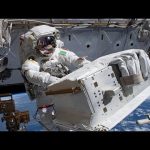
Installing a critical system for our Orion spacecraft, the latest engine test for our Artemis Moon missions, and working to give spacecraft propulsion a boost … a few of the stories to tell you about – This Week at NASA!
NASA completed a full-scale booster test for NASA’s Space Launch System rocket in Promontory, Utah, on Sept. 2.
The full-scale booster firing was conducted with new materials and processes that may be used for NASA’s Space Launch System (SLS) rocket boosters. NASA and Northrop Grumman, the SLS boosters lead contractor, will use data from the test to evaluate the motor’s performance using potential new materials and processes for Artemis missions beyond the initial Moon landing in 2024.
The SLS boosters are the largest, most powerful boosters ever built for flight. The two boosters on the rocket provide more than 75% of the thrust needed to launch NASA’s future deep space missions through NASA’s Artemis lunar program. Northrop Grumman is the lead contractor for the SLS boosters.
For a little over two minutes — the same amount of time that the boosters power the SLS rocket during liftoff and flight for each Artemis mission — the five-segment flight support booster fired in the Utah desert, producing more than 3 million pounds of thrust.
NASA and Northrop Grumman have previously completed three development motor tests and two qualification motor tests. Today’s test, called Flight Support Booster-1 (FSB-1), builds on prior tests with the introduction of propellant ingredients from new suppliers for boosters on SLS rockets to support flights after Artemis III.
A new cooling system for a device on the space station, first results from the first spacecraft to touch the Sun, and preparing Orion for some critical testing … a few of the stories to tell you about – This Week at NASA!
This video is available for download from NASA’s Image and Video Library: https://images.nasa.gov/details-NHQ_2019_1206_New%20Cooling%20System%20for%20a%20Device%20on%20the%20Space%20Station%20on%20This%20Week%20@NASA%20%E2%80%93%20December%206,%202019
Designer babies, the end of diseases, genetically modified humans that never age. Outrageous things that used to be science fiction are suddenly becoming reality. The only thing we know for sure is that things will change irreversibly.
Thanks to Volker Henn, James Gurney and (prefers anonymity) for help with this video!
THANKS A LOT TO OUR LOVELY PATRONS FOR SUPPORTING US:
Jeffrey Schneider, Konstantin Kaganovich, Tom Leiser, Archie Castillo, Russell Eishard, Ben Kershaw, Marius Stollen, Henry Bowman, Ben Johns, Bogdan Radu, Sam Toland, Pierre Thalamy, Christopher Morgan, Rocks Arent People, Ross Devereux, Pascal Michaud, Derek DuBreuil, Sofia Quintero, Robert Swiniarski, Merkt Kızılırmak, Michelle Rowley, Andy Dong, Saphir Patel, Harris Rotto, Thomas Huzij, Ryan James Burke, NTRX, Chaz Lewis, Amir Resali, The War on Stupid, John Pestana, Lucien Delbert, iaDRM, Jacob Edwards, Lauritz Klaus, Jason Hunt, Marcus : ), Taylor Lau, Rhett H Eisenberg, Mr.Z, Jeremy Dumet, Fatman13, Kasturi Raghavan, Kousora, Rich Sekmistrz, Mozart Peter, Gaby Germanos, Andreas Hertle, Alena Vlachova, Zdravko Šašek
SOURCES AND FURTHER READING:
The best book we read about the topic: GMO Sapiens
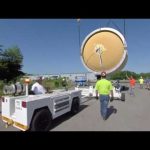
On June 28, the booster for NASA’s Space Launch System (SLS) rocket was fired up for a major two-minute full-duration qualification ground test at Orbital ATK Propulsion Systems’ test facilities in Promontory, Utah. Engineers will evaluate test data on the motor’s performance using cold propellant, the steering operation of its redesigned nozzle, and other operational data to help qualify the booster for flight. This is the last time the booster will be fired in a test environment before it’s used for the first uncrewed test flight of SLS with NASA’s Orion spacecraft, known as Exploration Mission-1, in late 2018. Also, SLS Test Hardware Arrives at Marshall, Juno Arrives at Jupiter July 4th, Test Lab Launched to Streamline Air Travel, Russian Docking System Tested on ISS, and NASA 2016 Agency Honor Award Distinguished Honorees.
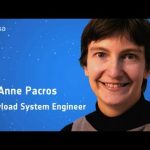
Academic background series: Anne Pacros is a payload system engineer on the Solar Orbiter mission and finds working in a position where all the threads of the project come together fascinating.
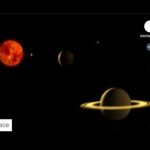
Pegaso 51 B è il nome che è stato dato al primo pianeta extra sistema solare scoperto nel 1995. Da allora ne sono stati scoperti altri 500. Space è andato a perlustare i recessi della ricerca su queste porzioni di universo.
Há algumas décadas, para observar Saturno, os cientistas recorriam a telescópios. Hoje em dia, os segredos de Saturno e da sua misteriosa lua Titã são revelados graças aos dados e imagens enviados pela missão Cassini-Huygens. Saturno nunca antes visto, é o tema de Space esta semana.
Hasta hace algunas décadas para ver Saturno la ciencia tenía que mirar a través de telescópios. Hoy Saturno y su misteriosa luna Titán son nuevos conocidos gracias a la misión Cassini-Huygens que desde 2004 envía imágenes y datos. Una aventura que está cambiando la percepción que hasta ahora teníamos de nuestro Sistema Solar.
Noch vor einigen Jahrzehnten konnte man den Saturn nur mit dem Teleskop beobachten. Heute lüftet die Cassini-Huygens-Mission mit ihren Bildern die Geheimnisse des Saturnsystems und liefert Antworten auf entscheidende wissenschaftliche Fragen.
Comets are primeval leftovers from the origins of the Solar System. To fully understand these ancient objects and perhaps the origins of life on Earth, ESA’s Rosetta mission will rendezvous with comet Churyumov-Gerasimenko in 2014. In November of that year, Rosetta’s Philae lander will touchdown on the comet and thoroughly investigate its composition.
Space missions are complicated pieces of orbital choreography. When planning a mission, spacecraft engineers must calculate how to point the solar panels towards the Sun, the main antenna towards Earth and the instruments towards the target. ESA Space Scientist Detlef Koschny build a LEGO model of Rosetta mission in order to visualise these precise orientations.
Built using LEGO Mindstorms, the Philae lander model can be controlled using a home computer. It can rotate and move the drill up and down to simulate the behaviour of the real lander. As part of ESA’s Rosetta space mission, Philae will land on comet Churyumov-Gerasimenko in November 2014 to study its composition.
The continuous monitoring of more than 156,000 stars for subtle brightness changes has led to the discovery by NASA’s Kepler Mission of the first confirmed system outside our own that has more than one planet transiting the same star. Also, researchers head north to “Mars on Earth;” “Avatar” director and film’s imagery featured in NASA Earth science public service campaign; Mary J. Blige encourages students “to reach for the stars;” NASA helps celebrate “Star Wars;” and more.