We are Europe’s gateway to space. Our mission is to shape the development of Europe’s space capability and ensure that investment in space continues to deliver benefits to the citizens of Europe and the world. Check out http://www.esa.int/ESA to get up to speed on everything space related.
Acompaña a Paxi en un viaje más allá del sistema solar. En este vídeo, dirigido a niños de entre 6 y 12 años, la mascota de la ESA explora planetas extrasolares.
★ Subscribe: http://bit.ly/ESAsubscribe and click twice on the bell button to receive our notifications.
We are Europe’s gateway to space. Our mission is to shape the development of Europe’s space capability and ensure that investment in space continues to deliver benefits to the citizens of Europe and the world. Check out http://www.esa.int/ESA to get up to speed on everything space related.
The Copernicus Sentinel-2 mission takes us over the green algae blooms swirling around the Baltic Sea, in this week’s edition of the Earth from Space programme.
We are Europe’s gateway to space. Our mission is to shape the development of Europe’s space capability and ensure that investment in space continues to deliver benefits to the citizens of Europe and the world. Check out http://www.esa.int/ESA to get up to speed on everything space related.
A powerful space telescope, due for launch from Europe’s Spaceport in French Guiana on 17 December 2019, will give scientists a new insight into the nature of planets outside our Solar System.
Cheops, the ‘Characterising Exoplanet Satellite’, will study known exoplanets that are orbiting bright stars.
More than 4000 exoplanets have been discovered and Cheops will be targeting known planets between the size of Earth and Neptune, to find out more about their composition, internal structure and whether they might be able to support life.
Cheops’ mission is a partnership between ESA and Switzerland with additional contributions from Austria, Belgium, France, Germany, Hungary, Italy, Portugal, Spain, Sweden and the UK.
This film examines the nature of exoplanets, the challenge of exoplanet exploration and features the Cheops Science Operations Centre in Geneva, it includes interviews with Didier Queloz, Chair of the Cheops Science Team and 2019 Nobel Physics Laureate, University of Geneva; Willy Benz, Cheops Principal Investigator, University of Bern; and Matthias Beck, Cheops Ground Segment Manager, University of Geneva).
We are Europe’s gateway to space. Our mission is to shape the development of Europe’s space capability and ensure that investment in space continues to deliver benefits to the citizens of Europe and the world. Check out http://www.esa.int/ESA to get up to speed on everything space related.
ESA’s first mission dedicated to investigating planets outside our solar system is scheduled for launch on a Soyuz rocket from the European spaceport in French Guiana on 17 December 2019.
Cheops – Characterising ExOPlanet Satellite – will study known exoplanets that are orbiting bright stars. The aim is to obtain detailed information about these planets to find out more about their composition and internal structure.
The mission is a partnership between ESA and Switzerland with additional contributions from Austria, Belgium, France, Germany, Hungary, Italy, Portugal, Spain, Sweden and the UK.
We are Europe’s gateway to space. Our mission is to shape the development of Europe’s space capability and ensure that investment in space continues to deliver benefits to the citizens of Europe and the world. Check out http://www.esa.int/ESA to get up to speed on everything space related.
Our alien friend Paxi went to visit American astronaut Nick Hague on board the International Space Station. Nick shows Paxi the Airlock and how astronauts exit and enter the ISS.
★ Subscribe: http://bit.ly/ESAsubscribe and click twice on the bell button to receive our notifications.
We are Europe’s gateway to space. Our mission is to shape the development of Europe’s space capability and ensure that investment in space continues to deliver benefits to the citizens of Europe and the world. Check out http://www.esa.int/ESA to get up to speed on everything space related.
The Copernicus Sentinel-1 mission takes us over part of the Brazilian state of Mato Grosso deep in the Amazon interior, in this week’s edition of the Earth from Space programme.
We are Europe’s gateway to space. Our mission is to shape the development of Europe’s space capability and ensure that investment in space continues to deliver benefits to the citizens of Europe and the world. Check out http://www.esa.int/ESA to get up to speed on everything space related.
In a cleanroom in Ottobrunn, Germany, the latest Copernicus Sentinel satellite is ready for final testing before it is packed up and shipped to the US for liftoff next year. Designed and built to chart changing sea level, it is the first of two identical Sentinel-6 satellites that will be launched consecutively to continue the time series of sea-level measurements. This new mission builds on heritage from previous ocean topography satellites, including the French–US Topex-Poseidon and Jason missions, previous ESA missions such as the ERS satellites, Envisat and CryoSat, as well as Copernicus Sentinel-3. With millions of people around the world at risk from rising seas, it is essential to continue measuring the changing height of the sea surface so that decision-makers are equipped to take appropriate mitigating action – as is being currently highlighted at the COP-25 Climate Change Conference in Spain.
We are Europe’s gateway to space. Our mission is to shape the development of Europe’s space capability and ensure that investment in space continues to deliver benefits to the citizens of Europe and the world. Check out http://www.esa.int/ESA to get up to speed on everything space related.
Nicolas Soubirous, Spacecraft Operations Engineer, shares his Young Graduate Trainee (YGT) experience at ESA, working in the EarthCARE, SEOSat & SMOS Missions Operations Unit at ESOC, Germany.
We are Europe’s gateway to space. Our mission is to shape the development of Europe’s space capability and ensure that investment in space continues to deliver benefits to the citizens of Europe and the world. Check out http://www.esa.int/ESA to get up to speed on everything space related.
Ina Cheibas talks about her Young Graduate Trainee (YGT) experience in the Advanced Concepts Team at ESTEC, Netherlands, where her role was to propose and develop additive manufacturing techniques for a space habitat with in situ resources.
We are Europe’s gateway to space. Our mission is to shape the development of Europe’s space capability and ensure that investment in space continues to deliver benefits to the citizens of Europe and the world. Check out http://www.esa.int/ESA to get up to speed on everything space related.
Interview with ESA Director General Jan Wörner following the conclusion of Space19+, the ESA Council at Ministerial Level, held in Seville, Spain, 27-28 November.
We are Europe’s gateway to space. Our mission is to shape the development of Europe’s space capability and ensure that investment in space continues to deliver benefits to the citizens of Europe and the world. Check out http://www.esa.int/ESA to get up to speed on everything space related.
Priya Patel, System Engineer, talks about her experience as a Young Graduate Trainee (YGT) working on the Laser Interferometer Space Antenna Mission (LISA).
We are Europe’s gateway to space. Our mission is to shape the development of Europe’s space capability and ensure that investment in space continues to deliver benefits to the citizens of Europe and the world. Check out http://www.esa.int/ESA to get up to speed on everything space related.
The Copernicus Sentinel-2 mission takes us over Seville in southern Spain, where ESA’s next Ministerial Council will soon take place, in this week’s edition of the Earth from Space programme.
We are Europe’s gateway to space. Our mission is to shape the development of Europe’s space capability and ensure that investment in space continues to deliver benefits to the citizens of Europe and the world. Check out http://www.esa.int/ESA to get up to speed on everything space related.
ESA’s flight controllers use the best software and systems to fly our missions — but do they have the cool savvy needed to handle a wonky engine and a time-critical manoeuvre?
Set in the near future, ‘The Burn’ is a new short film that tells the story of what happens when an ESA mission control team encounters an unexpected anomaly in what should be a routine manoeuvre.
The Operations Manager, spacecraft engineers, flight dynamics experts and software and systems specialists all ‘work the problem’, fighting against time, the inexorable pull of gravity and a capricious Solar System to avoid loss of mission.
Fundamentally, without constantly evolving mission operations infrastructure – ground stations across the globe, flight dynamics systems, high-tech control rooms and cutting edge control systems – we could not fly the complex missions we have successfully flown now for decades.
Sometimes, you have to fail to succeed. Throughout the year, teams train for every possible eventuality, to ensure that their skills, expertise and teamwork – in combination with the best mission control systems available – bring Europe’s missions to life.
Many of the actors appearing in ‘The Burn’ are the actual engineers currently flying missions at ESA, giving an authentic glimpse into the real-time experiences of the teams who fly European exploration spacecraft today.
We are Europe’s gateway to space. Our mission is to shape the development of Europe’s space capability and ensure that investment in space continues to deliver benefits to the citizens of Europe and the world. Check out http://www.esa.int/ESA to get up to speed on everything space related.
This is the European Space Agency, dedicated to the peaceful exploration and use of space for the benefit of humankind. Established in 1975, we work together with our 22 Member States to push the frontiers of science and technology, and promote economic growth in Europe. Space is the future and through ESA we are all part of it.
We are Europe’s gateway to space. Our mission is to shape the development of Europe’s space capability and ensure that investment in space continues to deliver benefits to the citizens of Europe and the world. Check out http://www.esa.int/ESA to get up to speed on everything space related.
We are Europe’s gateway to space. Our mission is to shape the development of Europe’s space capability and ensure that investment in space continues to deliver benefits to the citizens of Europe and the world. Check out http://www.esa.int/ESA to get up to speed on everything space related.
On 20 July 2019, ESA astronaut Luca Parmitano was launched to the International Space Station from the Baikonur Cosmodrome in Kazakhstan. During the Beyond mission he will participate in several spacewalks (EVA) to repair the dark matter hunter Alpha Magnetic Spectrometer, or AMS-02. Attached to the station during the STS-134 shuttle mission in May 2011, the AMS was never designed to be maintained in orbit. Luca has trained extensively for this challenging task, which will involve complicated techniques and the use of specially-designed tools.
We are Europe’s gateway to space. Our mission is to shape the development of Europe’s space capability and ensure that investment in space continues to deliver benefits to the citizens of Europe and the world. Check out http://www.esa.int/ESA to get up to speed on everything space related.
ESA astronaut Luca Parmitano will soon take part in several challenging spacewalks to service the International Space Station’s largest scientific instrument.
The Alpha Magnetic Spectrometer (AMS) is a sub-atomic particle detector that looks for dark matter, antimatter and measures cosmic rays – high energy particles that travel through space at close to the speed of light.
The AMS took 16 countries nearly 20 years to develop. It was assembled at CERN, tested at ESA’s ESTEC facility in The Netherlands and installed on the Space Station in 2011. Since then it has collected over 145 billion cosmic ray events across a range of energy levels and has already provided the first insights into potential antimatter and dark matter.
The maintenance of the AMS’ cooling system will ensure it can continue to provide more data and groundbreaking science. This film contains soundbites from the instrument’s Principal Investigator, Nobel Prize-winning physicist Professor Samuel Ting (MIT/CERN).
We are Europe’s gateway to space. Our mission is to shape the development of Europe’s space capability and ensure that investment in space continues to deliver benefits to the citizens of Europe and the world. Check out http://www.esa.int/ESA to get up to speed on everything space related.
Our alien friend Paxi went to visit American astronaut Anne McClain on board the International Space Station. Anne shows Paxi the EVA suits that astronauts wear during a spacewalk outside of the ISS.
★ Subscribe: http://bit.ly/ESAsubscribe and click twice on the bell button to receive our notifications.
We are Europe’s gateway to space. Our mission is to shape the development of Europe’s space capability and ensure that investment in space continues to deliver benefits to the citizens of Europe and the world. Check out http://www.esa.int/ESA to get up to speed on everything space related.
Kids have a very different and refreshing aspect to see life,
see life from their innocent point of view.
When kids try fun activities, trying artificial intelligence.
kids doing various activities. kids and technology. kids with new technology. kids having fun with technology. children take technology as fun. Technology and fun with kids. New era new technology new kinds of fun activities with kids. kids fun activities.
funny kids with technology. artificial intelligence with kids. how kids take artificial inteligence.
In September 2019 in Slovenia, astronauts from five space agencies around the world took part in ESA’s CAVES training course – Cooperative Adventure for Valuing and Exercising human behaviour and performance Skills.
The six ‘cavenauts’ were ESA astronaut Alexander Gerst, NASA astronauts Joe Acaba and Jeanette Epps, Roscosmos cosmonaut Nikolai Chub, Canadian Space Agency astronaut Joshua Kutryk and Japan’s space agency JAXA’s Takuya Onishi.
The three-week course prepares astronauts to work effectively in multicultural teams in an environment where safety is critical.
As they explored the caves, they encountered caverns, underground lakes and strange microscopic life. They tested new technology and conducted science – much like life on the International Space Station.
Inhospitable and hard to access, caves are untouched worlds and hold many scientific secrets. The astronauts performed a dozen experiments and were on the lookout for signs of life that has adapted to the extremes. They paid special attention to their environment, monitoring air and water quality, and looking for signs of pollution.
We are Europe’s gateway to space. Our mission is to shape the development of Europe’s space capability and ensure that investment in space continues to deliver benefits to the citizens of Europe and the world. Check out http://www.esa.int/ESA to get up to speed on everything space related.
SMOS has been in orbit for a decade. This remarkable satellite has not only exceeded its planned life in orbit, but also surpassed its original scientific goals. It was designed to deliver data on soil moisture and ocean salinity which are both crucial components of Earth’s water cycle. By consistently mapping these variables, SMOS is not only advancing our understanding of the water cycle and the exchange processes between Earth’s surface and the atmosphere, but is also helping to improve weather forecasts and contributing to climate research as well as contributing to a growing number practical everyday applications.
We are Europe’s gateway to space. Our mission is to shape the development of Europe’s space capability and ensure that investment in space continues to deliver benefits to the citizens of Europe and the world. Check out http://www.esa.int/ESA to get up to speed on everything space related.
The Copernicus Sentinel-1 mission takes us over cracks in the Brunt ice shelf, which lies in the Weddell Sea sector of Antarctica, in this week’s edition of the Earth from Space programme.
We are Europe’s gateway to space. Our mission is to shape the development of Europe’s space capability and ensure that investment in space continues to deliver benefits to the citizens of Europe and the world. Check out http://www.esa.int/ESA to get up to speed on everything space related.
With over 14 000 registrations for ESA’s Open Day in the Netherlands on 6 October 2019 another attendance record was achieved. People from all over Europe and the world met astronauts, space experts and saw behind the scenes of Europe’s space adventure at ESA’s largest establishment.
The theme of 2019 was ‘ESA to the Moon’. Dutch ESA astronaut André Kuipers was joined by pioneering Apollo astronauts Walt Cunningham, who flew on the first crewed Apollo mission, and Rusty Schweickart, who was the first person to fly the Lunar Module and use an Apollo lunar spacesuit for a spacewalk.
With areas for children organised by ESA education, and the NL Space Tent to meet with Dutch space professionals. ESA’s open days are the opportunity to come nose to nose with space hardware, hear where we’re going next and meet Europe’s space agents – space scientists, engineers and mission designers.
Talks and events were organised with astronauts, space experts and celebrities such as Scott Manley.
ESA hosts the annual open day at ESA’s technical centre ESTEC where new missions are designed, their industrial development is managed and the resulting satellites are tested for flight in space.
★ Subscribe: http://bit.ly/ESAsubscribe and click twice on the bell button to receive our notifications.
We are Europe’s gateway to space. Our mission is to shape the development of Europe’s space capability and ensure that investment in space continues to deliver benefits to the citizens of Europe and the world. Check out http://www.esa.int/ESA to get up to speed on everything space related.
Engineers have completed their testing of ESA’s Solar Orbiter spacecraft in preparation for launch early next year.
Equipped with a suite of ten instruments, Solar Orbiter will capture the closest ever pictures of our star, the first images of its poles, and make detailed observations of solar activity. Its specially designed heatshield is capable of enduring temperatures of more than 500 degrees Celsius.
Over the past year, Solar Orbiter has been undergoing a series of rigorous tests at the IABG test centre near Munich, Germany. The spacecraft is due to be packed into an Antonov cargo plane on 31 October for shipping to Florida. Launch on an Atlas 5 rocket from Cape Canaveral, is planned for February 2020.
We are Europe’s gateway to space. Our mission is to shape the development of Europe’s space capability and ensure that investment in space continues to deliver benefits to the citizens of Europe and the world. Check out http://www.esa.int/ESA to get up to speed on everything space related.
This month space experts from all over the world convened in Luxembourg for the first Space Resources Week to discuss how best to explore our Solar System sustainably and limit costly transport of resources from Earth – for example can we produce water and oxygen on the Moon?
From extracting water to creating metals from lunar dust, preparing for the next century of exploration will take industry and commercial partnerships off Earth while using resources we find there.
The first days of the convention included a professional course with space engineers, scientists and lawyers and economists followed by a space mining summit on the legal and business aspects and technical challenges of resource use.
On the last two days of Space Resource Week ESA organised a workshop together with the Luxembourg Space Agency to plan the steps Europe will take in the next five years. With over 350 participants from a broad range of disciplines including academia, industry, mining and energy companies as well as politicians, entrepreneurs, investors and economists.
This is just the beginning, humankind is returning to the Moon and we are setting the international collaboration required to do this sustainably and in partnership, we are an inter-disciplinary community of space resource personnel and will convene again next year to review the progress made towards some key breakthroughs, making Europe a leader in this field.
★ Subscribe: http://bit.ly/ESAsubscribe and click twice on the bell button to receive our notifications.
We are Europe’s gateway to space. Our mission is to shape the development of Europe’s space capability and ensure that investment in space continues to deliver benefits to the citizens of Europe and the world. Check out http://www.esa.int/ESA to get up to speed on everything space related.
Launched in December 2013, the Gaia mission is revolutionising our understanding of the Milky Way. The space telescope is mapping our galaxy in unprecedented detail – measuring the position, movement and distance of stars.
At a meeting in Groningen in the Netherlands, scientists have been discussing the challenge of processing and visualising Gaia data.
We are Europe’s gateway to space. Our mission is to shape the development of Europe’s space capability and ensure that investment in space continues to deliver benefits to the citizens of Europe and the world. Check out http://www.esa.int/ESA to get up to speed on everything space related.
We are Europe’s gateway to space. Our mission is to shape the development of Europe’s space capability and ensure that investment in space continues to deliver benefits to the citizens of Europe and the world. Check out http://www.esa.int/ESA to get up to speed on everything space related.
This timelapse video from the International Space Station shows ESA astronaut Luca Parmitano helping NASA astronauts Andrew Morgan and Christina Koch prepare for a spacewalk on 6 October 2019.
Andrew and Christina worked outside in the vacuum of space for seven hours and one minute to begin the latest round of upgrading the station’s large nickel-hydrogen batteries with newer, more powerful lithium-ion batteries.
This spacewalk is one of many scheduled for October and November. The first all-female spacewalk is expected to take place during the week of 14 October and Luca is expected to complete his first spacewalk of the Beyond mission later in November.
During his November spacewalks, Luca will work to repair and enhance the Alpha Magnetic Spectrometer – a particle physics experiment module that was never designed to be maintained in orbit.
The music accompanying this timelapse is I Go Blind 2 sourced from Audio Network.
We are Europe’s gateway to space. Our mission is to shape the development of Europe’s space capability and ensure that investment in space continues to deliver benefits to the citizens of Europe and the world. Check out http://www.esa.int/ESA to get up to speed on everything space related.
ExoMars 2020 has passed a number of milestones. The European carrier module was delivered in March. The European rover, which contains nine instruments, has been assembled by Airbus UK and is under environmental testing in Toulouse. It should be integrated with the spacecraft by the end of the year. The spacecraft is now in the Thales Alenia Space test facilities in Cannes to start the environmental and performance verification test campaign that will last until February 2020.
However, there remain some important challenges ahead for the parachute system of the descent module. Recent balloon high-altitude drop tests were unsuccessful. As a result, the next and final two drop tests, scheduled between January and March 2020, must be fully successful otherwise the mission cannot launch in 2020.
The joint ESA and Russian mission consists of four elements: a carrier module to propel the spacecraft to Mars, a descent module, a surface science platform and the Rosalind Franklin rover, which will use its drill up to depths of two meters to search for signs of life.
We are Europe’s gateway to space. Our mission is to shape the development of Europe’s space capability and ensure that investment in space continues to deliver benefits to the citizens of Europe and the world. Check out http://www.esa.int/ESA to get up to speed on everything space related.
We are Europe’s gateway to space. Our mission is to shape the development of Europe’s space capability and ensure that investment in space continues to deliver benefits to the citizens of Europe and the world. Check out http://www.esa.int/ESA to get up to speed on everything space related.
Three years after the Rosetta mission officially ended in 2016, scientists met at ESA’s ESTEC facility in The Netherlands to discuss the latest findings at the final Science Working Team (SWT) meeting.
From the launch in 2004, to its arrival at comet 67P in 2014, Rosetta has been an emotional and inspiring mission. Its findings have furthered our understanding of comets and changed our perceptions of how the Solar System formed.
The mission produced an enormous amount of data which will keep many scientists busy for years. The OSIRIS camera, for example, took 100 000 images. These are archived – with the analysis of images recently providing further insight into the comet’s activity.
Rosetta’s legacy of cometary science and data is not just continuing to produce more work, however, it’s also inspiring the next generation of scientists. Some began working on Rosetta as students and are now taking their experience forward onto ESA’s future Comet Interceptor mission.
We are Europe’s gateway to space. Our mission is to shape the development of Europe’s space capability and ensure that investment in space continues to deliver benefits to the citizens of Europe and the world. Check out http://www.esa.int/ESA to get up to speed on everything space related.
Our alien friend Paxi went to visit American astronaut Christina Koch on board the International Space Station. Christina talks about the importance of teachers and shares a story about her favourite teacher at school.
We are Europe’s gateway to space. Our mission is to shape the development of Europe’s space capability and ensure that investment in space continues to deliver benefits to the citizens of Europe and the world. Check out http://www.esa.int/ESA to get up to speed on everything space related.
We are Europe’s gateway to space. Our mission is to shape the development of Europe’s space capability and ensure that investment in space continues to deliver benefits to the citizens of Europe and the world. Check out http://www.esa.int/ESA to get up to speed on everything space related.
On Friday 27 September, ESRIN, our establishment in Italy welcomed members of the public on site as part of European Researchers’ Night. Joining research centres throughout Europe, European Researchers’ Night, promoted each year by the European Commission, is targeted at people of all ages who want to know more about science, research, and space exploration.
★ Subscribe: http://bit.ly/ESAsubscribe and click twice on the bell button to receive our notifications.
We are Europe’s gateway to space. Our mission is to shape the development of Europe’s space capability and ensure that investment in space continues to deliver benefits to the citizens of Europe and the world. Check out http://www.esa.int/ESA to get up to speed on everything space related.
Russian Cosmonaut Aleksei Ovtchinin passes the command of the International Space Station to Luca Parmitano in an official ceremony held on 2 October 2019. The ESA astronaut is the third European and the first Italian to have such responsibilities on the Space Station. Luca is Commander for Expedition 61, and for the second part of his second space mission known as Beyond.
We are Europe’s gateway to space. Our mission is to shape the development of Europe’s space capability and ensure that investment in space continues to deliver benefits to the citizens of Europe and the world. Check out http://www.esa.int/ESA to get up to speed on everything space related.
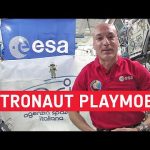
Playmobil figures are enjoyed by millions of children around the world, but now two very special figures, in the likeness of ESA’s Luca Parmitano, are flying around Earth with the astronaut himself.
Luca unpacked the two figures that arrived on the Cygnus NG-11 cargo ship in April 2019. The special edition figurines, limited to 25 000 can only be found with copies of the October 2019 Italian edition of Playmobil magazine.
This issue of the magazine is full of space-themed stories to inspire children and set their imaginations racing, while explaining about space exploration, the science behind the International Space Station and what we know about the Universe and what lies beyond our planet.
Playmobil toys are known for helping children develop their imaginations and concentration skills as they invent worlds for these little figures. The magazine and figure collaboration is a partnership between ESA, the Italian space agency ASI and the Italian publisher to celebrate Luca’s achievements and promote learning and foster curiosity and creativity in children.
The Playmobil Luca sports an astronaut ‘Snoopy’ hat, similar to that worn by the real Luca as he will prepare to don his spacesuit for a series of complex spacewalks later in his mission to repair the AMS-02 ‘antimatter hunter’ instrument outside the Space Station. The Snoopy cap holds the headphone and microphone communication so spacewalkers can talk to mission control and their colleagues inside the Space Station.
We are Europe’s gateway to space. Our mission is to shape the development of Europe’s space capability and ensure that investment in space continues to deliver benefits to the citizens of Europe and the world. Check out http://www.esa.int/ESA to get up to speed on everything space related.
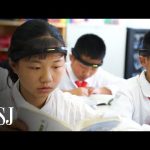
A growing number of classrooms in China are equipped with artificial-intelligence cameras and brain-wave trackers. While many parents and teachers see them as tools to improve grades, they’ve become some children’s worst nightmare.
The ESA Shop has it all!
Our classic logo and collectable designs printed on apparel, as well as publications, patches and gadgets. You can also explore themed designs that capture our activities of the moment.
See if something catches your eye, to ‘space up’ your life, or for the special space explorer in your life.
We are Europe’s gateway to space. Our mission is to shape the development of Europe’s space capability and ensure that investment in space continues to deliver benefits to the citizens of Europe and the world. Check out http://www.esa.int/ESA to get up to speed on everything space related.
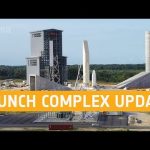
Things are shaping up at Europe’s Spaceport in French Guiana in preparation for Ariane 6. Take a tour of the launch complex and its various facilities.
Recent tests have used mock-ups of the P120C boosters to trial how they will be transported. See them on the launch pad, and get a sense of scale for Ariane 6.
We are Europe’s gateway to space. Our mission is to shape the development of Europe’s space capability and ensure that investment in space continues to deliver benefits to the citizens of Europe and the world. Check out http://www.esa.int/ESA to get up to speed on everything space related.