Tag: telecommunications

  • Advanced Research in Telecommunications Systems (ARTES) 4.0

    Advanced Research in Telecommunications Systems (ARTES) 4.0

    Satellite communication underpins everyday life, enabling fundamental improvements not just in communication, but also in transport, healthcare, safety and security, environmental services and many other industries.

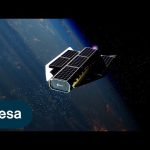
    The Advanced Research in Telecommunications Systems (ARTES) 4.0 programme enables European and Canadian industry to explore, through research and development, innovative concepts that stimulates the wider economy, creating new business and jobs across almost every industry. ARTES 4.0 supports the production of market-leading and cutting-edge products and services within a fiercely competitive global satellite communications market.

    Learn more: https://connectivity.esa.int/

    Credits: ESA – European Space Agency

    ★ Subscribe: http://bit.ly/ESAsubscribe and click twice on the bell button to receive our notifications.

    Check out our full video catalog: http://bit.ly/SpaceInVideos
    Follow us on Twitter: http://bit.ly/ESAonTwitter
    On Facebook: http://bit.ly/ESAonFacebook
    On Instagram: http://bit.ly/ESAonInstagram
    On LinkedIn: https://bit.ly/ESAonLinkedIn
    On Pinterest: https://bit.ly/ESAonPinterest
    On Flickr: http://bit.ly/ESAonFlickr

    We are Europe’s gateway to space. Our mission is to shape the development of Europe’s space capability and ensure that investment in space continues to deliver benefits to the citizens of Europe and the world. Check out https://www.esa.int/ to get up to speed on everything space related.

    Copyright information about our videos is available here: https://www.esa.int/ESA_Multimedia/Terms_and_Conditions

    #ESA #Satellite #Telecommunications
  • ESA highlights 2017

    ESA highlights 2017

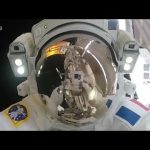
    With 2018 approaching rapidly and 2017 coming to a close, ESA can look back on a fruitful year. It has been a year dominated by the ESA astronaut missions to the International Space Station, the launch of more Sentinel satellites and the first launch of a small Geo satellite.

    This video looks back at the highlights of 2017 for ESA.

    More about ESA: http://www.esa.int

  • ECSAT: Space for daily life

    ECSAT: Space for daily life

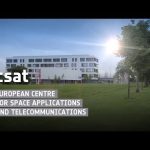
    ECSAT (European Centre for Space Applications and Telecommunications) is the European Space Agency’s centre in the UK. With a commercially driven ethos, it supports European and Canadian industry in developing commercial satcom products and services, downstream applications and the ‘spin-out’ of space into non-space sectors.

    ECSAT also the home of ESA’s Climate Office and has units dedicated to space exploration and technology development, one of which oversees the ESA–Rutherford Appleton Laboratory Advanced Manufacturing Laboratory.

    More about ECSAT:
    http://www.esa.int/About_Us/Welcome_to_ESA/ECSAT

  • ESA Euronews: Sport and Internet via satellite

    ESA Euronews: Sport and Internet via satellite

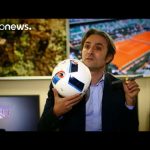
    Dozens of Euro 2016 matches are being beamed via satellite to television sets and phones all over the world this summer. But did you know that there is a technology, based on internet and satellite, that allows even a small football club to live stream their games and target a new audience?

    Claudio Rosmino and the Space team travelled to Italy to see this innovation in action – and also to France to explore the science behind the technology.

    This video is available in the following languages:
    English: https://www.youtube.com/watch?v=sI9He-OCyY0
    French: https://www.youtube.com/watch?v=PS6HbTzUvkE
    German: https://www.youtube.com/watch?v=tFys7MGwrVk
    Italian: https://www.youtube.com/watch?v=T82rBP-bBow
    Spanish: https://www.youtube.com/watch?v=c-gJxC7ch1Y
    Portuguese: https://www.youtube.com/watch?v=hmVgrd5CoXY
    Greek: https://www.youtube.com/watch?v=h41xGsJ745Y
    Hungarian: https://www.youtube.com/watch?v=nKhGZKaXnmQ

  • ESA astronaut Tim Peake controls rover from space

    ESA astronaut Tim Peake controls rover from space

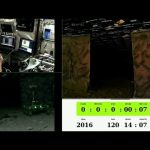
    On 29 April 2016, ESA astronaut Tim Peake on the International Space Station took control of a rover, nicknamed ‘Bridget’, in the UK and over two hours drove it into a simulated cave and found and identified targets despite the dark and limited feedback information.

    Before and after Tim came online from the orbiting Station, control of the rover was passed several times between engineers at the Airbus D&S ‘Mars Yard’ in Stevenage, UK, Belgium’s ISS User Support Centre in Brussels and ESA’s ESOC operations centre in Darmstadt, Germany. This complex real-time choreography was possible thanks to the ‘Internet in space’ – a network that tolerates disruptions – put in place by teams at ESOC. This network enables remote control of rovers or other devices in the difficult environment of space, with its long distances and frequent connection blackouts inevitable with orbital motion.

    During the experiment, a representative mission scenario was set up in which the rover was commanded to go from a lit environment into a challenging dark location (simulating a cave or a shaded crater) and identified a number of science targets. The Mars yard (30 x 13 m) was split into two areas, one lit and one in the dark. From one end of the yard, Bridget was commanded from ESOC until it reached the edge of the shaded area. Then at the edge of the ‘cave’, control was passed to astronaut Tim Peake, on board the Station, who controlled Bridget to drive across the yard, avoiding obstacles and identifying potential science targets, which were marked with a distinctive ultraviolet fluorescent marker. Once the targets were identified and mapped, Tim drove the rover out of the shaded area and handed control back to ESOC, who drove the rover back to its starting point.

    This video is a compressed extract that includes highlights of the experiment and includes scenes of the network control centre at ESOC, the Mars Yard at Stevenage and Tim Peake on the ISS. On audio, the voices of astronaut Time Peake, Lionel Ferra, the Eurocom ‘capcom’ controller at ESA’s Astronaut Centre in Cologne, Germany, and Kim Nergaard, the ground segment manager at ESOC, can be heard periodically.

    More information

    http://www.esa.int/ESA_in_your_country/United_Kingdom/ESA_astronaut_Tim_Peake_controls_rover_from_space

    http://blogs.esa.int/meteron/

    https://www.flickr.com/photos/esa_events/albums/72157667946502135

  • Working as a Telecommunications Engineer in ECSAT

    Working as a Telecommunications Engineer in ECSAT

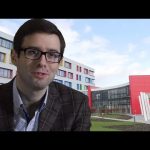
    Gonzalo Martín-de-Mercado specialises in optical telecommunications. He speaks about how his academic background helps him to support collaboration between ESA and companies.

    More about Careers at ESA:
    http://www.esa.int/careers

  • Ariane 5 performs 50th successful launch in a row

    Ariane 5 performs 50th successful launch in a row

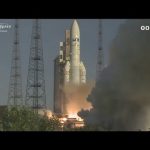
    Thursday 2 August 2012 marked the 50th successful Ariane flight in a row: an Ariane 5 was launched from Europe’s Spaceport in French Guiana to perform a dual deployment of two telecommunications satellites, Intelsat 20 and Hylas-2, into their planned transfer orbits.

    Lift off of flight VA208 took place at 22:54 CEST; 17:54 French Guiana time. This was Ariane 5’s fourth launch of 2012, continuing a line of launch successes unbroken since 2003.

  • ESA Satellite Telecommunications

    ESA Satellite Telecommunications

    Global communications underpin modern society and represent an important commercial sector. Satellites are a fundamental part of global telecommunications networks, providing all kind of services, efficiently and seamlessly, over almost every region of our planet.