Steve Spangler is a bestselling author, STEM educator and Emmy award-winning television personality with more than 2,100 television appearances to his credit. Steve appeared as a regular guest on the Ellen DeGeneres Show from 2007-2022 (27 appearances).
Tune in on Tuesday, 15 July, from 09:30 BST (10:30 CEST), to watch ESA project astronaut Sławosz Uznański-Wiśniewski and crew splash down off the coast of California, USA at 10:31 BST (11:31 CEST).
During the Ignis mission, Sławosz conducted 13 experiments proposed by Polish companies and institutions and developed in collaboration with ESA, along with three additional ESA-led experiments. These covered a broad range of areas including human research, materials science, biology, biotechnology and technology demonstrations.
Ax-4 marks the second commercial human spaceflight mission for an ESA project astronaut. Sponsored by the Polish government and supported by ESA, the Polish Ministry of Economic Development and Technology (MRiT) and the Polish Space Agency (POLSA), the mission featured an ambitious programme of technological and scientific research.
We are Europe’s gateway to space. Our mission is to shape the development of Europe’s space capability and ensure that investment in space continues to deliver benefits to the citizens of Europe and the world. Check out https://www.esa.int/ to get up to speed on everything space related.
Tune in on Monday, 14 July, from 11:45 BST (12:45 CEST), to watch ESA project astronaut Sławosz Uznański-Wiśniewski depart from the International Space Station, bringing the Ignis mission to a close after nearly three weeks in orbit.
During the Ignis mission, Sławosz conducted 13 experiments proposed by Polish companies and institutions and developed in collaboration with ESA, along with three additional ESA-led experiments. These covered a broad range of areas including human research, materials science, biology, biotechnology and technology demonstrations.
Ax-4 marks the second commercial human spaceflight mission for an ESA project astronaut. Sponsored by the Polish government and supported by ESA, the Polish Ministry of Economic Development and Technology (MRiT) and the Polish Space Agency (POLSA), the mission featured an ambitious programme of technological and scientific research.
We are Europe’s gateway to space. Our mission is to shape the development of Europe’s space capability and ensure that investment in space continues to deliver benefits to the citizens of Europe and the world. Check out https://www.esa.int/ to get up to speed on everything space related.
Steve Spangler is a bestselling author, STEM educator and Emmy award-winning television personality with more than 2,100 television appearances to his credit. Steve appeared as a regular guest on the Ellen DeGeneres Show from 2007-2022 (27 appearances).
Steve Spangler is a bestselling author, STEM educator and Emmy award-winning television personality with more than 2,100 television appearances to his credit. Steve appeared as a regular guest on the Ellen DeGeneres Show from 2007-2022 (27 appearances).
Steve Spangler is a bestselling author, STEM educator and Emmy award-winning television personality with more than 2,100 television appearances to his credit. Steve appeared as a regular guest on the Ellen DeGeneres Show from 2007-2022 (27 appearances).
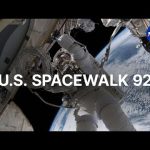
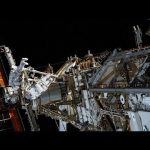
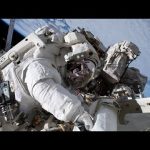
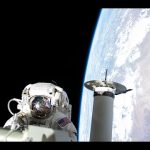
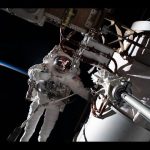
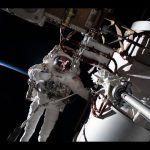
NASA astronauts Butch Wilmore and Suni Williams are taking a spacewalk outside the International Space Station on Thursday, Jan. 30, 2025, to maintain station hardware and collect samples of surface material for analysis from the Destiny laboratory and the Quest airlock. The spacewalk is expected to begin at approximately 8 a.m. EST (1300 UTC) and last for around six and a half hours.
Williams (wearing the suit with red stripes) and Wilmore (wearing the unmarked suit) arrived at the ISS last year and are both crew members of Expedition 72, which began on Sept. 23, 2024. This is Wilmore’s fifth spacewalk and the ninth for Williams.
NASA astronauts Nick Hague and Suni Williams are taking a spacewalk outside the International Space Station on Thursday, Jan. 16, 2025, to replace station hardware and repair the station’s NICER (Neutron star Interior Composition ExploreR) X-ray telescope. The spacewalk is expected to begin at approximately 8 a.m. EST (1300 UTC) and last for around six and a half hours.
Hague (wearing the suit with red stripes) and Williams (wearing the unmarked suit) arrived at the ISS last year and are both crew members of Expedition 72, which began on Sept. 23, 2024. This is Hague’s fourth spacewalk and the eighth for Williams.
Steve Spangler is a bestselling author, STEM educator and Emmy award-winning television personality with more than 2,100 television appearances to his credit. Steve appeared as a regular guest on the Ellen DeGeneres Show from 2007-2022. Learn more about Steve at https://stevespangler.com/about-steve-spangler/
Steve Spangler is a bestselling author, STEM educator and Emmy award-winning television personality with more than 2,100 television appearances to his credit. Steve appeared as a regular guest on the Ellen DeGeneres Show from 2007-2022. Learn more about Steve at https://stevespangler.com/about-steve-spangler/
Steve Spangler is a bestselling author, STEM educator and Emmy award-winning television personality with more than 2,100 television appearances to his credit. Steve appeared as a regular guest on the Ellen DeGeneres Show from 2007-2022. Learn more about Steve at https://stevespangler.com/about-steve-spangler/
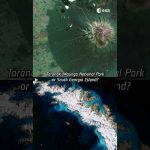
Chiara’s favourite satellite image is a rare (and almost cloud-free) view of the remote Elephant Island, in Antarctica.
This Copernicus Sentinel-2 image was captured a year ago and the full image has a 10 m resolution!
Do you agree with Chiara’s choice?
📸 Italy, South Georgia Island, Elephant Island: contains modified Copernicus Sentinel data (2016, 2018, 2023), processed by ESA, Creative Commons BY-SA 3.0 IGO.
In this special episode of our Curious Universe podcast, we turn the tables and put host Padi Boyd in the interview seat. Padi shares stories from her time with NASA’s groundbreaking Kepler mission, which showed us many more exoplanets—planets orbiting other stars—than we had previously discovered. She also tells us about her dream astronomical dinner companion and her go-to karaoke song.
In this special episode of our Curious Universe podcast, we turn the tables and put host Padi Boyd in the interview seat. Padi shares stories from her time with NASA’s groundbreaking Kepler mission, which showed us many more exoplanets—planets orbiting other stars—than we had previously discovered.
She also tells us about her dream astronomical dinner companion and her go-to karaoke song. Plus, we’ll wrap up another season of wild and wonderful adventures by answering questions from listeners like you and sharing behind-the-scenes tidbits from Season 6. For the first time, this episode of Curious Universe is also available as a video podcast.
NASA’s Curious Universe is an official NASA podcast. Discover more adventures with NASA experts at https://nasa.gov/curiousuniverse
An educational in-flight call with ESA astronaut Andreas Mogensen on board the International Space Station for teachers and students in Europe, connecting live with local events organised by ESERO Denmark, ESERO Finland, ESERO Sweden and ESERO Norway.
★ Subscribe: http://bit.ly/ESAsubscribe and click twice on the bell button to receive our notifications.
We are Europe’s gateway to space. Our mission is to shape the development of Europe’s space capability and ensure that investment in space continues to deliver benefits to the citizens of Europe and the world. Check out https://www.esa.int/ to get up to speed on everything space related.
Steve Spangler is a bestselling author, STEM educator and Emmy award-winning television personality with more than 2,100 television appearances to his credit. Steve appeared as a regular guest on the Ellen DeGeneres Show from 2007-2022. Learn more about Steve at https://stevespangler.com/about-steve-spangler/
Horațiu Năstase este un fizician și profesor în cadrul grupului de Teoria corzilor de la Institul de Fizica Teoretica al Universității de Stat Sao Paulo, Brazilia. A intrat in atenția presei în 2005, susținând că teoria corzilor ar putea fi testată experimental, folosind corespondența AdS/CFT.
Nestled between the colossal martian ‘Grand Canyon’ (Valles Marineris) and the tallest volcanoes in the Solar System (the Tharsis region) lies Noctis Labyrinthus – a vast system of deep and steep valleys that stretches out for around 1190 km (roughly the length of Italy here on Earth).
This video visualises a flight over the eastern part of Noctis Labyrinthus as seen by Mars Express’s High Resolution Stereo Camera (HRSC). It presents a perspective view down and across this fascinating landscape, showing distinctive ‘graben’ – parts of the crust that have subsided in relation to their surroundings. The intense volcanism in the nearby Tharsis region is to blame for the formation of these features; this volcanism caused large areas of martian crust to arch upwards and become stretched and tectonically stressed, leading to it thinning out, faulting and subsiding.
The highest plateaus seen here represent the original surface level before chunks of surface fell away. The intersecting canyons and valleys are up to 30 km wide and six km deep. In many places, gigantic landslides can be seen covering the valley slopes and floors, while other valley slopes show large dune fields created by sands blown both down and upslope by martian winds.
ESA has highlighted Mars Express images of Noctis Labyrinthus before, in 2006 and 2015. Mars Express has orbited the Red Planet since 2003, imaging Mars’s surface, mapping its minerals, studying its tenuous atmosphere, probing beneath its crust, and exploring how various phenomena interact in the martian environment. For more from the mission and HRSC, see ESA’s Mars Express releases.
Processing notes: The video was created using an image mosaic built over eight orbits (0442, 1085, 1944, 1977, 1988, 10497, 14632 and 16684) by ESA’s Mars Express and its HRSC. This mosaic is combined with topographic information from a digital terrain model to generate a three-dimensional landscape, with every second of the video comprising 50 separate frames rendered according to a pre-defined camera path. The opening credits (Mars globe, first 24 seconds) were created using the recent 20-year Mars global colour mosaic; this opening sequence has a three-fold vertical exaggeration, while the subsequent flight animation has a 1.5-fold exaggeration. Haze has been added to conceal the limits of the terrain model, and starts building up at distance of between 150 and 200 km. The video is centred at the martian coordinates of 7°S, 265°E.
Alt-text: The video begins on a rotating full-globe of Mars, with white polar caps and mottled tan surface visible. It then zooms in on the westernmost part of the large Valles Marineris canyon system, a region highlighted by a white box, and swaps to a new Mars Express visualisation of Noctis Labyrinthus. The camera then flies slowly across a landscape that is broken apart by deep intersecting valleys and canyons.
Credit: ESA/DLR/FU Berlin & NASA/JPL-Caltech/MSSS, CC BY-SA 3.0 IGO
★ Subscribe: http://bit.ly/ESAsubscribe and click twice on the bell button to receive our notifications.
We are Europe’s gateway to space. Our mission is to shape the development of Europe’s space capability and ensure that investment in space continues to deliver benefits to the citizens of Europe and the world. Check out https://www.esa.int/ to get up to speed on everything space related.
On July 12, 2023, the Artemis II crew rehearsed their recovery for when they return to Earth following their upcoming mission to the Moon. The recovery training took place during the Underwater Recovery Test 10 (URT-10) Navy Diver training at the Neutral Buoyancy Laboratory (NBL) at NASA’s Johnson Space Center in Houston. The recovery training led by teams from Exploration Ground Systems and the Department of Defense demonstrate future recovery of the crew, which includes being extracted from the spacecraft after splashing down in the Pacific Ocean and being lifted via helicopter to the recovery ship where they will undergo routine medical checks before returning to shore.
The Artemis II mission will send NASA Astronauts Reid Wiseman, Victor Glover, Christina Koch, and Canadian Space Agency astronaut Jeremy Hansen on a 10-day flight test around the Moon. Their journey will be the first crewed mission on NASA’s path toward establishing a long-term presence on the Moon.
Thanks to a global effort to regulate ozone-depleting substances, the ozone hole is showing signs of recovery and is projected to return to a healthy level by mid-century.
However, at NASA, scientists continue to monitor its progress. @NASAGoddard’s Qing Liang explains more. Keep up: https://go.nasa.gov/3DhEBvp
NASA astronauts Steve Bowen and Warren “Woody” Hoburg are taking a spacewalk on Thursday, June 15, to add a new solar panel to the International Space Station.
Bowen and Hoburg are scheduled to install a second International Space Station Roll-Out Solar Array, or IROSA, on this spacewalk, after previously installing one on June 9. The new arrays will increase the power capacity of the orbiting laboratory.
The spacewalk is scheduled to begin at 8:55 a.m. EDT (1255 UTC) and last about six hours. This is Bowen’s tenth spacewalk and the second for Hoburg.
NASA astronauts Steve Bowen and Warren “Woody” Hoburg are taking a spacewalk on Friday, June 9, to add a new unrolling solar panel to the International Space Station.
Bowen and Hoburg are scheduled to install an International Space Station Roll-Out Solar Array, or IROSA, on today’s spacewalk, with a second one to be installed on June 15. The new arrays will increase the power capacity of the orbiting laboratory.
The spacewalk, known formally as U.S. EVA 87, is scheduled to begin at 9:15 a.m. EDT (1315 UTC) and last about six and a half hours. Bowen will wear a suit with red stripes and Hoburg will wear an unmarked suit. This is Bowen’s ninth spacewalk and the first for Hoburg.
Moving ahead with space station power upgrades, some VIPs hear about some very important missions, and new eye-popping views of Earth from space … a few of the stories to tell you about – This Week at NASA!
Video Producer: Andre Valentine Video Editor: Andre Valentine Narrator: Andre Valentine Music: Universal Production Music Credit: NASA
NASA astronaut Steve Bowen and United Arab Emirates astronaut Sultan Alneyadi are conducting a spacewalk on Friday, April 28, 2023, to continue upgrading the International Space Station’s power generation system. The spacewalk is scheduled to begin at about 9:15 a.m. EDT (1315 UTC), and last about 6 hours and 30 minutes; it is part of a series to augment the station’s power channels with new International Space Station Roll-Out Solar Arrays (iROSAs). Four of the new iROSAs have been installed so far.
On Dec. 24, 1968, Apollo 8 astronauts Frank Borman, Jim Lovell, and Bill Anders became the first humans to orbit the Moon, and the first to witness the magnificent sight called “Earthrise.”
NASA’s Chief Scientist and Senior Climate Advisor Dr. Katherine Calvin sat down with Bill Anders to discuss the historic Earthrise photo.
Four astronauts are flying around the Moon on our 10-day Artemis II mission: NASA’s Reid Wiseman, Victor Glover, and Christina Koch, and the Canadian Space Agency’s Jeremy Hansen.
Get to know them a little bit better with us—and learn more about Artemis II, which is getting us ready for a long-term human presence on the Moon: https://www.nasa.gov/specials/artemis-ii/
In the 1980s, scientists discovered a gaping hole in Earth’s ozone layer, caused by humanmade chemicals. But thanks to the historical Montreal Protocol, the world came together to take bold action to save our planet. Decades later, we can see the steady recovery of the ozone hole. How did we do it? And what does space have to do with it? Join us as we explore the journey of the ozone hole, from its alarming discovery to the incredible strides made to fix it, and how satellites are helping us track its recovery.
★ Subscribe: http://bit.ly/ESAsubscribe and click twice on the bell button to receive our notifications.
We are Europe’s gateway to space. Our mission is to shape the development of Europe’s space capability and ensure that investment in space continues to deliver benefits to the citizens of Europe and the world. Check out https://www.esa.int/ to get up to speed on everything space related.
How do we communicate with spacecraft? For decades, satellites have beamed data back to Earth by way of radio waves, with a network of ground-based antennas collecting the incoming information. Now, we’re exploring laser communications, technology that will allow us to receive more data from farther than ever before — faster, too. NASA space communications expert Risha George tells us more: https://www.nasa.gov/lasercomms
Producers: Scott Bednar, Jessica Wilde Editor: James Lucas
Astronauts Nicole Mann of NASA and Koichi Wakata of JAXA (Japan Aerospace Exploration Agency) are conducting a spacewalk on Thursday, Feb. 2, to continue preparations for the installation of new roll-out solar arrays, or iROSAs, outside the station later this summer. The new arrays will increase the orbiting laboratory’s power capacity.
The spacewalk is scheduled to begin at 8:15 a.m. EST (1315 UTC) and last about six and a half hours. This is the second spacewalk for both Mann and Wakata.
Astronauts Nicole Mann of NASA and Koichi Wakata of JAXA (Japan Aerospace Exploration Agency) will step outside the International Space Station for their first spacewalk to finish work preparing for solar array additions planned for this summer.
The spacewalk is scheduled to begin at 8:15 a.m. EST (1315 UTC) and will last up to seven hours.
NASA astronauts Josh Cassada and Frank Rubio are conducting a spacewalk on Thursday, Dec. 22, to install new rollout solar arrays to upgrade the station’s power system. This spacewalk is the second of a pair this month to install the solar arrays and is scheduled to begin at 8:30 a.m. EST (1330 UTC), when the astronauts switch on their spacesuit battery packs. The spacewalk is expected to last about seven hours. Rubio (wearing the suit with red stripes) and Cassada (wearing the unmarked suit) are part of NASA’s SpaceX Crew-5 mission, which arrived at the station on Oct. 6, 2022. This is the third spacewalk for both astronauts.
The spacewalk originally scheduled for Wednesday, Dec. 21, was postponed when the International Space Station conducted a Pre-Determined Debris Avoidance Maneuver at 8:42 a.m. EST. The decision to conduct the maneuver was based on tracking data that showed a close approach to station of a fragment of Russian Fregat-SB upper stage debris. The crew was never in any immediate danger.
NASA astronauts Josh Cassada and Frank Rubio are conducting a spacewalk on Saturday, Dec. 3, to install an International Space Station Roll-Out Solar Array (iROSA) to augment power generation on the station’s starboard truss structure. This spacewalk is the first of a pair of spacewalks this month set to prepare the future deployment of additional solar arrays for the station. The spacewalk is scheduled to begin at 7:25 a.m. EST (12:25 UTC) and last about seven hours.
Cassada (wearing the suit with red stripes) and Rubio (wearing the unmarked suit) are part of NASA’s SpaceX Crew-5 mission, which arrived at the station on Oct. 6, 2022. This is the second spacewalk for both astronauts.
Cameras on NASA’s Space Launch System (SLS) rocket and Orion spacecraft give us amazing views of our adventure around the Moon. See up close views of the Moon from external cameras as well as the view from inside the capsule.
Orion is the only spacecraft capable of carrying humans from Earth on Artemis missions to deep space and bringing them back to Earth from the vicinity of the Moon. More than just a crew module, Orion has a launch abort system to keep astronauts safe if an emergency happens during launch, and a European-built service module that is the powerhouse that fuels and propels Orion and keeps astronauts alive with water, oxygen, power, and temperature control, as well as a heat shield that can handle high-speed returns from deep space. SLS is the most powerful rocket in the world and the only rocket capable of launching Orion with astronauts and their supplies on Artemis missions to the Moon.
Orion launched on the SLS rocket from Launch Pad 39B at NASA’s Kennedy Space Center in Florida Wednesday, Nov. 16, 2022. Artemis I is an uncrewed flight test of our SLS rocket, Orion spacecraft, and exploration ground systems for future Artemis missions—which will provide the foundation to send humans to the lunar surface, develop a long-term presence on and around the Moon, and pave the way for humanity to set foot on Mars.
Countdown to impact as NASA’s Double Asteroid Redirection Test (DART) attempts humanity’s first-ever test of planetary defense! The DART spacecraft will intentionally crash into asteroid Dimorphos at 7:14 p.m. ET on Monday, September 26, 2022 to see if kinetic force can change its orbit. Why? If this test is successful, the same technique could be used to deflect an Earth-threatening asteroid in the future, should one ever be discovered.
The #DARTMission’s target asteroid is NOT a threat to Earth before, during or after the impact event.
Mission briefing for NASA’s Artemis I mission around the Moon, launching no earlier than Aug. 29, 2022. An uncrewed Orion spacecraft will be tested on Artemis I and travel 40,000 miles past the Moon, farther than any spacecraft built for humans has gone before. Briefing participants are:
• NASA Administrator Bill Nelson • Bhavya Lal, associate administrator for technology, policy, and strategy, NASA Headquarters • Mike Sarafin, Artemis I mission manager, NASA Headquarters • Charlie Blackwell-Thompson, Artemis I launch director, NASA’s Kennedy Space Center in Florida • John Honeycutt, Space Launch System program manager, NASA’s Marshall Space Flight Center in Huntsville, Alabama • Howard Hu, Orion program manager, NASA’s Johnson Space Center in Houston
An educational in-flight call with ESA astronaut Samantha Cristoforetti on board the International Space Station for teachers and students in Europe, connecting live with local events organised by ESERO Italy, ESERO Portugal and ESERO Luxembourg.
★ Subscribe: http://bit.ly/ESAsubscribe and click twice on the bell button to receive our notifications.
We are Europe’s gateway to space. Our mission is to shape the development of Europe’s space capability and ensure that investment in space continues to deliver benefits to the citizens of Europe and the world. Check out https://www.esa.int/ to get up to speed on everything space related.
Interview with ESA astronaut Matthias Maurer after the conclusion of his 177-day mission on the International Space Station. During his time in orbit, Matthias supported over 35 European experiments and even more international experiments on board. The outcomes of these experiments will advance our knowledge in areas ranging from human health to materials science, benefiting life on Earth and the future of space exploration. Other highlights included his spacewalk to improve and maintain the Space Station.
We are Europe’s gateway to space. Our mission is to shape the development of Europe’s space capability and ensure that investment in space continues to deliver benefits to the citizens of Europe and the world. Check out https://www.esa.int/ to get up to speed on everything space related.
NASA astronaut Victor Glover served as the pilot on NASA’s SpaceX Crew-1 mission and spent six months on the International Space Station, where he worked on scientific investigations, technology demonstrations, and completed four spacewalks. He’ll speak live from the Smithsonian National Museum of African American History and Culture about preparing to be an astronaut, his recent mission, and the future of space travel including Artemis missions to the Moon.