Meet Esther, our System Engineer currently working on the Proba-3 mission.
Proba-3 is scheduled to liftoff on Wednesday, 4 December, at 11:38 CET from the Satish Dhawan Space Centre in India, Proba-3 will use two satellites to create the perfect conditions for observing the Sun’s corona.
One satellite features a telescope, kept in the centre of the shadow cast by the other satellite around 150 m away, thanks to an occulter disc. Maintaining the correct position in the shadow requires a precise formation flying capability, down to a single millimetre of precision.
Meet Ian Carnelli, project manager for Hera, our planetary defense mission that will very soon be launched into space.
Hera will be, along with NASA’s DART spacecraft, humankind’s first probe to rendezvous with a binary asteroid system, a little understood class making up around 15% of all known asteroids.
Work to do outside the space station, honoring a pair of former astronauts, and a milestone on Mars … a few of the stories to tell you about – This Week at NASA!
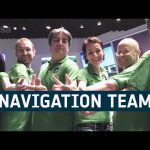
Dive into our navigation activities and hear about the projects, goals, challenges and work environment from ESA staff working in the Navigation Directorate and the Directorate for Technology, Engineering and Quality.
We are Europe’s gateway to space. Our mission is to shape the development of Europe’s space capability and ensure that investment in space continues to deliver benefits to the citizens of Europe and the world. Check out https://www.esa.int/ to get up to speed on everything space related.
ESA Academy is ESA’s overarching programme for undergraduate to PhD level students. Through a tailored transfer of space know-how and interaction with space professionals, ESA Academy takes students through a learning path that enriches and complements their academic education. In this session, participants will be informed on the different opportunities, ranging from training courses to the manufacturing of satellites, and what it takes to participate in them. Finally, the presenters will provide some insight into the evolving, future, ESA Academy programme.
We are Europe’s gateway to space. Our mission is to shape the development of Europe’s space capability and ensure that investment in space continues to deliver benefits to the citizens of Europe and the world. Check out https://www.esa.int/ to get up to speed on everything space related.
ESA has a number of programmes open to young professionals who are either still studying or have little to no work experience. Join this session to hear about what ESA has to offer. The programmes coordinator together with a few colleagues will share their insight and let you discover which path could lead to your future career!
We are Europe’s gateway to space. Our mission is to shape the development of Europe’s space capability and ensure that investment in space continues to deliver benefits to the citizens of Europe and the world. Check out https://www.esa.int/ to get up to speed on everything space related.
We asked our followers on social media to send in questions they would like to ask the ESA HR Department. This is your opportunity to hear the answers first hand. Have fun learning more about careers and recruitment here at ESA!
0:00-0:21 Introduction 0:21-1:08 What does a typical job interview at ESA look like? 1:08-2:00 How many careers paths can one start at ESA? 2:00- 3:02 I’m a girl and my dream is to become an astronaut. Is this possible? 3:02- 3:27 Do you respond to all applications? 3:27-4:02 How long does an application usually take to process? 4:02-4:26 Any jobs for space enthusiasts over the age of 40? 4:26-5:33 Do you really accept all ages? 5:33-6:52 Can I get into ESA without a background in space? 6:52-8:12 I’m puzzled by the ESA pay scale, are salaries negotiable? 8:12-9:16 What skillset and qualifications does a successful ESA applicant possess? 9:16-10:08 What is your funniest interview experience? 10:08- 10:54 is it hard to get a job at ESA? 10:54-12:11 What kind of benefits do ESA staff get? 12:11-12:58 Anything like free massages? 12:58- 14:06 Why is a masters degree required? 14:06- 15:01 How do you filter candidates? 15:01- 16:17 Do unsuccessful applicants go into a careers black hole? 16:17-16:52 Join us at ESA!
We are Europe’s gateway to space. Our mission is to shape the development of Europe’s space capability and ensure that investment in space continues to deliver benefits to the citizens of Europe and the world. Check out https://www.esa.int/ to get up to speed on everything space related.
Once the preparatory work has been completed, and the satellite developed and manufactured, the next step is launch and operations with a view to ensuring that it fulfils its original mission objectives. The post-launch phase can span many years, often as long or longer than the developmental phase. Some ESA scientific satellites even continue to operate beyond their original planned lifespan.
Join ESA experts working in launchers, operations, mission management and scientific data processing to find out what happens in the final phases of the mission when all the planning and development comes to fruition.
We are Europe’s gateway to space. Our mission is to shape the development of Europe’s space capability and ensure that investment in space continues to deliver benefits to the citizens of Europe and the world. Check out https://www.esa.int/ to get up to speed on everything space related.
R&D plays a key role as part of ESA’s mission to share the development of Europe’s space capability and to keep European industry at the leading edge of technology development. Not only are new and innovative technologies constantly being developed and tested to pave the way for future satellite projects, but ESA is also facilitating their application to scientific and commercial products and services. And well before an individual satellite project can be started, ESA and its experts are hard at work preparing the way through feasibility studies and assessments.
Join ESA experts working in the Concurrent Design Facility, Phi-Lab and the ARTES Programme to hear about their contributions to the overall ESA mission.
We are Europe’s gateway to space. Our mission is to shape the development of Europe’s space capability and ensure that investment in space continues to deliver benefits to the citizens of Europe and the world. Check out https://www.esa.int/ to get up to speed on everything space related.
We are Europe’s gateway to space. Our mission is to shape the development of Europe’s space capability and ensure that investment in space continues to deliver benefits to the citizens of Europe and the world. Check out https://www.esa.int/ to get up to speed on everything space related.
We are Europe’s gateway to space. Our mission is to shape the development of Europe’s space capability and ensure that investment in space continues to deliver benefits to the citizens of Europe and the world. Check out https://www.esa.int/ to get up to speed on everything space related.
Have you ever wondered what it was like to work in a satellite development project at the European Space Agency? Learn from the experts working in the Ariel satellite project team.
Fiona Walsh from ESA Human Resources moderates a panel with Jean-Christophe Salvignol, ESA’s Ariel Project Manager and a couple of his managers. They explain the incredible team effort required to bring this complex project from early inception, manufacturing of the satellite, accommodating its payloads and ensuring a successful launch to pave the way for exciting scientific discoveries. Ariel is one ESA’s science missions that will be launched in 2029 and will discover the composition of exoplanets by examining their atmospheres.
They explain how the project team is structured and a bit about the international collaboration involved. They also touch on the importance of building the right team and creating a great team spirit.
We are Europe’s gateway to space. Our mission is to shape the development of Europe’s space capability and ensure that investment in space continues to deliver benefits to the citizens of Europe and the world. Check out https://www.esa.int/ to get up to speed on everything space related.
Since 2020, ESA has been riding a recruitment wave stemming from the fact that, between 2020 and 2030, 44% of the ESA workforce will retire. This, combined with the impact of the Covid-19 pandemic on the way we work, forms a major catalyst for change. ESA is evolving, and will continue to evolve for the foreseeable future.
Join a roundtable discussion with the ESA Head of Human Resources, the ESA Chief Diversity Officer, and the ESA Head of Talent Acquisition to hear how they see the future of careers at ESA and who they expect their new colleagues to be.
We are Europe’s gateway to space. Our mission is to shape the development of Europe’s space capability and ensure that investment in space continues to deliver benefits to the citizens of Europe and the world. Check out https://www.esa.int/ to get up to speed on everything space related.
NASA benefits all humanity and our workforce is key to making this happen. Take a look at the universe of NASA missions and projects made possible by our commitment to teamwork, collaboration, equity and inclusiveness.
Our exploration of the universe, our technology development, our work to help understand climate change, and the opportunities the agency creates make our nation more prosperous, stronger, more inclusive and inspired. NASA furthers the nation’s goals to address climate change, advance space exploration, promote equity and diversity and provide educational STEM opportunities. NASA keeps the United States at the forefront of innovation.
Upgrade work continues outside the space station, an updated strategy for landing Artemis astronauts on the Moon, and unsealing pieces of the past … a few of the stories to tell you about – This Week at NASA!
Spacewalking astronauts work outside the space station, NASA’s new deputy administrator is sworn-in, and putting another piece of our Artemis I Moon rocket in place … a few of the stories to tell you about – This Week at NASA!
Our astronauts at work outside the space station, preparing for launch of our next planet-hunting mission, and finding exploding stars – a few of the stories to tell you about, This Week at NASA!
This video is available for download from NASA’s Image and Video Library: https://images.nasa.gov/details-NHQ_2018_0330_Astronauts%20at%20Work%20Outside%20the%20Space%20Station%20on%20This%20Week%20@NASA%20%E2%80%93%20March%2030,%202018.html
THANKS A LOT TO OUR LOVELY PATRONS FOR SUPPORTING US:
Brandon Eversole, Andrew Anglehart, Christian Ahlin, Kathleen Woolum, Estel Anahmias, Adam Schlender, Mike Luque, Encyclo, Stevie Taylor, Brent Yoder, Invisibleman, Jeff Lam, Christopher Hayes, Oliver Walker, gwendolyn bellermann, Matt Logan, Philip Chou, Brandon Young, Arlo Stewart, Thomas Hodnemyr, Viachaslau Hurmanau, Sam Cousins, Robin Hultgren, Jose Schroeder, Ched, Claustrophobya, Charles Wang, Dolan Dark, Casaro, Donglin Li, Sarah Thompson, Pamela Palmer, Fergal Harrington, Jonas Erath, Spencer, Zsuzsi Balai, Tyler Roberts, Allyssa Blalock, Robert Bishop, Carl-Johan Linde, Thomas Nielsen, Heather Pray, Marco Boneberger, Mehsotopes, Joe Johnston, ugo dubois, Keagan Boys, Miles Gard, Frantisek Sumsala, Scott, Tobias Theobald, Solar3ty Games, Nicholas Carr, K41N_of_2358, Daniel RodrÌguez, Pixlpit, Gytis Kirvela, Thomas Flanigan, Dwagon, Costin Graur, Mavis Everett, Kwiatkowski Robert, Huo Benpeng, Dan Gretton, Joshua Davison, Bryce Comp, Andrey Lipattsev, DEFECT DAVIS, Gurleen Saini, Andrew “FastLizard4” Adams, Isak Hietala, Leon Han, Sarah Johnson, Kieran Chakravorty, Hanna Khoury, Kimberly Martin, Jon Glass, Julius Wroblewski, Ben Zautner, Kester Falge, Juan Florez, Tad Moore
Also, check out the free WIRED channel on Roku, Apple TV, Amazon Fire TV, and Android TV. Here you can find your favorite WIRED shows and new episodes of our latest hit series Masterminds.
ABOUT WIRED
WIRED is where tomorrow is realized. Through thought-provoking stories and videos, WIRED explores the future of business, innovation, and culture.
The Future of Your Job in the Age of AI | Robots & Us | WIRED
The return of supersonic passenger air travel is one step closer to reality with NASA’s award of a contract for the preliminary design of a “low boom” flight demonstration aircraft. This is the first in a series of ‘X-planes’ in NASA’s New Aviation Horizons initiative, introduced in the agency’s Fiscal Year 2017 budget.
NASA Administrator Charles Bolden announced the award at an event Monday at Ronald Reagan Washington National Airport in Arlington, Virginia.
Participants:
NASA Administrator, Charlie Bolden
Associate Administrator, Jaiwon Shin
David Melcher of the Aeronautic Industry Association
Teresa Antoja holds a PhD in Physics and works as Research Fellow on the Gaia Mission. She gets everything ready so that the data coming down from the spacecraft can be used quickly and efficiently, contributing to its scientific exploitation by scientists all over the world that will revolutionise our view of our galaxy.
The European Space Agency’s ARTES programme for Advanced Research in Telecommunications Systems, helps to create products, services and infrastructures that benefit millions of people worldwide and make a major contribution to the European economy.
The economic engine of the space industry is satellite communications, generating over $140 billion a year in global revenues. The ARTES programme exists to support innovation, helping to transform research and development into commercial products and services.
ESA’s telecom programmes often take the form of public–private partnerships. ESA joins forces with industry to share the cost and risk, resulting in faster and more innovative technological advances than if either undertook the project alone.
The most recent high-profile telecom programmes are Alphasat, the largest European telecom satellite ever built and the European Data Relay System, a groundbreaking space and ground infrastructure that uses laser links to send data at unprecedented speeds.
ARTES also promotes the use of satellites in new and imaginative ways. Satellite communications can be applied in areas as diverse as healthcare, education, transport and security to deliver services and improve daily life.
Meet the space cadets, three young engineers with enviable jobs that are quite literally out of this world. This edition of Space focuses on three professionals who’ve turned their dreams of working in space into real down-to- Earth careers.
In the UK, 26-year-old Abbie Hutty, a spacecraft structures engineer at Astrium, is a proud member of the ExoMars team. She is developing the structure of the mission’s rover, ensuring that the actual body of the vehicle and other components are all structurally strong enough to withstand the launch from Earth, and landing on Mars.
Twenty-seven-year-old Marc Costa Sitjà, Science Operations Engineer at the European Space Agency, uses the huge antenna at Cebreros, west of Madrid, to ‘drive’ ESA’s Venus Express spacecraft around the planet. Every day he sends commands and receives data to and from the spacecraft from the agency’s ESAC facility near the Spanish capital.
Maria Komu, a 27-year-old researcher at the Finnish Meteorological Institute, works on Finnish mini satellite Aalto-1, and has a hands-on role developing a weather instrument for ESA’s ExoMars EDM mission.
Space is a childhood dream turned reality for all three. For Abbie the realisation that space wasn’t just science fiction came when she was still at school and she heard of the Beagle 2 mission to Mars, a lander that was developed in the UK by British engineers. Maria tells the story of a book about a school visit around the solar system that enchanted her as a young girl. Meanwhile Marc cites a vivid blue image of Venus as an inspiration to his career.
Abbie, Marc and Maria are all educated to masters level, while Maria continues studying towards a doctorate. They’re on the first steps of the career ladder, and that means plenty of learning ‘on-the-job’. Maria had to master soldering, programming, and testing, Marc developed his skills by creating software that helped a mission to better fulfill its purpose, while Abbie had to understand better the behaviour of particular materials in the cold vacuum of space.
The excitement of working in space is summed up by Abbie: “I think the space industry is quite a privileged industry to work in, because whilst you are still managing projects and meeting schedules and deadlines, and creating a product, at the end of the day that requires a certain amount of processes down on it, you can also come down to the clean rooms and look through the window and see your part of a spaceship, and think ‘that’s going to Mars, and I did that bit’, and you don’t get that anywhere else.”
Η Μαρία, ο Μαρκ και η Άμπι είναι τρεις νέοι μηχανικοί κι έχουν τρεις διαφορετικές ιστορίες, αλλά με ένα κοινό γνώρισμα. Η δουλειά τους είναι στη Γη, αλλά φεύγει από τα όριά της. Και οι τρεις πραγματοποίησαν το όνειρό τους: δουλεύουν στη διαστημική βιομηχανία. Και δηλώνουν ευτυχισμένοι γι’αυτό.
Λίγο μετά τα είκοσί τους χρόνια, ήδη έχουν σημαντικές ευθύνες.
Η Μαρία εργάζεται σε έναν φινλανδικό μίνι δορυφόρο και σε εργαλεία πρόγνωσης καιρού για την αποστολή ExoMars της ESA. Η Άμπι αναπτύσσει τη δομή του οχήματος της αποστολής. Ο Μαρκ σχεδιάζει τις επιχειρήσεις του δορυφόρου Venus Express της ESA.
Η Άμπι και ο Μαρκ έχουν μεταπτυχιακές σπουδές, ενώ η Μαρία είναι υποψήφια διδάκτωρ. Και οι τρεις λένε πως εμπνεύστηκαν από την ιδέα της εξερεύνησης του ηλιακού μας συστήματος.
Πλοήγηση δορυφόρων, κατασκευή διαστημικών οχημάτων και μετεωρολογικών σταθμών για τον Άρη. Όλα αυτά απαιτούν δεξιότητες, γνώση και αφοσίωση.
Δυσκολίες υπάρχουν σίγουρα. Όμως κανείς εκ των τριών δεν χάνει από το βλέμμα του τη μοναδική φύση μιας καριέρας στο διάστημα.
L’espace fascine bon nombre d’entre nous, mais bien peu ont la chance de travailler dans le domaine de la recherche spatiale. Nous avons rencontré trois jeunes ingénieurs qui ont entamé une carrière, la tête dans les étoiles et les pieds sur Terre.
A Helsinki, Maria Komu nous fait découvrir son lieu de travail : l’Institut météorologique finlandais qui dispose d’un laboratoire spatial. “Il y a à peine cinq ans, mon plus grand rêve, c’était simplement de pouvoir toucher quelque chose qui allait dans l’espace,” nous confie la jeune femme. “Aujourd’hui, je conçois des instruments qui vont dans l’espace, c’est incroyable !” s’enthousiasme-t-elle. Maria travaille sur un mini-satellite et des instruments météo pour le démonstrateur EDM de la mission ExoMars de l’Agence spatiale européenne (ESA).
Au nord de Londres, découvrons à présent, l’univers d’Abbie Hutty, ingénieur spatial structures chez Astrium. Son travail qui d’ailleurs, la passionne : s’assurer que “le corps du rover ExoMars est assez solide pour pouvoir supporter notamment le lancement, l’arrivée au sol et l’entrée dans l’atmosphère,” nous explique-t-elle.
En Espagne, à Cebreros, près de Madrid, Marc Costa Sitjà nous présente l’antenne à gain élevé qui permet à son équipe de communiquer avec le satellite Venus Express (ESA) pour gérer son pilotage. La parabole permet aux scientifiques d’envoyer des ordres de commande à l’engin et de recevoir des données en sa provenance comme une image de Vénus unique qu’ils ont réussi à constituer à partir de toute une série d’observations.
Nos trois jeunes ingénieurs ont choisi ces métiers pour explorer notre système solaire et peut-être éclaircir ses mystères. Une motivation qui les anime parfois depuis l’enfance. Chacun reconnaît avoir de la chance de mener une vie professionnelle dans un secteur qui les fascine. La Finlandaise Maria Komu aimerait poursuivre son rêve éveillé en visitant “d’immenses chambres à vide et peut-être des simulateurs solaires :c’est ce que je préfèrerais,” nous lance-t-elle avant de conclure : “et bien sûr, si je pouvais assister en vrai au lancement d’une fusée, ce serait vraiment cool !”
Economist Andrew McAfee suggests that, yes, probably, droids will take our jobs — or at least the kinds of jobs we know now. In this far-seeing talk, he thinks through what future jobs might look like, and how to educate coming generations to hold them.
TEDTalks is a daily video podcast of the best talks and performances from the TED Conference, where the world’s leading thinkers and doers give the talk of their lives in 18 minutes (or less). Look for talks on Technology, Entertainment and Design — plus science, business, global issues, the arts and much more.
Find closed captions and translated subtitles in many languages at http://www.ted.com/translate
Highlights of ESA astronaut Christer Fuglesang’s 14-day Alissé mission to the International Space Station between 29 August and 12 September 2009. Fuglesang was part of the seven-strong STS-128 crew launched to the ISS with Space Shuttle Discovery. STS-128 delivered new supplies and equipment to the ISS. The crew also performed three spacewalks to continue Station construction.