Microbial life is known to survive in all sorts of extreme environments by going into a dormant state. Could they have survived long trips around our galaxy to seed life on Earth? Astrobiologist Nicol Caplin talks extreme life in this episode of Meet The Experts.
We are Europe’s gateway to space. Our mission is to shape the development of Europe’s space capability and ensure that investment in space continues to deliver benefits to the citizens of Europe and the world. Check out http://www.esa.int/ESA to get up to speed on everything space related.
Let’s talk about science! In the latest episode of #EZScience, learn about the upcoming launch of Perseverance. Dr. E and Dr. Z talk about the technological advancements of the newest Mars rover (and helicopter!). The premiere of this episode is part of the National Air and Space Museum’s Mars Day program. Learn more: https://airandspace.si.edu/mars-day
ABOUT THE SERIES: In our #EZScience video series with the National Air and Space Museum, NASA’s associate administrator for science Dr. Thomas Zurbuchen and Museum director Dr. Ellen Stofan talk about the latest in planetary science and exploration.
Join ESA astronauts Thomas Pesquet and Matthias Maurer at NASA’s Johnson Space Center in Houston, Texas, USA. In part one of this video series, the two astronauts compare notes on their journey to date as they prepare for missions to the International Space Station.
Though mission details and dates are yet to be confirmed, Thomas and Matthias are the next two European astronauts in line for flights. Thomas has flown to the International Space Station before, while Matthias will fly for the first time.
Prior to a mission, astronauts train extensively to ensure they are familiar with the vast array of systems and operations on board. In this video, the pair discuss how training for a second mission differs from a first mission, the challenges of training during a global pandemic, and how flying to the Station on US commercial crew vehicles may differ from flying on the Russian Soyuz spacecraft.
This video was filmed in June 2020. At that time, the platform Thomas and Matthias were standing on – in front of a full-scale mock-up of the International Space Station – was the only place at NASA’s JSC that they could interact without face masks. Despite this, the pair were required to maintain social distance at all times as a precaution.
We are Europe’s gateway to space. Our mission is to shape the development of Europe’s space capability and ensure that investment in space continues to deliver benefits to the citizens of Europe and the world. Check out http://www.esa.int/ESA to get up to speed on everything space related.
Another power-packed spacewalk outside the space station, highlighting a pretty cool comet, and a key piece of Space Launch System hardware is on the move … a few of the stories to tell you about – This Week at NASA!
We are Europe’s gateway to space. Our mission is to shape the development of Europe’s space capability and ensure that investment in space continues to deliver benefits to the citizens of Europe and the world. Check out http://www.esa.int/ESA to get up to speed on everything space related.
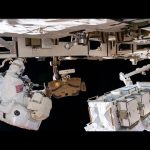
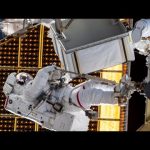
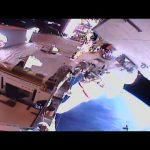
Coffee + spacewalk = breakfast of champions. ✔️ Join us on Thursday, July 16, as NASA Astronauts Chris Cassidy and Robert Behnken venture outside the International Space Station. This will be the first spacewalk in a series of two which complete power upgrades outside the orbital lab.The duo plan to remove five of six older nickel-hydrogen batteries for the truss’ power system and install three new lithium-ion batteries, as well as accompanying hardware. Start your day with us, and set a reminder to watch! Coverage starts at 6 a.m. EDT.
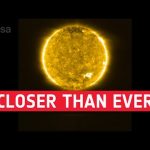
ESA’s Solar Orbiter spacecraft has sent back its first images of the Sun. At 77 million kilometres from the surface, this is the closest a camera has ever flown to our nearest star. The pictures reveal features on the Sun’s exterior that have never been seen in detail before.
Launched on 10 February 2020, the spacecraft completed its commissioning phase and first close-approach to the Sun in mid-June. Since then, science teams have been processing and examining this early data.
The spacecraft is currently in its cruise phase, on its way to Venus, but will eventually get even closer to the Sun.
We are Europe’s gateway to space. Our mission is to shape the development of Europe’s space capability and ensure that investment in space continues to deliver benefits to the citizens of Europe and the world. Check out http://www.esa.int/ESA to get up to speed on everything space related.
The first images from ESA’s Solar Orbiter, captured around the spacecraft’s first close pass of the Sun, some 77 million kilometres from its surface, are already exceeding expectations revealing interesting new phenomena on our parent star.
This animation shows a series of close-up views captured by the Extreme Ultraviolet Imager (EUI) at wavelengths of 17 nanometers, showing the upper atmosphere of the Sun, or corona, with a temperature of around 1 million degrees.
These images reveal a multitude of small flaring loops, erupting bright spots and dark, moving fibrils. A ubiquitous feature of the solar surface, uncovered for the first time by these images, have been called ‘campfires’. They are omnipresent minuature eruptions that could be contributing to the high temperatures of the solar corona and the origin of the solar wind.
Captured on 30 May 2020, when Solar Orbiter was roughly halfway between the Earth and the Sun, these are the closest views of the Sun ever taken, allowing EUI to see features in the solar corona of only 400 km across. As the mission continues, Solar Orbiter will go closer to the Sun and this will increase the instrument’s resolving power by a factor of two at closest approach.
The colour on this image has been artificially added because the original wavelength detected by the instrument is invisible to the human eye.
The circle in the lower left corner indicates the size of Earth for scale.
The extended grey shape visible at times moving across the field (00:00-00:25; 01:00-01:28; 01:50-02:00; 02:52-03:27) is not a solar feature but is caused by a sensor artefact.
Solar Orbiter is a space mission of international collaboration between ESA and NASA.
We are Europe’s gateway to space. Our mission is to shape the development of Europe’s space capability and ensure that investment in space continues to deliver benefits to the citizens of Europe and the world. Check out http://www.esa.int/ESA to get up to speed on everything space related.
The first images from ESA’s Solar Orbiter are already exceeding expectations and revealing interesting new phenomena on the Sun.
This animation combines a series of views captured with several remote-sensing instruments on Solar Orbiter between 30 May and 21 June 2020, when the spacecraft was roughly halfway between the Earth and the Sun ¬– closer to the Sun than any other solar telescope has ever been before.
The red and yellow images were taken with the Extreme Ultraviolet Imager (EUI) in the extreme ultraviolet region of the electromagnetic spectrum, at wavelengths of 30 and 17 nanometers, respectively.
The close-up views by EUI show the upper atmosphere of the Sun, or corona, with a temperature of around 1 million degrees. With the power to see features in the solar corona of only 400 km across, these images reveal a multitude of small flaring loops, erupting bright spots and dark, moving fibrils. A ubiquitous feature of the solar surface, uncovered for the first time by these images, have been called ‘campfires’. They are omnipresent minuature eruptions that could be contributing to the high temperatures of the solar corona and the origin of the solar wind.
The EUI images are followed by three views based on data from the Polarimetric and Helioseismic Imager (PHI) instrument. The blue and red view is a ‘tachogram’ of the Sun, showing the line of sight velocity of the Sun, with the blue side turning to us and the red side turning away. The following view is a magnetogram, or a map of magnetic propertied for the whole Sun, featuring a large magnetically active region in the lower right-hand quadrant of the Sun. The yellow-orange view is a visible light image and represents what we would see with the naked eye: there are no sunspots visible because the Sun is displaying only low levels of magnetic activity at the moment.
On larger scales, the Metis coronograph blocks out the dazzling light from the solar surface, bringing the fainter corona into view. Metis observes the corona simultaneously in visible light (shown in green) and ultraviolet light (shown in red) for the first time with unprecedented temporal coverage and spatial resolution. These images reveal the two bright equatorial streamers and fainter polar regions that are characteristic of the solar corona during times of minimal magnetic activity.
On even grander scales, the Heliospheric Imager (SoloHI) telescope takes images of the solar wind – the stream of charged particles constantly released by the Sun into outer space – by capturing the light scattered by electrons in the wind. The first-light image from SoloHI is shown at the end, as a mosaic of four separate images from the instrument’s four separate detectors. In this view, the Sun is located to the right of the frame, and its light is blocked by a series of baffles; the last baffle is in the field of view on the right-hand side and is illuminated by reflections from the solar array. The partial ellipse visible on the right is the zodiacal light, created by sunlight reflecting off the dust particles that are orbiting the Sun. The signal from the solar wind outflow is faint compared to the much brighter zodiacal light signal, but the SoloHI team has developed techniques to reveal it. Planet Mercury is also visible as a small bright dot near the lower edge of the upper left tile.
Solar Orbiter is a space mission of international collaboration between ESA and NASA.
We are Europe’s gateway to space. Our mission is to shape the development of Europe’s space capability and ensure that investment in space continues to deliver benefits to the citizens of Europe and the world. Check out http://www.esa.int/ESA to get up to speed on everything space related.
Have you ever done a science experiment and wondered “What would this be like if it were HUGE?” Welcome to Science Max, the exciting new series that turbocharges all the science experiments you’ve done at home.
The search for ancient life. Planetary evolution. Preparing for future human exploration. There are so many reasons to study the Red Planet. If you’re craving more, here’s what you need to know about Mars!
Have you seen Comet NEOWISE in the sky? ☄️ Visiting from the most distant parts of our solar system, it made its once-in-our-lifetimes close approach to the Sun on July 3, 2020 and will cross outside Earth’s orbit on its way back to the outer parts of the solar system by mid-August. Join experts on #NASAScience Live Wednesday, July 15 at 3:00 p.m. EDT to learn more about this comet and how you can spot it before it’s gone. Set a reminder to tune in!
Our Mars Perseverance rover is targeted to lift off July 30, 2020, on a seven-month journey to the Red Planet. It will search for signs of ancient life, collect rock and soil samples and help prepare for future human exploration. About the mission: https://mars.nasa.gov/mars2020/
How do we control a spacecraft from Earth and will satellites in space be autonomous one day soon? ESA mission control experts answer these questions and discuss the challenges of manoeuvring a mission from the ground in this episode of Meet the Experts.
* Erratum: the title of the last 3 speakers is ‘spacecraft engineer’ instead of ‘safecraft engineer’ as stated in the video.
We are Europe’s gateway to space. Our mission is to shape the development of Europe’s space capability and ensure that investment in space continues to deliver benefits to the citizens of Europe and the world. Check out http://www.esa.int/ESA to get up to speed on everything space related.
Our next Mars Rover gets closer to launch, a comet spotted from the space station and we’re ready to build a spacecraft to explore a metal-rich asteroid … a few of the stories to tell you about – This Week at NASA!
🚩 The first 1000 people to click the link will get 2 months of Skillshare Premium for FREE https://skl.sh/historymarche3
👇 Push down for more cool stuff 👇
Have you ever done a science experiment and wondered “What would this be like if it were HUGE?” Welcome to Science Max, the exciting new series that turbocharges all the science experiments you’ve done at home.
ANUNT: De saptamana viitoare nu mai pune videourile la aceasta ora, pentru ca vine vacanta, le voi pune in weekend, din cand in cand.
Putem continua discutia pe cel mai mare canal de Discord din Romania: “Comunitatea Cristian Presura”: www.discord.gg/presura In fiecare zi de la 20:00 avem discutii interesante pe canalul de voce!
NASA’s next Mars rover has a name – Perseverance. Like every exploration mission before, our rover is going to face challenges, and it’s going to make amazing discoveries.
The time at hand is hard. We have already surmounted many obstacles on our way to Red Planet, but as humans we will not give up. We will always persevere.
Targeted for launch in July 2020, NASA’s Mars Perseverance rover will search for signs of habitable conditions on Mars in the ancient past and for signs of past microbial life itself.
Meet the team designing and building the Psyche mission’s gamma ray and neutron spectrometer. This instrument on the spacecraft will detect, measure, and map Psyche’s elemental composition. It is mounted on a 6-foot (2-meter) boom to distance the sensors from background radiation created by energetic particles interacting with the spacecraft and to provide an unobstructed field of view. The team is based at the Applied Physics Laboratory at Johns Hopkins University and is led by Principal Investigator David Lawrence.
🚩 Get Surfshark VPN at https://surfshark.deals/historymarche – Enter promo code historymarche for 85% off and 3 extra months for free!
👇 Push down for more cool stuff 👇
📝 I’m working on the Battle of Cannae and I decided to compile the first 10 episodes, because when combined they have some 2 hours of video. So grouping them into two 1-hour videos (Parts 1 – 5) and (Parts 6 – 10) would make it a lot easier for you guys to watch, rather than go through every episode individually.
🎼 Music:
Peaks of Atlas – Omri Lahav
EpidemicSound.com
📝 Sources:
“The Punic Wars, 264 – 146 BC” – Nigel Bagnall
“Histories” – Polybius
“Carthage must be destroyed” – Richard Miles
“Fall of Carthage” – Adrian Goldsworthy
“Hannibal’s Oath” – John Prevas
Astronauts Chris Cassidy, Doug Hurley and Bob Behnken commemorate Independence Day in the United States. They explain the history of the American flag that was flown on the first and last space shuttle missions, which Doug and Bob will carry back to Earth when they return home aboard the SpaceX Crew Dragon Endeavour spacecraft.
For the latest on the International Space Station: www.nasa.gov/station
A mighty powerful spacewalk outside the space station, a look at the space station’s next crew, and updates on our Artemis program … a few of the stories to tell you about – This Week at NASA!
This video is available for download from NASA’s Image and Video Library: https://images.nasa.gov/details-A%20Mighty%20Powerful%20Spacewalk%20Outside%20the%20Space%20Station%20on%20This%20Week%20@NASA%20%E2%80%93%20July%203,%202020
Have you ever done a science experiment and wondered “What would this be like if it were HUGE?” Welcome to Science Max, the exciting new series that turbocharges all the science experiments you’ve done at home.
On her first trip to the International Space Station, Kate Rubins became the first person to sequence DNA in space. Find out the plans for her next trip during a live event at 4 p.m. ET Wednesday, July 1. Rubins and two Russian crewmates will launch to the station in October.
Tune in for our next International Space Station spacewalk!
On Wednesday, July 1, NASA astronauts Chris Cassidy and Robert Behnken will begin the 229th spacewalk in support of space station assembly, maintenance and upgrades. Astronauts Cassidy and Behnken will exit the station’s Quest airlock to replace aging nickel-hydrogen batteries for one of two power channels on the far starboard truss with new lithium-ion batteries that arrived on a Japanese cargo spacecraft last month. The spacewalk will begin at around 7:35 a.m. EDT, with an expected duration of 7 hours.
🚩 Get 70% off NordVPN! Only $3.49/mo, plus you get an additional month FREE at: https://nordvpn.com/historymarche ⌨️ Use coupon code: historymarche
👇 Push down for more cool stuff 👇
📝 Sources:
Bartold, Vasily (1928). Turkestan Down to the Mongol Invasion (Trans. T. Minorsky & C.E. Bosworth)
Chen, Sanping (2012). Multicultural China in the Early Middle Ages
Golden, Peter B. (1990). “The Kharakhanids and early Islam” in The Cambridge
History of Early Inner Asia, vol. 1 (ed. Denis Sinor)
Hoberman, Barry (Sept/Oct. 1982). “The Battle of Talas” in Aramco World, vol. 33 no. 5
Ibn al-Athir, Ali (ca. 1231) The Complete History
Sima, Guang (1084). Zizhi Tongjian.
Soucek, Svak (2000). A History of Inner Asia
Starr, S. Frederick (2004). Xinjiang: China’s Muslim Borderland
Putem continua discutia pe cel mai mare canal de Discord din Romania: “Comunitatea Cristian Presura”: www.discord.gg/presura In fiecare zi de la 20:00 avem discutii interesante pe canalul de voce!
Have burning questions about asteroids? Our experts have answers!
(Spoiler Alert: none of them will hit Earth.)
Our solar system is littered with asteroids and comets and sometimes they get a little close to Earth. When an asteroid or comet looks like it could come near our home planet, we keep close watch to warn of any potential impacts.
The latest asteroid news and updates from the European Space Agency hosted by award-winning science and space journalist Richard Hollingham. Richard is the presenter of the Space Boffins podcast, space correspondent for BBC Future and an ESA TV launch commentator.
The programme – hosted from Richard’s home in the East of England – will include features and discussions with leading asteroid experts. Guests include Antarctic meteorite hunter Dr Katie Joy from the University of Manchester, Professor Alan Fitzsimmons – who’s working on ESA’s asteroid intercept mission HERA, Dr Natalie Starkey from the Open University and ESA asteroid tracking expert Dr Detlef Koschny.
We’ll also hear from astronauts, researchers working on ESA’s new asteroid tracking telescopes and Brian May giving us the low-down on the challenges of asteroid rendezvous.
You can also find the a local Asteroid Day Programme in the following languages:
We are Europe’s gateway to space. Our mission is to shape the development of Europe’s space capability and ensure that investment in space continues to deliver benefits to the citizens of Europe and the world. Check out http://www.esa.int/ESA to get up to speed on everything space related.
Descubre las últimas noticias y la información más reciente de la Agencia Espacial Europea en una charla moderada por Mariella Graziano, una de las divulgadoras STEM más activas en España y Europa, y directora del departamento de Sistemas Espaciales y Robótica en la multinacional tecnológica española GMV, profundamente implicada en el desarrollo de la misión de defensa planetaria HERA de la ESA. Entre los invitados a la charla habrá divulgadores, científicos, astrónomos y expertos que trabajan para comprender la fascinante ciencia de los asteroides y meteoritos, así como los riesgos potenciales de los asteroides que orbitan cerca de la Tierra (tanto a nivel europeo, como la contribución española). Una sección de este programa contará incluso con la presencia de astronautas que explicarán las razones por las que debemos ser conscientes de los potenciales peligros que los asteroides pueden suponer para nuestro planeta.
★ Subscribe: http://bit.ly/ESAsubscribe and click twice on the bell button to receive our notifications.
We are Europe’s gateway to space. Our mission is to shape the development of Europe’s space capability and ensure that investment in space continues to deliver benefits to the citizens of Europe and the world. Check out http://www.esa.int/ESA to get up to speed on everything space related.
Un vivace incontro ospitato da Ettore Perozzi, maggiore esperto di difesa planetaria presso l’Agenzia Spaziale Italiana, ASI. Ospiti di riguardo includono esperti ASI e di Agenzia Spaziale Europea (ESA), INAF, e Minor Planet Center dell’Unione Astronomica Internazionale.
Rappresentazioni artistiche e di musica dal vivo saranno parte dell’evento, oltre all’astronauta dell’ESA Luca Parmitano che si unirà alla chiacchierata in collegamento da Houston, Texas.
★ Subscribe: http://bit.ly/ESAsubscribe and click twice on the bell button to receive our notifications.
We are Europe’s gateway to space. Our mission is to shape the development of Europe’s space capability and ensure that investment in space continues to deliver benefits to the citizens of Europe and the world. Check out http://www.esa.int/ESA to get up to speed on everything space related.
Bruce Benamran, l’un des youtubers scientifiques les plus regardés de France, animera une discussion passionnante autour des astéroïdes. Il abordera avec un panel de six experts plusieurs thèmes, dont les missions de défense planétaire et les opportunités futures offertes par l’exploitation des astéroïdes. Ian Carnelli (ESA), Aurélie Moussi (CNES), Patrick Michel (CNRS – Centre National de la Recherche Scientifique), Naomi Murdoch (ISAE-Supaero), Marc Serres (l’Agence spatiale luxembourgeoise) et l’astronaute de l’ESA Léopold Eyharts participeront à cette fascinante conversation; il expliqueront la manière dont les astéroïdes se sont formés et présenteront les découvertes scientifiques récentes et les défis à venir.
★ Subscribe: http://bit.ly/ESAsubscribe and click twice on the bell button to receive our notifications.
We are Europe’s gateway to space. Our mission is to shape the development of Europe’s space capability and ensure that investment in space continues to deliver benefits to the citizens of Europe and the world. Check out http://www.esa.int/ESA to get up to speed on everything space related.
🚩 Watch thousands of documentaries for FREE on CuriosityStream: http://go.thoughtleaders.io/1601020200605 – Use the code “historymarche” to get a 30-day free trial!
👇 Push down for more cool stuff 👇
📝 Sources:
Bartold, Vasily (1928). Turkestan Down to the Mongol Invasion (Trans. T. Minorsky & C.E. Bosworth)
Chen, Sanping (2012). Multicultural China in the Early Middle Ages
Golden, Peter B. (1990). “The Kharakhanids and early Islam” in The Cambridge
History of Early Inner Asia, vol. 1 (ed. Denis Sinor)
Hoberman, Barry (Sept/Oct. 1982). “The Battle of Talas” in Aramco World, vol. 33 no. 5
Ibn al-Athir, Ali (ca. 1231) The Complete History
Sima, Guang (1084). Zizhi Tongjian.
Soucek, Svak (2000). A History of Inner Asia
Starr, S. Frederick (2004). Xinjiang: China’s Muslim Borderland
Ice and snow can be a hot topic when talking about climate. The polar regions are very fragile and can tell us a lot about how Earth’s climate is changing. Andrew Shepherd of the University of Leeds is a leading climate scientist working with ESA and NASA. In this episode he explains how we can separate the effects of weather versus climate from data records and the role of space in studying changes to our planet in real-time and in the future.
We are Europe’s gateway to space. Our mission is to shape the development of Europe’s space capability and ensure that investment in space continues to deliver benefits to the citizens of Europe and the world. Check out http://www.esa.int/ESA to get up to speed on everything space related.
Tune in for our next International Space Station spacewalk! On Friday, June 26, NASA astronauts Chris Cassidy and Robert Behnken will begin the 228th spacewalk in support of space station assembly, maintenance and upgrades. Astronauts Cassidy and Behnken will exit the station’s Quest airlock to replace aging nickel-hydrogen batteries for one of two power channels on the far starboard truss with new lithium-ion batteries that arrived on a Japanese cargo spacecraft last month. The spacewalks will begin at around 7:35 a.m. EDT, with an expected duration of 7 hours.
A power spacewalk outside the space station, honoring a former ‘Hidden Figure,’ and a “way cool” find of a hot Jupiter … a few of the stories to tell you about – This Week at NASA!
This video is available for download from NASA’s Image and Video Library: https://images.nasa.gov/details-A%20Power%20Spacewalk%20Outside%20the%20Space%20Station%20on%20This%20Week%20@NASA%20%E2%80%93%20June%2026,%202020
The Copernicus Sentinel-2 mission takes us with this false-colour image over part of the Andes mountains, in southern Peru, in this week’s edition of the Earth from Space programme.
We are Europe’s gateway to space. Our mission is to shape the development of Europe’s space capability and ensure that investment in space continues to deliver benefits to the citizens of Europe and the world. Check out http://www.esa.int/ESA to get up to speed on everything space related.