Our planet is facing an unprecedented crisis as we continue to wrestle with the impacts of coronavirus. With its unparalleled technical and scientific expertise, NASA has joined the fight against the pandemic. Join us Thursday, June 25 at 3 p.m. EDT on #NASAScience Live to learn about the ideas and developments that NASA has contributed to confront this global health crisis.
Have you ever done a science experiment and wondered “What would this be like if it were HUGE?” Welcome to Science Max, the exciting new series that turbocharges all the science experiments you’ve done at home.
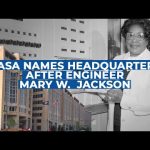
NASA Administrator Jim Bridenstine announced on Wednesday, June 24, 2020, the agency’s headquarters building in Washington, D.C., will be named after Mary W. Jackson, the first African American female engineer at NASA.
Jackson started her NASA career in the segregated West Area Computing Unit of the agency’s Langley Research Center in Hampton, Virginia. Jackson, a mathematician and aerospace engineer, went on to lead programs influencing the hiring and promotion of women in NASA’s science, technology, engineering, and mathematics careers. In 2019, she was posthumously awarded the Congressional Gold Medal.
“Mary W. Jackson was part of a group of very important women who helped NASA succeed in getting American astronauts into space. Mary never accepted the status quo, she helped break barriers and open opportunities for African Americans and women in the field of engineering and technology,” said Bridenstine. “Today, we proudly announce the Mary W. Jackson NASA Headquarters building. It appropriately sits on ‘Hidden Figures Way,’ a reminder that Mary is one of many incredible and talented professionals in NASA’s history who contributed to this agency’s success. Hidden no more, we will continue to recognize the contributions of women, African Americans, and people of all backgrounds who have made NASA’s successful history of exploration possible.”
The work of the West Area Computing Unit caught widespread national attention in the 2016 Margot Lee Shetterly book “Hidden Figures: The American Dream and the Untold Story of the Black Women Mathematicians Who Helped Win the Space Race.” The book was made into a popular movie that same year and Jackson’s character was played by award-winning actress Janelle Monáe.
“We are honored that NASA continues to celebrate the legacy of our mother and grandmother Mary W. Jackson,” said, Carolyn Lewis, Mary’s daughter. “She was a scientist, humanitarian, wife, mother, and trailblazer who paved the way for thousands of others to succeed, not only at NASA, but throughout this nation.”
Jackson was born and raised in Hampton, Virginia. After graduating high school, she graduated from Hampton Institute in 1942 with a dual degree in math and physical sciences, and initially accepted a job as a math teacher in Calvert County, Maryland. She would work as a bookkeeper, marry Levi Jackson and start a family, and work a job as a U.S. Army secretary before her aerospace career would take off.
In 1951, Jackson was recruited by the National Advisory Committee for Aeronautics, which in 1958 was succeeded by NASA. She started as a research mathematician who became known as one of the human computers at Langley. She worked under fellow “Hidden Figure” Dorothy Vaughan in the segregated West Area Computing Unit.
After two years in the computing pool, Jackson received an offer to work in the 4-foot by 4-foot Supersonic Pressure Tunnel, a 60,000 horsepower wind tunnel capable of blasting models with winds approaching twice the speed of sound. There, she received hands-on experience conducting experiments. Her supervisor eventually suggested she enter a training program that would allow Jackson to earn a promotion from mathematician to engineer. Because the classes were held at then-segregated Hampton High School, Jackson needed special permission to join her white peers in the classroom.
Jackson completed the courses, earned the promotion, and in 1958 became NASA’s first Black female engineer. For nearly two decades during her engineering career, she authored or co-authored research numerous reports, most focused on the behavior of the boundary layer of air around airplanes. In 1979, she joined Langley’s Federal Women’s Program, where she worked hard to address the hiring and promotion of the next generation of female mathematicians, engineers and scientists. Mary retired from Langley in 1985.
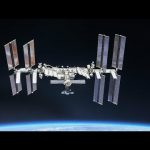
Tune in on Wed., June 24 at 2 p.m. EDT to learn about two upcoming spacewalks to begin the replacement of batteries for one of the space station’s power channels, as well as the latest on the SpaceX Dragon Endeavour’s mission to the orbiting laboratory.
On Fri., June 26 and Wed., July 1, NASA astronauts Chris Cassidy and Robert Behnken will exit the station’s Quest airlock to replace aging nickel-hydrogen batteries for one of two power channels on the far starboard truss with new lithium-ion batteries that arrived on a Japanese cargo spacecraft last month. The spacewalks will begin at around 7:35 a.m., and will last as long as seven hours.
In orbit for more than a decade, ESA’s Earth Explorer satellite SMOS has not only exceeded its planned lifespan, but also surpassed its original scientific goals. Built to demonstrate new technology in space and address gaps in our scientific understanding of how Earth works as a system, this remarkable mission is now also being used for a number of practical applications. With drought seemingly more commonplace, entrepreneurs are using information on soil moisture from SMOS and data from other satellites to generate commercial data products for the insurance market, ultimately bringing benefits to farmers.
★ Subscribe: http://bit.ly/ESAsubscribe and click twice on the bell button to receive our notifications.
We are Europe’s gateway to space. Our mission is to shape the development of Europe’s space capability and ensure that investment in space continues to deliver benefits to the citizens of Europe and the world. Check out http://www.esa.int/ESA to get up to speed on everything space related.
ESA astronauts Samantha Cristoforetti and Luca Parmitano join the 2019/20 Moon Camp Challenge winning teams for a 1-hour webinar. Connecting from all over the world, the teams have their questions answered live by the ESA astronauts.
★ Subscribe: http://bit.ly/ESAsubscribe and click twice on the bell button to receive our notifications.
We are Europe’s gateway to space. Our mission is to shape the development of Europe’s space capability and ensure that investment in space continues to deliver benefits to the citizens of Europe and the world. Check out http://www.esa.int/ESA to get up to speed on everything space related.
With around two and half hours set aside for exercise every day, skipping the gym is not an option for astronauts on the International Space Station. ESA’s team of astronaut trainers are responsible for developing specialised training programmes to prepare astronauts for spaceflight and combat the effects of microgravity on the body.Astronaut Fitness Expert, Dr. Nora Petersen, discusses training astronauts and how the programme may change for future missions to the Moon and Mars.
We are Europe’s gateway to space. Our mission is to shape the development of Europe’s space capability and ensure that investment in space continues to deliver benefits to the citizens of Europe and the world. Check out http://www.esa.int/ESA to get up to speed on everything space related.
🚩 Watch thousands of documentaries for FREE on CuriosityStream: http://go.thoughtleaders.io/1892920200620 – Use the code “historymarche” to get a 30-day free trial!
👇 Push down for more cool stuff 👇
📝 I’m working on the Battle of Cannae and I decided to compile the first 10 episodes, because when combined they have some 2 hours of video. So grouping them into two 1-hour videos (Parts 1 – 5) and (Parts 6 – 10) would make it a lot easier for you guys to watch, rather than go through every episode individually.
That said, the episodes still have some stuff that the compilation doesn’t, like the end cards, etc.
The second compilation (Parts 6 – 10) should be released in a week or two!
🎼 Music:
Peaks of Atlas – Omri Lahav
EpidemicSound.com
📝 Sources:
“The Punic Wars, 264 – 146 BC” – Nigel Bagnall
“Histories” – Polybius
“Carthage must be destroyed” – Richard Miles
“Fall of Carthage” – Adrian Goldsworthy
“Hannibal’s Oath” – John Prevas
NASA is inviting the public to help get ready for the upcoming launch of the Mars 2020 Perseverance Rover by joining a global, collective #CountdownToMars. Fans are asked to record video of their creative countdowns to liftoff, then share and tag them on social media with #CountdownToMars. Favorites may be featured on NASA social media and included in a compilation video on launch day.
The launch period for the Perseverance rover opens July 20, 2020. Perseverance will land on Mars Feb. 18, 2021. For more information on the rover’s mission, visit: https://mars.nasa.gov/mars2020.
** English and German subtitles are available for this clip under settings, subtitles/CC. **
ESA astronaut Matthias Maurer travelled to Houston, USA for training at NASA’s Johnson Space Center. In this video he shares his first few weeks of refresher training, with a glimpse behind the scenes.
Matthias travelled to Houston, USA from Europe with fellow ESA astronaut Thomas Pesquet. Thomas has flown to the International Space Station before, while Matthias is training for his first Space Station mission. Mission dates are yet to be confirmed, but as the next two ESA astronauts in line for flights, the pair are working to ensure they fully trained and ready.
Due to the current situation with COVID-19, all personnel are required to adhere to special safety precautions while training. These include wearing a mask – as seen in the clip.
Matthias will continue his training in Houston over the next weeks and months. Stay tuned for further footage of his training and experiences.
We are Europe’s gateway to space. Our mission is to shape the development of Europe’s space capability and ensure that investment in space continues to deliver benefits to the citizens of Europe and the world. Check out http://www.esa.int/ESA to get up to speed on everything space related.
Ce-i cu ele, nu mai insist. Sunt însă curios, de ce prind teren din ce în ce mai mult? La întrebare vă invit să răspundeți și voi mai joi, în comentarii.
A boost in the right direction for Artemis, closing in on the launch of our next Mars rover, and the latest progress in our quest for quiet supersonic flight … a few of the stories to tell you about – This Week at NASA!
This video is available for download from NASA’s Image and Video Library: https://images.nasa.gov/details-A%20Boost%20in%20the%20Right%20Direction%20for%20Artemis%20on%20This%20Week%20@NASA%20%E2%80%93%20June%2019,%202020
We are Europe’s gateway to space. Our mission is to shape the development of Europe’s space capability and ensure that investment in space continues to deliver benefits to the citizens of Europe and the world. Check out http://www.esa.int/ESA to get up to speed on everything space related.
Soon a Vega will launch from Kourou carrying a payload of several satellites. These will be delivered into orbit by a new multi-payload system developed by ESA. Among these small satellites, E-SAIL. This microsatellite is dedicated to supporting maritime traffic and making seafaring safer. It is part of ESA’s SAT-AIS programme, which aims is to increase the coverage of the Automatic Identification System for ships. This system is a short-range coastal tracking system currently used on ships that makes traffic safer but which has a limited range. With microsatellites from the SAT-AIS programme such as E-SAIL maritime shipping can be made safer across the oceans.
★ Subscribe: http://bit.ly/ESAsubscribe and click twice on the bell button to receive our notifications.
We are Europe’s gateway to space. Our mission is to shape the development of Europe’s space capability and ensure that investment in space continues to deliver benefits to the citizens of Europe and the world. Check out http://www.esa.int/ESA to get up to speed on everything space related.
Have you ever done a science experiment and wondered “What would this be like if it were HUGE?” Welcome to Science Max, the exciting new series that turbocharges all the science experiments you’ve done at home.
Follow the road to launch for our next mission to the Red Planet, the Mars 2020 Perseverance rover. NASA leadership and a panel of scientists and engineers will preview the upcoming mission at 2 p.m. EDT on Wednesday, June 17.
Briefing participants will be:
– NASA Administrator Jim Bridenstine
– Lori Glaze, director of NASA’s Planetary Science Division at NASA Headquarters in Washington
– Katie Stack Morgan, Perseverance deputy project scientist at NASA’s Jet Propulsion Laboratory (JPL) in Southern California
– Matt Wallace, Perseverance deputy project manager at JPL
– Luis Dominguez, Perseverance deputy electrical integration and test lead at JPL
– Omar Baez, launch director in NASA’s Launch Services Program at NASA’s Kennedy Space Center in Florida
Submit your questions during the briefing using #AskNASA!
Perseverance is a robotic scientist that will search for signs of past microbial life on Mars and characterize the planet’s climate and geology. It will also collect rock and soil samples for future return to Earth and pave the way for human exploration of the Red Planet. The mission is scheduled to launch from Space Launch Complex 41 at NASA’s Kennedy Space Center in Florida at 9:15 a.m. EDT July 20. It will land at Mars’ Jezero Crater on Feb. 18, 2021.
Multiple small satellites will be launched at once on the Vega VV16 mission from Europe’s Spaceport in Kourou, French Guiana. This flight will demonstrate the modular SSMS dispenser resting on its upper stage intended to bring routine affordable launch opportunities for light satellites from 0.2 kg CubeSats up to 400 kg minisatellites.
Until now the smallest classes of satellites – all the way down to tiny CubeSats, built from 10 cm modular boxes – have typically ‘piggybacked’ to orbit. They have to make use of any spare capacity as a single large satellite is launched, meaning their overall launch opportunities are limited.
The new Vega Small Spacecraft Mission Service switches this into a ‘rideshare’ model, with multiple small satellites being flown together, splitting the launch cost.
SAB Aeropsace in the Czech Republic and Bercella in Italy designed and manufactured this modular dispenser for ESA’s Vega prime contractor Avio. The component structures are made of very low-density aluminium ‘sandwich’ panels protected by carbon fibre reinforced polymer skins. This makes it very lightweight and rigid.
The SSMS comprises two main sections, the hexagonal lower section can hold six nanosatellites or up to a dozen CubeSat deployers while the upper section section is used for microsatellites, minisatellites and small satellites. The lower section can also be used independently, coupled with a larger satellite replacing the top section.
The hexagonal module, a central column, towers, a supporting platform and a set of standard satellite interface spacers are assembled to suit each mission and combination of satellites. For this flight, a configuration called Flexi-3 weighing just 330 kg is being used.
This demonstration flight aims to prove the technical and financial viability of the rideshare service. ESA has collaborated with the European Union, which has partly funded this mission within the Horizon 2020 programme. This is part of the Contribution Agreement between ESA and the EU on space technology activities signed on 16 April 2019.
The animation shows the separation of the ESAIL mission which is a joint ESA LuxSpace project to extend the monitoring of maritime traffic beyond existing land-based tracking of Automatic Identification Systems (AIS) through the means of an array of microsatellites: SAT-AIS.
★ Subscribe: http://bit.ly/ESAsubscribe and click twice on the bell button to receive our notifications.
We are Europe’s gateway to space. Our mission is to shape the development of Europe’s space capability and ensure that investment in space continues to deliver benefits to the citizens of Europe and the world. Check out http://www.esa.int/ESA to get up to speed on everything space related.
Professionals in the space sector don’t try to predict the future, but a dedicated team prepares for it. The Advanced Concepts Team (ACT) is ESA’s multidisciplinary team of future concepts researchers that explore solutions to potential problems in space many decades from now. Young Graduate Trainee Belinda Rich works on Advanced Materials for Space Habitats and discusses the ACT’s work in this area as well as in artificial intelligence, fundamental physics, neuroscience, energy systems, mission analysis and more.
We are Europe’s gateway to space. Our mission is to shape the development of Europe’s space capability and ensure that investment in space continues to deliver benefits to the citizens of Europe and the world. Check out http://www.esa.int/ESA to get up to speed on everything space related.
A new lead selected for our human spaceflight efforts, the new core capability of our next Mars rover, and news about our future VIPER lunar robot … a few of the stories to tell you about – This Week at NASA!
This video is available for download from NASA’s Image and Video Library: https://images.nasa.gov/details-A%20New%20Lead%20for%20Our%20Human%20Spaceflight%20Efforts%20on%20This%20Week%20@NASA%20%E2%80%93%20June%2012,%202020
We are Europe’s gateway to space. Our mission is to shape the development of Europe’s space capability and ensure that investment in space continues to deliver benefits to the citizens of Europe and the world. Check out http://www.esa.int/ESA to get up to speed on everything space related.
Have you ever done a science experiment and wondered “What would this be like if it were HUGE?” Welcome to Science Max, the exciting new series that turbocharges all the science experiments you’ve done at home.
A lot goes into planning a space mission, including how to de-orbit the spacecraft once it completes its mission. Systems engineer Sara Morales Serrano of ESA’s Clean Space office discusses the problem of space debris and the tools available to clean up space.
We are Europe’s gateway to space. Our mission is to shape the development of Europe’s space capability and ensure that investment in space continues to deliver benefits to the citizens of Europe and the world. Check out http://www.esa.int/ESA to get up to speed on everything space related.
Launching America on a commercial spacecraft, a NASA astronaut is headed back to the space station, and new close-up imagery of asteroid Bennu … a few of the stories to tell you about – This Week at NASA!
This video is available for download from NASA’s Image and Video Library: https://images.nasa.gov/details-Launching%20America%20On%20a%20Commercial%20Spacecraft%20on%20This%20Week%20@NASA%20%E2%80%93%20June%205,%202020
Have you ever done a science experiment and wondered “What would this be like if it were HUGE?” Welcome to Science Max, the exciting new series that turbocharges all the science experiments you’ve done at home.
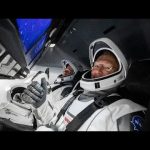
NASA astronaut Bob Behnken is a native of Missouri and a veteran of two space shuttle flights. Behnken flew STS-123 in March 2008 and STS-130 in February 2010, logging more than 708 hours in space, and more than 37 hours during six spacewalks. Behnken is currently serving as Joint Operations Commander on the first crewed flight of the SpaceX Crew Dragon, the Demo-2 mission, which launched May 27, 2020. The SpaceX Crew Dragon, along with the Boeing CST-100 Starliner, will provide roundtrip crew transportation services to the International Space Station and return the ability to launch humans into space from United States soil as part of NASA’s Commercial Crew Program. After docking with the International Space Station on the second day of the mission, he also joined Expedition 63 as a flight engineer.
NASA astronaut Doug Hurley was the pilot on STS‐127 and STS‐135. Hurley holds a Bachelor of Science in Civil Engineering from Tulane University. Before joining NASA, he was a fighter pilot and test pilot in the U.S. Marine Corps. Hurley is currently serving as Spacecraft Commander on the first crewed flight of the SpaceX Crew Dragon, the Demo-2 mission, which launched May 27, 2020. The SpaceX Crew Dragon, along with Boeing’s CST-100 Starliner, will provide roundtrip crew transportation services to the International Space Station and return the ability to launch humans into space from United States soil as part of NASA’s Commercial Crew Program. After docking with the International Space Station on the second day of the mission, he also joined Expedition 63 as a flight engineer.
Today we recognized the achievements of our #LaunchAmerica mission with NASA Astronauts Chris Cassidy, Robert Behnken and Douglas Hurley who rung the captain’s bell onboard the International Space Station to open the day’s trading on June 2.
Behnken and Hurley arrived at the station on May 31, a day after becoming the first NASA astronauts to launch on a commercial rocket. The launch of the SpaceX Falcon 9 rocket and Crew Dragon spacecraft marked the return of human launches from U.S. soil to the space station for the first time since the retirement of the space shuttle program in 2011.
Today we recognize the achievements of our #LaunchAmerica mission with NASA Astronauts Chris Cassidy, Robert Behnken and Douglas Hurley who will ring the captain’s bell on the space station for Nasdaq’s opening bell. This marks the first time NASA will ring the opening bell for Nasdaq.
When NASA astronauts Robert Behnken and Douglas Hurley launched to the space station aboard SpaceX’s Dragon Endeavor spacecraft, the world was watching. They also took 90,000 people along for the ride in a mosaic of Earth that include photos of Class of 2020 graduates
In this video, the crew members talk to Benji Reed, the SpaceX Director of Crew Mission Management, before displaying the graduation mosaic to honor those who graduated this spring during the coronavirus pandemic
Starting at 11:15 a.m. EDT, you can hear from NASA astronauts currently living and working 250 miles above Earth aboard our orbiting laboratory. Tune in to hear International Space Station Commander Chris Cassidy and Flight Engineers Bob Behnken and Doug Hurley report live on our historic #LaunchAmerica mission:
After launching from American soil in the commercially built and operated SpaceX Dragon Endeavour spacecraft, astronauts Bob Behnken and Doug Hurley have officially joined the International Space Station crew today – making history in the process.
Join NASA Administrator Jim Bridenstine, alongside other agency officials for a #LaunchAmerica update.
After a successful launch into orbit yesterday, SpaceX’s Dragon Endeavour spacecraft is en route to dock with the International Space Station. Watch as astronauts Robert Behnken and Douglas Hurley join the crew aboard our orbiting laboratory:
In this video, NASA astronauts Robert Behnken and Douglas Hurley speak to Mission Control in Houston from SpaceX’s Dragon Endeavour Spacecraft on May 31, just hours before they arrive at the International Space Station.
The SpaceX Falcon 9 rocket and Dragon spacecraft successfully launched from Kennedy Space Center’s historic Launch Pad 39A at 3:22 p.m. EDT on May 30 and arrived at the station’s Harmony port, docking at 10:16 a.m. EDT on May 31 while the spacecraft were flying about 262 miles above the northern border of China and Mongolia.
Workers are returning to Europe’s Spaceport in Kourou, French Guiana to resume preparations for Vega and Ariane 5 launches. Construction of the new Ariane 6 launch pad has also restarted.
COVID-19 lockdown measures introduced in March meant that all but safety-critical operations were suspended at the Spaceport and the vast site had to be secured. Strict new safety and hygiene procedures have now been introduced. Launch teams returning from mainland Europe will spend two weeks in quarantine.
Vega is due to return to flight this summer on its first rideshare mission dedicated to small satellites and Vega’s new dispenser called the Small Spacecraft Mission Service.
★ Subscribe: http://bit.ly/ESAsubscribe and click twice on the bell button to receive our notifications.
We are Europe’s gateway to space. Our mission is to shape the development of Europe’s space capability and ensure that investment in space continues to deliver benefits to the citizens of Europe and the world. Check out http://www.esa.int/ESA to get up to speed on everything space related.
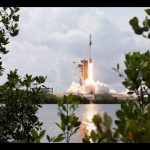
Liftoff! The SpaceX Falcon 9 rocket carrying NASA astronauts Robert Behnken and Douglas Hurley aboard the company’s Crew Dragon spacecraft launched from Kennedy Space Center’s historic Launch Pad 39A at 3:22 p.m. EDT on May 30, kicking off a critical final flight test of the SpaceX crew transportation system.
Following the successfully launch, NASA hosted a postlaunch news conference for officials to talk about the mission live from NASA’s Kennedy Space Center in Florida.
Participants included:
o NASA Administrator Jim Bridenstine
o Pat Forrester, NASA Chief Astronaut
o Kathy Lueders, manager, NASA Commercial Crew Program
o Elon Musk, SpaceX chief engineer
o Kirk Shireman, manager, International Space Station Program