NASA astronaut and U.S. Navy SEAL Chris Cassidy sends a message from the International Space Station, thanking all on the front lines facing COVID-19, our invisible enemy. From doctors and nurses in our hospitals, law enforcement and firefighters who protect us, warehouse personnel and grocery store clerks who keep the shelves stocked and the economy going – you are an inspiration to all and we sincerely thank you.
Author: kidibot
-
05. Electromagnetism
Vorbim despre legea inductiei, generarea de camp magnetic, relatia ditnre campurile electrice si magnetice, cu multe experimente! Dupa aceea va astept pe https://www.discord.gg/presura In fiecare zi de la 20:00 avem discutii interesante pe canalul de voce!
Cartea “O calatorie prin Univers”: t.ly/RkRED
Cartea Fizica Povestita: https://bit.ly/2YsKaAc
https://patreon.com/cristianpresura
https://www.facebook.com/presura
https://www.facebook.com/pg/stiintaclub/posts/
https://www.instagram.com/cristianpresura/ -
Highlighting Our Upcoming Launch of Astronauts from Florida on This Week @NASA – May 1, 2020
Highlighting our upcoming launch of astronauts from Florida, some news about our Moon to Mars effort, and our Mars helicopter has a new name … a few of the stories to tell you about – This Week at NASA!
This video is available for download from NASA’s Image and Video Library: https://images.nasa.gov/details-Highlighting%20Our%20Upcoming%20Launch%20of%20Astronauts%20from%20Florida%20on%20This%20Week%20@NASA%20%E2%80%93%20May%201,%202020
-

Earth from Space: Southern Ukraine
The Copernicus Sentinel-2 mission takes us over Southern Ukraine, in this week’s edition of the Earth from Space programme.
Download the image: http://www.esa.int/ESA_Multimedia/Images/2020/05/Southern_Ukraine
★ Subscribe: http://bit.ly/ESAsubscribe and click twice on the bell button to receive our notifications.
Check out our full video catalog: http://bit.ly/SpaceInVideos
Follow us on Twitter: http://bit.ly/ESAonTwitter
On Facebook: http://bit.ly/ESAonFacebook
On Instagram: http://bit.ly/ESAonInstagram
On Flickr: http://bit.ly/ESAonFlickrWe are Europe’s gateway to space. Our mission is to shape the development of Europe’s space capability and ensure that investment in space continues to deliver benefits to the citizens of Europe and the world. Check out http://www.esa.int/ESA to get up to speed on everything space related.
Copyright information about our videos is available here: http://www.esa.int/spaceinvideos/Terms_and_Conditions
#ESA
#EarthFromSpace
#Ukraine -
Artemis Announcement: NASA Selects Human Landing Systems
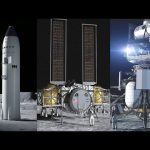
NASA has selected three American companies – Blue Origin, Dynetics and SpaceX – to design and develop human landing systems for the Artemis program. With these awards, NASA is on track to land the next astronauts on the lunar surface by 2024, and establish sustainable human exploration of the Moon by the end of the decade.
This video is available for download from NASA’s Image and Video Library: https://images.nasa.gov/details-NHQ_0430_HLS%20Announcement%201
-
#AskNASA┃ What is Hubble revealing about the universe?
This year, NASA is celebrating the Hubble Space Telescope’s 30 years of unlocking the beauty and mystery of space.
Hubble is revolutionizing modern astronomy for scientists, while taking the public on a wondrous journey of exploration and discovery. Hubble’s never-ending, breathtaking celestial snapshots provide a visual shorthand for Hubble’s top scientific achievements. Unlike any space telescope before it, Hubble made astronomy relevant, engaging and accessible for people of all ages. The space telescope’s iconic imagery has redefined our view of the universe and our place in time and space.For Hubble ‘At Home’ resources, visit this website for activities.
https://www.nasa.gov/content/hubble-inspires-online-activities/Send your questions to our experts using #AskNASA.
For more information about Artemis:
https://www.nasa.gov/what-is-artemisThis video is available for download from NASA’s Image and Video Library: https://images.nasa.gov/details-NHQ_2020_0429_AskNASA_202_Hubble
-
Cărți din biblioteca mea
După video vă aștept pe canalul de Discord https://www.discord.gg/presura In fiecare zi de la 20:00 avem discutii interesante pe canalul de voce!
Cartea “O calatorie prin Univers”: t.ly/RkRED
Cartea Fizica Povestita: https://bit.ly/2YsKaAc
https://patreon.com/cristianpresura
https://www.facebook.com/presura
https://www.facebook.com/pg/stiintaclub/posts/
https://www.instagram.com/cristianpresura/ -
NASA Science Live: Asteroid Close Approach
Have you heard about an asteroid close-approach happening on April 29? Asteroid 1998 OR2 poses no threat to our planet, but we can still learn a lot by studying it. Don’t miss a special Planetary Defense episode of NASA Science Live on Monday, April 27 at 3:00 p.m. EDT to learn how we find, track and monitor asteroids and near-Earth Objects.
-

Astronaut coffee break: let’s talk landing
Take a break with ESA astronauts Alexander Gerst, Samantha Cristoforetti, Luca Parmitano and Thomas Pesquet as they discuss living and working in space. In this video, our astronauts talk about their experiences of landing in a Russian Soyuz spacecraft upon returning from the International Space Station.
During a shared coffee break, Luca compares his first landing to his most recent landing – the second of which he found much softer than the first. Thomas finds humour in his experience of landing horizontally, while Alex describes a particularly high gravitational load on his return to Earth.
This clip is part of a series of four filmed in February 2020, following Luca’s return from the ISS mission on 6 February. It was filmed in the crew quarters of the German Aerospace Center DLR’s :envihab facility next to ESA’s European Astronaut Centre in Cologne, Germany.
For more about Luca’s Beyond mission and other ESA astronaut-related content, visit the Exploration blog: https://blogs.esa.int/exploration/
★ Subscribe: http://bit.ly/ESAsubscribe and click twice on the bell button to receive our notifications.
Check out our full video catalog: http://bit.ly/SpaceInVideos
Follow us on Twitter: http://bit.ly/ESAonTwitter
On Facebook: http://bit.ly/ESAonFacebook
On Instagram: http://bit.ly/ESAonInstagram
On Flickr: http://bit.ly/ESAonFlickrWe are Europe’s gateway to space. Our mission is to shape the development of Europe’s space capability and ensure that investment in space continues to deliver benefits to the citizens of Europe and the world. Check out http://www.esa.int/ESA to get up to speed on everything space related.
Copyright information about our videos is available here: http://www.esa.int/spaceinvideos/Terms_and_Conditions
#ESA
#AstronautCoffeeBreak
#Astronauts -
Hubble’s Collection of Anniversary Images
Each year, the NASA/ESA Hubble Space Telescope dedicates a small portion of its precious observing time to taking a special anniversary image, showcasing particularly beautiful and meaningful objects. These images continue to challenge scientists with exciting new surprises and to enthral the public with ever more evocative observations.
To celebrate Hubble’s 30th anniversary, let’s look back at the beauty and science behind each of the anniversary images unveiled as of 2005. In this video, we will also feature the very special 2020 Hubble Space Telescope 30th anniversary image.
Learn more: http://bit.ly/HubbleCelebratesIts30thAnniversaryWithATapestreOfBlazingStarbirth
Credit:
Directed by: Bethany Downer
Visual design and editing: Martin Kornmesser
Written by: Bethany Downer
Narration: Sara Mendes da Costa
Images & VIdeos: NASA, ESA, M.Kornmesser, L. Calçada, ESO, NAOJ, G. Bacon, L. Frattare, Z. Levay and F. Summers (STScI/AURA), D. Lennon and E. Sabbi (ESA/STScI), J. Anderson, S.E. de Mink, R. van der Marel, T. Sohn, and N. Walborn (STScI), L. Bedin (INAF, Padua), C. Evans (STFC), H. Sana (Amsterdam), N. Langer (Bonn), P. Crowther (Sheffield), A. Herrero (IAC, Tenerife), N. Bastian (USM, Munich), and E. Bressert (ESO), the Hubble Heritage Team, T. Davis, L. Frattare, Z. Levay, (Viz 3D team, STScI), J. Anderson (STScI), the Hubble Heritage Team (STScI/AURA), A. Nota (ESA/STScI), and the Westerlund 2 Science Team, Eckhard Slawik (e.slawik@gmx.net).
Music: Johan B. Monell (www.johanmonell.com
Web and technical support: Raquel Yumi Shida
Executive producer: Mariya Lyubenova★ Subscribe: http://bit.ly/ESAsubscribe and click twice on the bell button to receive our notifications.
Check out our full video catalog: http://bit.ly/SpaceInVideos
Follow us on Twitter: http://bit.ly/ESAonTwitter
On Facebook: http://bit.ly/ESAonFacebook
On Instagram: http://bit.ly/ESAonInstagram
On Flickr: http://bit.ly/ESAonFlickrWe are Europe’s gateway to space. Our mission is to shape the development of Europe’s space capability and ensure that investment in space continues to deliver benefits to the citizens of Europe and the world. Check out http://www.esa.int/ESA to get up to speed on everything space related.
Copyright information about our videos is available here: http://www.esa.int/spaceinvideos/Terms_and_Conditions
#ESA
#Hubble
#Hubble30 -
30 Years of Science with the Hubble Space Telescope
On 24 April 1990 the NASA/ESA Hubble Space Telescope was sent into orbit aboard the space shuttle Discovery, the first space telescope of its kind. It offered a new view of the Universe and has, for 30 years, reached and surpassed all expectations, beaming back data and images that have changed scientists’ understanding of the Universe and the public’s perception of it. Hubble’s discoveries have revolutionised nearly all areas of current astronomical research, from planetary science to cosmology, and its pictures are unmistakably out of this world.
This video revisits some of Hubble’s biggest science discoveries throughout its three decades of operation to celebrate the telescope’s 30th anniversary.
Learn more: http://bit.ly/HubbleCelebratesIts30thAnniversaryWithATapestreOfBlazingStarbirth
Credit:
Directed by: Bethany Downer
Visual design and editing: Martin Kornmesser
Written by: Bethany Downer
Narration: Sara Mendes da Costa
Images & Videos: NASA, ESA, M.Kornmesser, L. Calçada, ESO, G. Bacon (STScI), theHubble Heritage Team (STScI/AURA)-ESA/Hubble Collaboration, and H. Bond (STScI and Pennsylvania State University), A. Feild (STScI), and A. Riess (STScI/JHU), D. Jewitt (UCLA), F. Summers, Z. Levay, J. DePasquale, L. Hustak, L. Frattare, M. Robberto (STScI), R. Hurt (Caltech/IPAC) Acknowledgement: R. Gendler, spaceengine.org.
Music: Johan B. Monell (www.johanmonell.com)
Web and technical support: Raquel Yumi Shida
Executive producer: Mariya Lyubenova★ Subscribe: http://bit.ly/ESAsubscribe and click twice on the bell button to receive our notifications.
Check out our full video catalog: http://bit.ly/SpaceInVideos
Follow us on Twitter: http://bit.ly/ESAonTwitter
On Facebook: http://bit.ly/ESAonFacebook
On Instagram: http://bit.ly/ESAonInstagram
On Flickr: http://bit.ly/ESAonFlickrWe are Europe’s gateway to space. Our mission is to shape the development of Europe’s space capability and ensure that investment in space continues to deliver benefits to the citizens of Europe and the world. Check out http://www.esa.int/ESA to get up to speed on everything space related.
Copyright information about our videos is available here: http://www.esa.int/spaceinvideos/Terms_and_Conditions
#ESA
#Hubble
#Hubble -
Answering the Call to Help Combat Coronavirus on This Week @NASA – April 24, 2020
Answering the call to help combat coronavirus, a launch date for our Demo-2 mission, and … celebrating 30 years of Hubble … a few of the stories to tell you about – This Week at NASA!
This video is available for download from NASA’s Image and Video Library: https://images.nasa.gov/details-Answering%20the%20Call%20to%20Help%20Combat%20Coronavirus%20on%20This%20Week%20@NASA%20%E2%80%93%20April%2024,%202020
-
Hubble: 30 years unveiling the universe
This month marks the 30th anniversary of the international Hubble Space Telescope.
Launched on 24 April 1990, and deployed from the Space Shuttle Discovery cargo bay a day later (25 April 1990), the telescope has given us a new perspective on the Universe.
The joint NASA/ESA mission has shown us distant galaxies and spectacular nebulae. It has revealed supermassive black holes and planets in distant solar systems; and has proved that the Universe is not only expanding, the expansion is accelerating.
Hubble’s mission has also been eventful. When it was first launched, a defect in the mirror meant it sent back blurry images. Since then, five servicing missions have enabled the telescope to be improved and upgraded. Today, it is still going strong.
Learn more: http://bit.ly/HubbleCelebratesIts30thAnniversaryWithATapestreOfBlazingStarbirth
★ Subscribe: http://bit.ly/ESAsubscribe and click twice on the bell button to receive our notifications.
Check out our full video catalog: http://bit.ly/SpaceInVideos
Follow us on Twitter: http://bit.ly/ESAonTwitter
On Facebook: http://bit.ly/ESAonFacebook
On Instagram: http://bit.ly/ESAonInstagram
On Flickr: http://bit.ly/ESAonFlickrWe are Europe’s gateway to space. Our mission is to shape the development of Europe’s space capability and ensure that investment in space continues to deliver benefits to the citizens of Europe and the world. Check out http://www.esa.int/ESA to get up to speed on everything space related.
Copyright information about our videos is available here: http://www.esa.int/spaceinvideos/Terms_and_Conditions
#ESA
#Hubble
#Hubble30 -
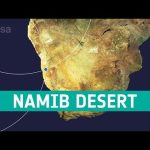
Earth from Space: Namib Desert
The Copernicus Sentinel-2 mission takes us over part of the Namib Desert, considered the oldest desert on Earth, in this week’s edition of the Earth from Space programme.
Download the image:
http://www.esa.int/ESA_Multimedia/Images/2020/04/Namib_Desert★ Subscribe: http://bit.ly/ESAsubscribe and click twice on the bell button to receive our notifications.
Check out our full video catalog: http://bit.ly/SpaceInVideos
Follow us on Twitter: http://bit.ly/ESAonTwitter
On Facebook: http://bit.ly/ESAonFacebook
On Instagram: http://bit.ly/ESAonInstagram
On Flickr: http://bit.ly/ESAonFlickrWe are Europe’s gateway to space. Our mission is to shape the development of Europe’s space capability and ensure that investment in space continues to deliver benefits to the citizens of Europe and the world. Check out http://www.esa.int/ESA to get up to speed on everything space related.
Copyright information about our videos is available here: http://www.esa.int/spaceinvideos/Terms_and_Conditions
#ESA
#EarthFromSpace
#NamibDesert -

Mars confinement tips
In these times of confinement, ESA astronaut support engineer Romain Charles shares nine tips on how to live in isolation – he spent 520 days locked in a mockup spacecraft and is a true expert on the subject.
Mars500 locked six ‘marsonauts’ in a simulated spaceship near Moscow, Russia for 520 days, the time it would take to fly to Mars and back plus 30 days spent exploring its surface. It was the first full-length, high-fidelity simulation of a human mission to our neighbouring planet. The crew went into lockdown on 3 June 2010, and they did not open the hatch until 17 months later on 4 November 2011.
Mars 500 was a success in that it proved that humans can survive the inevitable isolation that is needed for a mission to Mars and back. Psychologically, we can do it!
The crew had their ups and downs, but these were to be expected. In fact, scientists anticipated many more problems, but the crew did very well coping with the monotonous mission, with little variation in food and even a communication delay over 12 minutes one-way.
During their simulated mission, the crew lived in isolation without fresh food, sunlight or fresh air. The participants from Italy, Russia, China and France had no external cues such as the Sun going down at night to remind them when to sleep.
Their bodies are among the most researched in the world. Years of constant monitoring, prodding and taking blood allowed scientists examined how they reacted to the time in confinement with experiments focussing on their bodies, mental states and performance.
More on Mars 500: www.esa.int/Mars500
★ Subscribe: http://bit.ly/ESAsubscribe and click twice on the bell button to receive our notifications.
Check out our full video catalog: http://bit.ly/SpaceInVideos
Follow us on Twitter: http://bit.ly/ESAonTwitter
On Facebook: http://bit.ly/ESAonFacebook
On Instagram: http://bit.ly/ESAonInstagram
On Flickr: http://bit.ly/ESAonFlickrWe are Europe’s gateway to space. Our mission is to shape the development of Europe’s space capability and ensure that investment in space continues to deliver benefits to the citizens of Europe and the world. Check out http://www.esa.int/ESA to get up to speed on everything space related.
Copyright information about our videos is available here: http://www.esa.int/spaceinvideos/Terms_and_Conditions
#ESA
#Confinement
#Mars500 -

#EZScience Episode 6: NASA’s Hubble Space Telescope — Our Window to the Stars
Let’s talk about science! Watch the sixth episode of our #EZScience series to learn about the 30th anniversary of NASA’s Hubble Space Telescope. As the first major optical telescope to be placed in space, Hubble has changed our fundamental understanding of the universe.
ABOUT THE SERIES: In our #EZScience video series with the National Air and Space Museum, NASA’s associate administrator for science Dr. Thomas Zurbuchen and Museum director Dr. Ellen Stofan talk about the latest in planetary science and exploration.
Learn more about the series: https://www.nasa.gov/ezscience
Discover more about Hubble: https://www.nasa.gov/hubble -
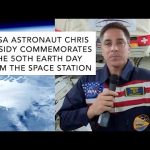
NASA Astronaut Chris Cassidy Commemorates the 50th Earth Day from the International Space Station
On the 50th anniversary of Earth Day, NASA astronaut Chris Cassidy of Expedition 63 reflects on what Earth Day means to him.
This Earth Day, we can still collectively appreciate the beauty of our planet and the extraordinary science that helps us understand how it all works — and we can do it from our homes. Join us in commemorating the 50th anniversary with #EarthDayAtHome.
-
NASA Science Live: Earth Day at Home
Happy Earth Day! Join NASA experts on the 50th anniversary of Earth Day as we explore important discoveries made about our planet, talk with teams creating green technology that benefits life on Earth, explore a new type of aircraft making flight greener and cleaner, and hear from a NASA inventor who has turned coral reef science into an interactive app that allows you to participate in science from home. Celebrate #EarthDayatHome with NASA.
-
“It can be done.” – an Earth Day message
In summer 2018, ESA joined with the musician Vangelis and the family of scientist Prof. Stephen Hawking to beam a message marking his passing to the nearest black hole. On 22 April 2020, Earth Day, we’re transmitting this poignant message to all of planet Earth – as a message of hope, to say that, by working together, we can overcome this crisis and others facing humankind.
The message reads:
“I am very aware of the preciousness of time. Seize the moment. Act now.
“I have spent my life travelling across the Universe inside my mind. Through theoretical physics I have sought to answer some of the great questions but there are other challenges, other big questions which must be answered, and these will also need a new generation who are interested, engaged and with an understanding of science.
“How will we feed an ever-growing population, provide clean water, generate renewable energy, prevent and cure disease and slow down global climate change?
“I hope that science and technology will provide the answers to these questions, but it will take people, human beings with knowledge and understanding to implement the solution.
“One of the great revelations of the space age has been a perspective that has given humanity on ourselves. When we see the Earth from space we see ourselves as a whole; we see the unity and not the divisions. It is such a simple image, with a compelling message: one planet, one human race.
“We are here together, and we need to live together with tolerance and respect. We must become global citizens.
“I have been enormously privileged through my work to be able to contribute to our understanding of the Universe. But it would be an empty Universe indeed, if it were not for the people I love and who love me.
“We are all time travellers journeying together into the future. But let us work together to make that future a place we want to visit. Be brave, be determined, overcome the odds. It can be done.
“It can be done.”
Text and narration: Prof. Stephen Hawking (© The Estate of Stephen Hawking)
Music: The Stephen Hawking Tribute by Vangelis (composed, arranged, produced and performed by Vangelis) 2018
Images:
ISS – ESA/NASA
Sentinel images – contain modified Copernicus Sentinel data/ESA, CC BY-SA 3.0 IGO
Stock footage – Pexels.com, Pixabay, Bedrijfsfilmspecialist.nl
COVID-19 testing – ©Governor Tom Wolf/Wikimedia Commons, CC-BY 2.0
Sentinel 2 animation – ©ESA/ATG Medialab
Earthrise – NASA
Rosetta Earth 2009 – ESA/Rosetta/MPS for OSIRIS team/M. McCaughrean
BepiColombo launch – ©ESA/CNES/Arianespace
Black hole – ©EHT Collaboration, CC BY 4.0
LHA 120-N150 – ©ESA/Hubble, NASA, Digitized Sky Survey 2, CC BY 4.0, D. De Martin
BepiColombo Earth flyby ©ESA/BepiColombo/MTM, CC BY-SA 3.0 IGO★ Subscribe: http://bit.ly/ESAsubscribe and click twice on the bell button to receive our notifications.
Check out our full video catalog: http://bit.ly/SpaceInVideos
Follow us on Twitter: http://bit.ly/ESAonTwitter
On Facebook: http://bit.ly/ESAonFacebook
On Instagram: http://bit.ly/ESAonInstagram
On Flickr: http://bit.ly/ESAonFlickrWe are Europe’s gateway to space. Our mission is to shape the development of Europe’s space capability and ensure that investment in space continues to deliver benefits to the citizens of Europe and the world. Check out http://www.esa.int/ESA to get up to speed on everything space related.
Copyright information about our videos is available here: http://www.esa.int/spaceinvideos/Terms_and_Conditions
#ESA
#EarthDay2020
#StephenHawking -
NASA’s Curious Universe: In the Amazon with NASA Earth Scientist Doug Morton
Our universe is a wild and wonderful place. In our new podcast, NASA’s Curious Universe (nasa.gov/curiousuniverse), we’re taking you on an adventure. In this episode, explore the Amazon Rainforest with Earth Scientist Doug Morton.
April 22 marks the 50th anniversary of Earth Day. Listen to the full first episode of the NASA’s Curious Universe podcast: nasa.gov/curiousuniverse
Listen on:
Apple Podcasts: https://podcasts.apple.com/us/podcast/nasas-curious-universe/id1505624059
Google Podcasts: https://podcasts.google.com/?feed=aHR0cHM6Ly93d3cubmFzYS5nb3YvcnNzL2R5bi9jdXJpb3VzLXVuaXZlcnNlLnJzcw
SoundCloud: https://soundcloud.com/nasa/sets/nasas-curious-universe-podcast -

Demonstratie in premiera: Nu traim intr-o simulare!
Traim intr-o simulare? Ca sa aflu raspunsul am cautat in fizica si filozofie. Vom discuta despre gauri negre, holografie, fizica cuantica si qualia. Iar la sfarsit voi demnostra ca NU traim intr-o simulare! Dupa video, raspund LIVE la intrebarile voastre pe canalul de Discord: “Comunitatea Cristian Presura”: www.discord.gg/presura In fiecare zi de la 20:00 avem discutii interesante pe canalul de voce!
Cartea “O calatorie prin Univers”: t.ly/RkRED
Cartea Fizica Povestita: https://bit.ly/2YsKaAc
https://patreon.com/cristianpresura
https://www.facebook.com/presura
https://www.facebook.com/pg/stiintaclub/posts/
https://www.instagram.com/cristianpresura/ -
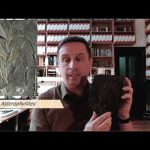
Calamites
Genul Calamites este un sfenopsid paleozoic cu o mare importanță carbogeneratoare, fiind un bun exemplu de plantă fosilă prin excelență. Calamites este înrudit cu genul actual Equisetum (coada calului) și are o lungă istorie în timp geologic. Parataxonomia folosită în Paleobotanică este de asemenea explicată pe scurt. Mulțumesc în mod special Dr. Atila Nyerges pentru ajutorul său legat de editarea video.
-
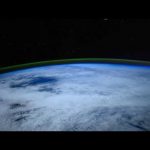
Earth Day 2020: NASA Puts Space to Work for the Planet
NASA’s unique vantage point of space allows us to better understand Earth’s interconnected systems and use that knowledge to live sustainably on our home planet, protect life around the world, and adapt to natural and human-caused changes. As NASA joins the world in observing the 50th anniversary of Earth Day, we reaffirm our commitment to understanding our planet’s interconnected systems to help protect them for future generations.
View this video in Spanish on our NASA en Español YouTube channel: https://youtu.be/x-AjWa27zr8
Learn more about how we’re celebrating #EarthDayAtHome: https://www.nasa.gov/press-release/nasa-marks-earth-day-s-50th-anniversary-with-earthdayathome/
-

Luca meets space cyber assistant Cimon
ESA astronaut Luca Parmitano tested new functionality for the astronaut aid Cimon relating to mood detection and enjoyed a few favourite songs on the first weekend of February 2020, his last weekend in space for the Beyond mission on the International Space Station.
Short for Crew Interactive Mobile CompanioN, Cimon is a 3D-printed plastic sphere designed to test human-machine interaction in space. It was developed and built by Airbus in Friedrichshafen and Bremen, Germany, on behalf of German aerospace centre DLR and uses artificial intelligence software by IBM Watson. Ludwig Maximilians University Clinic in Munich (LMU) is in charge of the project’s scientific aspects. Cimon was first used by ESA astronaut Alexander Gerst during his 2018 Horizons.
Cimon weighs around 5 kg on Earth and has a display screen at its centre. Its main aim is to support and increase astronaut efficiency by displaying and explaining information needed to carry out scientific experiments and repairs.
Other applications include mobile photography and videography and the ability to document experiments, search for objects and maintain an inventory. Cimon can also see, hear and understand what it observes and is equipped with an autonomous navigation system, allowing astronauts to issue voice commands like you would to virtual assistants like Alexa, Siri or Cortana on the ground.
Circling our planet at 28 800 km/h the International Space Station offers space for six astronauts to conduct experiments for researchers all over the world in weightlessness as well as test and demonstrate techniques needed to further explore our Solar System.
Europe’s laboratory Columbus was launched over 10 years ago and more than 200 experiments have been done inside. Columbus houses as many disciplines as possible in a small volume, from astrobiology to solar science through metallurgy and psychology. Countless papers have been published drawing conclusions from experiments performed in Columbus, and Cimon is another example of the research conducted in space.
Follow Luca: http://bit.ly/ESALucaParmitano
★ Subscribe: http://bit.ly/ESAsubscribe and click twice on the bell button to receive our notifications.
Check out our full video catalog: http://bit.ly/SpaceInVideos
Follow us on Twitter: http://bit.ly/ESAonTwitter
On Facebook: http://bit.ly/ESAonFacebook
On Instagram: http://bit.ly/ESAonInstagram
On Flickr: http://bit.ly/ESAonFlickrWe are Europe’s gateway to space. Our mission is to shape the development of Europe’s space capability and ensure that investment in space continues to deliver benefits to the citizens of Europe and the world. Check out http://www.esa.int/ESA to get up to speed on everything space related.
Copyright information about our videos is available here: http://www.esa.int/spaceinvideos/Terms_and_Conditions
#ESA
#LucaParmitano
#MissionBeyond -

Battle of Sekigahara, 1600 ⚔️ Tokugawa Shogunate is Born
Install Raid for Free ✅ IOS: https://clcr.me/HistoryM_iOS ✅ ANDROID: https://clcr.me/HistoryM_Android ✅ PC: https://clcr.me/HistoryM_PC and get a special starter pack 💥Available only for the next 30 days. Disclaimer: Footmouse is a parody, and not a real product available for purchase.
🚩 Consider supporting our work on Patreon: https://www.patreon.com/historymarche
🟥The Battle of Sekigahara was a turning point in the history of Japan, marking the sunset of the Sengoku and the dawning of the Tokugawa period.
🚩 Special thanks to our friend Hoc Est Bellum for collaborating with us. This video would not have been possible without him. Make sure to check out his channel – https://www.youtube.com/channel/UCl5m12RUvypT4e7w-mWrzsA
📢 Narration by: David McCallion
#japan #sengoku #tokugawa
-
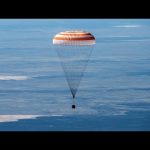
Space Station Crew Returns Safely to Earth on This Week @NASA – April 17, 2020
Space Station crew returns safely to Earth, practice for our asteroid sample return mission, and a new discovery from old data … a few of the stories to tell you about – This Week at NASA!
This video is available for download from NASA’s Image and Video Library: https://images.nasa.gov/details-Space%20Station%20Crew%20Returns%20Safely%20to%20Earth%20on%20This%20Week%20@NASA%20%E2%80%93%20April%2017,%202020
-
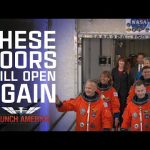
May 27, 2020: #LaunchAmerica
Before our Apollo astronauts launched to the Moon, they walked out of these doors at Kennedy Space Center. When NASA astronauts Bob Behnken and Doug Hurley board Crew Dragon for the SpaceX Demo-2 mission to the International Space Station, these doors will be used again. Prepare to #LaunchAmerica on May 27. www.nasa.gov/launchamerica
-
#AskNASA | What’s on the Apollo 13 Audio Tapes?
Software developer and website creator Ben Feist helps us step back in time with his new website, apolloinrealtime.org. Ben, a contractor at NASA’s Johnson Space Center in Houston, restored Mission Control audio of Apollo 13.
Applying new digital audio processing techniques, Ben explains how he and his team restored and digitized almost 7,200 hours of audio. The website features new audio from the mission, in particular, a phone call to Mission Control from Marilyn Lovell, Jim Lovell’s wife, the day after the explosion.
Commemorating the 50th anniversary of the historical Apollo 13 mission, Ben describes why the events and people from Apollo 13 continue to inspire us today.
Thanks to Stephen Slater and Ben Feist/Apollo in Real Time (apolloinrealtime.org/13) for providing footage and audio.
Send your questions to our experts using #AskNASA.
-
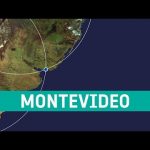
Earth from Space: Montevideo
The Copernicus Sentinel-2 mission takes us over Montevideo – the capital and largest city of Uruguay, in this week’s edition of the Earth from Space programme.
Download the image: http://www.esa.int/ESA_Multimedia/Images/2020/04/Montevideo_Uruguay
★ Subscribe: http://bit.ly/ESAsubscribe and click twice on the bell button to receive our notifications.
Check out our full video catalog: http://bit.ly/SpaceInVideos
Follow us on Twitter: http://bit.ly/ESAonTwitter
On Facebook: http://bit.ly/ESAonFacebook
On Instagram: http://bit.ly/ESAonInstagram
On Flickr: http://bit.ly/ESAonFlickrWe are Europe’s gateway to space. Our mission is to shape the development of Europe’s space capability and ensure that investment in space continues to deliver benefits to the citizens of Europe and the world. Check out http://www.esa.int/ESA to get up to speed on everything space related.
Copyright information about our videos is available here: http://www.esa.int/spaceinvideos/Terms_and_Conditions
#ESA
#EarthFromSpace
#Montevideo -
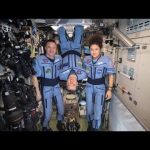
Expedition 62 Crew Returns to Earth From Space Station
After months living and working on the International Space Station, NASA astronauts Andrew Morgan and Jessica Meir and Oleg Skripochka of the Russian space agency Roscosmos are returning to Earth.
On board the orbiting laboratory, Andrew Morgan contributed to hundreds of experiments and conducted seven spacewalks. During her first spaceflight, Jessica Meir conducted the first three all-woman spacewalks with crewmate Christina Koch.
Join us and follow along as they make their voyage back to the Earth.
-
NASA’s Gravity Assist Podcast Season 4: Searching for Life
Is there life beyond Earth? How did life get started on Earth anyway? This season of NASA’s Gravity Assist podcast is about the origins of life on Earth and the search for life elsewhere. Subscribe at https://www.nasa.gov/gravityassist. See all NASA podcasts: www.nasa.gov/podcasts
Hosted by NASA’s Chief Scientist Jim Green, each episode features a conversation with a scientist who has researched some aspect of these questions. We’ll talk about the search for life on Mars, what kind of life might survive on Saturn’s moon Titan, and much more.
New episodes Fridays starting April 17.
-
4. Structura atomului
Din ce e facut atomul si cat de mare este? Sa aflam impreuna cum s-a descoperit pentru prima data asta. Dupa lectie, la 20:30, va astept pe https://www.discord.gg/presura Aici voi raspunde LIVE la intrebarile tale pe canalul AUDIO.
Cartea “O calatorie prin Univers”: t.ly/RkRED
Cartea Fizica Povestita: https://bit.ly/2YsKaAc
https://patreon.com/cristianpresura
https://www.facebook.com/presura
https://www.facebook.com/pg/stiintaclub/posts/
https://www.instagram.com/cristianpresura/ -
NASA’s View of Earth, in Music
Discover what NASA’s Earth data sounds like when it’s turned into music. With each passing Earth Day, the drums get louder. Every sound and instrument tell a story.
The higher the pitch of the music, the more data collected from NASA Earth science missions. The guitar represents the mission launches. The orchestra is split up based on the field of each mission:
• Strings = Atmosphere
• High Woodwinds = Geosphere
• Low Woodwinds = Hydrosphere
• High Brass = Cryosphere
• Low Brass = BiosphereApril 22 marks the 50th anniversary of Earth Day. Listen to the first episode of NASA’s Curious Universe podcast: www.nasa.gov/curiousuniverse
Listen on:
Apple Podcasts: https://podcasts.apple.com/us/podcast/nasas-curious-universe/id1505624059
Google Podcasts: https://podcasts.google.com/?feed=aHR0cHM6Ly93d3cubmFzYS5nb3YvcnNzL2R5bi9jdXJpb3VzLXVuaXZlcnNlLnJzcw
SoundCloud: https://soundcloud.com/nasa/sets/nasas-curious-universe-podcast -
Zoom past Earth with BepiColombo in virtual reality simulation
With a simple Google Cardboard-style virtual reality (VR) viewer, you can experience how it feels to be a spacecraft hurtling past Earth. This 360-degree VR simulation of a flyby manoeuvre performed by ESA’s Mercury-bound BepiColombo spacecraft takes you on a trip past Earth at the distance of only 12 700 km, closer than the orbit of Europe’s navigational satellites Galileo.
The simulation displays the field of view of two of BepiColombo’s science instruments (MERTIS and PHEBUS) and two of its three MCAM selfie cameras during the gravity-assist flyby at Earth on 10 April 2020.
The simulation was created using the SPICE software developed by NASA’s Jet Propulsion Laboratory and data generated by the European Space and Astronomy Centre (ESAC)in Spain.
BepiColombo, a joint mission of ESA and the Japan Aerospace Exploration Agency (JAXA), is on a seven-year cruise to Mercury, the smallest and innermost planet of the Solar System. Launched in October 2018, BepiColombo follows an intricate trajectory that involves nine gravity-assist flyby manoeuvres. In addition to the flyby at Earth, BepiColombo will perform two flybys at Venus and six at Mercury, its target planet. The manoeuvres slow down the spacecraft as it needs to constantly brake against the gravitational pull of the Sun in order to be able to enter the correct orbit around Mercury in 2025, ahead of commencing science operations in early 2026.
Credit: ESA SPICE Service/RHEA Group.
★ Subscribe: http://bit.ly/ESAsubscribe and click twice on the bell button to receive our notifications.
Check out our full video catalog: http://bit.ly/SpaceInVideos
Follow us on Twitter: http://bit.ly/ESAonTwitter
On Facebook: http://bit.ly/ESAonFacebook
On Instagram: http://bit.ly/ESAonInstagram
On Flickr: http://bit.ly/ESAonFlickrWe are Europe’s gateway to space. Our mission is to shape the development of Europe’s space capability and ensure that investment in space continues to deliver benefits to the citizens of Europe and the world. Check out http://www.esa.int/ESA to get up to speed on everything space related.
Copyright information about our videos is available here: http://www.esa.int/spaceinvideos/Terms_and_Conditions
#ESA
#BepiColombo
#360º -
Apollo 13: ‘Houston, We’ve Had a Problem’
“Houston, we’ve had a problem” is the now famous phrase radioed from Apollo 13 to Mission Control upon the catastrophic explosion that dramatically changed the mission.
On the 50th Anniversary of the Apollo 13 mission, we recognize the triumph of the mission control team and the astronauts, and look at the lessons learned. The Apollo 13 mission has become known as “a successful failure” that saw the safe return of its crew Commander James (Jim) Lovell Jr., Command Module Pilot John Swigert Jr. and Lunar Module Pilot Fred Haise Jr.Thanks to Stephen Slater and Ben Feist/Apollo in Real Time (apolloinrealtime.org/13) for providing additional footage and audio. Thanks for Andy Saunders for providing additional enhanced images.
-
Cum să-mi trăiesc viața? Omul și Cosmosul (reîncarcare video)
Aceasta este o reincarcare a unui video mai vechi care, din motive tehnice, a disparut de pe site.
Cartea “O calatorie prin Univers”: t.ly/RkRED
Cartea Fizica Povestita: https://bit.ly/2YsKaAc
https://patreon.com/cristianpresura
https://www.facebook.com/presura
https://www.facebook.com/pg/stiintaclub/posts/
https://www.instagram.com/cristianpresura/ -
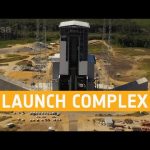
Ariane 6 launch complex – March 2020
Take a tour of the Ariane 6 launch complex and its various facilities filmed on 1 March 2020 at Europe’s Spaceport in French Guiana.
The 8200 tonne 90 metre-high mobile gantry stands over the launch pad. Take a look at the bogies that moved it there. Inside stand two mock-ups of the P120C boosters flanked by work platforms that will enable engineers to access the launch vehicle.
Delve deep under the launch table structure to see engineers working on the launch support systems.
Outside, tour past the liquid hydrogen and oxygen stores and on up to the assembly building where a mock-up of the Ariane 6 core stage is waiting at the entrance. Close by are additional service facilities, and the pumping station that will provide the water to quell the exhaust from the motors at liftoff.
Learn more about Ariane 6: http://bit.ly/esaAriane6
Credits: CNES/ESA
★ Subscribe: http://bit.ly/ESAsubscribe and click twice on the bell button to receive our notifications.
Check out our full video catalog: http://bit.ly/SpaceInVideos
Follow us on Twitter: http://bit.ly/ESAonTwitter
On Facebook: http://bit.ly/ESAonFacebook
On Instagram: http://bit.ly/ESAonInstagram
On Flickr: http://bit.ly/ESAonFlickrWe are Europe’s gateway to space. Our mission is to shape the development of Europe’s space capability and ensure that investment in space continues to deliver benefits to the citizens of Europe and the world. Check out http://www.esa.int/ESA to get up to speed on everything space related.
Copyright information about our videos is available here: http://www.esa.int/spaceinvideos/Terms_and_Conditions
#ESA
#Ariane6
#WorkInProgress -

Apollo 13: Home Safe
“Houston, we’ve had a problem.” Apollo 13 has become known as “a successful failure” that saw a safe return of the crew in spite of a catastrophic explosion in the middle of their lunar journey. This 30-minute documentary features interviews with Apollo 13 Astronauts Jim Lovell and Fred Haise, as well as Flight Directors Gene Kranz and Glynn Lunney, with engineer Hank Rotter. Parts of their interviews take place in the restored Apollo mission control room. This documentary also features original NASA footage and newly synchronized audio from Mission Control.
Thanks to Stephen Slater and Ben Feist/Apollo in Real-Time (apolloinrealtime.org/13) for providing additional footage and audio.
-
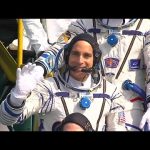
A Warm Welcome for the Space Station’s New Crew on This Week @NASA – April 10, 2020
New crew arrives safely at the space station, valuable microgravity research returns to Earth, and an update on our Commercial Crew Program … a few of the stories to tell you about – This Week at NASA!
This video is available for download from NASA’s Image and Video Library: https://images.nasa.gov/details-A%20Warm%20Welcome%20for%20the%20Space%20Stations%20New%20Crew%20on%20This%20Week%20@NASA%20April%2010,%202020
-

Expedition 63 Launch to the International Space Station
Three space travelers launched to the International Space Station aboard a Soyuz spacecraft.🚀 Astronaut Chris Cassidy of NASA and cosmonauts Anatoly Ivanishin and Ivan Vagner of the Russian space agency Roscosmos lifted off at 4:05 a.m. EDT on a four-orbit, six-hour journey to our orbiting laboratory.
This is the third spaceflight for both Cassidy and Ivanishin and the first for Vagner. During their mission on the station, they’ll welcome NASA’s Bob Behnken and Doug Hurley aboard the SpaceX Crew Dragon, which is currently targeted to launch no earlier than mid-to-late May.