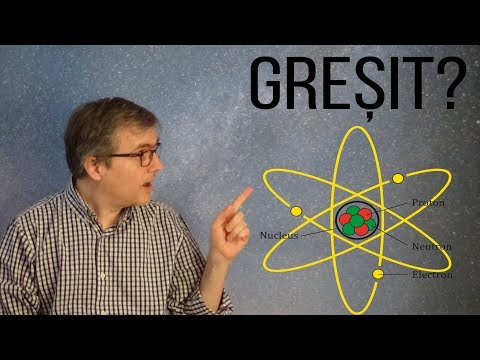
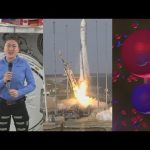
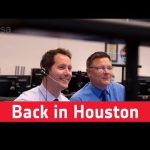
Interventia mea in cadrul emisiunii “Jurnalul de Stiinte” de la Digi TV, in ziua de 10 mai 2019. Emisiunea “Jurnalul de stiinte”, prezentata de Teodora Safta, se poate urmari In fiecare vineri, de la ora 19:00, la Digi World si in reluare sambata, de la ora 15:30, la Digi24.
One of the causalities of climate change is the diminishing ice cover, affecting our planet in a number of ways. Our satellites observe the planet’s cryosphere and provide key information to understand and respond to global thawing.
★ Subscribe: http://bit.ly/ESAsubscribe and click twice on the bell button to receive our notifications.
We are Europe’s gateway to space. Our mission is to shape the development of Europe’s space capability and ensure that investment in space continues to deliver benefits to the citizens of Europe and the world. Check out http://www.esa.int/ESA to get up to speed on everything space related.
Forging state-of-the-art space technologies, our Earth Explorer satellite missions continue to surpass expectations with a range of interesting and complementary results that go beyond their original goals. In this video, learn how each mission is contributing to Earth science, and changing the way we look at our beloved planet.
★ Subscribe: http://bit.ly/ESAsubscribe and click twice on the bell button to receive our notifications.
We are Europe’s gateway to space. Our mission is to shape the development of Europe’s space capability and ensure that investment in space continues to deliver benefits to the citizens of Europe and the world. Check out http://www.esa.int/ESA to get up to speed on everything space related.
In fiecare vineri, de la ora 19:00, Digi World, “Jurnalul de stiinte”
Reluare: sambata, de la ora 15:30, Digi24
In fiecare joi, de la ora 13:20, Radio Romania Cultural, “Stiinta in cuvinte potrivite”
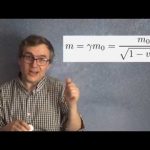
Codul matlab folosit este:
N=50000; a=4;
vp=zeros(N,1); vp(1)=0;
e=zeros(N,1); e(1)=1; de=0.0001;
m=zeros(N,1); m(1)=a*e(1);
for i=2:N
e(i)=e(i-1)+de;
m(i)=a*e(i-1);
dvp=(2/m(i-1))*de*(1-a*vp(i-1));
vp(i)=vp(i-1)+dvp;
end
h = figure;
set(h, ‘WindowStyle’, ‘Docked’);
subplot(2,1,1);
plot(e,sqrt(vp),’r-‘); hold on;
xlabel(‘Energie’);
ylabel(‘Viteza’);
subplot(2,1,2);
plot(sqrt(vp),m,’b-‘); hold on;
xlabel(‘Viteza’);
ylabel(‘Masa inertiala’);
In fiecare vineri, de la ora 19:00, Digi World, “Jurnalul de stiinte”
Reluare: sambata, de la ora 15:30, Digi24
In fiecare joi, de la ora 13:20, Radio Romania Cultural, “Stiinta in cuvinte potrivite”
On 11 May 2019, our astronaut Luca Parmitano met with members of the press at our establishment in Frascati, Italy, ahead of his second mission to the International Space Station. Speakers at the event included ESA Director General Jan Wörner, Head of ESA/ESRIN Josef Aschbacher, ESA Director of Human and Robotic Exploration, Italian Space Agency President Giorgio Saccoccia and ESA Utilisation Planning Team Leader Kirsten MacDonell.
Please note: the majority of the conference is in Italian, some of the speakers present in English.
We are Europe’s gateway to space. Our mission is to shape the development of Europe’s space capability and ensure that investment in space continues to deliver benefits to the citizens of Europe and the world. Check out http://www.esa.int/ESA to get up to speed on everything space related.
NEW MASTERCLASS EACH WEEK: http://londonreal.tv/masterclass-yt
David Icke is an English writer and public speaker, known since the 1990s as a professional conspiracy theorist calling himself a “full time investigator into WHO and WHAT is really controlling the world.”
As a former footballer, BBC sports television presenter, and spokesman for the Green Party, his interview on Terry Wogan’s show in 1991 turned him from a respected household name into a laughingstock across the country.
Now, he is the author of over 20 books and over 10 DVDs, and have lectured in over 25 countries, speaking live for up to 10 HOURS to huge audiences, filling stadiums like Wembley Arena.
His new movie Renegade, is the first ever feature film about his life and work.
About London Real:
Founded by Brian Rose in 2011. London Real is the curator of people worth watching. Our mission is to promote personal transformation through inspiration, self-discovery and empowerment.
We feature interesting guests with fascinating stories and unique perspectives on life. We aim to take viewers on a journey through the lives of others and ultimately inspire them to embark on one of their own.
Have you ever done a science experiment and wondered “What would this be like if it were HUGE?” Welcome to Science Max, the exciting new series that turbocharges all the science experiments you’ve done at home.
In fiecare vineri, de la ora 19:00, Digi World, “Jurnalul de stiinte”
Reluare: sambata, de la ora 15:30, Digi24
In fiecare joi, de la ora 13:20, Radio Romania Cultural, “Stiinta in cuvinte potrivite”
In fiecare vineri, de la ora 19:00, Digi World, “Jurnalul de stiinte”
Reluare: sambata, de la ora 15:30, Digi24
In fiecare joi, de la ora 13:20, Radio Romania Cultural, “Stiinta in cuvinte potrivite”
A commercial resupply mission heads to the space station, watching Earth breathe from space, and dealing with the impact threat of near-Earth objects … a few of the stories to tell you about – This Week at NASA!
This video is available for download from NASA’s Image and Video Library: https://images.nasa.gov/details-NHQ_2019_0504_Commercial%20Resupply%20Mission%20Launches%20to%20the%20Space%20Station%20on%20This%20Week%20@NASA%20%E2%80%93%20May%204,%202019.html
Have you ever done a science experiment and wondered “What would this be like if it were HUGE?” Welcome to Science Max, the exciting new series that turbocharges all the science experiments you’ve done at home.
Artificial intelligence increasingly touches nearly every aspect of the public, private, and personal systems of our lives – from healthcare to policing to finance, from email to unlocking your phone. These technologies are bounds ahead of traditional regulatory mechanisms and frequently controlled and developed behind doors with little accountability to equity concerns. How are these technologies deepening and obscuring structures of othering? What are the possibilities for transformation, accountability, and regulation? What are pitfalls and promises of tech within racial justice work? How do we even keep up with what is possible? In this session we will hear from leading activists, academics, and creatives, who are digging into these questions with a focus on racial and economic equity. Participants will walk away with a new set of questions with which to approach AI and a framework for how belonging can be better embedded in AI’s future.
Panelists included Renee DiResta, Sonia Katyal, Tawana “Honeycomb” Petty, Zoe Kahn, and Mahmoud Hamsho
Developing a space mission is a long process that involves a lot of tests, sometimes in harsh environments. An airborne campaign was recently carried out in the Arctic between Greenland, Iceland and Svalbard. Enduring temperatures of 30 degrees below zero, a team tested an airborne version of an imaging microwave radiometer to support the development of a potential satellite mission for Europe’s Copernicus programme.
★ Subscribe: http://bit.ly/ESAsubscribe and click twice on the bell button to receive our notifications.
We are Europe’s gateway to space. Our mission is to shape the development of Europe’s space capability and ensure that investment in space continues to deliver benefits to the citizens of Europe and the world. Check out http://www.esa.int/ESA to get up to speed on everything space related.
Don’t forget to take the quiz at 04:10!
Comment below what you think is the right answer, to be one of the 3 lucky winners who can win Amazon vouchers worth INR 500 or $10 (depending on your location). What are you waiting for? Winners will be announced on May 09, 2019.
This video on Artificial Intelligence introduces you to Artificial intelligence with a fun and simple approach. We will talk about what is artificial intelligence, how it’s different from machine learning and deep learning, its features, types, and scope. We also look at some interesting applications of Artificial Intelligence.
By the end of this video, you will understand:
1. What is Artificial Intelligence?
2. Difference between Artificial intelligence, Machine Learning and Deep Learning
3. Examples of Artificial Intelligence
4. Future of Artificial Intelligence
About Simplilearn Artificial Intelligence course:
Simplilearns’ Introduction to Artificial Intelligence course is designed to help learners decode the mystery of artificial intelligence and its business applications. The course provides an overview of AI concepts and workflows, machine learning and deep learning, and performance metrics. You’ll learn the difference between supervised, unsupervised and reinforcement learning; be exposed to use cases, and see how clustering and classification algorithms help identify AI business applications.
What are the career benefits of this Introduction to AI course?
Artificial intelligence has become a powerful driving force in a wide range of industries, helping people and businesses create exciting, innovative products and services, enable more informed business decisions, and achieve key performance goals. The median salary of an AI engineer in the US is $171,715(Source: Datamation). By 2022, the AI market will grow at a CAGR of 53.25 per cent, and an estimated. 2.3 million jobs will be created in the AI field by 2020 (Source: Gartner).
What are the course objectives?
The Introduction to Artificial Intelligence course will give you a look at the booming field of AI and show you how AI can help drive business value. The course covers basic concepts, terminologies, scope and stages of artificial intelligence and their effect on real-world business processes. By the end of the course, you will be able to clearly define various supervised and unsupervised AI algorithms, apply machine learning workflow to solve business problems and measure ROI based on performance metrics.
What skills will you learn from this Introduction to Artificial Intelligence course?
Upon completion of this course, you will understand:
1. The meaning, purpose, scope, stages, applications and effects of AI
2. Fundamental concepts of machine learning and deep learning
3. The difference between supervised, semi-supervised and unsupervised learning
Who should take this Introduction to Artificial Intelligence course?
Simplilearn’s Introduction to Artificial Intelligence imparts the basic concepts and principles of Artificial Intelligence to learners. The course caters to CxO level and middle management professionals who want to improve their ability to derive business value and ROI from AI and machine learning. This Artificial Intelligence Introduction course does not require programming or IT background, making it well-suited for the following audience:
1. Developers aspiring to be an artificial intelligence engineer or machine learning engineer
2. Analytics managers who are leading a team of analysts
3. Information architects who want to gain expertise in AI algorithms
4. Analytics professionals who want to work in machine learning or artificial intelligence
5. Graduates looking to build a career in artificial intelligence or machine learning
It’s the year 2028, and we’ve been carefully monitoring a worrying situation: an enormous asteroid is en route to strike Earth, although the exact point of impact is not yet clear.
National governments are planning to evacuate millions of people, an undertaking that will cause untold human misery and disruption on a gigantic scale. If the asteroid’s impact zone can be fixed, perhaps such chaos can be avoided.
As precious hours pass, find out how our Planetary Defence Office is able to obtain crucial information on this potential disaster as part of the Agency’s Space Safety and Security activities.
Back to the present day: Find out more about how we are preparing to protect our pale blue dot, its inhabitants and the vital satellite systems on which we have become so dependent.
Space Safety & Security at ESA: www.esa.int/spacesafety
Planetary Defence: www.esa.int/planetarydefence
★ Subscribe: http://bit.ly/ESAsubscribe and click twice on the bell button to receive our notifications.
ESA is Europe’s gateway to space. Our mission is to shape the development of Europe’s space capability and ensure that investment in space continues to deliver benefits to the citizens of Europe and the world. Check out http://www.esa.int/ESA to get up to speed on everything space related.
Our alien friend Paxi, went to visit American astronaut Anne McClain on board the International Space Station. Anne explains to Paxi how astronauts move around in weightlessness on the ISS.
Credits: ESA/NASA
★ Subscribe: http://bit.ly/ESAsubscribe and click twice on the bell button to receive our notifications.
ESA is Europe’s gateway to space. Our mission is to shape the development of Europe’s space capability and ensure that investment in space continues to deliver benefits to the citizens of Europe and the world. Check out http://www.esa.int/ESA to get up to speed on everything space related.
What could be the first sound of a marsquake, helping astronauts bust the dust on future missions to the Moon, and celebrating our home planet … a few of the stories to tell you about – This Week at NASA!
This video is available for download from NASA’s Image and Video Library: https://images.nasa.gov/details-NHQ_2019_0426_The%20First%20Possible%20Sound%20of%20a%20Marsquake%20on%20This%20Week%20@NASA%20%E2%80%93%20April%2026,%202019.html
Have you ever done a science experiment and wondered “What would this be like if it were HUGE?” Welcome to Science Max, the exciting new series that turbocharges all the science experiments you’ve done at home.
Of all the planets NASA has explored, none have matched the dynamic complexity of our own. Earth is a very special place. From the vantage point of space, the perspective of sky and sea, and all across the land, we study our planet not only to learn about it, but also to protect it.
An extended stay in space for one of our astronauts, a new resupply mission to the space station, and locating the universe’s first type of molecule … a few of the stories to tell you about – This Week at NASA!
This video is available for download from NASA’s Image and Video Library: https://images.nasa.gov/details-NHQ_2019_0419_An%20Extended%20Stay%20Onboard%20The%20Space%20Station%20on%20This%20Week%20@NASA%20%E2%80%93%20April%2019,%202019.html
Have you ever done a science experiment and wondered “What would this be like if it were HUGE?” Welcome to Science Max, the exciting new series that turbocharges all the science experiments you’ve done at home.
Raspuns catre senatorul Șerban Nicolae, care a declarat că nu crede în Big Bang: https://www.hotnews.ro/stiri-educatie-22698474-video-fizicianul-cristian-presur-spunde-senatorului-erban-nicolae-care-declarat-nu-crede-big-bang-face-confuzie-care-facem-poate-mul-dintre-noi-imagin-big-bang-explozie-obi-nuit.htm
Miercuri, 12 septembrie 2018:
Fizicianul Cristian Presură explică pe larg teoria Big Bang-ului, după ce Șerban Nicolae a declarat că nu crede în teoria marii explozii. “Nu am întâlnit nicăieri în lume, în nicio ipostază, o explozie care să fie creat ceva”, a spus senatorul, care a adăugat, în susținerea legii care interzice căsătoriile homosexuale, că el crede că există Dumnezeu. Într-o înregistrare video publicată pe contul său de Facebook, fizicianul Cristian Presură spune că senatorul “face o confuzie”: își imaginează Big Bang-ul ca o explozie într-un spațiu care există deja. “Ori, adevărul este că Big Bang-ul are de-a face mai mult cu expansiunea spațiului, decât cu a materiei”, explică fizicianul
This summer our astronaut Luca Parmitano will fly to the International Space Station from Baikonur Cosmodrome.
The Italian astronaut is currently training at NASA’s Johnson Space Center in Houston, USA, where he is learning Space Station operations in depth.
His second mission is called ‘Beyond’ and includes a spacewalk and running a rich scientific programme as well as seeing Luca take over command of the International Space Station – only the third time a European astronaut holds this role.
We are Europe’s gateway to space. Our mission is to shape the development of Europe’s space capability and ensure that investment in space continues to deliver benefits to the citizens of Europe and the world. Check out http://www.esa.int/ESA to get up to speed on everything space related.
Our astronaut Thomas Pesquet is back at NASA’s Johnson Space Center in Houston, USA.
His first mission to the International Space Station ended in June 2017. He is now working to prepare for a his next assignment. Currently Thomas is sharing his spaceflight experience with other astronauts and engineers, acting for example as a CapCom.
We are Europe’s gateway to space. Our mission is to shape the development of Europe’s space capability and ensure that investment in space continues to deliver benefits to the citizens of Europe and the world. Check out http://www.esa.int/ESA to get up to speed on everything space related.
Thanks for watching The Science KID “Artificial Intelligence In the Medical Field,” explaining what AI is, therapeutic robots, virtual presence, virtual reality, financial costs, death rates, etc.
Recommended Grade: 3rd, 4th, 5th, 6th, 7th, 8th, High School Science
Make sure to subscribe if you haven’t yet, what are you waiting for?!
The Science Kid is a scientific genius in a 13-year-old body! I post Science Videos on about everything Science. I hope you enjoy 😊 Remember “Science Can Always Be FUN!”
The plan to put humans on the Moon by 2024, wrapping up a series of spacewalks on the space station, and an historic first look at a black hole … a few of the stories to tell you about – This Week at NASA!
This video is available for download from NASA’s Image and Video Library: https://images.nasa.gov/details-NHQ_2019_0412_Our%20Five-Year%20Plan%20to%20Return%20Humans%20to%20the%20Moon%20on%20This%20Week%20@NASA%20%E2%80%93%20April%2012,%202019.html
Have you ever done a science experiment and wondered “What would this be like if it were HUGE?” Welcome to Science Max, the exciting new series that turbocharges all the science experiments you’ve done at home.
NASA Administrator Jim Bridenstine delivered a keynote address April 9 during the 35th Space Symposium in Colorado Springs, Colorado. During his speech, Bridenstine outlined NASA’s accelerated plans to send American astronauts to the Moon’s South Pole by 2024. The president’s direction from Space Policy Directive-1 galvanizes NASA’s return to the Moon and builds on progress on the Space Launch System rocket and Orion spacecraft, collaborations with U.S industry and international partners, and knowledge gained from current robotic assets at the Moon and Mars.
Astronauts work out for around 90 minutes a day onboard the International Space Station to combat the muscle and bone weakening effects of microgravity. But exercise is just as important for mental and physical health on Earth.
Our exercise team lead Nora Petersen explains how exercise specialists work with our astronauts to prepare them for a mission, some of the most important exercises on board and what happens upon an astronaut’s return to get them back in pre-flight shape.
The United Nations World Health Organization marks World Health Day on 7 April every year. The third Sustainable Development Goal underlines the right to health:Ensure healthy lives and promote well-being for all at all ages. On-orbit research, space technology and space applications can help improve health on Earth by monitoring our environment, helping track disease, improving diagnostics, and working on new medicines among other things. The UN is also focusing particularly this year on universal health coverage.
★ Subscribe: http://bit.ly/ESAsubscribe and click twice on the bell button to receive our notifications.
We are Europe’s gateway to space. Our mission is to shape the development of Europe’s space capability and ensure that investment in space continues to deliver benefits to the citizens of Europe and the world. Check out http://www.esa.int/ESA to get up to speed on everything space related.
Accelerating a human return to the Moon, wrapping up testing of our Space Launch System rocket engines, and Curiosity captures eclipses on Mars … a few of the stories to tell you about – This Week at NASA!
This video is available for download from NASA’s Image and Video Library: https://images.nasa.gov/details-NHQ_2019_0405_Discussing%20our%20Accelerated%20Return%20of%20Humans%20to%20the%20Moon%20on%20This%20Week%20@NASA%20%E2%80%93%20April%205,%202019.html
The first ever Spin Your Thesis! Human Edition campaign took place in DLR’s Short Arm Human Centrifuge facility in Cologne, Germany. Three teams comprised of 16 students from seven different universities participated in this new ESA Education’s hands-on programme for graduate students.
The Music For Space team from Hungarian and French universities used scientific methods to find the perfect tailored music for astronauts which should help physiologically and phsychologically during long spaceflights, thus merging science and art to help reduce stress.
★ Subscribe: http://bit.ly/ESAsubscribe and click twice on the bell button to receive our notifications.
ESA is Europe’s gateway to space. Our mission is to shape the development of Europe’s space capability and ensure that investment in space continues to deliver benefits to the citizens of Europe and the world. Check out http://www.esa.int/ESA to get up to speed on everything space related.
Managing the health of astronauts orbiting Earth at 28 000 km/h is a challenge, but how will we equip astronauts to stay healthy and deal with any medical emergencies during missions to the Moon or Mars?
Our flight surgeon Sergi Vaquer Araujo discusses how space medicine experts instill astronauts with the skills and knowledge needed to stay healthy on the International Space Station today, as we investigate new technologies that could benefit people on Earth.
The United Nations World Health Organization marks World Health Day on 7 April every year. The third Sustainable Development Goal underlines the right to health:Ensure healthy lives and promote well-being for all at all ages. On-orbit research, space technology and space applications can help improve health on Earth by monitoring our environment, helping track disease, improving diagnostics, and working on new medicines among other things. The UN is also focusing particularly this year on universal health coverage.
★ Subscribe: http://bit.ly/ESAsubscribe and click twice on the bell button to receive our notifications.
We are Europe’s gateway to space. Our mission is to shape the development of Europe’s space capability and ensure that investment in space continues to deliver benefits to the citizens of Europe and the world. Check out http://www.esa.int/ESA to get up to speed on everything space related.
NASA is a step closer to returning astronauts to the Moon in the next five years following this successful “hot fire” test of flight engine No. 2062 on the A-1 Test Stand at Stennis Space Center in Mississippi. This April 4, 2019 test caps more than four years of testing for the RS-25 engines that will help power the first four missions of the Space Launch System rockets. It also concludes a 51-month test series that demonstrated RS-25 engines can perform at the higher power level needed to launch the super heavy-lift SLS rocket.
Air pollution is a global environmental health problem that is responsible for millions of people dying prematurely every year. In cities and towns, traffic pumps pollutants such as nitrogen oxides and carbon monoxide directly into the air we breathe, which can increase the risk of cardiovascular and respiratory diseases, for example. Governments and decision-makers rely heavily on satellite data, such as that from the Copernicus Sentinel-5P mission, and computer models to show how pollution accumulates and how it is carried in the air so that they can develop appropriate mitigation strategies.
The United Nations World Health Organization marks World Health Day on 7 April every year. The third Sustainable Development Goal underlines the right to health: Ensure healthy lives and promote well-being for all at all ages. On-orbit research, space technology and space applications can help improve health on Earth by monitoring our environment, helping track disease, improving diagnostics, and working on new medicines among other things. The UN is also focusing particularly this year on universal health coverage.
★ Subscribe: http://bit.ly/ESAsubscribe and click twice on the bell button to receive our notifications.
ESA is Europe’s gateway to space. Our mission is to shape the development of Europe’s space capability and ensure that investment in space continues to deliver benefits to the citizens of Europe and the world. Check out http://www.esa.int/ESA to get up to speed on everything space related.