Author: kidibot

  • 3 Ways Black Holes Could Break Physics

    3 Ways Black Holes Could Break Physics

    What if the Earth were swallowed by a black hole? Would humanity’s legacy be gone forever? Or could you somehow get back that information from behind the event horizon?

    There are three possible answers to this question…but they all break physics as we know it!

    SUBSCRIBE: http://youtube.com/whatthephysics?sub

    Learn more in NOVA’s two-hour special, “Black Hole Apocalypse”: http://www.pbs.org/wgbh/nova/space/black-hole-apocalypse.html

    CREDITS:
    Host, Producer: Greg Kestin
    Research: Samia Bouzid, Greg Kestin, and Peter Chang
    Writing: Samia Bouzid, Greg Kestin
    Editorial Input from: Julia Cort, Ari Daniel
    Filming, Editing, and Animation: Greg Kestin and Samia Bouzid
    Scientific Consultants: Joe Polchinski, Netta Engelhardt, Steve Giddings
    Special thanks: Entire NOVA team
    From the producers of PBS NOVA © WGBH Educational Foundation
    Funding provided by FQXi
    Music provided by APM
    Sound effects: Freesound.org
    Images: MEDIODESCOCIDO (Stewie Griffin) and Paul Anderson (Grumpy Cat)
  • Science Max | Rocket Car | Season 1 Full Episode | Kids Science

    Science Max | Rocket Car | Season 1 Full Episode | Kids Science

    Phil builds a balloon powered car in the lab. Then he tries to make one big enough to ride. Can the Science Max build team find a big enough balloon? Or are balloons the way to go? Plus, Newton’s Cradle out of bowling balls, how Guinea Pigs got their name and Newton’s 3rd Law.

    Have you ever done a science experiment and wondered “What would this be like if it were HUGE?” Welcome to Science Max, the exciting new series that turbocharges all the science experiments you’ve done at home.

    In season 1, join Phil as he builds rocket cars, uses elastic energy to hurl pumpkins on a giant catapult, builds a bridge out of pasta that can hold a human, find magnets powerful enough to float Phil off the ground, and many more experiments taken to the MAX!

  • Our Newest Mission to Mars on This Week @NASA – May 5, 2018

    Our Newest Mission to Mars on This Week @NASA – May 5, 2018

    Our newest mission to Mars is on its way, Vice President Pence visits our Jet Propulsion Laboratory, and observing our planet’s ever-changing water cycle – a few of the stories to tell you about – This Week at NASA!

    This video is available for download from NASA’s Image and Video Library: https://images.nasa.gov/details-NHQ_20218_0505_Our%20Newest%20Mission%20to%20Mars%20on%20This%20Week%20@NASA%20%E2%80%93%20May%205,%202018.html

  • NASA’s InSight Mars Mission: Countdown to T-Zero

    NASA’s InSight Mars Mission: Countdown to T-Zero

    InSight, NASA’s next Mars explorer, has arrived at Vandenberg Air Force Base in California – a big step forward in the countdown to T-zero on May 5, 2018. The spacecraft is called InSight – short for Interior Exploration using Seismic Investigations, Geodesy and Heat Transport – and it’s being tested, fueled and encapsulated for launch aboard the powerful United Launch Alliance Atlas V rocket. The upcoming liftoff will mark the first time an interplanetary mission has launched from the West Coast.

  • Mars sample return

    Mars sample return

    Spacecraft in orbit and on Mars’s surface have made many exciting discoveries, transforming our understanding of the planet and unveiling clues to the formation of our Solar System, as well as helping us understand our home planet. The next step is to bring samples to Earth for detailed analysis in sophisticated laboratories where results can be verified independently and samples can be reanalysed as laboratory techniques continue to improve.

    Bringing Mars to Earth is no simple undertaking—it would require at least three missions from Earth and one never-been-done-before rocket launch from Mars.

    A first mission, NASA’s 2020 Mars Rover, is set to collect surface samples in pen-sized canisters as it explores the Red Planet. Up to 31 canisters will be filled and readied for a later pickup – geocaching gone interplanetary.

    In the same period, ESA’s ExoMars rover, which is also set to land on Mars in 2021, will be drilling up to two meters below the surface to search for evidence of life.

    A second mission with a small fetch rover would land nearby and retrieve the samples in a Martian search-and-rescue operation. This rover would bring the samples back to its lander and place them in a Mars Ascent Vehicle – a small rocket to launch the football-sized container into Mars orbit.

    A third launch from Earth would provide a spacecraft sent to orbit Mars and rendezvous with the sample containers. Once the samples are safely collected and loaded into an Earth entry vehicle, the spacecraft would return to Earth, release the vehicle to land in the United States, where the samples will be retrieved and placed in quarantine for detailed analysis by a team of international scientists.

    Credits: NASA/ESA

    ★ Subscribe: http://bit.ly/ESAsubscribe
    Learn more: http://bit.ly/BringingMartianSoilToEarth

  • Bridenstine Sworn in as NASA Administrator on This Week @NASA – April 27, 2018

    Bridenstine Sworn in as NASA Administrator on This Week @NASA – April 27, 2018

    Vice President Pence swears in our new NASA Administrator, a Hubble anniversary flythrough of a nebula, and the smell in the clouds of one of our outermost planets – a few of the stories to tell you about – This Week at NASA!

    This video is available for download from NASA’s Image and Video Library: https://images.nasa.gov/details-NHQ_2018_0427_%20Bridenstine%20Sworn%20in%20as%20NASA%20Administrator%20on%20This%20Week%20@NASA%20%E2%80%93%20April%2027,%202018.html

  • Science Max | LIQUIDS | Part 2 | Season 1 | Full Episode | Kids Science

    Science Max | LIQUIDS | Part 2 | Season 1 | Full Episode | Kids Science

    Have you ever done a science experiment and wondered “What would this be like if it were HUGE?” Welcome to Science Max, the exciting new series that turbocharges all the science experiments you’ve done at home.

  • ESA at ILA roundup day 3

    ESA at ILA roundup day 3

    Roundup from ESA WebTV of Day 3 at the Berlin Air and Space Show, 27 April

    ★ Subscribe: http://bit.ly/ESAsubscribe
    Learn more: http://bit.ly/ESAAtILA

  • 360° Dive into a BLACK HOLE

    360° Dive into a BLACK HOLE

    You just jumped into a black hole! Here’s what you’ll see as you hurtle toward the event horizon.

    SUBSCRIBE: http://youtube.com/whatthephysics?sub

    Learn more in NOVA’s two-hour special, “Black Hole Apocalypse”: http://www.pbs.org/wgbh/nova/space/black-hole-apocalypse.html

    CREDITS:
    Host, Producer: Greg Kestin
    Researchers: Samia Bouzid, Peter Chang
    Writers: Samia Bouzid, Greg Kestin
    Scientific Consultants: Joe Polchinski, Andrew Hamilton, Netta Engelhardt, Steve Giddings, Ethan Siegel, Janna Levin
    Editorial Input from: Julia Cort, Ari Daniel
    Filming and Editing: Greg Kestin
    Animation: Greg Kestin and Francesco Castelnovo
    Special thanks: Entire NOVA team
    From the producers of PBS NOVA © WGBH Educational Foundation
    Funding provided by FQXi
    Music provided by APM
    Sound effects: Freesound.org

  • BLACK HOLE Choose Your Own Adventure

    BLACK HOLE Choose Your Own Adventure

    Have you ever wondered what it would be like to fall into a black hole? Take a 360° adventure to find out!
    SUBSCRIBE: http://youtube.com/whatthephysics?sub

    Learn more in NOVA’s two-hour special, “Black Hole Apocalypse”: http://www.pbs.org/wgbh/nova/space/black-hole-apocalypse.html

    CREDITS:
    Host, Producer: Greg Kestin
    Researchers: Samia Bouzid, Peter Chang
    Writers: Samia Bouzid, Greg Kestin
    Scientific Consultants: Joe Polchinski, Andrew Hamilton, Netta Engelhardt, Steve Giddings, Ethan Siegel, Janna Levin
    Editorial Input from: Julia Cort, Ari Daniel
    Filming and Editing: Greg Kestin
    Animation: Greg Kestin and Francesco Castelnovo
    Special thanks: Entire NOVA team
    From the producers of PBS NOVA © WGBH Educational Foundation
    Funding provided by FQXi
    Music provided by APM
    Sound effects: Freesound.org

    Links to unlisted videos along this adventure:
    Push Greg into Black Hole: https://www.youtube.com/watch?v=Mpgw0oWLzS8
    Jump into Black Hole: https://www.youtube.com/watch?v=YRPpwUA6nQA
    Quantum Death: https://www.youtube.com/watch?v=SiutiEXlS60
    Gravity Death: https://www.youtube.com/watch?v=QIsRZ0nNYcs
    Greg Quantum Death: https://www.youtube.com/watch?v=hEEtfkclPDw
    Greg Gravity Death: https://www.youtube.com/watch?v=u0VdQTkc-78

  • ESA at ILA round up day 2

    ESA at ILA round up day 2

    Roundup of Day 2 at the Berlin Air and Space Show, 26 April

    ★ Subscribe: http://bit.ly/ESAsubscribe

    Learn more: bit.ly/ESAAtILA

  • Earth from Space: Cloud-free Europe

    Earth from Space: Cloud-free Europe

    Earth from Space is presented by Kelsea Brennan-Wessels from the ESA Web TV virtual studios. A mosaic of cloud-free images from the Copernicus Sentinel-3A satellite spanning Europe is featured in this edition.

    See also http://www.esa.int/spaceinimages/Images/2018/04/Cloud-free_Europe to download the image.

    Image acquired by Sentinel-3

    Animation credits: ATG medialab

    ★ Subscribe: http://bit.ly/ESAsubscribe

  • Sentinel-3B highlights

    Sentinel-3B highlights

    The Copernicus Sentinel-3B satellite spent six weeks at the Plesetsk cosmodrome in Russia being carefully prepared for liftoff. After being shipped from France to the launch site, the satellite was tested, joined to the rocket launch adapter, sealed from view in the fairing and taken by train to the launch pad. Sentinel-3B lifted off on 25 April 2018 at 17:57 GMT (19:57 CEST).

    It joins its twin, Sentinel-3A, in orbit. The pairing of identical satellites provides the best coverage and data delivery for Europe’s Copernicus programme – the largest environmental monitoring programme in the world. The satellites carry the same suite of cutting-edge instruments to measure oceans, land, ice and atmosphere. While these data are fed primarily into the Copernicus Marine Environment Monitoring Service, all the Copernicus services benefit to produce knowledge and information products in near-real time for a wide range of applications. The Sentinel-3 mission is essential for applications for ocean and coastal monitoring, numerical weather and ocean prediction, sea-level change and sea-surface topography monitoring, ocean primary production estimation and land-cover change mapping.

    ★ Subscribe: http://bit.ly/ESAsubscribe

  • Gaia second data release

    Gaia second data release

    The second data release of ESA’s Gaia mission has produced an extraordinary catalogue of over one and a half billion stars in our galaxy. Based on observations between July 2014 to May 2016, it includes the most accurate information yet on the positions, brightness, distance, motion, colour and temperature of stars in the Milky Way as well as information on asteroids and quasars.

    ★ Subscribe: http://bit.ly/ESAsubscribe

    Learn more: http://bit.ly/GaiaRickestStarMap

  • The Hyades cluster

    The Hyades cluster

    Animated 3D view of the sky as observed by ESA’s Gaia satellite using information from the mission’s second data release.

    The bright band in the left half of the image is the Milky Way, where most of the stars in our Galaxy reside. The animation starts with the Orion constellation at the centre; we then move towards the neighbouring Taurus constellation and to the Hyades star cluster, which is part of this constellation. Hyades is the closest open cluster to the Solar System, some 150 light-years away.

    The animation first shows the 3D structure of the cluster, based on accurate position and distance information from Gaia. Then an animated view of the future motions of stars is shown – both in Hyades and beyond. This is based on Gaia’s measurements of the velocity of stars across the sky, also known as proper motion.

    Credit: ESA/Gaia/DPAC, CC BY SA 3.0 IGO

    Acknowledgement: Gaia Data Processing and Analysis Consortium (DPAC); Gaia Sky; S. Jordan / T. Sagristà, Astronomisches Rechen-Institut, Zentrum für Astronomie der Universität Heidelberg, Germany

    ★ Subscribe: http://bit.ly/ESAsubscribe

    Learn more: bit.ly/GaiaRickestStarMap

  • Gaia’s first asteroid survey

    Gaia’s first asteroid survey

    Animated view of 14 099 asteroids in our Solar System, as viewed by ESA’s Gaia satellite using information from the mission’s second data release. The orbits of the 200 brightest asteroids are also shown, as determined using Gaia data.

    In future data releases, Gaia will also provide asteroid spectra and enable a complete characterisation of the asteroid belt. The combination of dynamical and physical information that is being collected by Gaia provides an unprecedented opportunity to improve our understanding of the origin and the evolution of the Solar System.

    Credit: ESA/Gaia/DPAC, CC BY SA 3.0 IGO

    Acknowledgement: Gaia Data Processing and Analysis Consortium (DPAC); Orbits: Gaia Coordinating Unit 4; P. Tanga, Observatoire de la Côte d’Azur, France; F. Spoto, IMCCE, Observatoire de Paris, France; Animation: Gaia Sky; S. Jordan / T. Sagristà, Astronomisches Rechen-Institut, Zentrum für Astronomie der Universität Heidelberg, Germany

    ★ Subscribe: http://bit.ly/ESAsubscribe

    Learn more: bit.ly/GaiaRickestStarMap

  • 360º Parallax and proper motion on the sky

    360º Parallax and proper motion on the sky

    A 360° animated view of the entire sky on 25 April 2018.

    After a few seconds, the stars start moving in the sky according to parallax, an apparent shift caused by Earth’s yearly motion around the Sun. Then, constellation outlines appear as visual aids. Finally, stars start moving according to their true motion through space, which is visible on the sky as proper motion. Parallaxes have been exaggerated by 100 000 and proper motions have been speeded up by one trillion (10^12) to make them visible in this animation. This animation is based on data from the second data release of ESA’s Gaia satellite, which has measured the positions, parallaxes and motions of more than one billion stars across the sky to unprecedented accuracy.
    ESA/Gaia/DPAC, CC BY SA 3.0 IGO

    Acknowledgement: Gaia Data Processing and Analysis Consortium (DPAC); Gaia Sky; S. Jordan / T. Sagristà, Astronomisches Rechen-Institut, Zentrum für Astronomie der Universität Heidelberg, Germany

    ★ Subscribe: http://bit.ly/ESAsubscribe

    Learn more: http://bit.ly/GaiaRickestStarMap

  • Welcome Jim Bridenstine to the NASA Family

    Welcome Jim Bridenstine to the NASA Family

    Jim Bridenstine officially took office as the 13th administrator of NASA on Monday, April 23rd, after he was given the oath of office by Vice President Mike Pence at the agency’s headquarters in Washington.

    This video is available for download from NASA’s Image and Video Library:
    https://go.nasa.gov/2vIT6Iw

  • To Europe’s spaceport!

    To Europe’s spaceport!

    Meet our new space explorers, the spacecraft of the BepiColombo mission, as they begin their adventure to planet Mercury. But first, they have to navigate through Amsterdam Schiphol airport to reach Europe’s spaceport in Kourou, French Guiana.

    The spacecraft really do depart from Schiphol; along with essential ground-support equipment they are scheduled to fly in a series of Antonov aircraft during the last week of April and first week of May. Upon arrival at Kourou, an intensive six-months of preparations will prepare the mission for launch. The launch window opens 5 October until 29 November 2018.

    Find out more about the BepiColombo mission on esa.int/bepicolombo

    Credits: ESA

    ★ Subscribe: http://bit.ly/ESAsubscribe

    Follow Bepi: http://bit.ly/BepiTwitter
    Follow MMO: http://bit.ly/MMOTwitter
    Follow MTM: http://bit.ly/MTMtwitterESA

  • Science Max | LIQUIDS | Part 1 | Season 1 Full Episode | Kids Science

    Science Max | LIQUIDS | Part 1 | Season 1 Full Episode | Kids Science

    Have you ever done a science experiment and wondered “What would this be like if it were HUGE?” Welcome to Science Max, the exciting new series that turbocharges all the science experiments you’ve done at home.

  • Waiting for Gaia

    Waiting for Gaia

    On 25 April 2018, ESA’s Gaia mission will publish its much awaited second data release, including high-precision measurements of nearly 1.7 billion stars in our Galaxy.

    Scientists who have been working on creating and validating the data contained in the catalogue tell us why they are waiting for this extraordinary release.

    Featured in the video: Antonella Vallenari (INAF, Astronomical Observatory of Padua), Anthony Brown (Leiden University), Timo Prusti (European Space Agency), Annie Robin (Institut UTINAM, OSU THETA Franche-Comté-Bourgogne), Laurent Eyer (University of Geneva) and Federica Spoto (IMCCE, Observatory of Paris).

    A media briefing on the second Gaia data release will be held at the ILA Berlin Air and Space Show in Germany on 25 April 11:00-12:15 CEST. Watch the webstream at www.esa.int/live

    Learn more about Gaia: bit.ly/ESAsGaia

    ★ Subscribe: http://bit.ly/ESAsubscribe

  • ESA Euronews: Surfing scientists

    ESA Euronews: Surfing scientists

    We meet a surfing scientist and toxic algae hunters to see how Sentinel-3 satellite data is used to study the coastline of the English Channel in this month’s episode of Space.

    Bob Brewin is pioneering a new technique in satellite oceanography – by going surfing.
    The Plymouth Marine Laboratory scientist uses his board to take sea surface temperature measurements, and then use them to better interpret data from European satellite Sentinel-3.

    This video is also available in the following languages:
    German: https://youtu.be/1dU52RA1IEE
    French: https://youtu.be/kSJXmrSWG-s
    Italian: https://youtu.be/PRPvcvZgQno
    Spanish: https://youtu.be/H0vQdyanyKk
    Portuguese: https://youtu.be/_nP6Bmpa6YQ
    Greek: https://youtu.be/y4zObvFjckY
    Hungarian: https://youtu.be/kj3-iO2S4UQ

    ★ Subscribe to the channel: http://bit.ly/ESAsubscribe

  • Artificial Intelligence – Expressing Number in Words

    Artificial Intelligence – Expressing Number in Words

    Artificial Intelligence – Expressing Number in Words
    Watch more Videos at https://www.tutorialspoint.com/videotutorials/index.htm
    Lecture By: Mr. Arnab Chakraborty, Tutorials Point India Private Limited

  • European Space Agency (ESA) Video on CPR

    European Space Agency (ESA) Video on CPR

    Astronautas de la ESA (Agencia Espacial Europea) explican las maniobras de RCP. El astronauta, Paolo Nespoli, practica habilidades de resucitación cardiopulmonar que salvan vidas a bordo de la Estación Espacial Internacional. Dos miembros de la tripulación de la Estación Espacial son asignados como Oficiales Médicos de la Tripulación y están capacitados para proporcionar apoyo médico durante su misión. Ofrecen apoyo médico básico como un paramédico en la Tierra.

  • Earth from Space: special edition

    Earth from Space: special edition

    In this special edition of Earth from Space, senior project scientist at Gamma Remote Sensing, Dr Maurizio Santoro, joins the show to discuss how his team estimates forest biomass from space.

    ★ Subscribe: http://bit.ly/ESAsubscribe

  • The European Space Agency Explained

    The European Space Agency Explained

    Sign up for the in60Learning
    Learning List: https://www.in60learning.com/
    Check out in60Learning’s titles on Amazon: https://amzn.to/2qAfdMq

    If you enjoyed the video, please drop a like!

    When people think about the big players of the space industry, they don’t tend to think about Europe. But believe it or not the European Space Agency or ESA has the second highest budget out of any space agency. So what are they doing with all that money?

    Narration by Mark Lurenana

    Written and Edited by David Blom – https://twitter.com/leavedavidalone

    Music:
    Cycles – Audionautix
    European Union Anthem
    Simon Bichbihler – In the 1980’s

    Thank you to In60learning for sponsoring this video.

    #EuropeanSpaceAgency #ESA #Explained

  • Science Max | MAGNET PART 2 | Season 1 Full Episode | Kids Science

    Science Max | MAGNET PART 2 | Season 1 Full Episode | Kids Science

    Have you ever done a science experiment and wondered “What would this be like if it were HUGE?” Welcome to Science Max, the exciting new series that turbocharges all the science experiments you’ve done at home.

  • Human Exploration Rover Challenge on This Week @NASA – April 13, 2018

    Human Exploration Rover Challenge on This Week @NASA – April 13, 2018

    A challenge for the next generation of explorers, an eye-popping virtual tour of the Moon, and introducing the public to a universe of discovery – a few of the stories to tell you about – This Week at NASA!

    This video is available for download from NASA’s Image and Video Library: https://images.nasa.gov/details-NHQ_2018_0413_Human%20Exploration%20Rover%20Challenge%20on%20This%20Week%20@NASA%20%E2%80%93%20April%2013,%202018.html

  • Trevor Moore: The Story of Our Times – “My Computer Just Became Self Aware” – Uncensored

    Trevor Moore: The Story of Our Times – “My Computer Just Became Self Aware” – Uncensored

    Trevor Moore’s drug-fueled laptop becomes autonomous and takes him on a wild ride through time.

    Watch the full special here: https://on.cc.com/2I17uyt

  • Low 3-D Flyover of Jupiter’s North Pole in Infrared

    Low 3-D Flyover of Jupiter’s North Pole in Infrared

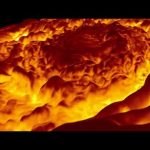
    In this animation the viewer is taken low over Jupiter’s north pole to illustrate the 3-D aspects of the region’s central cyclone and the eight cyclones that encircle it.
    Read more: https://www.nasa.gov/feature/jpl/nasa-s-juno-mission-provides-infrared-tour-of-jupiter-s-north-pole
    The movie utilizes imagery derived from data collected by the Jovian Infrared Auroral Mapper (JIRAM) instrument aboard NASA’s Juno mission during its fourth pass over the massive planet. Infrared cameras are used to sense the temperature of Jupiter’s atmosphere and provide insight into how the powerful cyclones at Jupiter’s poles work. In the animation, the yellow areas are warmer (or deeper into Jupiter’s atmosphere) and the dark areas are colder (or higher up in Jupiter’s atmosphere). In this picture the highest “brightness temperature” is around 260K (about -13°C) and the lowest around 190K (about -83°C). The “brightness temperature” is a measurement of the radiance, at 5 µm, traveling upward from the top of the atmosphere towards Juno, expressed in units of temperature.
    Credit: NASA/JPL-Caltech/SwRI/ASI/INAF/JIRAM

  • Artificial Intelligence for Villages | Senthil Kumar M | TEDxBITSathy

    Artificial Intelligence for Villages | Senthil Kumar M | TEDxBITSathy

    Motivated by the urge to help one of his own, Senthil kumar a man of great intellect took it upon
    himself to find the solution to a problem that stared right at the face of mankind.
    Senthil Kumar M hailing from Madurai, Tamil Nadu, India, has a great passion for innovating
    through technology to solve real-life problems.
    His vision is to build technology-enabled self-sustaining communities. He actively engages in
    community empowerment and education initiatives especially among girls through
    ‘MetooMentor’ – an NPO that mentors young women to innovate through technology.
    The ingenious device developed by him monitors and tracks the vitals of pregnant women living
    in the remote villages of India, transmitting the collected data over the cloud to the nearest health
    center by incorporating AI and DEEP LEARNING algorithms.
    Watch him speaking about the experiences and challenges he encountered throughout his
    journey!! Senthil Kumar M hailing from Madurai has a great passion for innovating through technology to solve real-life problems. He worked in fields like a wireless network, defence, maternal healthcare, and safety solutions and filed nearly 10 patents for the same. He began his career as an engineer in – Samsung | Qualcomm, but he quit his job to found two tech startups, GeoMeo and JioVio, in urban infrastructure and healthcare sector respectively. His vision is to build technology-enabled self-sustaining communities. He believes that we can achieve this only by bridging the digital divide in the society and by empowering the powerless/vulnerable.He actively engages in community empowerment and education initiatives especially among girls through ‘MetooMentor’ – an NPO that mentors young women to innovate through technology.With a handful of dedicated volunteers, He reached over 1000 girls in Madurai.He has been honoured as the top 5 Technology Explorers in India by Nasscom. This talk was given at a TEDx event using the TED conference format but independently organized by a local community. Learn more at https://www.ted.com/tedx

  • Paxi on the ISS: Sleeping in space

    Paxi on the ISS: Sleeping in space

    Our alien friend Paxi, ESA Education’s mascot, went to visit American astronaut Scott Tingle on board the International Space Station. Tingle tells Paxi about how astronauts sleep in weightlessness, an important aspect of living on the ISS.

    Credit: ESA/NASA

    #ESA
    #Paxi
    #InternationalSpaceStation

  • Science Max | MAGNET PART 1 | Season 1 Full Episode | Kids Science

    Science Max | MAGNET PART 1 | Season 1 Full Episode | Kids Science

    Have you ever done a science experiment and wondered “What would this be like if it were HUGE?” Welcome to Science Max, the exciting new series that turbocharges all the science experiments you’ve done at home.

  • Lowering the Boom of Supersonic Flight on This Week @NASA – April 6, 2018

    Lowering the Boom of Supersonic Flight on This Week @NASA – April 6, 2018

    Building the future of quiet supersonic flight, science and supplies delivered to the space station, and uncovering the farthest star ever seen – a few of the stories to tell you about, This Week at NASA!

    This video is available for download from NASA’s Image and Video Library: https://images.nasa.gov/details-Lowering%20the%20Boom%20of%20Supersonic%20Flight%20on%20This%20Week%20@NASA%20%E2%80%93%20April%206,%202018.html

  • NASA Psyche Mission: Journey to a Metal World

    NASA Psyche Mission: Journey to a Metal World

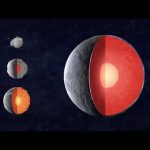
    Psyche is both the name of an asteroid orbiting the Sun between Mars and Jupiter — and the name of a NASA space mission to visit that asteroid, led by Arizona State University. Join the Psyche team to explore why this mission was selected for NASA’s Discovery Program, how we’ll get to the asteroid, what we hope to learn from Psyche, and the importance of scientific discovery.
    Credits: NASA/JPL-Caltech/Arizona State Univ./Peter Rubin/SSL

  • Upgrade Trailer #1 (2018) | Movieclips Trailers

    Upgrade Trailer #1 (2018) | Movieclips Trailers

    Check out the official Upgrade trailer starring Logan Marshall-Green! Let us know what you think in the comments below.
    ► Watch Upgrade on FandangoNOW: https://www.fandangonow.com/details/movie/upgrade-2018/MMV48FCE57BEECDD9E5CAFAD43FD0BB715E2?cmp=MCYT_YouTube_Desc

    US Release Date: June 1, 2018
    Starring: Logan Marshall-Green, Rosco Campbell, Richard Cawthorne
    Directed By: Leigh Whannell
    Synopsis: Set in the near-future, technology controls nearly all aspects of life. But when Grey, a self-identified technophobe, has his world turned upside down, his only hope for revenge is an experimental computer chip implant called Stem.

    Watch More Trailers:
    ► Hot New Trailers: http://bit.ly/2qThrsF
    ► Horror Trailers: http://bit.ly/2qRzZtr
    ► Action/Sci-Fi Trailers: http://bit.ly/2Dm6mTB

    Fuel Your Movie Obsession:
    ► Subscribe to MOVIECLIPS TRAILERS: http://bit.ly/2CNniBy
    ► Watch Movieclips ORIGINALS: http://bit.ly/2D3sipV
    ► Like us on FACEBOOK: http://bit.ly/2DikvkY
    ► Follow us on TWITTER: http://bit.ly/2mgkaHb
    ► Follow us on INSTAGRAM: http://bit.ly/2mg0VNU

    The Fandango MOVIECLIPS TRAILERS channel delivers hot new trailers, teasers, and sneak peeks for all the best upcoming movies. Subscribe to stay up to date on everything coming to theaters and your favorite streaming platform.

  • ESA – Space to Relax / Europe from Space

    ESA – Space to Relax / Europe from Space

    Having a stressful day? We got you covered! Sit back, turn the volume up and enjoy a relaxing moment brought to you by ESA and Lufthansa exploring the countries which make up the European Space Agency with images taken by the Copernicus Sentinel-1A, Sentinel-2A and Sentinel-3A, Proba-V and Envisat satellites.

    Don’t forget to favourite this video. You will always have a space to relax with us.

    Music by Matt Baute.

  • 5 Unbelievable Facts: FAKE? or PHYSICS?

    5 Unbelievable Facts: FAKE? or PHYSICS?

    Test yourself with our April Fools’ Day game: Fake or physics?
    SUBSCRIBE: http://youtube.com/whatthephysics?sub

    LINKS AND DETAILS:
    More details:
    #1. Speed of sound: Unlike light, sound needs a medium to travel through, and its speed depends on characteristics of that medium like density and temperature. In the extreme environment of a neutron star’s core, sound can travel extremely fast. But knowing that sound can’t surpass the speed of light, physicists can narrow down their models of neutron stars to include only those where “extremely fast” is less than light speed.

    For more: http://www.phys.utk.edu/news/archives/2015/speed-of-sound.pdf

    #2. Invisibility: The invisibility lens pictured in the video was developed at the University of Rochester. For more on how it works: http://www.rochester.edu/newscenter/watch-rochester-cloak-uses-ordinary-lenses-to-hide-objects-across-continuous-range-of-angles-70592/

    A more recent attempt at invisibility: https://www.ft.com/content/c6864c76-de7d-11e7-a0d4-0944c5f49e46

    #3. Relativity rainbows: A team at MIT created a game called “A Slower Speed of Light” that lets you see the world as you would at near-light speeds. Their trailer: https://www.youtube.com/watch?v=uu7jA8EHi_0

    #4. Acoustic levitation: A demo from Harvard Natural Sciences Lecture Demonstrations: https://www.youtube.com/watch?v=XpNbyfxxkWE

    #5: Quantum cloning: A video from MinutePhysics on why quantum mechanics doesn’t allow cloning: https://www.youtube.com/watch?v=owPC60Ue0BE

    CREDITS:
    Host, Producer: Greg Kestin
    Researchers: Greg Kestin, Samia Bouzid
    Writers: Samia Bouzid, Greg Kestin
    Editorial Input from: Julia Cort, Ari Daniel
    Filming: Greg Kestin
    Editing: Greg Kestin, Samia Bouzid
    Media: Hubble, NASA
    Special thanks: Entire NOVA team
    From the producers of PBS NOVA © WGBH Educational Foundation
    Funding provided by FQXi
    Ultrasonic Levitation video footage courtesy Harvard Natural Sciences Lecture Demonstrations
    Ultrasonic Levitation still courtesy of Argonne National Laboratory
    Music provided by APM
    Sound effects: Freesound.org