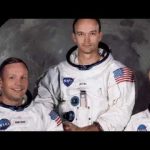
The scene with Dr Know from “AI: Artificial Intelligence”. RIP Robin Williams.
Author: kidibot
-

Docking of ATV Georges Lemaître to ISS
Highlights from the docking of ATV Georges Lemaître to the International Space Station. The fifth and final Automated Transfer Vehicle docked with the ISS at 13:30 UTC/15:30 CEST on 12 August 2014. The vehicle is carrying 6602 kg of freight, including 2680 kg of dry cargo and 3921 kg of water, propellants and gases.
-

Magic Arcs – Sick Science! #203
Check out cool science kits and toys: http://www.stevespanglerscience.com/
It’s probably the world’s most baffling optical illusion. Hold one arc above the other and ask the question, “Which arc is bigger?” The bottom arc will always look bigger than the top one, yet they are actually the same size! Reverse the arcs to make the other one look bigger. What you see is not always what you get! Keep reading and we’ll let you in on some presentation ideas and stunts that will really amaze and fool your friends.
Want more experiments like this? Check out http://www.stevespanglerscience.com/product/naked-eggs-and-flying-potatoes
Sick Science™ is a trademark of Steve Spangler, inc.
© 2014 Steve Spangler Science all rights reserved
-
ESA Euronews: Tschuri, die himmlische Badeente
Die Rosetta-Sonde hat ihren Zielkometen Tschuri erreicht. Damit hat für die Wissenschaftler von der ESA, die Rosetta vor zehn Jahren ins All geschickt haben, ein Wettlauf gegen die Zeit begonnen. Denn nun müssen sie den Kometen kartografieren und Daten sammeln, bevor sie im November den Landeroboter aus Rosetta ausklinken und auf Tschuri landen lassen. Dafür muss nun eine geeignete Landestelle gefunden werden – keine leichte Aufgabe. In der aktuellen Ausgabe von euronews Space zeigen uns die Kometen-Jäger in Darmstadt, wie man um einen Kometen fliegt, wie Rosetta ihr Ziel “sieht” und welche Bedeutung das ganze Projekt für die Wissenschaft und das Team hat.
-
ESA Euronews: Comet Hunters: Rosetta’s race to map 67P
The Rosetta mission is now on a race against time to prepare maps and collect data before the Philae lander is due to be sent down to the surface of comet 67P in November. In this edition of Euronews Space, the ‘Comet Hunters’ show us how to orbit a comet, how Rosetta ‘sees’ its target, and what the mission means to the world of science, and to this team in particular.
This video is available in the following languages:
Spanish: http://youtu.be/YBsk_qWuC8M
Portuguese: http://youtu.be/gVXQTYVjhkQ
Greek: http://youtu.be/PEbdC0FB1n8
Italian: http://youtu.be/D7RoCVKSYjg
German: http://youtu.be/AOdQc_vapF0
French: http://youtu.be/HF3Y6eKciLk
Hungarian soon! -
Orion recovery test update on This Week @NASA – August 8, 2014
NASA wrapped up its second Underway Recovery Test Aug. 4 with the Orion spacecraft, off the coast of San Diego, California. The agency teamed with Lockheed Martin, the U.S. Navy and the Department of Defense’s Human Space Flight Support Detachment 3 to evaluate primary and alternative methods to recover Orion after the spacecraft safely splashes down in the ocean at the conclusion of future deep space missions. Orion’s first spaceflight test with a splashdown in the Pacific Ocean is targeted for December. Also, Low-Density Supersonic Decelerator update, 2nd anniversary: 7 Minutes of Terror, Bolden visits MMS at Naval Research Lab, Scanning for algal blooms, Earth science showcase, and more!
-

Alexander Gerst talks about Rosetta
ESA astronaut Alexander Gerst talks with US media about the Rosetta mission, amongst other topics. Alexander is onboard the International Space Station at a member of the Expedition 40 crew and is living and working on the ISS for five and a months for the Bluedot mission. On 6 August, ESA’s comet chaser Rosetta arrived at comet 67P/Churyumov-Gerasimenko after a 10-year journey.
-

5 Fun Physics Phenomena
Five cool physics tricks, but how do they work?
Explanations: http://youtu.be/jIMihpDmBpY
Check out Audible.com: http://bit.ly/AudibleVe
Leave your ideas in the comments below or subscribe for the answers next week.Chris Hadfield in AUS: http://sciencealert.com.au/spaceoddity/
All tickets now sold out.The Cane Balance:
Slide your fingers in from the ends of a horizontal cane to find its centre of mass.Shot and Edited by Pierce Cook at the YouTube Space LA.
Music by Amarante: http://bit.ly/VeAmarante
-
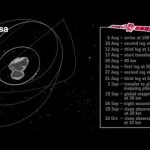
How to orbit a comet
What happens after Rosetta arrives at comet 67P/Churyumov–Gerasimenko? This animation describes the key dates for the next set of manoeuvres that will bring Rosetta even closer to the comet between August and October.
After arriving on 6 August, Rosetta will follow a set of two, three-legged triangular trajectories that require a small thruster burn at each apex. The legs are about 100 km long and it will take Rosetta between three and four days to complete each one.
The first triangle is conducted at a distance of about 100 km from the comet, the second at around 50 km. Then Rosetta will switch to a ‘global mapping phase’ at an altitude of about 30 km. During this period, it will make a ‘night excursion’, whereby the ground track of the spacecraft will be on the night-side of the comet (with the spacecraft still fully illuminated the Sun).
In October Rosetta will transfer to a close mapping phase to observe the comet from a distance of 10 km. The spacecraft will move even closer to dispatch lander Philae to the surface in November.
In this animation the comet is an artist’s impression and is not to scale with the spacecraft. The comet rotation is not representative (67P rotates once per 12.4 hours). Dates may be subject to change.
Credits: ESA
-
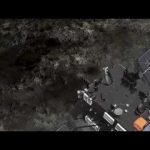
Philae’s mission at comet 67P
Extended version of Philae touchdown animation to include visualisations of some of the science experiments on the lander.
The animation begins with the deployment of Philae from Rosetta at comet 67P/Churyumov–Gerasimenko in November 2014. Rosetta will come to within about 10 km of the nucleus to deploy Philae, which will take several hours to reach the surface. Because of the comet’s extremely low gravity, landing gear will absorb the small forces of landing while ice screws in the probe’s feet and a harpoon system will lock the probe to the surface. At the same time a thruster on top of the lander will push it down to counteract the impulse of the harpoon imparted in the opposite direction. Once it is anchored to the comet, the lander will begin its primary science mission, based on its 64-hour initial battery lifetime. The animation then shows five of Philae’s 10 instruments in action: CIVA, ROLIS, SD2, MUPUS and APXS.
Rosetta’s Philae lander is provided by a consortium led by DLR, MPS, CNES and ASI.
Also watch:
Philae touchdown animation: http://youtu.be/BzfJlXHiagw
Philae’s panoramic camera (CIVA): http://youtu.be/k1IFU6kxcD8
Science on the comet: http://youtu.be/Pi0rwJktEF8Credits: ESA/ATG medialab
-
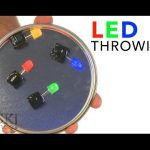
LED Throwies – Sick Science! #202
For the full experiment, click here: http://www.stevespanglerscience.com/lab/experiments/led-throwies
Graffiti Research Lab first introduced us to the awesome throwie idea, and we loved it. Ever since, we’ve been playing around with the idea of using light-emitting diodes (LED) and throwies as a great hands-on method to teaching science. You can do it, too, and we’ll show you how!
Want more experiments like this? Check out http://www.stevespanglerscience.com/product/naked-eggs-and-flying-potatoes
Sick Science™ is a trademark of Steve Spangler, inc.
© 2014 Steve Spangler Science all rights reserved
-
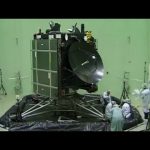
Rosetta Spacecraft at ESA’s ESTEC Test Centre
The road to humankind’s first rendezvous with a comet began at ESA’s technical centre in the Netherlands. The pioneering Rosetta spacecraft and its Philae lander were tested in simulated space conditions to ensure they could withstand the difficult journey.
Credits: ESA
-
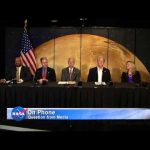
Mars 2020 Rover and Beyond News Teleconference from NASA Headquarters in Washington DC
During a July 31 briefing at NASA headquarters, agency officials announced seven science instruments, out of fifty-eight proposed, have been selected to be part of the next rover NASA will send to Mars in 2020. The Mars 2020 rover will be a new version of the Curiosity rover currently operating on Mars – with more sophisticated hardware to conduct unprecedented science and exploration technology investigations, including geological assessments, habitability of the environment and searching for signs of past life on the Red Planet.
-
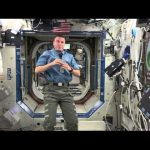
NASA Astronaut ISS Crew Member Reid Wiseman Discusses Life in Space with ABC’s “Nightline”
Aboard the International Space Station, Expedition 40 Flight Engineer Reid Wiseman of NASA discussed the status of his five and a half month mission on the orbital laboratory with the ABC News “Nightline” program during an in-flight interview July 31. Wiseman, who has garnered international attention for his enthusiastic involvement in social media, arrived on the station in late May and will remain in orbit until November, when he returns to Earth in a Russian Soyuz spacecraft.
-

#RosettaAreWeThereYet – Fabulous fables and tales of tails
Long, long ago men and women on Earth gazed in wonder at comets that appeared in the sky. What where these mysterious objects? Rosetta and Philae learn about the history of comets from their grandfather, Giotto.
This video is also available in the following languages:
German: http://youtu.be/TCUPKctIJcs
Spanish: http://youtu.be/07PjU9kJ7uI
Italian: http://youtu.be/UoHSiDz8u38
French: http://youtu.be/LArEprzylNYMore videos in the series are available in this playlist:
https://www.youtube.com/playlist?list=PLbyvawxScNbui_Ncl9uQ_fXLOjS4sNSd8
Credit: ESA -
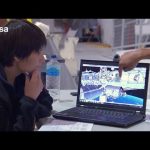
Samantha Cristoforetti, ESA astronaut training in Houston
Samantha Cristoforetti from Italy joined ESA’s Astronaut Corps in 2009. An experienced fighter pilot and Captain in the Italian Air Force, she’s been proposed by the Italian Space Agency ASI to fly to the International Space Station later this year. After extensive international training she’ll be launched from Baikonur Cosmodrome in Kazakhstan, becoming the eighth ESA astronaut to participate in a long-duration mission onboard the ISS.
Connect with Samantha on social media at http://samanthacristoforetti.esa.int
-
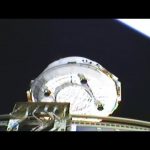
ATV-5 separation from Ariane 5
These images were taken by cameras on the Ariane 5 launcher that rocketed skywards on 29 July 2014 with Europe’s last cargo vessel to visit the International Space Station, ATV-5.
The video shows the separation of ATV Georges Lemaîtres and its Ariane 5.
From then on, it was a self-sufficient spacecraft heading towards the Space Station. The video also shows Ariane’s last stage manoeuvring out of the way.
ATV-5 is carrying almost 6.6 tonnes of supplies to the International Space Station, including a record amount of dry cargo – 2682 kg.
-
ATV Johannes Kepler – Orbits and body motion in space
This video is part of a series of educational videos that ESA is releasing based on the five visionaries that lent their name to Europe’s space freighters.
Jules Verne, Johannes Kepler, Edoardo Amaldi, Albert Einstein and Georges Lemaître form the inspiration to explain the principles of physics to young and older audiences.
Presented by Anu Ojha, this video offers a good basis to introduce schoolchildren and the general public to concepts of orbital mechanics.
Accompanying these videos are also a new set of resources that ESA education is producing: Teach with Space, a large set of demonstrations and teacher guides intended to bring the excitement of space into the classroom to inspire the next generation.
Classroom demos:
http://www.esa.int/spaceinvideos/Videos/2014/07/Marble-ous_ellipses_-_classroom_demonstration_video_VP02
http://www.esa.int/spaceinvideos/Videos/2014/07/Gravity_wells_-_classroom_demonstration_video_VP04 -
Chiedilo a Samantha: qual e’ la parte piu’ impegnativa dell’addestramento?
Due giovani terrestri hanno mandato una domanda per Samantha Cristoforetti per chiederle, secondo lei, quale parte del già’ difficile allenamento da astronauta e’ la più impegnativa.
-
What Is The Speed of Dark?
twitter: http://www.twitter.com/tweetsauce
instagram: http://www.instagram.com/electricpants
facebook: http://www.facebook.com/VsauceGaming
SOURCES BELOW:this is the video where I talk about THE SPEED OF PUSH: https://www.youtube.com/watch?v=Do1lm9IevYE
Big thanks to Martin Archer for help with this episode: http://www.martinarcher.co.uk/
And thanks to Guy Larsen for his shadow magic: https://twitter.com/guylar
music by http://www.YouTube.com/JakeChudnow
and http://www.audionetwork.comshadows faster than light:
http://math.ucr.edu/home/baez/physics/Relativity/SpeedOfLight/FTL.html#3
http://physics.stackexchange.com/questions/63434/could-the-shadow-move-with-faster-than-light-speed
http://www.madsci.org/posts/archives/2000-02/950834634.Ph.q.htmlmaking the moon brighter: http://what-if.xkcd.com/13/
sunset and earth’s shadow and belt of venus in single pics:
http://apod.nasa.gov/apod/ap131024.html
http://apod.nasa.gov/apod/ap100729.htmlamounts of evening-types in a city: http://weatherspark.com/averages/33125/Honolulu-Hawaii-United-States
superluminal scissors:
http://math.ucr.edu/home/baez/physics/Relativity/SR/scissors.html
http://boards.straightdope.com/sdmb/archive/index.php/t-69757.htmlwave animations:
http://www.ablongman.com/mullin/AnimationPages/FigsI-19&20.html
http://www.acs.psu.edu/drussell/Demos/SWR/SWR.html
http://resource.isvr.soton.ac.uk/spcg/tutorial/tutorial/Tutorial_files/Web-inter-superp.htmphase velocity vs. group velocity: http://resource.isvr.soton.ac.uk/spcg/tutorial/tutorial/Tutorial_files/Web-further-dispersive.htm
faster than light dark patches:
http://www.askamathematician.com/2013/02/q-is-darkness-a-wave-the-way-light-is-a-wave-what-is-the-speed-of-dark/
http://www.physicsclassroom.com/class/light/Lesson-3/The-Path-Differencemake a light interference pattern at home:
http://www.exploratorium.edu/snacks/diffraction/
http://www.instructables.com/id/How-to-perform-Interference-and-Diffranction-at-Ho/the speed of ignorance:
http://www.brainpickings.org/index.php/2012/04/02/stuart-firestein-ignorance-science/
http://philosophicalfallibilism.blogspot.com/2009_03_20_archive.html
http://kk.org/thetechnium/2008/10/the-expansion-o/
http://louisecharente.wordpress.com/2013/10/24/the-discovery-of-ignorance/Dunning-Kruger:
http://www.huffingtonpost.com/david-macaray/the-dunningkruger-effect_b_4476166.html
http://en.wikipedia.org/wiki/McArthur_Wheeler“animalcules”: http://www.leben.us/index.php/component/content/article/59-volume-3-issue-4/236-antoni-van-leeuwenhoeks-amazing-little-animalcules
-
ATV-5 Georges Lemaître mission
ATV-5 is the last in the series to deliver supplies to the International Space Station. The fifth Automated Transfer Vehicle was launched from Europe’s Spaceport in French Guiana on 29 July 2014. It has been named Georges Lemaître as a tribute to the Belgian physicist, father of the Big Bang theory.
After launch on an Ariane 5 from Kourou, ATV automatically navigates to a precision docking with the Station’s Russian Zvezda module. It remains attached to the ISS for up to six months before reentering the atmosphere and deliberately burning up together with several tonnes of Station waste.
-
Homemade Projector – Sick Science! #201
See the full experiment here: http://www.stevespanglerscience.com/lab/experiments/homemade-projector
Smartphones are used more frequently than for watching videos than ever before, but sometimes you just want a bigger viewing area. For those strapped for cash or in the mood to do something creative, you can construct your own Homemade Projector. All the project takes is a cardboard box, a smart phone, and a few basic tools. The result is a real, working projector that you’ve made with your own hands!
Want more experiments like this? Check out http://www.stevespanglerscience.com/product/naked-eggs-and-flying-potatoes
Sick Science™ is a trademark of Steve Spangler, inc.
© 2014 Steve Spangler Science all rights reserved
-

#RosettaAreWeThereYet – Where are YOU going?
We don’t know where you’re going, but we do know that Rosetta is about to arrive at comet 67P/Churyumov-Gerasimenko. Join the adventure and share your ‘are we there yet?’ photos to win great prizes.
More details and competition rules at http://www.esa.int/RosettaAreWeThereYet.
-

ATV-5: Georges Lemaître, Monseigneur Big Bang
With ATV-5 George Lemaitre soon to be launched to the ISS from Europe’s Spaceport in Kourou, ESA pays tribute to George Lemaitre, the Belgian cleric and professor who was the first to conceive the idea of a big bang.
The name of the man who proposed the prevailing ‘expansion’ theory on the beginning of the universe was proposed by Belgium’s delegation to ESA.
This video explains who was Georges Lemaitre and how he contributed to modern Cosmology. It includes an interview in English and French with Professor Dominique Lambert, Theoretical physics – University of Namur
-

Apollo 11 celebration, Next Giant Leap anticipation on This Week @NASA
There was more celebration of Apollo 11’s 45th anniversary at several events around the country – and more opportunity for the agency to highlight its “next giant leap” to send humans to Mars. Those events included a ceremony during which Kennedy Space Center’s Operations and Checkout Building was renamed on July 21, in honor of Apollo 11 Commander Neil Armstrong, who passed away in 2012. The facility, which was used to process and test Apollo spacecraft, is now being used to assemble NASA’s Orion spacecraft. Also, ISS astronauts appear in the House, Space station cargo ships, Extreme underwater mission underway, RS-25 Engine installed for testing, and more!
-
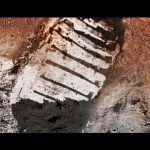
NASA’s Next Giant Leap
It was 45 years ago that Neil Armstrong took the small step onto the surface of the moon that changed the course of history. The Apollo missions blazed a path for human exploration to the moon and today NASA is taking its Next Giant Leap to near-Earth asteroids, Mars and beyond. As we develop and test the new tools of 21st century spaceflight on the human path to Mars, we once again will change the course of history.
-
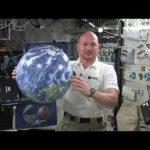
ESA astronaut Alexander Gerst greets German planetariums
On 25 July, several German planetariums connected with ESA’s Astronaut Centre in Cologne, Germany, for a Google Hangout session.
Usually, visitors to a planetarium are explore the starry night sky. But on the evening of 25 July eight German planetariums organised an event to talk about Alexander Gerst’s Blue Dot mission on the International Space Station, the European Astronaut Centre and about human spaceflight in general. A highlight of the evening was this message from Alexander Gerst in space.
-
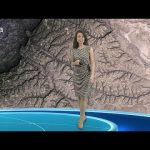
Earth from Space: Cal Madow
Earth from Space is presented by Kelsea Brennan-Wessels from the ESA Web-TV virtual studios. In the one-hundred-thirteenth edition, visit the Cal Madow mountain range in northern Somalia.
See also http://www.esa.int/spaceinimages/Images/2014/07/Cal_Madow_mountain_range_Somalia to download the image.
-

Five Divers – Sick Science! #200
We’ve found an awesome new science activity that uses Cartesian divers. No, it’s not Hook or Squidy, although they are pretty awesome, too. We’re talking about the Five Divers experiment. This project features, you guessed it, five individual Cartesian divers, but they’re all in the same bottle. Give the bottle a squeeze and watch as more divers sink as the pressure increases. Try it for yourself!
Want more experiments like this? Check out http://www.stevespanglerscience.com/product/naked-eggs-and-flying-potatoes
Sick Science™ is a trademark of Steve Spangler, inc.
© 2014 Steve Spangler Science all rights reserved
-
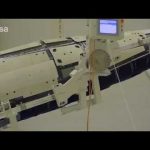
Measuring ESA’s IXV spaceplane
ESA’s Intermediate eXperimental Vehicle, IXV, is tilted and turned along and around all three axes at ESA’s Technical Centre, ESTEC, in the Netherlands to measure its centre of gravity and moments of inertia, because both influence its flying characteristics.
To be launched on Vega in early November 2014, IXV will flight-test the technologies and critical systems for Europe’s future automated reentry vehicles returning from low orbit.
-
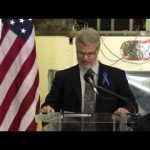
NASA Renames Historic Facility in Honor of Neil Armstrong
During a ceremony at Kennedy Space Center on Monday, July 21, NASA renamed the center’s Operations and Checkout Building in honor of late astronaut Neil Armstrong, who passed away in 2012. The ceremony included NASA Administrator Charles Bolden, Kennedy Center Director Robert Cabana, Apollo 11’s Michael Collins and Buzz Aldrin and astronaut Jim Lovell, who was the mission’s back-up commander. International Space Station NASA astronauts Steve Swanson, who is the current station commander, and Reid Wiseman, also took part in the ceremony via satellite downlink from their orbiting laboratory 260 miles above Earth.
Kennedy’s Operations and Checkout Building has played a vital role in NASA’s spaceflight history. It was used during the Apollo program to process and test the command, service and lunar modules. Today, the facility is being used to process and assemble NASA’s Orion spacecraft, which the agency will use to send astronauts to an asteroid in the 2020s and Mars in the 2030s.
-

#RosettaAreWeThereYet – Once upon a time…
..there was a spacecraft called Rosetta. Rosetta had been travelling in space for 10 years, towards a comet called 67P/Churyumov-Gerasimenko. Before long, Rosetta was able to see the comet in the distance, and she took stunning pictures as she got closer and closer. There was only a little way to go now…
This video is also available in the following languages:
Italian: https://youtu.be/PnF9KG5XN1s
French: https://youtu.be/g5ON54S07f4
Spanish: https://youtu.be/tfv1kGI7ho4
German: https://youtu.be/FdjSBCB93sUMore videos in the series are available in this playlist:
https://www.youtube.com/playlist?list=PLbyvawxScNbui_Ncl9uQ_fXLOjS4sNSd8 -
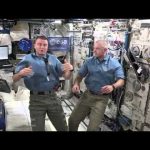
NASA’s Next Giant Leap
A live conversation about the future of space exploration with actor, director and narrator Morgan Freeman. He spoke at NASA’s Jet Propulsion Laboratory in Pasadena, California, about his personal vision for space. The event also included NASA astronaut Reid Wiseman and Expedition 40 Commander Steve Swanson participating from the International Space Station.
-

Apollo 11 yesterday, Next Giant Leap tomorrow on This Week @NASA
NASA is celebrating the 45th anniversary of the historic Apollo 11 mission to the moon. On July 20, 1969, Neil Armstrong and Buzz Aldrin, with crewmate Michael Collins manning the command service module from lunar orbit, became the first humans on the moon — with Armstrong’s historic first step onto the lunar surface becoming a symbolic giant leap for humanity. Today, with Apollo 11 as inspiration, NASA is taking the steps needed for America’s next giant leap, to send astronauts to Mars. The path to Mars will use a stepping stone approach consisting of key elements, including human health and technology research aboard the International Space Station; development and evolution of NASA’s Space Launch System rocket and Orion deep space capsule and development of other game-changing technologies to enable tomorrow’s missions. Also, Science instruments for Europa mission?, Cygnus cargo craft arrives at ISS, News conference with next ISS crew, 5th Anniversary of Bolden’s Confirmation, The Search for Life in the Universe.
-
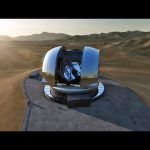
ESA Euronews: Empieza la construcción del telescopio óptico-infrarrojo más grande del mundo
Esta zona remota del desierto de Atacama, en Chile, es famosa porque aquí no hay nada. No hay agua, ni plantas, ni animales. Esto hace que sea un lugar perfecto para un proyecto realmente innovador, el Telescopio Europeo Extremadamente Grande, E-ELT.
Credits: ESA/Euronews
-
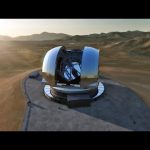
ESA Euronews: Um Telescópio Extremamente Grande para um Universo Infinito
O deserto de Atacama, no Chile é famoso por não ter nada – não tem água, nem plantas, nem animais. O que faz dele o local perfeito para acolher projeto verdadeiramente inovador, a construção do E-ELT, o European Extremely LargeTelescope ou o Telescópio Europeu Extremamente Grande.
Credits: ESA/Euronews
-
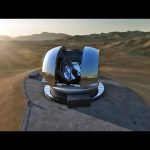
ESA Euronews: E-ELT: Das riesige Teleskop soll unbekannte Gebiete des Universums erforschen
Das E-ELT ist ein europäisches Projekt, um das weltweit größte optische Infrarot-Teleskop zu bauen. Die bahnbrechende Konstruktion in der Atacamawüste in Chile wird ferne Exoplaneten mit einer nie gekannten Detailschärfe untersuchen.
Credits: ESA/Euronews
-
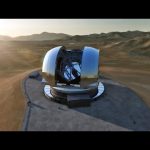
ESA Euronews: E-ELT : le télescope européen de l’extrême
Dans le désert d’Atacama au Chili, la construction du Télescope géant européen, l’E-ELT est entrée dans sa phase concrète avec la création d’une plate-forme au sommet d’une montagne à 3000 mètres d’altitude. C’est là que cet instrument optique / infrarouge le plus grand au monde sera mis en service au début de la prochaine décennie. Ses performances permettront notamment d’en savoir plus sur les exoplanètes et éventuellement, de faire avancer la vaste quête vers une autre forme de vie.
Credits: ESA/Euronews
-

ESA Euronews: E-ELT: Europe’s extreme new telescope
Work is underway to build the E-ELT, a telescope that could one day find signs of life on distant planets. With a 39-metre mirror, it will be the world’s biggest optical and infrared telescope.
Other languages available:
Italian: http://youtu.be/vrQZEBOWqsM
French: http://youtu.be/5enycnYuVR8
German: http://youtu.be/sCTKGGmHp2s
Spanish: http://youtu.be/_0jcfXKxjLI
Greek: http://youtu.be/e1y3FNZK9h0
Portuguese: http://youtu.be/ZX-srt2dlr8
Hungarian: http://youtu.be/nGyRcuk4ydkCredits: ESA/Euronews