Read the full experiment at http://www.stevespanglerscience.com/experiment/homemade-handboiler
Are you hot enough to make water bubble with just the heat from your touch? What would you say if we told you that you could make water boil with nothing more than your touch? Impossible, right? Give this experiment a try and find out.
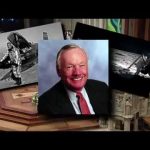
NASA Administrator Charles Bolden joined other agency officials and dignitaries at the Washington National Cathedral to honor the life and career of astronaut Neil Armstrong, the first man to walk on the moon, who died Aug. 25. The memorial was broadcast live on NASA Television and streamed on nasa.gov and the National Cathedral’s website.
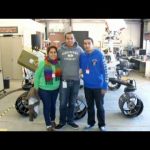
Luis Dominguez is a systems engineer in the Systems Integration and Test Group at NASA’s Jet Propulsion Laboratory, Pasadena, California (JPL). Dominguez is a Test Conductor/Analyst for the Mars Science Laboratory (MSL) Mission System Testbed Team. He started at JPL as an academic part time employee in the fall of 2007 working for the MSL Assembly, Test, and Launch Operations (ATLO) Team and subsequently moved to the Testbed team in 2009. He was born and raised in Los Angeles, California in the Leimert Park/Mid-City area. Luis holds a B.S. in Mechanical Engineering from the California State Polytechnic University, Pomona.
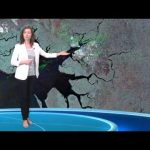
Earth from Space is presented by Kelsea Brennan-Wessels from the ESA Web-TV virtual studios. In the thirty-fifth edition, we explore West Africa, the Gulf of Guinea and the Cameroon Volcanic Line.
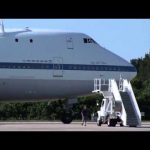
NASA’s Shuttle Carrier Aircraft (SCA), a modified 747 jumbo jet, touched down just before 4 p.m. EDT on Tuesday at the Shuttle Landing Facility (SLF) at the agency’s Kennedy Space Center in Florida. The SCA, which is designated NASA 905, was the original shuttle carrier and was used in 1977 for the space shuttle approach and landing tests. This series of eight captive and five free flights with the orbiter prototype Enterprise, in addition to ground taxi tests, validated the aircraft’s performance as an SCA, in addition to verifying the glide and landing characteristics of the orbiter configuration — paving the way for orbital flights and ferry flights. NASA 905 now will fly the final ferry flight in Space Shuttle Program history.
Read the full experiment at http://www.stevespanglerscience.com/experiment/red-cabbage-chemistry
Ahh, the sweet smell of science! Invite your friends over to share in this super smelly but really cool activity. Plug your nose and get ready to make your own red cabbage indicator that will test the acidity or alkalinity of certain liquids.
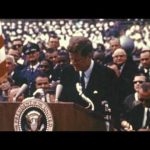
50 years ago, President John F. Kennedy delivered his historic “Space Challenge” speech to students and faculty at Rice University in Houston that included this now-iconic statement, “We choose to go to the moon not because it is easy but because it is hard.” See and hear the speech in its entirety this Wednesday at 10:15 a.m. Central on NASA TV just as it was delivered that morning on September 12, 1962
Read the full experiment at http://www.stevespanglerscience.com/experiment/sharpiepenscience
It’s a brand new tie dye technique without the mess… and the results are amazing! This experiment combines chemistry and art to create a design that is sure to get lots of attention.
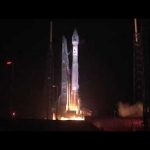
NASA’s Radiation Belt Storm Probes (RBSP), the first twin-spacecraft mission designed to explore our planet’s radiation belts, launched into the predawn skies at 4:05a.m. EDT Thursday from Cape Canaveral Air Force Station, Fla.
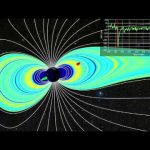
The two satellites, each weighing just less than 1,500 pounds, comprise the first dual-spacecraft mission specifically created to investigate this hazardous regions of near-Earth space, known as the radiation belts. These two belts, named for their discoverer, James Van Allen, encircle the planet and are filled with highly charged particles. The belts are affected by solar storms and coronal mass ejections and sometimes swell dramatically. When this occurs, they can pose dangers to communications, GPS satellites and human spaceflight.
The hardy RBSP satellites will spend the next 2 years looping through every part of both Van Allen belts. By having two spacecraft in different regions of the belts at the same time, scientists finally will be able to gather data from within the belts themselves, learning how they change over space and time. Designers fortified RBSP with special protective plating and rugged electronics to operate and survive within this punishing region of space that other spacecraft avoid. In addition, a space weather broadcast will transmit selected data from those instruments around the clock, giving researchers a check on current conditions near Earth.
Read the full experiment at http://www.stevespanglerscience.com/experiment/spinning-match-table-trick
When you cautiously balance a matchstick on the rim of a coin that has also been precariously balanced onto another coin, it might sound like rotating the matchstick will cause it all to come tumbling down. We’ll show how this isn’t just possible, it’s downright cool.
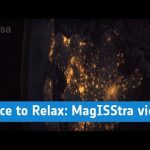
A breathtaking collection of photos taken by ESA Astronaut Paolo Nespoli during his 6-month MagISStra mission on the International Space Station 25 December 2010 – 24 May 2011.
Music: Dream Elements by Green Sun licensed by Ambient Music Garden.
Video produced for Lufthansa inflight entertainment (released June 2011).
Neil Armstrong, Apollo 11 Commander and first person to walk on the moon, guides us through the history of the National Aeronautics and Space Administration in the half-century since its establishment in 1958. Produced by NASA TV, 2008.
This live program at the National Air and Space Museum in Washington, DC highlights the success of America’s space program as it met President Kennedy’s challenge of putting a man on the moon by the end of the 1960s. Neil Armstrong, Apollo 11 Commander, who was the first person to set foot on the lunar surface on July 20, 1969, features prominently.
Premiered in 2008 at NASA’s Golden Anniversary Gala held at the Smithsonian National Air and Space Museum’s Udvar-Hazy Center in Chantilly, Va., this 13-and-a-half-minute video produced by NASA TV highlights the agency’s historic half-century milestones, including the landing of Apollo 11’s Neil Armstrong and Buzz Aldrin on the moon in 1969.
Read the full experiment at http://www.stevespanglerscience.com/experiment/prayer-vase-genie-in-a-bottle
The science magician displays a bottle and a short length of rope. She explains that according to the ancient legends, a genie lives in the bottle. While you can’t see the genie, if you tickle him with something like a rope, it makes him mad and he hangs onto the rope. The rope is inserted into the bottle and jiggled a bit. When the bottle with the rope still inside it is turned upside down, the rope is seen to dangle unsupported from the bottle. The magician explains that the genie is even strong enough to make the bottle float. Now, the bottle and rope are turned right side up. While holding only the end of the rope, the magician lets go of the bottle and it is seen to float at the end of the rope. On command, the genie releases the rope, it is easily removed from the bottle and handed out for examination. The bottle may be examined, as well. Nothing unusual will be found. But how?
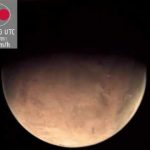
This movie was generated from 600 individual still images captured by the Visual Monitoring Camera (VMC) on board Mars Express during the 8194th orbit on 27 May 2010 between 02:00 and 09:00 UTC (04:00-11:00 CEST) and were transmitted to Earth a few hours later via ESA’s 35m New Norcia deep space station in Australia.
The portion of the movie where the planet beneath the spacecraft was dark has been largely removed since no detail was visible.
The images show the spacecraft’s slow descent from high above the planet, speeding up as closest approach is passed and then slowing down again as the distance increases. Towards the start of the video, the giant Martian volcanoes can be seen followed by the beginning of the ice coverage around the South Pole as the spacecraft crosses over to the night side of the planet. Shortly after emerging back onto the day side of the planet, the beautiful North Pole can be observed, followed by the long climb away from the planet over the equator. Finally, at the end of the movie, the disk of Phobos can be seen crossing from top to bottom of the image.
Credit: ESA – European Space Agency, CC BY-SA 3.0 IGO
Copyright Notice:
This work is licenced under the Creative Commons Attribution-ShareAlike 3.0 IGO (CC BY-SA 3.0 IGO) licence. The user is allowed to reproduce, distribute, adapt, translate and publicly perform this publication, without explicit permission, provided that the content is accompanied by an acknowledgement that the source is credited as ‘ESA/DLR/FU Berlin’, a direct link to the licence text is provided and that it is clearly indicated if changes were made to the original content. Adaptation/translation/derivatives must be distributed under the same licence terms as this publication. To view a copy of this license, please visit http://creativecommons.org/licenses/by-sa/3.0/igo/
An early look at artificial Intelligence. Guests includes Edward Feigenbaum of Stanford University, Nils Nilsson of the AI Center at SRI International, Tom Kehler of Intellegenetics, Herb Lechner of SRI, and John McCarthy of Stanford. Featured demonstrations include Inferential Knowledge Engineering and the programming language LISP. Originally broadcast in 1984.
Q. What is artificial intelligence?
A. It is the science and engineering of making intelligent machines, especially intelligent computer programs. It is related to the similar task of using computers to understand human intelligence, but AI does not have to confine itself to methods that are biologically observable.
Q. Yes, but what is intelligence?
A. Intelligence is the computational part of the ability to achieve goals in the world. Varying kinds and degrees of intelligence occur in people, many animals and some machines.
Q. Isn’t there a solid definition of intelligence that doesn’t depend on relating it to human intelligence?
A. Not yet. The problem is that we cannot yet characterize in general what kinds of computational procedures we want to call intelligent. We understand some of the mechanisms of intelligence and not others.
Q. Is intelligence a single thing so that one can ask a yes or no question “Is this machine intelligent or not?”?
A. No. Intelligence involves mechanisms, and AI research has discovered how to make computers carry out some of them and not others. If doing a task requires only mechanisms that are well understood today, computer programs can give very impressive performances on these tasks. Such programs should be considered “somewhat intelligent”.
Q. Isn’t AI about simulating human intelligence?
A. Sometimes but not always or even usually. On the one hand, we can learn something about how to make machines solve problems by observing other people or just by observing our own methods. On the other hand, most work in AI involves studying the problems the world presents to intelligence rather than studying people or animals. AI researchers are free to use methods that are not observed in people or that involve much more computing than people can do.
Q. What about IQ? Do computer programs have IQs?
A. No. IQ is based on the rates at which intelligence develops in children. It is the ratio of the age at which a child normally makes a certain score to the child’s age. The scale is extended to adults in a suitable way. IQ correlates well with various measures of success or failure in life, but making computers that can score high on IQ tests would be weakly correlated with their usefulness. For example, the ability of a child to repeat back a long sequence of digits correlates well with other intellectual abilities, perhaps because it measures how much information the child can compute with at once. However, “digit span” is trivial for even extremely limited computers.
Hosted by Stewart Cheifet, Computer Chronicles was the world’s most popular television program on personal technology during the height of the personal computer revolution. It was broadcast for twenty years from 1983 – 2002. The program was seen on more than 300 television stations in the United States and in over 100 countries worldwide, with translations into French, Spanish, Chinese, and Arabic. The series had a weekly television broadcast audience of over two million viewers.
Many of the series programs are distributed on video to corporations and educational institutions for use in computer training. Computer Chronicles program segments have also been bundled with various computer text books by major publishers.
Special Thanks to Anne Ketola for all the awesome NASA gear, and David Zimmerman for video equipment!
Lyrics:
When I EDL, time for seven minutes of flamin’ hell
Rover’s touchin’ down
everybody passin’ peanuts around, yeah
We’re at mission control, getting full use outta ev-er-y Sol (wa!)
Just 25 feet left to go
It’s Curiosity, look out below (yo)
Crane lower that rover (ah)
Crane lower that rover (ah)
Crane lower that rover (ah)
N-N-N-Now bug out!
Crane lower that rover
Crane lower that rove
Crane lower that rover
Now bug out!
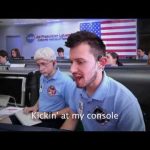
Kickin’ it at my con(sole), this is what I see (okay)
Data streaming back from curiosity
I got stars on my ‘hawk
and I ain’t afraid to show it (show it, show it, show it)
We’re NASA and we know it
We’re NASA and we know it
(Yo)
When I look for ice, gotta calibrate, gotta be precise
And when I raise the mast, panoramic views are unsurpassed (wha?)
This is how I rove, baking red rocks in my nuclear stove
We headed to the peak, with my laser eye
No one to bury me when it’s time to die (ow!)
Crane lower that rover
Crane lower that rover
Crane lower that rover
Now bug out!
Crane lower that rover
Crane lower that rover
Crane lower that rover
Now bug out!
Shoutout to Carl the Sage (and) Neil Degrasse T (B.A.!)
Shoutout to JPL and the Rocker-Bogie
We’re better than SpaceX
And we ain’t afraid to show it (show it, show it, show it)
We’re NASA and we know it
We’re NASA and we know it
ESA astronaut Andre Kuipers invites you to follow a guided tour of the complete International Space Station. Andre himself is the tour guide during this unique visit to the Station.
In the space of one hour Andre shows every module of the International Space Station and explains the ins and outs of living in the largest laboratory in space. This video gives a wonderful glimpse of how life is for an astronaut living in the Station. From science and maintenance to operating robotic arms and finding lost equipment, Andre takes you from the Japanese research module via the Station’s cellar and ‘garden’ to the Russian segment, ending his tour with breath-taking views of Earth from the European-built Cupola observation module.
This video was recorded during the end of ESA’s PromISSe mission. Andre spent a total of 193 days in space before returning to Earth on 1 July 2012.
Read the full experiment at http://www.stevespanglerscience.com/experiment/vanishing-styrofoam-cup
Styrofoam is one of the most complex and difficult materials on earth when it comes to decomposition. But, believe it or not, there is a way to make an entire cup of styrofoam vanish in a matter of seconds. It doesn’t involve fire, so there’s no acrid smoke released, either. It’s not actual magic, but knowing the science behind what takes places is pretty darn awesome.
“Making NASA History” is a 12 minute video introducing kids to the key moments in the history of the American space program. This video combines historical footage, photographs, and audio files with narration by two spacesuit-sporting interns from the NASA History Program Office. The goal of this video is to inspire both kids and adults to appreciate and learn more about NASA’s many accomplishments in space exploration and aeronautics.
With 14 days until its launch, the Radiation Belt Storm Probes mission is previewed by scientists at NASA Headquarters in Washington. RBSP will study the role of the Earth’s radiation belts in producing space weather that can adversely affect communications and electronic systems.
Read the full experiment at http://www.stevespanglerscience.com/experiment/water-balloon-in-a-bottle
If we asked you to blow up a balloon inside of a bottle or, better yet, fill that balloon with water, you’d probably think that it’s no problem. Think again! The Water Balloon in a Bottle experiment will show you just how powerful air pressure actually is, and you’ll get to play some fun tricks on your friends. Having fun with friends and learning along the way? It’s a hands-on science two-for-one!
NASA’s most advanced Mars rover Curiosity has landed on the Red Planet. The one-ton rover, hanging by ropes from a rocket backpack, touched down onto Mars Sunday to end a 36-week flight and begin a two-year investigation.
The Mars Science Laboratory (MSL) spacecraft that carried Curiosity succeeded in every step of the most complex landing ever attempted on Mars, including the final severing of the bridle cords and flyaway maneuver of the rocket backpack.
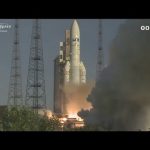
Thursday 2 August 2012 marked the 50th successful Ariane flight in a row: an Ariane 5 was launched from Europe’s Spaceport in French Guiana to perform a dual deployment of two telecommunications satellites, Intelsat 20 and Hylas-2, into their planned transfer orbits.
Lift off of flight VA208 took place at 22:54 CEST; 17:54 French Guiana time. This was Ariane 5’s fourth launch of 2012, continuing a line of launch successes unbroken since 2003.
Read the full experiment at http://www.stevespanglerscience.com/experiment/magic-with-physics-pendulum
While many magicians rely on the arts of deception or slight of hand to baffle their audience, we like to use principles of science to achieve the same effect. With the Pendulum Stop trick, you’ll use the sympathetic motion of two pendulums to make your friends think they’ve developed telekinetic powers… or are a Jedi… we’ll leave that part up to them. All you need are some household items and you’ll be fooling people in no time at all!
Actor William Shatner narrates this thrilling video about NASA’s Curiosity rover, from its entry and descent through the Martian atmosphere to its landing and exploration of the Red Planet in NASA’s hardest planetary science mission to date.
The Curiosity rover continues to make its way to Mars and its scheduled landing in Gale Crater on Monday, Aug. 6. Also Mars Yard; New record set; New heat shield test and new mission previewed; Landsat 40 and remembering Sally Ride and more….
Traditionally, engineers faced with the task of designing a new, complex system or structure – a car, an aircraft or a satellite – work sequentially, one step at a time, passing the design from engineer to engineer. This is inefficient and consumes time and resources.
For more than a decade, many of ESA’s sophisticated spacecraft have been designed with the help of the CDF, making use of very advanced iterative techniques – hence its title ‘concurrent’.
Concurrent engineering puts all related engineers, with all their brain power and required tools together with the final user representative – or customer – in the same location at the same time. This allows for iterative design at a fast pace, with customer and designers agreeing requirements and taking decisions in real time to ensure the best design for the right cost and an acceptable risk.
This process has been developed and honed so it is now common to produce a risk assessed conceptual space mission design complete with various options and including scheduling, testing and operations in a matter of weeks.
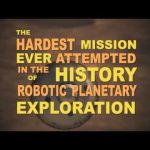
The Mars Science Laboratory, the hardest mission ever attempted in planetary robotic exploration is about to prove its mettle with the landing of its Curiosity rover on the Red Planet. Live coverage begins at 11:30 p.m. Eastern on NASA TV.
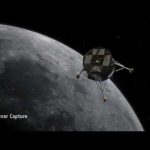
Lunar Lander mission, from launch to landing and exploring the Moon.
Lunar Lander is a robotic explorer that will demonstrate key European technologies and conduct science experiments.
The mission is a forerunner to future human and robotic exploration of the Moon and Mars. It will establish European expertise to allow strong international partnerships in exploration.
Graffiti is an oft discussed topic of debate in the modern world. While some consider graffiti a nuisance, others consider it street art. With that debate still raging, we suggest performing the Moss Graffiti experiment on a wall or piece of particle board that you have permission to use. Once you’ve received that permission, you’ll create a beautiful growing, green work of art.
Steve Spangler is a celebrity teacher, science toy designer, speaker, author and an Emmy award-winning television personality. Spangler is probably best known for his Mentos and Diet Coke geyser experiment that went viral in. Spangler is the founder of www.SteveSpanglerScience.com, a Denver-based company specializing in the creation of science toys, classroom science demonstrations, teacher resources and home for Spangler’s popular science experiment archive and video collection. Spangler is a frequent guest on the Ellen DeGeneres Show and Denver 9 News where he takes classroom science experiments to the extreme. For teachers, parents or DIY Science ideas – check out other sources of learning:
With less than three weeks to the scheduled landing of the Curiosity rover on the Red Planet, leaders of Mars Science Laboratory team field questions form media about the mission, the most difficult ever undertaken in the history of interplanetary robotic exploration.
An interview with Fernando Doblas, Head of the ESA Communication Department, in the Space Zone at Farnborough air show 2012. Fernando answers questions on ESA’s presence in the Space Zone, and how such events foster international cooperation and the role of ESA.
Tour of the Space Zone at Farnborough International Air show 2012 in the UK. ESA’s exhibition, alongside other space agencies and industries, is in the Space Zone between 9 — 15 July.
There’s something magical about a bubble. It’s just a little puff of air trapped in a thin film of soap and water, but its precise spherical shape and beautiful swirling colors make it a true wonder of science. A bubble’s life expectancy is usually measured in seconds unless you know how to make a SUPER BUBBLE!
Steve Spangler is a celebrity teacher, science toy designer, speaker, author and an Emmy award-winning television personality. Spangler is probably best known for his Mentos and Diet Coke geyser experiment that went viral in. Spangler is the founder of www.SteveSpanglerScience.com, a Denver-based company specializing in the creation of science toys, classroom science demonstrations, teacher resources and home for Spangler’s popular science experiment archive and video collection. Spangler is a frequent guest on the Ellen DeGeneres Show and Denver 9 News where he takes classroom science experiments to the extreme. For teachers, parents or DIY Science ideas – check out other sources of learning:
Read the full experiment at http://www.stevespanglerscience.com/experiment/puff-pop-how-to-make-a-co2-sandwich Mom always warned us never to play with our food… but no one said that the wrappers were off limits. Here’s a fun activity that uses some common items you’ll find around the house and a little creativity to explore the “pop” factor of vinegar and baking soda.