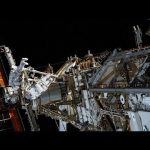
NASA astronauts Steve Bowen and Warren “Woody” Hoburg are taking a spacewalk on Thursday, June 15, to add a new solar panel to the International Space Station.
Bowen and Hoburg are scheduled to install a second International Space Station Roll-Out Solar Array, or IROSA, on this spacewalk, after previously installing one on June 9. The new arrays will increase the power capacity of the orbiting laboratory.
The spacewalk is scheduled to begin at 8:55 a.m. EDT (1255 UTC) and last about six hours. This is Bowen’s tenth spacewalk and the second for Hoburg.
The planet’s thick CO2-filled atmosphere is great at trapping heat. This creates a runaway greenhouse effect that makes Venus roughly 700°F (389°C) hotter than it would be otherwise. @NASAJPL’s Dr. Amy Hofmann provides all the sizzling details.
Ce este motivaţia? La ce ne foloseşte ea? În ce măsură putem să o strunim cu ajutorul voinţei? Ce spune psihologia despre asta? Cât de tare ne ajută motivația atunci când avem probleme? Ce legătură există între ce ştim şi ce facem? Sunt subiecte pe care le-ați văzut discutate în tot felul de contexte. De data asta în Deschis la Cercetare am adus un specialist, pe Căt��lina Kopetz, de la departamentul de psihologie al Wayne State University, pentru a răspunde la aceste întrebări într-o discuție LIVE moderată împreună cu Ada Roseti miercuri de la ora 21.00, aici https://www.youtube.com/watch?v=18SA8TTSzOw Dacă ai curiozități legate de psihologia motivației, pune o întrebare aici și, dacă întrebarea ta va primi răspuns în cadrul emisiunii, poți câștiga o carte de la Editura Humanitas.
For a quarter century, Ariane 5 has been Europe’s heavy-lift workhorse. Flying from Europe’s Spaceport in French Guiana, Ariane 5 has carried to space a long series of commercial and scientific missions. Notable payloads include ESA’s comet-chasing Rosetta, a dozen of Europe’s Galileo navigation satellites – orbited with just three launches – the NASA/ESA/CSA James Webb Space Telescope and, in April 2023, ESA’s Juice mission to Jupiter.
Ariane 5 more than doubled the mass-to-orbit capacity of its predecessor, Ariane 4, which flew from 1988 until 2003 as a favourite of the telecommunications industry with its need to put large payloads into very high geosynchronous orbits. Ariane 5’s capacity enabled it to orbit two large telecommunications satellites on a single launch, or to push very large payloads into deep space.
After 117 flights, Ariane 5 is being replaced by an all-new launch vehicle, Ariane 6.
★ Subscribe: http://bit.ly/ESAsubscribe and click twice on the bell button to receive our notifications.
We are Europe’s gateway to space. Our mission is to shape the development of Europe’s space capability and ensure that investment in space continues to deliver benefits to the citizens of Europe and the world. Check out https://www.esa.int/ to get up to speed on everything space related.
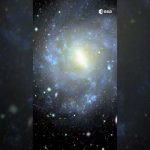
Our #Gaia spacecraft has captured a huge dark blob, 800 times more massive than our Sun which seems to be squeezed into a surprisingly small volume of space suggesting it could be an intermediate-mass black hole.
We are Europe’s gateway to space. Our mission is to shape the development of Europe’s space capability and ensure that investment in space continues to deliver benefits to the citizens of Europe and the world. Check out https://www.esa.int/ to get up to speed on everything space related.
The level of practical expertise, technical and operational expertise required to operate in such a fast-paced, rapidly changing environment such as space needs to be permanently developed and improved to maintain the technical excellence at the right level. But the constant improvement of the technical and operational knowledge is an exciting journey. Nicolas has experienced this first-hand since he joined the European Space Agency Operation Centre as Ground Station Engineer. As a young engineer at ESA, you can gain extremely valuable expertise through launch campaigns, test and validation campaigns, time at the console in the operation control room together with your team, witnessing and learning from the whole life cycle of a real satellite mission, one impossible thing at the time.
With 35 years of experience at ESA, Nicolas Bobrinsky is the former Head of Ground Systems Engineering & Innovation Department. He initiated and further managed the Space Situational Awareness and later the ESA Space Safety Programme.
In four episodes of this new series of ESA Masterclass, Nicolas takes us through major events in his career at ESA, covering cornerstone missions, first attempts, overcoming technical challenges, leading diverse teams and solving the unexpected problems that are part of any space endeavour.
★ Subscribe: http://bit.ly/ESAsubscribe and click twice on the bell button to receive our notifications.
We are Europe’s gateway to space. Our mission is to shape the development of Europe’s space capability and ensure that investment in space continues to deliver benefits to the citizens of Europe and the world. Check out https://www.esa.int/ to get up to speed on everything space related.
Sponsored by Jam City. #Ad Bring dinosaurs to life by downloading Jurassic World Alive using my link on your mobile device or tablet: https://jamcity.me/historymarche
🚩 The Battle of Formigny during the last phase of the Hundred Years’ War was perhaps the most decisive encounter in France’s reconquest of Normandy.
This classic chemistry experiment never gets old! #ScienceMax #Science #ScienceExperiments #Shorts
(🔔) Subscribe to Science Max for New Videos ▶▶ https://www.youtube.com/@ScienceMax?sub_confirmation=1
Have you ever done a science experiment and wondered “What would this be like if it were HUGE?” Welcome to Science Max, the exciting new series that turbocharges all the science experiments you’ve done at home.
Another power-generating spacewalk outside the space station, a commercial resupply spacecraft heads to the station, and sharing the experience of a ride aboard the space station … a few of the stories to tell you about – This Week at NASA!
NASA astronauts Steve Bowen and Warren “Woody” Hoburg are taking a spacewalk on Friday, June 9, to add a new unrolling solar panel to the International Space Station.
Bowen and Hoburg are scheduled to install an International Space Station Roll-Out Solar Array, or IROSA, on today’s spacewalk, with a second one to be installed on June 15. The new arrays will increase the power capacity of the orbiting laboratory.
The spacewalk, known formally as U.S. EVA 87, is scheduled to begin at 9:15 a.m. EDT (1315 UTC) and last about six and a half hours. Bowen will wear a suit with red stripes and Hoburg will wear an unmarked suit. This is Bowen’s ninth spacewalk and the first for Hoburg.
Imagine you are singing in a choir. You are doing your best, just like everybody else. Suddenly, somebody turns to you and points out that you are not singing the right note. If you are told off in a harsh way, you may feel bad about it, and if this happens too often you might not only feel upset about the choir but might even leave it for good. Eventually, the whole choir could end if everybody just leaves.
It is the duty of the choir conductor (the ESA team head) to be able to address every single situation in the right way, to make everyone feel heard and encouraged.
In the third video of this new series of ESA Masterclass, Nicolas shares some lessons learned in his decades as a team leader on what it takes to keep a team together through mutual trust and recognition and make all members work in a harmonious way, like singers of a well-tuned choir.
With 35 years of experience at ESA, Nicolas Bobrinsky is the former Head of Ground Systems Engineering & Innovation Department. He initiated and further managed the Space Situational Awareness and later the ESA Space Safety Programme.
In four episodes of this new series of ESA Masterclass, Nicolas takes us through major events in his career at ESA, covering cornerstone missions, first attempts, overcoming technical challenges, leading diverse teams and solving the unexpected problems that are part of any space endeavour.
★ Subscribe: http://bit.ly/ESAsubscribe and click twice on the bell button to receive our notifications.
We are Europe’s gateway to space. Our mission is to shape the development of Europe’s space capability and ensure that investment in space continues to deliver benefits to the citizens of Europe and the world. Check out https://www.esa.int/ to get up to speed on everything space related.
25 years ago, Copernicus set out to transform the way we see our planet. It is the largest environmental monitoring programme in the world. Learn more about the Copernicus programme and the Sentinel satellite missions developed by ESA. 👉 https://www.esa.int/Applications/Observing_the_Earth/Copernicus
Credits: ESA
★ Subscribe: http://bit.ly/ESAsubscribe and click twice on the bell button to receive our notifications.
We are Europe’s gateway to space. Our mission is to shape the development of Europe’s space capability and ensure that investment in space continues to deliver benefits to the citizens of Europe and the world. Check out https://www.esa.int/ to get up to speed on everything space related.
How do we know what Earth’s climate was like long ago? If you look closely, there are clues just about everywhere across our globe. Some are easy to see and others are more subtle. NASA climate scientist Dr. Gavin Schmidt explains.
Satellites in orbit underpin our modern lives. They are used in many areas and disciplines, including space science, Earth observation, meteorology, climate research, telecommunication, navigation and human space exploration. However, as space activities have increased, a new and unexpected hazard has started to emerge: space debris.
If space debris – uncontrolled human-made objects such as spent upper stages of rockets and pieces of satellites – hits a satellite, it could cause serious damage, which can even end a mission (as has happened in the past). If debris crashes on Earth’s surface, it could potentially hit populated areas.
In this second video, Nicolas looks back on the first key steps taken at ESA to develop the Space Safety Programme, devoted to the detection, prevention and mitigation of threats originating from space. This includes not just space debris but also asteroids and space weather. The latter is an intense, occasional energetic storm of particles and material emitted by the Sun. Mitigating these hazards protects our planet, society and economically-important infrastructure on Earth and in orbit.
A key element for the forecasting and prevention of space weather is to observe the Sun from the side. Discover more in this second video of the ESA Masterclass with Nicolas Bobrinsky. With 35 years of experience at ESA, Nicolas Bobrinsky is the former Head of Ground Systems Engineering & Innovation Department. He initiated and further managed the Space Situational Awareness and later the ESA Space Safety Programme.
In four episodes of this new series of ESA Masterclass, Nicolas takes us through major events in his career at ESA, covering cornerstone missions, first attempts, overcoming technical challenges, leading diverse teams and solving the unexpected problems that are part of any space endeavour.
★ Subscribe: http://bit.ly/ESAsubscribe and click twice on the bell button to receive our notifications.
We are Europe’s gateway to space. Our mission is to shape the development of Europe’s space capability and ensure that investment in space continues to deliver benefits to the citizens of Europe and the world. Check out https://www.esa.int/ to get up to speed on everything space related.
💥 Play War Thunder now for free with my link and get a massive bonus pack, including vehicles, boosts and more: https://playwt.link/historymarche 💥 War Thunder is a highly detailed vehicle combat game containing over 2000 playable tanks, aircraft and ships spanning over 100 years of development. Immerse yourself completely in dynamic battles with an unparalleled combination of realism and approachability
This video takes the viewers on a journey to the barred spiral galaxy NGC 5068, whose bright central bar is visible in the upper left of this image. NGC 5068 lies around 17 million light-years from Earth in the constellation Virgo.
With its ability to peer through the gas and dust enshrouding newborn stars, the NASA/ESA/CSA James Webb Space Telescope is the perfect telescope to explore the processes governing star formation. Stars and planetary systems are born amongst swirling clouds of gas and dust that are opaque to visible-light observatories like Hubble or the VLT. The keen vision at infrared wavelengths of two of Webb’s instruments — MIRI and NIRCam — allowed astronomers to see right through the gargantuan clouds of dust in NGC 5068 and capture the processes of star formation as they happened. This image combines the capabilities of these two instruments, providing a truly unique look at the composition of NGC 5068.
Credit: ESA/Webb, NASA, CSA, J. Lee and the PHANGS-JWST Team, Dark Energy Survey/DOE/FNAL/NOIRLab/NSF/AURA, DSS, N. Bartmann (ESA/Webb), E. Slawik, N. Risinger, D. de Martin (ESA/Webb), M. Zamani (ESA/Webb)
Music: Tonelabs – The Red North
★ Subscribe: http://bit.ly/ESAsubscribe and click twice on the bell button to receive our notifications.
We are Europe’s gateway to space. Our mission is to shape the development of Europe’s space capability and ensure that investment in space continues to deliver benefits to the citizens of Europe and the world. Check out https://www.esa.int/ to get up to speed on everything space related.
Live views from the International Space Station (ISS) are streaming from an external camera mounted on the ISS module called Node 2. Node 2 is located on the forward part of the ISS.
The camera is looking forward at an angle so that the International Docking Adapter 2, or IDA2, is visible. If the Node 2 camera is not available due to operational considerations for a longer period of time, a continuous loop of recorded HD Earth Views imagery will be displayed. The loop will have “Previously Recorded” on the image to distinguish it from the livestream from the Node 2 camera.
The space station orbits Earth about 250 miles (425 kilometers) above the surface. An international partnership of five space agencies from 15 countries operates the station, and it has been continuously occupied since November 2000. It’s a microgravity laboratory where science, research, and human innovation make way for new technologies and research breakthroughs not possible on Earth. More: https://go.nasa.gov/3CkVtC8
Did you know you can spot the station without a telescope? It looks like a fast-moving star, but you have to know when to look up. Sign up for text messages or email alerts to let you know when (and where) to spot the station and wave to the crew: https://spotthestation.nasa.gov
SpaceX’s 28th cargo resupply mission to the International Space Station is now scheduled to lift off at 11:47 a.m. EDT on Monday, June 5 (1547 UTC), from Launch Complex 39A at NASA’s Kennedy Space Center in Florida.
This uncrewed launch of SpaceX’s Dragon spacecraft will carry a new set of roll-out solar panels to boost the station’s power capacity, along with medical research, student-developed technology demonstrations, and essential supplies for our astronauts living and working aboard the orbiting laboratory.
Innovation is triggered by many drivers. One of these is the constant need for ESA to develop innovative solutions,such asuniquespacecrafttechnologies.
In this first video, Nicolas recalls how he and his team had to think outside the box to find a solution for ESA to communicate with Ulysses. Thespacecraft was flyingaround the north pole of the Sun,which ismuch fartherin deep spacethan satellites had beenlaunched up to that point.
The success of this solution motivated the decision to build ESA’sfirst deep-space communications antennas in New Norcia, in Australia, thus enabling many ESA scientific firstsin deep-space exploration.
The antennas would, some decades after, be critically important receivers forthe messages sent by the very distant Rosetta probe, on its quest to find and land on the comet 67P/Churyumov–Gerasimenko, and other ESA science and exploration missions such as Mars Express, Venus Expressand Cassini-Huygens.
With 35 yearsof experience at ESA, Nicolas Bobrinsky is the former Head of Ground Systems Engineering & Innovation Department. He initiated and further managed the Space Situational Awareness and later the ESA Space Safety Programme.
In four episodes of this new series of ESA Masterclass, Nicolas takes us through major events in his career at ESA, covering cornerstone missions, first attempts, overcoming technical challenges, leading diverse teamsand solving the unexpected problems that are part of any space endeavour.
★ Subscribe: http://bit.ly/ESAsubscribe and click twice on the bell button to receive our notifications.
We are Europe’s gateway to space. Our mission is to shape the development of Europe’s space capability and ensure that investment in space continues to deliver benefits to the citizens of Europe and the world. Check out https://www.esa.int/ to get up to speed on everything space related.
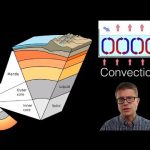
In this video Paul Andersen explains how rock is formed and changed on the planet. The video begins with a brief description of rocks, minerals, and the rock cycle. Plate tectonics is used to describe structure near plate boundaries. Hot spots and natural hazards (like volcanos, earthquake, and tsunamis) are included.
We are Europe’s gateway to space. Our mission is to shape the development of Europe’s space capability and ensure that investment in space continues to deliver benefits to the citizens of Europe and the world. Check out https://www.esa.int/ to get up to speed on everything space related.
I really think it might work this time! #ScienceMax #Science #ScienceExperiments #Shorts
(🔔) Subscribe to Science Max for New Videos ▶▶ https://www.youtube.com/@ScienceMax?sub_confirmation=1
Have you ever done a science experiment and wondered “What would this be like if it were HUGE?” Welcome to Science Max, the exciting new series that turbocharges all the science experiments you’ve done at home.
Axiom Mission 2 crew members return to Earth, discussing unidentified anomalous phenomena, and a water plume off of Saturn’s moon, Enceladus … a few of the stories to tell you about – This Week at NASA!
On Friday, to celebrate the 20th birthday of ESA’s Mars Express, you’ll have the chance to get as close as it’s currently possible get to a live view from Mars. Tune in to be amongst the first to see new pictures roughly every 50 seconds as they’re beamed down directly from the Visual Monitoring Camera on board ESA’s long-lived and still highly productive martian orbiter.
“This is an old camera, originally planned for engineering purposes, at a distance of almost three hundred million kilometres from Earth – this hasn’t been tried before and to be honest, we’re not 100% certain it’ll work,” explains James Godfrey, Spacecraft Operations Manager at ESA’s mission control centre in Darmstadt, Germany.
“But I’m pretty optimistic. Normally, we see images from Mars and know that they were taken days before. I’m excited to see Mars as it is now – as close to a martian ‘now’ as we can possibly get!’
We are Europe’s gateway to space. Our mission is to shape the development of Europe’s space capability and ensure that investment in space continues to deliver benefits to the citizens of Europe and the world. Check out https://www.esa.int/ to get up to speed on everything space related.