Have you ever done a science experiment and wondered “What would this be like if it were HUGE?” Welcome to Science Max, the exciting new series that turbocharges all the science experiments you’ve done at home.
Why does mid-infrared light evoke such a sombre, chilling mood in Webb’s Mid-Infrared Instrument (MIRI) image? Interstellar dust cloaks the scene. And while mid-infrared light specialises in detailing where dust is, the stars aren’t bright enough at these wavelengths to appear. Instead, these looming, leaden-hued pillars of gas and dust gleam at their edges, hinting at the activity within.
We are Europe’s gateway to space. Our mission is to shape the development of Europe’s space capability and ensure that investment in space continues to deliver benefits to the citizens of Europe and the world. Check out https://www.esa.int/ to get up to speed on everything space related.
Have you ever done a science experiment and wondered “What would this be like if it were HUGE?” Welcome to Science Max, the exciting new series that turbocharges all the science experiments you’ve done at home.
This week’s edition of the Earth from Space programme features a Copernicus Sentinel-2 image over the Fucino area, in central Italy. Here lies the Fucino Space Centre, where Telespazio will manage the early orbit activities of the Meteosat Third Generation (ESA – meteosat third generation) Imager satellite, scheduled for launch next week.
We are Europe’s gateway to space. Our mission is to shape the development of Europe’s space capability and ensure that investment in space continues to deliver benefits to the citizens of Europe and the world. Check out https://www.esa.int/ to get up to speed on everything space related.
These two mannequins occupy the passenger seats on Artemis I. Their their female-shaped, plastic bodies are filled with over 5600 sensors each to measure the radiation load during their trip around the Moon and back to Earth.
★ Subscribe: http://bit.ly/ESAsubscribe and click twice on the bell button to receive our notifications.
We are Europe’s gateway to space. Our mission is to shape the development of Europe’s space capability and ensure that investment in space continues to deliver benefits to the citizens of Europe and the world. Check out https://www.esa.int/ to get up to speed on everything space related.
Have you ever done a science experiment and wondered “What would this be like if it were HUGE?” Welcome to Science Max, the exciting new series that turbocharges all the science experiments you’ve done at home.
Ce sunt asteroizii? De ce ar trebui să ne ferim de ei? Care e rolul astronomilor amatori? Ce este poluarea cu lumină? La aceste întrebări și altele din același domeniu ne va răspunde Ovidiu Văduvescu, astronom la Isaac Newton Group of Telescopes în La Palma, Insulele Canare, într-o discuție LIVE moderată împreună cu Ada Roseti miercuri de la ora 21.00, aici https://www.youtube.com/watch?v=bsOLc3M5zyM Dacă ai și tu curiozități despre astronomie, pune o întrebare aici și, dacă întrebarea ta va primi răspuns în cadrul emisiunii, poți câștiga o carte de la Editura Humanitas.
Changes in our climate, along with other factors, have led to wildfires increasing in intensity, severity, size and duration. NASA climate and wildfire expert Liz Hoy explains how and why NASA studies these events from the ground, air, and space to better understand the impacts they have on both a local and global scale. https://www.nasa.gov/fires
Producers: Jessica Wilde, Scott Bednar Editor: Daniel Salazar
Un asteorid uriaș tocmai a trecut pe lângă planeta noastră! Pământul a fost în pericol! Scrie presa! Prieteni, e ca în bancurile de la Erevan: da, a trecut, doar că “pe lângă” înseamnă o distanță de 15 ori mai mare decât cea până la Lună! Adică a trecut pe la vreo 6 milioane de kilometri depărtare de noi… Țineți minte, sunt trei cazuri: 1) asteorizii mai mici de câțiva zeci de metri nu produc catastrofe; cei mai mulți ard în aer. 2) Asterozii cu un diametru de câteva sute de metri pot distruge un oraș , dar nu Pământul întreg ! Ăștia trebuie detectați la timp și deviați din mișcarea lor. 3) Asteroizi mai mari de un kilometru diametru. Ăștia sunt cei mai periculoși dar, din fericire, sunt toți monitorizați de către NASA . Știm , cu certitudine, că niciunul nu va lovi Pământul în următoarea sută de ani.
After the uncrewed Artemis I test flight, the Artemis II mission will have astronauts demonstrate what the Orion spacecraft – powered by a European Service Module – can do on its voyage around the Moon.
Two astronauts will fly on the second Artemis mission and take over controls to show how Orion handles at close-quarter flying. While in Earth orbit the spacecraft will detach from its second stage, fly away, turn around, approach the second stage and then fly away again – all using the European Service Module’s 33 thrusters.
Whereas in the first Artemis mission the second stage fired Orion into its lunar orbit, for the second mission it will be the European Service Module that will give the spacecraft its final push to its voyage around the Moon.
The crew will fly Orion to 8889 km beyond the Moon before completing a lunar flyby and returning to Earth. The mission will take a minimum of eight days and will collect valuable flight test data.
The European Service Module is one of ESA’s many contributions to NASA’s Orion spacecraft and the Artemis programme that will send astronauts to the Moon and beyond. It provides electricity, water, oxygen and nitrogen as well as keeping the spacecraft at the right temperature and on course.
The European Service Module has 33 thrusters, 11 km of electrical wiring, four propellant and two pressure tanks that all work together to supply propulsion and everything needed to keep astronauts alive far from Earth – there is no room for error.
★ Subscribe: http://bit.ly/ESAsubscribe and click twice on the bell button to receive our notifications.
We are Europe’s gateway to space. Our mission is to shape the development of Europe’s space capability and ensure that investment in space continues to deliver benefits to the citizens of Europe and the world. Check out https://www.esa.int/ to get up to speed on everything space related.
Have you ever done a science experiment and wondered “What would this be like if it were HUGE?” Welcome to Science Max, the exciting new series that turbocharges all the science experiments you’ve done at home.
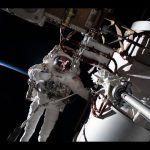
NASA astronauts Josh Cassada and Frank Rubio are conducting a spacewalk on Saturday, Dec. 3, to install an International Space Station Roll-Out Solar Array (iROSA) to augment power generation on the station’s starboard truss structure. This spacewalk is the first of a pair of spacewalks this month set to prepare the future deployment of additional solar arrays for the station. The spacewalk is scheduled to begin at 7:25 a.m. EST (12:25 UTC) and last about seven hours.
Cassada (wearing the suit with red stripes) and Rubio (wearing the unmarked suit) are part of NASA’s SpaceX Crew-5 mission, which arrived at the station on Oct. 6, 2022. This is the second spacewalk for both astronauts.
Warsaw straddles the Vistula (Wisla) River, the largest river in Poland. With a length of around 1000 km and a drainage basin of some 195 000 sq km, the Vistula is an important waterway to the nations of Eastern Europe.
We are Europe’s gateway to space. Our mission is to shape the development of Europe’s space capability and ensure that investment in space continues to deliver benefits to the citizens of Europe and the world. Check out https://www.esa.int/ to get up to speed on everything space related.
Have you ever done a science experiment and wondered “What would this be like if it were HUGE?” Welcome to Science Max, the exciting new series that turbocharges all the science experiments you’ve done at home.
On Dec. 5, NASA will air the lunar flyby of the Orion spacecraft on its return trek toward Earth. Orion completed a burn Dec. 1 to exit a lunar orbit thousands of miles beyond the Moon, where engineers have been testing systems to improve understanding of the spacecraft before future missions with astronauts. The return powered flyby burn, in which the spacecraft will harness the Moon’s gravity and accelerate back toward Earth, is expected at 11:43 a.m. (1643 UTC) The spacecraft is expected to fly about 79 miles above the lunar surface at 11:42 a.m. (16:42 UTC) just before the burn.
Orion launched aboard the Space Launch System (SLS) rocket at 1:47 am EST (0647 UTC) on Nov. 16 from historic Launch Complex 39B at NASA’s Kennedy Space Center. Orion entered a distant retrograde orbit on at 4:52 p.m. EST (2152 UTC) on Nov. 25, where the spacecraft has been testing systems in a deep space environment.
The Artemis I mission is the first integrated test of NASA’s deep space exploration systems: the Orion spacecraft, the SLS rocket, and Kennedy Space Center ground systems.
In this week’s edition of the Earth from Space programme, we take a look at the remarkable moraine patterns of Malaspina Glacier – the largest piedmont glacier in the world – through the eyes of Copernicus Sentinel-2.
We are Europe’s gateway to space. Our mission is to shape the development of Europe’s space capability and ensure that investment in space continues to deliver benefits to the citizens of Europe and the world. Check out https://www.esa.int/ to get up to speed on everything space related.
NASA will begin coverage of the Orion spacecraft performing the first of two maneuvers to exit lunar orbit, called the distant retrograde orbit departure burn, on Dec. 1 at 4:30 p.m. EST (21:30 UTC). The burn is scheduled to occur at 4:53 p.m. EST (21:53 UTC).
Orion launched aboard the Space Launch System (SLS) rocket at 1:47 a.m. EST (06:47 UTC) on Nov. 16 from historic Launch Complex 39B at NASA’s Kennedy Space Center. Orion entered a distant retrograde orbit on at 4:52 p.m. EST (21:52 UTC) on Nov. 25, where the spacecraft has been testing systems in a deep space environment.
The Artemis I mission is the first integrated test of NASA’s deep space exploration systems: the Orion spacecraft, the SLS rocket, and Kennedy Space Center ground systems.
NASA’s Commercial Lunar Payload Services (CLPS) initiative allows NASA to send science investigations and technology demonstrations to the lunar surface. Under Artemis, NASA will study more of the Moon than ever before, and CLPS will demonstrate how NASA is working with commercial companies to achieve robotic lunar exploration.
Joining @NASA’s Orion spacecraft on the powerful Space Launch System rocket are ten CubeSats that will help prepare for the return of astronauts to our lunar companion. Our deep space antennas, along with the Goonhilly Earth Station in the UK, are tracking six of the small satellites, ensuring they arrive where they need to be, and their data gets back home.
We are Europe’s gateway to space. Our mission is to shape the development of Europe’s space capability and ensure that investment in space continues to deliver benefits to the citizens of Europe and the world. Check out https://www.esa.int/ to get up to speed on everything space related.
Have you ever done a science experiment and wondered “What would this be like if it were HUGE?” Welcome to Science Max, the exciting new series that turbocharges all the science experiments you’ve done at home.
Cameras on NASA’s Space Launch System (SLS) rocket and Orion spacecraft give us amazing views of our adventure around the Moon. See up close views of the Moon from external cameras as well as the view from inside the capsule.
Orion is the only spacecraft capable of carrying humans from Earth on Artemis missions to deep space and bringing them back to Earth from the vicinity of the Moon. More than just a crew module, Orion has a launch abort system to keep astronauts safe if an emergency happens during launch, and a European-built service module that is the powerhouse that fuels and propels Orion and keeps astronauts alive with water, oxygen, power, and temperature control, as well as a heat shield that can handle high-speed returns from deep space. SLS is the most powerful rocket in the world and the only rocket capable of launching Orion with astronauts and their supplies on Artemis missions to the Moon.
Orion launched on the SLS rocket from Launch Pad 39B at NASA’s Kennedy Space Center in Florida Wednesday, Nov. 16, 2022. Artemis I is an uncrewed flight test of our SLS rocket, Orion spacecraft, and exploration ground systems for future Artemis missions—which will provide the foundation to send humans to the lunar surface, develop a long-term presence on and around the Moon, and pave the way for humanity to set foot on Mars.
Despre invitat: Adrian Apetri s-a născut la Târgu Mureș și a absolvit în 1997 Facultatea de Chimie și Inginerie Chimică de la Universitatea Babeș-Bolyai. După o prima tentativă de doctorat în cinetică chimică în România, abandonată în 1999, se înscrie la studii doctorale la Case Western Reserve University, în cadrul Departamentului de Fiziologie și Biofizică, unde se convertește, de altfel, la biochimie. Își susține doctoratul în 2004. Este specialist în plierea proteinelor și problemele care apar datorită “misfolding” cu accent pe prioni (boală vacii nebune și variantele umane (Creutzfeldt Jacob, Fatal Familial Insomnia) dar și alte proteine implicate în Alzheimers, Parkinsons etc.). A fost cercetător postdoctoral la Case Western Reserve University, Departamentul de Fiziologie și Biofizică, în 2004-2005. Între 2006 și 2009 lucrează la Howard Hughes Medical Institute Fellow la Yale University, ca o continuare a aventurii în lumea proteinelor (pliere, chaperoni, conexie cu bolile neurodegenerative). În 2010, se întoarce în Europa și lansează un start-up, Crucell, care este mai târziu achiziționat de Johnson and Johnson. În toți acești ani a construit laboratoare și grupuri de cercetare, a lucrat pe programe de anticorpi și vaccinuri, pe chestiuni de neurodegenerare și, mai târziu, în domeniul infecțiilor respiratorii. A supraviețuit pandemiei de Covid pe două fronturi: cetățean supus restricțiilor și cercetător în prima linie
Have you ever done a science experiment and wondered “What would this be like if it were HUGE?” Welcome to Science Max, the exciting new series that turbocharges all the science experiments you’ve done at home.
Is there water on the Moon? Yes! But you won’t find pools of liquid H2O on the lunar surface — water on the Moon is mostly in the form of ice.
Harvesting this water is a critical component of future human deep space exploration, which is why our golf cart-sized VIPER, or the Volatiles Investigating Polar Exploration Rover, will be traveling to the Moon’s South Pole to search for ice and other potential resources to determine where they came from. Explore more about this first-of-its-kind rover: https://www.nasa.gov/viper
Producers: Jessica Wilde, Scott Bednar Editor: Seth Robinson
Clever space detectives, we need your help! We’ve got a case on our hands, of two mysterious exoplanets, and we need your help to profile them. Find out how you can use real satellite data to investigate an alien planet and become an exoplanet detective in the first ever ESA Education student hackathon.
Join us for this exciting new event featuring experts such as Didier Queloz, the 2019 Nobel Laureate in Physics and Kate Isaak, ESA project scientist for the Cheops mission.
We are Europe’s gateway to space. Our mission is to shape the development of Europe’s space capability and ensure that investment in space continues to deliver benefits to the citizens of Europe and the world. Check out https://www.esa.int/ to get up to speed on everything space related.
On Monday, Nov. 28, 2022, Artemis I reached the halfway point of its 26-day mission around the Moon, flying roughly 270,000 miles (434,000 km) from the Earth—farther from our home planet than any spacecraft designed to send humans to space and back has gone before.
From Artemis I’s launch at NASA’s Kennedy Space Center, to its first “Earthrise”, to close-up views of the lunar surface, take a look back at some of the highlights from the first half of this mission.
Artemis I is an uncrewed test of our Space Launch System rocket and Orion spacecraft for future Artemis missions—which will send humans to the lunar surface, develop a long-term, sustainable presence on and around the Moon, and pave the way for humanity to set foot on Mars.
We are Europe’s gateway to space. Our mission is to shape the development of Europe’s space capability and ensure that investment in space continues to deliver benefits to the citizens of Europe and the world. Check out https://www.esa.int/ to get up to speed on everything space related.
Space for Education 2030 is the evolution of the ESA education programme. Take a look at what the Education office has in store for students and young people of all ages at the dawn of a new space era, for them to acquire the right skills needed to achieve a sustainable and secure future, and sustain Europe’s great ambitions in space.
★ Subscribe: http://bit.ly/ESAsubscribe and click twice on the bell button to receive our notifications.
We are Europe’s gateway to space. Our mission is to shape the development of Europe’s space capability and ensure that investment in space continues to deliver benefits to the citizens of Europe and the world. Check out https://www.esa.int/ to get up to speed on everything space related.
On Dec. 11, our Orion spacecraft returns home to Earth. This live stream from Orion will end prior to splashdown, approximately at the time of crew module separation from the service module. Watch live splashdown coverage: https://youtu.be/xzZPzmMtQA8
This is a live, low-resolution video feed from cameras on NASA’s Orion spacecraft as it accomplishes the Artemis I mission around the Moon and back to Earth. Splashdown is expected on Dec. 11, 2022.
Viewers will see the Artemis logo, or the last frame of good video data, if there is a loss of signal, or if the bandwidth is needed for mission activities. Viewers may see what appears to be a black screen when the vehicle is in darkness. There is no audio.
The primary goals for Artemis I are to demonstrate Orion’s systems in a spaceflight environment and ensure a safe re-entry, descent, splashdown, and recovery.
Have you ever done a science experiment and wondered “What would this be like if it were HUGE?” Welcome to Science Max, the exciting new series that turbocharges all the science experiments you’ve done at home.
Cosmic radiation is considered to be the main health hazard for humans on exploration missions. Far away from the protection of Earth’s magnetic field, the radiation doses could be up to 700 times higher than on our planet.
For long-term human activity at the Moon, we need to monitor the lunar radiation environment directly.
Two sources of radiation are of concern: galactic cosmic radiation from outside the galaxy and the unpredictable but virulent charged particles coming from our own Sun.
Cosmic radiation is always there, and it is also the main source of radiation for increasing the crew’s risk of cancer in missions to the Moon and Mars. The solar events deliver a high amount of radiation in a short period of time, leading to radiation sickness, with symptoms such as nausea and fatigue.
★ Subscribe: http://bit.ly/ESAsubscribe and click twice on the bell button to receive our notifications.
We are Europe’s gateway to space. Our mission is to shape the development of Europe’s space capability and ensure that investment in space continues to deliver benefits to the citizens of Europe and the world. Check out https://www.esa.int/ to get up to speed on everything space related.
There may not be any humans traveling on Artemis I but that doesn’t mean there aren’t any travelers aboard NASA’s Orion Spacecraft! Meet the three “passengers” that are collecting data to help us keep future NASA astronauts safe and understand what they will be experiencing on upcoming Artemis missions to the Moon. https://go.nasa.gov/3TDjPx5
The Artemis I mission consists of the Space Launch System rocket that is sending the uncrewed Orion spacecraft around the Moon and back to Earth to check out spacecraft systems before crew fly aboard on Artemis II. The Artemis I mission is one more step toward taking the next giant leap: sending the first astronauts to Mars.
🚩 Thanks to Established Titles for sponsoring this video! Go to https://establishedtitles.com/MARCHE10 to shop their Black Friday Sale, plus get an additional 10% off on any purchase with code MARCHE10 and help support the channel!
📚 Sources: Cassius Dio, Roman History Diodorus Siculus, Library of History Dionysius of Halicarnassus, Roman Antiquities Frontinus, Stratagems Livy, From the Founding of the City Polybius, Histories Zonaras, Epitome of Histories Bradley, G. 2020: Early Rome to 290 BC: The Beginnings of the City and the Rise of the Republic, Edinburgh. Cornell, T. 2017: ‘The “Samnite Wars,” 343-290 BC, in M. Whitby & H. Sidebottom (eds.), The Encyclopedia of Ancient Battles, Malden MA, Oxford & Chichester, West Sussex, 2.469-479. Forsyth, G. 2006: A Critical History of Early Rome: From Prehistory to the First Punic War, Berkeley. Oakley, S. P. 1997-2005: A Commentary on Livy, Books VI-X, Oxford.