Our Artemis I flight test is “go for launch,” the first deep-space long-duration biology test, and the Webb Space Telescope captures new images of Jupiter … a few of the stories to tell you about – This Week at NASA!
Before our Space Launch System (SLS) rocket and Orion spacecraft can launch our nation into a new era of spaceflight, the duo must first undergo a wet dress rehearsal at the launch pad prior to liftoff.
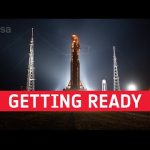
Watch SLS and Orion continue on their path to the pad as they travel to Kennedy Space Center’s Launch Pad 39B for a full countdown rehearsal – an operation involving hundreds of engineers stationed all across the nation.
Credits: Writer: Danielle Sempsrott Editor: Francisco Martin Producers: John Sackman, Michael Justice & Madison Tuttle Music courtesy of Gothic Storm Music Credit: NASA
JoAnn Morgan, former Apollo 11 engineer, expresses her excitement for Artemis I as launch day gets closer for NASA’s Space Launch System and Orion spacecraft. Morgan was the only woman working in the control room during launch of Apollo 11 to the Moon in 1969. She notes that more women now are leaders and contributors to NASA’s mission.
#Artemis I will launch no earlier than Aug. 29, 2022, at 8:33 a.m. EDT (12:33 UTC) from Kennedy Space Center’s Launch Complex 39B.
Managers and engineers from NASA’s Marshall Space Flight Center in Alabama share their thoughts about the Space Launch System (SLS) rocket for #Artemis I. Van L. Strickland, SLS program operations manager; John Blevins, SLS chief engineer; and Sharon Cobb, SLS associate program manager, commend a diverse workforce for its effort and dedication to prepare the backbone of NASA’s return to the Moon. SLS will launch the Orion spacecraft on its mission beyond the Moon and back to Earth. Artemis I is scheduled to launch no earlier than Aug. 29, 2022, at 8:33 a.m. EDT from Kennedy Space Center’s Launch Complex 39B in Florida.
A transmission spectrum of the hot gas giant exoplanet WASP-39 b, captured by Webb’s Near-Infrared Spectrograph on 10 July 2022, reveals the first definitive evidence for carbon dioxide in the atmosphere of a planet outside the Solar System. This is the first detailed transmission spectrum ever captured that covers wavelengths between 3 and 5.5 microns.
We are Europe’s gateway to space. Our mission is to shape the development of Europe’s space capability and ensure that investment in space continues to deliver benefits to the citizens of Europe and the world. Check out https://www.esa.int/ to get up to speed on everything space related.
Have you ever done a science experiment and wondered “What would this be like if it were HUGE?” Welcome to Science Max, the exciting new series that turbocharges all the science experiments you’ve done at home.
The journey of half a million miles – the first flight of the Artemis Generation – is about to begin. The uncrewed Artemis I mission will jump-start humanity’s return to the Moon with the thunderous liftoff of NASA’s powerful new Space Launch System rocket and Orion spacecraft. This critical flight test will send Orion farther than any human-rated spacecraft has ever flown, putting new systems and processes to the test and lighting the way for the crew missions to come. Artemis I is ready for departure – and, together with our partners around the world, we are ready to return to the Moon, with our sights on Mars and beyond.
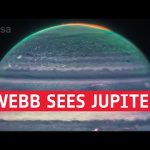
Webb’s Jupiter observations will give scientists even more clues to Jupiter’s inner life since with giant storms, powerful winds, aurorae, and extreme temperature and pressure conditions, the planet has a lot going on.
We are Europe’s gateway to space. Our mission is to shape the development of Europe’s space capability and ensure that investment in space continues to deliver benefits to the citizens of Europe and the world. Check out https://www.esa.int/ to get up to speed on everything space related.
The Artemis I mission is almost ready for launch: it will send an uncrewed spacecraft beyond the Moon and back. Join this virtual Q&A to learn more about Europe’s contribution to the mission: ESA is overseeing the development of the European Service Module, that provides air, electricity and propulsion to the spacecraft. Participants to this media briefing include Josef Aschbacher, ESA Director General ; David Parker, ESA Director for Human and Robotic Exploration ; Jean-Marc Nasr, @Airbus EVP Space Systems and Marc Steckling, Airbus Head of Space Exploration.
We are Europe’s gateway to space. Our mission is to shape the development of Europe’s space capability and ensure that investment in space continues to deliver benefits to the citizens of Europe and the world. Check out https://www.esa.int/ to get up to speed on everything space related.
We are Europe’s gateway to space. Our mission is to shape the development of Europe’s space capability and ensure that investment in space continues to deliver benefits to the citizens of Europe and the world. Check out https://www.esa.int/ to get up to speed on everything space related.
We are Europe’s gateway to space. Our mission is to shape the development of Europe’s space capability and ensure that investment in space continues to deliver benefits to the citizens of Europe and the world. Check out https://www.esa.int/ to get up to speed on everything space related.
🚩 In this video we’re heading back to the 9th century. The Battle of Pliska in 811 AD marked the first time since the death of Emperor Valens in 378 AD, that a Roman emperor fell in battle.
🚩 This video was produced in collaboration with Bulgarian Empire Mapping, check out their channel and give them the credit that they deserve! https://www.youtube.com/channel/UCD-0LPbxri4fSvd0UoisIfg – Big shout to BEM for collaborating with us on this video!
The move to the launchpad ahead of our Artemis I flight test, discussing priorities for national space activities, and cargo and science head home from the space station … a few of the stories to tell you about – This Week at NASA!
Named after one of the largest constellations in the night sky, Orion is the name given to the spacecraft that will carry the first woman and first person of color to the Moon. But before we fly astronauts aboard, the spacecraft, powered by our Space Launch System rocket, will travel tens of thousands of miles on a flight test around the Moon. Watch as teams at NASA’s Kennedy Space Center prepare Orion for that journey, outfitting the spacecraft with its necessary components as it moves along its path to the pad.
Writer: Danielle Sempsrott Editor: Francisco Martin Producers: John Sackman, Michael Justice & Madison Tuttle Music courtesy of Gothic Storm Music Credit: NASA
The series of heatwaves we are currently experiencing in western Europe is a clear sign of human-induced global warming. ESA’s Clement Albergel explains how we monitor these events using satellites such as the Copernicus Sentinel-3 mission and puts them in the context of the long-term climate data record generated via ESA’s Climate Change Initiative.
Credits: ESA
★ Subscribe: http://bit.ly/ESAsubscribe and click twice on the bell button to receive our notifications.
We are Europe’s gateway to space. Our mission is to shape the development of Europe’s space capability and ensure that investment in space continues to deliver benefits to the citizens of Europe and the world. Check out https://www.esa.int/ to get up to speed on everything space related.
Etched onto this thin Gallium Nitride (GaN) semiconductor wafer are hundreds of space-quality microwave integrated circuits. The transistor gate terminals are fabricated at a scale of 0.25 micrometres – a micrometre being a thousandth of a millimetre!
We are Europe’s gateway to space. Our mission is to shape the development of Europe’s space capability and ensure that investment in space continues to deliver benefits to the citizens of Europe and the world. Check out https://www.esa.int/ to get up to speed on everything space related.
Have you ever done a science experiment and wondered “What would this be like if it were HUGE?” Welcome to Science Max, the exciting new series that turbocharges all the science experiments you’ve done at home.
The Orion spacecraft with European Service Module will fly farther from Earth than any human-rated vehicle has ever flown before. This video gives an overview of the first mission – without astronauts – for Artemis, focussing on ESA’s European Service Module that powers the spacecraft.
The spacecraft will perform a flyby of the Moon, using lunar gravity to gain speed and propel itself 70 000 km beyond the Moon, almost half a million km from Earth – further than any human has ever travelled, where it will inject itself in a Distant Retrograde Orbit around the Moon.
On its return journey, Orion will do another flyby of the Moon before heading back to Earth.
The total trip will take around 20 days, ending with a splashdown in the Pacific Ocean without the European Service Module – it separates and burns up harmlessly in the atmosphere.
The second Artemis mission will have a simplified flight plan with only a flyby of the Moon but with four astronauts. The third Artemis mission will see astronauts taken to the lunar surface.
The European Service Module is ESA’s contribution to @NASA’s Orion spacecraft that will send astronauts to the Moon and beyond. It provides electricity, water, oxygen and nitrogen as well as keeping the spacecraft at the right temperature and on course.
The European Service Module has 33 thrusters, 11 km of electrical wiring, four propellant and two pressure tanks that all work together to supply propulsion and everything needed to keep astronauts alive far from Earth – there is no room for error.
★ Subscribe: http://bit.ly/ESAsubscribe and click twice on the bell button to receive our notifications.
We are Europe’s gateway to space. Our mission is to shape the development of Europe’s space capability and ensure that investment in space continues to deliver benefits to the citizens of Europe and the world. Check out https://www.esa.int/ to get up to speed on everything space related.
⚔️ Download Vikings: War of Clans for FREE here ➡️ https://clik.cc/1Mt3v and join the anniversary celebrations today! 🏹 👇 Push down for more cool stuff 👇
🚩 This video was produced in collaboration with my friend Hoc Est Bellum https://www.youtube.com/channel/UCl5m12RUvypT4e7w-mWrzsA I’m very happy to be working together on a new series with Hoc Est Bellum! Check out his channel and give him the credit that he deserves.
To prepare Europe for future decision making on Space-Based Solar Power, ESA has proposed a preparatory programme for Europe, initially named SOLARIS, for the upcoming ESA Council at Ministerial Level in November 2022.
Space-based solar power is a potential source of clean, affordable, continuous, abundant and secure energy. This basic concept has been given fresh urgency by the need for new sources of clean and secure energy to aid Europe’s transition to a Net Zero carbon world by 2050. If Europe wants to benefit from this game-changing capability then we need to start investing now.
We are Europe’s gateway to space. Our mission is to shape the development of Europe’s space capability and ensure that investment in space continues to deliver benefits to the citizens of Europe and the world. Check out https://www.esa.int/ to get up to speed on everything space related.
When #Artemis I launches to the Moon and back there will be *A LOT* of science hitching a ride! From CubeSats designed to hunt for water deposits on the lunar surface to experiments on how life responds to space – and so much more.
The Artemis I mission consists of the Space Launch System rocket that will send the uncrewed Orion spacecraft around the Moon and back to Earth to check out spacecraft systems before crew fly aboard on Artemis II. The Artemis I mission is one more step toward taking the next giant leap: sending the first astronauts to Mars. Get all the info on this historic mission: https://nasa.gov/specials/artemis-i
Producers: Jessica Wilde, Sami Aziz, Scott Bednar Videographer: Frank Michaux Credit: NASA
ESA astronaut Matthias Maurer returned from his first mission to the International Space Station, known as ‘Cosmic Kiss’, on Friday 6 May 2022. Revisit some of the highlights of his first stay in orbit with us. During his mission, Matthias became the 600th person in space, conducted his first spacewalk, and supported over one hundred cutting-edge scientific experiments – the findings of which will improve life back here on Earth.
We are Europe’s gateway to space. Our mission is to shape the development of Europe’s space capability and ensure that investment in space continues to deliver benefits to the citizens of Europe and the world. Check out https://www.esa.int/ to get up to speed on everything space related.
🚩 By 1859 the decades-long struggle to free Italy from being dominated by the mighty Austrian Empire seemed far from success. But a new secret alliance between two nations – the Kingdom of Piedmont-Sardinia and the Second French Empire – gave renewed hope to the effort. These three powers are about to embark on a monumental campaign that will culminate in one of the bloodiest battles of its time. At stake is the fate of Italy.
🚩Sources: Solferino 1859 – The battle for Italy’s freedom, by Richard Brooks (Osprey Publishing) Solferino The Birth of a Nation, by Patrick Turnbull The Campaign of Magenta & Solferino 1859, by Harold Carmichael Wylly C. B. The Shadow Emperor, by Alan Strauss-Schom The Unification of Italy, by Charles River Editors A Memory of Solferino, by Henry Dunant
The countdown to our Artemis I Moon mission, a Moon-observing small satellite hitching a ride on Artemis I, and some other tiny satellites that could help us better prepare for space weather … a few of the stories to tell you about – This Week at NASA!
Chachani is the tallest of the mountains near the Peruvian city of Arequipa. The outskirts of the city and part of the airport runway are just visible in the centre bottom of the image.
We are Europe’s gateway to space. Our mission is to shape the development of Europe’s space capability and ensure that investment in space continues to deliver benefits to the citizens of Europe and the world. Check out https://www.esa.int/ to get up to speed on everything space related.
Have you ever wondered what it takes to assemble the most powerful rocket NASA has ever built? Watch documentary footage of our Space Launch System (SLS) rocket’s transformation into the over-300-foot-tall launch vehicle that will return humanity to the Moon.
Starting with manufacturing and ending with stacking operations inside NASA Kennedy Space Center’s Vehicle Assembly Building, this is only the beginning of SLS’s path to the pad.
Writer: Danielle Sempsrott Editor: Francisco Martin Producers: John Sackman, Michael Justice & Madison Tuttle Music courtesy of Gothic Storm Music Credit: NASA
Watch live as our mega Moon rocket launches an uncrewed Orion spacecraft on a six-week mission around the Moon and back to Earth. During #Artemis I, Orion will lift off aboard the Space Launch System (SLS) rocket, and travel 280,000 miles (450,000 km) from Earth and 40,000 miles (64,000 km) beyond the far side of the Moon, carrying science and technology payloads to expand our understanding of lunar science, technology developments, and deep space radiation.
Through Artemis missions, NASA will land the first woman and the first person of color on the Moon, paving the way for a long-term lunar presence and serving as a steppingstone to send astronauts to Mars. We are going.