With a budget increase of more than 6% from the previous year, NASA will continue to boost its ingenuity in exploration, technology, aeronautics and science. This is a year of innovation.
This budget increases our ability to better understand Earth as a system –allowing us to tackle climate change in new ways. We will develop more climate-friendly aviation systems, like the X-57 Maxwell, and launch the James Webb Space Telescope that will enable groundbreaking research. Including a diverse and more inclusive workforce, we will continue pushing the boundaries of human exploration with Artemis, with goals of landing the first woman and the first person of color on the Moon, as well as fostering our international and commercial partnerships that help to make it all possible.
We look forward to continuing our legacy of inspiring the nation and the next generation of scientists, engineers and explorers, who will help us accomplish the ambitious goals that we’ve set out for NASA.
Producer/Editor: Lacey Young Music: Universal Production Music
NASA trailblazer and “Hidden Figure”, Mary W. Jackson was born April 9, 1921 in Hampton, VA. Despite segregation and difficult odds, she became the first black female engineer at NASA.
Jackson began her career with the agency in the segregated West Area Computing Unit of NASA’s Langley Research Center in Hampton, Virginia. The mathematician and aerospace engineer went on to lead programs influencing the hiring and promotion of women in NASA’s science, technology, engineering, and mathematics careers. In 2019, she was posthumously awarded the Congressional Gold Medal.
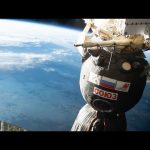
Watch a Soyuz MS-18 spacecraft lift off on a two-orbit, three-hour journey to the International Space Station! NASA astronaut Mark Vande Hei and cosmonauts Oleg Novitskiy and Pyotr Dubrov of Roscosmos are scheduled to launch at 3:42 a.m. EDT, Friday, April 9, from the Baikonur Cosmodrome in Kazakhstan.
The trio will be part of Expeditions 64 and 65 on the station, where they’ll continue work on hundreds of experiments in biology, biotechnology, physical science, and Earth science. This will be Vande Hei’s second spaceflight, Novitskiy’s third, and Dubrov’s first.
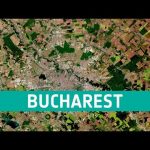
The Copernicus Sentinel-2 mission takes us over Bucharest – the capital and largest city of Romania, in this edition of the Earth from Space programme.
We are Europe’s gateway to space. Our mission is to shape the development of Europe’s space capability and ensure that investment in space continues to deliver benefits to the citizens of Europe and the world. Check out https://www.esa.int/ to get up to speed on everything space related.
Începând cu această ediție, întâlnirile vor începe la ora 21.00 (ora României).
Consacrat de către Michel Foucault, termenul de biopolitică desemnează un ansamblu de tehnici și strategii moderne de exercitare a puterii (bioputerea) prin care statul este direct investit în disciplinarea și normalizarea trupului, precum și în administrarea, optimizarea și proliferarea vieții unei populații prin diferite mecanisme de securitate. Deși constructivă, în măsura în care se preocupă de sănătatea și bunăstarea unei populații, biopolitica este în același timp potențial distructivă, deoarece preocuparea pentru sănătatea populației poate degenera în obsesie pentru puritatea rasei.
Se poate deduce de aici ideea că statul modern este interconectat în mod ambiguu cu rasismul (menținerea purității rasei devine principala justificare pentru administrarea morții), o posibilitate pe care nazismul a dus-o la paroxism. A reflecta astăzi critic asupra biopoliticii devine astfel o provocare pentru a regândi existența umană și comunitățile umane dincolo de dimensiunea strict biologică a vieții, în afara unei paradigme care încurajează naționalismul tribal, puritatea rasială și, în cele din urmă, posibilele acțiuni genocidare.
După zece ani în care a predat filosofie și teorie politică la Universitatea din București, Mihaela Czobor-Lupp predă în prezent teorie politică la Carleton College (Minnesota, Statele Unite ale Americii). Doamna Czobor-Lupp a public extensiv atât în română cât și în engleză, pe teme precum relația dintre cultură, imaginație și politică, patriotism constituțional și cosmopolitanism, religie, educație și dialog intercultural. Cel mai recent articol (martie 2021) al Mihaelei Czobor-Lupp se intitulează Why Plurality and Difference Matter? Reflecting with Hannah Arendt (Heterodox Academy). A contribuit cu articolul despre Cosmopolitan Care pentru Routledge International Handbook of Cosmopolitan Studies (second edition, ed. Gerard Delanty, Routledge, 2018). Mihaela Czobor-Lupp este autoarea volumului Imagination in Politics: Freedom or Domination? (Lexington Books, USA, 2014). În prezent, lucrează la un proiect de carte despre umanism în opera lui Tzvetan Todorov.
Have you ever done a science experiment and wondered “What would this be like if it were HUGE?” Welcome to Science Max, the exciting new series that turbocharges all the science experiments you’ve done at home.
ESA Director General Josef Aschbacher spoke to journalists on 7 April 2021 to introduce ESA Agenda 2025, setting out ESA’s strategic priorities and goals.
We are Europe’s gateway to space. Our mission is to shape the development of Europe’s space capability and ensure that investment in space continues to deliver benefits to the citizens of Europe and the world. Check out https://www.esa.int/ to get up to speed on everything space related.
Artemis 1 will be the first integrated test of NASA’s deep space exploration systems: the Orion spacecraft, Space Launch System (SLS) rocket and the ground systems at Kennedy Space Center in Cape Canaveral, Florida. The first in a series of increasingly complex missions, Artemis I will be an uncrewed flight test that will provide a foundation for human deep space exploration, and demonstrate our commitment and capability to extend human existence to the Moon and beyond.
During this flight, the spacecraft will launch on the most powerful rocket in the world and fly farther than any spacecraft built for humans has ever flown. It will travel 280,000 miles from Earth, thousands of miles beyond the Moon over the course of about a three-week mission. Orion will stay in space longer than any ship for astronauts has done without docking to a space station and return home faster and hotter than ever before.
With this first exploration mission, NASA is leading the next steps of human exploration into deep space where astronauts will build and begin testing the systems near the Moon needed for lunar surface missions and exploration to other destinations farther from Earth, including Mars.
Engineers will drop an 14,000-pound test version of the Orion spacecraft into the Hydro Impact Basin at NASA’s Langley Research Center’s Landing and Impact Research Facility in Hampton, Virginia at 1:45 p.m. EDT Tuesday, April 6.
This series of drop tests began March 23 to finalize computer models for loads and structures prior to the Artemis II flight test, NASA’s first mission with crew aboard Orion. Artemis II will carry astronauts around the Moon and back, paving the way to land the first woman and next man on the lunar surface and establish a sustainable presence at the Moon under the Artemis program.
Exoplanets – planets outside our solar system – are everywhere. But why do we study them? What makes them so interesting? At NASA, we’re surveying and studying exoplanets to learn all about their weirdness, their variety, and all the fascinating things they can tell us about how planets form and develop.
On Monday, April 5 starting at 6 a.m. EDT, watch the first-ever port relocation for a U.S. commercial spacecraft! Four astronauts will undock their SpaceX Crew Dragon “Resilience” from the International Space Station’s Harmony module forward port, and take a short ride to redock at Harmony’s zenith, or space-facing port.
The autonomous relocation maneuver, taking about 45 minutes, will prepare for the arrival of NASA’s SpaceX Crew-2 astronauts in late April, and the upcoming delivery of new solar arrays this summer. Astronauts Michael Hopkins, Victor Glover, and Shannon Walker of NASA and Soichi Noguchi of the Japan Aerospace Exploration Agency will be aboard the spacecraft.
00:00 Intro 00:18 1. Sunt vaccinurile disponibile în prezent în România, împotriva SARS-CoV2, eficace? Dacă da, în ce măsură? Dr. Adrian Pană, specialist sănătate publică și epidemiologie, expert în politici de sănătate, Center for Health Outcomes & Evaluation 01:47 2. Vaccinul are efecte secundare asupra persoanelor care suferă de comorbidități? Prof. dr. Dan Gaiță, Institutul de Boli Cardiovasculare din Timișoara, Universitatea de Medicină și Farmacie Victor Babeș 08:37 3. Vaccinul are efecte adverse asupra gravidelor? Prof. dr. Lucian Pușcașiu, Universitatea de Medicină, Farmacie, Științe și Tehnologie “G. E. Palade” Târgu Mureș, Cochrane România 14:27 4. Vaccinurile împotriva SARS-CoV2 disponibile în prezent în România, provoacă reacții adverse puternice, mai ales la persoane sănătoase? Dr. Adrian Pană, specialist sănătate publică și epidemiologie, expert în politici de sănătate, Center for Health Outcomes & Evaluation
🚩 Watch thousands of high quality documentaries on CuriosityStream: https://curiositystream.thld.co/historymarchemar and use the code: HISTORYMARCHE when you sign up to get 30 days of FREE unlimited access.
🚩 I’m very pleased to say that I’ve collaborated with Knowledgia on this project.
In part 1 you will learn about the geopolitics of this period and why did Rome attack Greece. In the 2nd part you will see details about the Battle of Cynoscephalae, which settled the age old dispute of Legion vs Phalanx and brought the Second Macedonian War to an end.
Make sure to check out Part 1 on Knowledgia, for a detailed insight into events that preceded the battle. https://youtu.be/n56BhDqeCyw
Preparing a small satellite to conduct some big science, an update on our upcoming mission to a metal-rich asteroid, and a new director for the International Space Station … a few of the stories to tell you about – This Week at NASA!
Social-democrația este o doctrină politică ce afirmă recunoașterea drepturilor politice ale clasei muncitoare și care urmărește reforma sistemului politic, social și economic de organizare a puterii politice. După al Doilea Război Mondial, social-democrația are ca scop asigurarea unui sistem politic care să asigure cetățenilor accesul universal, echitabil și egal la bunuri publice. Consolidarea și extinderea statului bunăstării (welfare state) este obiectivul contemporan al doctrinei social-democrate. Social-democrația este un curent de gândire în filosofie și științele sociale care încearcă să ofere o alternativă marxismului în cadrul mai larg al curentelor socialiste. Gândirea social-democrată clasică acceptă modelul socialist de organizare socială și economică, însă consideră fundamental modelul democrației parlamentare reprezentative pentru organizarea și exercitarea puterii politice.
În ce măsură principiile clasice ale social-democrației mai pot suscita adeziunea diferitelor grupuri sociale, astfel încât doctrina să supraviețuiască și să ofere susținere partidelor politice care o adoptă? A determinat abandonarea elementelor doctrinare provenite din socialism diluare sau pierderea completă a identității doctrinare? Care ar putea fi viitorul curentului de gândire în contextul evoluției științelor sociale într-o paradigmă instituționalistă, care ignoră sau critică conceptul de clase?
Bogdan FLORIAN este lector în cadrul Departamentului de Științe Politice si Studii Europene al Facultății de Științe Politice din cadrul SNSPA. Predă cursuri in domeniul politicilor publice și al cercetării în domeniul educației. Cercetător științific la Institutul de Științe ale Educației, apoi membru al mai multor echipe de cercetare, elaborare și implementare a politicilor publice în educație, expert-consultant pentru Banca Mondială și al Comisiei Europene în ceea ce privește proiectarea și evaluarea politicilor publice în domeniul educației. Istoria ideilor politice este un fel de hobby, lucrarea de licență având ca tema istoria social-democrației de după al Doilea Război Mondial. În prezent predă inclusiv un curs opțional despre dezvoltarea gândirii sociale și politice în România în perioada 1866-1940.
Have you ever done a science experiment and wondered “What would this be like if it were HUGE?” Welcome to Science Max, the exciting new series that turbocharges all the science experiments you’ve done at home.
We are Europe’s gateway to space. Our mission is to shape the development of Europe’s space capability and ensure that investment in space continues to deliver benefits to the citizens of Europe and the world. Check out https://www.esa.int/ to get up to speed on everything space related.
For the fourth time since 1978, ESA is recruiting new astronauts. Applications open 31 March and close 28 May 2021. Four new members of the European astronaut corps will be selected. Around 20 of the best remaining candidates will also be selected to a newly-established astronaut reserve, whose members may be called upon to fulfil specific missions. ESA’s last call for new astronauts was in 2008, when six candidates were appointed. They were joined by a further one candidate in 2015.
We are Europe’s gateway to space. Our mission is to shape the development of Europe’s space capability and ensure that investment in space continues to deliver benefits to the citizens of Europe and the world. Check out https://www.esa.int/ to get up to speed on everything space related.
Preparing for first flight on Mars, making a splash with Orion, and the space station’s next crew prepares for launch … a few of the stories to tell you about – This Week at NASA!
Despre Teodor Baconschi: Masterat și doctorat în Antropologie religioasă și istorie comparată a religiilor la Universitatea din Paris-Sorbonne (Paris IV, 1995, magna cum laude). Studii post-doctorale la New Europe College (București, 1996). Carieră diplomatică: ambasador al României la Sfântul Scaun, Ordinul Suveran de Malta și Republica San Marino (1997-2000). Director general MAE (2001-2002). Ambasador al României în Republica Portugheză (2002-2004). Secretar de stat pentru Afaceri Globale (MAE 2004-2006). Consilier prezidențial (2006-2007). Ambasador al României în Republica Franceză și Principatul de Monaco (2007-2009). Ministru al Afacerilor Externe (24 decembrie 2009-24 ianuarie 2012). Ambasador în Centrala MAE (2015-) Autor a peste douăzeci de lucrări în domeniul teologiei, teoriei politice, istoriei artei, eseist, publicist, traducător. Decorații: Comandor al Ordinului Pius IX (Vatican), Ordinul Sfintei Agatha (San Marino), Comandor Stella della solidarieta italiana, Cavaler al Ordinului de Merit (Portugalia), Comandor al Legiunii de Onoare (Franța), Cavaler al Ordinului Serviciul Credincios (România). Membru în Asociația Internațională de Studii Patristice (Paris). Membru în Uniunea Scriitorilor din România
Have you ever done a science experiment and wondered “What would this be like if it were HUGE?” Welcome to Science Max, the exciting new series that turbocharges all the science experiments you’ve done at home.
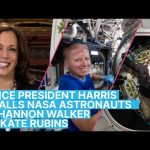
U.S. Vice President Kamala Harris placed a special phone call to Shannon Walker and Kate Rubins aboard the International Space Station to find out what it’s like to do science in space.
During the month of March, NASA celebrates and pays tribute to the many women who have played an essential role in shaping the history of the agency.
Is there life beyond Earth? NASA has been sending spacecraft to the far reaches of our solar system in search of an answer. But extreme forms of life on our own planet might reveal secrets of how life could form beyond Earth. Meet two NASA women who have ventured on remote expeditions and traversed Earth’s most extreme landscapes in the name of science and astrobiology. Send in your questions using #askNASA on Wednesday, March 31 at 3:00 p.m. EST, and tune in to hear from host and science communicator Kellie Gerardi.
Dr. Darlene Lim blends her field science research with future human-robotic spaceflight concepts to the Moon and Mars. She’s gone for runs on 6 out of the 7 continents on Earth.
Dr. Jackie Goordial looks for life in extreme environments to understand its limits, and where and how we could find life beyond Earth. Despite doing research at sea for weeks, she still gets very seasick and didn’t learn how to swim until later in life.
Mastering PixInsight and the art of Astroimage Processing, Rogelio Bernal Andreo, https://www.deepskycolors.com/mastering-pixinsight.html (cel mai bun manual de procesare a imaginilor in PixInsight, soft-ul de referinta pentru astrofotografie)
🚩 Check out Fields of Glory II – Medieval https://bit.ly/30MTVww and relive the Battle of Hastings in this stunningly detailed turn-based strategy! 👇 Push down for more cool stuff 👇
🚩 The Battle of Hastings was extremely important for the history of England. Duke William’s invasion was one of the most daring gambles in history and it ended the rule of the Anglo-Saxons that had lasted for over 600 years since the Roman times. The story of what happened was recorded in the Bayeux Tapestry.
Firing up the rocket for the Artemis Moon missions, a nomination for NASA’s next administrator, and making room for the space station’s next crew … a few of the stories to tell you about – This Week at NASA!
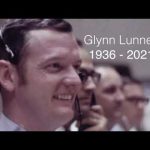
Legendary NASA Flight Director Glynn Lunney, 84, died Friday, March 19.
Lunney was a flight director for the Apollo 11 Moon landing mission, and was lead flight director for Apollo 7, the first crewed Apollo flight, and Apollo 10, the dress rehearsal for the first Moon landing, in NASA’s Mission Control Center in Houston. He led the mission control team credited with key actions that made it possible to save three Apollo 13 astronauts aboard a spacecraft disabled on the way to the Moon.
Watch three residents of the International Space Station fly their spacecraft to a new port on the station, making room for the future arrival of the next set of crew members. Astronaut Kate Rubins of NASA and cosmonauts Sergey Ryzhikov and Sergey Kud-Sverchkov of Roscosmos will undock their Soyuz MS-17 from the Earth-facing port of the station’s Rassvet module at 12:38 p.m. EDT, and dock again at the space-facing Poisk docking port at 1:07 p.m. This will be the 15th overall Soyuz port relocation, and the first since August 2019.
The Copernicus Sentinel-2 mission takes us over part of the Amazon rainforest in the Amazonas – the largest state in Brazil, in this edition of the Earth from Space programme.
We are Europe’s gateway to space. Our mission is to shape the development of Europe’s space capability and ensure that investment in space continues to deliver benefits to the citizens of Europe and the world. Check out https://www.esa.int/ to get up to speed on everything space related.
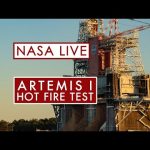
NASA’s Space Launch System (SLS) rocket’s core stage fired all four of its RS-25 engines on March 18th at Stennis Space Center near Bay St. Louis, Mississippi.
The core stage includes the liquid hydrogen tank and liquid oxygen tank, four RS-25 engines, and the computers, electronics, and avionics that serve as the “brains” of the rocket.
The hot fire was the final test of the Green Run series. The term “green” refers to the new hardware that will work together to power the stage, and “run” refers to operating all the components together simultaneously for the first time. For the test, the 212-foot core stage generated 1.6 million pounds of thrust, while anchored in the B-2 Test Stand at NASA’s Stennis Space Center near Bay St. Louis, Mississippi. The hot fire test included loading 733,000 gallons of liquid oxygen and liquid hydrogen – mirroring the launch countdown procedure – and igniting the engines.
Artemis I will be the first in series of increasingly complex missions, testing the SLS rocket and Orion spacecraft as an integrated system ahead of crewed flights to the Moon. Under the Artemis program, NASA is working to land the first woman and the next man on the Moon. SLS is the only rocket that can send Orion, astronauts, and supplies to the Moon on a single mission.
Now that the Green Run hot fire test is complete, Acting Administrator Steve Jurczyk, Deputy Associate Administrator for Human Exploration Tom Whitmeyer, Space Launch System (SLS) Manager John Honeycutt, and SLS Stages Manager Julie Bassler will discuss how the SLS core stage performed and what’s next for the Artemis I mission to the Moon. Today’s hot fire test took place at Stennis Space Center near Bay St. Louis, Mississippi, on the historic B-2 Test Stand and ignited the core stage for a full eight minutes, providing invaluable data for our engineers.
We are targeting 3:45 p.m. EDT on Thursday, March 18 for the second hot fire test of the core stage for the Space Launch System rocket at NASA’s Stennis Space Center near Bay St. Louis, Mississippi.
Engineers will power up all the core stage systems, load more than 700,000 gallons of supercold propellant into the tanks, and fire the rocket’s four RS-25 engines at the same time to simulate the stage’s operation during the launch of our first Artemis mission to the Moon.
Have you ever done a science experiment and wondered “What would this be like if it were HUGE?” Welcome to Science Max, the exciting new series that turbocharges all the science experiments you’ve done at home.
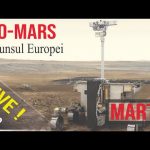
Invitat: Cristian Lazar, inginer în științe aerospațiale în cadrul proiectului ExoMars. Roverul european va pleca spre Marte in 2022. Claudiu Tănăselia ne va vorbi despre ultimele noutăți de la noutăți de la Perseverance.