We are Europe’s gateway to space. Our mission is to shape the development of Europe’s space capability and ensure that investment in space continues to deliver benefits to the citizens of Europe and the world. Check out https://www.esa.int/ to get up to speed on everything space related.
The Eastern Roman Empire was under constant Ottoman pressure ever since the new conquerors appeared in the Anatolia. Although the Ottomans tried to take Constantinople on a number of occasions, they had to lift the siege of the city due to the Crusades of Varna and Nicopolis, the Timurid Invasion and the battle of Ankara, and the Interregnum period that happened after their Sultan Bayezid was taken hostage by Timur. However, after the victories at the battles of Varna (1444) and 2nd Kosovo (1448) against the crusaders of Wladyslaw III and John Hunyadi, the road to Constantinople was open and the new sultan Mehmed II set his sight on the city of the Roman emperors…
We are grateful to our patrons, who made this video possible: Matthew Levy, Rene Malmgren, Ibrahim Rahman, Koopinator, Daisho, Łukasz Maliszewski, William Fluit, Juan Camilo Rodriguez, Murray Dubs, Félix Gagné-Dion, Fahri Dashwali, Kyle Hooton, Dan Mullen, Mohamed Thair, Pablo Aparicio Martínez, Iulian Margeloiu, Chet, Nick Nasad, Jeyares, Amir Eppel, Thomas Bloch, Uri Sternfeld, Georgi Kirilov, Mohammad Mian, Daniel Yifrach, Brian Crane, Muramasa, Gerald Tnay, Hassan Ali, Richie Thierry, David O’Hare, Christopher Commins, Chris Glantzis, William Pugh, Stefan Dt, indy, Bashir Hammour, Mario Nickel, R.G. Ferrick, Moritz Pohlmann, Russell Breckenridge, Jared R. Parker, Kassem Omar Kassem, AmericanPatriot, Robert Arnaud, Christopher Issariotis, John Wang, Joakim Airas, Nathanial Eriksen, Joakim Airas, Chuan Kit Kee, John Padalis, Raphaël Dordeins, Donovan Moore, Howie Truong, Chuan Kit Kee, Håvard Siegel Haukeberg, ccplz, Tepes Obrejac, Jon, Emil Johansson, Patrick Riordan, Marc Kuiper, Qamil Lita, Jack Roelofs, Fernando Henrique, iMattyz, Rbj, Frat, The Noob Game Developer, Jacob Filmer, Travis Tiffany, Andreas Ekström, Zachary Marhal, Tomás Cortés Benjumea, Mensur Hamzic, Maxwell Gaughran, Kristofer Eriksson, Dave Ormsby, Aaron Snakenberg, Razen Alsuwaihel, Scott Buster, Erik W Thurnher, Tim Taylor, Aldo Schepis and Umar Farooq.
The Machinimas for this video are created by one more friend – Malay Archer. Check out his channel, he has some of the best Total War machinimas ever created: https://www.youtube.com/user/MathemedicUpdates/videos
Joi, 26 noiembrie 2020, de la ora 20.00, o avem invitată pentru a treia ediție a Dicționarului de idei și ideologii pe Dana Jalobeanu. Specialistă în istoria și filosofia modernității timpurii și în gândirea Renașterii, Dana Jalobeanu predă la Facultatea de Filosofie a Universității din București din 2009.
În această emisiune, vom discuta cu Dana despre progres și progresism: despre felul în care una din cele mai generoase idei ale modernității, ideea de progres, se regăsește azi în mijlocul unor dezbateri ideologice, în care rațiunea și spiritul critic au lăsat loc invectivei și intoleranței.
În modernitate, progresul ajunge să fie asociat cu noua știință a naturii. Cunoașterea este cea care progresează și, odată cu ea, progresează și umanitatea. Progresul tehnologic, social, politic sau moral sunt însă produse derivate, fructele și efectele progresului cunoașterii. Această viziune despre progres este descrisă cel mai frumos în scrierile lui Francis Bacon, cel care distinge clar între experimente ale luminii (cele care dezvăluie cauze și duc la cunoaștere) și experimentele care dau roade. Ultimele sunt cele prin care știința dăruiește societății în care s-a ivit tehnologie, medicină sau educație, produse de natură a face viața oamenilor mai ușoară (sau mai lungă).
Enciclopediștii francezi iau această viziune și o simplifică, transformând-o într-o viziune a istoriei care se desfășoară cu sens. Experimentele de lumina ale lui Bacon dispar și în loc se revarsă secolul Luminilor. Dacă la Bacon drumul către cunoaștere era parcurs de puțini, iar cei mulți beneficiau de efecte și rezultate, secolul al XVIII-lea democratizează progresul. Dar îl și osifică. Îl transformă în ideologie. Ideologia progresistă… nu există, de fapt. Sau, mai precis, nu există o unică ideologie progresistă. Există o serie de ideologii, foarte diferite între ele, care fie se auto-intitulează progresiste, fie sunt etichetate în felul acesta, de către adversarii ideologici, de multe ori în mod peiorativ, sau de către istorici.
Ce au însă toate acestea în comun? Poate faptul că sunt reformatoare și contestatare? Sau poate că sunt convinse că societatea se poate schimba, iar un grup pe oameni suficient de hotărâți poate produce seria de schimbări necesare? Oricum ar fi, ele par să creadă că viitorul este deschis și ne-predeterminat, că societatea, ca și omul, se află într-un proces de evoluție înspre un viitor considerat mai bun decât prezentul.
Thanksgiving dinner aboard the International Space Station is a little different than one here on Earth. Watch this video to learn how astronauts living and working in space can enjoy holiday meals, thanks to the NASA Nutritional Lab at Johnson Space Center.
Earth is not the only place in the solar system with rain, rivers, lakes and seas. Saturn’s moon Titan has them, too — not of water, but of liquid methane and ethane. This Earth-like world even hides an ocean of liquid water deep beneath its surface! Find out what you need to know about Titan.
Support My Channel! Download Free ⚔️ Vikings War Of Clans Here
➤ IOS: http://bit.ly/2tyotBO
➤ Android: http://bit.ly/2NlJicL
And Get 200 💰 Gold, And a 🏥 Protective Shield for FREE
Our animated historical documentary series on the Ottoman history continues with the battle of Mohacs of 1526. As sultan Suleiman conquered Belgrade in 1521 and Rhodes in 1522, he was able to focus all his resources on the European expansion and his next target was the Kingdom of Hungary, which was once one of the strongest in Europe, but was in a decline. The battle of Mohacs changed the fate of Hungary for the centuries to come and opened the way for the Ottoman invasions into Europe.
🚩 Watch thousands of documentaries on CuriosityStream: https://curiositystream.thld.co/historymarchenov and use the code: historymarche to sign up. If you sign up between Nov 16th and Jan 3rd, you get unlimited access for only $14.99 a year, that’s only a little over $1 per month!
📝 This is the full documentary of the Battle of Cannae from our Hannibal series, parts 11-13, a detailed analysis of Hannibal’s biggest tactical masterpiece.
🚩 This episode and others like it are made possible by the generous support of our patrons on Patreon. If you’d like to help us produce more free content like this, consider becoming a patron on patreon.com/historymarche: https://www.patreon.com/historymarche
🎼 Music:
Peaks of Atlas – Omri Lahav
EpidemicSound.com
📝 Sources:
Adrian Goldsworthy – Cannae, Hannibal’s Greatest Victory
Adrian Goldsworthy – Fall of Carthage
Robert L. O’Connell – The Ghosts of Cannae
Nigel Bagnall – The Punic Wars, 264 – 146 BC
Mark Healy – Cannae 216 BC
Adrian Goldsworthy – Roman Warfare
Polybius – Histories
Dexter Hoyos – A companion to the Punic Wars
The journey of Resilience to the space station, the next ocean-observing satellite, and an update on a critical rocket test series for our Artemis missions … a few of the stories to tell you about – This Week at NASA!
Download link: images-assets.nasa.gov/video/The Journey of Resilience to The Space Station on This Week @NASA – November 21 2020/The Journey of Resilience to The Space Station on This Week @NASA – November 21 2020~orig.mp4
Producer: Andre Valentine
Editor: Sonnet Apple
Music: Universal Production Music
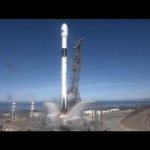
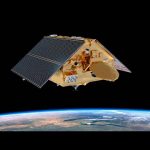
On Nov. 21, 2020, the U.S.-European oceanographic satellite Sentinel-6 Michael Freilich launched to orbit aboard a SpaceX Falcon 9 rocket. During a five-and-a-half-year prime mission, it will collect the most accurate data yet on global sea level and how our ocean is rising in response to climate change. The mission will also collect precise data of atmospheric temperature and humidity that will help improve weather forecasts and climate models.
We’re sending the Sentinel-6 Michael Freilich satellite to space to collect the most accurate data yet on global sea level and how our oceans are rising in response to climate change. This #SeeingTheSeas mission, a historic U.S.-European partnership, will launch from Vandenberg Air Force Base in California aboard a SpaceX Falcon 9 rocket at 12:17 p.m. EST (9:17 a.m. PST, 5:17 p.m. UTC).
The satellite, and its twin Sentinel-6B, is jointly developed by ESA (European Space Agency), the European Organisation for the Exploitation of Meteorological Satellites (EUMETSAT), NASA, and the National Oceanic and Atmospheric Administration (NOAA), with funding support from the European Commission and support from France’s National Centre for Space Studies (CNES). Sentinel-6 Michael Freilich is named in honor of the former director of NASA’s Earth Science Division, who was instrumental in advancing space-based ocean measurements.
Episodul 6 din seria „Poveşti neştiute ale muzeelor”, difuzată pe TVR1, TVR3, TVR HD, TVR Internaţional şi TVR MOLDOVA, în care telespectatorii au fost invitaţi să urmărească 10 scurtmetraje care surprind lucruri mai putin cunoscute despre marile muzee ale Capitalei. Lectura îi aparţine inconfundabilei actriţe Maia Morgenstern.
Signup for your FREE trial to The Great Courses Plus here: http://ow.ly/sLYW30f0W34
The Great Courses Plus is currently available to watch through a web browser to almost anyone in the world and optimized for the US market. The Great Courses Plus is currently working to both optimize the product globally and accept credit card payments globally.
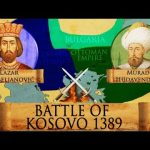
The Ottoman invasion of Europe was truly challenged for the first time during the Battle of Kosovo of 1389. The Serbs and other Balkan peoples alongside their allies from Western and Eastern Europe fought valiantly against overwhelming odds and although they lost, the foundation of the future resistance, that continued until the dissolution of the Ottoman Empire, was set. This battle was also remarkable due to the fact that leaders of both armies were killed during it. Prince Lazar Hrebeljanović died in the battle and Sultan Murad I was assassinated by the Serbian knight Miloš Obilić, who was killed shortly after. All three are considered martyrs by their people and the spirit of this battle is still part of the bitter animosity…
Sources used:
John V. A. Fine; John Van Antwerp Fine (1994). The Late Medieval Balkans: A Critical Survey from the Late Twelfth Century to the Ottoman Conquest. University of Michigan Press.
Ломоносов Матвей. Русские исторические источники Косовской битвы 1389 г.. — Пермь: Пермский госуниверситет, 2005
Inspired by: BazBattles, Invicta (THFE), Epic History TV and Historia Civilis
Songs used:
Ottoman Song – Uskudara Giderken
Dark Times – Kevin MacLeod
Magnus Ringblom – Ancient Sculptures in Church
Johannes Bornlof – Barbarians
Rannard Sillard – Deathmatch
Avem păreri despre ceea ce se întâmplă în politică și despre felul în care ea ne afectează viața. Cei mai mulți suntem nemulțumiți și credem că e posibilă o politică mai dreaptă, făcută de oameni bine intenționați care ne cunosc interesele. Ideile și interpretările pe care le dăm politicii, precum și proiectele pentru politicile viitorului, respectiv ideologiile pe care le împărtășim, ne fac să ne orientăm spre schimbare politică lentă uneori radicală, sau dimpotrivă, spre conservare politică, eventual spre întoarcerea unui regim în care credem că ne era mai bine. Atunci când credem că ideile noastre sunt singurele bune și că toți ar trebui să se supună politicilor celor care ne reprezintă pe noi, ideologia noastră este una extremistă. Atunci când credem că și alți oameni au dreptatea lor și că trebuie reprezentați politic, ideologia noastră este una pluralistă, democratică. Avem nevoie de busola unei ideologii ca să ne orientăm politic. Periculos este doar atunci când le-o impunem altora cu forța, ca adevăr unic. Azi o avem invitata pe Mihaela Miroiu.
Have you ever done a science experiment and wondered “What would this be like if it were HUGE?” Welcome to Science Max, the exciting new series that turbocharges all the science experiments you’ve done at home.
The world’s latest Earth-observing satellite, Sentinel-6 Michael Freilich, is set for launch on Nov. 21 from Vandenberg Air Force Base in California. Tune in live on Fri., Nov, 20 at 3:30 p.m EST (8:30 p.m. UTC) to learn about the science of this U.S-European mission, which will closely monitor sea level and provide atmospheric data to support weather forecasting and climate models. Hear from experts including project scientists and oceanographers at NASA, the European Space Agency, the European Organisation for the Exploitation of Meteorological Satellites, NASA’s Jet Propulsion Laboratory, and the University of Washington.
The 21st SpaceX cargo resupply mission that will launch from NASA’s Kennedy Space Center in Florida carries a variety of critical research and technology demonstrations to the International Space Station. The mission will be the first on an upgraded version of the company’s Dragon cargo spacecraft that can carry more science payloads to and from the orbiting laboratory. The craft’s cargo includes critical materials that support research ranging from heart disease to asteroid mining and a new commercial airlock as part of NASA’s goal to achieve a sustainable economy in low-Earth orbit. Learn more here: https://go.nasa.gov/3pzkkt8
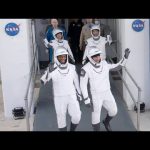
The SpaceX Crew Dragon Resilience successfully docked to the International Space Station at 11:01 p.m. EST Monday, transporting NASA astronauts Michael Hopkins, Victor Glover, Shannon Walker, and Japan Aerospace Exploration Agency (JAXA) astronaut Soichi Noguchi.
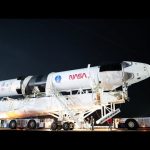
NASA’s SpaceX Crew-1 mission lifted off Sunday, Nov. 15, at 7:27 p.m. on the SpaceX Falcon 9 rocket and Crew Dragon spacecraft from Launch Complex 39A at NASA’s Kennedy Space Center in Florida. The mission is the first of six certified, crew missions NASA and SpaceX will fly as a part of the agency’s Commercial Crew Program.
The crew will conduct science and maintenance during a six-month stay aboard the orbiting laboratory and will return in spring 2021. It is scheduled to be the longest human space mission launched from the United States. The Crew Dragon spacecraft is capable of staying in orbit for at least 210 days, as a NASA requirement.
Producer Credit: Sonnet Apple Music: Willpower/Universal Production Music
Sea levels across the globe are rising as a result of a changing climate — and the rate at which they are rising is accelerating. Watch NASA Science Live Tuesday, Nov. 17 at 12:30 p.m. EST to meet NASA researchers studying these changes, and learn how the next mission launching to space will continue the nearly 30-year record of monitoring Earth’s ocean from space.
Tune in to hear NASA leadership discuss the successful launch and docking of Crew Dragon “Resilience” following the arrival of the Crew-1 astronauts Michael Hopkins, Victor Glover, Shannon Walker, and Japan Aerospace Exploration Agency’s (JAXA) Soichi Noguchi at the International Space Station. This is the first crew rotation flight of the SpaceX Crew Dragon spacecraft on a Falcon 9 rocket, following certification by NASA for regular flights to the space station as part of the agency’s Commercial Crew Program.
Tune in live as the Crew Dragon “Resilience” spacecraft docks to the International Space Station with astronauts Michael Hopkins, Shannon Walker, and Victor Glover of NASA and Soichi Noguchi of JAXA (Japan Aerospace Exploration Agency) aboard. The four astronauts will begin a six-month science mission on the station. Docking is scheduled at 11 p.m. EST (4 a.m. UTC), Monday, Nov. 16 followed by the hatch opening at 1:10 a.m. EST (6:30 a.m. UTC), and a welcome ceremony at 1:40 a.m. EST (6:40 a.m. UTC) Tuesday, Nov. 17.
NASA astronauts Victor Glover, Michael Hopkins, Shannon Walker and JAXA (Japan Aerospace Exploration Agency) astronaut Soichi Noguchi take viewers on a tour of the SpaceX Crew Dragon Resilience spacecraft that will take them to their new home on orbit.
The SpaceX Falcon 9 rocket and Crew Dragon spacecraft successfully launched from Kennedy Space Center’s historic Launch Pad 39A at Nov. 15 at 7:27 p.m. EST (Nov. 16 at 12:27 a.m. UTC) with the astronauts aboard for a six-month mission to the International Space Station. Crew Dragon will perform a series of phasing maneuvers to gradually approach and autonomously dock with the International Space Station on Monday, Nov. 16, at approximately 11:00 p.m.. EST (Nov. 17 at 4:00 a.m. UTC).
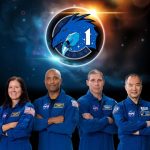
At 7:27 p.m. EST on Sunday, Nov. 15, 2020, the SpaceX Falcon 9 rocket and Crew Dragon “Resilience” spacecraft lifted off from Launch Complex 39A at NASA’s Kennedy Space Center in Florida. Aboard are astronauts Michael Hopkins, Shannon Walker, and Victor Glover of NASA and Soichi Noguchi of JAXA (Japan Aerospace Exploration Agency). The four are on the way to the International Space Station for a six-month science mission.
Join NASA Administrator Jim Bridenstine and officials from NASA, JAXA (Japan Aerospace Exploration Agency), the FAA (Federal Aviation Administration) and SpaceX for a live news conference starting at 9:30 p.m. EST with an update on NASA’s SpaceX Crew-1 mission. After launching at 7:27 p.m. EST from Kennedy Space Center in Florida, the SpaceX Crew Dragon ‘Resilience’ spacecraft carrying NASA astronauts Michael Hopkins, Victor Glover, and Shannon Walker, along with Soichi Noguchi of JAXA is in orbit and on the way to the International Space Station.
Watch as we #LaunchAmerica! Join us for live coverage of SpaceX Crew-1, the first crew rotation flight to the International Space Station by a U.S. commercial spacecraft. The crew is set to arrive at the International Space Station on Monday, Nov. 16 at 11 p.m. EST (Nov. 17 at 4 a.m. UTC). Watch continuous coverage of their entire ride, HERE: https://youtu.be/21X5lGlDOfg
The Crew Dragon ‘Resilience’ will carry astronauts Michael Hopkins, Victor Glover, and Shannon Walker of NASA and Soichi Noguchi of JAXA (Japan Aerospace Exploration Agency) to the station. Liftoff was at 7:27 p.m. EST, Sunday, Nov. 15 from Launch Complex 39A at NASA’s Kennedy Space Center in Florida.
NASA astronaut Victor Glover is launching to space for the first time on Nov. 15 when the NASA SpaceX Crew-1 mission lifts off from Kennedy Space Center. Glover is a graduate of the U.S. Air Force Test Pilot School, holds three master of science degrees, and was selected as a NASA astronaut in 2013.
“I do believe that human spaceflight is an imperative for our planet, and to be a part of that — to keep the progress going — I find very inspiring.”
NASA astronaut Dr. Shannon Walker holds a bachelor of arts degree in physics, a master of science and a doctorate of philosophy in space physics from Rice University. She launches on Nov. 15 at 7:27 p.m. aboard the NASA SpaceX Crew-1 mission, the first crew rotation flight of NASA’s Commercial Crew Program.
“The vehicle is definitely like a living creature. All the pipes, all the pipelines are alive.”
Japanese astronaut Soichi Noguchi of JAXA (Japan Aerospace Exploration Agency) is set to become the first international crew member to fly on a commercial crew mission on Nov. 15 at 7:27 p.m. EST, when the NASA SpaceX Crew-1 mission lifts off to the International Space Station.
Step inside the Main Control Room at ESOC, ESA’s European Space Operations Centre in Darmstadt, Germany, and one thing becomes immediately clear: teams that operate space missions are highly hierarchical, and the Flight Director is indisputably in charge.
How does this work, and why is this the case? In the last of his Masterclass series, Paolo Ferri delves into the culture of operations, from written rules and procedures to equally important unwritten principles that guide the day-to-day working lives of those flying Europe’s spacecraft.
Paolo explains that on rare occasions, an internal battle takes place when protocols, procedures and flight rules don’t seem up to the task, and someone must assume the huge responsibility of deciding whether or not they need to be violated to keep a mission functioning.
With 36 years’ of experience at ESA, Paolo Ferri is responsible for mission operations, and he has played a leading role in ensuring the success of missions like Eureca, ESA’s first-ever reusable satellite; Cluster, one of the longest-flying science missions; Venus Express, Europe’s first exploration of Earth’s ‘evil twin’; and Rosetta, humanity’s first landing on a comet.
In five episodes of ‘Leadership at Mission Control’, Paolo takes us through major events in his career at ESA, covering cornerstone missions, first attempts, overcoming technical challenges, building diverse teams, working under pressure and solving the unexpected problems that are part of any space endeavour.
This is the last episode of the ESA Masterclass series with Paolo Ferri. Thank you very much for watching!
★ Subscribe: http://bit.ly/ESAsubscribe and click twice on the bell button to receive our notifications.
We are Europe’s gateway to space. Our mission is to shape the development of Europe’s space capability and ensure that investment in space continues to deliver benefits to the citizens of Europe and the world. Check out http://www.esa.int/ESA to get up to speed on everything space related.
Join us LIVE from NASA’s Kennedy Space Center in Florida for updates as we prepare to #LaunchAmerica with NASA’s SpaceX Crew-1 mission.
The SpaceX Falcon 9 rocket and Crew Dragon spacecraft will carry astronauts Michael Hopkins, Victor Glover, and Shannon Walker of NASA, and astronaut Soichi Noguchi of the Japan Aerospace Exploration Agency (JAXA) to the International Space Station. Officials from NASA, SpaceX and U.S. Air Force 45th Weather Squadron will be on hand to talk about the upcoming mission scheduled for liftoff at 7:27 p.m. EST Sunday, Nov. 15.
The next space station crew launching from America, a mission milestone for our next Mars rover, and an update on a future Mars sample return mission … a few of the stories to tell you about – This Week at NASA!
Download Link https://images.nasa.gov/details-The%20Next%20Space%20Station%20Crew%20Launching%20From%20America%20on%20This%20Week%20@NASA%20%E2%80%93%20November%2013,%202020