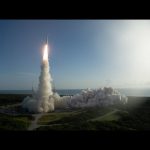
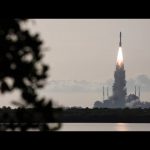
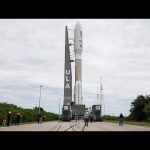
NASA Astronauts Robert Behnken and Douglas Hurley splashed down in the Dragon Endeavour capsule at 2:48 p.m. EDT on Sunday, Aug. 2, off the coast of Pensacola, Florida.
The Crew Dragon hatch was opened at 3:59 p.m., and Behnken and Hurley exited the spacecraft onto the Go Navigator for initial medical checks before returning to shore by helicopter. Once returned to shore, both crew members will immediately board a waiting NASA plane to fly back to Ellington field in Houston.
Hurley and Behnken arrived to the International Space Station May 31 and spent 62 days supporting science and research aboard the orbiting laboratory as part of Expedition 63.
Demo-2 is SpaceX’s final test flight and is providing data on the performance of the Falcon 9 rocket, Crew Dragon spacecraft and ground systems, as well as in-orbit, docking, splashdown, and recovery operations. The data will inform NASA’s certification of the SpaceX crew transportation system for regular flights carrying astronauts to and from the space station. SpaceX is readying the hardware for the first rotational mission that will occur following NASA certification, which is expected to take about six weeks.
Today’s #LaunchAmerica mission that brought NASA astronauts Robert Behnken and Douglas Hurley back to Earth marks the first splashdown of an American crew spacecraft in 45 years. Tune in starting at 4:45 p.m. EDT to hear Administrator Jim Bridenstine and #LaunchAmerica mission experts talk about this milestone in human spaceflight.
After 62 days in space, approximately 1,024 orbits around our planet and four spacewalks, our #LaunchAmerica crew members made their way home!
On Sunday, Aug. 2, 2020, NASA astronauts Robert Behnken and Douglas Hurley returned to Earth aboard SpaceX’s Crew Dragon Endeavour spacecraft. They splashed down safely in the Gulf of Mexico off the coast of Pensacola, Florida at 2:48 p.m. EDT.
Aceste raspunsuri au fost date LIVE https://www.discord.gg/presura dupa lectia de fizica 5. Electromagentism, pe care o puteti urmari aici: https://www.youtube.com/watch?v=eV9c9cynx4s
1. Cum se explică conceptul de energie?
2. Cum apare câmpul magnetic al stelelor neutronice?
3. De ce nu putem redirecționa energia elctromagnetică prin aer, într-un punct?
4. Cum se menține puterea unui electromagnet?
5. Ce este o cușcă Faraday?
6. Sunt afectate undele electromagnetice de gravitație?
7. Ce se întâmplă dacă se ciocnesc două
câmpuri magentice?
8. Poți distruge atomi cu un câmp magnetic puternic?
On Aug. 1, NASA astronauts Robert Behnken and Douglas Hurley will depart from the International Space Station aboard SpaceX’s Dragon “Endeavour” spacecraft after their mission aboard our orbiting laboratory. Starting at 5:15 p.m. EDT, tune in for our live coverage to see the duo undock from the station and make their return back to planet Earth.
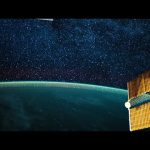
While in orbit, NASA astronauts Robert Behnken and Douglas Hurley captured stunning views of our home planet Earth.
The duo made history May 30 when they launched from American soil in a commercially built and operated American crew spacecraft to the International Space Station. Their mission and test flight is helping NASA certify SpaceX’s crew transportation system for regular flights carrying astronauts to and from the orbiting laboratory.
Docking their SpaceX Crew Dragon capsule to the International Space Station in May completed the first part of the mission for NASA astronauts Robert Behnken and Douglas Hurley on the first crewed test flight for the Commercial Crew Program (CCP). But their task was far from over. The following months contained another important piece of their journey: living and working aboard the orbiting laboratory. Together, they spent more than 100 hours assisting or conducting science and technology demonstrations on station. Learn more about their work here: https://go.nasa.gov/312ES1y
On Aug. 1, NASA astronauts Robert Behnken and Douglas Hurley will depart the International Space Station on SpaceX’s Crew Dragon spacecraft after a more than 60-day stay.
The mission, which is part of NASA’s Commercial Crew Program, marks the first crewed test flight of the spacecraft. Continuous coverage of their departure begins Aug. 1 at 5:15 p.m. EDT and you can watch here on YouTube: https://youtu.be/13OkD0C_TWU
Our next Mars rover is on its way, preparing for the historic return of a Commercial Crew mission, and naming the crew for a future mission … a few of the stories to tell you about – This Week at NASA!
Hear from the two NASA astronauts who launched to space aboard the SpaceX Dragon Endeavour, and from International Space Station commander Chris Cassidy, during a live Q&A. Astronauts Robert Behnken and Douglas Hurley are set to board the SpaceX Dragon Endeavour spacecraft on Saturday, August 1 and undock from the station for the journey home to Earth.
Weather permitting, NASA and SpaceX are targeting 2:42 p.m. EDT Sunday, Aug. 2, for the splashdown and conclusion of the Demo-2 test flight mission. The SpaceX Crew Dragon spacecraft, named Endeavour, lifted off May 30 on a Falcon 9 rocket from Launch Complex 39A at NASA’s Kennedy Space Center in Florida.
The Copernicus Sentinel-2 mission takes us over the many colourful curves and folds of the Flinders Ranges – the largest mountain range in South Australia, in this week’s edition of the Earth from Space programme.
We are Europe’s gateway to space. Our mission is to shape the development of Europe’s space capability and ensure that investment in space continues to deliver benefits to the citizens of Europe and the world. Check out http://www.esa.int/ESA to get up to speed on everything space related.
Space agency leaders from across the globe – including France, India, Italy, Japan, Norway, Spain, the U.S. and the European Space Agency – offer their congratulations for the successful launch of the Mars Perseverance Rover on July 30, 2020. After a 7-month journey to the Red Planet, Perseverance will land in Mars’ Jezero Crater on February 18, 2021.
Join Administrator Jim Bridenstine and NASA leadership for a post-launch news conference about the launch of our Perseverance rover and the Ingenuity helicopter on a United Launch Alliance Atlas V 541 rocket.
Submit your questions NOW for the broadcast! Comment using #CountdownToMars.
Was there once life on Mars? Our Perseverance rover aims to find out! On Thursday, July 30, watch our new robotic astrobiologist launch on a seven-month journey to the Red Planet. Launching on board will be the most sophisticated set of tools ever sent to Mars, with the hope Perseverance will uncover the planet’s secrets.
Tune in to our live launch broadcast starting at 7 a.m. EDT. Teams are targeting 7:50 a.m. EDT for liftoff of Perseverance atop United Launch Alliance’s Atlas V rocket from Kennedy Space Center in Florida. Don’t forget to set a reminder to join us in the #CountdownToMars – you won’t want to miss this historic mission take flight!
Have you ever done a science experiment and wondered “What would this be like if it were HUGE?” Welcome to Science Max, the exciting new series that turbocharges all the science experiments you’ve done at home.
Hear from NASA Administrator Jim Bridenstine and NASA and SpaceX officials about the upcoming departure of the SpaceX Dragon “Endeavour” from the International Space Station.
The SpaceX Dragon Endeavour, with NASA astronauts Robert Behnken and Douglas Hurley aboard, is currently targeted to undock from the space station on Saturday, Aug. 1 and splash down on Sunday, Aug. 2. This will be the first return of a commercially built and operated American spacecraft carrying astronauts from the space station.
In this “On the Go” episode of #EZScience, we’re on the scene at Kennedy Space Center with the rocket that will take the Perseverance rover and the Ingenuity helicopter to Mars.
ABOUT THE SERIES: In our #EZScience video series with the National Air and Space Museum, NASA’s associate administrator for science Dr. Thomas Zurbuchen and Museum director Dr. Ellen Stofan talk about the latest in planetary science and exploration.
Reporting from the Countdown Clock at NASA’s Kennedy Space Center — America’s spaceport — officials from NASA will provide a #CountdownToMars update for the July 30 launch of the Mars 2020 Perseverance rover on a United Launch Alliance Atlas V rocket from Space Launch Complex 41 at Cape Canaveral Air Force Station in Florida. The launch window is approximately two hours, with a launch opportunity every five minutes.
Watch LIVE to see NASA Administrator Jim Bridenstine, NASA Deputy Administrator Jim Morhard, Kennedy Space Center Director Bob Cabana, and astronaut Zena Cardman share their insights about the mission.
This video shows Jezero crater, the landing site of the @NASA Mars 2020 Perseverance rover on the Red Planet, based on images from ESA’s Mars Express mission. The planned landing area is marked with an orange ellipse.
Scheduled for launch from Cape Canaveral, Florida on 30 July 2020 on board an Atlas V rocket, the Perseverance rover will land on 18 February 2021 in Jezero crater.
An impact crater with a diameter of about 45 km, Jezero is located at the rim of the giant Isidis impact basin. Morphological evidence suggests that the crater once hosted a lake, some 3.5 billion years ago.
Jezero possesses an inlet- and an outlet channel. The inlet channel discharges into a fan-delta deposit, containing water-rich minerals such as smectite clays. Scientists believe that the lake was relatively long lived because the delta may have required 1 to 10 million years to reach its thickness and size. Other studies conclude that the lake did not experience periods of important water-level fluctuations and that it was formed by a continuous surface runoff. This makes Jezero crater to a prime target for the search for potential signs of microbial life, because organic molecules are very well preserved in river deltas and lake sediments.
The animation was created using an image mosaic made from four single orbit observations obtained by the High Resolution Stereo Camera (HRSC) on Mars Express between 2004 and 2008. The mosaic combines data from the HRSC nadir and colour channels; the nadir channel is aligned perpendicular to the surface of Mars, as if looking straight down at the surface. The mosaic image was then combined with topography information from the stereo channels of HRSC to generate a three-dimensional landscape, which was then recorded from different perspectives, as with a movie camera, to render the flight shown in the video.
Copyright:
Animation: ESA/DLR/FU Berlin, CC BY-SA 3.0 IGO
Music: Björn Schreiner
Soundtrack logo: Alicia Neesemann
★ Subscribe: http://bit.ly/ESAsubscribe and click twice on the bell button to receive our notifications.
We are Europe’s gateway to space. Our mission is to shape the development of Europe’s space capability and ensure that investment in space continues to deliver benefits to the citizens of Europe and the world. Check out http://www.esa.int/ESA to get up to speed on everything space related.
NASA’s Perseverance Mars rover carries technology that helps to lay the way forward for human exploration of the Red Planet. Scientists from NASA and the Massachusetts Institute of Technology explain.
When our Perseverance Mars rover launches on July 30, it’s set to be the first leg of a series of sample return missions in the search for evidence of life beyond Earth. Watch as experts from both NASA and the European Space Agency discuss how Perseverance will collect samples for future return to Earth.
Let’s talk about science! In the latest episode of #EZScience, learn about the science behind NASA’s Perseverance rover that is targeted to launch to the Red Planet on July 30.
ABOUT THE SERIES: In our #EZScience video series with the National Air and Space Museum, NASA’s associate administrator for science Dr. Thomas Zurbuchen and Museum director Dr. Ellen Stofan talk about the latest in planetary science and exploration.
ESA astronaut Thomas Pesquet has been assigned to the second operational flight of @SpaceX’s Crew Dragon spacecraft, launching to the International Space Station in 2021. Thomas’ second mission to the International Space Station will be called Alpha. This is after Alpha Centauri, the closest stellar system to Earth, following the French tradition to name space missions after stars or constellations.
We are Europe’s gateway to space. Our mission is to shape the development of Europe’s space capability and ensure that investment in space continues to deliver benefits to the citizens of Europe and the world. Check out http://www.esa.int/ESA to get up to speed on everything space related.
Our Mars 2020 Perseverance Rover will search for signs of ancient life beyond Earth. Find out more about the mission from the scientists and engineers on the team.
Lori Glaze, Planetary Science Division Director, NASA HQ
Jennifer Trosper, NASA’s Jet Propulsion Laboratory (remote)
Farah Alibay, Second engineer about mobility, NASA’s Jet Propulsion Laboratory
Ken Farley, Project Scientist, California Institute of Technology
Tanja Bosak, Sedimentology and Astrobiology Science Team Member, Massachusetts Institute of Technology
Submit your science and engineering questions NOW for the broadcast! Comment using #CountdownToMars.
How will Perseverance help with future human exploration? And how will the Mars Ingenuity Helicopter work?
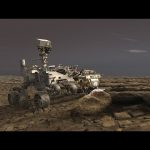
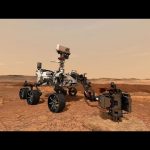
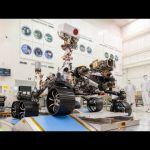
NASA’s Mars 2020 Perseverance rover is creating a lot of excitement. The new rover will look for signs of past microbial life, cache rock and soil samples, and prepare for future human exploration.
As part of the assembly, test, and launch operations team, NASA engineer Michelle Colizzi explains the Perseverance rover’s mission. She details how the drill will collect core samples and outlines plans to test a new technology to produce oxygen from the Martian atmosphere.
For more information about the mission, go to: mars.nasa.gov/mars2020/ Send your questions to our experts using: #AskNASA For more information about Artemis: https://www.nasa.gov/what-is-artemis
We’re going back to Mars! Our newest rover is named Perseverance, and will be launching soon for its seven-month journey to the Red Planet to search for signs of ancient life. And it’s bringing along a friend: a little helicopter named Ingenuity! Ingenuity will test the first powered flight on Mars.
1. Unde dispare lumina, când intră în cameră?
2. Unde dispare lumina, când intră în
cameră, iar pereții sunt oglinzi?
3. De ce se mișcă electronii pe orbitali
în interiorul atomului?
4. Electronii negativi sunt atrași de nucleul pozitiv. De ce nu se prăbușeste pe nucleu?
5. Ce se întămplă dacă apropiem două nuclee?
6. Din ce e compusă masa atomului?
7. De ce creează electronii câmp magnetic numai câns se mișcă?
8. De ce au atomii forme circulare?
9. Ce se întâmplă cu un electron care pleacă de pe pe orbita lui?
This week’s edition of the Earth from Space programme features a radar image of the Falkland Islands (Islas Malvinas), captured by the Copernicus Sentinel-1 mission.
We are Europe’s gateway to space. Our mission is to shape the development of Europe’s space capability and ensure that investment in space continues to deliver benefits to the citizens of Europe and the world. Check out http://www.esa.int/ESA to get up to speed on everything space related.
ESA astronaut Matthias Maurer has been training at @NASA’s Johnson Space Center in Houston, USA. In this video, he walks us through training for a spacewalk with NASA colleagues in the 12 m deep Neutral Buoyancy Facility (NBL).
Matthias travelled to Houston from Europe with fellow ESA astronaut Thomas Pesquet. Thomas has flown to the International Space Station before, while Matthias is training for his first Space Station mission. Mission dates are yet to be confirmed, but as the next two ESA astronauts in line for flights, the pair are working to ensure they fully trained and ready.
Due to the current situation with COVID-19, all personnel are required to adhere to special safety precautions while training. These include wearing a mask – as seen in the clip.
Matthias will continue his training in Houston over the next weeks and months. Stay tuned for further footage of his training and experiences.
We are Europe’s gateway to space. Our mission is to shape the development of Europe’s space capability and ensure that investment in space continues to deliver benefits to the citizens of Europe and the world. Check out http://www.esa.int/ESA to get up to speed on everything space related.
Have you ever done a science experiment and wondered “What would this be like if it were HUGE?” Welcome to Science Max, the exciting new series that turbocharges all the science experiments you’ve done at home.
Millions of miles from Earth lies a dusty, cold, desert world with a very thin atmosphere. You know this planet as Mars…but it hasn’t always been this way. There’s evidence that the Red Planet was much wetter and warmer, with a thicker atmosphere, billions of years ago. Could it also have supported life? NASA’s Perseverance rover launches next week and will explore the Red Planet to collect rock and soil samples, which may preserve ancient signs of life. Join experts on #NASAScience Live Wednesday, July 22 at 3:00 p.m. EDT, to learn more about this robotic astrobiologist.
Discovered in March 2020, Comet NEOWISE became visible to the naked eye in July, gifting observers in the northern hemisphere with one of the most scenic comets in over 20 years. The comet, which is on an almost parabolic orbit and had its closest approach to the Sun, or perihelion, in early July, reaches its closest point to Earth on 22–23 July, before zipping back towards the outer Solar System.
In this video, ESA Research Fellows Rachana Bhatawdekar and Sandor Kruk share their experience and explain how to observe and image the comet in the sky. Next, ESA Research Fellow Charlotte Götz tells us more about comets and their tails, and how ESA’s future Comet Interceptor mission, to be launched in 2028, is going to wait for such a ‘great’ comet that has not been discovered yet. The spacecraft will sit in a parking orbit around the Lagrange point L2, 1.5 million kilometres away from Earth, until an interesting ‘pristine’ comet visits the inner Solar System. It will then intersect the comet’s orbit to study its nucleus, gases, dust, and plasma environment.
Jump to the different segments of the video: 00:00 – 1:22 – How to see comet NEOWISE 1:23 – 2:42 – How to take a picture of comet NEOWISE 2:43 – 6:17 – Comets and Comet Interceptor
Image credits: Rachana Bhatawdekar, Sandor Kruk, Mark McCaughrean, Kai Noeske (2020) Thumbnail image: Courtesy Mark McCaughrean, 12 July 2020 (Wassenaar, The Netherlands)
★ Subscribe: http://bit.ly/ESAsubscribe and click twice on the bell button to receive our notifications.
We are Europe’s gateway to space. Our mission is to shape the development of Europe’s space capability and ensure that investment in space continues to deliver benefits to the citizens of Europe and the world. Check out http://www.esa.int/ESA to get up to speed on everything space related.
On July 21, NASA astronauts Chris Cassidy and Robert Behnken will conduct a spacewalk to perform a number of tasks designed to upgrade station systems. Coverage will begin around 7:15 a.m. EDT, and may last up to seven hours. This will be both astronauts’ 10th spacewalk outside the orbital lab and Behnken’s final before returning to Earth on SpaceX’s Dragon Endeavor on August 2.
As we explore Mars and other places in the solar system that might have life, scientists who work in Planetary Protection are busy making sure that we don’t contaminate them. While engineers prepare the Perseverance Rover for launch, Lisa Pratt, NASA’s Planetary Protection Officer, is making sure that it’s not carrying too many spores — cells that could re-activate and transport Earthly bacteria to Mars. It’s especially important to keep Perseverance clean because it will collect samples on Mars that will one day return to Earth. Learn what your hand sanitizer has in common with NASA’s clean rooms, and how scientists are thinking about protecting Mars in terms of future human missions.
NASA is advancing many technologies to send astronauts to Mars as early as the 2030s. Here are six things we are working on right now to make future human missions to the Red Planet possible.