Astronomers have pushed NASA’s Hubble Space Telescope to its limits by finding what they believe is the most distant, ancient object ever seen in the universe. Its light traveled 13.2 billion years to reach Hubble, roughly 150 million years longer than the previous record holder. The age of the universe is 13.7 billion years. The dim object is a tiny, compact galaxy of blue stars that existed 480 million years after the big bang, only four percent of the universe’s current age. It is so small, more than one hundred similarly-sized mini-galaxies would be needed to make up our Milky Way.
Category: Astronomie
-
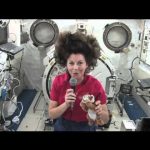
Waking up, working, and going to sleep in Zero G
Expedition 26 NASA Flight Engineer Cady Coleman discusses what daily life is like aboard an orbiting space laboratory on CBS’ news program “The Talk” on January 18, 2011.
-
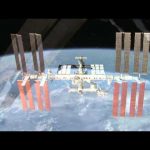
NASA’S Mission Control and ISS Crew Observe National Moment of Silence
At Mission Control at the Johnson Space Center in Houston and aboard the International Space Station, flight controllers and the Expedition 26 crew paused to observe a National Moment of Silence Jan. 10, 2011. The event was held for the victims of the shootings in Tucson, Ariz., Jan. 8 that left six people dead and more than a dozen wounded, including Rep. Gabrielle Giffords (D-AZ). Station Commander Scott Kelly, Giffords’ brother-in-law, led the station crew in its observance from 220 miles above the Earth.
-
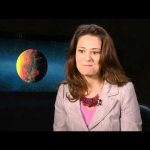
NASA’s Kepler Spacecraft Discovers Its First Rocky Exoplanet
NASA’s Kepler spacecraft has discovered Kepler-10b, its first confirmed rocky planet and the smallest transiting exoplanet discovered to date. Kepler-10b is only 1.4 times the size of Earth and has an average density of 8.8 grams per cubic centimeter, similar to that of an iron dumbbell. The planet orbits its star in only 0.84 days and is not in the habitable zone, where liquid water could exist.
-
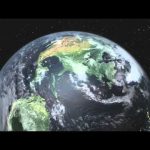
NASA Season’s Greetings 2010
NASA Television’s 2010 Season’s Greetings ID takes us on a journey through some of Hubble’s most beautiful images and ends with a view of a peaceful Earth through the cupola of the International Space Station. This piece was created by Mark R. Hailey, NASA Television’s Art Director with piano accompaniment by Michael Chao.
-
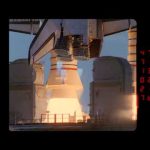
“Best of the Best” Provides New Views, Commentary of Shuttle Launches
This video from the Glenn Research Center highlights in stunning, behind-the-scenes imagery the launches of three space shuttle missions: STS-114, STS-117, and STS-124. NASA engineers provide commentary as footage from the ground and from the orbiters themselves document in detail the first phase of a mission.
-
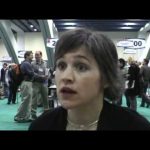
NASA Science on the Road: Oceans, Carbon, and Climate
The annual gathering of Earth and space scientists in San Francisco at the American Geophysical Union meeting draws thousands of researchers from around the world, including many involved with NASA research. Galen McKinley of the University of Wisconsin-Madison talks about her work with carbon in the global oceans and the Great Lakes.
-
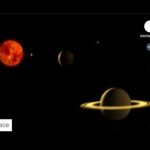
ESA Euronews: A caccia di esopianeti!
Pegaso 51 B è il nome che è stato dato al primo pianeta extra sistema solare scoperto nel 1995. Da allora ne sono stati scoperti altri 500. Space è andato a perlustare i recessi della ricerca su queste porzioni di universo.
-

NASA Science Seminar “Arsenic and the Meaning of Life”
A scientific presentation by U.S. Geological Survey research hydrologist Dr. Ronald Oremland about the role of arsenic in microbial life and the microbial ecology of California’s Mono Lake.
Oremland is a senior scientist with the USGS Water Resources Division in Menlo Park, Calif., and a principal investigator with NASA’s Exobiology and Evolutionary Biology Program, an element of NASA’s Astrobiology Program. He is a co-author of the paper on arsenic findings published last week in Science Express and announced during the Dec. 2 NASA press conference. -

NASA-Funded Research Discovers Life Built with Toxic Chemical
NASA-funded astrobiology research has changed the fundamental knowledge about what comprises all known life on Earth.
Researchers conducting tests in the harsh environment of Mono Lake in California have discovered the first known microorganism on Earth able to thrive and reproduce using the toxic chemical arsenic. The microorganism substitutes arsenic for phosphorus in its cell components.
This finding of an alternative biochemistry makeup will alter biology textbooks
and expand the scope of the search for life beyond Earth. The research
is published in this week’s edition of Science Express. -

Space Station Crew Uses HAM Radio to Call Earth
Inside the International Space Station, Expedition 25 commander Doug Wheelock gave a tour of the Russian segment of the orbiting complex, including the Soyuz spacecraft docked there. Wheelock showed off the station’s HAM radio, using the call sign “NA1SS,” to talk with people on the ground as the station flies overhead at 17,500 miles per hour. Wheelock, and Flight Engineers Shannon Walker and Fyodor Yurchickin all will return home to Earth this Thursday, Nov. 25.
-
ESA Euronews: Segredos de Saturno
Há algumas décadas, para observar Saturno, os cientistas recorriam a
telescópios. Hoje em dia, os segredos de Saturno e da sua misteriosa lua Titã são revelados graças aos dados e imagens enviados pela missão Cassini-Huygens. Saturno nunca antes visto, é o tema de Space esta semana. -

ESA Euronews: Los secretos de Saturno
Hasta hace algunas décadas para ver Saturno la ciencia tenía que mirar a
través de telescópios. Hoy Saturno y su misteriosa luna Titán son nuevos
conocidos gracias a la misión Cassini-Huygens que desde 2004 envía imágenes y datos. Una aventura que está cambiando la percepción que hasta ahora teníamos de nuestro Sistema Solar. -
ESA Euronews: Der Saturn gibt seine Geheimnisse preis
Noch vor einigen Jahrzehnten konnte man den Saturn nur mit dem Teleskop
beobachten. Heute lüftet die Cassini-Huygens-Mission mit ihren Bildern die
Geheimnisse des Saturnsystems und liefert Antworten auf entscheidende
wissenschaftliche Fragen. -

New Shuttle Launch Date Tops This Week @NASA
A new target launch date has been selected for STS-133, allowing ample time for repairs to space shuttle Discovery. Also, NASA’s chief technologist and planetary science director were among more than 20 speakers featured at the second TEDxNASA conference in Newport News, Virginia. Hosted by the Langley Research Center, TEDx focused on education, innovation, family, technology, art and space travel. Plus, X-15 astronaut Joe Wagner joins Aerospace Hall of Fame; HQ Honor Awards; and Herrington helps celebrate American Indian & Alaska Native Heritage Month.
-
“Larry the Cable Guy” Says “Git-R-Done!” and Watch NASA TV
In this second of three station IDs, comedian Daniel Lawrence Whitney, a.k.a. “Larry the Cable Guy,” implores viewers to watch NASA Television.
-
ESA Euronews: Il satellite al servizio di internet
L’internet ad alta velocità è una necessità. Non importa dove siete, lontano
dalle città o in treno. Potete essere sempre connessi se l’autostrada
dell’informazione attraversa lo spazio. In questa puntata Space si occupa dell’internet satellitare, un modo universale e efficiente per avere accesso al World Wide Web. -
ESA Euronews: Internet de alta velocidad cuando sea y donde sea
Disponer de internet a alta velocidad se ha convertido en una necesidad en cualquier lugar del planeta, ya sea en un pueblo aislado o en un tren. La mejor solución llega desde el espacio: La conexión a internet vía satélite.
-
The International Space Station: Together is the Future
As the International Space Station Program completes 10 years of continuous human presence, administrators and former crewmembers discuss its past, present and future. The first residents, astronaut Bill Shepherd and cosmonauts Sergei Krikalev and Yuri Gidzenko came aboard the ISS on Nov. 2, 2000 on Expedition 1.
-
NASA Sets Official Launch Date for Shuttle Discovery
After a day-long flight readiness review at Kennedy Space Center in Florida, senior NASA and contractor managers voted unanimously to set space
-
ESA Euronews: Europe and space exploration (Português)
Space exploration is a major global issue and Europe wants to be in the driving seat. It therefore needs to develop a global vision and a strategic action plan.
-
ESA Euronews: Europe and space exploration (Italiano)
Space exploration is a major global issue and Europe wants to be in the driving seat. It therefore needs to develop a global vision and a strategic action plan.
-
ESA Euronews: Europe and space exploration (Français)
Space exploration is a major global issue and Europe wants to be in the driving seat. It therefore needs to develop a global vision and a strategic action plan.
-
ESA Euronews: Europe and space exploration (Deutsch)
Space exploration is a major global issue and Europe wants to be in the driving seat. It therefore needs to develop a global vision and a strategic action plan.
-
ESA Euronews: Europe and space exploration
Space exploration is a major global issue and Europe wants to be in the driving seat. It therefore needs to develop a global vision and a strategic action plan.
-

NASA Experts Assist in Chilean Miners’ Survival and Rescue
On Aug. 31, a NASA team of experts arrived in Santiago for about a week as part of NASA’s commitment to provide U.S. assistance. NASA’s assistance was only a small contribution to the Chilean government’s overall rescue effort. The NASA team included two medical doctors, a psychologist and an engineer. Dr. Michael Duncan, deputy chief medical officer in NASA’s Space Life Sciences Directorate at NASA’s Johnson Space Center in Houston,
led the team. The other team members are physician J.D. Polk, psychologist Al Holland and engineer Clint Cragg. -
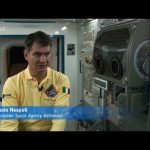
Counting down for ESA’s MagISStra mission
ESA’s Director of Human Spaceflight Simonetta Di Pippo together with ESA’s astronaut Paolo Nespoli introduce the MagISStra mission which is going to be launched in December 2010 from Baikonur Cosmodrome, Kazakhstan. This is the third six-month duration mission a European astronaut takes part to.
-
ESA Euronews: Ciência e ficção científica
Júlio Verne, Arthur C. Clark e muitos outros imaginaram mundos, máquinas e viagens fantásticas. Contudo muito do que então era ficção científica, tornou-se realidade. “Ciência e ficção científica” é o tema desta
edição de Space -
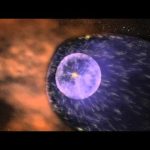
NASA Spacecraft Reveals Changes at Solar System’s Edge
For the first time, NASA’s Interstellar Boundary Explorer, or IBEX, spacecraft reveals changing conditions at the edge of our solar system. The heliosphere changes size through the solar cycle, which affects the number of cosmic rays that reach Earth. Scientists now have a better understanding of the dynamic nature of our home in the galaxy.
-
First “Goldilocks” Exoplanet Discovered by NASA-funded Researchers
A team of planet hunters led by astronomers at the University of California (UC), Santa Cruz and the Carnegie Institution of Washington has announced the discovery of a planet orbiting a nearby star, Gliese 581, at a distance that places it squarely in the middle of the star’s “habitable zone.” This would be the most Earth-like exoplanet and the first truly habitable one yet discovered. The research was supported by grants from NASA and the National Science Foundation. “Goldilocks” refers to an exoplanet whose temperatures are “not too cold, not too hot, but just right” to maintain water and support Earth-like life.
-
ESA Euronews: A can-size challenge for European students (Español)
Flying your very own rocket with its model satellite – this was the challenge facing high-school students from all over Europe this summer for the first ever European CanSat competition in Norway.
-
ESA Euronews: A can-size challenge for European students (Português)
Flying your very own rocket with its model satellite – this was the challenge facing high-school students from all over Europe this summer for the first ever European CanSat competition in Norway.
-
ESA Euronews: A can-size challenge for European students
Flying your very own rocket with its model satellite – this was the challenge facing high-school students from all over Europe this summer for the first ever European CanSat competition in Norway.
-
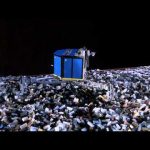
Using LEGO® to simulate ESA’s touchdown on a comet
Comets are primeval leftovers from the origins of the Solar System. To fully understand these ancient objects and perhaps the origins of life on Earth, ESA’s Rosetta mission will rendezvous with comet Churyumov-Gerasimenko in 2014. In November of that year, Rosetta’s Philae lander will touchdown on the comet and thoroughly investigate its composition.
Copyright © Lightcurve Films/Maarten Roos, ESA, DLR, Europlanet, LEGO
-

ESA Space Scientist Detlef Koschny explains why he originally built Rosetta in LEGO®
Space missions are complicated pieces of orbital choreography. When planning a mission, spacecraft engineers must calculate how to point the solar panels towards the Sun, the main antenna towards Earth and the instruments towards the target. ESA Space Scientist Detlef Koschny build a LEGO model of Rosetta mission in order to visualise these precise orientations.
Copyright © Lightcurve Films/Maarten Roos, ESA, DLR, Europlanet, LEGO
-
ESA Space Scientist Detlef Koschny demonstrates the prototype LEGO® Philae lander
Built using LEGO Mindstorms, the Philae lander model can be controlled using a home computer. It can rotate and move the drill up and down to simulate the behaviour of the real lander. As part of ESA’s Rosetta space mission, Philae will land on comet Churyumov-Gerasimenko in November 2014 to study its composition.
Copyright © Lightcurve Films/Maarten Roos, ESA, DLR, Europlanet, LEGO
-
Newly-Discovered Sun-Like System Highlights This Week @ NASA
The continuous monitoring of more than 156,000 stars for subtle brightness changes has led to the discovery by NASA’s Kepler Mission of the first confirmed system outside our own that has more than one planet transiting the same star. Also, researchers head north to “Mars on Earth;” “Avatar” director and film’s imagery featured in NASA Earth science public service campaign; Mary J. Blige encourages students “to reach for the stars;” NASA helps celebrate “Star Wars;” and more.
-

U2 in Space and On Tour with NASA
A year’s worth of collaboration between NASA and U2 both in space and on the Irish rock band’s “360” world tour is highlighted in a new video produced by the group. In 2009, U2 approached NASA with the idea to include the crew of the International Space Station in its shows, and the astronauts agreed to participate in this unique experience. Bono, The Edge, Adam Clayton and Larry Mullen, Jr. spoke with the Expedition 20 crew on the space station several times before the astronauts recorded a video segment that U2 incorporated into its concerts. The crew members include Michael Barratt of NASA, Frank De Winne of the European Space Agency, Bob Thirsk of the Canadian Space Agency, Koichi Wakata of the Japan Aerospace Exploration Agency, and Gennady Padalka and Roman Romanenko of the Russian Federal Space Agency.
-
“Avatar” Director in NASA Earth Science Exploration PSAs
James Cameron, director of “Avatar,” talks about many of the contributions that NASA’s Earth science program has made in regards to environmental awareness and exploration of our home planet. “A Planet in Peril” is one of three public service announcements featuring “Avatar” film imagery and computer animations and data from NASA’s fleet of Earth-observing satellites. NASA has 14 science satellites in orbit making cutting-edge global observations of the entire global system including the atmosphere, oceans, land surface, snow and ice.