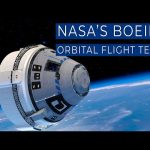
Launching Soon: Starliner will launch on NASA’s Boeing Orbital Flight Test-2 mission headed for the International Space Station. The uncrewed mission will test end-to-end capabilities of the Starliner spacecraft and Atlas V rocket from launch to docking to a return to Earth in the desert of the western United States.
This is the second uncrewed flight test of the company’s CST-100 Starliner spacecraft for NASA’s Commercial Crew Program.
Producer/Editor: Lacey Young Music: Universal Production Music
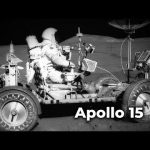
Our first wheels on the Moon. On the Apollo 15 mission, the Lunar Roving Vehicle allowed the astronauts to cover a much greater distance on the Moon than the previous three flights had accomplished. This year marks the 50th anniversary of the Apollo 15 mission. On July 26, 1971, David R. Scott (Commander), James B. Irwin (Lunar Module Pilot) and Alfred M. Worden (Command Module Pilot) launched from Kennedy Space Center’s Launch Complex 39A.
Apollo 15 set several new records for crewed spaceflight: heaviest payload in a lunar orbit of approximately 107,000 pounds, maximum radial distance traveled on the lunar surface away from the spacecraft of about 17.5 miles, most lunar surface moonwalks (three) and longest total of duration for lunar surface moonwalk (18 hours, 37 minutes), longest time in lunar orbit (about 145 hours), longest crewed lunar mission (295 hours), longest Apollo mission, the first satellite placed in lunar orbit by a crewed spacecraft, and first deep space and operational spacewalk.
The Paris Agreement adopted a target for global warming not to exceed 1.5°C. This sets a limit on the additional carbon we can add to the atmosphere – the carbon budget. Only 18% of the carbon budget is now left. That is about 10 years at current emission rates.
Each country reports its annual greenhouse gas emissions to the United Nations. Scientists then set these emissions against estimates of the carbon absorbed by Earth’s natural carbon sinks. This is known as the bottom-up approach to calculating the carbon budget.
Another way to track carbon sources and sinks is to measure the amounts of greenhouse gases in the atmosphere from space – the top-down approach. As well as tracking atmospheric carbon, ESA’s Climate Change Initiative is using satellite observations to track other carbon stocks on land and sea.
How we use the land accounts for about a quarter of our greenhouse gas emissions. Forests are the largest store of carbon on the land. Fire acts as a conduit for carbon to pass from the land to the atmosphere. And phytoplankton in the ocean is an important carbon sink.
ESA’s RECCAP-2 project is using this information to reconcile the differences between the bottom-up and top-down approaches. Observations are combined with atmospheric and biophysical computer models to deduce carbon fluxes at the surface. This will improve the precision of each greenhouse gas budget and help separate natural fluxes from agricultural and fossil fuel emissions. This work will help us gauge whether we can stay within the 1.5°C carbon budget, or if more warming is in store.
Credits: ESA/Planetary Visions
★ Subscribe: http://bit.ly/ESAsubscribe and click twice on the bell button to receive our notifications.
We are Europe’s gateway to space. Our mission is to shape the development of Europe’s space capability and ensure that investment in space continues to deliver benefits to the citizens of Europe and the world. Check out https://www.esa.int/ to get up to speed on everything space related.
Relocating a commercial spacecraft at the space station, while another one gets ready to launch to the station, and Perseverance prepares for a mission milestone on Mars … a few of the stories to tell you about – This Week at NASA!
We are Europe’s gateway to space. Our mission is to shape the development of Europe’s space capability and ensure that investment in space continues to deliver benefits to the citizens of Europe and the world. Check out https://www.esa.int/ to get up to speed on everything space related.
Ten years ago, the last shuttle mission (STS-135) dropped out of the predawn darkness and landed at Kennedy’s Shuttle Landing Facility Runway 15 for the final time.
Over the course of the more than eight days, Commander Chris Ferguson, Pilot Doug Hurley, and Mission Specialists Sandy Magnus and Rex Walheim had spent much of their time delivering a stockpile of supplies and parts to the space station.
The end of their mission aboard Atlantis may have been the end of the shuttle era, but it was the beginning a new stage of exploration.
0:00 – Intro 0:24 Preparing to launch 2:48 Launch delay 3:34 Launch 4:01 Arrive at the International Space Station 5:51 Returning Home 7:04 Landing 8:51 New Beginnings
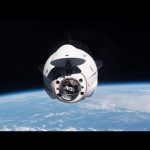
NASA’s SpaceX Crew-2 astronauts on the International Space Station will board Crew Dragon Endeavour on Wednesday, July 21, to relocate the spacecraft to another docking port. The maneuver will free up up a “parking space” for the uncrewed Boeing Starliner spacecraft, currently targeted to launch on its second Orbital Flight Test on July 30.
Starliner’s arrival on July 31 will mark the first time two different U.S. commercial spacecraft built for crew will be docked to our orbiting laboratory at the same time.
Live NASA TV coverage of Crew Dragon relocation begins at 6:30 a.m. EDT (10:30 UTC), with undocking at 6:45 a.m. (10:45 UTC) and redocking at 7:32 a.m. (11:32 UTC).
NASA honors the 100th anniversary of the birth of space pioneer John Glenn. Glenn was one of NASA’s original seven Mercury astronauts, served four terms as a U.S. senator from Ohio, and flew on the space shuttle Discovery at the age of 77.
His flight on Friendship 7 on Feb. 20, 1962, showed the world that America was a serious contender in the space race with the Soviet Union. It also made Glenn an instant hero as the first American to orbit Earth.
After retiring from NASA in 1965, Glenn took an active part in Ohio politics and environmental protection efforts. He won his Senate seat in 1974, carrying all 88 counties of Ohio. He was re-elected in 1980 with the largest margin in Ohio history.
Ohio returned him to the Senate for a third term in 1986, again with a substantial majority. In 1992 he was elected again, becoming the first popularly elected senator from his state to win four consecutive terms.
In 1998, Glenn flew on the STS-95 Discovery shuttle flight, a 9-day mission during which the crew supported a variety of research payloads including deployment of the Spartan solar-observing spacecraft, the Hubble Space Telescope Orbital Systems Test Platform, and Glenn’s investigations on space flight and the aging process.
ESA’s first Earth observation mission dedicated to understanding our planet, the European Remote Sensing satellite (ERS-1), was launched into orbit on 17 July 1991. At the time, it was the most sophisticated Earth observation spacecraft developed and launched by Europe.
Thirty years ago, as the team went through the launch and early-orbit phase, the first synthetic aperture radar images were awaited in Kiruna and Fucino. Featuring video footage taken in 1991, the team involved tells the story of the anxious moments and important breakthroughs they made as the first images arrived. Get an insider view into the problem-solving moments from inside one of ESA’s processing rooms.
We are Europe’s gateway to space. Our mission is to shape the development of Europe’s space capability and ensure that investment in space continues to deliver benefits to the citizens of Europe and the world. Check out https://www.esa.int/ to get up to speed on everything space related.
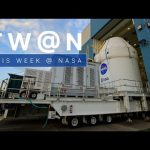
Installing a critical system for our Orion spacecraft, the latest engine test for our Artemis Moon missions, and working to give spacecraft propulsion a boost … a few of the stories to tell you about – This Week at NASA!
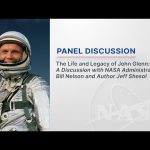
NASA Administrator Bill Nelson joined author Jeff Shesol for a discussion on the life of the late U.S. senator and former astronaut John Glenn during a virtual panel that aired on NASA Television’s Public Channel and the agency’s website. Glenn Center Director Dr. Marla Pérez-Davis and acting Chief Historian Dr. Brian Odom gave opening remarks at the event.
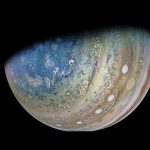
On June 7, 2021, NASA’s Juno spacecraft flew closer to Jupiter’s ice-encrusted moon Ganymede than any spacecraft in more than two decades. Less than a day later, Juno made its 34th flyby of Jupiter. This animation provides a “starship captain” point of view of each flyby. For both worlds, JunoCam images were orthographically projected onto a digital sphere and used to create the flyby animation. Synthetic frames were added to provide views of approach and departure for both Ganymede and Jupiter.
Soon Eutelsat Quantum will be launched into a geostationary orbit on board an Ariane 5 from Kourou. This advanced telecommunications satellite is revolutionary as it offers its users the ability to reconfigure the satellite while in orbit. This offers a previously unknown degree of flexibility during its 15-year lifetime. It allows for satellites of this type to be mass-produced, making them extremely interesting for commercial parties and industry. The satellite was developed as an ESA partnership project with operator @Eutelsat SA and prime contractor @Airbus working together with ESA to share the risk of developing this innovative piece of technology.
We are Europe’s gateway to space. Our mission is to shape the development of Europe’s space capability and ensure that investment in space continues to deliver benefits to the citizens of Europe and the world. Check out https://www.esa.int/ to get up to speed on everything space related.
Timelapse video made during ESA astronaut Thomas Pesquet’s second mission to the International Space Station, “Alpha”.
ESA astronaut Thomas Pesquet and @NASA astronaut Shane Kimbrough performed three spacewalks in the span of 10 days to install two new solar arrays that will generate more electricity on the International Space Station.
The third and final spacewalk for the duo happened on June 25 to finish installing the second pair of new solar arrays. This spacewalk proceeded without problems, and the two new solar arrays are already working and supplying power to the Space Station.
The design of the new solar arrays will be used to power the lunar Gateway that will be built in an orbit around the Moon – the next outpost in space for the agencies that run the International Space Station.
Thomas has now spent exactly 33 hours on spacewalks, all with Shane over the course of two spaceflights.
Thomas posted this video on his social media channels with the caption: “Aki took another great timelapse of our last spacewalk to install the new solar panels… for now. Four more are set to be installed, but they are not on the Station yet. This timelapse is great because it shows how small we are compared to the huge layout of the Space Station (it is about the same size as a football field – both types: American football or actually-using-your-feet-football fields). Note how the solar arrays we are working on don’t move, this is because they were turned off and not following the Sun so were not generating power. As an extra precaution we didn’t connect the power cables until darkness!”
Over 200 experiments are planned during Thomas’ time in space, with 40 European ones and 12 new experiments led by the French space agency @CnesFrance.
We are Europe’s gateway to space. Our mission is to shape the development of Europe’s space capability and ensure that investment in space continues to deliver benefits to the citizens of Europe and the world. Check out https://www.esa.int/ to get up to speed on everything space related.
A commercial cargo spacecraft leaves the space station, watching an Atlantic storm from space, and the Artemis I rocket moves closer to launch … a few of the stories to tell you about – This Week at NASA!
We are Europe’s gateway to space. Our mission is to shape the development of Europe’s space capability and ensure that investment in space continues to deliver benefits to the citizens of Europe and the world. Check out https://www.esa.int/ to get up to speed on everything space related.
Ten years ago, Atlantis rose from the launch pad on a plume of fire and parted the high clouds on its way to the International Space Station and to its place in history. The 11:29 a.m. EDT liftoff on July 8, 2011, marked the last time a space shuttle would climb from Kennedy’s seaside launch complex to soar toward the heavens.
The crew of four veteran astronauts aboard Atlantis — Commander Chris Ferguson, Pilot Doug Hurley, and Mission Specialists Sandy Magnus and Rex Walheim — set off on the STS-135 mission to deliver a stockpile of supplies and parts to the space station.
The ESA Jupiter Icy Moons Explorer (Juice) team has been working very hard to prepare the spacecraft for the first test in the one-year long environmental test campaign. This is the so-called Thermal Balance Thermal Vacuum (TBTV) test.
Juice is in the Large Space Simulator (LSS), a unique facility in Europe (run by the European Test Center, at ESA/ESTEC in the Netherlands) that can simulate the vacuum and cold and hot temperature conditions in space, and also the Sun itself!
The TBTV started on 17 June with the closure of the LSS and the “pumping-down”, meaning the removal of air within the chamber to a pressure level of 10nbar (1/100 000 000th of the outside air pressure). This is the closest Juice will come to space conditions while on Earth. It will undergo 24/7 testing, ending on 16 July 2021.
In this episode this process is followed and several team members comment on the different moments.
Produced for ESA by Lightcurve Films. GoPro footage by ESA. Original music by William Zeitler.
★ Subscribe: http://bit.ly/ESAsubscribe and click twice on the bell button to receive our notifications.
We are Europe’s gateway to space. Our mission is to shape the development of Europe’s space capability and ensure that investment in space continues to deliver benefits to the citizens of Europe and the world. Check out https://www.esa.int/ to get up to speed on everything space related.
The European Robotic Arm (ERA) will be launched to the International Space Station together with the Russian Multipurpose Laboratory Module, called ‘Nauka’. ERA is the first robot able to ‘walk’ around the Russian segment of the Space Station. It has the ability to anchor itself to the Station and move back and forward by itself, hand-over-hand between fixed base-points. This 11-metre intelligent space robot will serve as main manipulator on the Russian part of the Space Station, assisting the astronauts during spacewalks. The robot arm can help install, deploy and replace elements in outer space ERA is 100% made-in-Europe. A consortium of European companies led by Airbus Defence and Space Netherlands designed and assembled it for ESA. The robotic arm is largely funded by the Dutch government.
We are Europe’s gateway to space. Our mission is to shape the development of Europe’s space capability and ensure that investment in space continues to deliver benefits to the citizens of Europe and the world. Check out https://www.esa.int/ to get up to speed on everything space related.
A U.S. commercial spacecraft departs the space station, more supplies and hardware are delivered to the station, and a moniker for the Artemis I mission’s “Moonikin” … a few of the stories to tell you about – This Week at NASA!
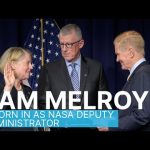
NASA’s new deputy administrator Col. Pam Melroy shares her vision for NASA’s future.
One of only two women to command a space shuttle, Melroy logged more than 38 days in space. She served as pilot on two flights, STS-92 in 2000 and STS-112 in 2002, and was the mission commander on STS-120 in 2007. All three of her missions were assembly missions to build the International Space Station.
After graduating from United States Air Force Test Pilot School, Melroy logged more than 6,000 flight hours in more than 50 different aircraft. She is a veteran of Operation Desert Shield/Desert Storm and Operation Just Cause, with more than 200 combat and combat support hours.
After serving more than two decades in the Air Force and as a NASA astronaut, Melroy took on a number of leadership roles, including at Lockheed Martin, the Federal Aviation Administration, the Defense Advanced Research Projects Agency, Nova Systems Pty, Australia, and as an advisor to the Australian Space Agency. She also served as an independent consultant and a member of the National Space Council’s Users Advisory Group.
Producer/Editor: Lacey Young Music: Universal Production Music
At NASA, every day is asteroid day. From the many missions journeying to asteroids in our solar system – some even returning samples to Earth – to the efforts to find, track and monitor near-Earth objects and protect our planet from potential impact hazards, NASA and its partners are always looking to the skies. Join us on International Asteroid Day, Wednesday, June 30 at 1:00 p.m. ET to hear from experts and ask them your questions about all things asteroids. Send in questions using #askNASA.
Meet the experts:
Dr. Dani DellaGiustina is a Research Scientist at the University of Arizona and the acting Deputy Principal Investigator for the OSIRIS-REx mission. Dani has been studying our solar system and asteroids for quite some time. She says she loves seeing images and data that’s coming off spacecraft for the first time because chances are – you might be the first human who has ever seen a rock or feature on a planetary surface. She says it feels like you are on the edge of human knowledge. In her spare time, Dani enjoys being outside and hanging out with her dogs.
Dr. Terik Daly is a Senior Scientist at Johns Hopkins University Applied Physics Laboratory. As a planetary scientist, Terik investigates how the solar system formed and changes through time. He loves working in teams to solve problems that are too big for any one person to solve, which is why he finds his work in planetary defense interesting. Terik has three young kids and enjoys cooking, yoga and biking.
NASA’s Psyche team will measure the asteroid’s magnetic field using a magnetometer. This instrument is composed of two identical high-sensitivity magnetic field sensors located at the middle and outer end of a 6-foot (2-meter) boom on the spacecraft. The magnetometer team is based at the Massachusetts Institute of Technology and Technical University of Denmark.
The Psyche mission is led by Principal Investigator Lindy Elkins-Tanton of Arizona State University. NASA’s Jet Propulsion Laboratory is responsible for the mission’s overall management, system engineering, integration and test, and mission operations. Maxar Technologies is providing a high-power solar electric propulsion spacecraft chassis.
Staying safe and healthy moves us forward – for your family and the NASA family.
We prioritize the safety of our employees and our communities. All employees are strongly encouraged to monitor vaccine availability in their local communities while the agency updates its capabilities to support vaccine distribution and works with states to get vaccine for our mission-critical workforce.
Timelapse video made during ESA astronaut Thomas Pesquet’s second mission to the International Space Station, “Alpha”.
On Sunday 20 June 2021 Thomas and @NASA astronaut Shane Kimbrough were helped into their spacesuits again for their fourth spacewalk together. This time it was to complete installation of the first new solar array and get ahead on the second.
During this spacewalk the duo unfolded the solar arrays that are rolled into tubes for transport, aligned them, connected data cables and secured them to the mounting bracket. Connecting the power lines must be done during the orbital night-time as a precaution to avoid any chance of electric shock.
As Thomas and Shane waited for the night to arrive, Shane’s helmet lights and camera partially detached from his helmet but Thomas used some wire to successfully reattach them as a temporary fix.
From there the spacewalk went smoothly. Shane and Thomas connected the new solar array, watched it unfurl and prepared for the installation of the second new solar array. The second spacewalk lasted 6 hours and 28 minutes, with the duo arriving back at the airlock at 20:10 CEST (19:10 BST).
This video shows scenes from this spacewalk. The images for this timelapse were taken by @JAXA | 宇宙航空研究開発機構 astronaut and Space Station commander Aki Hoshide.
Thomas posted this video on his social media with the caption: “We have to do EVAs, but someone has to keep running the Space Station while we are preparing, spacewalking, reconfiguring, preparing again… Aki has been rock solid taking care of the spaceship pretty much by himself, performing all the maintenance and the science experiments, AND ON TOP OF THAT he found the time to take timelapses of our little walks outside. The man is a machine!”
Over 200 experiments are planned during Thomas’ time in space, with 40 European ones and 12 new experiments led by the French space agency @CNES.
We are Europe’s gateway to space. Our mission is to shape the development of Europe’s space capability and ensure that investment in space continues to deliver benefits to the citizens of Europe and the world. Check out https://www.esa.int/ to get up to speed on everything space related.
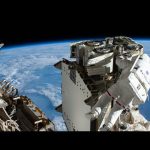
Spacewalking astronauts work outside the space station, NASA’s new deputy administrator is sworn-in, and putting another piece of our Artemis I Moon rocket in place … a few of the stories to tell you about – This Week at NASA!
The Copernicus Sentinel-1 takes us over Lake Mar Chiquita – an endorheic salt lake in the northeast province of Córdoba, Argentina, in this edition of the Earth from Space programme.
We are Europe’s gateway to space. Our mission is to shape the development of Europe’s space capability and ensure that investment in space continues to deliver benefits to the citizens of Europe and the world. Check out https://www.esa.int/ to get up to speed on everything space related.
Timelapse video made during ESA astronaut Thomas Pesquet’s second mission to the International Space Station, “Alpha”.
On 16 June 2021 Thomas and @NASA astronaut Shane Kimbrough went on a spacewalk to install a new solar array for the International Space Station. These arrays, called IROSA for ISS Roll-Out Solar Array, had to be taken from their storage area outside the Space Station and passed from spacewalker to spacewalker to the worksite. There the rolled arrays were to be secured, unfolded, connected and then unfurled.
During the spacewalk a small technical problem in Shane’s spacesuit required him to return to the airlock and restart his Display and Control Module. This module provides astronauts with continuous information on pressure, temperature and other vital data during a spacewalk. Though the restart was successful and Shane was in no danger, it delayed the duo’s work, preventing them from completing installation of the first new solar array as planned. A second spacewalk was done on 20 June to finish installing the first solar array.
This video shows scenes from the first spacewalk with Thomas being moved on the robotic arm, at the controls was NASA astronaut Megan McArthur. The images for this timelapse were taken by @JAXA | 宇宙航空研究開発機構 astronaut and Space Station commander Aki Hoshide.
Thomas posted this video on his social media with the caption: “We have to do EVAs, but someone has to keep running the Space Station while we are preparing, spacewalking, reconfiguring, preparing again… Aki has been rock solid taking care of the spaceship pretty much by himself, performing all the maintenance and the science experiments, AND ON TOP OF THAT he found the time to take timelapses of our little walks outside. The man is a machine!”
Over 200 experiments are planned during Thomas’ time in space, with 40 European ones and 12 new experiments led by the French space agency @CNES
We are Europe’s gateway to space. Our mission is to shape the development of Europe’s space capability and ensure that investment in space continues to deliver benefits to the citizens of Europe and the world. Check out https://www.esa.int/ to get up to speed on everything space related.
At NASA, there is space for everybody! Subscribe to NASA’s official YouTube channel to explore the universe and discover our home planet. Visit https://www.nasa.gov for more!
Producer/Editor: Lacey Young Music: Universal Production Music
Want to learn more about applications to ESA’s astronaut selection? Watch the replay of this media briefing to get an insight into the total number and spread of applications across all ESA Member and Associate Member states. Vacancies for the positions of astronaut and astronaut (with a physical disability) have closed on 18 June 2021, after a two-and-a-half-month-long application period.
★ Subscribe: http://bit.ly/ESAsubscribe and click twice on the bell button to receive our notifications.
We are Europe’s gateway to space. Our mission is to shape the development of Europe’s space capability and ensure that investment in space continues to deliver benefits to the citizens of Europe and the world. Check out https://www.esa.int/ to get up to speed on everything space related.
ESA astronaut Thomas Pesquet talked to French national football team player Kylian Mbappé from the International Space Station during the Alpha mission in 2021.
They talked about science, life in space, teamwork, international collaboration, performing under pressure, stress, risk, life behind the scenes and the parallels between professional sport and being an astronaut.
Thomas has often said that sport taught him the values of team spirit and respecting team mates, and no astronaut is an island – if one profession is an example of teamwork it is being an astronaut. It takes a team to ensure they are at their best.
Credits: @UEFA
★ Subscribe: http://bit.ly/ESAsubscribe and click twice on the bell button to receive our notifications.
We are Europe’s gateway to space. Our mission is to shape the development of Europe’s space capability and ensure that investment in space continues to deliver benefits to the citizens of Europe and the world. Check out https://www.esa.int/ to get up to speed on everything space related.
NASA Deputy Administrator Pam Melroy took office Monday after she was given the oath of office by NASA Administrator Bill Nelson during a ceremony at the Mary W. Jackson NASA Headquarters building in Washington on June 21, 2021.
Melroy was nominated in April by President Biden and confirmed by the Senate on June 17. Along with Nelson, Melroy is responsible for providing overall leadership, planning, and policy direction for NASA.
One of only two women to command a space shuttle, Melroy logged more than 38 days in space. All three of her missions were assembly missions to build the International Space Station. After serving more than two decades in the Air Force and as a NASA astronaut, Melroy took on a number of leadership roles, including at Lockheed Martin, the Federal Aviation Administration, the Defense Advanced Research Projects Agency, Nova Systems Pty, Australia, and as an advisor to the Australian Space Agency. She currently is an independent consultant and a member of the National Space Council’s Users Advisory Group.
Video Producer: Lacey Young Music Credit: Universal Production Music
SPACEWALK COMING SOON: Join us live from space on Sun. June 20 at 6:30 a.m. EDT (10:30 UTC) to cheer on NASA astronaut Shane Kimbrough and European Space Agency astronaut Thomas Pesquet as they continue work installing new, roll-up solar arrays on the International Space Station. Once their spacesuits are set to battery power around 8 a.m. EDT (12:00 UTC), the duo will spend about 6.5 hours in the vacuum of space on this demanding task.
Set a reminder to watch this special job performed live!
Installing new solar arrays for the space station, updating launch and landing dates for Commercial Crew, and NASA’s new deputy administrator is confirmed … a few of the stories to tell you about – This Week at NASA!
We are Europe’s gateway to space. Our mission is to shape the development of Europe’s space capability and ensure that investment in space continues to deliver benefits to the citizens of Europe and the world. Check out https://www.esa.int/ to get up to speed on everything space related.
Join us on June 17, 2021 at 2 p.m. EDT for a conversation in honor of National LGBTQ+ Pride Month about what it means to be an ally, understanding some of the barriers faced by the lesbian, gay, bisexual, transgender, and queer community, and what you as an active ally can do to help break down those barriers. The panel discussion will be moderated by Charles Cockrell, associate director for strategy at NASA’s Glenn Research Center, and will feature:
• Melanie Saunders, NASA deputy associate administrator • Sarah J. Phillips, visual information specialist for the Image Technology Center at NASA’s Glenn Research Center • Ron Brade, retired associate center director at NASA’s Ames Research Center • Donna Shafer, associate center director at NASA’s Johnson Space Center
The event is sponsored by the LGBTQ+ Employee Alliance Group at NASA’s Langley Research Center, the LGBT Advisory Council at NASA’s Goddard Space Flight Center, Out & Allied at NASA’s Johnson Space Center; the LGBT Employee and Allies Network at NASA’s Kennedy Space Center, the LGBT Advisory Group at NASA’s Ames Research Center, the NASA HQ Pride Alliance; The Rainbow Alliance at NASA’s Glenn Research Center, Stennis Space Center, and the NASA Shared Services Center.
NASA has issued a Request for Information (RFI) to receive input from the public on NASA’s mission directorates’ programs, procurements, grants, regulations and policies. NASA will use this information to evaluate, implement, modify, expand, and streamline its programs, procurements, grants, regulations and policies to remove systemic inequitable barriers and challenges facing underserved communities.
Through the RFI process, NASA hopes to initiate vibrant, meaningful, and ongoing dialogues that will help the agency build and improve current agency policies, practices, and programs. The deadline for public comments to this RFI is Monday, July 12, but we encourage submission of comments as soon as possible to enable early analysis and follow-up discussions.
Video Producer: Sonnet Apple Music Credit: Universal Production Music
After more than 20 years, the International Space Station is getting new solar arrays, and you have the chance to watch it LIVE during a spacewalk! On June 16, Shane Kimbrough of NASA Astronauts and Thomas Pesquet of the European Space Agency will venture into the vacuum of space for ~6.5 hours to install and deploy two roll-out solar arrays on the space station.
Coverage starts at 6:30 a.m. EDT (10:30 UTC). Set a reminder to watch this special job performed live!
An instrument destined for Jupiter orbit undergoes eight days of cryogenic radio-frequency testing using a new test facility at ESA’s ESTEC technical centre in the Netherlands. The Submillimetre Wave Instrument of ESA’s Juice mission will survey the churning atmosphere of Jupiter and the scanty atmospheres of its Galilean moons.
Testing took place in ESA’s custom-built Low-temperature Near-field Terahertz chamber, or Lorentz. The first chamber of its kind, the 2.8-m diameter Lorentz chamber can perform high-frequency radio-frequency testing in realistic space conditions, combining space-quality vacuum with ultra-low temperatures.
★ Subscribe: http://bit.ly/ESAsubscribe and click twice on the bell button to receive our notifications.
We are Europe’s gateway to space. Our mission is to shape the development of Europe’s space capability and ensure that investment in space continues to deliver benefits to the citizens of Europe and the world. Check out https://www.esa.int/ to get up to speed on everything space related.