Amy Mainzer is a senior research scientist at NASA’s Jet Propulsion Laboratory. She served as deputy project scientist for NASA’s Wide-field Infrared Survey Explorer mission, an Earth-orbiting telescope designed to survey the entire sky in heat-sensitive infrared wavelengths. Following successful completion of its prime mission, this telescope was renamed NEOWISE and given a new mission to characterize asteroids and comets; Mainzer is the principal investigator. She also is the principal investigator of the proposed Near-Earth Object Camera mission, which would carry out a comprehensive survey of asteroids and comets using a dedicated space telescope surveying the solar system from a vantage point beyond the Earth’s Moon.
Category: Astronomie
-

Women @NASA
Producer Kathleen Kennedy and actor Daisy Ridley took a pause on the set of Star Wars: Episode VIII, to talk about the amazing women that work at NASA.
For more information visit:
https://women.nasa.gov -
Thomas Pesquet: Mission to ISS
On 17 November 2016, ESA astronaut Thomas Pesquet will be the tenth French astronaut to be launched into space, alongside Roscosmos commander Oleg Novitsky and NASA astronaut Peggy Whitson.
They will travel from Baikonur Cosmodrome in Kazachstan on the Soyuz MS-03, a recently upgraded version of Russia’s workhorse that has been in service for almost 50 years.
Thomas’s mission is called Proxima and it is the ninth long-duration mission for an ESA astronaut. It was named after the closed star to the Sun – continuing a tradition of naming missions with French astronauts after stars and constellations.
During Proxima, Thomas will perform more than 50 scientific experiments for ESA and CNES as well as take part in many research activities for the other Space Station partners.
-

Paxi joins ESA Education’s Fly Your Thesis! 2016 campaign
Paxi has joined ESA Education’s Fly Your Thesis! 2016 campaign where 4 teams of university students are running their experiments in an environment of microgravity.
More about Fly Your Thesis!:
http://www.esa.int/Education/Fly_Your_ThesisMore about Paxi:
http://www.esa.int/paxi/ -

Happy Halloween from NASA
One never knows what eeriness lurks in the spooky remains of a deserted launch pad.
NASA wishes you a Happy Halloween.
-
Thomas Pesquet bio
With a background as an aerospace engineer and commercial pilot, Thomas Pesquet is the youngest member of ESA’s astronaut corps. Having completed several years of international training since his selection in 2009, he’ll shortly become the tenth French national to travel into orbit. His stay onboard the International Space Station – known as the Proxima mission – will last around six months.
Find out more about the Proxima mission:
http://www.esa.int/proximaConnect with Thomas Pesquet on social media:
http://thomaspesquet.esa.int -
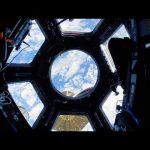
Space Station Fisheye Fly-Through 4K (Ultra HD)
Join us for a fly-through of the International Space Station. Produced by Harmonic exclusively for NASA TV UHD, the footage was shot in Ultra High Definition (4K) using a fisheye lens for extreme focus and depth of field.
-

ESA Euronews: ExoMars at Mars
Scientists and engineers on the ExoMars project had their hearts in their mouths as the ExoMars mission reached the red planet, with the Schiaparelli probe going missing in action at the end of its descent just as the TGO mothership swept into a perfectly timed orbit.
The rollercoaster ride of arrival at Mars is the first installment in this ambitious Russian and European project that aims for the first time to directly search for signs of life on Mars.
The plight of Schiaparelli remains unclear. It is certainly on the Martian surface, but may well have hit the red dust much harder then engineers had planned, and nothing has been heard from it since.
Data relayed during the lander’s descent shows the initial high-speed entry to the Martian atmosphere went well, with the heatshield slowing the craft and the parachute deploying. However once the back heat shield and parachute were ejected the flow of events did not go to plan.
This video is available in the following languages:
English https://www.youtube.com/watch?v=S3eIilSYrok
French https://www.youtube.com/watch?v=mEXA_Fo7ABg
German https://www.youtube.com/watch?v=jCCFOjP0ocw
Spanish https://www.youtube.com/watch?v=bMnSKkSLLbA
Italian https://www.youtube.com/watch?v=wqi7XU0ojqI
Portuguese https://www.youtube.com/watch?v=-VyaoG_f51s
Hungarian https://www.youtube.com/watch?v=S7QLUBb5QbI
Greek https://www.youtube.com/watch?v=hlrNu0vselk -

Earth from Space: Kathmandu
Earth from Space is presented by Kelsea Brennan-Wessels from the ESA Web-TV virtual studios. Part of Nepal including its capital city, Kathmandu, and the Himalayan foothills are featured in the 202nd edition.
See also http://www.esa.int/spaceinimages/Images/2016/10/Kathmandu_Nepal to download the image.
-
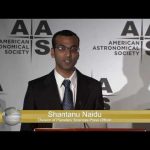
NASA Updates Status of Mission to Jupiter
Team members of NASA’s Juno mission to Jupiter discussed the latest science results, an amateur imaging processing campaign, and the recent decision to postpone a scheduled burn of the spacecraft’s main engine, during a media briefing on Oct. 19. The agency’s Juno spacecraft entered orbit around Jupiter on July 4. On Aug. 27, it performed its first close flyby of the planet. It was the first time Juno had its entire suite of science instruments activated and observing the planet as the spacecraft zoomed past.
-
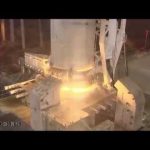
Orbital ATK Launches to ISS from NASA’s Wallops Flight Facility
On Oct. 17, Orbital ATK launched its Cygnus cargo spacecraft atop an Antares rocket to the International Space Station. The spacecraft launched from the Mid-Atlantic Regional Spaceport at NASA’s Wallops Flight Facility in Virginia. This is the sixth cargo mission to the International Space Station for Orbital ATK.
-
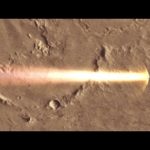
Schiaparelli’s descent to Mars in real time
Visualisation of the ExoMars Schiaparelli module entering and descending through the atmosphere to land on Mars. The animation follows a simulated timeline of the module, starting when it enters the atmosphere at an altitude of 121 km at 14:42 GMT. In six minutes it will use a heatshield, parachute and thrusters to brake from 21 000 km/h to a near standstill 2 m above the surface, where a crushable structure on its underside will absorb the final shock.
The key operational milestones are highlighted in the animation at the predicted times at which they have been calculated to occur. However, the actual times may vary depending on the atmospheric conditions on the day, the final path through the atmosphere and the speed at which the module descends.
The times indicated in the animation are onboard spacecraft times at Mars. The one-way signal travel time on 19 October is just under 10 minutes, meaning that signals relayed by spacecraft at Mars are received on Earth about 10 minutes after the event itself has happened on the Red Planet.
Both Schiaparelli and the Mars scenery in this animation are computer-generated.
-

Making Human Settlement of Space a Reality on This Week @NASA – October 14, 2016
An Oct. 11 opinion article written by President Barack Obama and published by CNN, outlined a vision for the future of space exploration. In it, the president echoed the words in his 2015 State of the Union address about the importance of sending humans on a roundtrip mission to Mars by the 2030s, and developing technology to help us stay on the Red Planet for an extended time. That same day in a blog post, NASA Administrator Charlie Bolden and John Holdren, assistant to the President for Science and Technology, discussed two NASA initiatives that build on the president’s vision and use public-private partnerships to enable humans to live and work in space in a sustainable way. The first was the selection of six companies to develop habitation systems as part of the agency’s Next Space Technologies for Exploration Partnerships or “NextSTEP” program, designed to lay the groundwork for deep space missions. And this fall as part of the second initiative, NASA will start the process of providing companies with a potential opportunity to add their own modules and other capabilities to the International Space Station. The move is in-line with NASA’s plan to support and foster the growing community of scientists and entrepreneurs conducting research and growing businesses in space. Also, White House Frontiers Conference, Kennedy Reopens After Hurricane Matthew, Orion Service Module Vibration Tests, SLS Liquid Hydrogen Fuel Tank Completed, and Aviation Safety Reporting System Turns 40!
-
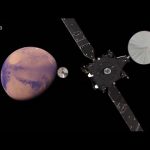
ExoMars: From separation to landing
On 16 October, seven months and 500 million km after launching from Baikonur in Kazakhstan, the joint European and Russian ExoMars 2016 mission reaches a crucial phase.
The Trace Gas Orbiter will release its Schiaparelli lander for a three day coast and a six minute descent to the Martian surface.The lander, which was designed to demonstrate technologies for entry, descent and landing on Mars, is heading for the Meridiani Planum. This is an area that is currently being studied by NASA’s Opportunity rover and Europe’s Mars Express orbiter.
On 19 October, the Schiaparelli lander will be activated a few hours before reaching the Martian atmosphere, when it will be travelling at some 21 000 km/h. The front heatshield – covered with 90 insulating tiles – will be subjected to temperatures of up to 1500 degrees Celsius.
This video covers the separation, descent and landing procedures, as well as the orbiter’s critical burn to avoid crashing on the surface of Mars.
-

ESTEC Open Day 2016
In place for more than half a century, the complex ESTEC in Noordwijk is ESA’s single largest establishment, focused on developing technology, planning missions and testing satellites. More than 8700 visitors at the Open Day on 2 October 2016 were able to wander around the sprawling facility at their own pace, meeting astronauts, scientists and mission designers while seeing special exhibits and actual space hardware.
The theme of this year’s Open Day was “Breath of Life” – the ExoMars orbiter, currently nearing Mars, will be searching out methane and associated rare gases in the thin alien atmosphere as evidence of either surviving Mars microbes or a different kind of ‘life’ – subsurface volcanic activity, which would mean the planet remains geologically active.
-
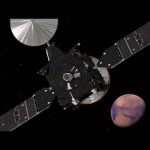
ExoMars at Mars
Three days before arriving at Mars on 19 October 2016, the ExoMars Trace Gas Orbiter (TGO) will release its entry, descent and landing demonstrator, Schiaparelli, towards the Red Planet. ExoMars is several missions in one. Its orbiter is a science and relay mission. The TGO will search for evidence of gases, such as methane, that may be associated with geological or biological processes. The Schiaparelli lander is a technology demonstrator to test key technologies for future missions to Mars.
The landing site is an elliptical region close to the equator about 100 km long and 15 km wide in the planet’s Meridiani Planum area. It is relatively flat, smooth and well studied as NASA’s Opportunity rover is on the ground and ESA’s Mars Express spacecraft, which will also act as one of the data relay orbiters, has been overhead since 2003.
This video covers the landing and orbital manoeuvres, including the use of aerobraking – which ESA is using for the first time at Mars.
-
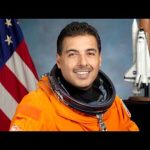
Aspira con NASA/Aspire with NASA
In recognition of Hispanic Heritage Month NASA hosted an event at the agency’s headquarters in Washington Tuesday, Oct. 4, called Aspira con NASA (Aspire with NASA). The event featured a video message from NASA Administrator Charles Bolden as well as presentations from guest speakers Diana Trujillo, mission lead for Mars Curiosity Rover, and former NASA astronaut José Hernández. Each shared stories of aspiration, inspiration and exploration.
-

Earth from Space: Shanghai
Earth from Space is presented by Kelsea Brennan-Wessels from the ESA Web-TV virtual studios. The Chinese city of Shanghai is featured in the 200th edition.
See also http://www.esa.int/spaceinimages/Images/2016/10/Shanghai to download the image.
-

Schiaparelli’s descent to Mars
Visualisation of the ExoMars Schiaparelli module entering and descending through the martian atmosphere to land on Mars.
Schiaparelli will enter the atmosphere at about 21 000 km/h and in less than six minutes it will use a heatshield, a parachute and thrusters to slow its descent before touching down in the Meridiani Planum region close to the equator, absorbing the final contact with a crushable structure.
The entire process will take less than six minutes: the animation has been sped up.
Schiaparelli is set to separate from the Trace Gas Orbiter on 16 October, after a seven-month cruise together through space, and will enter the atmosphere on 19 October at 14:42 GMT.
For an overview of the key timings and altitudes corresponding to the events portrayed in this animation see the Schiaparelli descent sequence graphic: http://www.esa.int/spaceinimages/Images/2016/02/ExoMars_2016_Schiaparelli_descent_sequence_16_9
Both Schiaparelli and the Mars scenery in this animation were computer generated.
More about ExoMars:
http://www.esa.int/exomarsExoMars FAQ:
http://www.esa.int/Our_Activities/Space_Science/ExoMars/ExoMars_frequently_asked_questions -
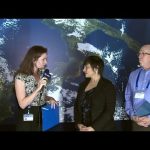
Earth from Space: Special edition
Discover more about our planet with the Earth from Space video programme. During the Global Platform for Sustainable Cities working group meeting at ESA’s ESRIN establishment in Italy, four experts join the show to discuss how satellite data can be used to promote sustainable cities.
The four guests are Xiaomei Tan: Senior Climate Change Specialist, Global Environment Facility; Xueman Wang: Global Platform for Sustainable Cities Coordinator, World Bank; Gayatri Singh: Urban Development Specialist, World Bank City Planning Labs Initiative; Herman Pienaar: Director of City Transformation and Spatial Planning, City of Johannesburg.
-
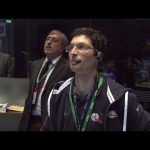
Rosetta end of mission
Inside the main control room at ESA’s operation centre as the Rosetta spacecraft sends its last signal from Comet 67P/Churyumov–Gerasimenko, confirming the end of the spacecraft’s 12.5 year journey in space.
-
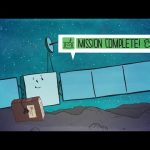
Once upon a time… mission complete
On the last day of her incredible mission, Rosetta slowly descends to the surface of Comet 67P/Churyumov-Gerasimenko. After having sent her extraordinary data back home, she is ready to join Philae for a well deserved rest on the comet. But is there one last surprise in store?
This video is available in the following languages:
English https://www.youtube.com/watch?v=vcYo-qQ5HbA
German https://www.youtube.com/watch?v=4ngPV02ie4g
Spanish https://www.youtube.com/watch?v=1PI103Je-cE
French https://www.youtube.com/watch?v=MwML3kdmbPk
Italian https://www.youtube.com/watch?v=X_vaJmUt37sMore about Rosetta:
http://rosetta.esa.int
http://blogs.esa.int/rosettaCredit: ESA
-

(German) Once upon a time… mission complete
On the last day of her incredible mission, Rosetta slowly descends to the surface of Comet 67P/Churyumov-Gerasimenko. After having sent her extraordinary data back home, she is ready to join Philae for a well deserved rest on the comet. But is there one last surprise in store?
More about Rosetta:
http://rosetta.esa.int
http://blogs.esa.int/rosettaCredit: ESA
-
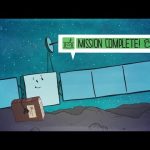
(French) Once upon a time… mission complete
On the last day of her incredible mission, Rosetta slowly descends to the surface of Comet 67P/Churyumov-Gerasimenko. After having sent her extraordinary data back home, she is ready to join Philae for a well deserved rest on the comet. But is there one last surprise in store?
More about Rosetta:
http://rosetta.esa.int
http://blogs.esa.int/rosettaCredit: ESA
-

(Italian) Once upon a time… mission complete
On the last day of her incredible mission, Rosetta slowly descends to the surface of Comet 67P/Churyumov-Gerasimenko. After having sent her extraordinary data back home, she is ready to join Philae for a well deserved rest on the comet. But is there one last surprise in store?
More about Rosetta:
http://rosetta.esa.int
http://blogs.esa.int/rosettaCredit: ESA
-
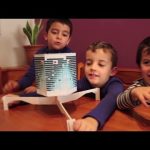
The Rosetta Legacy
Besides its scientific and operational successes, the Rosetta mission has captured the imagination of many people worldwide, stimulating them to produce art and music, and undertake other creative activities with friends and families. Many even made further education or career choices inspired by the mission.This video features a selection of contributions that were shared on the Rosetta Legacy tumblr in September 2016.
Music by Andrew Manson
https://soundcloud.com/andrewmanson/rosetta-and-the-comet -

Ambition – Epilogue
After her long, arduous training, our young Apprentice is now a fully fledged Master of cosmic origins, exploring an alien planet rich with water and life. But something familiar crosses her mind. Memories from her training, and Rosetta’s historic journey to catch a comet. She returns to the archives.
Once again, ESA and Fish Ladder / Platige Image blur the lines between science fiction and science fact in this epilogue to their award-winning 2014 short film, Ambition, which portrayed the scientific questions and technical challenges, and above all, the human determination that make exploration of the Universe such a compelling theme.
The epilogue is directed by Maciej Jackiewicz and stars Aisling Franciosi (The Fall, Game of Thrones).
Credits:
A Fish Ladder/Platige Image & European Space Agency Production
Concept/creative strategy: Fish Ladder
Director/edit: Maciej Jackiewicz
Director of photography: Mateusz Skalski
Cast: Aisling Franciosi
Story:
Maciej Jackiewicz
Jan Pomierny
Tobiasz PiątkowskiCreative producer: Jan Pomierny
Producer: Marta Staniszewska
Executive producer: Mark McCaughrean (ESA)Set production: Beata Pych
First assistant director/set manager: Jakub Kędzierski
First assistant camera: Piotr Twardowski
Focus puller: Seweryn Kukliński
Steadicam operator: Jarosław Wierzbicki
Steadicam assistant: Sławomir Wierzbicki
Camera equipment: MX35Gaffer: Rafał Okyne
Lighting crew: Heliograf
Lighting equipment: HeliografSet decoration:
Rafał RusinCostume designer:
Paula DudziakHair & make-up:
Agnieszka WilkSet duty:
Daniel & Licho (Yellowóz)Catering on set/generator/wardrobe:
Robert PiszczatowskiDrivers:
Bogdan Manowski
Andrzej KornowskiVFX supervisor:
Maciej JackiewiczLayout artist:
Dominik WawrzyniakVFX artists:
Seweryn Czarnecki
Andrzej Przydatek
Tomasz Przydatek
Waldemar Woźniak
Sylwester Lipiński
Benjamin McallisterMusic:
Porcelain written & performed by snowbird, from the album moon (Bella Union P&C 2013)Sound producer:
Sylwia Szczepankiewicz (Juice)Sound design & mix:
Kuba Pietrzak (Juice)Digital intermediate:
Piotr DutkiewiczSpecial thanks:
Kampinos National Park, Poland
The Royal Łazienki Museum in Warsaw, PolandMattias Malmer
Simon Raymonde
Grzegorz Nizio
Łukasz Alwast
Pedro RussoCopyright:
European Space Agency (2016) -
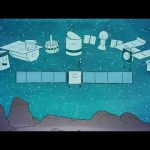
Once upon a time… Rosetta’s grand finale
Rosetta revisits the exciting scientific discoveries she made during her time at Comet 67P/Churyumov-Gerasimenko, including the successful search to find Philae. Finally, she starts preparing to descend to the comet for the end of her extraordinary mission.
This video is available in the following languages:
English https://www.youtube.com/watch?v=lVKFyFbfpOI
German https://www.youtube.com/watch?v=hoDMZRAyDFs
Spanish https://www.youtube.com/watch?v=OzAzBHmH8y8
French https://www.youtube.com/watch?v=EoJ1bE80pK8
Italian https://www.youtube.com/watch?v=k5fAIKzJRBsMore about Rosetta:
http://rosetta.esa.int
http://blogs.esa.int/rosettaCredit: ESA
-

Visualising Rosetta’s descent
Animation visualising Rosetta’s descent to Comet 67P/Churyumov–Gerasimenko on 30 September 2016. The sequence is speeded up to show the relative motion of Rosetta and the rotating comet below.
Rosetta will target a smooth region close to several large pits measuring more than 100 m across and 60 m deep, on the small lobe of the comet.
The impact time is predicted as 11:20 GMT +/- 20 minutes on 30 September.
More information about Rosetta’s descent towards region of active pits, see
http://www.esa.int/Our_Activities/Space_Science/Rosetta/Rosetta_s_descent_towards_region_of_active_pitsFor the latest updates, see http://rosetta.esa.int
Credit: ESA/ATG medialab, Music: Pawel Blaszczak
-
NASA Hispanic Heritage Month Employee Profile – Claudia Herrera – Armstrong Flight Research Center
Claudia Herrera has been with NASA Armstrong Flight Research Center since January of 2005, and works as a Structural Dynamics engineer. Claudia is involved in the life cycle phase of flight‑test projects that take finite element models to flight‑test validation, participating in both the analytical and ground and flight test aspects of model correlation and verification.
-
ESA Euronews: Rosetta heads for glorious crash-landing
In just a few days’ time ESA’s Rosetta mission is going to come to a close in a most extraordinary fashion, because the spacecraft is going to slowly, and deliberately crash-land into the comet that it has been orbiting for the past two years.
Euronews is with the team as they prepare for this dramatic finale.
This video is available in the following languages:
English https://www.youtube.com/watch?v=K_7u71Lu3S4
German https://www.youtube.com/watch?v=MX7SYFWzUp8
French https://www.youtube.com/watch?v=WXTn3mDWH-Y
Spanish https://www.youtube.com/watch?v=SjenXVAFTTw
Italian https://www.youtube.com/watch?v=32nyF3IkzU8
Portuguese https://www.youtube.com/watch?v=4_CTvNZfXxc
Greek https://www.youtube.com/watch?v=CdUgVQibZWo
Hungarian https://www.youtube.com/watch?v=i3OTRPHckSM -

ESA Euronews: El final programado de Rosetta
En pocos días, la misión Rosetta de la Agencia Espacial Europea (ESA) tocará a su fin. Y lo hará de la forma más extraordinaria, porque la nave espacial irá a chocar, lenta y deliberadamente, contra el cometa alrededor del cual ha estado orbitando durante los últimos dos años. Nos reunimos con el equipo mientras preparan este dramático final.
-

ESA Euronews: Rosetta se prépare au choc fatal sur la comète Tchouri
Le 30 septembre prochain, la sonde Rosetta s’écrasera lentement et délibérément sur la comète autour de laquelle elle orbite depuis deux ans. Or elle n’a pas été conçue pour cela. L’issue sera fatale. Mais avant cette dernière manoeuvre, les scientifiques ont prévu d’effectuer des relevés inédits à l’approche de “Tchouri”.
-
Earth from Space: Alakol Lake
Earth from Space is presented by Kelsea Brennan-Wessels from the ESA Web-TV virtual studios. In the one hundred ninety-ninth edition, explore Kazakhstan’s Alakol Lake.
See also http://www.esa.int/spaceinimages/Images/2016/09/Alakol_Lake to download the image.
-
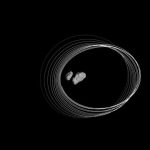
Rosetta’s last orbits around the comet
Animation of Rosetta’s trajectory over the last two months of its mission at Comet 67P/Churyumov–Gerasimenko.
The animation begins in early August, when the spacecraft started flying elliptical orbits that brought it progressively closer to the comet at its closest approach.
On 24 September 2016, Rosetta will leave its current close, flyover orbits and transfer into the start of a 16 x 23 km orbit that will be used to prepare and line up for the final descent.
On the evening of 29 September (20:50 GMT) Rosetta will manoeuvre onto a collision course with the comet, beginning the descent from an altitude of 19 km. The spacecraft will fall freely, without further manoeuvres, collecting scientific data during the descent.
The trajectory shown here was created from real data provided over the last month, but may not necessarily follow the exact comet distance because of natural deviations from the comet’s gravity and outgassing.
Find out more about Rosetta at:
http://blogs.esa.int/rosetta
and
http://www.esa.int/rosetta -
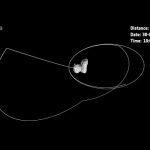
Rosetta’s final path
Animation of Rosetta’s final trajectory in the last 10 days of its mission at Comet 67P/Churyumov–Gerasimenko.
On 24 September 2016, Rosetta will leave a close flyover orbit and transfer into the start of a 16 x 23 km orbit that will be used to prepare and line up for the final descent. In the evening of 29 September (20:50 GMT) Rosetta will manoeuvre onto a collision course with the comet, beginning the descent from an altitude of 19 km. The spacecraft will fall freely, without further manoeuvres, collecting scientific data during the descent.
The trajectory shown in this animation is created from real data provided in the last month, but may not necessarily follow the exact distance/time details because of natural deviations in the trajectory associated with the comet’s gravity and outgassing.
Find out more about Rosetta at:
http://blogs.esa.int/rosetta
and
http://www.esa.int/rosetta -
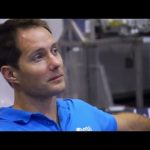
ESA astronauts training for ISS mission
Thomas Pesquet from France will shortly become the last member of ESA’s 2009 astronaut class to fly to the International Space Station.
He is scheduled to fly next November for a six-month stay in orbit, during which time he’ll carry out maintenance activities and a packed schedule of experiments.
He has been training at NASA’s Johnson Space Centre in Houston, Texas, alongside veteran ESA astronaut Paolo Nespoli from Italy, who will be going to the ISS for the third time after Thomas’s return to Earth.
This video shows new images of Thomas and Paolo training at Johnson Space Center in Houston, USA.
-
Asteroid Redirect Mission Briefing on This Week @NASA – September 19, 2016
On Sept. 14, officials from the White House and NASA discussed the space agency’s Asteroid Redirect Mission (ARM) during a televised event at NASA’s Goddard Space Flight Center. On the mission, which is targeted for launch in Dec. 2021, NASA plans to send a robotic spacecraft to an asteroid tens of millions of miles from Earth, capture a multi-ton boulder, and bring it to an orbit near the moon for future exploration by astronauts on a following mission aboard NASA’s Orion spacecraft. During the live discussion, John Holdren, assistant to President Obama for Science and Technology, NASA Administrator Charles Bolden and ARM Program Director Michele Gates highlighted the mission’s scientific and technological benefits, how the mission will support NASA’s goal of sending humans to Mars in the 2030s, and how it will demonstrate technology relevant to defending Earth from potentially hazardous asteroids. Also, Astronaut Tim Kopra Visits DC Area, The Warmest August in 136 Years, and 2016 Arctic Sea Ice Minimum Ties 2nd Lowest on Record!
-
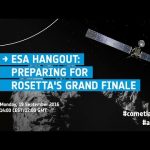
ESAHangout: Preparing for Rosetta’s grand finale
ESA’s Rosetta spacecraft is set to complete its incredible mission in a controlled descent to the surface of Comet 67P/C-G on 30 September. Mission experts joined an ESA Hangout on 19 September to discuss Rosetta’s final days and hours of operation, including expectations for the images and other scientific data that will be collected as the spacecraft gets closer and closer to the surface. They also discuss the exciting discovery of Philae that was made earlier this month.
Hangout guests:
Andrea Accomazzo, Flight operations director
Sylvain Lodiot, Rosetta spacecraft operations manager
Claire Vallat or Richard Moissl (TBC), Rosetta science ground segment liaison scientist
Laurence O’Rourke, Rosetta downlink science operations manager (lander search coordinator)Moderated by Emily Baldwin, Space Science Editor.
-

NASA Astronaut Talks with Cancer Patients about Cancer Research on the International Space Station
Aboard the International Space Station, Expedition 49 Flight Engineer Kate Rubins of NASA discussed research aboard the orbital laboratory with patients from the MD Anderson Cancer Center in Houston and center officials visiting mission control during an in-flight event Sept. 16. Rubins wore a suit flown to the station that she helped to fabricate pre-flight, illustrating the need for a heightened awareness of cancer research.