
Scarlin Hernandez is a Spacecraft Engineer for the James Webb Space Telescope at the Space Telescope Science Institute in Baltimore, MD. She tests and verifies the ground systems that will be used to command and control the telescope once it’s in space. The telescope will be used to discover new planets and the first stars after the dark ages. The National Science Foundation awarded her a full college scholarship to the Capitol Technology University (CTU) in Laurel, MD. Scarlin completed a internship at NASA’s Goddard Space Flight Center, and by the age of 20, she was part of the ground control system team for the Tropical Rainfall Measuring Mission (TRMM) satellite. In 2013, she earned a Bachelor’s degree in Computer Engineering, but she found her real niche in Astronautical Engineering. After graduation, Scarlin was the mission planning lead for the TRMM mission before transferring to work on the James Webb Space Telescope mission.
Category: Astronomie
-
Film, Television and Video History of NASA
In 1958 NASA’s top management T. Keith Glennan and Hugh L. Dryden used a film presentation to introduce the new agency to former employees of NACA (National Advisory Committee for Aeronautics). Since that day visual communication has been a key element in telling the NASA story to the world.
-
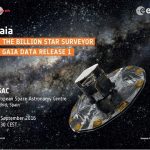
Press Conference: First Data Release from ESA’s Gaia Mission
Launched in December 2013, Gaia is destined to create the most accurate map yet of the Milky Way. By making accurate measurements of the positions and motions of stars in the Milky Way, it will answer questions about the origin and evolution of our home galaxy.
The first intermediate data release, containing among other things three-dimensional positions and two-dimensional motions of a subset of two million stars, demonstrates that Gaia’s measurements are as precise as planned, paving the way to create the full map of one billion stars to be released towards the end of 2017.
-
Record Breaking NASA Astronaut Discusses His Recent Mission
During a live satellite interview Sept. 14 on NASA TV, astronaut and Expedition 48 Commander Jeff Williams spoke about his recent record-breaking mission aboard the International Space Station.
Williams and Russian crewmates Alexey Ovchinin and Oleg Skripochka, of the Russian space agency Roscosmos, returned to Earth Sept. 6 in Kazakhstan (7:13 a.m. Sept. 7, Kazakhstan time) to wrap up a 172 day mission aboard the station. Williams now has spent 534 days in space, making him first on the all-time NASA astronaut list. During the mission, Williams was instrumental in preparing the station for the future arrival of U.S. commercial crew spacecraft. The first International Docking Adapter was installed during a spacewalk by Williams and fellow NASA astronaut Kate Rubins Aug. 19. Outfitted with a host of sensors and systems, the adapter’s main purpose is to connect spacecraft bringing astronauts to the station in the future. Its first users are expected to be Boeing’s CST-100 Starliner and SpaceX’s Crew Dragon spacecraft, now in development in partnership with NASA.
-
First data from ESA’s Gaia mission
Launched in December 2013, Gaia is destined to create the most accurate map yet of the Milky Way.
By making accurate measurements of the positions and motions of roughly 1% of the total population of stars in the Milky Way, it will answer questions about the origin and evolution of our home galaxy.
The first intermediate data release, containing, among other things, three-dimensional positions and two dimensional motions of a subset of two million stars, demonstrates that Gaia’s measurements are as precise as planned, paving the way to create the full map of one billion stars to be released towards the end of 2017.
Find out more about Gaia:
http://www.esa.int/gaia -
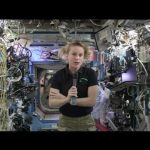
NASA Astronaut Talks to Students about Life Aboard the Space Station
Aboard the International Space Station, Expedition 49 Flight Engineer Kate Rubins of NASA discussed life and research aboard the orbital laboratory with students at the Vintage High School in Napa, California during an in-flight educational event Sept. 14. Rubins, who is in the third month of a four-month mission on the station, is a 1996 graduate of Vintage High School. She recently conducted two spacewalks outside the outpost to install the first International Docking Adapter that U.S. commercial crew spacecraft will link up to in the future, as well as new high definition cameras on the station’s truss.
-
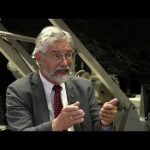
White House, NASA Discuss Asteroid Redirect Mission
Officials from the White House Office of Science and Technology Policy (OSTP) and NASA held a live Asteroid Redirect Mission (ARM) discussion at the space agency’s Goddard Space Flight Center in Greenbelt, Maryland. During the event on Wednesday, Sept. 14, OSTP’s Dr. John P. Holdren, NASA’s Administrator Charles Bolden and ARM Program Director Dr. Michele Gates, highlighted the mission’s scientific and technological benefits, how the mission will support NASA’s goal of sending humans to Mars in the 2030s, and how ARM will demonstrate technology relevant to defending Earth from potentially hazardous asteroids.
-
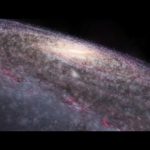
From the Solar System to the Hyades cluster
A virtual journey, from our Solar System through the Milky Way, based on data from the first release of ESA’s Gaia satellite.
The journey starts by looking back at the Sun, surrounded by its eight planets. We then move away from the Sun and travel towards and around the Hyades star cluster, the closest open cluster to the Solar System, some 150 light-years away.
The 3D positions of the stars shown in the animation are drawn from the Tycho-Gaia Astrometric Solution (TGAS), which combines information from Gaia’s first year of observations with the earlier Hipparcos and Tycho-2 Catalogues, both based on data from ESA’s Hipparcos mission.
This new dataset contains positions on the sky, distances and proper motions of over two million stars. It is twice as precise and contains almost 20 times as many stars as the previous reference for astrometry, the Hipparcos Catalogue.
The journey continues showing the full extent size of the stars contained in the Tycho-Gaia Astrometric Solution, all relatively near to the Sun, in the overall context of our Milky Way galaxy.
The final Gaia catalogue will contain the most detailed 3D map ever made of the Galaxy, charting a billion stars – about 1% of the Milky Way’s stellar content – to unprecedented accuracy.
For more information about Gaia, visit: http://www.esa.int/gaia
Credit: ESA/Gaia/DPAC; Acknowledgement: S. Jordan & T. Sagristà Sellés (Zentrum für Astronomie der Universität Heidelberg)
-
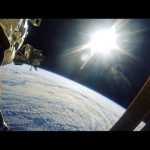
Destination low Earth-orbit
ESA astronaut Andreas Mogensen narrates this video on the inspiring endeavours of human spaceflight and how it changes our daily lives.
Andreas covers the first flight in Earth-orbit and the permanent inhabitation of space on the International Space Station to future exploration of our Solar System – and how these events inspired his work as an engineer and later astronaut.
The video touches on the amazing research done in space and for space and the technological impact this has making life on Earth better.
-

Asteroid Sample Return Mission Launches on This Week @NASA – September 9, 2016
On Sept. 8, NASA launched the Origins, Spectral Interpretation, Resource Identification, Security – Regolith Explorer, or OSIRIS-REx mission from Cape Canaveral Air Force Station in Florida. OSIRIS-REx, the first U.S. mission to sample an asteroid, is scheduled to arrive at near-Earth asteroid Bennu in 2018. Mission plans call for the spacecraft to survey the asteroid, retrieve a small sample from its surface, and return the sample to Earth for study in 2023. Analysis of that sample is expected to reveal clues about the history of Bennu over the past 4.5 billion years, as well as clues about the evolution of our solar system. Also, Williams’ Record-Breaking Spaceflight Concludes, Next ISS Crew Prepares for Launch, Sample Return Robot Challenge, NASA X-Plane Gets its Wing, and Convergent Aeronautics Solutions Showcase!
-

NASA Continues to Boldy Go!
50 years ago Star Trek premiered on the small screen. Today, stars of the original series; William Shatner, Nichelle Nichols and George Takei share their excitement and passion for the real space exploration being done by NASA.
#StarTrek50
-
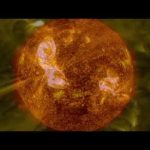
NASA Uncovering the Secrets of Asteroids
NASA scientists discussed asteroids, how they relate to the origins of our solar system, and the search for life beyond Earth during this Sept. 7 event at the agency’s Kennedy Space Center, in Florida. The event was held in conjunction with other pre-launch activities related to the Origins Spectral Interpretation Resource Identification Security – Regolith Explorer, or OSIRIS-REx mission. OSIRIS-REx will be the first U.S. mission to sample an asteroid. The spacecraft is targeted to launch Sept. 8 at 7:05 p.m. EDT to the near-Earth asteroid Bennu, arriving in 2018, to survey the surface, retrieve at least 60 grams (2.1 ounces) of surface material, and return it to Earth in 2023 for study. Analysis of the sample will reveal the earliest stages of the solar system’s evolution and the history of Bennu over the past 4.5 billion years.
-
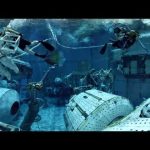
NASA VR/360 Astronaut Training: Space Walk
A 360-degree immersive virtual reality (VR) viewing experience, featuring exclusive astronaut training footage from NASA’s Neutral Buoyancy Laboratory (NBL) in Houston, Texas. The stunning NASA VR/360 video, produced by Harmonic, offers a variety of perspectives – in the pool and out – as astronauts complete space-walk training for future missions to the International Space Station (ISS).
-
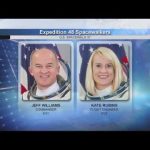
Second ISS Spacewalk in Two Weeks on This Week @NASA – September 2, 2016
Outside the International Space Station, Expedition 48 Commander Jeff Williams and Flight Engineer Kate Rubins of NASA conducted a spacewalk Sept. 1 to retract a thermal radiator, install the first of several enhanced high definition cameras on the station’s truss and tighten bolts on a joint that enables one of the station’s solar arrays to rotate. This was the second spacewalk for the pair in just 13 days. They installed the station’s first international docking adapter during their previous spacewalk on Aug. 19. The adapter will provide a parking place for new U.S. commercial crew spacecraft delivering astronauts to the station on future missions. Also, Space Station Cameras Capture Hurricanes, Future Space Station Crews Prepare for Missions, Record-Breaking Galaxy Cluster Discovered, Up-Close with Jupiter, and more!
-
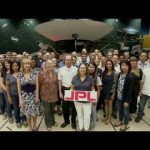
Happy 50th Anniversary Star Trek
In recognition of Star Trek’s 50th anniversary NASA wishes the entire Star Trek family a happy anniversary. Thanks for the inspiration, Live long and prosper.
#StarTrek50For more information visit:
http://www.nasa.gov/startrek -
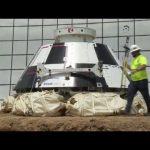
Dragon Cargo Spacecraft Departs the ISS on This Week @NASA – August 26, 2016
The SpaceX Dragon cargo spacecraft left the International Space Station on August 26. The Dragon departed the station five weeks after delivering almost 5,000 pounds of supplies, experiments and equipment to the orbital complex – including an international docking adapter for use by future American commercial crew spacecraft transporting astronauts to the station. The station’s Canadarm2 robotic arm was used to grapple the Dragon, move it away from the ISS, and release it for its return trip to Earth. The capsule is returning with about 3,000 pounds of cargo and experiments for researchers and investigators. Also, New U.S. Endurance Record in Space, Next U.S. Spacewalk Previewed, Boeing CST-100 Starliner Land Drop Test, SLS Liquid Hydrogen Test Tank Moved, and Celebrating National Parks, from Space!
-

RS-25 Rocket Engine Test Firing
The 7.5-minute test conducted at NASA’s Stennis Space Center is part of a series of tests designed to put the upgraded former space shuttle engines through the rigorous temperature and pressure conditions they will experience during a launch. The tests also support the development of a new controller, or “brain,” for the engine, which monitors engine status and communicates between the rocket and the engine, relaying commands to the engine and transmitting data back to the rocket.
-

NASA Social Goes Behind the Scenes of our Journey to Mars
A NASA Social was held on August 18 at the Michoud Assembly Facility in New Orleans, Louisiana, and at the Stennis Space Center near Bay St. Louis, Mississippi to give the members of social and traditional media an opportunity to see the progress being made on sending humans to Mars. The event featured tours of the manufacturing facilities at Michoud where work is underway on the core stage of the Space Launch System (SLS) — NASA’s new heavy-lift rocket that will send humans to deep space destinations, a test firing of the mighty RS-25 rocket engine that will power the SLS, and other rare behind the scenes look at other things NASA is doing to get ready for the Journey to Mars and other deep space travel.
-
NASA TV Briefing Previews Launch of Asteroid Bound Spacecraft
On August 17, NASA hosted a briefing at the agency’s headquarters in Washington, DC to preview the launch of the Origins, Spectral Interpretation, Resource Identification, Security-Regolith Explorer (OSIRIS-REx) spacecraft – the first U.S. spacecraft destined to rendezvous with, study and return a sample of an asteroid. OSIRIS-REx will launch September 8 from Cape Canaveral Air Force Station in Florida on its mission to study, in detail, an asteroid called Bennu. The mission represents a valuable opportunity to learn more about the origins of our solar system, the sources of water and organic molecules on Earth, and the hazards and resources in near-Earth space.
-
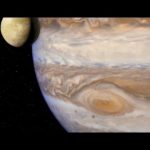
Space science: everything starts here
How did it all begin? What are the origins of our planet? To understand our place in the Universe we need to explore space. Find out how we’re doing this with ESA’s incredible fleet of space science missions to study our Sun and chart the stars around us, probe the dark matter and dark energy of the Universe, and tour various planets, moons and other small bodies in our Solar System.
-

NASA TV Briefing Previews Upcoming U S Spacewalk to Install Space Station Docking Port
NASA TV aired a briefing from the agency’s Johnson Space Center in Houston on Monday, August 15, to preview the August 19 spacewalk to install a new gateway for American commercial crew spacecraft at the International Space Station — a significant milestone in NASA’s work to return crew launches to U.S. soil. Experts from the ISS and commercial crew programs discussed the process and significance of installing and connecting the first of the two international docking adapters (IDAs), which was launched on a SpaceX Dragon cargo spacecraft and arrived at the station July 20. Expedition 48 Commander Jeff Williams and Flight Engineer Kate Rubins of NASA will conduct the spacewalk to install the equipment. Coverage of the spacewalk will begin at 6:30 a.m. EDT Aug. 19, on NASA TV and the agency’s website, with the spacewalk scheduled to begin at 8:05 a.m.
-
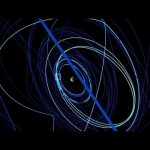
Rosetta’s journey around the comet
Animation visualising Rosetta’s two-year journey around Comet 67P/Churyumov–Gerasimenko.
The animation begins on 31 July 2014, during Rosetta’s final approach to the comet after its ten-year journey through space. The spacecraft arrived at a distance of 100 km on 6 August whereupon it gradually approached the comet and entered initial mapping orbits that were needed to select a landing site for Philae. These observations also enabled the first comet science of the mission. The manoeuvres in the lead up to, during and after Philae’s deployment on 12 November are seen, before Rosetta settled into longer-term science orbits.
In February and March 2015 the spacecraft made several flybys. One of the closest flybys triggered a ‘safe mode’ event that forced it to retreat temporarily until it was safe to gradually draw closer again. The comet’s increased activity in the lead up to and after perihelion in August 2015 meant that Rosetta remained well beyond 100 km distances for several months.
In June 2015, contact was restored with Philae again – albeit temporary, with no permanent link able to be maintained, despite a series of dedicated trajectories flown by Rosetta for several weeks.
Following perihelion, Rosetta performed a dayside far excursion some 1500 km from the comet, before re-approaching to closer orbits again, enabled by the reduction in the comet’s activity. In March–April 2016 Rosetta went on another far excursion, this time on the night side, followed by a close flyby and orbits dedicated to a range of science observations.
The animation finishes at 9 August 2016, before the details of the end of mission orbits were known. A visualisation of the trajectories leading to the final descent to the surface of the comet on 30 September will be provided once available.
The trajectory shown in this animation is created from real data, but the comet rotation is not. An arrow indicates the direction to the Sun as the camera viewpoint changes during the animation.
-
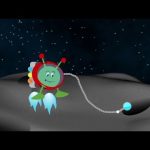
Paxi – Rosetta og kometer
Følg Paxi til randen av solsystemet, oppdag kometenes verden og lær om det fantastiske Rosetta har på kometen 67P/Churyumov-Gerasimenko.
I videoen, som retter seg mot barn mellom 6–12 år, tar Paxi barna med seg for å oppdage kometer og Rosetta – det fantastiske ESA-romfartøyet som flyr langs kometen 67P/Churyumov-Gerasimenko. 12.11.2014 skal det prøve å slippe en lander på denne.
Videoen er den tredje i en serie av animasjoner hvor Paxi, ESAs utdannelsesmaskot, kommer i kontakt med forskjellige sider ved solsystemet, universet, jordens hemmeligheter og mye mer.
-
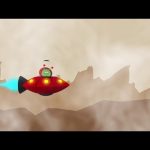
Paxi – Solsystemet
Bli med Paxi på en reise i solsystemet vårt, fra de steinete indre planetene i nærheten av solen, forbi de store planetene, til den iskalde utkanten og hjemstedet til kometene.
I denne videoen, som retter seg mot barn mellom 6–12 år, tar Paxi oss med på en tur i solsystemet. I løpet av turen besøker dere alle de åtte planetene og andre mindre ting som asteroider, kometer og dvergplaneten Pluto.
Videoen er den andre i en serie av animasjoner hvor Paxi, ESAs utdannelsesmaskot, kommer i kontakt med forskjellige sider ved solsystemet, universet, jordens hemmeligheter og mye mer.
-

Hvem er Paxi?
Møt Paxi, ESAs utdannelsesmaskot: hvor han kommer fra, hva han liker med romfart, hvem vennene hans er …
I videoen, som retter seg mot barn mellom 6–12 år, presenteres seeren for Paxi, et lite romvesen som kommer fra planeten Ally-O. Paxi har kommet til jorden for å møte nye venner og ta med seg barn på eventyrlige reiser i verdensrommet. Videoen er den første i en serie av animasjoner hvor Paxi, ESAs utdannelsesmaskot, kommer i kontakt med forskjellige sider ved solsystemet, universet, jordens hemmeligheter og mye mer. -

Paxi – Finns det Marsianer?
Följ med Paxi på hans resa till Mars där han utforskar planetens uttorkade flodfåror, vulkaner och polernas istäcken.
-

Paxi – ¿Los marcianos existen?
Sigue a Paxi en su viaje a Marte, donde explorará los lechos secos de los ríos, un enorme volcán y los casquetes polares del planeta.
-

Paxi – Există marțienii ?
Urmează-l pe Paxi în călătoria sa spre Marte, unde va explora albiile secate ale râurilor de pe planetă, vulcanii şi calotele polare de gheaţă.
-

Paxi – Os marcianos existem?
Siga o Paxi na sua viagem a Marte, onde ele irá explorar os leitos de rios secos do planeta, vulcões e calotas polares.
-

Paxi – Czy Marsjanie istnieją?
Podróżując razem z Paxim na Marsa, zbadacie wyschnięte koryta rzek tej planety, wulkany oraz polarne czapy lodowe.
-
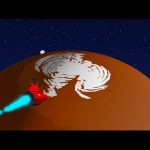
Paxi – Den röda planetens hemligheter
Följ med Paxi på hans resa till den röda planeten för att undersöka om det finns marsmänniskor och lär dig samtidigt om europeiska rymdsamarbetets ExoMars-projekt.
-
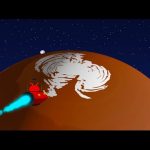
Paxi – Secretos del planeta rojo
Acompaña a Paxi en su viaje al Planeta Rojo para investigar si existen los marcianos y descubrir más cosas sobre las misiones ExoMars de la Agencia Espacial Europea.
-
Paxi – Secretele Planetei Roșii
Însoţeşte-l pe Paxi în călătoria sa spre Planeta Roşie, pentru a investiga dacă există marţieni şi pentru a afla mai multe despre misiunile ExoMars ale Agenţiei Spaţiale Europene.
-
Paxi – Sekrety Czerwonej Planety
Leć razem z Paxim na Czerwoną Planetę, aby sprawdzić, czy Marsjanie istnieją i dowiedzieć się więcej o misjach ExoMars Europejskiej Agencji Kosmicznej.
-
Paxi – Segredos do Planeta Vermelho
Acompanhe o Paxi na sua viagem ao Planeta Vermelho para investigar se existem marcianos e ficar a conhecer as missões ExoMars da Agência Espacial Europeia.
-
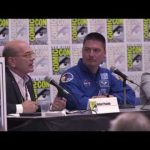
Extreme Underwater Mission on This Week @NASA – July 29, 2016
The 21st NASA Extreme Environment Mission Operations got underway July 21 in the Florida Keys. NASA astronauts Reid Wiseman and Megan McArthur are part of the international crew of NEEMO-21 aquanauts performing research during the 16-day mission, which takes place about 60 feet below the surface of the Atlantic Ocean, in the Aquarius habitat – the world’s only undersea science station. Simulated spacewalks are designed to evaluate tools and mission operation techniques that could be used on future space missions. NEEMO-21’s objectives include testing a mini DNA sequencer similar to the one NASA astronaut Kate Rubins also will test aboard the International Space Station, and a telemedicine device that will be used for future space applications. The mission also will simulate communications delays like those that would be encountered on a mission to Mars. Also, Space Launch System Work Platforms, All-Electric X-Plane Arrives, Asteroid Mission Technology, and NASA @Comic-Con International.
-
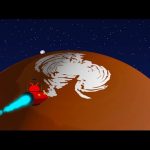
Paxi – Den røde planeten
Bli med på reisen til den røde planeten for å finne ut om marsboerne eksisterer, og lær mer om ExoMars-oppdragene til Det europeiske romfartsbyrået.
-

Paxi – Finnes det marsboere
Bli med Paxi til Mars og utforsk planetens tørre elveleier, vulkaner og polaris.
-

ExoMars/TGO Deep Space Hangout
Google hangout with ExoMars mission experts for an update on the cruise to Mars, the crucial mid-course manoeuvre on 28 July and the upcoming preparations for the arrival phase. The hangout was held on 26 July at 16:00 CEST/14:00 GMT.
Since launch on 14 March, ESA’s ExoMars Trace Gas Orbiter and the Schiaparelli landing demonstration module have been en route to the Red Planet.
The hangout included mission updates and a live Q&A with ESA experts and scientists, focusing on the crucial milestones during the spacecraft’s seven-month cruise to the Red Planet.
The hangout was hosted by Daniel Scuka (ESA Spacecraft Operations Editor) who was joined by:
** Michel Denis – ExoMars Flight Director, ESOC
** Silvia Sangiorgi – ExoMars Deputy Spacecraft Operations Manager, ESOC
** Michael Khan – Mission Analyst, ESOC
** Ian Thomas – NOMAD (spectrometer) Project Manager, Royal Belgian Institute for Space AeronomyBackground info on #ExoMars :
http://www.esa.int/Our_Activities/Space_Science/ExoMars
http://www.esa.int/Our_Activities/Operations/ExoMars_TGO_operations -

Paxi – Existují Marťané?
Přidejte se k Paximu na jeho cestě k rudé planetě, prozkoumejte, zda existují Marťané, a seznamte se s misemi ExoMars Evropské vesmírné agentury.