Science Max – Ever wanted to build a bridge out of pasta? It’s not too hard and works better than you’d think. But what if we were to try to make a pasta bridge big enough for Phil to walk across? Plus, learn how to build a sandcastle you can stand on!
Have you ever done a science experiment and wondered “What would this be like if it were HUGE?” Welcome to Science Max, the exciting new series that turbocharges all the science experiments you’ve done at home.
In season 1, join Phil as he builds rocket cars, uses elastic energy to hurl pumpkins on a giant catapult, builds a bridge out of pasta that can hold a human, find magnets powerful enough to float Phil off the ground, and many more experiments taken to the MAX!
Phil builds a balloon powered car in the lab. Then he tries to make one big enough to ride. Can the Science Max build team find a big enough balloon? Or are balloons the way to go? Plus, Newton’s Cradle out of bowling balls, how Guinea Pigs got their name and Newton’s 3rd Law.
Have you ever done a science experiment and wondered “What would this be like if it were HUGE?” Welcome to Science Max, the exciting new series that turbocharges all the science experiments you’ve done at home.
In season 1, join Phil as he builds rocket cars, uses elastic energy to hurl pumpkins on a giant catapult, builds a bridge out of pasta that can hold a human, find magnets powerful enough to float Phil off the ground, and many more experiments taken to the MAX!
Science Max – Phil starts with a Popsicle stick catapult. Then he uses everything he knows about elastic energy to build a full-size catapult that hurls pumpkins! Plus, a maxed out paddle wheel boat and a historical re-enactment (sort of) of how catapults were used in medieval days.
Have you ever done a science experiment and wondered “What would this be like if it were HUGE?” Welcome to Science Max, the exciting new series that turbocharges all the science experiments you’ve done at home.
In season 1, join Phil as he builds rocket cars, uses elastic energy to hurl pumpkins on a giant catapult, builds a bridge out of pasta that can hold a human, find magnets powerful enough to float Phil off the ground, and many more experiments taken to the MAX!
Science Max – Phil starts with a balloon powered hover disc, then tries to make a maxed out version big enough to ride. In fact, why not make two and then race them! Phil also tries to use the power of friction to climb the walls and even to fly!
Have you ever done a science experiment and wondered “What would this be like if it were HUGE?” Welcome to Science Max, the exciting new series that turbocharges all the science experiments you’ve done at home.
In season 1, join Phil as he builds rocket cars, uses elastic energy to hurl pumpkins on a giant catapult, builds a bridge out of pasta that can hold a human, find magnets powerful enough to float Phil off the ground, and many more experiments taken to the MAX!
Steve Spangler launches a Solar Bag using the power of the sun. At least if Crazy Russian Hacker copies this idea, we know he probably bought the Solar Bag from us!
This is hands down the BEST and easiest fake blood recipe out there. Our secret is the unique combination of Imperial powdered sugar and cocoa powder. The combination with red food coloring makes this the sickest BLENDER BLOOD you can make.
Check out cool science kits and toys: www.stevespanglerscience.com
If you’ve ever wanted to make something invisible, our science guy Steve Spangler says he has the secret. Our only question is why he has fragile object, safety glasses and a hammer. Steve is with Mark at the invisibility demo table.
Steve Spangler is a celebrity teacher, science toy designer, speaker, author and an Emmy award-winning television personality. Spangler is probably best known for his Mentos and Diet Coke geyser experiment that went viral in. Spangler is the founder of www.SteveSpanglerScience.com, a Denver-based company specializing in the creation of science toys, classroom science demonstrations, teacher resources and home for Spangler’s popular science experiment archive and video collection. Spangler is a frequent guest on the Ellen DeGeneres Show and Denver 9 News where he takes classroom science experiments to the extreme. For teachers, parents or DIY Science ideas – check out other sources of learning:
There are a number of things that can help your balance. You could try walking with books on your hand, walking a tightrope, or taking some ballet classes. If you’re a hex nut, however, you’re going to need some help from magnets and their magnetic fields. Do you think you have the magnetism it takes to master the Balancing Hex Nut Challenge?
If you’ve ever spent time outdoors in the cold, there’s a good chance you’ve used or seen chemical hand warmers. If you want to experience the science inside of those disposable plastic bags, then try your chilly hand at the Homemade Hand Warmer experiment. You can witness how an everyday chemical reaction like rusting can be used to keep your digits from falling off.
It might have happened to you… You put a bottle of soda in the freezer for a few minutes just to get it ice cold. When you take the soda out of the freezer, it’s still a liquid (nothing unusual has happened just yet). However, the second you twist off the cap, the soda instantly freezes! The process is amazing to watch… but it’s a real bummer if you were thirsty (because it’s tough to suck ice out of the bottle). This is a great illustration of how carbon dioxide can lower the freezing point of water. Get some ice, some salt, and some plastic bottles of soda water and try this very cool science demo.
So, you’re waiting for your dinner to arrive and you’re bored out of your mind. There’s nothing to read… the conversation is slim to none… and you’ve already counted all of the sugar packets. Hmmm? There’s a straw… and straws are interesting. Is there anything you can do with a straw to “be amazing?” Keep reading – in a matter of minutes you’ll have the entire restaurant upset by your science antics.
Here’s a classic science demonstration that is sure to wake you up… and the people down the street… and every dog in the neighborhood! With a little practice and some science know-how, you’ll turn an ordinary piece of aluminum rod into a singing virtuoso.
A rusted iron ball bearing seems like it might be past its prime, as far as uses go. Thankfully, all you need to do is wrap one of the bearings in some aluminum foil. You’re almost ready to create a thermite reaction. BANG!
We’ll admit, we take a little bit of offense when someone says, “Snow only comes in white.” Apparently, they’ve never seen the Rainbow Snow activity. If you’ve ever played with our Insta-Snow® powder, especially with our Color Fizzers, you know exactly how superabsorbent polymers can create a colorful blizzard of the most realistic fake snow out there.
Sugar is delicious, sweet and… perfect for creating colorful, beautiful ornaments? This holiday season, grab a bag of Imperial Sugar or Dixie Crystals granulated sugar and mix yourself a supersaturated solution. Don’t know how to make a supersaturated solution? We’ll teach you! Once you’ve learned the science behind Sugar Crystal Ornaments, you’re tree, house, or classroom will have some of the most awesome (and scientific) ornaments around.
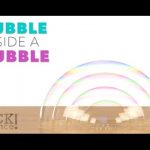
Grab a bag of Imperial Sugar or Dixie Crystals and let’s blow some bubbles. Wait… let’s blow bubbles INSIDE of other bubbles! When you mix-up a batch of super strong bubble solution and know a bit about volume and elasticity, you can blow bubble inside of bubble, inside of bubble. How many Bubble Inside a Bubble challenges can you do?
Sugar is tasty, but it can also be beautiful. Learn about awesome science like crystallization while creating a delicious and colorful treat! Stained Glass Sugar takes a tried and true recipe for sugar glass and creates vibrant, edible stained glass. The recipe is simple and easy, but by the end you’ll have made sugar glass that’s awesome enough for use on a movie set!
Food always tastes better when it’s homemade, and the same is true for ice cream. We went out and got some brown sugar from Imperial Sugar and Dixie Crystals to concoct a tasty ice cream creation. You can make your own ice cream, too! With the easy-to-follow steps below, you’ll have Brown Sugar Homemade Ice Cream in less than 30 minutes!
You’ve let your friend in on a secret: you bought some magical Imperial Sugar or Dixie Crystals sugar cubes. Seriously! This Sugar Cube Magic will blow the socks off of your friends. Have your friend pick a number between 1 and 10, then write it on the sugar cube. From there, it’s a fun experience in misdirection and magic as you dissolve the sugar cube in water!
Discovering density has never been more colorful, or fun! The Sugar Rainbow is a creative and engaging method of teaching about how different densities will stack atop each other. There’s even an additional lesson about adhesion and cohesion! Combine gorgeous colors and awesome science with a little bit of sugar and water!
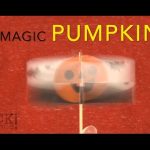
Many people have wondered exactly how a Magic Pumpkin is created. Well, sorry to burst your bubble, but the secret it animation. It’s a cartoon. Want to create your own illustrated Magic Pumpkin? Check out the amazing Magic Pumpkin designed by our team of scientists. It’s an activity that will have you spinning… literally!
Steve Spangler is a celebrity teacher, science toy designer, speaker, author and an Emmy award-winning television personality. Spangler is probably best known for his Mentos and Diet Coke geyser experiment that went viral in. Spangler is the founder of www.SteveSpanglerScience.com, a Denver-based company specializing in the creation of science toys, classroom science demonstrations, teacher resources and home for Spangler’s popular science experiment archive and video collection. Spangler is a frequent guest on the Ellen DeGeneres Show and Denver 9 News where he takes classroom science experiments to the extreme. For teachers, parents or DIY Science ideas – check out other sources of learning:
There’s nothing better than having a bowl full of worms without the hassle of digging them out of the ground… and all by using fascinating polymer science. Now our worm-ologists have made an exciting new kind of Insta-Worms that are heat sensitive! You won’t believe your eyes as temperature changes the appearance of this special kind of Insta-Worms.
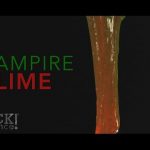
Where does slime come from, you ask? Monsters, of course. But thanks to some cool genetic mutations, vampires now have their own slime. Telling the difference between monster slime and vampire slime can be tricky at first glance, unless you know the vampire secret… hold the slime up to the light. Ordinary monster slime just looks green (because monster blood is green, dah). Vampire slime, on the other hand, shows its true color when you hold it up to the light because the green turns dark red to reveal what vampires drink… well… you know… that stuff. Leave it to the vampires to find another way to hide their true identity.
This activity will prove that Mom was right… “Wash your hands with soap and warm water!” A Petri dish prepared with nutrient agar (a seaweed derivative with beef nutrients) is an ideal food source for the bacteria you’ll be growing. In this experiment, Steve Spangler collected samples from items around the office – you will not believe what he found.
Science staples involve things that go boom and things that blast off. With the Ping Pong Popper kids’ science experiment, you’ll take both the booming and blasting to new, hands-on levels. You get to construct popper toy and learn about combustion!
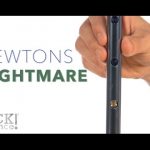
Drop one weight into the tube and, no surprise here, the weight drops to the ground with a thud. Go figure… it’s gravity at work! The second weight might bend your mind a little, though. Drop this weight into the aluminum tube and… wait… why didn’t it come out the bottom? Give it a second, that weight just takes a while longer, but figuring it out may be a bit tricky. That’s why we call it Newton’s Nightmare!
Air pressure is one of our favorite invisible forces, especially when Bernoulli’s Principle is involved. The Soda Can Jump utilizes this awesome principle to launch an empty soda can out of a coffee mug. It’s a hands-on experience in physics that you won’t want to miss.
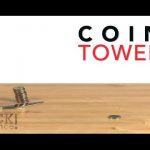
When it comes to scientific muses, Sir Isaac Newton is definitely near the top of our list. Our favorite laws to break involve physics, movement, and motion! That’s why we came up with the Coin Tower demonstration. Using a butter knife, you’ll remove the bottom coin from an entire tower of coins. What’s the secret? Perform the project to find out!
Do you know what a voltaic battery is? You probably do! Voltaic batteries come in all shapes and sizes, turning chemical energy into the electrical energy we need to power our cell phones, iPods, tablets, cars… you name it! These batteries seem pretty complicated, but you can make a real voltaic battery right at home! Grab some vinegar, nails, copper wire, and an ice tray… you’re in for a lesson in circuits you’ll never forget.
It’s probably the world’s most baffling optical illusion. Hold one arc above the other and ask the question, “Which arc is bigger?” The bottom arc will always look bigger than the top one, yet they are actually the same size! Reverse the arcs to make the other one look bigger. What you see is not always what you get! Keep reading and we’ll let you in on some presentation ideas and stunts that will really amaze and fool your friends.
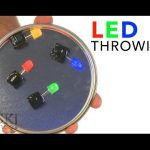
Graffiti Research Lab first introduced us to the awesome throwie idea, and we loved it. Ever since, we’ve been playing around with the idea of using light-emitting diodes (LED) and throwies as a great hands-on method to teaching science. You can do it, too, and we’ll show you how!
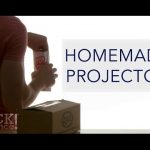
Smartphones are used more frequently than for watching videos than ever before, but sometimes you just want a bigger viewing area. For those strapped for cash or in the mood to do something creative, you can construct your own Homemade Projector. All the project takes is a cardboard box, a smart phone, and a few basic tools. The result is a real, working projector that you’ve made with your own hands!