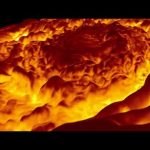
In this animation the viewer is taken low over Jupiter’s north pole to illustrate the 3-D aspects of the region’s central cyclone and the eight cyclones that encircle it.
Read more: https://www.nasa.gov/feature/jpl/nasa-s-juno-mission-provides-infrared-tour-of-jupiter-s-north-pole
The movie utilizes imagery derived from data collected by the Jovian Infrared Auroral Mapper (JIRAM) instrument aboard NASA’s Juno mission during its fourth pass over the massive planet. Infrared cameras are used to sense the temperature of Jupiter’s atmosphere and provide insight into how the powerful cyclones at Jupiter’s poles work. In the animation, the yellow areas are warmer (or deeper into Jupiter’s atmosphere) and the dark areas are colder (or higher up in Jupiter’s atmosphere). In this picture the highest “brightness temperature” is around 260K (about -13°C) and the lowest around 190K (about -83°C). The “brightness temperature” is a measurement of the radiance, at 5 µm, traveling upward from the top of the atmosphere towards Juno, expressed in units of temperature.
Credit: NASA/JPL-Caltech/SwRI/ASI/INAF/JIRAM
Blog
-
Low 3-D Flyover of Jupiter’s North Pole in Infrared
-
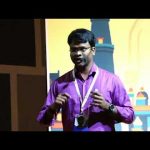
Artificial Intelligence for Villages | Senthil Kumar M | TEDxBITSathy
Motivated by the urge to help one of his own, Senthil kumar a man of great intellect took it upon
himself to find the solution to a problem that stared right at the face of mankind.
Senthil Kumar M hailing from Madurai, Tamil Nadu, India, has a great passion for innovating
through technology to solve real-life problems.
His vision is to build technology-enabled self-sustaining communities. He actively engages in
community empowerment and education initiatives especially among girls through
‘MetooMentor’ – an NPO that mentors young women to innovate through technology.
The ingenious device developed by him monitors and tracks the vitals of pregnant women living
in the remote villages of India, transmitting the collected data over the cloud to the nearest health
center by incorporating AI and DEEP LEARNING algorithms.
Watch him speaking about the experiences and challenges he encountered throughout his
journey!! Senthil Kumar M hailing from Madurai has a great passion for innovating through technology to solve real-life problems. He worked in fields like a wireless network, defence, maternal healthcare, and safety solutions and filed nearly 10 patents for the same. He began his career as an engineer in – Samsung | Qualcomm, but he quit his job to found two tech startups, GeoMeo and JioVio, in urban infrastructure and healthcare sector respectively. His vision is to build technology-enabled self-sustaining communities. He believes that we can achieve this only by bridging the digital divide in the society and by empowering the powerless/vulnerable.He actively engages in community empowerment and education initiatives especially among girls through ‘MetooMentor’ – an NPO that mentors young women to innovate through technology.With a handful of dedicated volunteers, He reached over 1000 girls in Madurai.He has been honoured as the top 5 Technology Explorers in India by Nasscom. This talk was given at a TEDx event using the TED conference format but independently organized by a local community. Learn more at https://www.ted.com/tedx -

Paxi on the ISS: Sleeping in space
Our alien friend Paxi, ESA Education’s mascot, went to visit American astronaut Scott Tingle on board the International Space Station. Tingle tells Paxi about how astronauts sleep in weightlessness, an important aspect of living on the ISS.
Credit: ESA/NASA
#ESA
#Paxi
#InternationalSpaceStation -

Science Max | MAGNET PART 1 | Season 1 Full Episode | Kids Science
Have you ever done a science experiment and wondered “What would this be like if it were HUGE?” Welcome to Science Max, the exciting new series that turbocharges all the science experiments you’ve done at home.
-

Lowering the Boom of Supersonic Flight on This Week @NASA – April 6, 2018
Building the future of quiet supersonic flight, science and supplies delivered to the space station, and uncovering the farthest star ever seen – a few of the stories to tell you about, This Week at NASA!
This video is available for download from NASA’s Image and Video Library: https://images.nasa.gov/details-Lowering%20the%20Boom%20of%20Supersonic%20Flight%20on%20This%20Week%20@NASA%20%E2%80%93%20April%206,%202018.html
-
NASA Psyche Mission: Journey to a Metal World
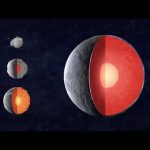
Psyche is both the name of an asteroid orbiting the Sun between Mars and Jupiter — and the name of a NASA space mission to visit that asteroid, led by Arizona State University. Join the Psyche team to explore why this mission was selected for NASA’s Discovery Program, how we’ll get to the asteroid, what we hope to learn from Psyche, and the importance of scientific discovery.
Credits: NASA/JPL-Caltech/Arizona State Univ./Peter Rubin/SSL -

Upgrade Trailer #1 (2018) | Movieclips Trailers
Check out the official Upgrade trailer starring Logan Marshall-Green! Let us know what you think in the comments below.
► Watch Upgrade on FandangoNOW: https://www.fandangonow.com/details/movie/upgrade-2018/MMV48FCE57BEECDD9E5CAFAD43FD0BB715E2?cmp=MCYT_YouTube_DescUS Release Date: June 1, 2018
Starring: Logan Marshall-Green, Rosco Campbell, Richard Cawthorne
Directed By: Leigh Whannell
Synopsis: Set in the near-future, technology controls nearly all aspects of life. But when Grey, a self-identified technophobe, has his world turned upside down, his only hope for revenge is an experimental computer chip implant called Stem.Watch More Trailers:
► Hot New Trailers: http://bit.ly/2qThrsF
► Horror Trailers: http://bit.ly/2qRzZtr
► Action/Sci-Fi Trailers: http://bit.ly/2Dm6mTBFuel Your Movie Obsession:
► Subscribe to MOVIECLIPS TRAILERS: http://bit.ly/2CNniBy
► Watch Movieclips ORIGINALS: http://bit.ly/2D3sipV
► Like us on FACEBOOK: http://bit.ly/2DikvkY
► Follow us on TWITTER: http://bit.ly/2mgkaHb
► Follow us on INSTAGRAM: http://bit.ly/2mg0VNUThe Fandango MOVIECLIPS TRAILERS channel delivers hot new trailers, teasers, and sneak peeks for all the best upcoming movies. Subscribe to stay up to date on everything coming to theaters and your favorite streaming platform.
-

ESA – Space to Relax / Europe from Space
Having a stressful day? We got you covered! Sit back, turn the volume up and enjoy a relaxing moment brought to you by ESA and Lufthansa exploring the countries which make up the European Space Agency with images taken by the Copernicus Sentinel-1A, Sentinel-2A and Sentinel-3A, Proba-V and Envisat satellites.
Don’t forget to favourite this video. You will always have a space to relax with us.
Music by Matt Baute.
-
5 Unbelievable Facts: FAKE? or PHYSICS?
Test yourself with our April Fools’ Day game: Fake or physics?
SUBSCRIBE: http://youtube.com/whatthephysics?subLINKS AND DETAILS:
More details:
#1. Speed of sound: Unlike light, sound needs a medium to travel through, and its speed depends on characteristics of that medium like density and temperature. In the extreme environment of a neutron star’s core, sound can travel extremely fast. But knowing that sound can’t surpass the speed of light, physicists can narrow down their models of neutron stars to include only those where “extremely fast” is less than light speed.For more: http://www.phys.utk.edu/news/archives/2015/speed-of-sound.pdf
#2. Invisibility: The invisibility lens pictured in the video was developed at the University of Rochester. For more on how it works: http://www.rochester.edu/newscenter/watch-rochester-cloak-uses-ordinary-lenses-to-hide-objects-across-continuous-range-of-angles-70592/
A more recent attempt at invisibility: https://www.ft.com/content/c6864c76-de7d-11e7-a0d4-0944c5f49e46
#3. Relativity rainbows: A team at MIT created a game called “A Slower Speed of Light” that lets you see the world as you would at near-light speeds. Their trailer: https://www.youtube.com/watch?v=uu7jA8EHi_0
#4. Acoustic levitation: A demo from Harvard Natural Sciences Lecture Demonstrations: https://www.youtube.com/watch?v=XpNbyfxxkWE
#5: Quantum cloning: A video from MinutePhysics on why quantum mechanics doesn’t allow cloning: https://www.youtube.com/watch?v=owPC60Ue0BE
CREDITS:
Host, Producer: Greg Kestin
Researchers: Greg Kestin, Samia Bouzid
Writers: Samia Bouzid, Greg Kestin
Editorial Input from: Julia Cort, Ari Daniel
Filming: Greg Kestin
Editing: Greg Kestin, Samia Bouzid
Media: Hubble, NASA
Special thanks: Entire NOVA team
From the producers of PBS NOVA © WGBH Educational Foundation
Funding provided by FQXi
Ultrasonic Levitation video footage courtesy Harvard Natural Sciences Lecture Demonstrations
Ultrasonic Levitation still courtesy of Argonne National Laboratory
Music provided by APM
Sound effects: Freesound.org -
How to create Artificial Intelligence in Python : Part-1 || Iron Man Friday?
Hello Friends, I am very excited while creating the video. This video is very close to my heart. Why? I love Marvel series specially the Iron Man and his AI Jarvis.
But, now Jarvis is Vision and at present his AI is Friday. So, i have tried to build same kind of Artificial Intelligence in Python.
RIght now, it a basic one. Which will greet, open C drive folders and good bye.
Github : https://goo.gl/UM5m8D
Playlist : https://goo.gl/4sLjHpI hope you like and enjoy this video. If yes, don’t forget to subscribe and hit the like button.
Telegram : https://goo.gl/8GaAwZ
WhatsApp : http://bit.ly/31ZdBM1
Slack : https://goo.gl/D3PFEG
Hike : https://hike.li/n5GvHcCiyL -

Science Max | BRIDGE PART 1 | Season 1 Full Episode | Kids Science
Have you ever done a science experiment and wondered “What would this be like if it were HUGE?” Welcome to Science Max, the exciting new series that turbocharges all the science experiments you’ve done at home.
-
Astronauts at Work Outside the Space Station on This Week @NASA – March 30, 2018
Our astronauts at work outside the space station, preparing for launch of our next planet-hunting mission, and finding exploding stars – a few of the stories to tell you about, This Week at NASA!
This video is available for download from NASA’s Image and Video Library: https://images.nasa.gov/details-NHQ_2018_0330_Astronauts%20at%20Work%20Outside%20the%20Space%20Station%20on%20This%20Week%20@NASA%20%E2%80%93%20March%2030,%202018.html
-
ESA reentry expertise
Every week, on average, a substantial, inert satellite drops into our atmosphere and burns up. Monitoring these reentries and warning European civil authorities has become routine work for ESA’s space debris experts.
Each year, about 100 tonnes of defunct satellites, uncontrolled spacecraft, spent upper stages and discarded items like instrument covers are dragged down by Earth’s upper atmosphere, ending their lives in flaming arcs across the sky.
Some of these objects are big and chunky, and pieces of them survive the fiery reentry to reach the surface. Our planet, however, is a big place, mostly covered by water, and much of what falls down is never seen by anyone, sinking to the bottom of some ocean, or landing far from human habitation.
While still in orbit, these and many other objects are tracked by a US military radar network, which shares the data with ESA, since Europe has no such capability of its own.It’s the task of ESA’s Space Debris team to look at these data and issue updates to ESA Member States and partner civil authorities around the globe.
Visit http://www.esa.int/Our_Activities/Operations/Space_Debris/ESA_reentry_expertise to learn more
-
AI vs Machine Learning vs Deep Learning | Machine Learning Training with Python | Edureka
🔥 NIT Warangal Post Graduate Program on AI and Machine Learning: https://www.edureka.co/nitw-ai-ml-pgp
This Edureka Machine Learning tutorial (Machine Learning Tutorial with Python Blog: https://goo.gl/fe7ykh ) on “AI vs Machine Learning vs Deep Learning” talks about the differences and relationship between AL, Machine Learning and Deep Learning. Below are the topics covered in this tutorial:1. AI vs Machine Learning vs Deep Learning
2. What is Artificial Intelligence?
3. Example of Artificial Intelligence
4. What is Machine Learning?
5. Example of Machine Learning
6. What is Deep Learning?
7. Example of Deep Learning
8. Machine Learning vs Deep LearningMachine Learning Tutorial Playlist: https://goo.gl/UxjTxm
– – – – – – – – – – – – – – – – –
Subscribe to our channel to get video updates. Hit the subscribe button above: https://goo.gl/6ohpTV
Instagram: https://www.instagram.com/edureka_learning
Facebook: https://www.facebook.com/edurekaIN/
Twitter: https://twitter.com/edurekain
LinkedIn: https://www.linkedin.com/company/edureka
Telegram: https://t.me/edurekaupdates– – – – – – – – – – – – – – – – –
#edureka #AIvsMLvsDL #PythonTutorial #PythonMachineLearning #PythonTraining
How it Works?
1. This is a 5 Week Instructor led Online Course,40 hours of assignment and 20 hours of project work
2. We have a 24×7 One-on-One LIVE Technical Support to help you with any problems you might face or any clarifications you may require during the course.
3. At the end of the training you will be working on a real time project for which we will provide you a Grade and a Verifiable Certificate!– – – – – – – – – – – – – – – – –
About the Course
Edureka’s Python Online Certification Training will make you an expert in Python programming. It will also help you learn Python the Big data way with integration of Machine learning, Pig, Hive and Web Scraping through beautiful soup. During our Python Certification training, our instructors will help you:
1. Master the Basic and Advanced Concepts of Python
2. Understand Python Scripts on UNIX/Windows, Python Editors and IDEs
3. Master the Concepts of Sequences and File operations
4. Learn how to use and create functions, sorting different elements, Lambda function, error handling techniques and Regular expressions ans using modules in Python
5. Gain expertise in machine learning using Python and build a Real Life Machine Learning application
6. Understand the supervised and unsupervised learning and concepts of Scikit-Learn
7. Master the concepts of MapReduce in Hadoop
8. Learn to write Complex MapReduce programs
9. Understand what is PIG and HIVE, Streaming feature in Hadoop, MapReduce job running with Python
10. Implementing a PIG UDF in Python, Writing a HIVE UDF in Python, Pydoop and/Or MRjob Basics
11. Master the concepts of Web scraping in Python
12. Work on a Real Life Project on Big Data Analytics using Python and gain Hands on Project Experience
– – – – – – – – – – – – – – – – – – –Why learn Python?
Programmers love Python because of how fast and easy it is to use. Python cuts development time in half with its simple to read syntax and easy compilation feature. Debugging your programs is a breeze in Python with its built in debugger. Using Python makes Programmers more productive and their programs ultimately better. Python continues to be a favorite option for data scientists who use it for building and using Machine learning applications and other scientific computations.
Python runs on Windows, Linux/Unix, Mac OS and has been ported to Java and .NET virtual machines. Python is free to use, even for the commercial products, because of its OSI-approved open source license.
Python has evolved as the most preferred Language for Data Analytics and the increasing search trends on python also indicates that Python is the next “Big Thing” and a must for Professionals in the Data Analytics domain.For more information, please write back to us at sales@edureka.co or call us at IND: 9606058406 / US: 18338555775 (toll-free).
Customer Review
Sairaam Varadarajan, Data Evangelist at Medtronic, Tempe, Arizona: “I took Big Data and Hadoop / Python course and I am planning to take Apache Mahout thus becoming the “customer of Edureka!”. Instructors are knowledge… able and interactive in teaching. The sessions are well structured with a proper content in helping us to dive into Big Data / Python. Most of the online courses are free, edureka charges a minimal amount. Its acceptable for their hard-work in tailoring – All new advanced courses and its specific usage in industry. I am confident that, no other website which have tailored the courses like Edureka. It will help for an immediate take-off in Data Science and Hadoop working.”
-
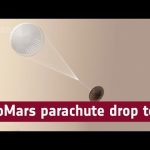
ExoMars low-altitude parachute drop test
The video features footage taken of the parachute deployment as seen from the ground, as well as from onboard GoPros fixed to the drop test vehicle and looking up at the parachute. The test focused on the deployment and inflation of the second main stage 35m-wide parachute, which will be the largest to fly on Mars.
Discussing the test are Stephane Langlois, ESA ExoMars engineer, and John Underwood, principal engineer at Vorticity.
The test was carried out by Vorticity Ltd under supervision of Thales Alenia Space France, Thales Alenia Space Italy and ESA, in Kiruna, Sweden, on 2 March 2018.
Credits: ESA & Vorticity Ltd
-

Fizz, Bang, Wow! 25 Years of Making Science Fun
Things that fizz, pop, explode and inspire the next generation of scientists and engineers. Here’s are just a few highlights of the last 25 years working with the team at Steve Spangler Science. Thanks to everyone from around the world who subscribed to our channels, participated in our live events, purchased our educational science kits, joined our STEM subscription club or followed our journey over the years. We promise more fun, learning and inspiration in the years to come. Thank you! – Steve Spangler
Sick Science® is a trademark of Steve Spangler, inc.
© 2018 Steve Spangler, Inc all rights reserved
-

Science Max | BRIDGE PART 2 | Season 1 Full Episode | Kids Science
Have you ever done a science experiment and wondered “What would this be like if it were HUGE?” Welcome to Science Max, the exciting new series that turbocharges all the science experiments you’ve done at home.
-

New Crew Arrives at the Space Station on This Week @NASA – March 23, 2018
A new crew at the space station, some science on the next SpaceX resupply mission, and testing Orion’s parachutes – a few of the stories to tell you about – This Week at NASA!
This video is available for download from NASA’s Image and Video Library: https://images.nasa.gov/details-NHQ_2018_0323_New%20Crew%20Arrives%20at%20the%20Space%20Station%20on%20This%20Week%20@NASA%20%E2%80%93%20March%2023,%202018.html
-
ESA Euronews: Az űrhajósoknak is fáj a háta
Az űrorvostudomány eredményei segíthetnek a földi betegségekben szenvedőknek is. Ami jó a Nemzetközi Űrállomáson, az segíthet a Newcastle-i nyugdíjasokon is.
Az űrhajósoknak földöntúli munkájuk van. A hajnalt és a naplementét naponta 16-szor látják, és az űrben töltött hetek és hónapok alatt a testük kívül-belül átalakul. Izmaik és csontjaik tömegükből veszítenek, és egészségi állapotuk is megváltozik. Így az asztronauták testüket is a tudomány szolgálatába állítják.
A nemzetközi űrállomáson zajló kutatások nem csak abban segítenek, hogy jobban megismerjük az emberi testet, hanem abban is, hogy olyan hétköznapi problémákra találjunk új megoldást, mint például a hátfájás. A Space márciusi adásában az űrmedicináról lesz szó.
-
ESA Euronews: Οι αστροναύτες λύνουν καθημερινά προβλήματα υγείας
Πειράματα σε αστροναύτες προσφέρουν χρήσιμα συμπεράσματα σε επιστήμονες για απλά ιατρικά θέματα που αντιμετωπίζουμε όλοι μας στη Γη
Οι αστροναύτες έχουν μια απαιτητική δουλειά. Βλέπουν την ανατολή και τη δύση του ήλιου 16 φορές την ημέρα. Επειδή αυτό συμβαίνει για εβδομάδες, το σώμα τους αλλάζει εσωτερικά, αλλά και εξωτερικά. Χάνουν μυική και οστική μάζα και η υγεία τους επηρεάζεται πολλαπλά.
-

What The World Will Look Like In 50 Years, According To Tech Experts
Business Insider spoke to 6 tech industry figures at MWC 2018, and asked them what they thought the world would look like in 50 years’ time. From self-driving cars to implanted technology, watch to hear what these experts are predicting for the future.
Tech Insider tells you all you need to know about tech: gadgets, how-to’s, gaming, science, digital culture, and more.
Subscribe to our channel and visit us at: http://www.businessinsider.com/sai
TI on Facebook: https://www.facebook.com/techinsider
TI on Instagram: https://www.instagram.com/tech_insider/
TI on Twitter: https://twitter.com/techinsider -

Science Max | FRICTION PART 2 | Season 1 Full Episode | Kids Science
Have you ever done a science experiment and wondered “What would this be like if it were HUGE?” Welcome to Science Max, the exciting new series that turbocharges all the science experiments you’ve done at home.
-

ESA – Space to Relax / eARTh
Having a stressful day? We got you covered!Sit back, turn the volume up and enjoy a relaxing moment brought to you by ESA and Lufthansa getting lost in the beauty of our planet with images captured by Envisat, JAXA ALOS, KARI Kompsat-2, GeoEye Ikonos-2 and NASA Landsat-5 and Landsat-7 satellites.
Don’t forget to favourite this video. You will always have a space to relax with us.
Music: “Page of Life” by Green Sun.
-

Stephen Hawking – His Wisdom, Wit, and Work
“The past tells us who we are. Without it, we lose our identity.” —Stephen Hawking
Today we’re remembering Stephen Hawking, who shone light on the darkest places in the universe.
Video about information paradox: https://youtu.be/jyFAsbBvZ70
Credits
Host, Producer: Greg Kestin
Researchers: Greg Kestin, Samia Bouzid
Writers: Samia Bouzid, Greg Kestin
Editorial Input from: Julia Cort, Ari Daniel
Black Hole Animations: Edgeworx
Special thanks: Entire NOVA team
From the producers of PBS NOVA © WGBH Educational Foundation
Funding provided by FQXi
Music provided by APM
Sound effects: Freesound.org -
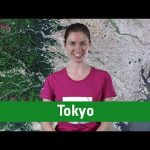
Earth from Space: Tokyo
Earth from Space is presented by Kelsea Brennan-Wessels from the ESA Web TV virtual studios. In this edition, Sentinel-2A satellite takes us over Japan’s capital, the world’s largest megacity.
See also http://www.esa.int/spaceinimages/Images/2018/03/Tokyo to download the image.
-

ESA – Space to Relax / Frozen planet
Having a stressful day? We got you covered! Sit back, turn the volume up and enjoy a relaxing moment brought to you by ESA and Lufthansa exploring the coldest parts of our planet with a collection of ice images captured by the Envisat satellite.
Don’t forget to favourite this video. You will always have a space to relax with us.
Music: “Page of Life” by Green Sun.
-

NASA Honors Legacy of Renowned Astrophysicist Stephen Hawking
NASA is honoring visionary physicist Stephen Hawking, who died at his home in Cambridge, England, early Wednesday morning.
Acting NASA Administrator Robert Lightfoot noted Hawking’s role as a “passionate communicator who wanted to share the excitement of discovery with all,” adding that his “impact cannot be overstated.”
“Stephen’s breakthroughs in the fields of physics and astronomy not only changed how we view the cosmos, but also has played, and will continue to play, a pivotal role in shaping NASA’s efforts to explore our solar system and beyond,” said Lightfoot.
This video is available for download from NASA’s Image and Video Library: https://images.nasa.gov/details-NHQ_2018_0314_NASA%20Honors%20Legacy%20of%20Renowned%20Astrophysicist%20Stephen%20Hawking.html
-
Artificial Intelligence: Investing in Yourself | Upamanyu Ghose | TEDxHRCollege
This talk explores the similarities between the human brain and AI. It is a very high level abstraction of AI and how it enables us to unfold the convolutions of the mind. It convinces you that when you invest in AI, you are actually investing in yourself. Upamanyu Ghose is a 3rd year computer science and engineering student, who is an ex computer vision team member of Project Manas, the only team comprising only of undergraduate students, working to build India’s first driverless car for Mahindra’s million dollar rise prize challenge.
He has been actively pursuing projects and research in the field of computer vision and natural language processing for the past year and is currently working on a project to enable searching through contents of a video. His prior projects include, cervical cancer detection using deep learning, tweet generator, generating stem cell lineage using image processing techniques (assisted a lab in Imperial College London). He’s also a part of a group called Teach Code for Good, which focuses on teaching underprivileged children the basics of coding in order to gear them up for the future.
His future plan is to pursue research in the field of human cognition in order to understand the mind better through artificial intelligence. This talk was given at a TEDx event using the TED conference format but independently organized by a local community. Learn more at https://www.ted.com/tedx -
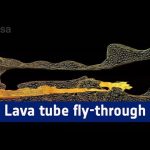
Lava tube fly-through
The “Cueva de los Verdes” lava tube in Lanzarote, Spain, is one of the world’s largest volcanic cave complexes with a total length of about 8 km.
Geology experts from ESA’s Pangaea-X campaign mapped most of the lava tube system as part of a project supported by local authorities Cabildo of Lanzarote and the University of Padova, Italy. The data was acquired in November 2017 by Leica Geosystems.
The map comes alive in great detail in 3D, helping institutions to protect the subterranean environment. The map also provides scientific data to study the origins of the tube and its peculiar formations.
Pangaea-X is a test campaign that brings together geology, high-tech survey equipment and space exploration. Learn more about the science and technology behind this campaign visiting http://blogs.esa.int/pangaea
-

Random Forest Algorithm – Random Forest Explained | Random Forest in Machine Learning | Simplilearn
This Random Forest Algorithm tutorial will explain how Random Forest algorithm works in Machine Learning. By the end of this video, you will be able to understand what is Machine Learning, what is Classification problem, applications of Random Forest, why we need Random Forest, how it works with simple examples and how to implement Random Forest algorithm in Python.
Below are the topics covered in this Machine Learning tutorial:
1. What is Machine Learning?
2. Applications of Random Forest
3. What is Classification?
4. Why Random Forest?
5. Random Forest and Decision Tree
6. Use case – Iris Flower AnalysisSubscribe to our channel for more Machine Learning Tutorials: https://www.youtube.com/user/Simplilearn?sub_confirmation=1
You can also go through the Slides here: https://goo.gl/K8T4tW
Machine Learning Articles: https://www.simplilearn.com/what-is-artificial-intelligence-and-why-ai-certification-article?utm_campaign=Random-Forest-Tutorial-eM4uJ6XGnSM&utm_medium=Tutorials&utm_source=youtube
To gain in-depth knowledge of Machine Learning, check our Machine Learning certification training course: https://www.simplilearn.com/big-data-and-analytics/machine-learning-certification-training-course?utm_campaign=Random-Forest-Tutorial-eM4uJ6XGnSM&utm_medium=Tutorials&utm_source=youtube
#MachineLearningAlgorithms #Datasciencecourse #DataScience #SimplilearnMachineLearning #MachineLearningCourse
– – – – – – – –
About Simplilearn Machine Learning course:
A form of artificial intelligence, Machine Learning is revolutionizing the world of computing as well as all people’s digital interactions. Machine Learning powers such innovative automated technologies as recommendation engines, facial recognition, fraud protection and even self-driving cars.This Machine Learning course prepares engineers, data scientists and other professionals with knowledge and hands-on skills required for certification and job competency in Machine Learning.
– – – – – – –
Why learn Machine Learning?
Machine Learning is taking over the world- and with that, there is a growing need among companies for professionals to know the ins and outs of Machine Learning
The Machine Learning market size is expected to grow from USD 1.03 Billion in 2016 to USD 8.81 Billion by 2022, at a Compound Annual Growth Rate (CAGR) of 44.1% during the forecast period.– – – – – –
What skills will you learn from this Machine Learning course?
By the end of this Machine Learning course, you will be able to:
1. Master the concepts of supervised, unsupervised and reinforcement learning concepts and modeling.
2. Gain practical mastery over principles, algorithms, and applications of Machine Learning through a hands-on approach which includes working on 28 projects and one capstone project.
3. Acquire thorough knowledge of the mathematical and heuristic aspects of Machine Learning.
4. Understand the concepts and operation of support vector machines, kernel SVM, naive Bayes, decision tree classifier, random forest classifier, logistic regression, K-nearest neighbors, K-means clustering and more.
5. Be able to model a wide variety of robust Machine Learning algorithms including deep learning, clustering, and recommendation systems– – – – – – –
Who should take this Machine Learning Training Course?
We recommend this Machine Learning training course for the following professionals in particular:
1. Developers aspiring to be a data scientist or Machine Learning engineer
2. Information architects who want to gain expertise in Machine Learning algorithms
3. Analytics professionals who want to work in Machine Learning or artificial intelligence
4. Graduates looking to build a career in data science and Machine Learning– – – – – –
For more updates on courses and tips follow us on:
– Facebook: https://www.facebook.com/Simplilearn
– Twitter: https://twitter.com/simplilearn
– LinkedIn: https://www.linkedin.com/company/simplilearn
– Website: https://www.simplilearn.comGet the Android app: http://bit.ly/1WlVo4u
Get the iOS app: http://apple.co/1HIO5J0 -
Artificial Intelligence Based Car Full Working Project Model
Artificial Intelligence Based Car Full Working Project Model
Visit our Website For Free Projects Report.
Click Here: https://www.prayogindia.in/product/artificial-intelligence-based-car/We also Provide Training Courses on
Following Programs :1. ARDUINO PROGRAMMING COURSE
2. 8051 PROGRAMMING COURSE
3. PCB DESIGNING
4. RASPBERRY PI
5. I.O.T
6. BASIC ROBOTICS
7. BASIC ELECTRONICS
8. SCIENCE FUN ACTIVITY FOR KIDS
9. DRONE FLYING & LEARNINGOur Next Batch is going to
Start on : 9th April 2018For more Details Call/Whatsapp: +91 8409498926
*We also Develop any kind of Projects according to your Needs*
-~-~~-~~~-~~-~-
Please watch: “A complete Syllabus of Transistor tutorial in Hindi – Part 1”
https://www.youtube.com/watch?v=6VTHe6vGGGI
-~-~~-~~~-~~-~- -

Science Max | FRICTION PART 1 | Season 1 Full Episode | Kids Science
Have you ever done a science experiment and wondered “What would this be like if it were HUGE?” Welcome to Science Max, the exciting new series that turbocharges all the science experiments you’ve done at home.
-

Send Your Name to the Sun on This Week @NASA – March 9, 2018
A chance to send your name to the Sun, testing systems for our Orion spacecraft, and sizing up Earth, from space – a few of the stories to tell you about – This Week at NASA!
This video is available for download from NASA’s Image and Video Library: https://images.nasa.gov/details-NHQ_2018_0309_Send%20Your%20Name%20to%20the%20Sun%20on%20This%20Week%20@NASA%20%E2%80%93%20March%209,%202018.html
-

Do Parallel Universes Exist?
Could we be living in one of many parallel universes? Find out why some physicists think we might.
– Subscribe: https://www.youtube.com/WhatThePhysics?sub_confirmation=1Have questions, ask me:
twitter @gkestin*learn more about electron volts here: https://en.wikipedia.org/wiki/Electronvolt
Host, Producer: Greg Kestin
Researchers: Samia Bouzid, Drew Gannon, Peter Chang
Writers: Samia Bouzid, Greg Kestin
Fish voices: Tiffany Dill, Arlo Perez
Scientific Consultant: Alan Lightman, Curtis McCully
Editorial Input from: Julia Cort, Ari Daniel
Filming: Greg Kestin
Animation and Editing: Greg Kestin
Special thanks: Entire NOVA team
From the producers of PBS NOVA © WGBH Educational Foundation
Funding provided by FQXi
Music provided by APM -
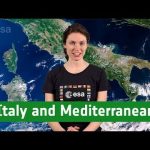
Earth from Space: Italy and Mediterranean
Earth from Space is presented by Kelsea Brennan-Wessels from the ESA Web TV virtual studios. In this edition, Sentinel-3A treats us to a view stretching from Sardinia to Romania.
Visit http://www.esa.int/spaceinimages/Images/2018/03/Italy_and_Mediterranean to download the image.
-
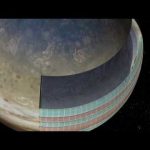
NASA’s Juno Spacecraft Reveals the Depth of Jupiter’s Colored Bands
For hundreds of years, this gaseous giant planet appeared shrouded in colorful bands of clouds extending from dusk to dawn, referred to as zones and belts. Story: https://www.nasa.gov/feature/jpl/nasa-juno-findings-jupiter-s-jet-streams-are-unearthly
The bands were thought to be an expression of Jovian weather, related to winds blowing eastward and westward at different speeds.
This animation illustrates a recent discovery by Juno that demonstrates these east-west flows, also known as jet-streams penetrate deep into the planet’s atmosphere, to a depth of about 1,900 miles (3,000 kilometers). Due to Jupiter’s rapid rotation (Jupiter’s day is about 10 hours), these flows extend into the interior parallel to Jupiter’s axis of rotation, in the form of nested cylinders. Below this layer the flows decay, possibly slowed by Jupiter’s strong magnetic field.
The depth of these flows surprised scientists who estimate the total mass involved in these jet streams to be about 1% of Jupiter’s mass (Jupiter’s mass is over 300 times that of Earth). This discovery was revealed by the unprecedented accuracy of Juno’s measurements of the gravity field.
Credit: NASA/JPL-Caltech/SwRI/ASI
-
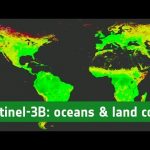
Sentinel-3: a workhorse mission for Copernicus
Following its launch in February 2016 and subsequent commissioning phase, the Copernicus Sentinel-3A satellite has been systematically measuring our oceans, land, ice and atmosphere. The information feeds a range of practical applications and is used for monitoring and understanding large-scale global dynamics. Sentinel-3A will soon be joined in orbit by its identical twin, Sentinel-3B. Both satellites carry a suite of cutting-edge instruments to supply a new generation of data products, which are particularly useful for marine applications. For example, they monitor ocean-surface temperatures for ocean and weather forecasting services, aquatic biological productivity, ocean pollution and sea-level change. The mission also delivers unique and timely information about changing land cover, vegetation, urban heat islands, and for tracking wildfires. With the two satellites in orbit, global coverage and data delivery will be optimised.
-

2017 Space App Camp
The sixth Space App Camp was held at ESA’s establishment in Frascati, Italy, in September 2017. The camp offers access to the latest space data – particularly from the European Copernicus programme – to app developers, who work to make the information accessible to a broad audience. Twenty-four developers from 14 countries attended the 2017 camp. In this short video, participants talk about why they attended and what they hoped to achieve.
Travel App wins top prize at App camp:
http://www.esa.int/Our_Activities/Observing_the_Earth/Copernicus/Travel_app_wins_top_prize_at_App_Camp -
Benefits of Clinical Informatics and Artificial Intelligence (AI) | Philips Healthcare
Learn how clinical informatics can structure healthcare data across multiple sources and make the invisible visible through medical data visualization. Learn more at http://philips.to/2I7BiZR.
CMIO Vinay Vaidya of Phoenix Childrens’ Hospital discusses the challenges of managing the overabundance of healthcare data and points to the use of healthcare informatics systems to streamline analysis. He further implies that having human and artificial intelligence (AI) working together produces much more powerful medical insights.
Join the conversation and help us create the future of healthcare:
http://philips.to/2FvXOgw
https://twitter.com/philipshealth
https://www.linkedin.com/company/philips