Blog
-
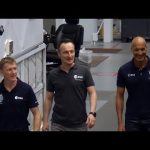
ESA astronauts training in Houston
Four ESA astronauts have recently been training at NASA’s Johnson Space Centre (JSC) in Houston, Texas. For ESA’s newest astronaut Matthias Maurer, it was a chance to inspect a mock-up of NASA’s future space vehicle Orion alongside Tim Peake and Luca Parmitano, both experienced astronauts. Tim and Matthias have undergone spacewalk training in the neutral buoyancy pool. Alexander Gerst is also at JSC, training for his 2018 long-duration mission to the ISS.
Connect with the astronauts: http://www.esa.int/astronauts
-
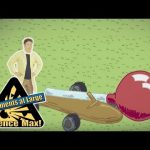
Science Max | Fantastic Experiments Compilation | Science Max Season1 | Kids Science
Science Max brings you a special compilation including some of our favourite episodes from season 1. Tune in and prepare for a heap of science madness!
Have you ever done a science experiment and wondered “What would this be like if it were HUGE?” Welcome to Science Max, the exciting new series that turbocharges all the science experiments you’ve done at home.
In season 1, join Phil as he builds rocket cars, uses elastic energy to hurl pumpkins on a giant catapult, builds a bridge out of pasta that can hold a human, find magnets powerful enough to float Phil off the ground, and many more experiments taken to the MAX!
-
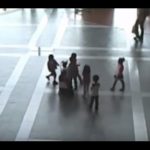
Robot Tries to Escape from Children’s Attack
This video is part of “Escaping from Children’s Abuse of Social Robots,” by Dražen Brščić, Hiroyuki Kidokoro, Yoshitaka Suehiro, and Takayuki Kanda from ATR Intelligent Robotics and Communication Laboratories and Osaka University, and “Why Do Children Abuse Robots?”, by Tatsuya Nomura, Takayuki Uratani, Kazutaka Matsumoto, Takayuki Kanda, Hiroyoshi Kidokoro, Yoshitaka Suehiro, and Sachie Yamada from Ryukoku University, ATR Intelligent Robotics and Communication Laboratories, and Tokai University, presented at the 2015 ACM/IEEE International Conference on Human-Robot Interaction. Learn more: http://spectrum.ieee.org/automaton/robotics/artificial-intelligence/children-beating-up-robot
-
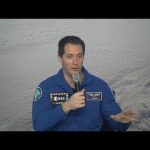
Thomas Pesquet: Post-flight press conference (in French)
Replay of the press conference (in French) with ESA astronaut Thomas Pesquet held at the European Astronaut Centre in Cologne, Germany, on 6 June 2017. Thomas returned to Earth on 2 June 2017 after completion of his six-month Proxima mission to the International Space Station.
Thomas took part in more than 60 experiments during his mission. His experiments are helping to understand the human brain, ocean currents and radiation in space, how atoms behave and tested new spacecraft materials. Other highlights included his two spacewalks to improve and maintain the Space Station.
This press conference was originally broadcast on the ESA Livesteam channel: https://livestream.com/ESA/events/7463026
More about Proxima: http://www.esa.int/proxima
Connect with Thomas: http://thomaspesquet.esa.int -

Contributors to sea-level rise
The physical processes causing global sea-level rise are highlighted in the animation. The main causes are thermal expansion of oceans, as they accumulate the excess heat caused by greenhouse gas emissions, the melting of ice from the ice sheets and glaciers, as well as changes in land water storage such as lakes. Regionally, sea level changes vary quite dramatically. The reasons for this are different to the global causes of sea-level changes and include changes to sea water density, influenced by salinity and temperature.
The Climate Change Initiative Open Data Portal: http://cci.esa.int
Credits: Planetary Visions
-
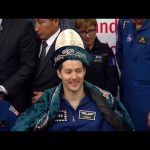
Thomas Pesquet: Undocking and landing
Highlights from ESA astronaut Thomas Pesquet’s return to Earth at the end of his six-month Proxima mission to the International Space Station on 2 June 2017.
After farewells and hatch closure, Thomas and his Expedition 50/51 crewmate and Soyuz commander Oleg Novitsky undocked from the International Space Station at 12:47 CEST (10:47 GMT). Just a few hours later their spacecraft reentered Earth’s atmosphere, landing in the Kazakh Steppe at 16:10 CEST (14:10 GMT). Thomas and Oleg were helped out of the Soyuz by a recovery crew and, after medical checks, they were flown to Karaganda airport where they received the traditional welcoming ceremony. Thomas then flew directly from Karaganda to Cologne, in Germany, home to the European Astronaut Centre, to start post-flight testing.
Thomas and Oleg spent 196 days in space. Thomas took part in more than 60 experiments during his Proxima mission. His experiments are helping to understand the human brain, ocean currents and radiation in space, how atoms behave and tested new spacecraft materials. Other highlights included his two spacewalks to improve and maintain the Space Station.
More about the Proxima mission: http://www.esa.int/proxima
Connect with Thomas: http://thomaspesquet.esa.int -
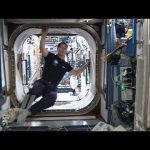
Full Space Station tour with Thomas (in French)
ESA astronaut Thomas Pesquet’s in-depth tour of the International Space Station in French, recorded during his Proxima mission.
Thomas performed around 60 scientific experiments for ESA and France’s space agency CNES and other Station partners.The mission is part of ESA’s vision to use Earth-orbiting spacecraft as a place to live and work for the benefit of European society while using the experience to prepare for future voyages of exploration further into the Solar System.
More about the Proxima mission: http://www.esa.int/proxima
Connect with Thomas Pesquet: http://thomaspesquet.esa.int -
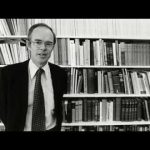
NASA names Unique Solar Mission after University of Chicago Physicist Eugene Parker
On May 31, NASA renamed humanity’s first mission to fly a spacecraft directly into the sun’s atmosphere in honor of Professor Eugene Parker, a pioneering physicist at the University of Chicago. This is the first time in agency history a spacecraft has been named for a living individual. Parker, the S. Chandrasekhar Distinguished Service Professor Emeritus in Physics, is best known for developing the concept of solar wind—the stream of electrically charged particles emitted by the sun.
Previously named Solar Probe Plus, the Parker Solar Probe will launch in summer 2018. Placed in orbit within four million miles of the sun’s surface, and facing heat and radiation unlike any spacecraft in history, the spacecraft will explore the sun’s outer atmosphere and make critical observations that will answer decades-old questions about the physics of how stars work. The resulting data will improve forecasts of major space weather events that impact life on Earth, as well as satellites and astronauts in space.
-
Science Max | Bridges and Rockets | Science Max Season1 | Kids Science
Science Max brings you a special compilation including some of our favourite episodes from season 1. Tune in and prepare for a heap of science madness!
Have you ever done a science experiment and wondered “What would this be like if it were HUGE?” Welcome to Science Max, the exciting new series that turbocharges all the science experiments you’ve done at home.
In season 1, join Phil as he builds rocket cars, uses elastic energy to hurl pumpkins on a giant catapult, builds a bridge out of pasta that can hold a human, find magnets powerful enough to float Phil off the ground, and many more experiments taken to the MAX!
-
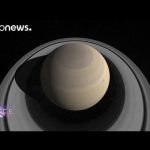
ESA Euronews: Journey around Saturn
Right now the Cassini spacecraft is flying between the rings of Saturn and the planet itself, a daring trajectory chosen to conclude a unique exploration mission.
To find out what that orbit means, and to look back at some of Cassini-Huygens finest moments, we met up with key members of the science team in the UK for this edition of Space.
This video is also available in the following languages:
German https://www.youtube.com/watch?v=aXeX4xDy32U
Italian https://www.youtube.com/watch?v=h5ptu4qs1Oc
French https://www.youtube.com/watch?v=2dpvBbYa358
Spanish https://www.youtube.com/watch?v=fJPsi61AnkY
Portuguese https://www.youtube.com/watch?v=MZq2LywHs04
Hungarian https://www.youtube.com/watch?v=JVvTZ9Ij02k
Greek https://www.youtube.com/watch?v=RUQ4_Md1eZ0 -

ESA Euronews: Endspurt am Saturn
Die Cassini-Huygens-Mission am Saturn startete vor zwanzig Jahren, 2004 schwenkte die Doppel-Sonde in ihre Umlaufbahn um den Saturn ein. Im Dezember 2004 koppelte der Lander Huygens von der Cassini-Sonde ab und setzte im Januar 2005 auf dem Titan auf. Die Mission entdeckte unter anderem ein Eismeer auf dem Saturn-Mond Enceladus und fliegt jetzt zwischen den Ringen des Saturn und dem Planeten selbst. Im September soll Cassini mangels Treibstoffvorräten in der Saturn-Atmosphäre verglühen.
Die Saturn-Spezialisten des Mullard Space Science Laboratory (MSSL) in Südengland verfolgen die Mission und erforschen das Sonnensystem des pittoresken Planeten. Die Cassini-Sonde wird gerade auf ihre finale Umlaufbahn gebracht, um nächstmögliche Eindrücke vom Saturn zu gewinnen.
-
New eyes
Thomas Pesquet reflects on living on the International Space Station after his six-month Proxima mission. Beyond science and technology the voyage often reveals more than the destination. A message for all humans.
As Marcel Proust wrote in his book The Prisoner: “The only true voyage of discovery, … would be not to visit strange lands but to possess other eyes, to behold the universe through the eyes of another, of a hundred others, to behold the hundred universes that each of them beholds, that each of them is.”
The footage was shot with the Space Station’s highest resolution camera at resolutions between 4K and 6K and available here in Ultra High Definition (3840×2160 pixels). Download the full high-resolution file from ESA’s video archive: http://www.esa.int/spaceinvideos/Videos/2017/05/New_eyes
During Proxima, Thomas performed around 50 scientific experiments for ESA and France’s space agency CNES as well as take part in many research activities for the other Station partners.
The mission is part of ESA’s vision to use Earth-orbiting spacecraft as a place to live and work for the benefit of European society while using the experience to prepare for future voyages of exploration further into the Solar System.
More about the Proxima mission: http://www.esa.int/proxima
Connect with Thomas Pesquet: http://thomaspesquet.esa.intMusic: ‘On home leave’ by Luke Richards
-
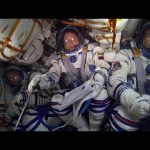
Soyuz ride into space
On 28 May 2014, ESA astronaut Alexander Gerst and NASA astronaut Reid Wiseman under the command of Russian cosmonaut Maxim Suraev rocketed into space in a Soyuz spacecraft. This was their voyage.
For Alexander and Reid it was the first time they saw Earth from space.
Strapped atop 274 tonnes of rocket propellants delivering 26 million horsepower, it took only six hours to reach their destination, International Space Station.
Alexander worked as a geophysicist and volcanologist before he was selected as an ESA astronaut in 2009. His Blue Dot mission included an extensive scientific programme of experiments in physical science, biology, and human physiology as well as radiation research and technology demonstrations. All experiments make use of the out-of-this-world laboratory to improve life on Earth or prepare for further human exploration of our Solar System.
Read more about the Blue Dot mission: http://www.esa.int/Our_Activities/Human_Spaceflight/Blue_dot
Follow Alexander: http://alexandergerst.esa.int/ -

Acting Administrator Robert Lightfoot Discusses NASA’s FY2018 NASA Budget Request
Acting NASA Administrator Robert Lightfoot discussed the agency’s Fiscal Year 2018 budget request on May 23, during an agencywide town hall State of NASA address at NASA Headquarters in Washington. The address also was broadcast on NASA Television and streamed on the agency’s homepage and mobile apps.
-
NASA: Dream. Innovate. Build. Discover.
On May 23, the Acting Administrator Robert Lightfoot gave a State of NASA address at Headquarters to rollout the Fiscal Year 2018 Budget proposal. This video highlights the future-facing vision of those plans.
-
Science Max | Elastics and Friction Compilation | Science Max Season1 | Kids Science
Science Max brings you a special compilation including some of our favourite episodes from season 1. Tune in and prepare for a heap of science madness!
Have you ever done a science experiment and wondered “What would this be like if it were HUGE?” Welcome to Science Max, the exciting new series that turbocharges all the science experiments you’ve done at home.
In season 1, join Phil as he builds rocket cars, uses elastic energy to hurl pumpkins on a giant catapult, builds a bridge out of pasta that can hold a human, find magnets powerful enough to float Phil off the ground, and many more experiments taken to the MAX!
-
The Future of Your Job in the Age of AI | Robots & Us | WIRED
Robot co-workers and artificial intelligence assistants are becoming more common in the workplace. Could they edge human employees out? What then?
Still haven’t subscribed to WIRED on YouTube? ►► http://wrd.cm/15fP7B7
Also, check out the free WIRED channel on Roku, Apple TV, Amazon Fire TV, and Android TV. Here you can find your favorite WIRED shows and new episodes of our latest hit series Masterminds.
ABOUT WIRED
WIRED is where tomorrow is realized. Through thought-provoking stories and videos, WIRED explores the future of business, innovation, and culture.The Future of Your Job in the Age of AI | Robots & Us | WIRED
-
AI Can Now Self-Reproduce—Should Humans Be Worried? | Eric Weinstein
New videos DAILY: https://bigth.ink/youtube
Join Big Think Edge for exclusive videos: https://bigth.ink/Edge
———————————————————————————-———————————————————————————-
ABOUT BIG THINK:Smarter Faster™
Big Think is the leading source of expert-driven, actionable, educational content — with thousands of videos, featuring experts ranging from Bill Clinton to Bill Nye, we help you get smarter, faster. Subscribe to learn from top minds like these daily. Get actionable lessons from the world’s greatest thinkers & doers. Our experts are either disrupting or leading their respective fields. We aim to help you explore the big ideas and core skills that define knowledge in the 21st century, so you can apply them to the questions and challenges in your own life.Other Frequent contributors include Michio Kaku & Neil DeGrasse Tyson.
Michio Kaku Playlist: https://bigth.ink/kaku
Bill Nye Playlist: https://bigth.ink/BillNye
Neil DeGrasse Tyson Playlist: https://bigth.ink/deGrasseTysonRead more at Bigthink.com for a multitude of articles just as informative and satisfying as our videos. New articles posted daily on a range of intellectual topics.
Join Big Think Edge, to gain access to a world-class learning platform focused on building the soft skills essential to 21st century success. It features insight from many of the most celebrated and intelligent individuals in the world today. Topics on the platform are focused on: emotional intelligence, digital fluency, health and wellness, critical thinking, creativity, communication, career development, lifelong learning, management, problem solving & self-motivation.
BIG THINK EDGE: https://bigth.ink/Edge
If you’re interested in licensing this or any other Big Think clip for commercial or private use, contact our licensing partner, Executive Interviews: https://bigth.ink/licensing
———————————————————————————-
Follow Big Think here:📰BigThink.com: https://bigth.ink
🧔Facebook: https://bigth.ink/facebook
🐦Twitter: https://bigth.ink/twitter
📸Instagram: https://bigth.ink/Instragram
📹YouTube: https://bigth.ink/youtube
✉ E-mail: info@bigthink.com
———————————————————————————- -
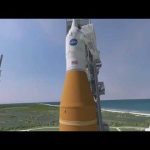
Media View Barge Pegasus and SLS Hardware on This Week @NASA – May 19, 2017
On May 16, NASA held a media event at Marshall Space Flight Center in Huntsville, Alabama, to highlight the recent arrival of the barge Pegasus with the first core stage test article for NASA’s Space Launch System (SLS) rocket. NASA modified Pegasus to accommodate the massive SLS core stage, increasing the barge’s length and weight-carrying capacity. The core stage test article – manufactured at the agency’s Michoud Assembly Facility, in New Orleans – is the first of four core stage test articles scheduled to be delivered to Marshall for testing. This delivery marks a critical milestone toward Exploration Mission-1 (EM-1), the first flight of SLS and NASA’s Orion spacecraft. It also brings the agency a step closer to sending humans to deep space destinations – including Mars. Also, Lightfoot Discusses Future Exploration Goals, Ochoa, Foale Inducted into Hall of Fame, and Virtual Tour of Meteorite Lab!
-
Science Max | Magnets and Boats Compilation | Science Max Season1 | Kids Science
Science Max brings you a special compilation including some of our favourite episodes from season 1. Tune in and prepare for a heap of science madness!
Have you ever done a science experiment and wondered “What would this be like if it were HUGE?” Welcome to Science Max, the exciting new series that turbocharges all the science experiments you’ve done at home.
In season 1, join Phil as he builds rocket cars, uses elastic energy to hurl pumpkins on a giant catapult, builds a bridge out of pasta that can hold a human, find magnets powerful enough to float Phil off the ground, and many more experiments taken to the MAX!
-
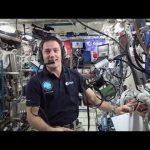
Thomas Pesquet mission highlights
Thomas Pesquet will shortly be returning to Earth after a six-month stay onboard the International Space Station. Named Proxima, this mission is the ninth long-duration flight for an ESA astronaut.
Thomas’s in-orbit schedule includes around 50 experiments for ESA and the French Space Agency CNES, and he’s so far carried out two maintenance spacewalks alongside station commander Shane Kimbrough.
Connect with Thomas via http://thomaspesquet.esa.int
More about the Proxima mission http://blogs.esa.int/thomas-pesquet/ -

Paxi – Dzień, noc i pory roku
(Polish) Join Paxi as he explores why we have day and night, and learn why the Earth has seasons.
-

Space Station Crew Conducts Milestone Spacewalk
Outside the International Space Station, Expedition 51 Commander Peggy Whitson and Flight Engineer Jack Fischer of NASA conducted a spacewalk May 12 to replace an avionics box responsible for routing power and data commands to experiments on the orbital outpost. In addition to that work, the two spacewalkers installed a data cable for the Alpha Magnetic Spectrometer and a new high definition camera on the station’s truss. The spacewalk was the 200th in support of space station assembly and maintenance since 1998, the ninth for Whitson, who vaulted into third place on the all-time list for most spacewalking hours, and the first for Fischer.
-
Milestone Spacewalk on the Space Station on This Week @NASA – May 12, 2017
On May 12, Peggy Whitson and Jack Fischer conducted a spacewalk outside the International Space Station. This was the 200th spacewalk in support of station assembly and maintenance. Prior to the outing, during their pre-breathe activities in the airlock, the spacewalkers had to share Whitson’s service and cooling umbilical (SCU), due to an issue with the SCU connected to Fischer’s suit. That device provides electricity, cooling and communications during the pre-breathe phase of a spacewalk. Despite a late start, the pair completed the primary task of replacing an avionics box that supplies electricity and data connections to the science experiments on the orbital laboratory. It was Whitson’s ninth spacewalk and the first for Fischer. Also, Exploration Mission-1 Announcement, Future Space Station Crew Previews Mission, Humans to Mars Summit 2017, James Webb Space Telescope at JSC, and Martian New Year in Mars, PA!
-
Paxi – Střídání dne a noci a ročních období
(Czech) Join Paxi as he explores why we have day and night, and learn why the Earth has seasons.
-

Paxi – Ziua, noaptea şi anotimpurile
(Romanian) Join Paxi as he explores why we have day and night, and learn why the Earth has seasons.
-
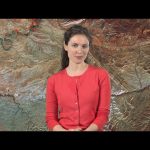
Earth from Space: Uintah Basin
Earth from Space is presented by Kelsea Brennan-Wessels from the ESA Web-TV virtual studios. In the 229th edition, Sentinel-2 takes us over the border of the US states Utah and Colorado.
See also http://www.esa.int/spaceinimages/Images/2017/05/Uintah_Basin_United_States to download the image.
-
Paxi – Päivä, yö ja vuodenajat
(Finnish) Join Paxi as he explores why we have day and night, and learn why the Earth has seasons.
-

Paxi – El día, la noche y las estaciones
Descubre con Paxi por qué existe el día y la noche y por qué la Tierra tiene estaciones.
-

Paxi – Dagen, natten og årstiderne
(Danish) Join Paxi as he explores why we have day and night, and learn why the Earth has seasons.
-
Paxi – Tag, Nacht und die Jahreszeiten
(German) Join Paxi as he explores why we have day and night, and learn why the Earth has seasons.
-
Paxi – Le jour, la nuit et les saisons
(French) Join Paxi as he explores why we have day and night, and learn why the Earth has seasons.
-
Paxi – Il giorno, la notte e le stagioni
(Italian) Join Paxi as he explores why we have day and night, and learn why the Earth has seasons.
-
Paxi – Dag, nacht en de seizoenen
(Dutch) Join Paxi as he explores why we have day and night, and learn why the Earth has seasons.
-
Paxi – Dag, natt, og årstidene
(Norwegian) Join Paxi as he explores why we have day and night, and learn why the Earth has seasons.
-
Paxi – O Dia, a noite e as estações do ano
(Portuguese) Join Paxi as he explores why we have day and night, and learn why the Earth has seasons.
-
Paxi – Dag, natt och årstiderna
(Swedish) Join Paxi as he explores why we have day and night, and learn why the Earth has seasons.
-
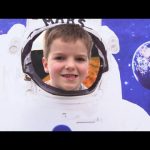
NASA Celebrates Mars New Year in Mars, Pennsylvania
NASA helped the town of Mars, Pennsylvania ring in the Martian New Year, May 5-6. Citizens of the town, just north of Pittsburgh, invited the agency to help celebrate Mars New Year, which happens about every two Earth years. Activities included two days of science, technology, engineering, arts and mathematics or (STEAM) activities, to encourage young people to pursue careers in these fields of study, which are critical to NASA’s journey to Mars.
-

Science Max | Science Compilation | Science Max Season1 | Kids Science
Science Max brings you a special compilation including some of our favourite episodes from season 1. Tune in and prepare for a heap of science madness!
Have you ever done a science experiment and wondered “What would this be like if it were HUGE?” Welcome to Science Max, the exciting new series that turbocharges all the science experiments you’ve done at home.
In season 1, join Phil as he builds rocket cars, uses elastic energy to hurl pumpkins on a giant catapult, builds a bridge out of pasta that can hold a human, find magnets powerful enough to float Phil off the ground, and many more experiments taken to the MAX!