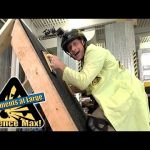
Magnets have poles – when you put opposite ones together, they attract. But when you but the same ones together, they repel. Could we find magnets powerful enough to repel each other and float Phil off the ground? Plus, watch magnets defy gravity all on their own.
Have you ever done a science experiment and wondered “What would this be like if it were HUGE?” Welcome to Science Max, the exciting new series that turbocharges all the science experiments you’ve done at home.
In season 1, join Phil as he builds rocket cars, uses elastic energy to hurl pumpkins on a giant catapult, builds a bridge out of pasta that can hold a human, find magnets powerful enough to float Phil off the ground, and many more experiments taken to the MAX!
NASA’s Juno spacecraft made its latest close flyby of Jupiter Feb. 2 — passing about 2,700 miles above the planet’s clouds. This was the fourth close flyby since Juno began orbiting Jupiter last year on July 4. During these close passes instruments on the spacecraft probe beneath the cloud cover to collect scientific data about the planet’s structure, atmosphere and magnetosphere. This information could help us better understand the planetary systems being discovered around other stars. Also, Cassini Sees Saturn’s Rings in Greater Detail, The Most Extreme Blazars, NASA at Super Bowl Event, NASA at NBA Black Heritage Celebration, and
Day of Remembrance!
BepiColombo, Europe’s first mission to Mercury, is currently being put through its paces at ESA’s European Space Research and Technology Centre (ESTEC) in the Netherlands. Mechanical and vibration tests will get underway in April with a view to a launch in October 2018. BepiColombo will arrive at Mercury, the smallest planet in our Solar System, in December 2025.
The ESA-led joint European and Japanese mission consists of two spacecraft – the Mercury Planetary Orbiter (MPO) and the Mercury Magnetospheric Orbiter (MMO) – as well as a sunshield and a Mercury Transfer Module, which will power its seven year journey using its solar electric propulsion engine. It will be a mission of further discovery after NASA’s Messenger spacecraft uncovered a number of surprises – including evidence of water ice at the closest planet to the Sun and a magnetic dipole field.
This video covers the mission status as well and its plan to follow up on Mercury’s unexpected features and properties. It includes an interview with Johannes Benkhoff, ESA BepiColombo project scientist.
This music video, directed by Jérôme de Gerlache, is a collaboration between French musician Yuksek and ESA astronaut Thomas Pesquet on the International Space Station.
The friends came up for the concept of this film to show both ships of creation: Yuksek’s studio where he composed the music inspired by Thomas Pesquet’s flight, and the spaceship where Thomas is performing science for the benefit of humanity.
Illustrating their everyday working life, they are brought together by music that crosses borders and travels easily from Earth to space. Music connects people anywhere, it is universal and that is its intrinsic beauty.
Thomas is spending six months on the International Space Station as part of his Proxima mission. During Proxima, Thomas will perform around 50 scientific experiments for ESA and France’s space agency CNES as well as take part in many research activities for the other Station partners. The mission is part of ESA’s vision to use Earth-orbiting spacecraft as a place to live and work for the benefit of European society while using the experience to prepare for future voyages of exploration further into the Solar System.
Music: Yuksek « Live Alone feat Roman Rappak »
Directed by Jérôme de Gerlache
Director of photography [space] Thomas Pesquet
Director of photography [earth] Jacques Ballard
Editor Nicolas Capus
Colorgrading Arthur Paux
Thanks to Emilien Lazaron.
Many thanks to Partyfine, Universal Music, Have a great day films, Sparks seeker
Ever wanted to build a bridge out of pasta? It’s not too hard and works better than you’d think. But what if we were to try to make a pasta bridge big enough for Phil to walk across? Plus, learn how to build a sandcastle you can stand on!
Have you ever done a science experiment and wondered “What would this be like if it were HUGE?” Welcome to Science Max, the exciting new series that turbocharges all the science experiments you’ve done at home.
In season 1, join Phil as he builds rocket cars, uses elastic energy to hurl pumpkins on a giant catapult, builds a bridge out of pasta that can hold a human, find magnets powerful enough to float Phil off the ground, and many more experiments taken to the MAX!
Want to learn more about AI and machine learning? Take this free HubSpot Academy course: https://bit.ly/2Sm2rzG
What is AI? What is machine learning and how does it work? You’ve probably heard the buzz. The age of artificial intelligence has arrived. But that doesn’t mean it’s easy to wrap your mind around. For the full story on the rise of artificial intelligence, check out The Robot Revolution: http://hubs.ly/H0630650
Let’s break down the basics of artificial intelligence, bots, and machine learning. Besides, there’s nothing that will impact marketing more in the next five to ten years than artificial intelligence. Learn what the coming revolution means for your day-to-day work, your business, and ultimately, your customers.
Every day, a large portion of the population is at the mercy of a rising technology, yet few actually understand what it is.
Artificial intelligence. You know, HAL 9000 and Marvin the Paranoid Android?
Thanks to books and movies, each generation has formed its own fantasy of a world ruled — or at least served — by robots. We’ve been conditioned to expect flying cars that steer clear of traffic and robotic maids whipping up our weekday dinner.
But if the age of AI is here, why don’t our lives look more like the Jetsons?
Well, for starters, that’s a cartoon. And really, if you’ve ever browsed Netflix movie suggestions or told Alexa to order a pizza, you’re probably interacting with artificial intelligence more than you realize.
And that’s kind of the point. AI is designed so you don’t realize there’s a computer calling the shots. But that also makes understanding what AI is — and what it’s not — a little complicated.
In basic terms, AI is a broad area of computer science that makes machines seem like they have human intelligence.
So it’s not only programming a computer to drive a car by obeying traffic signals, but it’s when that program also learns to exhibit signs of human-like road rage.
As intimidating as it may seem, this technology isn’t new. Actually, for the past half-a-century, it’s been an idea ahead of its time.
The term “artificial intelligence” was first coined back in 1956 by Dartmouth professor John McCarthy. He called together a group of computer scientists and mathematicians to see if machines could learn like a young child does, using trial and error to develop formal reasoning. The project proposal says they’ll figure out how to make machines “use language, form abstractions and concepts, solve kinds of problems now reserved for humans, and improve themselves.”
That was more than 60 years ago.
Since then, AI has remained for the most part in university classrooms and super secret labs … But that’s changing.
Like all exponential curves, it’s hard to tell when a line that’s slowly ticking upwards is going to skyrocket.
But during the past few years, a couple of factors have led to AI becoming the next “big” thing: First, huge amounts of data are being created every minute. In fact, 90% of the world’s data has been generated in the past two years. And now thanks to advances in processing speeds, computers can actually make sense of all this information more quickly. Because of this, tech giants and venture capitalists have bought into AI and are infusing the market with cash and new applications.
Very soon, AI will become a little less artificial, and a lot more intelligent.
Now the question is: Should you brace yourself for yet another Terminator movie, live on your city streets?
Not exactly. In fact, stop thinking of robots. When it comes to AI, a robot is nothing more than the shell concealing what’s actually used to power the technology.
That means AI can manifest itself in many different ways. Let’s break down the options…
First, you have your bots. They’re text-based and incredibly powerful, but they have limitations.
Ask a weather bot for the forecast, and it will tell you it’s partly cloudy with a high of 57. But ask that same bot what time it is in Tokyo, and it’ll get a little confused. That’s because the bot’s creator only programmed it to give you the weather by pulling from a specific data source.
Natural language processing makes these bots a bit more sophisticated. When you ask Siri or Cortana where the closest gas station is, it’s really just translating your voice into text, feeding it to a search engine, and reading the answer back in human syntax. So in other words, you don’t have to speak in code.
Machine intelligence, artificial intelligence, machine learning, artificial intelligence tutorial, machine learning tutorial, evolution of machine learning, advantages of artificial intelligence, applications of artificial intelligence, ai meaning, machine learning applications, artificial intelligence examples.
Want to stay current on emerging tech? Check out our free guide today: http://bit.ly/2GJesc2
On January 31, 2017, NASA observed its annual Day of Remembrance to commemorate the crews of Apollo 1, and space shuttles Challenger and Columbia, as well as other members of the NASA family who lost their lives furthering the cause of exploration. This year also marks the 50th anniversary of the accidental fire, that occurred inside an Apollo spacecraft on the launch pad at Cape Kennedy, that tragically claimed the lives of Apollo 1 astronauts, Virgil Grissom, Edward White and Roger Chaffee.
In this edition of Space, Euronews correspondent Jeremy Wilks reports from the Observatory of Geneva – home to experts in exoplanets, the name given to planets outside our solar system.
So far they have managed to find more than 3500, but they believe there could be literally billions of them across the Milky Way.
The first exoplanet to be discovered was what’s known as a hot Jupiter, a giant gas planet orbiting close to its star. That discovery, made by University of Geneva professor Michel Mayor in 1995, kick-started a revolution in astronomy, one which at the time of our interview put the number of exoplanets at 3559 and counting.
Dans Space, Jérémy Wilks vous emmène ce mois-ci à l’observatoire de Genève, la “maison” des experts en exoplanètes, ces planètes qui sont en dehors de notre système solaire. A ce jour, 3.559 d’entre elles ont été découvertes, mais les scientifiques pensent qu’il en existe des millions dans la Voie Lactée.
La première exoplanète qui a été découverte est une planète géante gazeuse similaire à Jupiter, en orbite autour de son étoile. Cette découverte, faite en 1995 par le professeur Michel Mayor de l’Université de Genève, a donné le coup d’envoi d’une révolution en astronomie. Une révolution qui part de l’existence prouvée d’une exoplanète, à la découverte de 3.559 exoplanètes aujourd’hui.
Az exobolygók, vagyis a Naprendszeren kívüli bolygók keresése azon az emberi álmon alapszik, hogy a homo sapiens valaha elhagyhatja a Földet, és új hazát fog keresni. A bolygókat megtalálni azonban rendkívül nehéz, hiszen nem bocsátanak ki fényt, és olyan messze vannak, hogy a legerősebb távcsővel sem láthatók. Ezért sokáig a létezésükre sem volt bizonyíték.
Az első felfedezett exobolygó egy hatalmas gázbolygó volt, a genfi egyetemi professzor, Michel Mayor és csapatának 1995-ös felfedezése forradalmat hozott a csillagászatban. Húsz év alatt egyetlen exobolygótól eljutottunk 3599-ig.
NASA astronaut Randy Bresnik, Paolo Nespoli of ESA (European Space Agency), and Sergey Ryazanskiy of the Russian space agency Roscosmos, who are scheduled to launch to the International Space Station in late spring, participated in a news conference Jan. 25, at the agency’s Johnson Space Center in Houston.
This will be Bresnik’s second trip to the space station, the second expedition for Ryazanskiy, and Nespoli’s third trip to the space station. They will be part of Expeditions 52 and 53.
NASA Television provided live coverage of the Jan. 24 funeral service at Houston’s St. Martin’s Episcopal Church, celebrating the life and legacy of NASA astronaut and U.S. Navy Capt. Eugene A. Cernan. The former Gemini and Apollo astronaut died Jan. 16 at the age of 82.
Cernan left his mark on the history of exploration by flying three times in space, twice to the moon. He also holds the distinction of being the second American to walk in space and the last human to leave his footprints on the lunar surface.
Ever wanted to build a bridge out of pasta? It’s not too hard and works better than you’d think. But what if we were to try to make a pasta bridge big enough for Phil to walk across? Plus, learn how to build a sandcastle you can stand on!
Have you ever done a science experiment and wondered “What would this be like if it were HUGE?” Welcome to Science Max, the exciting new series that turbocharges all the science experiments you’ve done at home.
In season 1, join Phil as he builds rocket cars, uses elastic energy to hurl pumpkins on a giant catapult, builds a bridge out of pasta that can hold a human, find magnets powerful enough to float Phil off the ground, and many more experiments taken to the MAX!
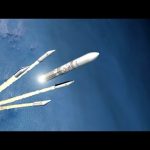
Decided in Luxemburg by the European Space Agency council meeting at Ministerial level, Ariane 6 is a modular three-stage launcher (solid–cryogenic–cryogenic) with two configurations using: four boosters (A64) or two boosters (A62).
The world is changing and is changing fast. Many of today’s traditional #jobs are at risk. With #AI becoming more predominant, how can we ensure that our children and their children can thrive in this future?
Gordon heads to Spain to visit a sustainable sturgeon farm, and experiences first hand how much caviar Can be produced from just one fish. He then whips up a lobster and potato salad with truffle mayonnaise and caviar to top it all off. Indulgent.
Gordon Ramsay Ultimate Fit Food: http://amzn.to/2FznHtk
Subscribe for weekly cooking videos.
If you liked this clip check out the rest of Gordon’s channels:
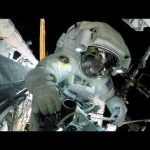
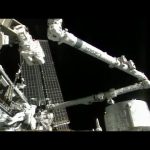
ESA astronaut Thomas Pesquet completed his first spacewalk 13 January 2017 together with NASA astronaut Shane Kimbrough to complete a battery upgrade to the outpost’s power system.
Thomas recorded the spacewalk for the first time with a camera in a space-proof casing that was mounted to a bracket on his chest called the mini work station. This video shows scenes from the spacewalk using this camera.
The spacewalk went as planned and, even better, Shane and Thomas performed a number of extra tasks once they had installed the batteries. They retrieved a failed camera, installed a protective cover on an unused docking port, moved handrails in preparation for future spacewalks and took pictures of external facilities for ground control.
The duo spent five hours and 58 minutes outside the International Space Station.
Thomas is spending six months on the International Space Station as part of his Proxima mission. During Proxima, Thomas will perform around 50 scientific experiments for ESA and France’s space agency CNES as well as take part in many research activities for the other Station partners. The mission is part of ESA’s vision to use Earth-orbiting spacecraft as a place to live and work for the benefit of European society while using the experience to prepare for future voyages of exploration further into the Solar System.
On 10 September 2016, about 2000 Europeans helped to shape the future of space by taking part in a world first: the Citizens’ Debate on Space for Europe. The future of ESA’s space missions were discussed and the different debate sites connected via video conferencing.
On 10 September 2016, about 2000 Europeans helped to shape the future of space by taking part in a world first: the Citizens’ Debate on Space for Europe. The future of ESA’s space missions were discussed and the different debate sites connected via video conferencing.
On 10 September 2016, about 2000 Europeans helped to shape the future of space by taking part in a world first: the Citizens’ Debate on Space for Europe. The future of ESA’s space missions were discussed and the different debate sites connected via video conferencing.
On 10 September 2016, about 2000 Europeans helped to shape the future of space by taking part in a world first: the Citizens’ Debate on Space for Europe. The future of ESA’s space missions were discussed and the different debate sites connected via video conferencing.
On 10 September 2016, about 2000 Europeans helped to shape the future of space by taking part in a world first: the Citizens’ Debate on Space for Europe. The future of ESA’s space missions were discussed and the different debate sites connected via video conferencing.
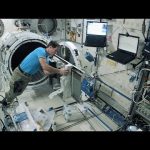
ESA astronaut Thomas Pesquet working in the Kibo laboratory to prepare a CubeSat launch – at 30 times increased speed.
The cylinder in the back is the mini-airlock that allows objects to be sent outside the Space Station. First Thomas and NASA astronaut Shane Kimbrough retrieved the Robotics External Leak Locator and wrapped it up for storage.
Afterwards Thomas installs the platform that the robotic arm grabs. The pointy bit is the connector for the robotic arm.
This video was recorded in December 2016 and was the first step for launching the CubeSats on 16 January 2017. Later Thomas put the satellite launcher on the platform and a third step is to connect the satellites themselves.
Thomas is spending six months on the International Space Station as part of his Proxima mission. During Proxima, Thomas will perform around 50 scientific experiments for ESA and France’s space agency CNES as well as take part in many research activities for the other Station partners. The mission is part of ESA’s vision to use Earth-orbiting spacecraft as a place to live and work for the benefit of European society while using the experience to prepare for future voyages of exploration further into the Solar System.
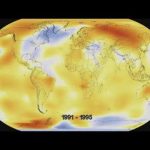
NASA and the National Oceanic and Atmospheric Administration (NOAA) announced on Jan. 18, that global surface temperatures in 2016 were the warmest since modern record keeping began in 1880. The finding was based on results of independent analyses by both agencies. According to analysis by scientists at NASA’s Goddard Institute for Space Studies (GISS) in New York, 2016 is the third year in a row to set a new record for global average surface temperatures, further demonstrating a long-term warming trend. Also, Cygnus Cargo Module Arrives at KSC, Up in 30 Seconds, and Remembering Gene Cernan.
NASA Administrator Charles Bolden shared his thoughts on the life and legacy of Gemini and Apollo astronaut Gene Cernan, who passed away on Jan. 16 at the age of 82.
Cernan flew on three separate space missions. He was the second American to walk in space as the pilot on Gemini IX; ventured to the moon on Apollo 10, the pathfinder for the first lunar landing; and as commander of Apollo 17, Cernan holds the distinction of being the last person to leave his footprints on the surface of the moon.
Phil starts with a balloon powered hover disc, then tries to make a maxed out version big enough to ride. In fact, why not make two and then race them! Phil also tries to use the power of friction to climb the walls and even to fly!
Have you ever done a science experiment and wondered “What would this be like if it were HUGE?” Welcome to Science Max, the exciting new series that turbocharges all the science experiments you’ve done at home.
In season 1, join Phil as he builds rocket cars, uses elastic energy to hurl pumpkins on a giant catapult, builds a bridge out of pasta that can hold a human, find magnets powerful enough to float Phil off the ground, and many more experiments taken to the MAX!
Former NASA astronaut Eugene Cernan, the last man to walk on the moon, died Monday, Jan. 16, following ongoing health issues, according to a statement from his family.
“It is with very deep sadness that we share the loss of our beloved husband and father,” said Cernan’s family. “Our family is heartbroken, of course, and we truly appreciate everyone’s thoughts and prayers. Gene, as he was known by so many, was a loving husband, father, grandfather, brother and friend.”
“Even at the age of 82, Gene was passionate about sharing his desire to see the continued human exploration of space and encouraged our nation’s leaders and young people to not let him remain the last man to walk on the Moon,” the family continued.
Cernan, a Captain in the U.S. Navy, left his mark on the history of exploration by flying three times in space, twice to the moon. He also holds the distinction of being the second American to walk in space and the last human to leave his footprints on the lunar surface.
The following is a statement from NASA Administrator Charles Bolden on the passing of the Gemini and Apollo astronaut:
“Gene Cernan, Apollo astronaut and the last man to walk on the moon, has passed from our sphere, and we mourn his loss. Leaving the moon in 1972, Cernan said, ‘As I take these last steps from the surface for some time into the future to come, I’d just like to record that America’s challenge of today has forged man’s destiny of tomorrow.’ Truly, America has lost a patriot and pioneer who helped shape our country’s bold ambitions to do things that humankind had never before achieved.”
According to the family, details regarding services will be announced in the coming days.
Phil starts with a balloon powered hover disc, then tries to make a maxed out version big enough to ride. In fact, why not make two and then race them! Phil also tries to use the power of friction to climb the walls and even to fly!
Have you ever done a science experiment and wondered “What would this be like if it were HUGE?” Welcome to Science Max, the exciting new series that turbocharges all the science experiments you’ve done at home.
In season 1, join Phil as he builds rocket cars, uses elastic energy to hurl pumpkins on a giant catapult, builds a bridge out of pasta that can hold a human, find magnets powerful enough to float Phil off the ground, and many more experiments taken to the MAX!
Thomas Pesquet from France has been onboard the International space Station since 19 November 2016. He is about to take part in his first Extra-Vehicular Activity (EVA, or spacewalk), performing maintenance outside the Space Station to upgrade its batteries to newer lithium-ion versions. Intensive preparations for this procedure took place in the months leading up to launch, with classroom sessions at NASA’s Johnson Space Centre in conjunction with underwater training in NASA’s Neutral Buoyancy Lab.
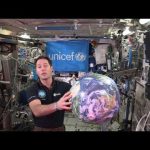
En tant qu’ambassadeur UNICEF, l’astronaute de l’ESA Thomas Pesquet, actuellement à bord de la Station spatiale internationale dans le cadre de l’Expédition 50, souhaite attirer l’attention sur le besoin de protéger et soutenir les jeunes générations, à l’heure où le changement climatique met toujours plus en péril leur avenir.
In his role as an ambassador for UNICEF France, ESA astronaut Thomas Pesquet, who is currently on the International Space Station as part of the Expedition 50 crew, spreads the message about the need to protect and support children in a time when climate change increasingly endangers their lives.
Watch us test and play with the Anki Overdrive car track toy. At the end of the video we present the Family Playlab Play Rating where we give ratings (1-5 and 5 is better) in the following categories:
-Assembly
-Durability
-Price
-Fun score
Overall we think that the Anki Overdrive is a very fun toy to play with.
Anki Overdrive is like a smart robot version of a classic slot car race track, where each car is a robot with smart artificial intelligence.
Disclaimer: Anki did not pay us to make this video. This is a test and review of the Anki Overdrive product, and Anki has had no control of the content of the video.
On Jan. 4, NASA held a press briefing at the agency’s Johnson Space Center in Houston to preview a pair of planned spacewalks to perform a complex upgrade to the International Space Station’s power system. NASA’s Shane Kimbrough and Peggy Whitson will conduct the spacewalk on Jan. 6. The second spacewalk, on Jan. 13, will be performed by Kimbrough and Thomas Pesquet of ESA (European Space Agency). Working on the right side truss of the space station, the crew members will install adapter plates and hook up electrical connections for six new lithium-ion batteries that were delivered to the station in December.
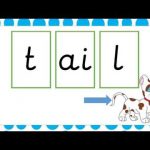
Learn to read CVC words with the ai phoneme reading machine style. The letters a and i make the ai sound like in the word rain.
CVC words featured: rain, pain, nail, mail, sail, tail, chain.
Children learn to read and write using phonics. In phonics we listen to the sounds in the word then break the word into sounds. This is called segmentation. You sound out the word by saying each sound then blend the sounds together to say the word.



![Artificial Intelligence News – Toddler Robots Help Solve How Children Learn☑️[Computer and Math]](https://video.kidibot.ro/wp-content/uploads/2019/12/923/artificial-intelligence-news-toddler-robots-help-solve-how-children-learnefb88fcomputer-and-math-150x150.jpg)