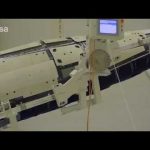
ESA’s Intermediate eXperimental Vehicle, IXV, is tilted and turned along and around all three axes at ESA’s Technical Centre, ESTEC, in the Netherlands to measure its centre of gravity and moments of inertia, because both influence its flying characteristics.
To be launched on Vega in early November 2014, IXV will flight-test the technologies and critical systems for Europe’s future automated reentry vehicles returning from low orbit.
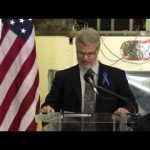
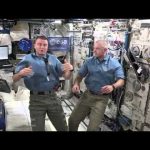
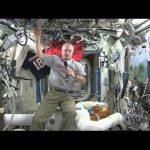
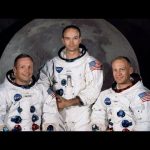
During a ceremony at Kennedy Space Center on Monday, July 21, NASA renamed the center’s Operations and Checkout Building in honor of late astronaut Neil Armstrong, who passed away in 2012. The ceremony included NASA Administrator Charles Bolden, Kennedy Center Director Robert Cabana, Apollo 11’s Michael Collins and Buzz Aldrin and astronaut Jim Lovell, who was the mission’s back-up commander. International Space Station NASA astronauts Steve Swanson, who is the current station commander, and Reid Wiseman, also took part in the ceremony via satellite downlink from their orbiting laboratory 260 miles above Earth.
Kennedy’s Operations and Checkout Building has played a vital role in NASA’s spaceflight history. It was used during the Apollo program to process and test the command, service and lunar modules. Today, the facility is being used to process and assemble NASA’s Orion spacecraft, which the agency will use to send astronauts to an asteroid in the 2020s and Mars in the 2030s.
..there was a spacecraft called Rosetta. Rosetta had been travelling in space for 10 years, towards a comet called 67P/Churyumov-Gerasimenko. Before long, Rosetta was able to see the comet in the distance, and she took stunning pictures as she got closer and closer. There was only a little way to go now…
A live conversation about the future of space exploration with actor, director and narrator Morgan Freeman. He spoke at NASA’s Jet Propulsion Laboratory in Pasadena, California, about his personal vision for space. The event also included NASA astronaut Reid Wiseman and Expedition 40 Commander Steve Swanson participating from the International Space Station.
NASA is celebrating the 45th anniversary of the historic Apollo 11 mission to the moon. On July 20, 1969, Neil Armstrong and Buzz Aldrin, with crewmate Michael Collins manning the command service module from lunar orbit, became the first humans on the moon — with Armstrong’s historic first step onto the lunar surface becoming a symbolic giant leap for humanity. Today, with Apollo 11 as inspiration, NASA is taking the steps needed for America’s next giant leap, to send astronauts to Mars. The path to Mars will use a stepping stone approach consisting of key elements, including human health and technology research aboard the International Space Station; development and evolution of NASA’s Space Launch System rocket and Orion deep space capsule and development of other game-changing technologies to enable tomorrow’s missions. Also, Science instruments for Europa mission?, Cygnus cargo craft arrives at ISS, News conference with next ISS crew, 5th Anniversary of Bolden’s Confirmation, The Search for Life in the Universe.
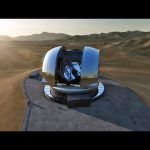
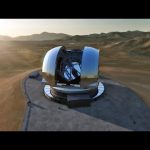
Esta zona remota del desierto de Atacama, en Chile, es famosa porque aquí no hay nada. No hay agua, ni plantas, ni animales. Esto hace que sea un lugar perfecto para un proyecto realmente innovador, el Telescopio Europeo Extremadamente Grande, E-ELT.
O deserto de Atacama, no Chile é famoso por não ter nada – não tem água, nem plantas, nem animais. O que faz dele o local perfeito para acolher projeto verdadeiramente inovador, a construção do E-ELT, o European Extremely LargeTelescope ou o Telescópio Europeu Extremamente Grande.
Das E-ELT ist ein europäisches Projekt, um das weltweit größte optische Infrarot-Teleskop zu bauen. Die bahnbrechende Konstruktion in der Atacamawüste in Chile wird ferne Exoplaneten mit einer nie gekannten Detailschärfe untersuchen.
Dans le désert d’Atacama au Chili, la construction du Télescope géant européen, l’E-ELT est entrée dans sa phase concrète avec la création d’une plate-forme au sommet d’une montagne à 3000 mètres d’altitude. C’est là que cet instrument optique / infrarouge le plus grand au monde sera mis en service au début de la prochaine décennie. Ses performances permettront notamment d’en savoir plus sur les exoplanètes et éventuellement, de faire avancer la vaste quête vers une autre forme de vie.
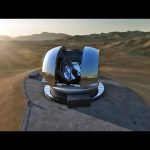
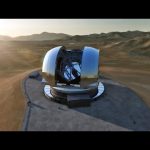
Work is underway to build the E-ELT, a telescope that could one day find signs of life on distant planets. With a 39-metre mirror, it will be the world’s biggest optical and infrared telescope.
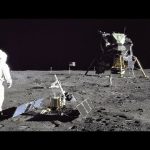
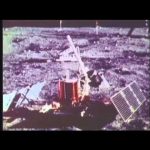
Original Mission Video as aired in July 1969 depicting the Apollo 11 astronauts conducting several tasks during extravehicular activity (EVA) operations on the surface of the moon. The EVA lasted approximately 2.5 hours with all scientific activities being completed satisfactorily. The Apollo 11 (EVA) began at 10:39:33 p.m. EDT on July 20, 1969 when Astronaut Neil Armstrong emerged from the spacecraft first. While descending, he released the Modularized Equipment Stowage Assembly on the Lunar Module’s descent stage. A camera on this module provided live television coverage of man’s first step on the Moon. On this, their one and only EVA, the astronauts had a great deal to do in a short time. During this first visit to the Moon, the astronauts remained within about 100 meters of the lunar module, collected about 47 pounds of samples, and deployed four experiments. After spending approximately 2 hours and 31 minutes on the surface, the astronauts ended the EVA at 1:11:13 a.m. EDT on July 21.
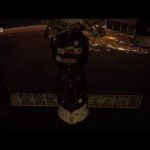
Aboard the International Space Station, Expedition 40 Commander Steve Swanson of NASA discussed life and research on the orbital outpost during an in-flight interview July 17 with KDVR-TV in Denver. Swanson, who is a native of Steamboat Springs, Colorado, arrived on the station in late March, became station commander in May and will remain in orbit until mid-September when he will return to Earth in a Russian Soyuz spacecraft.
The Journeys of Apollo is a previously produced documentary narrated by Actor Peter Cullen that relives the 40th Apollo Anniversary and mission to explore Earths neighbor, the moon.
The story of the first Moon landing in July 1969. Depicts the principal events of the mission, from the launching through the post recovery activities of astronauts Armstrong, Aldrin, and Collins. Through television, motion pictures, and still photography, the program provides an “eyewitness” perspective of the Apollo 11 mission.
Notebooks are a necessity in every science setting. Graphs, observations, procedures… all of science falls by the wayside without a way of recording the information. Here’s a fun fact: two notebooks are even better than one! When you intertwine two notebooks, page by page, they become Inseparable Books! Check out this hands-on activity and see if you can overpower the friction between the books!
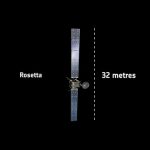
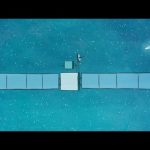
This short animation explains the relative sizes of the Rosetta spacecraft and comet 67P/Churyumov–Gerasimenko.
Rosetta is 32 m from tip to tip of the solar wings. Assuming the comet measures about 4 km across, that’s 125 times the width of Rosetta.
Unlike typical artist’s impressions, this image is scaled to convey the vast difference in size between Rosetta and the comet, even when the spacecraft is in a close 10 km orbit, as depicted here.
Rosetta arrives at the comet at an altitude of 100 km in the first week of August, and will move progressively closer over the following two months, with the intention to orbit at an altitude of just 10 km, depending on the comet’s activity. For Philae’s deployment in November, Rosetta will come to within a few kilometres of the surface.
The comet depicted in this animation is an artist’s impression.
NASA space-based observatories are making unprecedented new discoveries and revealing worlds never before seen. During a televised panel discussion of leading science and engineering experts at NASA Headquarters on Monday, July 14, a scientific and technological roadmap to lead to the discovery of potentially habitable worlds among the stars was addressed. The agency’s next step, the James Webb Space Telescope (Webb telescope), was featured as a new tool that will continue to help scientists rewrite scientific textbooks long after its scheduled launch in 2018.
This month, our nation will mark the 45th anniversary of the Apollo 11 landing on the moon – a remarkable American accomplishment and a “giant leap” for humankind. Today, at NASA, we’re working on the next giant leap – a human mission to Mars, standing on the shoulders of astronauts Neil Armstrong, Buzz Aldrin and Michael Collins.
As I near the end of my fifth year as NASA administrator, I take great pride in the many amazing things our nation’s space program continues to accomplish. From an incredible five Earth science missions heading to space this year, to the first flight test of the Orion spacecraft that will one day carry astronauts to Mars and the continued success of our commercial partners in their missions to the International Space Station (ISS), we’re building on the Apollo program’s legacy to test and fly transformative, cutting-edge technologies today for tomorrow’s missions.
Around this 45th anniversary, we look ahead on our path to Mars and the milestones within our grasp. We’re treading that path with a stepping stone approach that takes the extraordinary work our crews have been doing aboard the Space Station for more than 13 years preparing us to travel farther into our solar system. Technology drives exploration, and we’ll be testing new technologies in the proving ground of deep space on our mission to an asteroid, eventually becoming Earth independent as we reach Mars.
Just this past week we were pleased that one of our private sector partners, Orbital Sciences, once again successfully launched a cargo mission to the ISS from U.S. soil. Along with another commercial partner, SpaceX, they’ve demonstrated with their Cygnus and Dragon spacecraft, respectively, that American industry can help us reach low Earth orbit and create good jobs and value for NASA at the same time. Later this year, we plan to award commercial contracts for transporting our astronauts to space from American soil by 2017, ending our reliance on others to get into space and freeing up scarce resources to focus on our even bolder Mars mission.
Our science missions also continue to turn science fiction into science fact. Today in Washington, we are hosting a public event, “The Search for Life in the Universe,” about our work on one of the most fundamental questions in exploration, “Are we alone?” Top scientists will share insights on how close we are to answering that question, what we know today from NASA missions and what we may find out soon.
In September, MAVEN arrives at Mars to study the planet’s upper atmosphere even as Curiosity and Opportunity continue to rove the surface and help prepare us for human missions to the Red Planet. Next year New Horizons arrives at Pluto and the year after, Juno arrives at Jupiter, even as we prepare our next Great Observatory, the James Webb Space Telescope, for launch in 2018 to peer back at the oldest light in the cosmos.
You can see that today’s astronauts, scientists and engineers continue to be inspired by the Apollo 11 mission. I’m proud and privileged to head a space agency that is accomplishing so much today with the legacy of the Apollo 11 crew and the thousands of ground support personnel who facilitated their success. As the world’s leader in exploration, we have so much to look forward to in the coming years.
Below is a link to a video I recorded about my personal remembrances of the first moon landing. I’m sure every one of you who was old enough also remembers exactly where you were at the time.
In the spirit of this brave crew, we look forward to a new generation of NASA achievements in space.
ESA astronaut Alexander Gerst recorded this timelapse from the International Space Station as it flew over Brazil and the Atlantic Ocean at speeds of 28 800 km/h, 400 km above our planet.
Data from NASA’s Aquarius instrument has helped researchers create worldwide maps of soil moisture, showing how the wetness of the land fluctuates with the seasons and weather phenomena. Soil moisture, the water contained within soil particles, is an important player in Earth’s water cycle. When it launched in June 2011, the primary science objective of the Aquarius mission was to study the salt content of ocean surface waters. But investigators have since developed a method to retrieve soil moisture data from the instrument’s microwave radiometer. Also, SLS Core Preliminary Design Review, JWST update and Dry ice gullies on Mars.
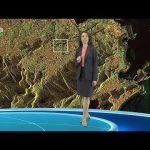
Earth from Space is presented by Kelsea Brennan-Wessels from the ESA Web-TV virtual studios. In the one-hundred-eleventh edition we examine a Sentinel-1 radar image over Rio de Janeiro and the site of this year’s World Cup final.
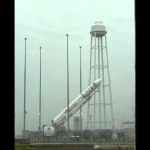
The Orbital Sciences Corporation Antares rocket, with the Cygnus spacecraft onboard, is seen in this time-lapse movie as it is raised at launch Pad-0A, Thursday, July 10, 2014, at NASA’s Wallops Flight Facility in Virginia. The Antares will launch with the Cygnus spacecraft filled with over 3,000 pounds of supplies for the International Space Station, including science experiments, experiment hardware, spare parts, and crew provisions. The Orbital-2 mission is Orbital Sciences’ second contracted cargo delivery flight to the space station for NASA. Photo Credit: (NASA/Bill Ingalls)
After a 10-year journey, Rosetta and Philae are impatient to arrive at their destination!
In July 2014, the public were invited to join the “Rosetta, are we there yet?” campaign, a photo contest to support the last leg of the spacecraft’s epic 10-year voyage to comet 67P/Churyumov–Gerasimenko.
From NASA’s Mission Control in Houston, TX, International Space Station Flight Controller, Brion Au, answered questions from students at the Museum of Flight in Washington who are in the Washington Aerospace Scholars program, during a NASA Digital Learning Network (DLN) interactive broadcast.
NASA DLN broadcasts are connecting students around the country with the live mission operations being done by the International Space Station Flight Control Team. ISS flight controllers, astronauts and scientists answer student’s questions about living and working in space, how the Houston mission control center operates, and a wealth of other topics related to Science, Technology, Engineering, and Mathematics.
Photographic paper has long been a popular warm weather activity for kids and adults, but did you know that you can use fabric, too? With Sun Sensitive Fabric, just lay objects on the UV reactive cloth and expose it to the sun’s rays. After ten minutes, rinse the fabric with water and lock the images in place. You even have multiple colors to choose from! Try making images from red, green, or even yellow fabric. Get out in the sun and enjoy Sun Sensitive Fabric!
After eight years in orbit, ESA’s Venus Express has completed routine science observations and is preparing for a daring plunge into the planet’s hostile atmosphere.
Venus Express was launched on 9 November 2005, and arrived at Venus on 11 April 2006.
It has been orbiting Venus in an elliptical 24-hour loop that takes it from a distant 66 000 km over the south pole — affording incredible global views — to an altitude of around 250 km above the surface at the north pole, close to the top of the planet’s atmosphere.
With a suite of seven instruments, the spacecraft has provided a comprehensive study of the ionosphere, atmosphere and surface of Venus.
This video includes interviews in English with Håkan Svedhem, ESA mission scientist and Patrick Martin, ESA Venus Express mission manager
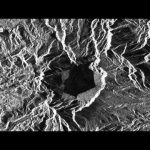
Earth from Space is presented by Kelsea Brennan-Wessels from the ESA Web-TV virtual studios. This week’s image from the Sentinel-1A radar satellite shows part of the Philippine island of Luzon with Mount Pinatubo.
NASA’s Orbiting Carbon Observatory-2 mission is underway. Launched from California’s Vandenberg Air Force Base, OCO-2 will help track our impact on the amount of carbon dioxide in the atmosphere and help us better understand the various human-made and natural sources of CO-2. This is one of five Earth-observing missions scheduled in 2014 — the most Earth-focused missions launched in a single year, in more than a decade. Also, Saucer-shaped vehicle tested, Cygnus Orb-2 launch update, Space Launch System model tests and 10 years exploring Saturn.
In recognition of the 50th anniversary of the Civil Rights Act of 1964, this series of short videos features NASA employees discussing their experiences and recollections related to the Civil Rights Movement, the civil rights progress of the last 50 years and the challenges that still confront us. The Civil Rights Act was signed into law July 2, 1964 by President Lyndon Baines Johnson — the namesake of NASA’s Johnson Space Center.
The dramatic conclusion to ESA’s latest StarTiger project: a ‘dropship’ quadcopter steers itself to lower a rover gently onto a safe patch of the rocky martian surface. StarTiger’s Dropter project was tasked with developing and demonstrating a European precision-landing capability for Mars and other targets.
Starting from scratch for the eight-month project, the Dropter team was challenged to produce vision-based navigation and hazard detection and avoidance for the dropship. It has to identify a safe landing site and height before winching down its passenger rover on a set of cables. Flight testing took place at Airbus Defence and Space’s Trauen test site in northern Germany.
Credit:
Deutsches Forschungszentrum für Künstliche Intelligenz, DFKI
Spin.Works
Poznañ University of Technology/Institute of Control and Information Engineering, IAII
Airbus Defence & Space
NASA’s first spacecraft dedicated to studying carbon dioxide in Earth’s atmosphere was successfully launched from Vandenberg Air Force Base, California. OCO-2 will be collecting a great number of high-resolution measurements, which will provide a greater spatial distribution of CO2 over the entire globe, in short, a bigger, clearer, more complete picture of global CO2. These measurements will be combined with data from the ground-based network to provide scientists with the information that they need to better understand the processes that regulate atmospheric CO2 and its role in the carbon cycle.
You’ve seen Steve use a giant smoke ring launcher made from a modified trash can, but there’s a way you can construct a smaller version at home! Using an empty coffee container and a smoke bomb, you’ll be creating swirling vortexes of smoke in under 10 minutes. In addition to the awesome smoke ring launcher you’ll have, you will also gain a new understanding of the movement of air and vortexes!
Growing up, Monica Bowie dreamed of becoming a lawyer for the Department of Justice. After 23 years of working for NASA, she is delighted that the life she planned for herself was not what actually happened. Ms. Bowie started at NASA as a Clerk Typist and has worked her way up to serving as NASA’s Lead for International Guest Operations. She supports international guests attending Shuttle and Expendable Launch Vehicle events at NASA Centers, serving as the international lead coordinator for 22 Shuttle launches and landings. She established a unique process for supporting NASA’s international guests and became the recognized expert Agency-wide and around the world. Recently, she supported Office of International and Interagency Relations International Program Specialists in developing international agreements.
Ms. Bowie assisted in the negotiation and renewal of the NASA-ESA Spacelab Loan Agreement. She renewed the University of British Columbia Loan Agreement. She assisted with the coordination of the Exchange of Notes between the Government of the United States of America and the Government of Australia. She also coordinates Astronauts post-flight international visits. Ms. Bowie realizes that not everyone at NASA has the opportunity to associate with astronauts. Her work with this special group is priceless and creates memories that she will forever cherish.
Earth from Space is presented by Kelsea Brennan-Wessels from the ESA Web-TV virtual studios. A Ramsar wetland of international importance located in southern Iran is featured in the one-hundred-ninth edition.
In true World Cup spirit ESA astronaut Alexander Gerst and NASA astronauts Reid Wiseman and Steve Swanson play a friendly game of football, celebrating their goals as only they can while living in the International Space Station.
Recorded during their time-off over the weekend the astronaut-footballers enjoyed some weightless football fun.
During Alexander’s six-month Blue Dot mission on the Space Station he will run over 100 experiments that cannot be done anywhere else on Earth – just like these celebrations.
The Civil Rights Act of 1964 was signed into law July 2, 1964 by President Lyndon Baines Johnson, the namesake of NASA¹s Johnson Space Center. NASA employees and retirees from around the Nation join together to share their stories as they remember the past, discuss diversity and look forward to future progress.
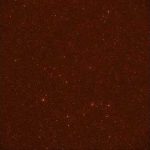
Animation using a sequence of raw NAVCAM frames from 8 May to 22 June. The NAVCAM has a 5-degree field of view and takes 1024 x 1024 12-bit per pixel images.
Just imagine if the solution to an oil spill was this simple: Sprinkle a small amount of a non-toxic powder onto the layer of oil and in seconds the powder bonds to the oil, forming a sponge-like material that can be easily removed from the surface of the water. It’s more than just a dream… a new form of superabsorbent polymer technology is changing the way environmental scientists approach oil spills and waste management problems. The results are amazing!