Tag: 360

  • 5,000 Exoplanets: Listen to the Sounds of Discovery (360 Video)

    5,000 Exoplanets: Listen to the Sounds of Discovery (360 Video)

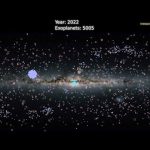
    On March 21, 2022, the number of known exoplanets passed 5,000 according to the NASA Exoplanet Archive. This 360-degree animation and sonification tracks humanity’s discovery of the planets beyond our solar system over time. Turning NASA data into sounds allows users to hear the pace of discovery with additional information conveyed by the notes themselves.

    As each exoplanet is discovered, a circle appears at its position in the sky. The size of the circle indicates the relative size of the planet’s orbit and the color indicates which planet detection method was used to discover it. The music is created by playing a note for each newly discovered world. The pitch of the note indicates the relative orbital period of the planet. Planets that take a longer time to orbit their stars are heard as lower notes, while planets that orbit more quickly are heard as higher notes.

    Exoplanet detection methods: radial velocity (pink); transit (purple); imaging (orange); microlensing (green); timing variations (red); orbital brightness modulation (yellow); astrometry (gray); disk kinematics (blue).

    Please note: Not all browsers support viewing 360 videos. YouTube supports their playback on computers using Chrome, Firefox, MS Edge, and Opera browsers. For the best experience on a mobile device, play this video in the YouTube app.

    Credit: NASA/JPL-Caltech/M. Russo, A. Santaguida (SYSTEM Sounds)
  • Keeping it fluid(ics) | Cosmic Kiss 360°

    Keeping it fluid(ics) | Cosmic Kiss 360°

    Europe’s Columbus laboratory is a hive of activity in this 360° timelapse as ESA astronaut Matthias Maurer works on an experiment called Fluidics and his @NASA colleague Raja Chari carries out activity in the Veggie plant habitat.

    Developed by French space agency @CNES and co-funded by @Airbus, the Fluidics experiment investigates how liquids behave in space. It was first run by ESA astronaut Thomas Pesquet in 2017 during his Proxima mission.

    Made up of six small, transparent spheres housed in the black centrifuge seen here, the experiment studies two phenomena. The first is ‘sloshing’ or how liquids move in enclosed spaces. The second is wave turbulence.

    Understanding the underlying physics of how liquids move in space will help improve the fuel economy of spacecraft and our knowledge of Earth’s oceans. By observing how surface forces behave in reduced gravity and singling out interactions, scientists aim to improve climate models for forecasting sea states and better understand wave formation on Earth.

    Fluidics is just one of many European and international science experiments Matthias is supporting throughout his six-month Cosmic Kiss mission.

    Follow Matthias: https://bit.ly/ESACosmicKiss

    ★ Subscribe: http://bit.ly/ESAsubscribe and click twice on the bell button to receive our notifications.

    Check out our full video catalog: http://bit.ly/SpaceInVideos
    Follow us on Twitter: http://bit.ly/ESAonTwitter
    On Facebook: http://bit.ly/ESAonFacebook
    On Instagram: http://bit.ly/ESAonInstagram
    On LinkedIn: https://bit.ly/ESAonLinkedIn
    On Pinterest: https://bit.ly/ESAonPinterest
    On Flickr: http://bit.ly/ESAonFlickr

    We are Europe’s gateway to space. Our mission is to shape the development of Europe’s space capability and ensure that investment in space continues to deliver benefits to the citizens of Europe and the world. Check out https://www.esa.int/ to get up to speed on everything space related.

    Copyright information about our videos is available here: https://www.esa.int/ESA_Multimedia/Terms_and_Conditions

    #ESA
    #CosmicKiss
    #MatthiasMaurer

  • Columbus, Kibo and a Dragon | Cosmic Kiss 360°

    Columbus, Kibo and a Dragon | Cosmic Kiss 360°

    Join ESA astronaut Matthias Maurer on a 360° fly-through of Europe’s Columbus laboratory, @JAXA | 宇宙航空研究開発機構’s Kibo Module and the Crew Dragon capsule on the International Space Station.

    Matthias has been living and working on the International Space Station for around 100 days, following the launch of Crew-3 from @NASA’s Kennedy Space Center in Florida on 11 November 2021. He will spend approximately six months in orbit for his Cosmic Kiss mission. Much of this time is being spent inside the Columbus lab supporting European and international science.

    Columbus is ESA’s single largest contribution to the International Space Station and was also the first permanent European research facility in space. In this video you can see the different experiment racks in the module as he flies through, including NASA’s Veggie greenhouses omitting a pink light.

    Follow Matthias: https://bit.ly/ESACosmicKiss

    ★ Subscribe: http://bit.ly/ESAsubscribe and click twice on the bell button to receive our notifications.

    Check out our full video catalog: http://bit.ly/SpaceInVideos
    Follow us on Twitter: http://bit.ly/ESAonTwitter
    On Facebook: http://bit.ly/ESAonFacebook
    On Instagram: http://bit.ly/ESAonInstagram
    On LinkedIn: https://bit.ly/ESAonLinkedIn
    On Pinterest: https://bit.ly/ESAonPinterest
    On Flickr: http://bit.ly/ESAonFlickr

    We are Europe’s gateway to space. Our mission is to shape the development of Europe’s space capability and ensure that investment in space continues to deliver benefits to the citizens of Europe and the world. Check out https://www.esa.int/ to get up to speed on everything space related.

    Copyright information about our videos is available here: https://www.esa.int/ESA_Multimedia/Terms_and_Conditions

    #ESA
    #CosmicKiss
    #MatthiasMaurer

  • Space stowage in 360° | Cosmic Kiss

    Space stowage in 360° | Cosmic Kiss

    Tour the Italian-built Permanent Multipurpose Module (PMM) of the International Space Station in 360° with ESA astronaut Matthias Maurer.

    Attached to Node 3, PMM is a large, reusable, pressurised element that was originally used to ferry cargo to and from the Station. It can hold up to 16 racks of equipment, experiments and supplies and has an end-cone with additional storage space for cargo bags, trash and other items.

    The only thing PMM has no room for is a fear of enclosed spaces. Watch as Matthias maneuvers between the boxes and bags in this vital module in orbit.

    Matthias is currently living and working aboard the International Space Station for his first mission, Cosmic Kiss. Find out more about Matthias and his ESA mission on the Cosmic Kiss mission webpage.

    Follow Matthias: https://bit.ly/ESACosmicKiss

    ★ Subscribe: http://bit.ly/ESAsubscribe and click twice on the bell button to receive our notifications.

    Check out our full video catalog: http://bit.ly/SpaceInVideos
    Follow us on Twitter: http://bit.ly/ESAonTwitter
    On Facebook: http://bit.ly/ESAonFacebook
    On Instagram: http://bit.ly/ESAonInstagram
    On LinkedIn: https://bit.ly/ESAonLinkedIn
    On Pinterest: https://bit.ly/ESAonPinterest
    On Flickr: http://bit.ly/ESAonFlickr

    We are Europe’s gateway to space. Our mission is to shape the development of Europe’s space capability and ensure that investment in space continues to deliver benefits to the citizens of Europe and the world. Check out https://www.esa.int/ to get up to speed on everything space related.

    Copyright information about our videos is available here: https://www.esa.int/ESA_Multimedia/Terms_and_Conditions

    #ESA
    #360
    #CosmicKiss

  • Space repairs in 360° | Cosmic Kiss

    Space repairs in 360° | Cosmic Kiss

    Scientist, engineer, test subject and tradesperson – astronauts in orbit wear many different hats. In this 360° timelapse, ESA astronaut Matthias Maurer works to repair a faulty valve behind EXPRESS-Rack 3.

    Water On-Off Valve 8 (WOOV-8), along with WOOV-6 and WOOV-7, determines whether the cooling water of Europe’s Columbus module flows through, or bypasses, the heat exchange system that transfers waste heat to downstream cooling circuits outside the International Space Station. The valve has been a problem child for ground teams and astronauts for the past few years and was first replaced during a complicated operation in 2013.

    It was last replaced by ESA astronaut Thomas Pesquet in October 2021, but continued issues led Matthias to try out a reserve valve to see if an unplanned conversion was possible. The operation was successfully completed on the real WOOV-8 in December 2021, and all involved breathed a sigh of relief.

    Performing maintenance and repair tasks in weightlessness is especially difficult as astronauts have the added challenge of trying to hold themselves in position while turning a screw or securing a hatch. Watch Matthias carefully fold down the rack, set-up lighting and complete the task as you explore his workspace in 360°.

    Matthias was launched to the International Space Station for his Cosmic Kiss mission on 11 November 2021. He will spend approximately six months living and working in orbit, supporting over 35 European and many more international experiments on board.

    Follow Matthias: https://bit.ly/ESACosmicKiss

    ★ Subscribe: http://bit.ly/ESAsubscribe and click twice on the bell button to receive our notifications.

    Check out our full video catalog: http://bit.ly/SpaceInVideos
    Follow us on Twitter: http://bit.ly/ESAonTwitter
    On Facebook: http://bit.ly/ESAonFacebook
    On Instagram: http://bit.ly/ESAonInstagram
    On LinkedIn: https://bit.ly/ESAonLinkedIn
    On Pinterest: https://bit.ly/ESAonPinterest
    On Flickr: http://bit.ly/ESAonFlickr

    We are Europe’s gateway to space. Our mission is to shape the development of Europe’s space capability and ensure that investment in space continues to deliver benefits to the citizens of Europe and the world. Check out https://www.esa.int/ to get up to speed on everything space related.

    Copyright information about our videos is available here: https://www.esa.int/ESA_Multimedia/Terms_and_Conditions

    #ESA
    #360
    #CosmicKiss

  • Hello and goodbye in 360° | Cosmic Kiss

    Hello and goodbye in 360° | Cosmic Kiss

    Spaceflight participants Yusaku Maezawa and Yozo Hirano and Russian cosmonaut Alexander Misurkin were welcomed to the International Space Station on 8 December 2021 for a 12 day stay in space. Experience their arrival and farewell in 360° as captured by ESA astronaut Matthias Maurer from within the Russian segment.

    Also seen in this video are Expedition 66 Commander Anton Shkaplerov, @Roscosmos Mediacosmonaut Pyotr Dubrov and @NASA astronauts Mark Vande Hei, Raja Chari, Tom Marshburn, and Kayla Barron.

    Matthias was launched to the International Space Station for his six-month ESA mission known as Cosmic Kiss on 11 November 2021. During his time on board, he will support around 35 European and many more international experiments in orbit.

    Follow Matthias: https://bit.ly/ESACosmicKiss

    ★ Subscribe: http://bit.ly/ESAsubscribe and click twice on the bell button to receive our notifications.

    Check out our full video catalog: http://bit.ly/SpaceInVideos
    Follow us on Twitter: http://bit.ly/ESAonTwitter
    On Facebook: http://bit.ly/ESAonFacebook
    On Instagram: http://bit.ly/ESAonInstagram
    On LinkedIn: https://bit.ly/ESAonLinkedIn
    On Pinterest: https://bit.ly/ESAonPinterest
    On Flickr: http://bit.ly/ESAonFlickr

    We are Europe’s gateway to space. Our mission is to shape the development of Europe’s space capability and ensure that investment in space continues to deliver benefits to the citizens of Europe and the world. Check out https://www.esa.int/ to get up to speed on everything space related.

    Copyright information about our videos is available here: https://www.esa.int/ESA_Multimedia/Terms_and_Conditions

    #ESA
    #360
    #CosmicKiss

  • Space science in 360° | Cosmic Kiss

    Space science in 360° | Cosmic Kiss

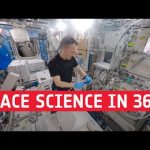
    Immerse yourself in 360° of science with ESA astronaut Matthias Maurer as he prepares an experiment to examine how human cells behave in weightlessness.

    The Cytoskeleton experiment is a biological study that aims to determine the changing function of RhoGTPases when in vitro cell cultures are exposed to weightlessness. It will run in the Biolab facility of Europe’s Columbus laboratory.

    In this video, we see Matthias remove Cytoskeleton cell cultures from the Minus Eighty Lab Freezer ISS (MELFI) and prepare them in the Life Sciences Glovebox (LSG) before installing the experiment in Columbus’s BioLab.

    Matthias was launched to the International Space Station for his current Cosmic Kiss mission on 11 November 2021. In his approximately six months on board, he will support over 35 European experiments and many more international experiments in orbit.

    Follow Matthias: https://bit.ly/ESACosmicKiss

    ★ Subscribe: http://bit.ly/ESAsubscribe and click twice on the bell button to receive our notifications.

    Check out our full video catalog: http://bit.ly/SpaceInVideos
    Follow us on Twitter: http://bit.ly/ESAonTwitter
    On Facebook: http://bit.ly/ESAonFacebook
    On Instagram: http://bit.ly/ESAonInstagram
    On LinkedIn: https://bit.ly/ESAonLinkedIn
    On Pinterest: https://bit.ly/ESAonPinterest
    On Flickr: http://bit.ly/ESAonFlickr

    We are Europe’s gateway to space. Our mission is to shape the development of Europe’s space capability and ensure that investment in space continues to deliver benefits to the citizens of Europe and the world. Check out https://www.esa.int/ to get up to speed on everything space related.

    Copyright information about our videos is available here: https://www.esa.int/ESA_Multimedia/Terms_and_Conditions

    #ESA
    #360
    #CosmicKiss

  • Astrobee robots in 360° | Cosmic Kiss

    Astrobee robots in 360° | Cosmic Kiss

    Join ESA astronaut Matthias Maurer inside Kibo, the Japanese laboratory module of the International Space Station in 360°, setting up Astrobee robotic free-flyers for the ReSWARM experiment. Short for RElative Satellite sWArming and Robotic Maneuvering, this robotics demonstration tests autonomous microgravity motion planning and control for on-orbit assembly and coordinated motion.

    This investigation aims to test coordination between multiple robots, robots and cargo, and robots and their operating environment as developers envision the future of autonomous robot operations in space.

    Matthias was launched to the International Space Station on Crew Dragon Endurance as part of Crew-3 at 02:03 GMT/03:03 CET Thursday 11 November 2021. His ESA mission on board is known as Cosmic Kiss and will see him live and work for approximately six months in orbit.

    Follow Matthias: https://bit.ly/ESACosmicKiss

    ★ Subscribe: http://bit.ly/ESAsubscribe and click twice on the bell button to receive our notifications.

    Check out our full video catalog: http://bit.ly/SpaceInVideos
    Follow us on Twitter: http://bit.ly/ESAonTwitter
    On Facebook: http://bit.ly/ESAonFacebook
    On Instagram: http://bit.ly/ESAonInstagram
    On LinkedIn: https://bit.ly/ESAonLinkedIn
    On Pinterest: https://bit.ly/ESAonPinterest
    On Flickr: http://bit.ly/ESAonFlickr

    We are Europe’s gateway to space. Our mission is to shape the development of Europe’s space capability and ensure that investment in space continues to deliver benefits to the citizens of Europe and the world. Check out https://www.esa.int/ to get up to speed on everything space related.

    Copyright information about our videos is available here: https://www.esa.int/ESA_Multimedia/Terms_and_Conditions

    #ESA
    #360
    #CosmicKiss

  • Orbital Thanksgiving in 360° | Cosmic Kiss

    Orbital Thanksgiving in 360° | Cosmic Kiss

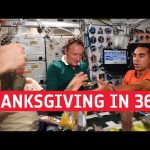
    Feel like a guest and join ESA astronaut Matthias Maurer and his Expedition 66 crew mates enjoying a festive Thanksgiving meal on board the International Space Station in 360°. Explore the space station’s dining area and see what’s on the menu for this year’s orbital Thanksgiving.

    Matthias says: “One of the best things about international collaboration, beyond our daily work on science and operations, is sharing international celebrations and culture. I’m thankful for all my crew mates up here on the International Space Station and everyone supporting our mission from Earth”.

    Matthias was launched to the International Space Station on Crew Dragon Endurance as part of Crew-3 at 02:03 GMT/03:03 CET Thursday 11 November 2021. His ESA mission is known as Cosmic Kiss and will see him live and work in orbit for approximately six months.

    Follow Matthias: https://bit.ly/ESACosmicKiss

    ★ Subscribe: http://bit.ly/ESAsubscribe and click twice on the bell button to receive our notifications.

    Check out our full video catalog: http://bit.ly/SpaceInVideos
    Follow us on Twitter: http://bit.ly/ESAonTwitter
    On Facebook: http://bit.ly/ESAonFacebook
    On Instagram: http://bit.ly/ESAonInstagram
    On LinkedIn: https://bit.ly/ESAonLinkedIn
    On Pinterest: https://bit.ly/ESAonPinterest
    On Flickr: http://bit.ly/ESAonFlickr

    We are Europe’s gateway to space. Our mission is to shape the development of Europe’s space capability and ensure that investment in space continues to deliver benefits to the citizens of Europe and the world. Check out https://www.esa.int/ to get up to speed on everything space related.

    Copyright information about our videos is available here: https://www.esa.int/ESA_Multimedia/Terms_and_Conditions

    #ESA
    #360
    #CosmicKiss

  • Cupola in 360° | Cosmic Kiss

    Cupola in 360° | Cosmic Kiss

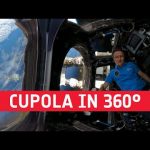
    Join ESA astronaut Matthias Maurer inside the seven-windowed cupola, the International Space Station’s “window to the world” and pan around to enjoy the view.

    The ESA – European Space Agency-built Cupola is the favourite place of many astronauts on the International Space Station.

    It serves not only as a unique photo spot, but also for observing robotic activities of the Canadian Space Agency’s robotic arm Canadarm2, arriving spacecraft and spacewalks.

    Just outside the cupola and behind Matthias is a portion of the Soyuz MS-19 crew ship docked to the Rassvet module and the Prichal docking module attached to the Nauka multipurpose laboratory service module.

    Matthias was launched to the International Space Station on Crew Dragon Endurance as part of Crew-3 at 02:03 GMT/03:03 CET Thursday 11 November. His ESA mission on board is known as Cosmic Kiss and will see him live and work for approximately six months in orbit.

    Follow Matthias: https://bit.ly/ESACosmicKiss

    ★ Subscribe: http://bit.ly/ESAsubscribe and click twice on the bell button to receive our notifications.

    Check out our full video catalog: http://bit.ly/SpaceInVideos
    Follow us on Twitter: http://bit.ly/ESAonTwitter
    On Facebook: http://bit.ly/ESAonFacebook
    On Instagram: http://bit.ly/ESAonInstagram
    On LinkedIn: https://bit.ly/ESAonLinkedIn
    On Pinterest: https://bit.ly/ESAonPinterest
    On Flickr: http://bit.ly/ESAonFlickr

    We are Europe’s gateway to space. Our mission is to shape the development of Europe’s space capability and ensure that investment in space continues to deliver benefits to the citizens of Europe and the world. Check out https://www.esa.int/ to get up to speed on everything space related.

    Copyright information about our videos is available here: https://www.esa.int/ESA_Multimedia/Terms_and_Conditions

    #ESA
    #360
    #CosmicKiss

  • Space vacuuming in 360º | Cosmic Kiss

    Space vacuuming in 360º | Cosmic Kiss

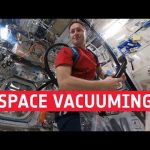
    Even astronauts in orbit cannot escape housework. Join ESA astronaut Matthias Maurer as he vacuums the European Columbus and Japanese Kibo modules of the International Space Station in this 360° video.

    Unlike on Earth, dust on the Space Station does not settle. Astronauts vacuum regularly to prevent floating dust from getting in their eyes and noses, causing irritation and allergic reactions. Pan to explore the different modules and follow Matthias’s work.

    Matthias was launched to the International Space Station on Crew Dragon Endurance as part of Crew-3 at 02:03 GMT/03:03 CET Thursday 11 November. His ESA mission on board is known as Cosmic Kiss and will see him live and work for approximately six months in orbit.

    Follow Matthias: https://bit.ly/ESACosmicKiss

    ★ Subscribe: http://bit.ly/ESAsubscribe and click twice on the bell button to receive our notifications.

    Check out our full video catalog: http://bit.ly/SpaceInVideos
    Follow us on Twitter: http://bit.ly/ESAonTwitter
    On Facebook: http://bit.ly/ESAonFacebook
    On Instagram: http://bit.ly/ESAonInstagram
    On LinkedIn: https://bit.ly/ESAonLinkedIn
    On Pinterest: https://bit.ly/ESAonPinterest
    On Flickr: http://bit.ly/ESAonFlickr

    We are Europe’s gateway to space. Our mission is to shape the development of Europe’s space capability and ensure that investment in space continues to deliver benefits to the citizens of Europe and the world. Check out https://www.esa.int/ to get up to speed on everything space related.

    Copyright information about our videos is available here: https://www.esa.int/ESA_Multimedia/Terms_and_Conditions

    #ESA
    #360
    #CosmicKiss

  • Workout in 360º | Cosmic Kiss

    Workout in 360º | Cosmic Kiss

    Explore the International Space Station’s Cupola module in 360 degrees while ESA astronaut Matthias Maurer lifts weights in weightlessness. This 360 timelapse video was shot over 53 minutes, at a rate one frame every two seconds, as Matthias completed a workout on the Advanced Resistive Exercise Device (ARED).

    Pan to watch the world go by as the Station orbits Earth at around 28 000 km/h, then see how Matthias keeps his muscles and bones healthy for a safe return to Earth.

    Exercise is an important part of an astronaut’s daily routine. It not only keeps them fit and ready for demanding tasks like a spacewalk, but it also helps to combat bone and muscle loss caused by a prolonged stay in orbit. ARED is one of several exercise devices astronauts use on Station. They also have a treadmill called T2 and an exercycle known as CEVIS.

    Matthias was launched to the International Space Station on Crew Dragon Endurance as part of Crew-3 at 02:03 GMT/03:03 CET Thursday 11 November. His ESA mission on board is known as Cosmic Kiss and will see him live and work for approximately six months in orbit.

    Follow Matthias: https://bit.ly/ESACosmicKiss

    ★ Subscribe: http://bit.ly/ESAsubscribe and click twice on the bell button to receive our notifications.

    Check out our full video catalog: http://bit.ly/SpaceInVideos
    Follow us on Twitter: http://bit.ly/ESAonTwitter
    On Facebook: http://bit.ly/ESAonFacebook
    On Instagram: http://bit.ly/ESAonInstagram
    On LinkedIn: https://bit.ly/ESAonLinkedIn
    On Pinterest: https://bit.ly/ESAonPinterest
    On Flickr: http://bit.ly/ESAonFlickr

    We are Europe’s gateway to space. Our mission is to shape the development of Europe’s space capability and ensure that investment in space continues to deliver benefits to the citizens of Europe and the world. Check out https://www.esa.int/ to get up to speed on everything space related.

    Copyright information about our videos is available here: https://www.esa.int/ESA_Multimedia/Terms_and_Conditions

    #ESA
    #360
    #CosmicKiss

  • Floating through the Space Station in 360

    Floating through the Space Station in 360

    ESA astronaut Thomas Pesquet takes you on a brief tour of the International Space Station like no other. Filmed with a 360 camera, he floats from Node-3 to Europe’s Columbus laboratory.
    Immerse yourself in this brief but unique fly through humankind’s orbital outpost.

    Follow Thomas: http://bit.ly/ThomasPesquetBlog

    ★ Subscribe: http://bit.ly/ESAsubscribe and click twice on the bell button to receive our notifications.

    Check out our full video catalog: http://bit.ly/SpaceInVideos
    Follow us on Twitter: http://bit.ly/ESAonTwitter
    On Facebook: http://bit.ly/ESAonFacebook
    On Instagram: http://bit.ly/ESAonInstagram
    On Pinterest: https://bit.ly/ESAonPinterest
    On Flickr: http://bit.ly/ESAonFlickr

    We are Europe’s gateway to space. Our mission is to shape the development of Europe’s space capability and ensure that investment in space continues to deliver benefits to the citizens of Europe and the world. Check out https://www.esa.int/ to get up to speed on everything space related.

    Copyright information about our videos is available here: https://www.esa.int/ESA_Multimedia/Terms_and_Conditions

    #ESA
    #ISSTour
    #MissionAlpha

  • Node 3 | Space Station 360 [in French with English subtitles available]

    Node 3 | Space Station 360 [in French with English subtitles available]

    ESA astronaut Thomas Pesquet takes you on a tour of the International Space Station like no other. Filmed with a 360 camera, the Space Station 360 series lets you explore for yourself alongside Thomas’s explanation – episode six is NASA’s Node-3, also known as Tranquility.

    Node 3 has cylindrical hull 4.5 m in diameter with a shallow conical section enclosing each end. It is almost 7 m long and, together with the Space Station’s observatory Cupola, weighed over 13.5 tonnes at launch. Built in Europe, Node 3 houses the life-support equipment, the toilet and equipment racks.

    Follow Thomas: http://bit.ly/ThomasPesquetBlog

    ★ Subscribe: http://bit.ly/ESAsubscribe and click twice on the bell button to receive our notifications.

    Check out our full video catalog: http://bit.ly/SpaceInVideos
    Follow us on Twitter: http://bit.ly/ESAonTwitter
    On Facebook: http://bit.ly/ESAonFacebook
    On Instagram: http://bit.ly/ESAonInstagram
    On Pinterest: https://bit.ly/ESAonPinterest
    On Flickr: http://bit.ly/ESAonFlickr

    We are Europe’s gateway to space. Our mission is to shape the development of Europe’s space capability and ensure that investment in space continues to deliver benefits to the citizens of Europe and the world. Check out https://www.esa.int/ to get up to speed on everything space related.

    Copyright information about our videos is available here: https://www.esa.int/ESA_Multimedia/Terms_and_Conditions

    #ESA
    #ISSTour
    #MissionAlpha

  • Quest airlock | Space Station 360 [in French with English subtitles available]

    Quest airlock | Space Station 360 [in French with English subtitles available]

    ESA astronaut Thomas Pesquet takes you on a tour of the International Space Station like no other. Filmed with a 360 camera, the Space Station 360 series lets you explore for yourself alongside Thomas’s explanation – episode four is @NASA’s Quest airlock.

    The Quest airlock is the Station’s smallest module, but it is vital for going on spacewalks. This is where the astronauts suit up into their spacesuits, prepare for the spacewalk and enter the airlock to go outside for maintenance, installing new equipment or science experiments.

    Follow Thomas: http://bit.ly/ThomasPesquetBlog

    ★ Subscribe: http://bit.ly/ESAsubscribe and click twice on the bell button to receive our notifications.

    Check out our full video catalog: http://bit.ly/SpaceInVideos
    Follow us on Twitter: http://bit.ly/ESAonTwitter
    On Facebook: http://bit.ly/ESAonFacebook
    On Instagram: http://bit.ly/ESAonInstagram
    On Pinterest: https://bit.ly/ESAonPinterest
    On Flickr: http://bit.ly/ESAonFlickr

    We are Europe’s gateway to space. Our mission is to shape the development of Europe’s space capability and ensure that investment in space continues to deliver benefits to the citizens of Europe and the world. Check out https://www.esa.int/ to get up to speed on everything space related.

    Copyright information about our videos is available here: https://www.esa.int/ESA_Multimedia/Terms_and_Conditions

    #ESA
    #ISSTour
    #MissionAlpha

  • Kibo | Space Station 360 [in French with English subtitles available]

    Kibo | Space Station 360 [in French with English subtitles available]

    ESA astronaut Thomas Pesquet takes you on a tour of the International Space Station like no other. Filmed with a 360 camera, the Space Station 360 series lets you explore for yourself alongside Thomas’s explanation – this is the Kibo module.

    Kibo is the Japanese module, also known as the Japanese Experiment Module or JEM. Thomas takes you through the hardware available for the astronauts and researchers on Earth and the unique airlock and storage space in Kibo.

    The video is part of a series with Thomas showing each module in full 360 surround video.
    Click and drag with your mouse or move your smartphone around to see different angles and feel like you are in space with Thomas.

    Follow Thomas: http://bit.ly/ThomasPesquetBlog

    ★ Subscribe: http://bit.ly/ESAsubscribe and click twice on the bell button to receive our notifications.

    Check out our full video catalog: http://bit.ly/SpaceInVideos
    Follow us on Twitter: http://bit.ly/ESAonTwitter
    On Facebook: http://bit.ly/ESAonFacebook
    On Instagram: http://bit.ly/ESAonInstagram
    On Pinterest: https://bit.ly/ESAonPinterest
    On Flickr: http://bit.ly/ESAonFlickr

    We are Europe’s gateway to space. Our mission is to shape the development of Europe’s space capability and ensure that investment in space continues to deliver benefits to the citizens of Europe and the world. Check out https://www.esa.int/ to get up to speed on everything space related.

    Copyright information about our videos is available here: https://www.esa.int/ESA_Multimedia/Terms_and_Conditions

    #ESA
    #ISSTour
    #MissionAlpha

  • Node 2 | Space Station 360 (in French with English subtitles available)

    Node 2 | Space Station 360 (in French with English subtitles available)

    ESA astronaut Thomas Pesquet takes you on a tour of the International Space Station like no other. Filmed with a 360 camera, the Space Station 360 series lets you explore for yourself alongside Thomas’s explanation – this is the Node 2 module.

    Node 2 is a European-built connecting module also known as Harmony that acts as an internal passageway and utility hub. Its exterior also serves as a work platform for the station’s robotic arm, Canadarm2, and has docking ports for spacecraft.

    In this video, Thomas shows the different modules that Node 2 connects: Europe’s Columbus Laboratory, the US lab Destiny and the Japanese Kibo Laboratory. He also shows workspaces and sleeping cabins where astronauts can have some personal space and sleep with their sleeping bags attached to the wall.

    Click and drag with your mouse or move your smartphone around see different angles and feel like you are in space with Thomas.

    Follow Thomas: http://bit.ly/ThomasPesquetBlog

    ★ Subscribe: http://bit.ly/ESAsubscribe and click twice on the bell button to receive our notifications.

    Check out our full video catalog: http://bit.ly/SpaceInVideos
    Follow us on Twitter: http://bit.ly/ESAonTwitter
    On Facebook: http://bit.ly/ESAonFacebook
    On Instagram: http://bit.ly/ESAonInstagram
    On Pinterest: https://bit.ly/ESAonPinterest
    On Flickr: http://bit.ly/ESAonFlickr

    We are Europe’s gateway to space. Our mission is to shape the development of Europe’s space capability and ensure that investment in space continues to deliver benefits to the citizens of Europe and the world. Check out https://www.esa.int/ to get up to speed on everything space related.

    Copyright information about our videos is available here: https://www.esa.int/ESA_Multimedia/Terms_and_Conditions

    #ESA
    #ISSTour
    #MissionAlpha

  • Columbus module | Space Station 360 (in French with English subtitles available)

    Columbus module | Space Station 360 (in French with English subtitles available)

    ESA astronaut Thomas Pesquet takes you on a tour of the International Space Station like no other. Filmed with a 360 camera, the Space Station 360 series lets you explore for yourself alongside Thomas’s explanation – starting with Europe’s science laboratory, Columbus.

    Columbus is not the Station’s largest module, but it is one of the best equipped. It is the place where European astronauts conduct most of their work on board and has an external platform that allows experiments to be exposed to the vacuum of space. In addition to science racks, Columbus offers storage space and even a new crew quarter for sleeping. Click and drag with your mouse or move your smartphone around see different angles and feel like you too are in space.

    Follow Thomas: http://bit.ly/ThomasPesquetBlog

    ★ Subscribe: http://bit.ly/ESAsubscribe and click twice on the bell button to receive our notifications.

    Check out our full video catalog: http://bit.ly/SpaceInVideos
    Follow us on Twitter: http://bit.ly/ESAonTwitter
    On Facebook: http://bit.ly/ESAonFacebook
    On Instagram: http://bit.ly/ESAonInstagram
    On Flickr: http://bit.ly/ESAonFlickr

    We are Europe’s gateway to space. Our mission is to shape the development of Europe’s space capability and ensure that investment in space continues to deliver benefits to the citizens of Europe and the world. Check out https://www.esa.int/ to get up to speed on everything space related.

    Copyright information about our videos is available here: https://www.esa.int/ESA_Multimedia/Terms_and_Conditions

    #ESA
    #ISSTour
    #MissionAlpha

  • Zoom past Earth with BepiColombo in virtual reality simulation

    Zoom past Earth with BepiColombo in virtual reality simulation

    With a simple Google Cardboard-style virtual reality (VR) viewer, you can experience how it feels to be a spacecraft hurtling past Earth. This 360-degree VR simulation of a flyby manoeuvre performed by ESA’s Mercury-bound BepiColombo spacecraft takes you on a trip past Earth at the distance of only 12 700 km, closer than the orbit of Europe’s navigational satellites Galileo.

    The simulation displays the field of view of two of BepiColombo’s science instruments (MERTIS and PHEBUS) and two of its three MCAM selfie cameras during the gravity-assist flyby at Earth on 10 April 2020.

    The simulation was created using the SPICE software developed by NASA’s Jet Propulsion Laboratory and data generated by the European Space and Astronomy Centre (ESAC)in Spain.

    BepiColombo, a joint mission of ESA and the Japan Aerospace Exploration Agency (JAXA), is on a seven-year cruise to Mercury, the smallest and innermost planet of the Solar System. Launched in October 2018, BepiColombo follows an intricate trajectory that involves nine gravity-assist flyby manoeuvres. In addition to the flyby at Earth, BepiColombo will perform two flybys at Venus and six at Mercury, its target planet. The manoeuvres slow down the spacecraft as it needs to constantly brake against the gravitational pull of the Sun in order to be able to enter the correct orbit around Mercury in 2025, ahead of commencing science operations in early 2026.

    Credit: ESA SPICE Service/RHEA Group.

    ★ Subscribe: http://bit.ly/ESAsubscribe and click twice on the bell button to receive our notifications.

    Check out our full video catalog: http://bit.ly/SpaceInVideos
    Follow us on Twitter: http://bit.ly/ESAonTwitter
    On Facebook: http://bit.ly/ESAonFacebook
    On Instagram: http://bit.ly/ESAonInstagram
    On Flickr: http://bit.ly/ESAonFlickr

    We are Europe’s gateway to space. Our mission is to shape the development of Europe’s space capability and ensure that investment in space continues to deliver benefits to the citizens of Europe and the world. Check out http://www.esa.int/ESA to get up to speed on everything space related.

    Copyright information about our videos is available here: http://www.esa.int/spaceinvideos/Terms_and_Conditions

    #ESA
    #BepiColombo
    #360º

  • 360º Parallax and proper motion on the sky

    360º Parallax and proper motion on the sky

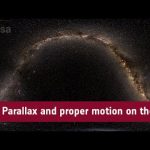
    A 360° animated view of the entire sky on 25 April 2018.

    After a few seconds, the stars start moving in the sky according to parallax, an apparent shift caused by Earth’s yearly motion around the Sun. Then, constellation outlines appear as visual aids. Finally, stars start moving according to their true motion through space, which is visible on the sky as proper motion. Parallaxes have been exaggerated by 100 000 and proper motions have been speeded up by one trillion (10^12) to make them visible in this animation. This animation is based on data from the second data release of ESA’s Gaia satellite, which has measured the positions, parallaxes and motions of more than one billion stars across the sky to unprecedented accuracy.

    ESA/Gaia/DPAC, CC BY SA 3.0 IGO

    Acknowledgement: Gaia Data Processing and Analysis Consortium (DPAC); Gaia Sky; S. Jordan / T. Sagristà, Astronomisches Rechen-Institut, Zentrum für Astronomie der Universität Heidelberg, Germany

    ★ Subscribe: http://bit.ly/ESAsubscribe

    Learn more: http://bit.ly/GaiaRickestStarMap

  • Space Station 360: Kibo

    Space Station 360: Kibo

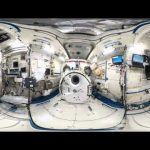
    Explore Japan’s Kibo space laboratory with your mobile phone or VR headset in this panorama.

    This 360° panorama lets you explore the International Space Station’s seventh module, Kibo. It was launched in three parts in 2008 and 2009 aboard Space Shuttles Atlantis and Endeavour.

    The laboratory is renowned for its volume and extra features such as its external robotic arm, an airlock to send experiments outside, and an external facility to expose experiments to space. Nanosats can be launched from Kibo through the airlock, making the Station a base for deploying satellites as well as a weightless research centre for biology, physics and medicine.

    Explore Kibo in YouTube, Flickr or Facebook format with your mobile phone and virtual-reality headset, or take the full tour including all Space Station modules with videos and extra information below. We will release a new Space Station module in 360° every week on Thursday.

    Flickr:
    https://flic.kr/p/FvFV6t

    Facebook:
    https://www.facebook.com/EuropeanSpaceAgency/videos/10153487683065667/

    Full tour:
    http://www.esa.int/Our_Activities/Human_Spaceflight/International_Space_Station/Highlights/International_Space_Station_panoramic_tour

  • Space Station 360: Columbus

    Space Station 360: Columbus

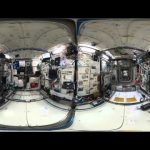
    Explore Europe’s Columbus space laboratory with your mobile phone or VR headset in this panorama.

    This 360° panorama lets you explore the International Space Station’s sixth module, Columbus. It was launched on 7 February 2008 on Space Shuttle Atlantis. The laboratory is ESA’s largest single contribution to the Station, and Europe’s first permanent research facility in space.

    The state-of-the-art facility offers 75 cubic metres of workspace and contains a suite of research equipment. External platforms support experiments and applications in space science, Earth observation and technology.

    Columbus offers European scientists full access to a weightless environment that cannot be duplicated on Earth.

    Explore Columbus in Flickr, Facebook or YouTube format with your mobile phone and virtual-reality headset, or take the full tour including all Space Station modules with videos and extra information below. We will release a new Space Station module in 360° every week on Thursday.

    Flickr:
    https://flic.kr/p/Ga1Een

    Facebook:
    https://www.facebook.com/EuropeanSpaceAgency/videos/10153473864510667/

    Full tour:
    http://www.esa.int/Our_Activities/Human_Spaceflight/International_Space_Station/Highlights/International_Space_Station_panoramic_tour

  • Space Station 360: Harmony (Node 2)

    Space Station 360: Harmony (Node 2)

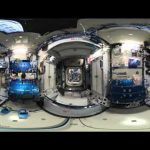
    Explore the International Space Station’s Harmony module in this full panorama with your mobile phone or VR headset.

    This 360° panorama lets you explore the International Space Station’s fifth module, Harmony. It was launched on 23 October 2007 aboard Space Shuttle Discovery to link the Columbus, Kibo and Destiny laboratories.

    Harmony was developed for NASA under an ESA contract with European industry. Its structure is based on that of the Multi-Purpose Logistics Modules and the Europe’s Columbus.

    Explore Harmony in YouTube, Flickr or Facebook format with your mobile phone and virtual-reality headset, or take the full tour including all Space Station modules with videos and extra information below. We will release a new Space Station module in 360° every week on Thursday.

    Flickr:
    https://flic.kr/p/FURQQL

    Facebook:
    https://www.facebook.com/EuropeanSpaceAgency/videos/10153458751575667/

    Full tour:
    http://www.esa.int/Our_Activities/Human_Spaceflight/International_Space_Station/Highlights/International_Space_Station_panoramic_tour

  • Space Station 360: Zarya

    Space Station 360: Zarya

    Explore the Space Station’s first module with your mobile phone or virtual-reality headset

    This 360° video allows you to explore the International Space Station’s first module, Zarya. Launched on 20 November 1998, it was joined three weeks later by the US Unity module. Also known as the Functional Cargo Block, the module is now mainly used for storage.

    ESA astronaut Samantha Cristoforetti took the pictures to form these images in June 2015 at the end of her 199-day Futura mission.

    Explore this module in Flickr, Facebook or Youtube format with your mobile phone or take the full International Space Station tour on the ESA website with videos and extra information.

    Full tour:
    http://www.esa.int/Our_Activities/Human_Spaceflight/International_Space_Station/Highlights/International_Space_Station_panoramic_tour

    Flickr:
    https://flic.kr/p/E9Hynp

    Facebook:
    https://www.facebook.com/EuropeanSpaceAgency/videos/10153373310585667/