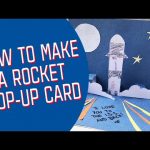
Making a pop-up card is the perfect way to celebrate NASA launching American astronauts to the International Space Station from U.S. soil for the first time since 2011.
All you will need is is some construction paper, scrapbook paper (or cardstock), scissors, drawing supplies, and adhesive. Watch this video to learn more.
How are you preparing to #LaunchAmerica? From building your own rocket to binge-watching launch videos, share a video, a photo or simply your thoughts using #LaunchAmerica for a chance to be featured on our social media platforms.
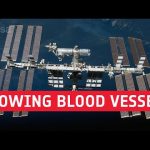
By cultivating human endothelial cells in space, researchers are gaining knowledge about the way our blood vessels function. This could help prevent and treat diseases such as atherosclerosis, hypertension, diabetes and thrombosis here on Earth, while keeping astronauts healthy in space.
In this video, biochemist and molecular biologist Dr Markus Wehland discusses the Spheroids experiment, which ran on the International Space Station during ESA astronaut Tim Peake’s Principia mission in 2016.
Cells cultivated in microgravity during this experiment assembled into globular and tubular structures. These structures were similar to the inner lining of blood vessels inside our bodies, but had never been achieved before by scientists cultivating cells on Earth.
Knowledge about cell growth and structure gained through this study could aid the development of tissue engineering techniques to replace damaged blood vessels in patients. It could also improve the efficiency and safety of drugs that help regulate vessel development.
It is good news for those affected by cardiovascular disease and a great example of the way in which research in microgravity is enhancing life on Earth.
The step to space research is closer than you might think. Get involved with spaceflight research via www.esa.int/spaceflightAO. Find out about our commercial partnerships and opportunities in human and robotic exploration via www.esa.int/explorationpartners to run your research in microgravity as well.
★ Subscribe: http://bit.ly/ESAsubscribe and click twice on the bell button to receive our notifications.
ESA is Europe’s gateway to space. Our mission is to shape the development of Europe’s space capability and ensure that investment in space continues to deliver benefits to the citizens of Europe and the world. Check out http://www.esa.int/ESA to get up to speed on everything space related.
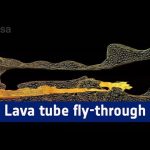
The “Cueva de los Verdes” lava tube in Lanzarote, Spain, is one of the world’s largest volcanic cave complexes with a total length of about 8 km.
Geology experts from ESA’s Pangaea-X campaign mapped most of the lava tube system as part of a project supported by local authorities Cabildo of Lanzarote and the University of Padova, Italy. The data was acquired in November 2017 by Leica Geosystems.
The map comes alive in great detail in 3D, helping institutions to protect the subterranean environment. The map also provides scientific data to study the origins of the tube and its peculiar formations.
Pangaea-X is a test campaign that brings together geology, high-tech survey equipment and space exploration. Learn more about the science and technology behind this campaign visiting http://blogs.esa.int/pangaea
Space debris – a journey to Earth (3D stereoscopic version) takes the audience on a journey from the outer solar system back to our home planet. The objects encountered along the way are manmade. Originally designed to explore the universe, these are now a challenge for modern space flight. An estimated number of 700,000 objects larger than 1 cm and 170 million objects larger than 1mm are expected to reside in Earth orbits.
The video gives a closer look at the different regions used for space flight and explains how mitigation and removal measures could preserve future usage of these orbits.
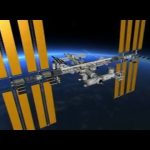
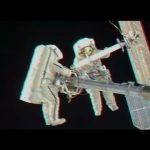
Get an idea of what it feels like to see the International Space Station from the outside, as an astronaut on a spacewalk. Put your 3D glasses on to appreciate the size of humankind’s orbital laboratory and watch a Soyuz spacecraft undock and a docking with ESA’s supply spacecraft Automated Transfer Vehicle.
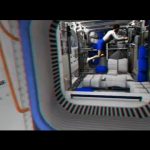
Put your 3D glasses on for this virtual visit of the International Space Station’s modules. Float through the space laboratories and connecting modules from the perspective of an astronaut.
ESA astronaut André Kuipers’ stay on the International Space Station (ISS) started on 23 December 2011 and continues until 1 July 2012. Apart from his demanding tasks as Flight Engineer for Expeditions 30/31, André is providing us with amazing imagery of Earth and of life and work on the ISS. For the first time, digital 3D still photos have been taken of cosmonauts carrying out extravehicular activities in their spacesuits. This short clip collects a selection of 3D images footage taken with the Erasmus Recording Binocular (ERB-2) and some 3D stills from a Fuji W3 camera. Stereoscopic images are a unique tool for providing viewers with a sense of presence in the constrained and dense habitat in which the astronauts live.
Stereoscopic 3D glasses are required to properly enjoy the full 3D effect of this footage.
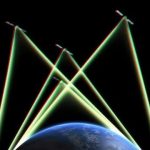
A 3D presentation of the Galileo satellite navigation system, a joint development by the European Union and European Space Agency. This constellation of satellites will allow users to pinpoint their location anywhere on Earth — their launches commencing on 20 October 2011.
Use red/blue 3D glasses to experience the full 3D experience of this clip.