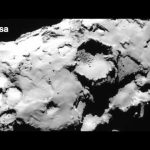
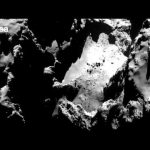
This footage is from 20 January 2014, when ESA’s Rosetta spacecraft awoke from deep space hibernation, more than 800 million kilometres from Earth. After spending 31 months in a power-saving sleep mode to conserve energy while travelling through the cold, outer regions of the Solar System, Rosetta successfully reactivated and sent a signal back to Earth — a simple “Hello, world!” that marked the beginning of one of the most ambitious space missions in history. Rosetta went on to become the first spacecraft to rendezvous with a comet (67P/Churyumov–Gerasimenko), orbit it, and deploy a lander, Philae, to its surface.
Comets are small objects of loosely packed ice and dust. Sometimes oddly shaped, they can tell us much about the formation of our Solar System. Cometary scientist Charlotte Götz discusses comets, their formation and their study in this week’s episode of Meet the Experts.
We are Europe’s gateway to space. Our mission is to shape the development of Europe’s space capability and ensure that investment in space continues to deliver benefits to the citizens of Europe and the world. Check out http://www.esa.int/ESA to get up to speed on everything space related.
Three years after the Rosetta mission officially ended in 2016, scientists met at ESA’s ESTEC facility in The Netherlands to discuss the latest findings at the final Science Working Team (SWT) meeting.
From the launch in 2004, to its arrival at comet 67P in 2014, Rosetta has been an emotional and inspiring mission. Its findings have furthered our understanding of comets and changed our perceptions of how the Solar System formed.
The mission produced an enormous amount of data which will keep many scientists busy for years. The OSIRIS camera, for example, took 100 000 images. These are archived – with the analysis of images recently providing further insight into the comet’s activity.
Rosetta’s legacy of cometary science and data is not just continuing to produce more work, however, it’s also inspiring the next generation of scientists. Some began working on Rosetta as students and are now taking their experience forward onto ESA’s future Comet Interceptor mission.
We are Europe’s gateway to space. Our mission is to shape the development of Europe’s space capability and ensure that investment in space continues to deliver benefits to the citizens of Europe and the world. Check out http://www.esa.int/ESA to get up to speed on everything space related.
This short movie shares an impression of some of the scientific highlights from Rosetta’s mission at Comet 67P/Churyumov–Gerasimenko, as told through the voices of scientists working with Rosetta’s vast dataset, two years after the mission ended.
Rosetta launched in 2004 and travelled for ten years to its destination before deploying the lander Philae to the comet’s surface. Following the comet along its orbit around the Sun, Rosetta studied the comet’s surface changes, its dusty, gassy environment and its interaction with the solar wind. Even though scientific operations concluded in September 2016 with Rosetta’s own descent to the comet’s surface, analysis of the mission’s data will continue for decades.
Credits: This is an ESA Web TV production. The video contains artist impressions of the spacecraft (credit: ESA/ATG medialab) and animations/infographics by ESA. Images of the comet are from Rosetta’s OSIRIS and NAVCAM cameras, as well as Philae’s CIVA camera (credits: ESA/Rosetta/MPS for OSIRIS Team MPS/UPD/LAM/IAA/SSO/INTA/UPM/DASP/IDA – CC BY SA 4.0; ESA/Rosetta/NavCam – CC BY-SA IGO 3.0; ESA/Rosetta/Philae/CIVA). Ground-based images were provided by Colin Snodgrass/Alan Fitzsimmons/Liverpool Telescope. The plasma visualisation is based on modelling and simulation by Technische Universität Braunschweig and Deutsches Zentrum für Luft- und Raumfahrt, and visualised by Zuse-Institut Berlin. The animation of Philae’s flight across the surface is based on data from Philae’s ROMAP, RPC-MAG, OSIRIS, ROLIS, CIVA CONSERT, SESAME and MUPUS instrument teams, the Lander Control Centre at DLR and the Science Operation and Navigation Center at CNES.
ESA is Europe’s gateway to space. Our mission is to shape the development of Europe’s space capability and ensure that investment in space continues to deliver benefits to the citizens of Europe and the world. Check out http://www.esa.int/ESA to get up to speed on everything space related.
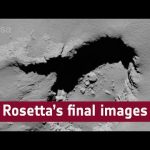
Enjoy this compilation of with the last images taken by Rosetta’s high resolution OSIRIS camera during the mission’s final hours at Comet 67P/Churyumov-Gerasimenko. As it moved closer towards the surface it scanned across an ancient pit and sent back images showing what would become its final resting place.
Credits: Images: ESA/Rosetta/MPS for OSIRIS Team MPS/UPD/LAM/IAA/SSO/INTA/UPM/DASP/IDA – CC BY-SA 4.0
Image compilation: ESA–D. C. Jimeno and M. P. Ayucar
Følg Paxi til randen av solsystemet, oppdag kometenes verden og lær om det fantastiske Rosetta har på kometen 67P/Churyumov-Gerasimenko.
I videoen, som retter seg mot barn mellom 6–12 år, tar Paxi barna med seg for å oppdage kometer og Rosetta – det fantastiske ESA-romfartøyet som flyr langs kometen 67P/Churyumov-Gerasimenko. 12.11.2014 skal det prøve å slippe en lander på denne.
Videoen er den tredje i en serie av animasjoner hvor Paxi, ESAs utdannelsesmaskot, kommer i kontakt med forskjellige sider ved solsystemet, universet, jordens hemmeligheter og mye mer.
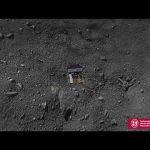
Data from both the Philae lander and Rosetta orbiter experiments, as well as simulation results based on Philae’s mechanical design have been used to reconstruct the lander’s attitude and motion during its descent and touchdowns on Comet 67P/Churyumov-Gerasimenko on 12 November 2014.
The new animation presented today, one year after Philae touched down on the comet, focuses on Philae’s dramatic two-hour flight from Agilkia to Abydos.
Credits: The video was prepared with inputs from the ROMAP, RPC-MAG, OSIRIS, ROLIS, CIVA CONSERT, SESAME and MUPUS instrument teams as well as from the Lander Control Centre at DLR and Science Operation and Navigation Center at CNES.
Rosetta and Philae were ready for their biggest challenge yet: landing on Comet 67P/Churyumov-Gerasimenko. As Rosetta bid her lander farewell and sent him to the comet’s surface, the whole world looked on, anxious to see what would happen next…
The Philae lander may be in hibernation mode on the surface of a comet, but it’s still very much alive in the hearts of the Comet Hunters, the team who helped Rosetta become the most famous space mission since the Moon landings. In this special edition of Euronews Space we have an extended episode of our Comet Hunters series, filmed during and after the comet landing at ESA’s base in Darmstadt and at the DLR’s Philae control room in Köln.
El módulo de aterrizaje Philae puede que esté en modo hibernación allá lejos, en la superficie del cometa, pero aún está muy vivo en los corazones de los Cazadores de cometas. El equipo ha hecho que Rosetta se convierta en una de las misiones espaciales más famosas desde que el hombre llegó a la Luna. En esta edición especial de Space, en Euronews, veremos un largo episodio de nuestra serie Cazadores de cometas, filmado durante y después del aterrizaje de Philae en el cometa desde la base de la Agencia Espacial Europea en Darmstadt y en la sala de control del Centro Aeroespacial Alemán en Colonia.
Mercoledì 12 novembre, il D-Day per Rosetta e Philae: un giorno che i cacciatori di comete non dimenticheranno mai.
Matt Taylor, scienziato del progetto Rosetta, ESA: “Ieri iero rilassato, ora invece c’è questo aumento esponenziale di stress ed eccitazione. Sono al massimo adesso”. “Questa è la mia previsione per oggi, ecco quanto mi sento sicuro”, dice Taylor mostrando un tatuaggio del lander sulla gamba.
Paolo Ferri, direttore della missione Rosetta, ESA: “Sono estremamente stressato, la notte non è trascorsa tranquillamente come speravo. Le attività di preparazione del lander hanno richiesto molto più tempo, abbiamo dovuto rifare delle cose”.
Ma poi la buona notizia è arrivata, Rosetta ha ricevuto un segnale da Philae, e poi, dopo alcune ore di tensione, la missione è compiuta. Matt Taylor, scienziato del progetto Rosetta, ESA: “Siamo atterrati su una cometa!”
Το ρομποτικό σκάφος Philae προσγειώθηκε στον κομήτη 67P γράφοντας μία νέα σελίδα στη διαστημική ιστορία
To euronews είχε εξ αρχής προνομιακή πρόσβαση στο κέντρο ελέγχου των επιχειρήσεων. Η προσεδάφιση του Philae στον κομήτη κέντρισε το ενδιαφέρον όλου του κόσμου. Η 12η Νοεμβρίου είναι μία ημέρα που η επιστημονική ομάδα δεν πρόκειται να ξεχάσει ποτέ. Πάμε να γνωρίσουμε τους πρωταγωνιστές της επιχείρησης Ροζέτα και να ρίξουμε μία παρασκηνιακή ματιά στο κέντρο των επιχειρήσεων στο Ντάρμσταντ της Γερμανίας. «Χθες ήμουν χαλαρός. Τώρα έχω και πάλι άγχος αλλά και μεγάλο ενθουσιασμό. Με το τατουάζ μου που απεικονίζει την προσεδάφιση του Philae κάνω την πρόβλεψή μου. Είμαι σίγουρος ότι όλα θα πάνε καλά», δηλώνει ο Ματ Τέιλορ, επιστήμονας της ESA στην επιχείρηση Ροζέτα. «Είχα απίστευτο άγχος καθώς η νύχτα δεν εξελισσόταν όσο ομαλά ήλπιζα. Οι ενέργειες για την προετοιμασία προσεδάφισης μας πήρανε περισσότερο χρόνο, γιατί έπρεπε να ξανακάνουμε κάποια πράγματα», διηγείται ο διευθυντής του εγχειρήματος Πάολο Φέρι. Τέλος καλό, όλα καλά. Η κούραση και το στρες εξαφανίστηκαν, όταν η Ροζέτα έλαβε το πρώτο σήμα από το ρομποτικό σκάφος Philae. Οι συντελεστές πανηγύρισαν τη μεγάλη επιτυχία τους. Την επόμενη ημέρα τα τηλεοπτικά συνεργεία που πολιόρκησαν το κέντρο επιχειρήσεων άρχισαν να μαζεύουν τον εξοπλισμό τους. Στην αίθουσα ελέγχου του Ευρωπαϊκού Οργανισμού Διαστήματος η επιστημονική ομάδα προσπαθεί να εντοπίσει το Philae πάνω στον κομήτη. Το ρομποτικό σκάφος αναπήδησε δύο φορές και προσγειώθηκε σε μία σκοτεινή ρωγμή. Αυτό δεν το εμπόδισε να στείλει σημαντικές πληροφορίες.
The third of a trio of music videos released by ESA to celebrate the first ever attempted soft landing on a comet by ESA’s Rosetta mission.
Vangelis, the world-renowned musician, has composed this piece of music specially for ESA and inspired by the Rosetta mission. Vangelis’s music is often linked to themes of science, history and exploration, and he is best known for his Academy Award–winning score for the film Chariots of Fire, composing scores for the films Antarctica, Blade Runner, 1492: Conquest of Paradise and Alexander, and the use of his music in the documentary series Cosmos, by Carl Sagan.
Vangelis said: “Mythology, science and space exploration are subjects that have fascinated me since my early childhood. And they were always connected somehow with the music I write.”
Video copyright: ESA/Vangelis
Original music: Vangelis
The first of a trio of music videos released by ESA to celebrate the first ever attempted soft landing on a comet by ESA’s Rosetta mission.
Vangelis, the world-renowned musician, has composed this piece of music specially for ESA and inspired by the Rosetta mission. Vangelis’s music is often linked to themes of science, history and exploration, and he is best known for his Academy Award–winning score for the film Chariots of Fire, composing scores for the films Antarctica, Blade Runner, 1492: Conquest of Paradise and Alexander, and the use of his music in the documentary series Cosmos, by Carl Sagan.
Vangelis said: “Mythology, science and space exploration are subjects that have fascinated me since my early childhood. And they were always connected somehow with the music I write.”
Video copyright: ESA/Vangelis Original music: Vangelis
Nach einer 10-jährigen Reise haben Rosetta und Philae endlich ihr Ziel erreicht. Den Kometen 67P/Churyumov-Gerasimenko. Rosetta verbrachte mehrere Wochen damit, die Oberfläche des Kometen zu studieren und schickte viele Informationen zurück zur Erde. Aber wo würde Philae wohl landen können? Die Wissenschaftler überlegten lang und intensiv. Letztendlich fanden sie die beste Landestelle für Philae. Beide Raumsonden konnten es nicht mehr erwarten. Die ganze Welt würde zusehen, wenn sich Rosetta und Philae für ihre bisher größte Herausfordung bereit machen…
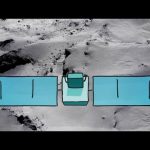
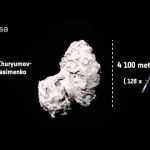
This short animation explains the relative sizes of the Rosetta spacecraft and comet 67P/Churyumov–Gerasimenko. Rosetta is 32 m from tip to tip of the solar wings. The comet measures 4.1 km along its longest length, 128 times the width of Rosetta.
Unlike typical artist’s impressions, this image is scaled to convey the vast difference in size between Rosetta and the comet, even when the spacecraft is in a close 10 km orbit, as depicted here.
Rosetta reached 10 km distance from the comet centre by October 2014.
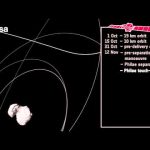
Animation showing Rosetta’s orbit in the lead up to, during and after lander separation.
The animation begins on 1 October 2014, when Rosetta is orbiting about 19 km from Comet 67P/Churyumov–Gerasimenko (all distances refer to the comet’s centre). The animation shows the transition to the close 10 km orbit by mid-October, and then the steps taken to move onto the pre-separation trajectory.
On the day of landing, 12 November, Rosetta makes a further manoeuvre 2–3 hours before separation to move to 22.5 km from the comet centre to deploy the lander, Philae. While Philae descends to the surface over a period of seven hours, Rosetta makes another manoeuvre to maintain visibility with the lander. A series of ‘relay phase’ manoeuvres then move Rosetta out to a distance of about 50 km, before moving first to a 30 km orbit and later to an orbit at about 20 km by early December.
The speed of the animation slows during the separation and lander phase to better highlight these events. The comet shape and rate of rotation is real – the comet rotates with a period of about 12.4 hours.
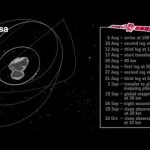
What happens after Rosetta arrives at comet 67P/Churyumov–Gerasimenko? This animation describes the key dates for the next set of manoeuvres that will bring Rosetta even closer to the comet between August and October.
After arriving on 6 August, Rosetta will follow a set of two, three-legged triangular trajectories that require a small thruster burn at each apex. The legs are about 100 km long and it will take Rosetta between three and four days to complete each one.
The first triangle is conducted at a distance of about 100 km from the comet, the second at around 50 km. Then Rosetta will switch to a ‘global mapping phase’ at an altitude of about 30 km. During this period, it will make a ‘night excursion’, whereby the ground track of the spacecraft will be on the night-side of the comet (with the spacecraft still fully illuminated the Sun).
In October Rosetta will transfer to a close mapping phase to observe the comet from a distance of 10 km. The spacecraft will move even closer to dispatch lander Philae to the surface in November.
In this animation the comet is an artist’s impression and is not to scale with the spacecraft. The comet rotation is not representative (67P rotates once per 12.4 hours). Dates may be subject to change.
Extended version of Philae touchdown animation to include visualisations of some of the science experiments on the lander.
The animation begins with the deployment of Philae from Rosetta at comet 67P/Churyumov–Gerasimenko in November 2014. Rosetta will come to within about 10 km of the nucleus to deploy Philae, which will take several hours to reach the surface. Because of the comet’s extremely low gravity, landing gear will absorb the small forces of landing while ice screws in the probe’s feet and a harpoon system will lock the probe to the surface. At the same time a thruster on top of the lander will push it down to counteract the impulse of the harpoon imparted in the opposite direction. Once it is anchored to the comet, the lander will begin its primary science mission, based on its 64-hour initial battery lifetime. The animation then shows five of Philae’s 10 instruments in action: CIVA, ROLIS, SD2, MUPUS and APXS.
Rosetta’s Philae lander is provided by a consortium led by DLR, MPS, CNES and ASI.
Long, long ago men and women on Earth gazed in wonder at comets that appeared in the sky. What where these mysterious objects? Rosetta and Philae learn about the history of comets from their grandfather, Giotto.
We don’t know where you’re going, but we do know that Rosetta is about to arrive at comet 67P/Churyumov-Gerasimenko. Join the adventure and share your ‘are we there yet?’ photos to win great prizes.
After a 10-year journey, Rosetta and Philae are impatient to arrive at their destination!
In July 2014, the public were invited to join the “Rosetta, are we there yet?” campaign, a photo contest to support the last leg of the spacecraft’s epic 10-year voyage to comet 67P/Churyumov–Gerasimenko.
Rosetta is about to put on the brakes to ensure that it is on target for comet 67P/Churyumov-Gerasimenko.
This video explains the crucial orbit correction manoeuvres that are required to slow down Rosetta’s speed, relative to the comet, from 750 metres per second to just one metre per second between 21 May and 5 August. By then, nine thruster burns (including one test burn in early May) will have reduced the distance between them from one million kms to just under 200 kms.
We also see the first images of the comet from the spacecraft’s OSIRIS camera (Optical, Spectroscopic and Infrared Remote Imaging System), taken between 24 March and 4 May 2014. As the spacecraft gets closer to the comet, further images will improve the orbital corrections and provide more details about the comet’s shape, size and rotation.
MIRO, built by an international team for the European Space Agency, will start taking measurements from late May onwards and will measure gases released from the comet as it approaches the Sun.
The exploits of comet-hunting spacecraft Rosetta are generating intense interest as it speeds towards a dramatic climax this autumn.
The craft will catch up with comet 67p/Churyumov–Gerasimenko, fly alongside, and put a lander on its surface. Throughout this fantastic voyage, Euronews will have special access to the engineers and scientists who are making it happen.
On 20th January Rosetta woke up from two and a half years of hibernation. It was a moment of extreme tension for everyone at ESA’s European Space Operations Centre in Darmstadt, Germany. Strained, nervous faces searched for a signal from a probe in deep space.
After some 45 minutes of anxiety the all-important first signal came through. The scientists burst into energetic applause.
Hace unos días, la sonda Rosetta se reactivó tras casi dos años y medio de hibernación. La comunidad científica del mundo entero estaba pendiente de la sala de control en el momento en el que Rosetta, tras reactivarse, enviaba su señal de confirmación.
A ocho cientos millones de kilómetros, en algún lugar del espacio, Rosetta se despertaba.
Este proceso tardó varias horas, a las 18:18 de la tarde, hora central europea, el equipo del Centro de Operaciones de la Agencia Espacial Europea, en Darmstadt, Alemania, estallaba de alegría.
Pár nappal ezelőtt az Európai Űrügynökség sikeresen felébresztette a hibernációból a Rosetta nevű műholdat, amely hamarosan egyedülálló küldetésre indul: leszállóegységet próbál ereszteni egy üstökös felszínére.
2014. január huszadikán a világ szeme az Európai Űrügynökség csapatára szegeződött, amint arra vártak, hogy az űreszköz válaszoljon.
This movie shows a sequence of images taken as ESA’s Rosetta spacecraft flew past the main-belt asteroid (21) Lutetia, during the spacecraft’s 10-year journey towards comet 67P/Churyumov-Gerasimenko.
The flyby took place on 10 July 2010, when Rosetta flew past the asteroid at a distance of 3168.2 km and at a relative speed of 15 km/s. The first image shown in the sequence was taken nine and a half hours before closest approach, from a distance of 500 000 km to Lutetia; the last image was taken six minutes after closest approach, at 6300 km from the asteroid.
The OSIRIS camera on board Rosetta has surveyed the part of Lutetia that was visible during the flyby – about half of its entire surface, mostly coinciding with the asteroid’s northern hemisphere. These unique, close-up images have allowed scientists to study the asteroid’s surface morphology, composition and other properties in unprecedented detail.