Tag: 67P/Churyumov-Gerasimenko

  • Latest from Rosetta

    Latest from Rosetta

    Three years after the Rosetta mission officially ended in 2016, scientists met at ESA’s ESTEC facility in The Netherlands to discuss the latest findings at the final Science Working Team (SWT) meeting.

    From the launch in 2004, to its arrival at comet 67P in 2014, Rosetta has been an emotional and inspiring mission. Its findings have furthered our understanding of comets and changed our perceptions of how the Solar System formed.

    The mission produced an enormous amount of data which will keep many scientists busy for years. The OSIRIS camera, for example, took 100 000 images. These are archived – with the analysis of images recently providing further insight into the comet’s activity.

    Rosetta’s legacy of cometary science and data is not just continuing to produce more work, however, it’s also inspiring the next generation of scientists. Some began working on Rosetta as students and are now taking their experience forward onto ESA’s future Comet Interceptor mission.

    Further insight into the comet’s activity: http://bit.ly/CometCollapsingCliffsAndBouncingBoulders

    ★ Subscribe: http://bit.ly/ESAsubscribe and click twice on the bell button to receive our notifications.

    Check out our full video catalog: http://bit.ly/SpaceInVideos
    Follow us on Twitter: http://bit.ly/ESAonTwitter
    On Facebook: http://bit.ly/ESAonFacebook
    On Instagram: http://bit.ly/ESAonInstagram
    On Flickr: http://bit.ly/ESAonFlickr

    We are Europe’s gateway to space. Our mission is to shape the development of Europe’s space capability and ensure that investment in space continues to deliver benefits to the citizens of Europe and the world. Check out http://www.esa.int/ESA to get up to speed on everything space related.

    Copyright information about our videos is available here: http://www.esa.int/spaceinvideos/Terms_and_Conditions

    #ESA
    #Rosetta
    #SpaceExploration
  • Rosetta’s final images

    Rosetta’s final images

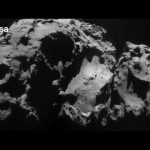
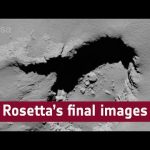
    Enjoy this compilation of with the last images taken by Rosetta’s high resolution OSIRIS camera during the mission’s final hours at Comet 67P/Churyumov-Gerasimenko. As it moved closer towards the surface it scanned across an ancient pit and sent back images showing what would become its final resting place.

    Browse all images via the Archive Image Browser: https://imagearchives.esac.esa.int

    Credits: Images: ESA/Rosetta/MPS for OSIRIS Team MPS/UPD/LAM/IAA/SSO/INTA/UPM/DASP/IDA – CC BY-SA 4.0
    Image compilation: ESA–D. C. Jimeno and M. P. Ayucar

    ★ Subscribe: http://bit.ly/ESAsubscribe

    Learn more: http://bit.ly/RosettaImageArchiveComplete

  • Rosetta’s ever-changing view of a comet

    Rosetta’s ever-changing view of a comet

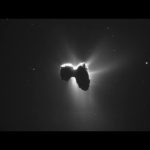
    These 210 images reflect Rosetta’s ever-changing view of Comet 67P/Churyumov–Gerasimenko between July 2014 and September 2016.

    The sequence begins in the month leading up to Rosetta’s arrival on 6 August, when the comet was barely a few pixels in the field of view. Suddenly, the curious shape was revealed and Rosetta raced to image its surface, coming within 10 km, to find a suitable place for Philae to land just three months later.

    Philae’s landing is featured with the ‘farewell’ images taken by both spacecraft of each other shortly after separation, and by Philae as it drew closer to the surface at its first touchdown point. An image taken at the final landing site is also shown.The subsequent images, taken by Rosetta, reflect the varying distance from the comet as well as the comet’s rise and fall in activity as they orbited the Sun.

    Before the comet reached its most active phase in August 2015, Rosetta was able to make some close flybys, including one in which the lighting geometry from the Sun was such that the spacecraft’s shadow could be seen on the surface.

    Then, owing to the increase of dust in the local environment, Rosetta had to maintain a safer distance and carry out scientific observations from afar, but this also gave some impressive views of the comet’s global activity, including jets and outburst events.

    Once the activity began to subside, Rosetta could come closer again and conduct science nearer to the nucleus, including capturing more high-resolution images of the surface, and looking out for changes after this active period.

    Eventually, as the comet returned to the colder outer Solar System, so the available solar power to operate Rosetta fell. The mission concluded with Rosetta making its own dramatic descent to the surface on 30 September 2016, the final images taken reflected in the last images shown in this montage.

    Explore thousands of Rosetta images in our Archive Image Browser: https://imagearchives.esac.esa.int/

    More about Rosetta and its science discoveries: http://www.esa.int/Our_Activities/Space_Science/Rosetta

    Credits: ESA/Rosetta/NavCam – CC BY-SA IGO 3.0; ESA/Rosetta/MPS for OSIRIS Team MPS/UPD/LAM/IAA/SSO/INTA/UPM/DASP/IDA; ESA/Rosetta/Philae/CIVA; ESA/Rosetta/Philae/ROLIS/DLR

  • Rosetta’s complete journey around the comet

    Rosetta’s complete journey around the comet

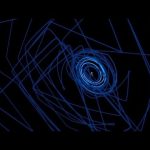
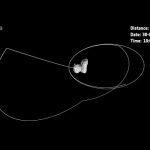
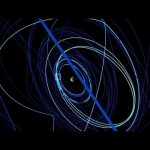
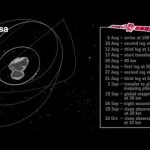
    Animation visualising Rosetta’s trajectory around Comet 67P/Churyumov–Gerasimenko, from arrival to mission end.

    The animation begins on 31 July 2014, during Rosetta’s final approach to the comet after its ten-year journey through space. The spacecraft arrived at a distance of 100 km on 6 August, from where it gradually approached the comet and entered initial mapping orbits that were needed to select a landing site for Philae. These observations also enabled the first comet science of the mission.The manoeuvres in the lead up to, during and after Philae’s release on 12 November are seen, before Rosetta settled into longer-term science orbits.

    In February and March 2015 the spacecraft made several flybys. One of the closest triggered a ‘safe mode’ that forced it to retreat temporarily until it was safe to draw gradually closer again.

    The comet’s increased activity in the lead up to and after perihelion in August 2015 meant that Rosetta remained well beyond 100 km for several months.In June 2015, contact was restored with Philae again – albeit temporary, with no permanent link able to be maintained, despite a series of dedicated trajectories flown by Rosetta for several weeks.

    Following the closest approach to the Sun, Rosetta made a dayside far excursion some 1500 km from the comet, before re-approaching to closer orbits again, enabled by the reduction in the comet’s activity.

    In March–April 2016 Rosetta went on another far excursion, this time on the night side, followed by a close flyby and orbits dedicated to a range of science observations.

    In early August the spacecraft started flying elliptical orbits that brought it progressively closer to the comet. On 24 September Rosetta left its close, flyover orbits and switched into the start of a 16 x 23 km orbit that was used to prepare and line up for the final descent.

    On the evening of 29 September Rosetta manoeuvred onto a collision course with the comet, beginning the final, slow descent from an altitude of 19 km. It collected scientific data throughout the descent and gently struck the surface at 10:39 GMT on 30 September in the Ma’at region on the comet’s ‘head’, concluding the mission.

    The trajectory shown in this animation is created from real data, but the comet rotation is not. Distances are given with respect to the comet centre (except for the zero at the end to indicate completion), but may not necessarily follow the exact comet distance because of natural deviations from the comet’s gravity and outgassing. An arrow indicates the direction to the Sun as the camera viewpoint changes during the animation.

    More about the Rosetta mission:
    http://rosetta.esa.int

  • Rosetta end of mission

    Rosetta end of mission

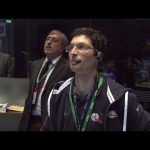
    Inside the main control room at ESA’s operation centre as the Rosetta spacecraft sends its last signal from Comet 67P/Churyumov–Gerasimenko, confirming the end of the spacecraft’s 12.5 year journey in space.

  • Once upon a time… mission complete

    Once upon a time… mission complete

    On the last day of her incredible mission, Rosetta slowly descends to the surface of Comet 67P/Churyumov-Gerasimenko. After having sent her extraordinary data back home, she is ready to join Philae for a well deserved rest on the comet. But is there one last surprise in store?

    This video is available in the following languages:
    English https://www.youtube.com/watch?v=vcYo-qQ5HbA
    German https://www.youtube.com/watch?v=4ngPV02ie4g
    Spanish https://www.youtube.com/watch?v=1PI103Je-cE
    French https://www.youtube.com/watch?v=MwML3kdmbPk
    Italian https://www.youtube.com/watch?v=X_vaJmUt37s

    More about Rosetta:
    http://rosetta.esa.int
    http://blogs.esa.int/rosetta

    Credit: ESA

  • (German) Once upon a time… mission complete

    (German) Once upon a time… mission complete

    On the last day of her incredible mission, Rosetta slowly descends to the surface of Comet 67P/Churyumov-Gerasimenko. After having sent her extraordinary data back home, she is ready to join Philae for a well deserved rest on the comet. But is there one last surprise in store?

    More about Rosetta:
    http://rosetta.esa.int
    http://blogs.esa.int/rosetta

    Credit: ESA

  • (French) Once upon a time… mission complete

    (French) Once upon a time… mission complete

    On the last day of her incredible mission, Rosetta slowly descends to the surface of Comet 67P/Churyumov-Gerasimenko. After having sent her extraordinary data back home, she is ready to join Philae for a well deserved rest on the comet. But is there one last surprise in store?

    More about Rosetta:
    http://rosetta.esa.int
    http://blogs.esa.int/rosetta

    Credit: ESA

  • (Italian) Once upon a time… mission complete

    (Italian) Once upon a time… mission complete

    On the last day of her incredible mission, Rosetta slowly descends to the surface of Comet 67P/Churyumov-Gerasimenko. After having sent her extraordinary data back home, she is ready to join Philae for a well deserved rest on the comet. But is there one last surprise in store?

    More about Rosetta:
    http://rosetta.esa.int
    http://blogs.esa.int/rosetta

    Credit: ESA

  • Once upon a time… Rosetta’s grand finale

    Once upon a time… Rosetta’s grand finale

    Rosetta revisits the exciting scientific discoveries she made during her time at Comet 67P/Churyumov-Gerasimenko, including the successful search to find Philae. Finally, she starts preparing to descend to the comet for the end of her extraordinary mission.

    This video is available in the following languages:
    English https://www.youtube.com/watch?v=lVKFyFbfpOI
    German https://www.youtube.com/watch?v=hoDMZRAyDFs
    Spanish https://www.youtube.com/watch?v=OzAzBHmH8y8
    French https://www.youtube.com/watch?v=EoJ1bE80pK8
    Italian https://www.youtube.com/watch?v=k5fAIKzJRBs

    More about Rosetta:
    http://rosetta.esa.int
    http://blogs.esa.int/rosetta

    Credit: ESA

  • Visualising Rosetta’s descent

    Visualising Rosetta’s descent

    Animation visualising Rosetta’s descent to Comet 67P/Churyumov–Gerasimenko on 30 September 2016. The sequence is speeded up to show the relative motion of Rosetta and the rotating comet below.

    Rosetta will target a smooth region close to several large pits measuring more than 100 m across and 60 m deep, on the small lobe of the comet.

    The impact time is predicted as 11:20 GMT +/- 20 minutes on 30 September.

    More information about Rosetta’s descent towards region of active pits, see
    http://www.esa.int/Our_Activities/Space_Science/Rosetta/Rosetta_s_descent_towards_region_of_active_pits

    For the latest updates, see http://rosetta.esa.int

    Credit: ESA/ATG medialab, Music: Pawel Blaszczak

  • Rosetta’s last orbits around the comet

    Rosetta’s last orbits around the comet

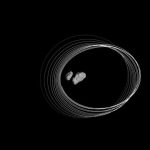
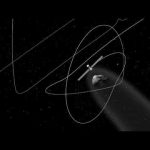
    Animation of Rosetta’s trajectory over the last two months of its mission at Comet 67P/Churyumov–Gerasimenko.

    The animation begins in early August, when the spacecraft started flying elliptical orbits that brought it progressively closer to the comet at its closest approach.

    On 24 September 2016, Rosetta will leave its current close, flyover orbits and transfer into the start of a 16 x 23 km orbit that will be used to prepare and line up for the final descent.

    On the evening of 29 September (20:50 GMT) Rosetta will manoeuvre onto a collision course with the comet, beginning the descent from an altitude of 19 km. The spacecraft will fall freely, without further manoeuvres, collecting scientific data during the descent.

    The trajectory shown here was created from real data provided over the last month, but may not necessarily follow the exact comet distance because of natural deviations from the comet’s gravity and outgassing.

    Find out more about Rosetta at:
    http://blogs.esa.int/rosetta
    and
    http://www.esa.int/rosetta

  • Rosetta’s final path

    Rosetta’s final path

    Animation of Rosetta’s final trajectory in the last 10 days of its mission at Comet 67P/Churyumov–Gerasimenko.

    On 24 September 2016, Rosetta will leave a close flyover orbit and transfer into the start of a 16 x 23 km orbit that will be used to prepare and line up for the final descent. In the evening of 29 September (20:50 GMT) Rosetta will manoeuvre onto a collision course with the comet, beginning the descent from an altitude of 19 km. The spacecraft will fall freely, without further manoeuvres, collecting scientific data during the descent.

    The trajectory shown in this animation is created from real data provided in the last month, but may not necessarily follow the exact distance/time details because of natural deviations in the trajectory associated with the comet’s gravity and outgassing.

    Find out more about Rosetta at:
    http://blogs.esa.int/rosetta
    and
    http://www.esa.int/rosetta

  • Rosetta’s journey around the comet

    Rosetta’s journey around the comet

    Animation visualising Rosetta’s two-year journey around Comet 67P/Churyumov–Gerasimenko.

    The animation begins on 31 July 2014, during Rosetta’s final approach to the comet after its ten-year journey through space. The spacecraft arrived at a distance of 100 km on 6 August whereupon it gradually approached the comet and entered initial mapping orbits that were needed to select a landing site for Philae. These observations also enabled the first comet science of the mission. The manoeuvres in the lead up to, during and after Philae’s deployment on 12 November are seen, before Rosetta settled into longer-term science orbits.

    In February and March 2015 the spacecraft made several flybys. One of the closest flybys triggered a ‘safe mode’ event that forced it to retreat temporarily until it was safe to gradually draw closer again. The comet’s increased activity in the lead up to and after perihelion in August 2015 meant that Rosetta remained well beyond 100 km distances for several months.

    In June 2015, contact was restored with Philae again – albeit temporary, with no permanent link able to be maintained, despite a series of dedicated trajectories flown by Rosetta for several weeks.

    Following perihelion, Rosetta performed a dayside far excursion some 1500 km from the comet, before re-approaching to closer orbits again, enabled by the reduction in the comet’s activity. In March–April 2016 Rosetta went on another far excursion, this time on the night side, followed by a close flyby and orbits dedicated to a range of science observations.

    The animation finishes at 9 August 2016, before the details of the end of mission orbits were known. A visualisation of the trajectories leading to the final descent to the surface of the comet on 30 September will be provided once available.

    The trajectory shown in this animation is created from real data, but the comet rotation is not. An arrow indicates the direction to the Sun as the camera viewpoint changes during the animation.

  • Once upon a time… Rosetta’s second year at the comet

    Once upon a time… Rosetta’s second year at the comet

    Rosetta describes the exciting discoveries she made during her second year at Comet 67P/Churyumov-Gerasimenko, after the comet made its closest approach to the Sun along its orbit. She also tells us about her efforts to contact Philae, and starts counting down to her own mission finale.

    This video is available in the following languages:
    English https://www.youtube.com/watch?v=lxdDx8frN_Y
    Spanish https://www.youtube.com/watch?v=zM-ZJBinuBk
    French https://www.youtube.com/watch?v=bFF1izh10PM
    Italian https://www.youtube.com/watch?v=3aS1pgOU8Gs
    German https://www.youtube.com/watch?v=ne_PvPJZYL4

  • Rosetta update

    Rosetta update

    The Rosetta spacecraft is still orbiting comet 67P/Churyumov-Gerasimenko while it now approaches the Sun. Six months ago Rosetta made history by delivering its Philae lander onto a comet’s surface – something no other space mission has done before.

    This video covers the mission’s highlights so far: from its launch in 2004; its journey across the solar system and waking up after deep space hibernation ten years later, its arrival at the selection of a landing site and Philae’s unexpected multiple landings on the comet. It also reviews what we have learnt about the comet to this point.

    Credit: ESA, with footage by DLR, licenced under CC-BY 3.0 DE

  • Paxi – Rosetta en kometen

    Paxi – Rosetta en kometen

    Volg Paxi tot de rand van onze zonnestelsel om een wereld van kometen te ontdekken, en te leren over de verbazingwekkende Rosetta missie naar de komeet 67P/Churyumov-Gerasimenko.

    In deze video, met als doelgroep kinderen tussen de 6 en 12 jaar oud, neemt Paxi kinderen met hem mee om kometen en Rosetta te ontdekken, de verbazingwekkende ESA ruimtevaartuig die naast komeet 67P/Churyumov-Gerasimenko vliegt en op 12 November 2014 een poging zal doen om een lander te landen.

    Deze video is de derde in een animatie serie waarin Paxi, de mascotte van ESA Education, verschillende aspecten van het zonnestelsel, het universum, de geheimen van planeet aarde, en nog veel meer zal toelichten.

    Credit: ESA; produced by Science Office, illustrations by Kaleidoscope Design, NL

    Wie is Paxi? http://youtu.be/6iWfNh8RcJQ
    Paxi – Het zonnestelsel http://youtu.be/4lSQE8LCDiU
    Paxi – Rosetta en kometen http://youtu.be/6ItAdZNwMEg

    These videos are also available in the following languages:
    English: https://www.youtube.com/playlist?list=PLbyvawxScNbucdsnNdB9p89RmePmGv5cM
    Spanish: https://www.youtube.com/playlist?list=PLbyvawxScNbsiYWkwXlb3WMdm2IFWoMyc
    Italian: https://www.youtube.com/playlist?list=PLbyvawxScNbt11Hfg6Cww2ckfHnvXeOdv
    German: https://www.youtube.com/playlist?list=PLbyvawxScNbvwcIVrGQV4p6g6cp9pH0To
    French: https://www.youtube.com/playlist?list=PLbyvawxScNbsiKIAXeo63bGr1QjYJ4QiL

  • Philae landing: touchdown highlights

    Philae landing: touchdown highlights

    Highlights from coverage of ESA’s Rosetta mission soft-landing its Philae probe on a comet, the first time in history that such an extraordinary feat has been achieved.

    After a tense wait during the seven-hour descent to the surface of Comet 67P/Churyumov–Gerasimenko, the signal confirming the successful touchdown arrived on Earth at 16:03 GMT (17:03 CET).

    More about Rosetta at:
    http://www.esa.int/rosetta

  • Rosetta orbiting around the comet

    Rosetta orbiting around the comet

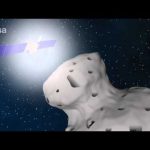
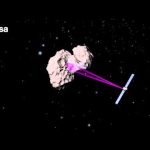
    Rosetta orbiting Comet 67P/Churyumov–Gerasimenko and scanning its surface to make scientific measurements. The colours of the beams and their shape on the surface represent two different instruments imaging and analysing the comet.

    The Rosetta orbiter has a total of 11 instruments to study the characteristics and environment of the comet. Rosetta is taking images of the comet at a variety of different wavelengths, measuring its gravity, mass, density, internal structure, shape and rotation, and assessing the properties of its gaseous, dust-laden atmosphere, or coma. It is also probing the surrounding plasma environment and analysing how it interacts with the solar wind.

    Rosetta also carries a small lander, Philae, which will descend to the surface of the comet and make in situ measurements using its suite of 10 instruments.

    The animation is not to scale; the comet is about 4.1 km wide and Rosetta is 32 m across including its solar wings, and it conducts scientific investigations at a range of altitudes. The comet shape is based on a true comet shape model.

    Credits: ESA

  • Demonstrating Rosetta’s Philae lander on the Space Station

    Demonstrating Rosetta’s Philae lander on the Space Station

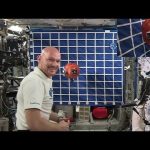
    ESA astronaut Alexander Gerst performs a demonstration of how ESA’s Rosetta mission will attempt to put a lander, called ‘Philae’ on the surface of comet 67P/Churyumov–Gerasimenko.

    Alexander narrates the story of the Rosetta mission and performs a demonstration that visualises the difficulties of landing on an object that has little gravitational pull. Using the weightless environment of the Space Station, Alexander attempts to land ‘Philae’ (an ear plug) onto the surface of the ‘comet’ (an inactive SPHERES robot) with increasing levels of difficulty: a rotating comet that is not moving to one that is both rotating and moving.

    This video is one of the six experiments and demonstrations in the Flying Classroom, Alexander will use small items to demonstrate several principles of physics in microgravity to students aged 10–17 years.

    The Rosetta mission’s lander, Philae, will be deployed on 12 November at 08:35 GMT/09:35 CET from a distance of 22.5 km from the centre of the comet. It will land about seven hours later, with confirmation expected to arrive at Earth at around 16:00 GMT/17:00 CET.

    More about the Rosetta mission: http://rosetta.esa.int
    More about ESA Education: http://www.esa.int/education

    Credit: ESA

  • Rosetta: landing on a comet

    Rosetta: landing on a comet

    Rosetta will release its Philae lander when approximately 22 kilometres from the centre of the comet. A signal confirming the separation will arrive at ground stations on Earth 28 minutes and 20 seconds later while the lander’s descent to the surface will take seven hours. On the way down, Philae will take a series of images and onboard instruments will sample the dust, gas and plasma close to the comet’s surface and measure any magnetic field.

    Philae’s three lander legs will absorb the momentum of impact and use it to drive an ice screw in each foot into the surface. At the same time two harpoons will fire to lock the probe onto the surface and a small thruster on top will counteract the impulse. Once anchored to the nucleus, Philae will begin its primary science mission, based on its initial battery lifetime of 64 hours.

    The SESAME experiment – which contains three instruments – includes one called CASSE, located in the lander’s feet. Harald KRUEGER, Principal Investigator of Rosetta’s SESAME experiment, explains how CASSE will use acoustic waves to determine properties of the comet’s soil.

    Within hours of landing, we also hope to see the first ever images of a comet from its surface.

    More about the Rosetta mission: http://rosetta.esa.int

  • Rosetta’s journey

    Rosetta’s journey

    A summary of Rosetta’s journey – from its launch on 2 March 2004 – to the planned landing on comet 67P/Churyumov-Gerasimenko on 12 November 2014. The journey has included four gravitational assists from Mars and the Earth, flybys with asteroids Steins and Lutetia, and the spacecraft’s temporary hibernation and successful wake up on 20 January 2014.

    In May Rosetta put on the brakes and performed rendezvous manoeuvres for several months. During this period, images from the onboard cameras revealed the comet’s unusual ‘space duck’ shape.

    Rosetta arrived at its destination on 6 August and became the first spacecraft to orbit a comet. The primary landing site was announced in September and Rosetta is now on schedule to release its Philae lander onto the comet’s surface in November.

  • Preparing for #CometLanding

    Preparing for #CometLanding

    After a ten-year journey, Rosetta and Philae had finally reached their destination, Comet 67P/Churyumov–Gerasimenko. Rosetta spent many weeks studying the comet, sending lots of information back to Earth. But where was Philae going to land? Eventually the scientists on Earth found the best place on the comet for Philae to land. Soon it was time to make the final preparations for Philae’s great adventure. Both spacecraft couldn’t wait any longer. The whole world would be watching as Rosetta and Philae prepared for their biggest challenge yet…

    This video is also available in the following languages:
    Italian: http://youtu.be/pNwPY5__SNw
    French: http://youtu.be/KeCse_mA2cs
    German: http://youtu.be/afbfA3HaCxc
    Spanish: http://youtu.be/sEexOXkazWs

    Other videos in the series are available in this playlist:
    https://www.youtube.com/playlist?list=PLbyvawxScNbui_Ncl9uQ_fXLOjS4sNSd8

    Credit: ESA

  • Preparing for #CometLanding (German)

    Preparing for #CometLanding (German)

    Nach einer 10-jährigen Reise haben Rosetta und Philae endlich ihr Ziel erreicht. Den Kometen 67P/Churyumov-Gerasimenko. Rosetta verbrachte mehrere Wochen damit, die Oberfläche des Kometen zu studieren und schickte viele Informationen zurück zur Erde. Aber wo würde Philae wohl landen können? Die Wissenschaftler überlegten lang und intensiv. Letztendlich fanden sie die beste Landestelle für Philae. Beide Raumsonden konnten es nicht mehr erwarten. Die ganze Welt würde zusehen, wenn sich Rosetta und Philae für ihre bisher größte Herausfordung bereit machen…

  • Philae’s descent and science on the surface

    Philae’s descent and science on the surface

    Annotated version of the Philae’s mission at comet 67P animation.

    The animation begins with the deployment of Philae from Rosetta at comet 67P/Churyumov–Gerasimenko in November 2014. It will take several hours for it to reach the surface. Because of the comet’s extremely low gravity, landing gear will absorb the small forces of landing while ice screws in the probe’s feet and a harpoon system will lock the probe to the surface. At the same time a thruster on top of the lander will push it down to counteract the impulse of the harpoon imparted in the opposite direction.

    Once it is anchored to the comet, the lander will begin its primary science mission, based on its 64-hour initial battery lifetime. The animation shows a number of the science instruments in action on the surface.

    Rosetta’s Philae lander is provided by a consortium led by DLR, MPS, CNES and ASI.

    Credits: ESA/ATG medialab

  • ESA Euronews: Tschuri, die himmlische Badeente

    ESA Euronews: Tschuri, die himmlische Badeente

    Die Rosetta-Sonde hat ihren Zielkometen Tschuri erreicht. Damit hat für die Wissenschaftler von der ESA, die Rosetta vor zehn Jahren ins All geschickt haben, ein Wettlauf gegen die Zeit begonnen. Denn nun müssen sie den Kometen kartografieren und Daten sammeln, bevor sie im November den Landeroboter aus Rosetta ausklinken und auf Tschuri landen lassen. Dafür muss nun eine geeignete Landestelle gefunden werden – keine leichte Aufgabe. In der aktuellen Ausgabe von euronews Space zeigen uns die Kometen-Jäger in Darmstadt, wie man um einen Kometen fliegt, wie Rosetta ihr Ziel “sieht” und welche Bedeutung das ganze Projekt für die Wissenschaft und das Team hat.

  • Alexander Gerst talks about Rosetta

    Alexander Gerst talks about Rosetta

    ESA astronaut Alexander Gerst talks with US media about the Rosetta mission, amongst other topics. Alexander is onboard the International Space Station at a member of the Expedition 40 crew and is living and working on the ISS for five and a months for the Bluedot mission. On 6 August, ESA’s comet chaser Rosetta arrived at comet 67P/Churyumov-Gerasimenko after a 10-year journey.

  • How to orbit a comet

    How to orbit a comet

    What happens after Rosetta arrives at comet 67P/Churyumov–Gerasimenko? This animation describes the key dates for the next set of manoeuvres that will bring Rosetta even closer to the comet between August and October.

    After arriving on 6 August, Rosetta will follow a set of two, three-legged triangular trajectories that require a small thruster burn at each apex. The legs are about 100 km long and it will take Rosetta between three and four days to complete each one.

    The first triangle is conducted at a distance of about 100 km from the comet, the second at around 50 km. Then Rosetta will switch to a ‘global mapping phase’ at an altitude of about 30 km. During this period, it will make a ‘night excursion’, whereby the ground track of the spacecraft will be on the night-side of the comet (with the spacecraft still fully illuminated the Sun).

    In October Rosetta will transfer to a close mapping phase to observe the comet from a distance of 10 km. The spacecraft will move even closer to dispatch lander Philae to the surface in November.

    In this animation the comet is an artist’s impression and is not to scale with the spacecraft. The comet rotation is not representative (67P rotates once per 12.4 hours). Dates may be subject to change.

    Credits: ESA

  • How big is Rosetta compared with the comet?

    How big is Rosetta compared with the comet?

    This short animation explains the relative sizes of the Rosetta spacecraft and comet 67P/Churyumov–Gerasimenko.

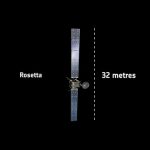
    Rosetta is 32 m from tip to tip of the solar wings. Assuming the comet measures about 4 km across, that’s 125 times the width of Rosetta.

    Unlike typical artist’s impressions, this image is scaled to convey the vast difference in size between Rosetta and the comet, even when the spacecraft is in a close 10 km orbit, as depicted here.

    Rosetta arrives at the comet at an altitude of 100 km in the first week of August, and will move progressively closer over the following two months, with the intention to orbit at an altitude of just 10 km, depending on the comet’s activity. For Philae’s deployment in November, Rosetta will come to within a few kilometres of the surface.

    The comet depicted in this animation is an artist’s impression.

    #Rosettaarewethereyet

    Credits: ESA

  • Are we there yet?

    Are we there yet?

    After a 10-year journey, Rosetta and Philae are impatient to arrive at their destination!

    In July 2014, the public were invited to join the “Rosetta, are we there yet?” campaign, a photo contest to support the last leg of the spacecraft’s epic 10-year voyage to comet 67P/Churyumov–Gerasimenko.

    This video is also available in the following languages:
    German: https://youtu.be/MbsJ04OF4K8
    Spanish: https://youtu.be/caHYr3m-QLc
    French: https://youtu.be/7Xuxy0s6QEY
    Italian: https://youtu.be/z_qN3HdLPzM

    More videos in the series are available in this playlist:
    https://www.youtube.com/playlist?list=PLbyvawxScNbui_Ncl9uQ_fXLOjS4sNSd8

    Credits: ESA/Design & Data

    #Rosettaarewethereyet

  • Rosetta’s orbit around the comet

    Rosetta’s orbit around the comet

    After a ten year journey through space, ESA’s Rosetta spacecraft will reach comet 67P/Churyumov-Gerasimenko in August 2014. After catching up with the comet Rosetta will slightly overtake and enter orbit from the ‘front’ of the comet as both the spacecraft and 67P/CG move along their orbits around the Sun. Rosetta will carry out a complex series of manoeuvres to reduce the separation between the spacecraft and comet from around 100 km to 25-30 km. From this close orbit, detailed mapping will allow scientists to determine the landing site for the mission’s Philae lander. Immediately prior to the deployment of Philae in November, Rosetta will come to within just 2.5 km of the comet’s nucleus.
    This animation is not to scale; Rosetta’s solar arrays span 32 m, and the comet is approximately 4 km wide.

    Credit: ESA — C. Carreau

  • Chasing a comet

    Chasing a comet

    Rosetta’s journey from launch in March 2004 to comet 67P/Churyumov-Gerasimenko in August 2014, including 3 flybys of Earth and 1 of Mars. By January 2014 Rosetta is about 9 million kilometres from comet 67P/CG. By early May, Rosetta will be 2 million kilometres from the comet and at the end of May the spacecraft will execute a major rendezvous manoeuvre to line it up for orbit insertion at the start of August.
    The comet and planets are not to scale.

    Credits: ESA — C. Carreau

  • Rosetta’s view of Lutetia, July 2010

    Rosetta’s view of Lutetia, July 2010

    This movie shows a sequence of images taken as ESA’s Rosetta spacecraft flew past the main-belt asteroid (21) Lutetia, during the spacecraft’s 10-year journey towards comet 67P/Churyumov-Gerasimenko.

    The flyby took place on 10 July 2010, when Rosetta flew past the asteroid at a distance of 3168.2 km and at a relative speed of 15 km/s. The first image shown in the sequence was taken nine and a half hours before closest approach, from a distance of 500 000 km to Lutetia; the last image was taken six minutes after closest approach, at 6300 km from the asteroid.

    The OSIRIS camera on board Rosetta has surveyed the part of Lutetia that was visible during the flyby – about half of its entire surface, mostly coinciding with the asteroid’s northern hemisphere. These unique, close-up images have allowed scientists to study the asteroid’s surface morphology, composition and other properties in unprecedented detail.