Tag: Animations

  • Striking lightning from 36 000 km away

    Striking lightning from 36 000 km away

    Discover the first results from Europe’s first Lightning Imager onboard the Meteosat Third Generation. The Lightning Imager can continuously detect rapid flashes of lighting in Earth’s atmosphere whether day or night from a distance of 36 000 km.

    This is the first time a geostationary weather satellite has the capability to detect lightning across Europe, Africa and the surrounding waters. Each camera can capture up to 1000 images per second and will continuously observe lightning activity from space. The data will give weather forecasters greater confidence in their predictions of severe storms.

    For more information on the Lightning Imager first data, click here: https://www.esa.int/Applications/Observing_the_Earth/Meteorological_missions/meteosat_third_generation

    The full list of animations are available here: https://www.esa.int/ESA_Multimedia/Sets/MTG_Lightning_Imager_animations

    Credits: ESA – European Space Agency

    ★ Subscribe: http://bit.ly/ESAsubscribe and click twice on the bell button to receive our notifications.

    Check out our full video catalog: http://bit.ly/SpaceInVideos
    Follow us on Twitter: http://bit.ly/ESAonTwitter
    On Facebook: http://bit.ly/ESAonFacebook
    On Instagram: http://bit.ly/ESAonInstagram
    On LinkedIn: https://bit.ly/ESAonLinkedIn
    On Pinterest: https://bit.ly/ESAonPinterest
    On Flickr: http://bit.ly/ESAonFlickr

    We are Europe’s gateway to space. Our mission is to shape the development of Europe’s space capability and ensure that investment in space continues to deliver benefits to the citizens of Europe and the world. Check out https://www.esa.int/ to get up to speed on everything space related.

    Copyright information about our videos is available here: https://www.esa.int/ESA_Multimedia/Terms_and_Conditions

    #ESA
    #Lightning
    #Satellite
  • Paxi explores the Moon!

    Paxi explores the Moon!

    Join Paxi on a trip to the Moon!

    In this video, targeted at children aged between 6 and 12 years, Paxi explores what humans need to live on the Moon.

    The adventures of Paxi are also available in the following languages:
    🇨🇿 https://youtu.be/x9MqiQoIzJc
    🇩🇰 https://youtu.be/nhElPPLwW5M
    🇳🇱 https://youtu.be/8popaYvkhb4
    🇫🇮 https://youtu.be/LobWAO6a-Hk
    🇫🇷 https://youtu.be/xzeL-TZz_Qg
    🇩🇪 https://youtu.be/DaAUE1R9pn4
    🇮🇹 https://youtu.be/pdOzAzA6SfQ
    🇳🇴 https://youtu.be/GzRdVAbJaDQ
    🇵🇱 https://youtu.be/DYdAR2F7KTY
    🇵🇹 https://youtu.be/W2Y2RMEacDQ
    🇷🇴 https://youtu.be/2jVsuVZbez8
    🇪🇸 https://youtu.be/xd1a0BHZ2uo
    🇸🇪 https://youtu.be/_rpxtATdMvE

    ★ Subscribe: http://bit.ly/ESAsubscribe and click twice on the bell button to receive our notifications.

    Check out our full video catalog: http://bit.ly/SpaceInVideos
    Follow ESA on Twitter: http://bit.ly/ESAonTwitter
    On Facebook: http://bit.ly/ESAonFacebook
    On Instagram: http://bit.ly/ESAonInstagram
    On Flickr: http://bit.ly/ESAonFlickr

    ESA is Europe’s gateway to space. Our mission is to shape the development of Europe’s space capability and ensure that investment in space continues to deliver benefits to the citizens of Europe and the world. Check out http://www.esa.int/ESA to get up to speed on everything space related.

    Copyright information about our videos is available here: http://www.esa.int/spaceinvideos/Terms_and_Conditions

    #Paxi
    #ESAKids
    #Moon

  • ESA and the Sustainable Development Goals

    ESA and the Sustainable Development Goals

    The European Space Agency demonstrates its commitment to the United Nations Sustainable Development Goals through the activities promoted by its ten directorates. Satellite data and space applications, as well as space technologies, play a major role in addressing issues ranging from health care and education through to climate change and human migration. ESA’s multifaceted technical expertise can provide policy makers, aid organisations and private companies with the necessary tools to support economic growth, social development and environmental protection.

    Credit: ESA -The ScienceOffice.org

  • Juice’s journey to Jupiter

    Juice’s journey to Jupiter

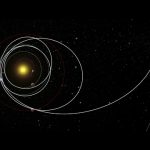
    This animation shows the proposed trajectory of ESA’s Jupiter Icy Moons Explore (Juice) mission to Jupiter.

    Based on a launch in June 2022, the spacecraft will make a series of gravity-assist flybys at Earth (May 2023, September 2024 and November 2026), Venus (October 2023) and Mars (February 2025) before arriving in the Jupiter system in October 2029.

    The animation ends at the Jupiter orbit insertion point, but the planned 3.5 year mission will see Juice not only orbit Jupiter, but also make dedicated flybys of the moons Europa, Callisto and Ganymede, before orbiting the largest moon, Ganymede.

    More about Juice:
    http://sci.esa.int/juice/

  • The amazing adventures of Rosetta and Philae (German)

    The amazing adventures of Rosetta and Philae (German)

    Watch the amazing cartoon adventures of Rosetta and Philae, now back-to-back in one special feature-length production.

    Find out how Rosetta and Philae first got inspired to visit a comet, and follow them on their incredible ten-year journey through the Solar System to their destination, flying around planets and past asteroids along the way. Watch as Philae tries to land on the comet and deals with some unexpected challenges!

    Learn about the fascinating observations that Rosetta made as she watched the comet change before her eyes as they got closer to the Sun and then further away again. Finally, wish Rosetta farewell, as she, too, finishes her amazing adventure on the surface of the comet. Keep watching for one last surprise!

    This video is also available in
    English: https://www.youtube.com/watch?v=HD2zrF3I_II />Italian: https://www.youtube.com/watch?v=mOE1lt-t3JY />French: https://www.youtube.com/watch?v=t2qcopytSbQ />Spanish: https://www.youtube.com/watch?v=jfU09NXRnfI

  • The amazing adventures of Rosetta and Philae (Spanish)

    The amazing adventures of Rosetta and Philae (Spanish)

    Watch the amazing cartoon adventures of Rosetta and Philae, now back-to-back in one special feature-length production.

    Find out how Rosetta and Philae first got inspired to visit a comet, and follow them on their incredible ten-year journey through the Solar System to their destination, flying around planets and past asteroids along the way. Watch as Philae tries to land on the comet and deals with some unexpected challenges!

    Learn about the fascinating observations that Rosetta made as she watched the comet change before her eyes as they got closer to the Sun and then further away again. Finally, wish Rosetta farewell, as she, too, finishes her amazing adventure on the surface of the comet. Keep watching for one last surprise!

  • The amazing adventures of Rosetta and Philae (French)

    The amazing adventures of Rosetta and Philae (French)

    Watch the amazing cartoon adventures of Rosetta and Philae, now back-to-back in one special feature-length production.

    Find out how Rosetta and Philae first got inspired to visit a comet, and follow them on their incredible ten-year journey through the Solar System to their destination, flying around planets and past asteroids along the way. Watch as Philae tries to land on the comet and deals with some unexpected challenges!

    Learn about the fascinating observations that Rosetta made as she watched the comet change before her eyes as they got closer to the Sun and then further away again. Finally, wish Rosetta farewell, as she, too, finishes her amazing adventure on the surface of the comet. Keep watching for one last surprise!

  • The amazing adventures of Rosetta and Philae

    The amazing adventures of Rosetta and Philae

    Watch the amazing cartoon adventures of Rosetta and Philae, now back-to-back in one special feature-length production.

    Find out how Rosetta and Philae first got inspired to visit a comet, and follow them on their incredible ten-year journey through the Solar System to their destination, flying around planets and past asteroids along the way. Watch as Philae tries to land on the comet and deals with some unexpected challenges!

    Learn about the fascinating observations that Rosetta made as she watched the comet change before her eyes as they got closer to the Sun and then further away again. Finally, wish Rosetta farewell, as she, too, finishes her amazing adventure on the surface of the comet. Keep watching for one last surprise!

    This video is also available in
    Italian: https://www.youtube.com/watch?v=mOE1lt-t3JY
    French: https://www.youtube.com/watch?v=t2qcopytSbQ
    Spanish: https://www.youtube.com/watch?v=jfU09NXRnfI
    German: https://www.youtube.com/watch?v=gDmp4ZhSuIc

  • Rosetta’s complete journey around the comet

    Rosetta’s complete journey around the comet

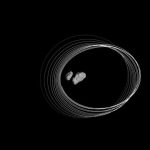
    Animation visualising Rosetta’s trajectory around Comet 67P/Churyumov–Gerasimenko, from arrival to mission end.

    The animation begins on 31 July 2014, during Rosetta’s final approach to the comet after its ten-year journey through space. The spacecraft arrived at a distance of 100 km on 6 August, from where it gradually approached the comet and entered initial mapping orbits that were needed to select a landing site for Philae. These observations also enabled the first comet science of the mission.The manoeuvres in the lead up to, during and after Philae’s release on 12 November are seen, before Rosetta settled into longer-term science orbits.

    In February and March 2015 the spacecraft made several flybys. One of the closest triggered a ‘safe mode’ that forced it to retreat temporarily until it was safe to draw gradually closer again.

    The comet’s increased activity in the lead up to and after perihelion in August 2015 meant that Rosetta remained well beyond 100 km for several months.In June 2015, contact was restored with Philae again – albeit temporary, with no permanent link able to be maintained, despite a series of dedicated trajectories flown by Rosetta for several weeks.

    Following the closest approach to the Sun, Rosetta made a dayside far excursion some 1500 km from the comet, before re-approaching to closer orbits again, enabled by the reduction in the comet’s activity.

    In March–April 2016 Rosetta went on another far excursion, this time on the night side, followed by a close flyby and orbits dedicated to a range of science observations.

    In early August the spacecraft started flying elliptical orbits that brought it progressively closer to the comet. On 24 September Rosetta left its close, flyover orbits and switched into the start of a 16 x 23 km orbit that was used to prepare and line up for the final descent.

    On the evening of 29 September Rosetta manoeuvred onto a collision course with the comet, beginning the final, slow descent from an altitude of 19 km. It collected scientific data throughout the descent and gently struck the surface at 10:39 GMT on 30 September in the Ma’at region on the comet’s ‘head’, concluding the mission.

    The trajectory shown in this animation is created from real data, but the comet rotation is not. Distances are given with respect to the comet centre (except for the zero at the end to indicate completion), but may not necessarily follow the exact comet distance because of natural deviations from the comet’s gravity and outgassing. An arrow indicates the direction to the Sun as the camera viewpoint changes during the animation.

    More about the Rosetta mission:
    http://rosetta.esa.int

  • Schiaparelli’s descent to Mars

    Schiaparelli’s descent to Mars

    Visualisation of the ExoMars Schiaparelli module entering and descending through the martian atmosphere to land on Mars.

    Schiaparelli will enter the atmosphere at about 21 000 km/h and in less than six minutes it will use a heatshield, a parachute and thrusters to slow its descent before touching down in the Meridiani Planum region close to the equator, absorbing the final contact with a crushable structure.

    The entire process will take less than six minutes: the animation has been sped up.

    Schiaparelli is set to separate from the Trace Gas Orbiter on 16 October, after a seven-month cruise together through space, and will enter the atmosphere on 19 October at 14:42 GMT.

    For an overview of the key timings and altitudes corresponding to the events portrayed in this animation see the Schiaparelli descent sequence graphic: http://www.esa.int/spaceinimages/Images/2016/02/ExoMars_2016_Schiaparelli_descent_sequence_16_9

    Both Schiaparelli and the Mars scenery in this animation were computer generated.

    More about ExoMars:
    http://www.esa.int/exomars

    ExoMars FAQ:
    http://www.esa.int/Our_Activities/Space_Science/ExoMars/ExoMars_frequently_asked_questions

  • Rosetta’s last orbits around the comet

    Rosetta’s last orbits around the comet

    Animation of Rosetta’s trajectory over the last two months of its mission at Comet 67P/Churyumov–Gerasimenko.

    The animation begins in early August, when the spacecraft started flying elliptical orbits that brought it progressively closer to the comet at its closest approach.

    On 24 September 2016, Rosetta will leave its current close, flyover orbits and transfer into the start of a 16 x 23 km orbit that will be used to prepare and line up for the final descent.

    On the evening of 29 September (20:50 GMT) Rosetta will manoeuvre onto a collision course with the comet, beginning the descent from an altitude of 19 km. The spacecraft will fall freely, without further manoeuvres, collecting scientific data during the descent.

    The trajectory shown here was created from real data provided over the last month, but may not necessarily follow the exact comet distance because of natural deviations from the comet’s gravity and outgassing.

    Find out more about Rosetta at:
    http://blogs.esa.int/rosetta
    and
    http://www.esa.int/rosetta

  • From the Solar System to the Hyades cluster

    From the Solar System to the Hyades cluster

    A virtual journey, from our Solar System through the Milky Way, based on data from the first release of ESA’s Gaia satellite.

    The journey starts by looking back at the Sun, surrounded by its eight planets. We then move away from the Sun and travel towards and around the Hyades star cluster, the closest open cluster to the Solar System, some 150 light-years away.

    The 3D positions of the stars shown in the animation are drawn from the Tycho-Gaia Astrometric Solution (TGAS), which combines information from Gaia’s first year of observations with the earlier Hipparcos and Tycho-2 Catalogues, both based on data from ESA’s Hipparcos mission.

    This new dataset contains positions on the sky, distances and proper motions of over two million stars. It is twice as precise and contains almost 20 times as many stars as the previous reference for astrometry, the Hipparcos Catalogue.

    The journey continues showing the full extent size of the stars contained in the Tycho-Gaia Astrometric Solution, all relatively near to the Sun, in the overall context of our Milky Way galaxy.

    The final Gaia catalogue will contain the most detailed 3D map ever made of the Galaxy, charting a billion stars – about 1% of the Milky Way’s stellar content – to unprecedented accuracy.

    For more information about Gaia, visit: http://www.esa.int/gaia

    Credit: ESA/Gaia/DPAC; Acknowledgement: S. Jordan & T. Sagristà Sellés (Zentrum für Astronomie der Universität Heidelberg)

  • Once upon a time… Rosetta’s second year at the comet

    Once upon a time… Rosetta’s second year at the comet

    Rosetta describes the exciting discoveries she made during her second year at Comet 67P/Churyumov-Gerasimenko, after the comet made its closest approach to the Sun along its orbit. She also tells us about her efforts to contact Philae, and starts counting down to her own mission finale.

    This video is available in the following languages:
    English https://www.youtube.com/watch?v=lxdDx8frN_Y
    Spanish https://www.youtube.com/watch?v=zM-ZJBinuBk
    French https://www.youtube.com/watch?v=bFF1izh10PM
    Italian https://www.youtube.com/watch?v=3aS1pgOU8Gs
    German https://www.youtube.com/watch?v=ne_PvPJZYL4

  • Inside LISA Pathfinder, with narration

    Inside LISA Pathfinder, with narration

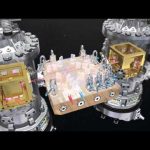
    ESA’s LISA Pathfinder mission is a technology demonstrator that will pave the way for future spaceborne gravitational-wave observatories. It will operate about 1.5 million km from Earth towards the Sun, orbiting the first Sun–Earth ‘Lagrangian point’, L1.

    The animation of the spacecraft build-up begins with two freely falling test masses. Between them lies the central component of LISA Pathfinder’s payload: the 20 x 20 cm optical bench interferometer. A set of 22 mirrors and beam-splitters directs laser beams across the bench. There are two beams: one reflects off the two free-falling test masses while the other is confined to the bench. By comparing the length of the different paths covered by the beams, it is possible to monitor changes accurately in distance and orientation between the two test masses.

    A box surrounds the two masses without touching them, shielding them from outside influence and constantly applying tiny adjustments to its position. This internal payload is housed in a central cylinder, isolating the test masses from the other components of the science payload and spacecraft.

    The solar array provides power to the instrumentation and acts as a thermal shield. Microthrusters control the spacecraft to keep the master test mass centred in its housing, opposing the force of the solar radiation pressure – the main source of ‘noise’ – impinging on the solar array.

    Although LISA Pathfinder is not aimed at the detection of gravitational waves themselves, it will prove the innovative technologies needed to do so. It will demonstrate that the two independent masses can be monitored as they free-fall through space, reducing external and internal disturbances to the point where the relative test mass positions would be more stable than the expected change caused by a passing gravitational wave, equal to much less than the size of an atom.

    Animated sequence without narration: Inside LISA Pathfinder: https://www.youtube.com/watch?v=YyZJ1JC_URc

    More about LISA Pathfinder: http://sci.esa.int/lisa-pathfinder/