Tag: Apollo

  • ASELENIZAREA: o minciună și o farsă? 🌕 Dovezile pe masă!

    ASELENIZAREA: o minciună și o farsă? 🌕 Dovezile pe masă!

    Pe Daniel il gasiti aici: https://www.tiktok.com/@astroabra

    00:00:48 – Scurtă istorie a programului Apollo.
    00:05:48 – De ce nu se văd stelele?
    00:07:06 – De ce flutură steagul?
    00:09:24 – De ce nu se mai întorc oamenii pe Lună?
    00:12:44 – Cum au rezistat în centura de radiații Van Allen?
    00:15:01 – Concluzii despre calatoria pe luna

    #uvt

    ❗Primește răspunsuri direct pe whatsapp ► https://patreon.com/cristianpresura
    ❗Devino membru ► https://tinyurl.com/membruyoutube

    🔸 PAYPAL ► paypal.me/cristianpresura
    🔸 DONORBOX ► https://donorbox.org/cristianpresura

    ❗Alege TU următorul subiect! ► https://tinyurl.com/cristianpresura
    ❗TikTok ► https://www.tiktok.com/@cristian.presura
    ❗Facebook ► https://www.facebook.com/presura
    ❗Facebook page ► https://www.facebook.com/stiintaclub
    ❗Instagram ► https://www.instagram.com/cristianpresura/
    ❗Twitch ► https://www.twitch.tv/cristian_presura
    ❗Discord ► https://www.discord.gg/presura
    ❗Reddit ► https://www.reddit.com/r/presura/

    📙 Carte ► “Fizica Povestita”: https://bit.ly/2YsKaAc
    📙 Carte ► “O calatorie prin Univers”: https://bit.ly/3pdOfGp
    📙 Carte ► “Care e diferența dintre un copil și un laptop?” https://bit.ly/3h4auLZ

    🔊 Spotify Podcast ► https://spoti.fi/3dbvYo6
    🔊 MixCloud Podcas ► https://www.mixcloud.com/StiintaClub/
    ❗Asociația “Știinta pentru toți” ► https://www.presura.ro/

    Seria Fizica Cool #seriacool https://tinyurl.com/2s437srj
    Seria shorts: https://tinyurl.com/yw8b4sab
    Seria carte “Fizica Povestită” #fizicapovestita https://tinyurl.com/966kzam9
    Seria „Dicţionarul de idei şi ideologii (#2i)”: https://tinyurl.com/muryddb5
    Seria “Deschis la cercetare”: https://tinyurl.com/2p9dtb6k
    Fizica pentru începători: https://tinyurl.com/4xbc67c2
    Fizica cuantică: https://tinyurl.com/mr2d7acu
    Fizica nucleara: https://tinyurl.com/3yv3kr5r
    Fizica spațiului: https://tinyurl.com/3kc5jz95
    Călătorie prin Univers: https://tinyurl.com/mv6sxxrb
    Teoria relativității: https://tinyurl.com/2m8umyew
    Fizica simplă: https://tinyurl.com/24j6ekje
    Fizica avansată: https://tinyurl.com/39chd56e
    Fizica mediului inconjurator: https://tinyurl.com/5n86xdzc
    Cum sa ne protejam? https://tinyurl.com/mmyvr3n7
    Fizica 5G: https://tinyurl.com/2p9b3j6r
    Podcast “Întâlnirea cu fizica”: https://tinyurl.com/5n8hsswe
    algoritm:”A fost aselenizarea falsă? Această teorie conspiraționistă continuă să atragă atenția, mai ales pe TikTok, unde circulă povești că totul ar fi fost filmat într-un studio la Hollywood. Conspiraționiștii spun că programul Apollo și NASA ar fi pus în scenă o minciună politică în timpul Războiului Rece, doar pentru a învinge Uniunea Sovietică după triumfurile Sputnik și Gagarin. Întrebările lor ating teme precum lipsa stelelor din fotografii, fluturarea steagului american și radiațiile din centurile Van Allen.

    Pentru a înțelege adevărul, trebuie privită istoria programului spațial. După discursul lui John F. Kennedy, „We choose to go to the moon”, SUA au lansat racheta Saturn V și au construit modulul lunar. Au urmat teste, sacrificii precum Apollo 1 și progrese remarcabile. Misiunea Apollo 11, în iulie 1969, i-a dus pe Neil Armstrong, Buzz Aldrin și Michael Collins pe Lună. Modulul Eagle a aselenizat, iar cuvintele „The Eagle has landed” au devenit legendare.

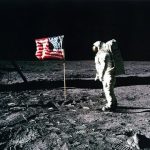
    NASA a explicat clar misterele. Stelele nu apar în fotografii pentru că expunerea scurtă a aparatului favoriza suprafața Lunii și costumele albe, nu lumina slabă a stelelor. Steagul american părea să fluture din cauza unei bare metalice orizontale și a vibrațiilor mecanice produse de astronauți, nu a vântului. În privința radiațiilor, centurile Van Allen au fost traversate rapid, pe traiectorii periferice, iar grosimea aluminiului navei a asigurat protecție. Astronauții au primit doze comparabile cu un CT toracic, mult sub pragul de risc.

    De ce nu s-a mai revenit pe Lună? Costurile uriașe și lipsa motivației politice după câștigarea cursei spațiale au dus la anularea misiunilor Apollo ulterioare. Totuși, interesul renaște odată cu programul Artemis, care pregătește o întoarcere pe Lună și chiar drumul spre Marte.

    Astfel, dovezile arată că aselenizarea nu a fost falsă, ci o reușită istorică a astronauților și a întregului program spațial Apollo.”

    #stiinta #fizica #science #tehnologie #technology #cristianpresura
  • NASA Remembers Apollo Astronaut Jim Lovell

    NASA Remembers Apollo Astronaut Jim Lovell

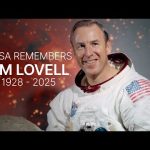
    We are saddened by the passing of Apollo astronaut Jim Lovell at the age of 97.

    Jim Lovell was a veteran of the Gemini VII and Gemini XII missions before becoming command module pilot and navigator for Apollo 8, the first crewed spacecraft to be lifted into near-Earth orbit by the Saturn V launch vehicle. He became the first man to orbit the Moon on two separate missions when he served as the commander of Apollo 13.

    Unfortunately, the mission to explore the Fra Mauro region of the Moon did not go as planned. What many viewed as a “routine” mission soon had millions around the globe glued to television sets watching and hoping for a positive outcome to one of the most intense episodes in the history of space exploration.
    More: https://www.nasa.gov/news-release/acting-nasa-administrator-reflects-on-legacy-of-astronaut-jim-lovell/

    Credit: NASA

  • NASA Remembers Apollo 8 Astronaut Bill Anders

    NASA Remembers Apollo 8 Astronaut Bill Anders

    We mourn the passing of Apollo Astronaut William “Bill” Anders at the age of 90.

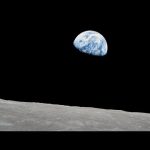
    He was backup pilot for the Gemini XI, Apollo 11 flights, and was lunar module pilot for Apollo 8 — the first lunar orbit mission. On Christmas Eve in 1968, Anders turned his camera toward Earth and captured the legendary Earthrise photo.

    For more information about Anders’ NASA career, and his biography, visit: https://www.nasa.gov/former-astronaut-william-a-anders/

    Credit: NASA

  • Earthrise: A Conversation with Apollo 8 Astronaut Bill Anders (Official NASA Video)

    Earthrise: A Conversation with Apollo 8 Astronaut Bill Anders (Official NASA Video)

    On Dec. 24, 1968, Apollo 8 astronauts Frank Borman, Jim Lovell, and Bill Anders became the first humans to orbit the Moon, and the first to witness the magnificent sight called “Earthrise.”

    NASA’s Chief Scientist and Senior Climate Advisor Dr. Katherine Calvin sat down with Bill Anders to discuss the historic Earthrise photo.

    To learn about how NASA continues to study the Earth, check out: https://nasa.gov/earth

    Avail Link: https://images.nasa.gov/details/Earthrise%20-%20A%20Conversation%20with%20Apollo%208%20Astronaut%20Bill%20Anders%20%28Official%20NASA%20Video%29

    Music: Universal Production
    Video Producers: Shane & Sonnet Apple
    Audio Engineer: Manny Cooper

    Credit: NASA

  • Apollo to Artemis: NASA Returns to the Moon

    Apollo to Artemis: NASA Returns to the Moon

    On Saturday, Nov. 26, at 8:42 a.m EST (13:42 UTC) the Orion spacecraft will break the record for farthest distance traveled by a spacecraft designed to carry humans to deep space and safely return them to Earth. This distance is currently held by the Apollo 13 spacecraft. In this video, Apollo astronauts and flight directors give their insights into the Apollo program, the nation’s reaction then, and how the Artemis program will benefit the nation today. As we go back to the Moon, Artemis will prepare us to travel even deeper into space.

    Learn more: https://www.nasa.gov/specials/artemis-i

    Credits:
    Producer: Amy Leinart & Sami Aziz
    Music: Universal Production Music
    Credit: NASA

  • Apollo 11 Engineer JoAnn Morgan Sends Greeting for Artemis I Moon Mission

    Apollo 11 Engineer JoAnn Morgan Sends Greeting for Artemis I Moon Mission

    JoAnn Morgan, former Apollo 11 engineer, expresses her excitement for Artemis I as launch day gets closer for NASA’s Space Launch System and Orion spacecraft. Morgan was the only woman working in the control room during launch of Apollo 11 to the Moon in 1969. She notes that more women now are leaders and contributors to NASA’s mission.

    #Artemis I will launch no earlier than Aug. 29, 2022, at 8:33 a.m. EDT (12:33 UTC) from Kennedy Space Center’s Launch Complex 39B.

    Watch the NASA TV launch broadcast in 4K: https://youtu.be/CMLD0Lp0JBg

    Editor: Frankie Martin
    Producers: Megan Cruz, Sami Aziz and John Sackman
    Music Courtesy of Gothic Storm Music
    Credit: NASA

  • Apollo 15: “Never Been on a Ride like this Before”

    Apollo 15: “Never Been on a Ride like this Before”

    Our first wheels on the Moon. On the Apollo 15 mission, the Lunar Roving Vehicle allowed the astronauts to cover a much greater distance on the Moon than the previous three flights had accomplished. This year marks the 50th anniversary of the Apollo 15 mission. On July 26, 1971, David R. Scott (Commander), James B. Irwin (Lunar Module Pilot) and Alfred M. Worden (Command Module Pilot) launched from Kennedy Space Center’s Launch Complex 39A.

    Apollo 15 set several new records for crewed spaceflight: heaviest payload in a lunar orbit of approximately 107,000 pounds, maximum radial distance traveled on the lunar surface away from the spacecraft of about 17.5 miles, most lunar surface moonwalks (three) and longest total of duration for lunar surface moonwalk (18 hours, 37 minutes), longest time in lunar orbit (about 145 hours), longest crewed lunar mission (295 hours), longest Apollo mission, the first satellite placed in lunar orbit by a crewed spacecraft, and first deep space and operational spacewalk.

    For more information:
    https://www.nasa.gov/mission_pages/apollo/missions/apollo15.html

    Executive Producer: Sami Aziz
    Video Editor: Chris Chamberland
    Music courtesy of Gothic Storm Music

  • NASA Remembers Apollo Astronaut Michael Collins

    NASA Remembers Apollo Astronaut Michael Collins

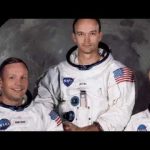
    We are heartbroken to share that astronaut Michael Collins, the command module pilot of the historic Apollo 11 mission to the Moon, has passed away at the age of 90.

    Collins was one of the third group of astronauts named by NASA in October 1963. In 1966, he served as the pilot on the 3-day Gemini 10 mission, during which he set a world altitude record and became the nation’s third spacewalker, completing two extravehicular activities. His second flight was as command module pilot of the historic Apollo 11 mission in July 1969. He remained in lunar orbit while Neil Armstrong and Buzz Aldrin became the first men to walk on the Moon.

  • Apollo 14: ‘A Wild Place Up Here’

    Apollo 14: ‘A Wild Place Up Here’

    Apollo 14 was the eighth crewed Apollo mission and the third to land on the Moon. On January 31, 1971, Apollo 14 launched from Kennedy Space Center with a crew of commander Alan B. Shepard, command module pilot Stuart A. Roosa, and lunar module pilot Edgar D. Mitchell.

    The crew experienced challenges in docking with the lunar module Antares and six attempts were required before a “hard dock” was achieved.

    On February 5, 1971, Antares made the most precise landing to date in the hilly uplands of the Fra Mauro crater.

    Shepard and Mitchell spent a total of 33.5 hours on the Moon and performed two extra-vehicular activities (EVAs, or “moonwalks”), totaling 9 hours and 23 minutes. During the first EVA, they deployed several science experiments. Among these was a reflector that continues to be used to measure the distance from the Earth to the Moon. They also deployed a seismometer, which detected thousands of moonquakes and helped to determine the structure of the Moon’s interior. Other instruments measured the composition of the solar wind and the Moon’s tenuous atmosphere and plasma environment. Shepard and Mitchell collected 95 pounds of lunar rock and soil samples.

    The command module Kitty Hawk splashed down safely on February 9, 1971, exactly nine days and two minutes after launch. The mission duration from liftoff to splashdown was 216 hours, two minutes.

    Download Link: https://images.nasa.gov/details-Apollo%2014%20%E2%80%98A%20Wild%20Place%20Up%20Here%E2%80%99

    Video Credits:
    Producer/Writer/Editor: Amy Leniart

  • #AskNASA | What’s on the Apollo 13 Audio Tapes?

    #AskNASA | What’s on the Apollo 13 Audio Tapes?

    Software developer and website creator Ben Feist helps us step back in time with his new website, apolloinrealtime.org. Ben, a contractor at NASA’s Johnson Space Center in Houston, restored Mission Control audio of Apollo 13.

    Applying new digital audio processing techniques, Ben explains how he and his team restored and digitized almost 7,200 hours of audio. The website features new audio from the mission, in particular, a phone call to Mission Control from Marilyn Lovell, Jim Lovell’s wife, the day after the explosion.

    Commemorating the 50th anniversary of the historical Apollo 13 mission, Ben describes why the events and people from Apollo 13 continue to inspire us today.

    Thanks to Stephen Slater and Ben Feist/Apollo in Real Time (apolloinrealtime.org/13) for providing footage and audio.

    Send your questions to our experts using #AskNASA.

  • Apollo 13: ‘Houston, We’ve Had a Problem’

    Apollo 13: ‘Houston, We’ve Had a Problem’

    “Houston, we’ve had a problem” is the now famous phrase radioed from Apollo 13 to Mission Control upon the catastrophic explosion that dramatically changed the mission.
    On the 50th Anniversary of the Apollo 13 mission, we recognize the triumph of the mission control team and the astronauts, and look at the lessons learned. The Apollo 13 mission has become known as “a successful failure” that saw the safe return of its crew Commander James (Jim) Lovell Jr., Command Module Pilot John Swigert Jr. and Lunar Module Pilot Fred Haise Jr.

    Thanks to Stephen Slater and Ben Feist/Apollo in Real Time (apolloinrealtime.org/13) for providing additional footage and audio. Thanks for Andy Saunders for providing additional enhanced images.

  • Apollo 13: Home Safe

    Apollo 13: Home Safe

    “Houston, we’ve had a problem.” Apollo 13 has become known as “a successful failure” that saw a safe return of the crew in spite of a catastrophic explosion in the middle of their lunar journey. This 30-minute documentary features interviews with Apollo 13 Astronauts Jim Lovell and Fred Haise, as well as Flight Directors Gene Kranz and Glynn Lunney, with engineer Hank Rotter. Parts of their interviews take place in the restored Apollo mission control room. This documentary also features original NASA footage and newly synchronized audio from Mission Control.

    Thanks to Stephen Slater and Ben Feist/Apollo in Real-Time (apolloinrealtime.org/13) for providing additional footage and audio.

  • NASA Remembers Apollo Astronaut Al Worden

    NASA Remembers Apollo Astronaut Al Worden

    NASA astronaut Al Worden has died at the age of 88.

    Worden served as command module pilot for Apollo 15 with Dave Scott and Jim Irwin. During the mission Worden became the first human to carry out a deep space walk. He logged 38 minutes in extravehicular activity outside the command module, “Endeavour.”

    During 1972-1973, Worden was Senior Aerospace Scientist at the NASA Ames Research Center, and from 1973 to 1975, he was chief of the Systems Study Division at Ames.

    This video is available for download from NASA’s Image and Video Library: https://images.nasa.gov/details-al%20worden_fixed

  • Apollo 13 Views of the Moon in 4K

    Apollo 13 Views of the Moon in 4K

    This video uses data gathered from the Lunar Reconnaissance Orbiter spacecraft to recreate some of the stunning views of the Moon that the Apollo 13 astronauts saw on their perilous journey around the farside in 1970. These visualizations, in 4K resolution, depict many different views of the lunar surface, starting with earthset and sunrise and concluding with the time Apollo 13 reestablished radio contact with Mission Control. Also depicted is the path of the free return trajectory around the Moon, and a continuous view of the Moon throughout that path. All views have been sped up for timing purposes — they are not shown in “real-time.”

    Credits:
    Data Visualization by: Ernie Wright (USRA)
    Video Produced & Edited by: David Ladd (USRA)
    Music provided by Universal Production Music: “Visions of Grandeur” – Frederick Wiedmann

    This video is public domain and along with other supporting visualizations can be downloaded from the Scientific Visualization Studio at: http://svs.gsfc.nasa.gov/13537

  • Apollo 12: The Pinpoint Mission

    Apollo 12: The Pinpoint Mission

    Apollo 12 launched from Cape Kennedy on Nov. 14, 1969, into a cloudy, rain-swept sky. Launch controllers lost telemetry contact at 36 seconds, and again at 52 seconds, when the Saturn V launch vehicle was struck by lightning.

    In addition to continuing Apollo’s lunar exploration tasks, Charles Conrad, Alan Bean, and Richard Gordon deployed the Apollo Lunar Surface Experiments Package, a set of investigations left on the Moon’s surface to gather data.

    This video is available for download from NASA’s Image and Video Library: https://images.nasa.gov/details-NHQ_2019_1114_Apollo%2012%20-%20The%20Pinpoint%20Mission

  • Becoming a planetary explorer with Matthias Maurer | Space Bites

    Becoming a planetary explorer with Matthias Maurer | Space Bites

    We are training astronauts to explore the lunar surface, collect samples, perform experiments and create an outpost in order to live and work on the Moon. But how will future lunar exploration differ from how Apollo astronauts explored and worked on the Moon?

    Our astronaut Matthias Maurer talks of the challenging training he went through during the new episode of Space Bites.

    Space Bites hosts the best talks on space exploration from the most inspiring and knowledgeable speakers from the field. Held at the technical heart of the European Space Agency in The Netherlands, the lectures illustrate the challenges of space.

    To learn more about the exploration of the Moon visit http://lunarexploration.esa.int

    More information on our telerobotics and haptics laboratory:
    http://bit.ly/TeleroboticsAndHapticsLaboratory including how the Centaur rover is used with sub-millimetre precision while operated from the International Space Station: https://youtu.be/6kMqt4sMFdM

    ★ Subscribe: http://bit.ly/ESAsubscribe and click twice on the bell button to receive our notifications.

    Check out our full video catalog: http://bit.ly/SpaceInVideos
    Follow us on Twitter: http://bit.ly/ESAonTwitter
    On Facebook: http://bit.ly/ESAonFacebook
    On Instagram: http://bit.ly/ESAonInstagram
    On Flickr: http://bit.ly/ESAonFlickr

    We are Europe’s gateway to space. Our mission is to shape the development of Europe’s space capability and ensure that investment in space continues to deliver benefits to the citizens of Europe and the world. Check out http://www.esa.int/ESA to get up to speed on everything space related.

    Copyright information about our videos is available here: http://www.esa.int/spaceinvideos/Terms_and_Conditions

    #ESA
    #SpaceBites
    #MatthiasMaurer

  • NASA Explorers: Apollo Story Roundup

    NASA Explorers: Apollo Story Roundup

    Throughout the series, you heard memories of the first Moon landing from people all over the world. In this bonus episode, we share a few more stories: a trip to Rome, a girl with binoculars and a reel-to-reel tape recorder.

    You can find the series, soundtrack, artwork, and more here: https://www.nasa.gov/nasa-explorers-apollo

    Join the NASA Explorers community on Facebook: https://www.facebook.com/NASAExplorersSeries/

    Credit: NASA’s Goddard Space Flight Center

    Elizabeth Tammi (GSFC Interns): Producer
    Katie Atkinson (GSFC Interns): Narrator
    Katie Atkinson (GSFC Interns): Producer
    Haley Reed (ADNET): Producer
    Micheala Sosby (NASA/GSFC): Producer
    Aaron E. Lepsch (ADNET): Technical Support

    Music by Lee Rosevere and Daniel Wytanis

    This video is public domain and along with other supporting visualizations can be downloaded from the Scientific Visualization Studio at: https://svs.gsfc.nasa.gov/13204

  • NASA Explorers: Moon Detective

    NASA Explorers: Moon Detective

    What happened to the lost data from the Apollo era? Get to know the “data detectives” who are tracking it down. The science experiments the Apollo astronauts conducted from the surface of the Moon provide a long-term data record that’s crucial to understanding our Moon as a complete system. Today’s scientists are looking forward to future human exploration of the Moon and the discoveries to follow.

    Ketan from Sugarland, Texas, tells us about his childhood in Mumbai, India, and how his father made sure his children got a firsthand look at the Moon landing.

    You can find the series, soundtrack, artwork, and more here: https://www.nasa.gov/nasa-explorers-apollo

    Join the NASA Explorers community on Facebook: https://www.facebook.com/NASAExplorersSeries/

    Credit: NASA’s Goddard Space Flight Center

    Katie Atkinson (GSFC Interns): Narrator
    Katie Atkinson (GSFC Interns): Producer
    Haley Reed (ADNET): Producer
    Micheala Sosby (NASA/GSFC): Producer
    Aaron E. Lepsch (ADNET): Technical Support

    Music by Lee Rosevere and Daniel Wytanis

    This video is public domain and along with other supporting visualizations can be downloaded from the Scientific Visualization Studio at: https://svs.gsfc.nasa.gov/13204

  • NASA Explorers: Moon Girl

    NASA Explorers: Moon Girl

    Meet the scientists who are making big discoveries by studying some very tiny rocks. The women of NASA’s Mid-Atlantic Noble Gas Research Laboratory (MNGRL) are getting ready to analyze never-before-seen Moon samples. These samples, collected by Apollo astronauts and brought back to Earth, have been carefully preserved for half a century so they could be studied by future generations of scientists.

    Sophie, a 13-year-old from Athens, Greece, shares how lunar exploration inspires her to become an astrophysicist.

    You can find the series, soundtrack, artwork, and more here: https://www.nasa.gov/nasa-explorers-apollo

    Join the NASA Explorers community on Facebook: https://www.facebook.com/NASAExplorersSeries/

    Credit: NASA’s Goddard Space Flight Center

    Katie Atkinson (GSFC Interns): Narrator
    Katie Atkinson (GSFC Interns): Producer
    Haley Reed (ADNET): Producer
    Micheala Sosby (NASA/GSFC): Producer
    Aaron E. Lepsch (ADNET): Technical Support

    Music by Lee Rosevere and Daniel Wytanis

    This video is public domain and along with other supporting visualizations can be downloaded from the Scientific Visualization Studio at: https://svs.gsfc.nasa.gov/13204

  • NASA Explorers: The Family Moon Business

    NASA Explorers: The Family Moon Business

    Lunar exploration runs in the family for the Petros. NASA lunar scientist Noah Petro interviews his father, Denis, about his work as an Apollo program engineer. In a heartfelt conversation, Noah and his dad examine the human impact of the momentous Apollo 11 mission and their shared passion for science and learning.

    Ginny from Danville, Kentucky, tells a story about celebrating the Moon landing with her childhood friends and a secret lemonade stand.

    You can find the series, soundtrack, artwork, and more here: https://www.nasa.gov/nasa-explorers-apollo

    Join the NASA Explorers community on Facebook: https://www.facebook.com/NASAExplorersSeries/

    Credit: NASA’s Goddard Space Flight Center

    Katie Atkinson (GSFC Interns): Narrator
    Katie Atkinson (GSFC Interns): Producer
    Haley Reed (ADNET): Producer
    Micheala Sosby (NASA/GSFC): Producer
    Aaron E. Lepsch (ADNET): Technical Support

    Music by Lee Rosevere and Daniel Wytanis

    This video is public domain and along with other supporting visualizations can be downloaded from the Scientific Visualization Studio at: https://svs.gsfc.nasa.gov/13204

  • Apollo 11: Celebrating NASA’s Historic Moon Landing

    Apollo 11: Celebrating NASA’s Historic Moon Landing

    The primary objective of Apollo 11 was to complete a national goal set by President John F. Kennedy on May 25, 1961: perform a crewed lunar landing and return to Earth. The success of the mission was celebrated globally and united all humankind. This video shows the parades that celebrated the successful return of Neil Armstrong, Michael Collins and Buzz Aldrin.

    For more information on the Apollo Program, visit https://www.nasa.gov/specials/apollo50th/

  • Apollo 11: Neil Armstrong’s Reflections on NASA’s Mission to Land on the Moon

    Apollo 11: Neil Armstrong’s Reflections on NASA’s Mission to Land on the Moon

    Neil A. Armstrong, commander of the Apollo 11 mission to land on the Moon, reflects on the successful mission and his experience in lunar exploration.

    For more information on the Apollo Program, visit https://www.nasa.gov/specials/apollo50th/

  • Apollo 11: One Small Step on the Moon for All Mankind

    Apollo 11: One Small Step on the Moon for All Mankind

    Neil Armstrong and Buzz Aldrin spent more than two hours outside their spacecraft on the Moon. They studied the surface. They collected rocks. After almost a day, they blasted off. They docked with Michael Collins in orbit around the Moon.

    For more information on their voyage to the Moon and one small step on the lunar surface for all of mankind, visit https://www.nasa.gov/specials/apollo50th/

  • Apollo 11: Landing on the Moon

    Apollo 11: Landing on the Moon

    On July 20, 1969, humans walked on another world for the first time in history, achieving the goal that President John F. Kennedy had set in 1961, before Americans had even orbited the Earth. After a landing that included dodging a lunar crater and boulder field just before touchdown, Apollo 11 astronauts Neil Armstrong and Buzz Aldrin explored the area around their lunar landing site for more than two hours.

    When the lunar module landed at 4:17 p.m EDT, only 30 seconds of fuel remained. Armstrong radioed “Houston, Tranquility Base here. The Eagle has landed.” Mission control erupted in celebration as the tension breaks, and a controller tells the crew “You got a bunch of guys about to turn blue, we’re breathing again.”

    For more information on the Apollo Program, visit https://www.nasa.gov/specials/apollo50th/

  • Historic Apollo 11 Footage: Returning to Earth after Moon Landing

    Historic Apollo 11 Footage: Returning to Earth after Moon Landing

    “As a result of what you have done, the world’s never been closer together …. We can reach for the stars just as you have reached so far for the stars,” said President Richard Nixon to the #Apollo50th crew who had a successful voyage to land and walk on the Moon. Tune in on Wednesday, July 24 starting at 12:45 p.m. EDT as we broadcast historic footage of this moment

  • NASA Remembers Legendary Flight Director Chris Kraft

    NASA Remembers Legendary Flight Director Chris Kraft

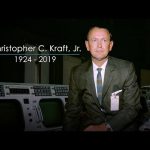
    Christopher C. Kraft, Jr., who died July 22, 2019, created the concept of NASA’s Mission Control and developed its organization, operational procedures and culture, then made it a critical element of the success of the nation’s human spaceflight programs.

    “America has truly lost a national treasure today with the passing of one of NASA’s earliest pioneers – flight director Chris Kraft,” NASA Administrator Jim Bridenstine said in a statement. “We send our deepest condolences to the Kraft family.”

    This video is available for download from NASA’s Image and Video Library: https://images.nasa.gov/details-NHQ_2019_0722_NASA%20Remembers%20Legendary%20Flight%20Director%20Chris%20Kraft.html

  • Historic Apollo 11 Moonwalk Footage

    Historic Apollo 11 Moonwalk Footage

    Starting at 10:38 p.m. EDT on July 20, 2019, NASA TV replayed the historic footage of the #Apollo11 Moonwalk in real time as it happened 50 years ago. Relive our #Apollo50th broadcast:

  • Historic Apollo 11 Moon Landing Footage

    Historic Apollo 11 Moon Landing Footage

    Join us for a trip down memory lane! Starting at 4:02 p.m. EDT on July 20, 2019, NASA TV replayed the original footage of the 1969 Moon landing. Relive the moment:

  • Fifty Years of Apollo Technologies in Your Life

    Fifty Years of Apollo Technologies in Your Life

    In 1969 when NASA astronauts took one small step on the lunar surface, the feat resulted in a giant leap forward in innovations for humanity. The many challenges NASA overcame on the way to the Moon led the agency and its partners to devise new inventions and techniques that spread into public life, and we are still reaping the benefits of those technology developments today. As with the many spinoffs from the Apollo era, the technologies we’re building for today’s missions to the Moon and on to Mars will transform our lives for generations to come.

    Learn more about NASA technology transfer: https://spinoff.nasa.gov

  • NASA Explorers: Giant Leaps

    NASA Explorers: Giant Leaps

    What does a half-century of lunar science sound like? Join Moon data expert Ernie Wright on a musical time-traveling journey through the Apollo program and the exploration era of today. We explore what we knew about the Moon before Apollo, what we discovered because of it and the mysteries today’s scientists are working to solve.

    Elena, from Nantes, France, shares her memory of watching the Apollo 11 landing from a friend’s house in Seattle.

    You can find the series, soundtrack, artwork, and more here: https://www.nasa.gov/nasa-explorers-apollo

    Join the NASA Explorers community on Facebook: https://www.facebook.com/NASAExplorersSeries/

    Credit: NASA’s Goddard Space Flight Center

    Katie Atkinson (GSFC Interns): Narrator
    Katie Atkinson (GSFC Interns): Producer
    Haley Reed (ADNET): Producer
    Micheala Sosby (NASA/GSFC): Producer
    Aaron E. Lepsch (ADNET): Technical Support

    Data sonification by SYSTEM Sounds/Matt Russo and Andrew Santaguida
    Music by Lee Rosevere and Daniel Wyantis

    This video is public domain and along with other supporting visualizations can be downloaded from the Scientific Visualization Studio at: https://svs.gsfc.nasa.gov/13204

  • Introducing NASA Explorers: Apollo, an Audio Series

    Introducing NASA Explorers: Apollo, an Audio Series

    NASA Explorers: Apollo is an audio series that tells stories of the Moon and the people who explore it. During the Apollo program, the Moon became a part of the human domain. Twelve astronauts walked on the lunar surface, conducted research there and collected Moon rocks to bring back to Earth for study. Fifty years after humanity’s first steps on the Moon, today’s lunar scientists are searching for answers to the big questions: How did the Moon form? How did our solar system evolve? Did the Moon help life on Earth get its start?

    Meet a Moon detective, scientists who study space rocks and people from all over the world whose lives were shaped by the epic adventures of the Apollo program. You can listen to NASA Explorers: Apollo on Apple Podcasts, SoundCloud, Google Play and Facebook Watch.

    You can find the series, soundtrack, artwork, and more here: https://www.nasa.gov/nasa-explorers-apollo

    Join the NASA Explorers community on Facebook: https://www.facebook.com/NASAExplorersSeries/

    Credit: NASA’s Goddard Space Flight Center

    Kaliah Hobbs (GSFC Interns): Lead Producer
    Haley Reed (ADNET): Lead Producer
    Katie Atkinson (GSFC Interns): Narrator
    Katie Atkinson (GSFC Interns): Producer
    Micheala Sosby (NASA/GSFC): Producer
    Aaron E. Lepsch (ADNET): Technical Support

    Music credits: “Tycho’s Daydream” by Daniel Wyantis

    This video is public domain and along with other supporting visualizations can be downloaded from the Scientific Visualization Studio at: https://svs.gsfc.nasa.gov/13204

  • Apollo 10: ‘Tell the world, we have arrived’

    Apollo 10: ‘Tell the world, we have arrived’

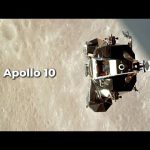
    Fifty years ago, Apollo 10 launched from Cape Kennedy on May 18, 1969. The Apollo 10 mission encompassed all aspects of an actual crewed lunar landing, except the landing. It was the first flight of a complete, crewed Apollo spacecraft to operate around the Moon. The crew members were Commander Thomas Stafford, Command Module Pilot John Young and Lunar Module Pilot Eugene Cernan. Objectives included a scheduled eight-hour lunar orbit of the separated lunar module, or LM, and descent to about nine miles off the moon’s surface before ascending for rendezvous and docking with the command and service module, or CSM, in about a 70-mile circular lunar orbit. Pertinent data to be gathered in this landing rehearsal dealt with the lunar potential, or gravitational effect, to refine the Earth-based crewed spaceflight network tracking techniques, and to check out LM programmed trajectories and radar, and lunar flight control systems. Twelve television transmissions to Earth were planned. All mission objectives were achieved.

  • Apollo 9: ‘A Hell of a Ride’

    Apollo 9: ‘A Hell of a Ride’

    50 years ago, we tested the capabilities of our Moon landing spacecraft in Earth’s orbit. Commander James McDivitt, Command Module Pilot David Scott and Lunar Module Pilot Rusty Schweickart performed systems checks and gathered data. The Lunar Module and the Command Module separated by nearly 100 miles and an engine burn check brought them back together. A challenging rendezvous and docking proved the abilities of the hardware. This historic mission launched on March 3, 1969 as an engineering mission and paved the way for future Apollo missions.

    This video is available for download from NASA’s Image and Video Library: https://images.nasa.gov/details-NHQ_2019_0301_Celebrating%2050%20Years%20of%20Apollo%209%20-%20A%20Hell%20of%20a%20Ride.html

  • Apollo 8: Around The Moon and Back

    Apollo 8: Around The Moon and Back

    50 years ago, three NASA astronauts embarked on a journey that would take them “Round the moon and back”. The Apollo 8 mission proved the performance of the command and service module. This historic mission launched on December 21, 1968 to demonstrate a lunar trajectory and was the first crewed launch of the Saturn V rocket. On Christmas Eve, Frank Borman, Jim Lovell, and Bill Anders were the first humans to orbit the Moon and the first to see an Earthrise above its surface.

    This video is available for download from NASA’s Image and Video Library: https://images.nasa.gov/details-NHQ_2018_1221_Apollo%208%20-%20Around%20The%20Moon%20and%20Back.html

  • Apollo 8: A Story of Christmas Around the Moon

    Apollo 8: A Story of Christmas Around the Moon

    50 years ago, three NASA astronauts embarked on a journey that would take them “Round the moon and back”. The Apollo 8 mission proved the performance of the command and service module. This historic mission launched on December 21, 1968 to demonstrate a lunar trajectory and was the first manned launch of the Saturn V rocket. On Christmas Eve, Frank Borman, Jim Lovell, and Bill Anders were the first humans to orbit the Moon and the first to see an Earthrise above its surface. NASA Administrator Jim Bridenstine remembers the bravery and dedication of the Apollo 8 mission.

    This video is available for download from NASA’s Image and Video Library: https://images.nasa.gov/details-NHQ_20181211_Apollo%208_Bridenstine_FINAL.html

  • Apollo 50th: First Crew Launches on Apollo 7

    Apollo 50th: First Crew Launches on Apollo 7

    On October 11th, 1968, just 15 months from President Kennedy’s deadline for a moon landing, NASA launched its first Apollo crew into space. Apollo 7’s Wally Schirra, Donn Eisele, and Walter Cunningham spent 11 days in low Earth orbit, thoroughly testing the Apollo Command and Service Module’s systems. The crew also won an Emmy for the first live television broadcasts from an American spacecraft.

    This video is available for download from NASA’s Image and Video Library: https://images.nasa.gov/details-NHQ_2018_1011_Apollo%2050th%20-%20First%20Crew%20Launches%20on%20Apollo%207.html

  • NASA Reflects on Legacy of Gene Cernan, Last Man to Walk on Moon

    NASA Reflects on Legacy of Gene Cernan, Last Man to Walk on Moon

    Former NASA astronaut Eugene Cernan, the last man to walk on the moon, died Monday, Jan. 16, following ongoing health issues, according to a statement from his family.

    “It is with very deep sadness that we share the loss of our beloved husband and father,” said Cernan’s family. “Our family is heartbroken, of course, and we truly appreciate everyone’s thoughts and prayers. Gene, as he was known by so many, was a loving husband, father, grandfather, brother and friend.”
    “Even at the age of 82, Gene was passionate about sharing his desire to see the continued human exploration of space and encouraged our nation’s leaders and young people to not let him remain the last man to walk on the Moon,” the family continued.

    Cernan, a Captain in the U.S. Navy, left his mark on the history of exploration by flying three times in space, twice to the moon. He also holds the distinction of being the second American to walk in space and the last human to leave his footprints on the lunar surface.

    The following is a statement from NASA Administrator Charles Bolden on the passing of the Gemini and Apollo astronaut:

    “Gene Cernan, Apollo astronaut and the last man to walk on the moon, has passed from our sphere, and we mourn his loss. Leaving the moon in 1972, Cernan said, ‘As I take these last steps from the surface for some time into the future to come, I’d just like to record that America’s challenge of today has forged man’s destiny of tomorrow.’ Truly, America has lost a patriot and pioneer who helped shape our country’s bold ambitions to do things that humankind had never before achieved.”

    According to the family, details regarding services will be announced in the coming days.

    Note: package may include some silent video.

  • Apollo 11 celebration, Next Giant Leap anticipation on This Week @NASA

    Apollo 11 celebration, Next Giant Leap anticipation on This Week @NASA

    There was more celebration of Apollo 11’s 45th anniversary at several events around the country – and more opportunity for the agency to highlight its “next giant leap” to send humans to Mars. Those events included a ceremony during which Kennedy Space Center’s Operations and Checkout Building was renamed on July 21, in honor of Apollo 11 Commander Neil Armstrong, who passed away in 2012. The facility, which was used to process and test Apollo spacecraft, is now being used to assemble NASA’s Orion spacecraft. Also, ISS astronauts appear in the House, Space station cargo ships, Extreme underwater mission underway, RS-25 Engine installed for testing, and more!

  • Apollo 11 Mission Audio – Day 1

    Apollo 11 Mission Audio – Day 1

    Audio highlights from the first day of the Apollo 11 mission.

  • Apollo 11 yesterday, Next Giant Leap tomorrow on This Week @NASA

    Apollo 11 yesterday, Next Giant Leap tomorrow on This Week @NASA

    NASA is celebrating the 45th anniversary of the historic Apollo 11 mission to the moon. On July 20, 1969, Neil Armstrong and Buzz Aldrin, with crewmate Michael Collins manning the command service module from lunar orbit, became the first humans on the moon — with Armstrong’s historic first step onto the lunar surface becoming a symbolic giant leap for humanity. Today, with Apollo 11 as inspiration, NASA is taking the steps needed for America’s next giant leap, to send astronauts to Mars. The path to Mars will use a stepping stone approach consisting of key elements, including human health and technology research aboard the International Space Station; development and evolution of NASA’s Space Launch System rocket and Orion deep space capsule and development of other game-changing technologies to enable tomorrow’s missions. Also, Science instruments for Europa mission?, Cygnus cargo craft arrives at ISS, News conference with next ISS crew, 5th Anniversary of Bolden’s Confirmation, The Search for Life in the Universe.