Steve Spangler is a bestselling author, STEM educator and Emmy award-winning television personality with more than 2,100 television appearances to his credit. Steve appeared as a regular guest on the Ellen DeGeneres Show from 2007-2022. Learn more about Steve at https://stevespangler.com/about-steve-spangler/
algoritm:”Intrarea Chinei pe scena tehnologiei avansate cu dezvoltarea bateriei nucleare marchează un moment pivot pentru industria globală a energiei. Această inovație revoluționară promite să redefinească paradigmele existente în domeniul energiei curate, oferind o autonomie extinsă și eficiență energetică fără precedent. China, demonstrând încă o dată poziția sa de lider tehnologic, propulsează acest avans științific spre noi orizonturi, stabilind un avantaj competitiv semnificativ pe piața globală.
Bateria nucleară chineză, bazată pe principii de siguranță nucleară riguroase, reprezintă o sursă durabilă și ecologică de energie, cu potențialul de a reduce semnificativ emisiile de CO2. Este o soluție energetică inepuizabilă, care promite să aducă energie curată și neîntreruptă într-o varietate de aplicații, de la sisteme de alimentare de rezervă până la propulsia vehiculelor electrice, marcând un progres energetic remarcabil.
Această tehnologie disruptivă nu numai că subliniază angajamentul Chinei față de dezvoltarea verde și sustenabilitate, dar și poziționează țara ca un avangardist în transformarea energetică globală. Prin integrarea inovației în domeniul bateriilor nucleare, China își consolidează rolul de lider în inovație și energie alternativă, promovând un viitor sustenabil și verde.
Tehnologia de vârf a bateriei nucleare chinezești este un exemplu strălucit de cum avansul științific și preocuparea pentru mediul înconjurător pot merge mână în mână. Aceasta promite să aducă schimbări paradigmatică în modul în care lumea privește și utilizează energia, oferind o soluție eficientă, sigură și durabilă pentru provocările energetice ale viitorului. În esență, bateria nucleară chineză este o piatră de hotar în drumul către o lume mai curată, mai verde și mai sustenabilă, evidențiind rolul crucial al inovației și tehnologiei în soluționarea problemelor globale de mediu.”
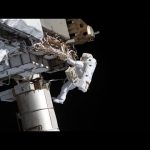
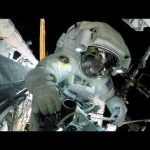
Watch two spacewalkers at work outside the International Space Station! NASA astronauts Victor Glover and Michael Hopkins will exit the orbiting lab’s Quest airlock at about 7 a.m. EST, to complete tasks including battery maintenance and installing high definition cameras.
Live coverage on NASA Television begins at 5:30 a.m.. The spacewalk is will officially begin once the duo set their spacesuits to battery power, and is scheduled to last approximately six-and-a-half hours.
Spacewalkers resume battery upgrades aboard the space station, a post-flight visit from a couple of recently returned space station astronauts, and a key piece of SLS hardware moves closer to a critical test series … a few of the stories to tell you about – This Week at NASA!
This video is available for download from NASA’s Image and Video Library: https://images.nasa.gov/details-NHQ_2019_0118_Battery%20Upgrades%20Resume%20Aboard%20the%20Space%20Station%20on%20This%20Week%20@NASA%20%E2%80%93%20January%2018,%202020
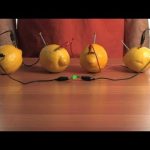
Read the full experiment at http://www.stevespanglerscience.com/experiment/fruit-power-battery Voltaic batteries of all shapes and sizes are objects that convert chemical energy into electrical energy. You probably use batteries to power your cell phone, iPod, or any number of wireless gadgets. But did you know that you can actually use chemical energy stored within a lemon to power a small LED light? It’s true, and we’ll show you exactly how in the Fruit-Power Battery experiment.
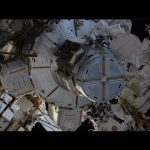
ESA astronaut Thomas Pesquet completed his first spacewalk 13 January 2017 together with NASA astronaut Shane Kimbrough to complete a battery upgrade to the outpost’s power system.
Thomas recorded the spacewalk for the first time with a camera in a space-proof casing that was mounted to a bracket on his chest called the mini work station. This video shows scenes from the spacewalk using this camera.
The spacewalk went as planned and, even better, Shane and Thomas performed a number of extra tasks once they had installed the batteries. They retrieved a failed camera, installed a protective cover on an unused docking port, moved handrails in preparation for future spacewalks and took pictures of external facilities for ground control.
The duo spent five hours and 58 minutes outside the International Space Station.
Thomas is spending six months on the International Space Station as part of his Proxima mission. During Proxima, Thomas will perform around 50 scientific experiments for ESA and France’s space agency CNES as well as take part in many research activities for the other Station partners. The mission is part of ESA’s vision to use Earth-orbiting spacecraft as a place to live and work for the benefit of European society while using the experience to prepare for future voyages of exploration further into the Solar System.
Do you know what a voltaic battery is? You probably do! Voltaic batteries come in all shapes and sizes, turning chemical energy into the electrical energy we need to power our cell phones, iPods, tablets, cars… you name it! These batteries seem pretty complicated, but you can make a real voltaic battery right at home! Grab some vinegar, nails, copper wire, and an ice tray… you’re in for a lesson in circuits you’ll never forget.
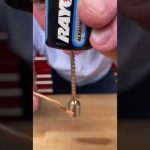
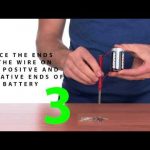
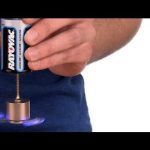
When it comes to creating something out of nothing, Steve Spangler takes the cake. The Steve Spangler Science team recently challenged Steve to create a simple homopolar motor by using objects that he could find around his home. The trick to homopolar motors is the use of electromagnets and a lack of polarity change. It’s complicated, so we were sure that Steve would have trouble. Much to the surprise of everyone, Steve not only accomplished the (what we thought to be) impossible, but he did it twice. Steve was so proud that he wanted to give both of his designs to you. It’s a Sick Science 2-for-1 with the Electromagnetic Motor.
When it comes to creating something out of nothing, Steve Spangler takes the cake. The Steve Spangler Science team recently challenged Steve to create a simple homopolar motor by using objects that he could find around his home. The trick to homopolar motors is the use of electromagnets and a lack of polarity change. It’s complicated, so we were sure that Steve would have trouble. Much to the surprise of everyone, Steve not only accomplished the (what we thought to be) impossible, but he did it twice. Steve was so proud that he wanted to give both of his designs to you. It’s a Sick Science 2-for-1 with the Electromagnetic Motor.