When people think about the big players of the space industry, they don’t tend to think about Europe. But believe it or not the European Space Agency or ESA has the second highest budget out of any space agency. So what are they doing with all that money?
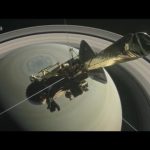
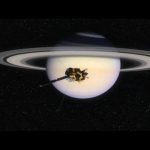
Following over a decade of ground-breaking discoveries, Cassini is now approaching its mission end.
With little fuel left to correct the NASA’s spacecraft trajectory, it has been decided to end the mission by plunging it into Saturn’s atmosphere on 15 September 2017. In the process, Cassini will burn up, satisfying planetary protection requirements to avoid possible contamination of any moons of Saturn that could have conditions suitable for life. These include Saturn’s largest moon Titan and Enceladus, which has a liquid ocean under its icy crust.
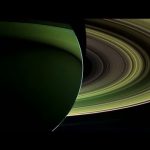
The grand finale is not only a spectacular way to complete this extraordinary mission, but will also return a bounty of unique scientific data that was not possible to collect during the previous phases of the mission. Cassini has never ventured into the area between Saturn and its rings before, so the new set of orbits is almost like a whole new mission.
These close orbits will provide the highest resolution observations ever achieved of the inner rings and the planet’s clouds. The orbits will also give the chance to examine in situ the material in the rings and plasma environment of Saturn. It will also probe the planet’s magnetic field at close distances.
This video explains Cassini ‘s final operations, what the Cassini-Huygens mission has taught us about Saturn, the potential for life on its moons and the promise of more science to come.
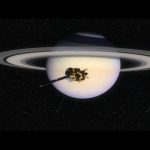
Cassini-Huygens was launched on 15 October 1997 from Cape Canaveral, Florida.After nearly 13 years in orbit around Saturn, the international Cassini-Huygens mission is going through its final chapter: NASA’s Cassini spacecraft is performing a series of daring dives between the planet and its rings, leading to a dramatic final plunge into Saturn’s atmosphere on 15 September.
On 14 January 2005, ESA’s Huygens probe, which hitched a ride to the Saturn system attached to Cassini during the seven-year voyage, entered the history books by descending to the surface of Titan, Saturn’s largest moon. This was humanity’s first successful attempt to land a probe on another world in the outer Solar System.
Huygens made a 21-day solo cruise toward the haze-shrouded moon. Plunging into Titan’s atmosphere, the probe touched down safely on Titan’s frozen surface.
Huygens provided a stream of data representing a unique treasure trove of in situ measurements from the planet-sized satellite which scientists are still mining today.
This video recalls the ‘one of a kind’ journey of Huygens.
Right now the Cassini spacecraft is flying between the rings of Saturn and the planet itself, a daring trajectory chosen to conclude a unique exploration mission.
To find out what that orbit means, and to look back at some of Cassini-Huygens finest moments, we met up with key members of the science team in the UK for this edition of Space.
Die Cassini-Huygens-Mission am Saturn startete vor zwanzig Jahren, 2004 schwenkte die Doppel-Sonde in ihre Umlaufbahn um den Saturn ein. Im Dezember 2004 koppelte der Lander Huygens von der Cassini-Sonde ab und setzte im Januar 2005 auf dem Titan auf. Die Mission entdeckte unter anderem ein Eismeer auf dem Saturn-Mond Enceladus und fliegt jetzt zwischen den Ringen des Saturn und dem Planeten selbst. Im September soll Cassini mangels Treibstoffvorräten in der Saturn-Atmosphäre verglühen.
Die Saturn-Spezialisten des Mullard Space Science Laboratory (MSSL) in Südengland verfolgen die Mission und erforschen das Sonnensystem des pittoresken Planeten. Die Cassini-Sonde wird gerade auf ihre finale Umlaufbahn gebracht, um nächstmögliche Eindrücke vom Saturn zu gewinnen.
Há algumas décadas, para observar Saturno, os cientistas recorriam a telescópios. Hoje em dia, os segredos de Saturno e da sua misteriosa lua Titã são revelados graças aos dados e imagens enviados pela missão Cassini-Huygens. Saturno nunca antes visto, é o tema de Space esta semana.
Hasta hace algunas décadas para ver Saturno la ciencia tenía que mirar a través de telescópios. Hoy Saturno y su misteriosa luna Titán son nuevos conocidos gracias a la misión Cassini-Huygens que desde 2004 envía imágenes y datos. Una aventura que está cambiando la percepción que hasta ahora teníamos de nuestro Sistema Solar.
Noch vor einigen Jahrzehnten konnte man den Saturn nur mit dem Teleskop beobachten. Heute lüftet die Cassini-Huygens-Mission mit ihren Bildern die Geheimnisse des Saturnsystems und liefert Antworten auf entscheidende wissenschaftliche Fragen.