ESA is Europe’s gateway to space. Our mission is to shape the development of Europe’s space capability and ensure that investment in space continues to deliver benefits to the citizens of Europe and the world. Check out http://www.esa.int/ESA to get up to speed on everything space related.
ESA Web TV talks with ESA’s Director General Jan Wörner about the plans for ‘Space19+’, ESA’s next Ministerial Council, and its benefits for citizens.
Ministers from ESA’s Member States will come together in Seville, Spain, 27-28 November 2019, to secure financing for ESA’s activities in the coming years.
In this interview the Director General discusses the Space19+ proposal including his plans for space programmes to be carried out by the Agency beyond 2019, covering all aspects of space activities: science and exploration, applications, access to space, operations, research and development. The Space19+ plan also puts ESA in a world-leading position in the emerging field of space safety and security.
★ Subscribe: http://bit.ly/ESAsubscribe and click twice on the bell button to receive our notifications.
ESA is Europe’s gateway to space. Our mission is to shape the development of Europe’s space capability and ensure that investment in space continues to deliver benefits to the citizens of Europe and the world. Check out http://www.esa.int/ESA to get up to speed on everything space related.
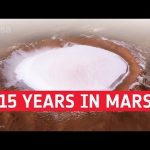
On 25 December 2003, ESA’s Mars Express entered orbit around the Red Planet. The spacecraft began returning the first images from orbit using its High Resolution Stereo Camera just a couple of weeks later, and over the course of its fifteen year history has captured thousands of images covering the globe.
This video compilation highlights some of the stunning scenes revealed by this long-lived mission. From breathtaking horizon-to-horizon views to the close-up details of ice- and dune-filled craters, and from the polar ice caps and water-carved valleys to ancient volcanoes and plunging canyons, Mars Express has traced billions of years of geological history and evolution.
ESA is Europe’s gateway to space. Our mission is to shape the development of Europe’s space capability and ensure that investment in space continues to deliver benefits to the citizens of Europe and the world. Check out http://www.esa.int/ESA to get up to speed on everything space related.
ESA can look back at a fulfilling year. It has been a year marked by new Earth Observation missions to analyse and protect our planet, in particular the completion of the first wave of Copernicus Sentinel satellites and the launch of Aeolus. Galileo also reached an important milestone – there are now 26 satellites in orbit. Other achievements include the October launch of BepiColombo, the ESA-JAXA mission to study Mercury, and the almost continuous presence of ESA astronauts on the International Space Station.
What was your favourite moment? Tell us in the comment section.
★ Subscribe: http://bit.ly/ESAsubscribe and click twice on the bell button to receive our notifications.
ESA is Europe’s gateway to space. Our mission is to shape the development of Europe’s space capability and ensure that investment in space continues to deliver benefits to the citizens of Europe and the world. Check out http://www.esa.int/ESA to get up to speed on everything space related.
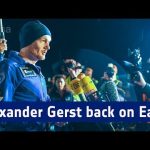
Just hours after returning from his Horizons mission on the International Space Station, ESA astronaut Alexander Gerst gives a short interview at the German Aerospace Centre’s ‘:envihab’ facility in Cologne, Germany.
Alexander returned to Earth alongside crew mates Serena Auñón-Chancellor and Sergei Prokopyev on 20 December 2018 in the same Soyuz MS-09 spacecraft that flew them to the Station on 6 June 2018.
The trio’s landing in the Kazakh steppe marked the successful conclusion of over six months in space during which Alexander conducted over 60 European experiments, became the second ever European commander of the International Space Station, welcomed six resupply vehicles, installed the first commercial facility for research in the Columbus laboratory, delivered an important message on climate change for leaders at the COP24 climate change conference, captured real-time footage of a Soyuz launch abort and much, much more.
#Horizons was Alexander’s second mission to the International Space Station – the first was Blue Dot in 2014.
Now back in Cologne, Alexander will take his time to readapt to Earth’s gravity supported by ESA’s team of space medicine experts. He will also continue to provide ground-based data for researchers to support experiments performed in space.
ESA is Europe’s gateway to space. Our mission is to shape the development of Europe’s space capability and ensure that investment in space continues to deliver benefits to the citizens of Europe and the world. Check out http://www.esa.int/ESA to get up to speed on everything space related.
ESA astronaut Alexander Gerst recorded a message in German to his future grandchildren from the International Space Station’s Cupola observatory during his Horizons mission in 2018. Although this message is addressed to his descendants, it applies to all of us. Everyone should contribute to the protection and improvement of this planet we call home.
Alexander’s message is as follows:
Dear grandchildren,
You have not been born yet, and I do not know if I will ever meet you, so I’ve decided to record this message for you.
I’m on the International Space Station in the Cupola Observation Module gazing down at your beautiful planet. And although I’ve now almost spent a year of my life in space and looked at Earth every single day, I just can’t get enough of this view.
I know it probably sounds strange to you, but at the time the Space Station was built and was up here in orbit, not everyone was able to travel into space and see the Earth from a distance. Before me, only around 500 people had the chance. At this very moment, there are 7 billion people living down there on Earth and only three of them live in space. And when I look down at the planet, I think I need to apologise to you.
Right now, it looks like we – my generation – are not going to leave this planet in its best condition for you. Of course, in retrospect many people will say they weren’t aware of what we were doing. But in reality, we humans know that right now we’re polluting the planet with carbon dioxide, we’re making the climate reach tipping point, we’re clearing forests, we’re polluting the oceans with garbage, we’re consuming the limited resources far too quickly, and we’re waging mostly pointless wars.
And every one of us has to take a good look at themselves and think about where this is leading. I very much hope for our own sake that we can still get our act together and improve a few things. And I hope that we won’t be remembered by you as the generation who selfishly and ruthlessly destroyed your livelihood.
I’m sure you understand these things much better than my generation. And who knows, maybe we’ll learn something new, such as: taking a step always helps; this fragile spaceship called Earth is much smaller than most people can imagine; how fragile the Earth’s biosphere is and how limited its resources are; that it’s worth getting along with your neighbours; that dreams are more valuable than money and you have to give them a chance; that boys and girls can do things equally well, but that every one of you has one thing that he or she can do much better than all the others; that the simple explanations are often wrong and that one’s own point of view is always incomplete; that the future is more important than the past; that one should never fully grow up; and that opportunities only come along once. You have to take a risk for things that are worth it, and any day during which you discovered something new – one where you gazed beyond your horizon – is a good day.
I wish I could look into the future through your eyes, into your world and how you see it. Unfortunately, that is not possible and therefore the only thing that remains for me is to try to make your future the best one I can possibly imagine.
International Space Station – Commander of Expedition 57 – Alexander Gerst – 25 November 2018 – 400 km above the Earth’s surface
——————————
Follow Alexander and review his #Horizons mission on social media via http://bit.ly/AlexanderGerstESA and on http://bit.ly/HorizonsBlogESA
——————————
★ Subscribe: http://bit.ly/ESAsubscribe and click twice on the bell button to receive our notifications.
ESA is Europe’s gateway to space. Our mission is to shape the development of Europe’s space capability and ensure that investment in space continues to deliver benefits to the citizens of Europe and the world. Check out http://www.esa.int/ESA to get up to speed on everything space related.
The ride home from the International Space Station sees the astronauts brake from 28 800 km/h to a standstill at touchdown in barely three hours. How does the Soyuz spacecraft reenter the atmosphere? And how does the capsule land?
Watch in just two minutes the sequence of events from farewell to landing. This video is based on a training lesson for ESA astronauts, and it features dramatic footage of actual landings.
ESA is Europe’s gateway to space. Our mission is to shape the development of Europe’s space capability and ensure that investment in space continues to deliver benefits to the citizens of Europe and the world. Check out http://www.esa.int/ESA to get up to speed on everything space related.
ESA is Europe’s gateway to space. Our mission is to shape the development of Europe’s space capability and ensure that investment in space continues to deliver benefits to the citizens of Europe and the world. Check out http://www.esa.int/ESA to get up to speed on everything space related.
Meet Mari, who shares her experience as a Young Graduate Trainee in the Legal Services Department and Executive Secretary for the European Centre for Space Law.
★ Subscribe: http://bit.ly/ESAsubscribe and click twice on the bell button to receive our notifications.
ESA is Europe’s gateway to space. Our mission is to shape the development of Europe’s space capability and ensure that investment in space continues to deliver benefits to the citizens of Europe and the world. Check out http://www.esa.int/ESA to get up to speed on everything space related.
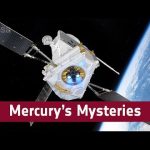
BepiColombo, Europe’s first mission to Mercury, launched on 20 October 2018. The spacecraft began its seven year journey by unfurling antennas and solar arrays, taking a few selfies and deploying a three metre magnetometer boom. The spacecraft, a joint mission between ESA and the Japanese space agency JAXA, will soon engage its solar propulsion engine but meanwhile scientists are busy preparing for BepiColombo’s arrival in 2025.
ESA is Europe’s gateway to space. Our mission is to shape the development of Europe’s space capability and ensure that investment in space continues to deliver benefits to the citizens of Europe and the world. Check out http://www.esa.int/ESA to get up to speed on everything space related.
Meet Mircea! He’s 27 years old and comes from Romania.
He works at ESA as a Young Graduate Trainee (YGT) in the Materials’ Physics and Chemistry section, where he analyses how materials used could contaminate the sensitive surfaces of a spacecraft.
★ Subscribe: http://bit.ly/ESAsubscribe and click twice on the bell button to receive our notifications.
ESA is Europe’s gateway to space. Our mission is to shape the development of Europe’s space capability and ensure that investment in space continues to deliver benefits to the citizens of Europe and the world. Check out http://www.esa.int/ESA to get up to speed on everything space related.
ESA is Europe’s gateway to space. Our mission is to shape the development of Europe’s space capability and ensure that investment in space continues to deliver benefits to the citizens of Europe and the world. Check out http://www.esa.int/ESA to get up to speed on everything space related.
Italian ESA astronaut Samantha Cristoforetti, speaking from the European Astronaut Centre near Cologne in Germany, has a message of thanks to all those who’ve entered our Lunar 3D printing competition so far. A new lunar analogue test facility, called Luna for short, is currently being set up at EAC to test the technologies and techniques needed for any future Moon base – with 3D printing high on the list. And a team ESA’s technical centre in Noordwijk, the Netherlands, is overseeing a project to research in detail how 3D printing could be used in such a Moon base. We’re also interested in the human factor: what would you 3D print to make the Moon feel like home? That’s why we’re crowdsourcing your ideas through this competition. The closing date is 23 September 2018.
ESA is Europe’s gateway to space. Our mission is to shape the development of Europe’s space capability and ensure that investment in space continues to deliver benefits to the citizens of Europe and the world. Check out http://www.esa.int/ESA to get up to speed on everything space related.
ESA is Europe’s gateway to space. Our mission is to shape the development of Europe’s space capability and ensure that investment in space continues to deliver benefits to the citizens of Europe and the world. Check out http://www.esa.int/ESA to get up to speed on everything space related.
Ever wondered what it feels like to fly from Alaska to the Andes in 260 seconds? ESA astronaut Alexander Gerst captured this timelapse footage of Alaska, the USA and South America while orbiting Earth on board the International Space Station.
This timelapse is made up of 6,375 images shown 12.5 times faster than actual speed. Music is Our Oasis by Miriam Speyer, sourced from Audio Network Limited.
What is a lunar eclipse? What is a solar eclipse? This short video explains the difference between these regularly occurring events that can be observed from Earth.
The video uses a mix of ground- and space-based imagery of eclipses, including footage from the International Space Station, ESA’s Proba-2 satellite and the Japanese-led Hinode satellite.
Remember: never look directly at the Sun, even when partially eclipsed, without proper eye protection such as special solar eclipse glasses, or you risk permanent eye damage.
Credits: ESA, ESA/CESAR (graphics, ground-based observations), NASA’s Scientific Visualization Studio (partial lunar eclipse sequence) ESA/NASA (ISS footage), ESA/Royal Observatory of Belgium (Proba-2 footage), NASA/Hinode/XRT (Hinode image).
On 20 July 2018 around 21:50 local time, ESA astronaut Alexander Gerst welcomed the legendary electronic band Kraftwerk and 7500 visitors to the Jazz Open Festival on Stuttgart’s Schlossplatz – live from the International Space Station, where he will live and work until mid-December 2018. During the call with space, Kraftwerk founding member Ralf Hütter and Alexander played a special duet version of the track Spacelab, for which Alexander had a tablet computer configured with virtual synthesizers on board. With thanks to Kraftwerk for sharing this video footage.
————————————————————————————————————–
So begrüßte ESA-Astronaut Alexander Gerst am 20. Juli 2018 um 21:50 Uhr Ortszeit die legendären Elektro-Pioniere Kraftwerk sowie 7500 Besucherinnen und Besucher des Jazz Open-Festivals auf dem Stuttgarter Schlossplatz – und zwar live von der Internationalen Raumstation ISS, auf der er noch bis Mitte Dezember 2018 lebt und arbeitet.
Kraftwerk-Gründungsmitglied Ralf Hütter und Alexander Gerst spielten eine spezielle Version des Tracks Spacelab im Duett an, für das Gerst eigens einen mit virtuellen Synthesizern konfigurierten Tablet-Computer an Bord hatte.
Humans will have to breath, drink and eat while living on the Moon. They will need energy to perform tasks using their robotic companions and materials to build structures. For a sustainable approach to space exploration these resources cannot be carried from Earth but have to be found on the Moon itself.
Angel Abbud Madrid is the Director of the Center for Space Resources at the Colorado School of Mines (CSM), where he leads a multidisciplinary research programme on the human and robotic exploration of space and the utilisation of its resources. He is also the Director of the CSM Space Resources Program, the first academic programme in the world focused on educating scientists, engineers, economists, entrepreneurs and policymakers in the developing field of space resources.
Space Bites hosts the best talks on space exploration from the most inspiring and knowledgeable speakers from the field. Held at the technical heart of the European Space Agency in the Netherlands, the lectures are now also available on YouTube. If you want to know about the present and future challenges of ESA, stay tuned for more.
We are Europe’s gateway to space. Our mission is to shape the development of Europe’s space capability and ensure that investment in space continues to deliver benefits to the citizens of Europe and the world. Check out https://www.esa.int/ to get up to speed on everything space related.
Explore the Philippines’ Mount Mayon, one of the world’s most active volcanoes, in this episode of Earth from Space, presented by Kelsea Brennan-Wessels from the ESA Web TV virtual studios.
Earth from Space is presented by Kelsea Brennan-Wessels from the ESA Web TV virtual studios. In this edition, Sentinel-2A satellite takes us over Japan’s capital, the world’s largest megacity.


![Nachricht an meine Enkelkinder [with Closed Captions]](https://video.kidibot.ro/wp-content/uploads/2020/03/6507/nachricht-an-meine-enkelkinder-with-closed-captions-150x150.jpg)
![How do astronauts return to Earth? [with Closed Captions]](https://video.kidibot.ro/wp-content/uploads/2021/07/10518-how-do-astronauts-return-to-earth-with-closed-captions-150x150.jpg)