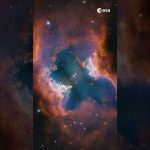
In celebration of the NASA/ESA Hubble Space Telescope’s 35 years in Earth orbit, an assortment of images that were recently taken by Hubble has been released today. This stretches from the planet Mars to images of stellar birth and death, and a magnificent neighbouring galaxy. After over three decades of scrutinising our Universe, Hubble remains a household word as the most well-recognised telescope in scientific history.
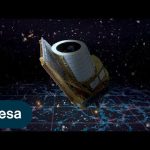
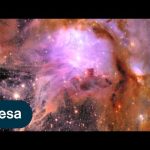
ESA is releasing a new set of full-colour images captured by the space telescope Euclid. Five new portraits of our cosmos were captured during Euclid’s early observations phase, each revealing amazing new science. Euclid’s ability to unravel the secrets of the cosmos is something you will not want to miss.
Credits: ESA – European Space Agency
★ Subscribe: http://bit.ly/ESAsubscribe and click twice on the bell button to receive our notifications.
We are Europe’s gateway to space. Our mission is to shape the development of Europe’s space capability and ensure that investment in space continues to deliver benefits to the citizens of Europe and the world. Check out https://www.esa.int/ to get up to speed on everything space related.
Today, ESA’s Euclid space mission releases five unprecedented new views of the Universe. The never-before-seen images demonstrate Euclid’s ability to unravel the secrets of the cosmos and enable scientists to hunt for rogue planets, use lensed galaxies to study mysterious matter, and explore the evolution of the Universe.
Read more about Euclid’s first images and download the individual images here:
Credits: ESA/Euclid/Euclid Consortium/NASA, image processing by J.-C. Cuillandre (CEA Paris-Saclay), G. Anselmi
★ Subscribe: http://bit.ly/ESAsubscribe and click twice on the bell button to receive our notifications.
We are Europe’s gateway to space. Our mission is to shape the development of Europe’s space capability and ensure that investment in space continues to deliver benefits to the citizens of Europe and the world. Check out https://www.esa.int/ to get up to speed on everything space related.
Join host and award-winning journalist Soledad O’Brien for NASA’s “Hispanic Heritage: El Ayer y El Mañana” (The Past and the Future) event, a conversation about the upcoming Smithsonian National Museum of the American Latino, NASA’s influence on Hispanic-American culture, and the pioneering spirit of Latinos.
Participants include Dr. Ellen R. Stofan, under secretary for Science and Research at the Smithsonian Institution, and Dr. Marla Pérez-Davis, director of NASA’s Glenn Research Center. NASA astronauts Frank Rubio and Joe Acaba join other voices from across the agency, and Administrator Bill Nelson delivers closing remarks.
00:00-00:15 Show open 00:15-2:15 Host Soledad O’Brien’s opening remarks 2:15-12:13 Conversation with Smithsonian’s Dr. Ellen R. Stofan about the National Museum of the American Latino 12:13-17:27 Remarks from Dr. Marla Pérez-Davis, Center Director at NASA Glenn Research Center 17:27-22:50 Remarks from Debbie Martínez, Marlyn Andino, Miguel Alvarez, Gaudy Bezos-O’Connor, and George Altamirano at NASA Langley Research Center 22:50-27:03 Remarks from Sandra Cauffman, Earth Science Deputy Director 27:03-30:47 Remarks from Gisela Muñoz, Crew Systems Astronaut Instructor at NASA Johnson Space Center 30:47-34:22 Continued conversation about the National Museum of the American Latino 34:22-42:24 Conversation with NASA astronauts Dr. Frank Rubio and Joe Acaba 42:24-46:09 Continued conversation about the National Museum of the American Latino 46:09-50:35 Workforce remarks from Liliana Villarreal at NASA Kennedy Space Center, Elio Morillo at NASA Jet Propulsion Laboratory, and Cesar Acosta at NASA Ames Research Center 50:35-52:33 Continued conversation about the National Museum of the American Latino 52:33-54:29 Host Soledad O’Brien’s closing remarks 54:25-55:44 Closing remarks from NASA’s Hispanic Outreach and Leadership Alliance 55:44-57:32 Closing remarks from NASA Administrator Bill Nelson
Producers: Lacey Young, David Anderson Editor: David Anderson Music: Universal Production Music
Each May, NASA commemorates Asian American and Pacific Islander (AAPI) Heritage Month to recognize the significant contributions of past and present employees of AAPI descent. Each of them embody the enduring and resilient spirit this community brings to advancing science, research, and discovery. Hear their stories.
Featured in the video: Anthony Arviola – Langley Research Center Han Woong (Brian) Bae – Marshall Space Flight Center Kelly Busquets – Goddard Space Flight Center Sarat Calmur – Langley Research Center Gemma Flores – NASA Headquarters Wensheng Huang – Glenn Research Center Miki Kenji – Glenn Research Center Alex Lin – Langley Research Center Rita Melvin – Goddard Space Flight Center Kartik Sheth – NASA Headquarters Steve Shih – NASA Headquarters Emilie Siochi – Langley Research Center Jenny Staggs – Armstrong Flight Research Center Githika Tondapu – Marshall Space Flight Center Sara Tsui – Kennedy Space Center Jennifer Turner – Johnson Space Center
Video Credit: NASA 360 – Jessica Wilde, David Shelton, and Scott Bednar
Join astronaut Frank Rubio and leaders from NASA on Oct. 7 at 2 p.m. ET as we celebrate the contributions of Hispanic Americans across the agency during a special program titled “Hispanics: Be Proud of Your Past, Embrace the Future.” Participants for this Hispanic Heritage Month program include:
Jim Green, NASA chief scientist
Bettina Inclán, NASA associate administrator for Communications
Clara O’Farrell, Mars Entry, Descent and Landing Engineer
Erika Podest, climate scientist
Opening remarks by NASA associate administrator Steve Jurczyk.
September 2020 – ESA’s Kiruna ground station in northern Sweden celebrates 30 years of space excellence. Near the top of the world, at a latitude of almost 68° north and sited 38 kilometres east of Kiruna town, the Kiruna ground station has been operational for 30 years. Ideally positioned to support polar-orbiting missions, the station is a crucial gateway for much of the data enabling us to study our planet’s oceans, water and atmosphere, forecast weather and understand the rapid advance of climate change. With its two sophisticated antennas, it also supports some of ESA’s scientific missions such as Integral and Cluster. The station is part of ESA’s Estrack network linking all Agency missions to the ESOC mission control centre in Darmstadt, Germany.
★ Subscribe: http://bit.ly/ESAsubscribe and click twice on the bell button to receive our notifications.
We are Europe’s gateway to space. Our mission is to shape the development of Europe’s space capability and ensure that investment in space continues to deliver benefits to the citizens of Europe and the world. Check out http://www.esa.int/ESA to get up to speed on everything space related.
Honoring the past and present, NASA celebrates Asian American Pacific Islanders Heritage Month. These NASA employees, who have helped contribute to America’s space program, celebrate their diverse history, rich culture and contributions.
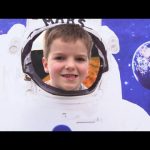
NASA helped the town of Mars, Pennsylvania ring in the Martian New Year, May 5-6. Citizens of the town, just north of Pittsburgh, invited the agency to help celebrate Mars New Year, which happens about every two Earth years. Activities included two days of science, technology, engineering, arts and mathematics or (STEAM) activities, to encourage young people to pursue careers in these fields of study, which are critical to NASA’s journey to Mars.
NASA works with the Maker community to create new ideas and technologies to drive exploration here on Earth and out in space. The agency uses prizes and challenges, like the Future Engineers 3-D printing challenge for students, and programs like the CubeSat Launch Initiative, which works with students across the country to build and launch small satellites, to encourage innovation and STEM development. During the National Week of Making 2016, NASA committed to continuing its work in order to help groups in all 50 states launch a satellite into orbit.
In recognition of Memorial Day, NASA remembers the men and women who have served in the U.S. armed forces and the sacrifices they’ve made to preserve the freedoms, safety and liberties of Americans throughout our country and around the world.
On April 22nd, Earth Day is an annual world wide celebration in support of environmental protection. NASA undertakes various efforts to protect and understand our home planet. NASA wants to capture what people all around the world are doing to protect, improve and celebrate Earth… So, where on EARTH will you be? http://www.nasa.gov/24Seven #24Seven
A little more than a century ago, on March 3, 1915, congress created the National Advisory Committee for Aeronautics, the organization from which NASA was created in 1958. Now, on National Aviation Day, we celebrate 100 years of aviation research, and we’re planning for the next 100 years!
NASA uses the vantage point of space to increase our understanding of our home planet, improve lives and safeguard our future. The agency also develops new ways to observe and study Earth’s interconnected natural systems with long-term data records, shares this unique knowledge, and works with institutions around the world to gain new insights into how our planet is changing. Here’s a brief thirty second video showing some of the sights and sounds of our Earth and why it’s important to us all to appreciate our unique home in the solar system.
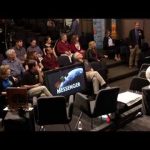
NASA held a panel discussion media on Thursday, April 16, to share scientific findings and technical accomplishments of the agency’s MErcury Surface, Space ENvironment, GEochemistry, and Ranging (MESSENGER) spacecraft.
After more than 10 years in space, the highly successful mission will come to an end when it is expected to collide into planet Mercury at a speed of more than 8,750 miles per hour (3.91 km/sec) near the end of this month.
Launched in August 2004, MESSENGER traveled 4.9 billion miles (7.9 billion kilometers) – a journey that included 15 trips around the sun and flybys of Earth once, Venus twice, and Mercury three times – before it was inserted into orbit around its target planet in March 2011. The spacecraft’s cameras and other sophisticated, high-technology instruments have collected unprecedented images and made other observations. Mission managers are preparing to impact Mercury’ surface in the next couple weeks.
Participants featured were:
· James Green, director, Planetary Science Division, NASA Headquarters, Washington
· Sean Solomon, MESSENGER principal investigator; director, Columbia University’s Lamont-Doherty Earth Observatory, Palisades, New York
· Helene Winters, MESSENGER project manager, Johns Hopkins University Applied Physics Laboratory, Laurel, Maryland
· Daniel O’Shaughnessy, MESSENGER systems engineer, Johns Hopkins University Applied Physics Laboratory, Laurel, Maryland
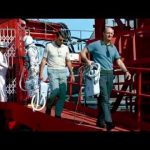
Gemini 3 launched March 23, 1965 from Cape Canaveral, Florida. It was the first crewed Earth-orbiting spacecraft of the Gemini series. It was piloted by astronauts Virgil “Gus” Grissom and John Young.
Celebrating the landing of Rosetta’s Philae lander on 67P/Churyumov–Gerasimenko at ESA’s technical heart. Along with the main Rosetta landing event taking place at ESA’s ESOC control centre, many other events took place all across Europe. More than a quarter of a century in the making, the Rosetta comet-chaser had been designed, planned and finally tested at ESTEC – ESA’s largest establishment, based in Noordwijk, the Netherlands – in advance of its 2004 launch.
More than 450 external guests, media representatives and Agency personnel gathered together at SpaceExpo, ESTEC’s visitor centre, to follow the nail-biting Philae landing during the afternoon and evening of Wednesday 12 November 2014. ESTEC Director Franco Ongaro presided over the gathering, which was also attended by ESA astronaut André Kuipers, Rob van Hassel of Airbus Defence and Space Netherlands – who detailed the Dutch contributions to Rosetta – as well as comet expert Inge Loes ten Kate from Utrecht University.
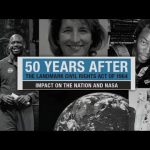
The Civil Rights Act of 1964 was signed into law July 2, 1964 by President Lyndon Baines Johnson, the namesake of NASA¹s Johnson Space Center. NASA employees and retirees from around the Nation join together to share their stories as they remember the past, discuss diversity and look forward to future progress.
Celebration, when the Curiosity Rover safely found the surface of Mars on August 6, 2012 … and celebration this week on Capitol Hill as NASA and members of Congress mark the one year anniversary of the Martian landing and showcase the ways the rover is helping us get to know Mars. During another event to celebrate Curiosity at the Eisenhower Executive Office Building, members of the Curiosity team presented White House officials with a replica of the plaque flown on the mission and signed by the President. Curiosity’s landing ignited a new generation of excitement which grew even more when the rover found evidence that Mars could’ve sustained life in the past. NASA and the rest of Earth looks forward to future finds on Mars from Curiosity and other missions. Also, Bolden Visits Wallops, Asteroid Mission Formulation Review, Following The Water, Preparing For Tomorrow, SLS Design Gets “OK”, NASA Gets New Chief Scientist, X-Ray Eclipse, Commercial Crew Industry Day, Train Like An Astronaut, Promoting Stem & Safety and more!
NASA’s fleet of science satellites and research aircraft are at work around the world 24/7 helping scientists discover just how our living planet really works. Take a look at some of the insights and don’t forget to celebrate Earth Day on April 22!
Take a look at the beauty and wonder of our home planet as seen from space by astronauts on the International Space Station. And don’t forget to celebrate Earth Day on April 22!
This live program at the National Air and Space Museum in Washington, DC highlights the success of America’s space program as it met President Kennedy’s challenge of putting a man on the moon by the end of the 1960s. Neil Armstrong, Apollo 11 Commander, who was the first person to set foot on the lunar surface on July 20, 1969, features prominently.
Administrator Charles Bolden talks of the contributions to the space program made by African Americans, including Guy Bluford, the first black man in space; the first African American woman in space; and Fred Gregory, the first black to pilot and command a space shuttle mission.