What does it take to gaze through time to our universe’s very first stars, galaxies, and light? “Cosmic Dawn: The Untold Story of the James Webb Space Telescope,” a NASA+ documentary, takes you behind the scenes of Webb’s journey, through the eyes of the dreamers who made it possible.
The documentary brings viewers on an unprecedented journey through Webb’s delicate assembly, rigorous testing, and triumphant launch, showcasing the sheer complexity and breathtaking risks involved in creating a telescope capable of peering billions of years into the past. Follow the telescope from an idea developed at NASA’s Goddard Space Flight Center all the way to the launchpad in French Guiana, with never-before-seen footage captured by the Webb film crew offering intimate access to the challenges and triumphs along the way.
Coming June 2025 to NASA+, YouTube, and other platforms, the original documentary film “Cosmic Dawn” takes you behind the scenes of the James Webb Space Telescope.
Relive the pitfalls and the triumphs of the world’s most powerful space telescope—from developing the idea of an impossible machine to watching with bated breath as it unfolded, hurtling through space a million miles away from Earth.
You’ve seen the universe through the eyes of Webb. Now discover how this technological marvel came about through the eyes of the scientists, engineers, and dreamers who made it possible.
Ai întrebări de știință și vrei răspunsuri personale? Intră acum pe Patreon și eu își voi răspunde direct pe whatsapp ►https://patreon.com/cristianpresura
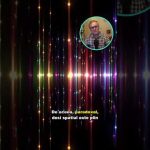
An ethereal dance of misty clouds of interstellar dust with a myriad of distant stars and galaxies speckled like paint drops over a black canvas. This is a sonification of a breathtaking image taken by ESA’s Euclid space telescope of the young star-forming region Messier 78.
The sonification offers a different representation of the data collected by Euclid, and lets us explore the stellar nurseries in M78 through sound. Close your eyes and listen to let the cosmic image be drawn by your mind’s eye, or watch as the traceback line in this video follows the sounds to colour the image from left to right.
The twinkling sounds of various pitches and volumes represent the galaxies and stars in the frame. The pitch of the sound points towards where we see the dot of light in the image. Higher pitches tell us that a star or galaxy appears further at the top in the image along the traceback line.
The brightness of these objects in and around M78 are represented by the volume of the twinkles. Whenever we hear a particularly loud clink, the star or galaxy that Euclid observed appears particularly bright in the image.
Underlying these jingling sounds, we can hear a steady undertone, made up of two chords which represent different regions in Messier 78. This sound intensifies as the traceback line approaches first the brightest, and later the densest regions in the nebula.
The first two deeper crescendos in this undertone indicate two patches in the image where the most intense colour is blue/purple. These appear as two ‘cavities’ in M78, where newly forming stars carve out and illuminate the dust and gas in which they were born.
The chords intensify a third time at a slightly higher pitch corresponding to the red-orange colours in the image, as the sound draws over the densest star-forming region of the frame. This stellar nursery is hidden by a layer of dust and gas that is so thick that it obscures almost all the light of the young stars within it.
Many thanks to Klaus Nielsen (DTU Space / Maple Pools) for making the sonification in this video. If you would like to hear more sonifications and music by this artist, please visit: https://linktr.ee/maplepools
————————————————— Credits Credit: ESA/Euclid/Euclid Consortium/NASA, image processing by J.-C. Cuillandre (CEA Paris-Saclay) and G. Anselmi, sonification by K. Nielsen (DTU Space/Maple Pools) License: CC BY-SA 3.0 or ESA Standard License
Video credit slate ESA/Euclid/Euclid Consortium/NASA Image processing: J.-C. Cuillandre (CEA Paris-Saclay), G. Anselmi Data sonification & music: Klaus Nielsen (DTU Space/Maple Pools) —————————————————
★ Subscribe: http://bit.ly/ESAsubscribe and click twice on the bell button to receive our notifications.
We are Europe’s gateway to space. Our mission is to shape the development of Europe’s space capability and ensure that investment in space continues to deliver benefits to the citizens of Europe and the world. Check out https://www.esa.int/ to get up to speed on everything space related.
ESA’s Euclid mission is designed to explore the composition and evolution of the dark Universe. The space telescope will create a great map of the large-scale structure of the Universe across space and time by observing billions of galaxies out to 10 billion light-years, across more than a third of the sky. Euclid will explore how the Universe has expanded and how structure has formed over cosmic history, revealing more about the role of gravity and the nature of dark energy and dark matter.
Euclid is a fully European mission, built and operated by ESA, with contributions from NASA. The Euclid Consortium – consisting of more than 2000 scientists from 300 institutes in 13 European countries, the US, Canada and Japan – provided the scientific instruments and scientific data analysis. ESA selected Thales Alenia Space as prime contractor for the construction of the satellite and its Service Module, with Airbus Defence and Space chosen to develop the Payload Module, including the telescope. NASA provided the near-infrared detectors of the NISP instrument.
More about Euclid: esa.int/euclid
★ Subscribe: http://bit.ly/ESAsubscribe and click twice on the bell button to receive our notifications.
We are Europe’s gateway to space. Our mission is to shape the development of Europe’s space capability and ensure that investment in space continues to deliver benefits to the citizens of Europe and the world. Check out https://www.esa.int/ to get up to speed on everything space related.
ESA astronaut Matthias Maurer returned from his first mission to the International Space Station, known as ‘Cosmic Kiss’, on Friday 6 May 2022. Revisit some of the highlights of his first stay in orbit with us. During his mission, Matthias became the 600th person in space, conducted his first spacewalk, and supported over one hundred cutting-edge scientific experiments – the findings of which will improve life back here on Earth.
We are Europe’s gateway to space. Our mission is to shape the development of Europe’s space capability and ensure that investment in space continues to deliver benefits to the citizens of Europe and the world. Check out https://www.esa.int/ to get up to speed on everything space related.
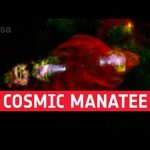
ESA’s XMM-Newton has X-rayed this beautiful cosmic creature, known as the Manatee Nebula, pinning down the location of unusual particle acceleration in its ‘head’.
The Manatee Nebula, or W50, is thought to be a large supernova remnant created when a giant star exploded around 30 000 years ago, flinging its shells of gases out across the sky. It is one of the largest such features known, spanning the equivalent size of four full Moons.
Unusually for a supernova remnant, a black hole remains in its core. This central ‘microquasar’, known as SS 433, emits powerful jets of particles travelling at speeds close to a quarter the speed of light that punch through the gassy shells, creating the double-lobed shape.
SS 433 is identified by the red dot in the middle of the image. The X-ray data acquired by XMM-Newton are represented in yellow (soft X-rays), magenta (medium energy X-rays) and cyan (hard X-ray emission), while red is radio and green optical wavelengths imaged by the Very Large Array and the Skinakas Observatory in Greece, respectively. @NASA NuSTAR and Chandra data were also used for the study (not shown in this image).
The nebula attracted attention in 2018 when the High-Altitude Water Cherenkov Observatory, which is sensitive to very high energy gamma-ray photons, revealed the presence of highly energetic particles (hundreds of tera electron volts), but could not pinpoint from where within the Manatee the particles were originating.
XMM-Newton was crucial in homing in on the region of particle acceleration in the X-ray jet blasting from the Manatee’s head, which begins about 100 light years away from the microquasar (represented by the magneta and cyan colours towards the left side SS 433) and extends to approximately 300 light years (coinciding with the radio ‘ear’ where the shock terminates).
Samar Safi-Harb of the University of Manitoba, Canada, who led the study, says “thanks to the new XMM-Newton data, supplemented with NuSTAR and Chandra data, we believe the particles are getting accelerated to very high energies in the head of the Manatee through an unusually energetic particle acceleration process. The black hole outflow likely made its way there and has been re-energized to high-energy radiation at that location, perhaps due to shock waves in the expanding gas clouds and enhanced magnetic fields.”
The nebula acts as a nearby laboratory for exploring a wide range of astrophysical phenomena associated with the outflows of many galactic and extragalactic sources and will be subject to further investigation. Furthermore, follow-up studies by ESA’s future Athena X-ray observatory will provide even more sensitive details about the inner workings of this curious cosmic Manatee.
Credits: S. Safi-Harb et al (2022)
★ Subscribe: http://bit.ly/ESAsubscribe and click twice on the bell button to receive our notifications.
We are Europe’s gateway to space. Our mission is to shape the development of Europe’s space capability and ensure that investment in space continues to deliver benefits to the citizens of Europe and the world. Check out https://www.esa.int/ to get up to speed on everything space related.
The Crew Dragon capsule carrying ESA astronaut Matthias Maurer and @NASA astronauts Raja Chari, Thomas Marshburn and Kayla Barron home from the International Space Station splashed down off the coast of Florida, USA, on Friday 6 May 2022 at 05:43 BST/06:43 CEST.
Its return marks the end of Crew-3’s almost six-month stay in orbit and the end of Matthias’s first mission, known as Cosmic Kiss.
Crew-3 undocked from the International Space Station in Crew Dragon spacecraft Endurance at 06:20 BST/07:20 CEST Thursday 5 May.
When a Crew capsule splashes down, it is met by nearby ships with experts ready to bring it on board, open the hatch, and welcome the astronauts home. After initial medical checks, the crew is transported by helicopter to shore.
Now that his mission has come to an end, Matthias will return to ESA’s European Astronaut Centre in Cologne, Germany, where he will participate in post-flight debriefings, provide samples for scientific evaluation and readapt to Earth’s gravity with the support of ESA experts.
We are Europe’s gateway to space. Our mission is to shape the development of Europe’s space capability and ensure that investment in space continues to deliver benefits to the citizens of Europe and the world. Check out https://www.esa.int/ to get up to speed on everything space related.
On 23 March 2022, ESA astronaut Matthias Maurer successfully performed his first extravehicular activity (EVA) alongside fellow @NASA astronaut Raja Chari. The spacewalk, dubbed “US EVA 80”, was carried out in support of assembly, refurbishment and maintenance work on the International Space Station.
In this video, Matthias Maurer answers questions and reports on his experiences, feelings and the challenges he faced during his almost seven-hour-long spacewalk.
00:00 – 01:56 What was it like to leave the ISS for the fist time? 01:57 – 04:07 Can you compare a spacewalk with underwater training? 04:08 – 05:37 What was your most difficult task? 05:38 – 08:17 There was a “problem” at the beginning. What happened? 08:18 – 10:21 Were you able to enjoy the view? 10:22 – 11:46 You flew over your homeland, Saarland, during the EVA. Were you able to see your home? 11:47 – 12:39 What surprised you the most and what did you not expect at all? 12:40 – 16:26 How did you feel afterwards and how did you sleep?
During his Cosmic Kiss mission, Matthias Maurer will live and work aboard the International Space Station for approximately six months, conducting and supporting more than 35 European and numerous other international experiments in orbit.
We are Europe’s gateway to space. Our mission is to shape the development of Europe’s space capability and ensure that investment in space continues to deliver benefits to the citizens of Europe and the world. Check out https://www.esa.int/ to get up to speed on everything space related.
Europe’s Columbus laboratory is a hive of activity in this 360° timelapse as ESA astronaut Matthias Maurer works on an experiment called Fluidics and his @NASA colleague Raja Chari carries out activity in the Veggie plant habitat.
Developed by French space agency @CNES and co-funded by @Airbus, the Fluidics experiment investigates how liquids behave in space. It was first run by ESA astronaut Thomas Pesquet in 2017 during his Proxima mission.
Made up of six small, transparent spheres housed in the black centrifuge seen here, the experiment studies two phenomena. The first is ‘sloshing’ or how liquids move in enclosed spaces. The second is wave turbulence.
Understanding the underlying physics of how liquids move in space will help improve the fuel economy of spacecraft and our knowledge of Earth’s oceans. By observing how surface forces behave in reduced gravity and singling out interactions, scientists aim to improve climate models for forecasting sea states and better understand wave formation on Earth.
Fluidics is just one of many European and international science experiments Matthias is supporting throughout his six-month Cosmic Kiss mission.
We are Europe’s gateway to space. Our mission is to shape the development of Europe’s space capability and ensure that investment in space continues to deliver benefits to the citizens of Europe and the world. Check out https://www.esa.int/ to get up to speed on everything space related.
On 11 November 2021, ESA astronaut Matthias Maurer was launched to the International Space Station for his first mission, Cosmic Kiss. Around 100 days later, we reflect on some highlights from space.
Matthias flew to the Station on a @SpaceX Crew Dragon alongside @NASA astronauts and fellow first-time fliers Kayla Barron and Raja Chari, and NASA spaceflight veteran Tom Marshburn. Collectively known as Crew-3, they were welcomed as members of Expedition 66 by Commander Anton Shkaplerov, cosmonaut Pyotr Dubrov and NASA’s Mark Vande Hei.
While in orbit, Matthias is supporting over 35 European and many more international experiments. The outcomes of these experiments will advance our knowledge in areas ranging from human health to materials science, physics, Earth observation, technology development and more.
Matthias is expected to spend approximately six months in orbit and there are many more highlights to come.
We are Europe’s gateway to space. Our mission is to shape the development of Europe’s space capability and ensure that investment in space continues to deliver benefits to the citizens of Europe and the world. Check out https://www.esa.int/ to get up to speed on everything space related.
Aici vedem sateliții Io și Europa orbitand în jurul lui Jupiter. Io este mai departe de noi și Europa mai aproape. În spate se vede Marea Pată Roșie, care este o furtună violentă ce durează de peste două sute de ani pe Jupiter și este mai mare decât Pământul (nu e clar daca Galileo a vazut-o, pe la 1830 apar primele desene). Videoul a fost realizat de Kevin M. Gill de la NASA, care a combinat imagini ale sondei Cassini.
Tour the Italian-built Permanent Multipurpose Module (PMM) of the International Space Station in 360° with ESA astronaut Matthias Maurer.
Attached to Node 3, PMM is a large, reusable, pressurised element that was originally used to ferry cargo to and from the Station. It can hold up to 16 racks of equipment, experiments and supplies and has an end-cone with additional storage space for cargo bags, trash and other items.
The only thing PMM has no room for is a fear of enclosed spaces. Watch as Matthias maneuvers between the boxes and bags in this vital module in orbit.
Matthias is currently living and working aboard the International Space Station for his first mission, Cosmic Kiss. Find out more about Matthias and his ESA mission on the Cosmic Kiss mission webpage.
We are Europe’s gateway to space. Our mission is to shape the development of Europe’s space capability and ensure that investment in space continues to deliver benefits to the citizens of Europe and the world. Check out https://www.esa.int/ to get up to speed on everything space related.
Scientist, engineer, test subject and tradesperson – astronauts in orbit wear many different hats. In this 360° timelapse, ESA astronaut Matthias Maurer works to repair a faulty valve behind EXPRESS-Rack 3.
Water On-Off Valve 8 (WOOV-8), along with WOOV-6 and WOOV-7, determines whether the cooling water of Europe’s Columbus module flows through, or bypasses, the heat exchange system that transfers waste heat to downstream cooling circuits outside the International Space Station. The valve has been a problem child for ground teams and astronauts for the past few years and was first replaced during a complicated operation in 2013.
It was last replaced by ESA astronaut Thomas Pesquet in October 2021, but continued issues led Matthias to try out a reserve valve to see if an unplanned conversion was possible. The operation was successfully completed on the real WOOV-8 in December 2021, and all involved breathed a sigh of relief.
Performing maintenance and repair tasks in weightlessness is especially difficult as astronauts have the added challenge of trying to hold themselves in position while turning a screw or securing a hatch. Watch Matthias carefully fold down the rack, set-up lighting and complete the task as you explore his workspace in 360°.
Matthias was launched to the International Space Station for his Cosmic Kiss mission on 11 November 2021. He will spend approximately six months living and working in orbit, supporting over 35 European and many more international experiments on board.
We are Europe’s gateway to space. Our mission is to shape the development of Europe’s space capability and ensure that investment in space continues to deliver benefits to the citizens of Europe and the world. Check out https://www.esa.int/ to get up to speed on everything space related.
Immerse yourself in 360° of science with ESA astronaut Matthias Maurer as he prepares an experiment to examine how human cells behave in weightlessness.
The Cytoskeleton experiment is a biological study that aims to determine the changing function of RhoGTPases when in vitro cell cultures are exposed to weightlessness. It will run in the Biolab facility of Europe’s Columbus laboratory.
In this video, we see Matthias remove Cytoskeleton cell cultures from the Minus Eighty Lab Freezer ISS (MELFI) and prepare them in the Life Sciences Glovebox (LSG) before installing the experiment in Columbus’s BioLab.
Matthias was launched to the International Space Station for his current Cosmic Kiss mission on 11 November 2021. In his approximately six months on board, he will support over 35 European experiments and many more international experiments in orbit.
We are Europe’s gateway to space. Our mission is to shape the development of Europe’s space capability and ensure that investment in space continues to deliver benefits to the citizens of Europe and the world. Check out https://www.esa.int/ to get up to speed on everything space related.
Join ESA astronaut Matthias Maurer inside Kibo, the Japanese laboratory module of the International Space Station in 360°, setting up Astrobee robotic free-flyers for the ReSWARM experiment. Short for RElative Satellite sWArming and Robotic Maneuvering, this robotics demonstration tests autonomous microgravity motion planning and control for on-orbit assembly and coordinated motion.
This investigation aims to test coordination between multiple robots, robots and cargo, and robots and their operating environment as developers envision the future of autonomous robot operations in space.
Matthias was launched to the International Space Station on Crew Dragon Endurance as part of Crew-3 at 02:03 GMT/03:03 CET Thursday 11 November 2021. His ESA mission on board is known as Cosmic Kiss and will see him live and work for approximately six months in orbit.
We are Europe’s gateway to space. Our mission is to shape the development of Europe’s space capability and ensure that investment in space continues to deliver benefits to the citizens of Europe and the world. Check out https://www.esa.int/ to get up to speed on everything space related.
Feel like a guest and join ESA astronaut Matthias Maurer and his Expedition 66 crew mates enjoying a festive Thanksgiving meal on board the International Space Station in 360°. Explore the space station’s dining area and see what’s on the menu for this year’s orbital Thanksgiving.
Matthias says: “One of the best things about international collaboration, beyond our daily work on science and operations, is sharing international celebrations and culture. I’m thankful for all my crew mates up here on the International Space Station and everyone supporting our mission from Earth”.
Matthias was launched to the International Space Station on Crew Dragon Endurance as part of Crew-3 at 02:03 GMT/03:03 CET Thursday 11 November 2021. His ESA mission is known as Cosmic Kiss and will see him live and work in orbit for approximately six months.
We are Europe’s gateway to space. Our mission is to shape the development of Europe’s space capability and ensure that investment in space continues to deliver benefits to the citizens of Europe and the world. Check out https://www.esa.int/ to get up to speed on everything space related.
Join ESA astronaut Matthias Maurer inside the seven-windowed cupola, the International Space Station’s “window to the world” and pan around to enjoy the view.
The ESA – European Space Agency-built Cupola is the favourite place of many astronauts on the International Space Station.
It serves not only as a unique photo spot, but also for observing robotic activities of the Canadian Space Agency’s robotic arm Canadarm2, arriving spacecraft and spacewalks.
Just outside the cupola and behind Matthias is a portion of the Soyuz MS-19 crew ship docked to the Rassvet module and the Prichal docking module attached to the Nauka multipurpose laboratory service module.
Matthias was launched to the International Space Station on Crew Dragon Endurance as part of Crew-3 at 02:03 GMT/03:03 CET Thursday 11 November. His ESA mission on board is known as Cosmic Kiss and will see him live and work for approximately six months in orbit.
We are Europe’s gateway to space. Our mission is to shape the development of Europe’s space capability and ensure that investment in space continues to deliver benefits to the citizens of Europe and the world. Check out https://www.esa.int/ to get up to speed on everything space related.
Even astronauts in orbit cannot escape housework. Join ESA astronaut Matthias Maurer as he vacuums the European Columbus and Japanese Kibo modules of the International Space Station in this 360° video.
Unlike on Earth, dust on the Space Station does not settle. Astronauts vacuum regularly to prevent floating dust from getting in their eyes and noses, causing irritation and allergic reactions. Pan to explore the different modules and follow Matthias’s work.
Matthias was launched to the International Space Station on Crew Dragon Endurance as part of Crew-3 at 02:03 GMT/03:03 CET Thursday 11 November. His ESA mission on board is known as Cosmic Kiss and will see him live and work for approximately six months in orbit.
We are Europe’s gateway to space. Our mission is to shape the development of Europe’s space capability and ensure that investment in space continues to deliver benefits to the citizens of Europe and the world. Check out https://www.esa.int/ to get up to speed on everything space related.
Explore the International Space Station’s Cupola module in 360 degrees while ESA astronaut Matthias Maurer lifts weights in weightlessness. This 360 timelapse video was shot over 53 minutes, at a rate one frame every two seconds, as Matthias completed a workout on the Advanced Resistive Exercise Device (ARED).
Pan to watch the world go by as the Station orbits Earth at around 28 000 km/h, then see how Matthias keeps his muscles and bones healthy for a safe return to Earth.
Exercise is an important part of an astronaut’s daily routine. It not only keeps them fit and ready for demanding tasks like a spacewalk, but it also helps to combat bone and muscle loss caused by a prolonged stay in orbit. ARED is one of several exercise devices astronauts use on Station. They also have a treadmill called T2 and an exercycle known as CEVIS.
Matthias was launched to the International Space Station on Crew Dragon Endurance as part of Crew-3 at 02:03 GMT/03:03 CET Thursday 11 November. His ESA mission on board is known as Cosmic Kiss and will see him live and work for approximately six months in orbit.
We are Europe’s gateway to space. Our mission is to shape the development of Europe’s space capability and ensure that investment in space continues to deliver benefits to the citizens of Europe and the world. Check out https://www.esa.int/ to get up to speed on everything space related.
ESA astronaut Matthias Maurer and @NASA astronauts Raja Chari, Tom Marshburn and Kayla Barron liftoff to the International Space Station in the @SpaceX Crew Dragon spacecraft “Endurance”.
Collectively known as “Crew-3”, the astronauts were launched from launchpad 39A at @NASAKennedy in Florida, USA at 02:03 GMT/03:03 CET Thursday 11 November.
The spacecraft docked to the International Space Station at 00:32 CET Friday, 12 November/23:32 GMT Thursday, 11 November, marking the official start of Matthias’s first mission ‘Cosmic Kiss’.
Crew-3 will spend around six months living and working aboard the orbital outpost before returning to Earth. It is the first space mission for Matthias, who’s become the 600th human to fly to space. He chose the name “Cosmic Kiss” for his mission as a declaration of love for space.
Matthias has a background in materials science and looks forward to supporting a wide range of science and research in orbit. The work he carries out throughout his mission will contribute to the success of future space missions and help enhance life on Earth.
We are Europe’s gateway to space. Our mission is to shape the development of Europe’s space capability and ensure that investment in space continues to deliver benefits to the citizens of Europe and the world. Check out https://www.esa.int/ to get up to speed on everything space related.
Watch the full replay of ESA astronaut Matthias Maurer’s pre-launch news conference at ESA’s European Astronaut Centre (EAC) in Cologne, Germany.
Held in both English and German on 9 September 2021, the conference covers ESA’s vision for human and robotic exploration as well as the science and operations Matthias will support on the International Space Station during his six-month Cosmic Kiss mission.
Cosmic Kiss is Matthias’s first space mission. He will be launched from the Kennedy Space Center in Florida, USA as a member of US Commercial Crew-3 alongside @NASA astronauts Thomas Marshburn, Raja Chari and Kayla Barron.
While in orbit, Matthias will support over 35 European experiments and many more international experiments. He will also be the first European to perform a Russian spacewalk since Thomas Reiter in the 1990s. Knowledge gained through the Cosmic Kiss mission will shape the future of space exploration and help enhance life on Earth.
Conference panellists are: ESA Director General Josef Aschbacher, ESA Director of Human and Robotic Exploration David Parker, ESA International Space Station Programme Manager and Head of EAC Frank De Winne, Director General of @DLR and Member of the DLR Executive Board Walther Pelzer, and ESA Astronaut Matthias Maurer. This conference was moderated by ESA Communication Programme Officer for Human and Robotic Exploration Marco Trovatello.
We are Europe’s gateway to space. Our mission is to shape the development of Europe’s space capability and ensure that investment in space continues to deliver benefits to the citizens of Europe and the world. Check out https://www.esa.int/ to get up to speed on everything space related.
ESA astronaut Matthias Maurer from Germany has been assigned his first mission to the International Space Station. He is expected to fly to the Space Station in the autumn of 2021. The mission is called Cosmic Kiss and Maurer will spend six months in orbit, carrying out vital science and operations on behalf of researchers and international partners worldwide.
We are Europe’s gateway to space. Our mission is to shape the development of Europe’s space capability and ensure that investment in space continues to deliver benefits to the citizens of Europe and the world. Check out https://www.esa.int/ to get up to speed on everything space related.
NOVA has teamed up with Cook’s Illustrated to cook up a recipe for stars and black holes – a culinary “course” on how the most mysterious objects in the universe are created.
Scientific notes:
Stellar mass black holes vs. supermassive black holes
* Stellar mass black holes form from the collapse of massive stars at the ends of their lives, so they have roughly the same mass as a star. Supermassive black holes are physically identical to their smaller counterparts, except they are 10 thousand to a billion times the size of the sun. However, their formation is more of a mystery. They may form from the merging of smaller black holes. http://astronomy.swin.edu.au/cosmos/S/Supermassive+Black+Hole
Supermassive black holes at the center of galaxies
* Almost every large galaxy has a supermassive black hole at its center, but researchers are not yet sure (https://jila.colorado.edu/research/astrophysics/black-holes-galaxies) why that’s the case, how they originate, and what their role is in the creation and evolution of galaxies.
Why are stars different colors?
* The color of a star depends on its temperature (http://www.atnf.csiro.au/outreach/education/senior/astrophysics/photometry_colour.html). The hotter a star, the higher energy its light will be. Higher energy/temperature corresponds with the blue end of the visible spectrum and lower energy/temperature corresponds with the red end.
How does dark matter make stars spin faster?
* In the 1960s, astronomers Vera Rubin and Kent Ford noticed that stars at the edges of galaxies were moving just as fast as stars at the center, which surprised them: it appeared that the force of gravity causing stars to orbit the center of the galaxy was not weakening over distance. Their observation implied that something else, distributed throughout the galaxy, was exerting a gravitation pull. We now know that that “something else,” now named dark matter, accounts for about 85% of the matter in the universe. (It existence was inferred in the 1930s, when the astronomer Fritz Zwicky(http://www2.astro.psu.edu/users/rbc/a1/week_10.html) noticed that galaxies in clusters were moving faster than they should.)
Size of the universe
* The universe is only 13.8 billion years old, but has a radius of about 46 billion light-years. If nothing can travel faster than the speed of light, how can that be? The expansion of the universe, driven by dark energy, is causing distances between objects to grow. Note that it is not moving those objects apart; rather, it is increasing the amount of space between them. https://phys.org/news/2015-10-big-universe.html
Cosmic webs
* Galaxies are not distributed randomly (http://skyserver.sdss.org/dr1/en/astro/structures/structures.asp) in space; instead, clusters of galaxies form web-like patterns. These webs consist of filaments, where dark matter and ordinary (baryonic) matter are concentrated, and voids, where galaxies are scarce. Researchers believe that these large-scale structures grew out of minor fluctuations in density at the beginning of the universe.
Composition of the early universe
* Moments after the Big Bang, the universe formed the nuclei for what would be come the universe’s hydrogen and helium atoms, with one helium nucleus for every 10 or 11 hydrogen (http://umich.edu/~gs265/bigbang.htm). When the first stars formed, there were no heavier elements — those elements formed inside stars.
String Theory Landscape
* The String Theory Landscape is a theory that the universe we live in is one of many universes. It attempts to explain how certain constants of nature seem “fine-tuned” for life, which contradicts the anthropic principle, or the notion that we humans hold a special place in the universe. https://www.scientificamerican.com/article/multiverse-the-case-for-parallel-universe/%0A
Disintegration of the universe
* In the future Degenerate Era of the universe, as space-time expands and stars burn up, all of the matter in stars will be consumed by black holes. But even black holes are not forever. Stephen Hawking theorized that black holes will slowly radiate away their mass in what is now called Hawking radiation until they too dissipate away. http://www.nytimes.com/books/first/a/adams-universe.html
______
MEDIA CREDITS:
Music provided by APM
Sound effects: Freesound.org
Additional Animations:
– Galaxy within Universe: Edgeworx;
– Stars at center of Milky Way – NASA/NCSA University of Illinois Visualization by Frank Summers, Space Telescope Science Institute, Simulation by Martin White and Lars Hernquist, Harvard University
After an epic space journey, the European Huygens probe landed on Saturn’s moon Titan, a mysterious satellite that has perplexed astronomers for decades. On 14 January 2005, Huygens made the farthest touchdown of any human-built object sent to land on another world.