Tag: CubeSats

  • Asteroid mission is getting ready ☄️ #shorts

    Asteroid mission is getting ready ☄️ #shorts

    In its latest test of readiness for space, ESA’s Hera spacecraft for planetary defence is being operated for around three weeks in hard vacuum, while being subjected to the same temperature profiles it will experience during its journey to the Didymos binary asteroid system.

    The 1.6 × 1.6 × 1.7 m spacecraft was slid inside the 4.5-m diameter, 11.8-m long Phenix thermal vacuum chamber at ESA’s ESTEC Test Centre in the Netherlands.

    “You’re always a bit nervous when your baby gets moved about,” remarks Ian Carnelli, overseeing Hera for ESA. “Right now it’s being shut into a dark airless box for weeks on end, but we have confidence it will perform well.”

    Hera can be seen receded into the rectangular ‘thermal tent’ within Phenix. The six copper walls of this internal box can be heated up to 100°C or cooled via piped liquid nitrogen down to –190°C, all independently from each other.

    Then, after the main door of the stainless steel Phenix chamber was slid shut, the air within the chamber was pumped out during a lengthy 20 hours process down to approximately one billionth of outside atmospheric pressure. This will allow the Hera team from ESA, European Test Services operating the Test Centre and Hera manufacturer OHB to test the spacecraft’s thermal behaviour as the temperature changes around it.

    Space is a place where it is possible to be hot and cold at the same time if one part of your spacecraft is in sunlight and another is in shade. And because there is no air, there is no conduction or convection to lose heat from your spacecraft. Instead thermal experts employ insulation and radiators to keep the body of a spacecraft within carefully chosen temperature limits. In general spacecraft electronics – just like their human makers – work best at room temperature.

    “We already have detailed models of the spacecraft’s thermal behaviour, and this spacecraft-level thermal vacuum test lets us correlate these models with reality,” explains Hera’s Product Assurance and Safety manager, Heli Greus.

    “More than 400 thermal sensors have been placed in and around Hera to give us precise knowledge of what is going on, and the test is being supervised on a 24/7 basis in case anything anomalous occurs. The spacecraft is now being put through a series of ‘cold plateaus’ and ‘hot plateaus’ representative of its mission, which will allow us to test the thermal limits of each specific unit aboard.”

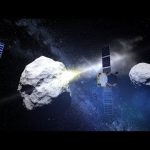
    Hera is Europe’s contribution to an international planetary defence experiment. Following the DART mission’s impact with the Dimorphos asteroid in 2022 – modifying its orbit and sending a plume of debris thousands of kilometres out into space – Hera will return to Dimorphos to perform a close-up survey of the crater left by DART. The mission will also measure Dimorphos’ mass and make-up, along with that of the larger Didymos asteroid that Dimorphos orbits around. Hera is due for launch in October 2024.

    The ESTEC Test Centre in the Netherlands is the largest facility of its kind in Europe, providing a complete suite of equipment for all aspects of satellite testing under a single roof.

    Credits: ESA – European Space Agency

    #ESA #Hera #Asteroid
  • Hera asteroid mission goes on trial

    Hera asteroid mission goes on trial

    At some point, statistically speaking, a large asteroid will impact Earth. Whether that’s tomorrow, in ten years, or a problem for our descendants, ESA is getting prepared.

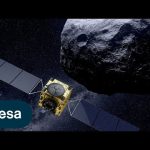
    As part of the world’s first test of asteroid deflection, ESA’s Hera mission will perform a detailed post-impact survey of Dimorphos – the 160-metre asteroid struck, and successfully deflected, by NASA’s DART spacecraft.

    Hera will soon study the aftermath. Launching in October 2024, Hera will turn this grand-scale experiment into a well-understood and hopefully repeatable planetary defence technique.

    But before Hera and its two CubeSats fly, they’re rigorously tested at ESA’s ESTEC test centre in Noordwijk, the Netherlands. From the force and noise of the rocket take-off to the sustained vacuum and temperature extremes of deep space, all aspects of Hera’s functioning are checked before they begin their journey, alone in space.

    Credits: ESA – European Space Agency

    ★ Subscribe: http://bit.ly/ESAsubscribe and click twice on the bell button to receive our notifications.

    Check out our full video catalog: http://bit.ly/SpaceInVideos
    Follow us on Twitter: http://bit.ly/ESAonTwitter
    On Facebook: http://bit.ly/ESAonFacebook
    On Instagram: http://bit.ly/ESAonInstagram
    On LinkedIn: https://bit.ly/ESAonLinkedIn
    On Pinterest: https://bit.ly/ESAonPinterest
    On Flickr: http://bit.ly/ESAonFlickr

    We are Europe’s gateway to space. Our mission is to shape the development of Europe’s space capability and ensure that investment in space continues to deliver benefits to the citizens of Europe and the world. Check out https://www.esa.int/ to get up to speed on everything space related.

    Copyright information about our videos is available here: https://www.esa.int/ESA_Multimedia/Terms_and_Conditions

    #ESA
    #Asteroid
    #HeraMission

  • Launch of Cyclone-Tracking TROPICS CubeSats from New Zealand, Pt. II (Official NASA Broadcast)

    Launch of Cyclone-Tracking TROPICS CubeSats from New Zealand, Pt. II (Official NASA Broadcast)

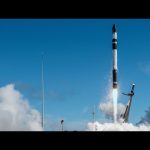
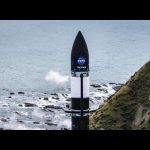
    NASA and Rocket Lab will launch two small satellites to join two already in orbit for NASA’s TROPICS (Time-Resolved Observations of Precipitation structure and storm Intensity with a Constellation of Smallsats) mission. Liftoff on an Electron rocket is targeted for no earlier than 11:30 p.m. EDT Thursday, May 25 (0330 UTC Friday, May 26) from Rocket Lab’s Launch Complex-1 in Māhia, New Zealand.

    The TROPICS mission will study the formation and development of tropical cyclones, making observations of temperature, precipitation, water vapor, and cloud ice more often than what is possible with current weather satellites.

    A recording of the May 7 TROPICS launch can be found at https://www.youtube.com/watch?v=AjnByCGS2Bs. />
    Image Credit: Rocket Lab

  • Launch of Cyclone-Tracking TROPICS CubeSats from New Zealand (Official NASA Broadcast)

    Launch of Cyclone-Tracking TROPICS CubeSats from New Zealand (Official NASA Broadcast)

    Launch of NASA’s Time-Resolved Observations of Precipitation structure and storm Intensity with a Constellation of Smallsats (TROPICS) mission is now targeted for 9 p.m. EDT, Sunday, May 7 (0100 UTC, Monday May 8) from Rocket Lab’s Launch Complex-1 in Māhia, New Zealand.

    NASA and Rocket Lab will launch two CubeSats into orbit for the TROPICS (Time-Resolved Observations of Precipitation structure and storm Intensity with a Constellation of Smallsats) mission.

    TROPICS is a constellation of four identical CubeSats designed to observe tropical cyclones from low Earth orbit, making observations more frequently than current weather tracking satellites. A second launch from Rocket Lab will carry two additional CubeSats, with exact launch times contingent on the date and time of the first launch.

    Download Link: https://images.nasa.gov/details/Launch%20of%20Cyclone-Tracking%20TROPICS%20CubeSats%20from%20New%20Zealand%20%28Official%20NASA%20Broadcast%29

    Image Credit: Rocket Lab

  • Shoebox-size satellites for Artemis I #shorts

    Shoebox-size satellites for Artemis I #shorts

    Joining @NASA’s Orion spacecraft on the powerful Space Launch System rocket are ten CubeSats that will help prepare for the return of astronauts to our lunar companion. Our deep space antennas, along with the Goonhilly Earth Station in the UK, are tracking six of the small satellites, ensuring they arrive where they need to be, and their data gets back home.

    Learn more: https://www.esa.int/Enabling_Support/Operations/ESA_Ground_Stations/Europe_to_support_Artemis_CubeSats_in_return_to_Moon

    ★ Subscribe: http://bit.ly/ESAsubscribe and click twice on the bell button to receive our notifications.

    Check out our full video catalog: http://bit.ly/SpaceInVideos
    Follow us on Twitter: http://bit.ly/ESAonTwitter
    On Facebook: http://bit.ly/ESAonFacebook
    On Instagram: http://bit.ly/ESAonInstagram
    On LinkedIn: https://bit.ly/ESAonLinkedIn
    On Pinterest: https://bit.ly/ESAonPinterest
    On Flickr: http://bit.ly/ESAonFlickr

    We are Europe’s gateway to space. Our mission is to shape the development of Europe’s space capability and ensure that investment in space continues to deliver benefits to the citizens of Europe and the world. Check out https://www.esa.int/ to get up to speed on everything space related.

    Copyright information about our videos is available here: https://www.esa.int/ESA_Multimedia/Terms_and_Conditions

    #ESA
    #CubeSats
    #ForwardToTheMoon

  • After DART comes Hera

    After DART comes Hera

    The night of 26 September 2022 will make space history – as the moment when @NASA’s DART spacecraft impacts the Dimorphos asteroid in an attempt to divert its course – humankind’s first planetary defence test. Next, in 2024, ESA launches its Hera spacecraft to investigate the post-impact asteroid. In fact, Hera is not one spacecraft but three: it carries with it ESA’s first deep-space CubeSats to make extra observations of its target.

    With the Hera mission, ESA is assuming even greater responsibility for protecting our planet and ensuring that Europe plays a leading role in the common effort to tackle asteroid risks.

    In this video, Ian Carnelli, Hera mission manager, and members of the Hera team, reflect on the DART impact and introduce Hera and its Milani and Juventas CubeSats.

    ★ Subscribe: http://bit.ly/ESAsubscribe and click twice on the bell button to receive our notifications.

    Check out our full video catalog: http://bit.ly/SpaceInVideos
    Follow us on Twitter: http://bit.ly/ESAonTwitter
    On Facebook: http://bit.ly/ESAonFacebook
    On Instagram: http://bit.ly/ESAonInstagram
    On LinkedIn: https://bit.ly/ESAonLinkedIn
    On Pinterest: https://bit.ly/ESAonPinterest
    On Flickr: http://bit.ly/ESAonFlickr

    We are Europe’s gateway to space. Our mission is to shape the development of Europe’s space capability and ensure that investment in space continues to deliver benefits to the citizens of Europe and the world. Check out https://www.esa.int/ to get up to speed on everything space related.

    Copyright information about our videos is available here: https://www.esa.int/ESA_Multimedia/Terms_and_Conditions

    #ESA #Hera #DartMisson

  • Tracking NASA’s DART asteroid impact #shorts

    Tracking NASA’s DART asteroid impact #shorts

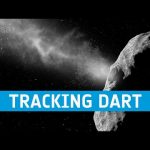
    All eyes are looking up as @NASA intentionally crashes the 550 kg DART spacecraft into an orbiting asteroid at high speed. Our Estrack network of ground stations, Europe’s ‘eyes on the sky’, will be particularly focused on the humanmade impactor, keeping track as it closes in on the 160-metre-wide moving target in the world’s first test of asteroid deflection.

    Learn more: https://www.esa.int/Space_Safety/Planetary_Defence/ESA_deep_space_network_tracks_DART_asteroid_impact

    ★ Subscribe: http://bit.ly/ESAsubscribe and click twice on the bell button to receive our notifications.

    Check out our full video catalog: http://bit.ly/SpaceInVideos
    Follow us on Twitter: http://bit.ly/ESAonTwitter
    On Facebook: http://bit.ly/ESAonFacebook
    On Instagram: http://bit.ly/ESAonInstagram
    On LinkedIn: https://bit.ly/ESAonLinkedIn
    On Pinterest: https://bit.ly/ESAonPinterest
    On Flickr: http://bit.ly/ESAonFlickr

    We are Europe’s gateway to space. Our mission is to shape the development of Europe’s space capability and ensure that investment in space continues to deliver benefits to the citizens of Europe and the world. Check out https://www.esa.int/ to get up to speed on everything space related.

    Copyright information about our videos is available here: https://www.esa.int/ESA_Multimedia/Terms_and_Conditions

    #ESA
    #DART
    #AsteroidDeflection

  • SSMS inaugural flight on Vega

    SSMS inaugural flight on Vega

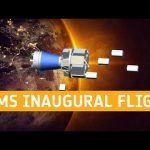
    Multiple small satellites will be launched at once on the Vega VV16 mission from Europe’s Spaceport in Kourou, French Guiana. This flight will demonstrate the modular SSMS dispenser resting on its upper stage intended to bring routine affordable launch opportunities for light satellites from 0.2 kg CubeSats up to 400 kg minisatellites.

    Until now the smallest classes of satellites – all the way down to tiny CubeSats, built from 10 cm modular boxes – have typically ‘piggybacked’ to orbit. They have to make use of any spare capacity as a single large satellite is launched, meaning their overall launch opportunities are limited.

    The new Vega Small Spacecraft Mission Service switches this into a ‘rideshare’ model, with multiple small satellites being flown together, splitting the launch cost.

    SAB Aeropsace in the Czech Republic and Bercella in Italy designed and manufactured this modular dispenser for ESA’s Vega prime contractor Avio. The component structures are made of very low-density aluminium ‘sandwich’ panels protected by carbon fibre reinforced polymer skins. This makes it very lightweight and rigid.

    The SSMS comprises two main sections, the hexagonal lower section can hold six nanosatellites or up to a dozen CubeSat deployers while the upper section section is used for microsatellites, minisatellites and small satellites. The lower section can also be used independently, coupled with a larger satellite replacing the top section.

    The hexagonal module, a central column, towers, a supporting platform and a set of standard satellite interface spacers are assembled to suit each mission and combination of satellites. For this flight, a configuration called Flexi-3 weighing just 330 kg is being used.

    This demonstration flight aims to prove the technical and financial viability of the rideshare service. ESA has collaborated with the European Union, which has partly funded this mission within the Horizon 2020 programme. This is part of the Contribution Agreement between ESA and the EU on space technology activities signed on 16 April 2019.

    The animation shows the separation of the ESAIL mission which is a joint ESA LuxSpace project to extend the monitoring of maritime traffic beyond existing land-based tracking of Automatic Identification Systems (AIS) through the means of an array of microsatellites: SAT-AIS.

    ★ Subscribe: http://bit.ly/ESAsubscribe and click twice on the bell button to receive our notifications.

    Check out our full video catalog: http://bit.ly/SpaceInVideos
    Follow us on Twitter: http://bit.ly/ESAonTwitter
    On Facebook: http://bit.ly/ESAonFacebook
    On Instagram: http://bit.ly/ESAonInstagram
    On Flickr: http://bit.ly/ESAonFlickr

    We are Europe’s gateway to space. Our mission is to shape the development of Europe’s space capability and ensure that investment in space continues to deliver benefits to the citizens of Europe and the world. Check out http://www.esa.int/ESA to get up to speed on everything space related.

    Copyright information about our videos is available here: http://www.esa.int/spaceinvideos/Terms_and_Conditions

    #ESA
    #SSMS
    #VegaVV16

  • Earth from Space: Barcelona

    Earth from Space: Barcelona

    The Copernicus Sentinel-2 mission takes us over Barcelona, the second largest city in Spain, in this week’s edition of the Earth from Space programme.

    Download the image: https://www.esa.int/ESA_Multimedia/Images/2020/06/Barcelona_Spain

    ★ Subscribe: http://bit.ly/ESAsubscribe and click twice on the bell button to receive our notifications.

    Check out our full video catalog: http://bit.ly/SpaceInVideos
    Follow us on Twitter: http://bit.ly/ESAonTwitter
    On Facebook: http://bit.ly/ESAonFacebook
    On Instagram: http://bit.ly/ESAonInstagram
    On Flickr: http://bit.ly/ESAonFlickr

    We are Europe’s gateway to space. Our mission is to shape the development of Europe’s space capability and ensure that investment in space continues to deliver benefits to the citizens of Europe and the world. Check out http://www.esa.int/ESA to get up to speed on everything space related.

    Copyright information about our videos is available here: http://www.esa.int/spaceinvideos/Terms_and_Conditions

    #ESA
    #EarthFromSpace
    #Barcelona

  • ESA webinars – CubeSats in the context of space debris

    ESA webinars – CubeSats in the context of space debris

    With this webinar about CubeSats in the context of space debris, we want to raise awareness of the space debris problem to the CubeSat community, present the Space Debris Mitigation (SDM) requirements and what they mean for CubeSats, discuss Post Mission Disposal (PMD) technologies, and finally, close the gap between the community and ESA to attempt involving it more in future events

    ★ Subscribe: http://bit.ly/ESAsubscribe and click twice on the bell button to receive our notifications.

    Check out our full video catalog: http://bit.ly/SpaceInVideos
    Follow ESA on Twitter: http://bit.ly/ESAonTwitter
    On Facebook: http://bit.ly/ESAonFacebook
    On Instagram: http://bit.ly/ESAonInstagram
    On Flickr: http://bit.ly/ESAonFlickr

    ESA is Europe’s gateway to space. Our mission is to shape the development of Europe’s space capability and ensure that investment in space continues to deliver benefits to the citizens of Europe and the world. Check out http://www.esa.int/ESA to get up to speed on everything space related.

    Copyright information about our videos is available here: http://www.esa.int/spaceinvideos/Terms_and_Conditions

    #ESA
    #SpaceDebris
    #CubeSats

  • Launching satellites from Space Station – step one

    Launching satellites from Space Station – step one

    ESA astronaut Thomas Pesquet working in the Kibo laboratory to prepare a CubeSat launch – at 30 times increased speed.

    The cylinder in the back is the mini-airlock that allows objects to be sent outside the Space Station. First Thomas and NASA astronaut Shane Kimbrough retrieved the Robotics External Leak Locator and wrapped it up for storage.

    Afterwards Thomas installs the platform that the robotic arm grabs. The pointy bit is the connector for the robotic arm.
    This video was recorded in December 2016 and was the first step for launching the CubeSats on 16 January 2017. Later Thomas put the satellite launcher on the platform and a third step is to connect the satellites themselves.

    Thomas is spending six months on the International Space Station as part of his Proxima mission. During Proxima, Thomas will perform around 50 scientific experiments for ESA and France’s space agency CNES as well as take part in many research activities for the other Station partners. The mission is part of ESA’s vision to use Earth-orbiting spacecraft as a place to live and work for the benefit of European society while using the experience to prepare for future voyages of exploration further into the Solar System.

    Connect with Thomas Pesquet: http://thomaspesquet.esa.int

    Music: Dynamic Systems – Gledden / Pedder

  • Space Station’s 100,000th Orbit on This Week @NASA – May 20, 2016

    Space Station’s 100,000th Orbit on This Week @NASA – May 20, 2016

    On May 16, the International Space Station completed its 100,000th orbit of Earth since the launch of the first component on Nov. 20, 1998. In that time, the station has traveled more than 2.6 billion miles – which is roughly the equivalent of about 10 round trips between Earth and Mars, at the average distance between the two planets. The space station zips around our planet at 17,500 miles per hour – completing each orbit in just 90 minutes – giving the crew onboard the unique opportunity to experience 16 sunrises and sunsets per day and to capture some great images of Earth. Also, CubeSats Deployed from ISS, Humans to Mars Summit 2016, Orion’s Water Drop Test “Passengers”, There’s No Place Like Space and more!

  • ESA Euronews: O gigantesco mundo dos nanossatélites

    ESA Euronews: O gigantesco mundo dos nanossatélites

    Os nanossatélites são pequenos cubos que prometem determinar o futuro da exploração espacial, desde as incursões a Marte até à observação de asteróides potencialmente perigosos para a Terra. No Centro Espacial Mektory de Tallin, na Estónia, um grupo de estudantes está precisamente a construir um destes concentrados de tecnologia.

    Também conhecidos como cubesats, os nanossatélites abrem um sem número de possibilidades na aventura espacial. Daí que o seu desenvolvimento desperte o interesse tanto das grandes agências espaciais, como das universidades, como esta na capital estoniana, que integra o centro de inovação Mektory.

  • ESA Euronews: CubeSat, a satellite in a shoe box

    ESA Euronews: CubeSat, a satellite in a shoe box

    Tiny satellites the size of a small cube, jam-packed with the most advanced nanotechnologies: is this the future of Space missions?

    To find out, ESA Euronews went to Tallin, Estonia, where students at the Mektory Space Centre are preparing the launch of their first nanosatellite.

    Nanosatellites – tiny cubes of 10cm x 10cm x 10cm, full of nanotechnologies — are going to be more and more important in the future of space exploration, from Mars missions, to the surveillance of asteroids, which could potentially be dangerous for our planet.

    Also known as ‘CubeSats’ these tiny satellites open up a whole world of possibilities for those who want to explore space.

    This video is also available in the following languages:
    French: https://www.youtube.com/watch?v=RFVJ0ZGW2nI
    German: https://www.youtube.com/watch?v=rOdjO5bhoiU
    Italian: https://www.youtube.com/watch?v=5cP0baTNDYo
    Spanish: https://www.youtube.com/watch?v=NlZSt0WfMTo
    Portuguese: https://www.youtube.com/watch?v=6tM5AXZtY18
    Greek: https://www.youtube.com/watch?v=WIIVLxcOlT0
    Hungarian: https://www.youtube.com/watch?v=XAlfhpzadWc

  • ESA Euronews: De mi az a nanoműhold?

    ESA Euronews: De mi az a nanoműhold?

    A nanoműholdak egyre fontosabbak lesznek az űrkutatásban, a Mars megfigyelésétől a Földre veszélyt jelentő aszteroidák felkutatásáig. A bennük rejlő potenciált mindenki igyekszik kiaknázni, a nagy űrügynökségektől a tudományos diákkörökig. Ez a helyzet a Mektory Űrközpontban, az észt főváros, Talinn műszaki egyetemén, ahol a diákok az első nanoműholdjuk Föld körüli pályára állítását készítik elő.

    – Azt hittem, soha nem fogok műholdat építeni, hiszen ilyesmit csak a NASA-nál csinálnak. Most meg műholdat építek az egyetemi laborban – hitetlenkedett az Euronewsnak Marta Hang, az űrközpont programasszisztense.

    A Mektory nanoműhold-programja egy nemzetközi egyetemi kezdeményezés, amelyben az oktatók és a hallgatók együttműködnek az űrkutatásban érdekelt és más technológiai cégekkel. A cél az, hogy felkészítsék a hallgatókat arra, hogy az űriparban helyezkedjenek el. A csapat jelenleg az első űrküldetését tervezi.

    – Egy kockaműholdat fejlesztünk, amely egy egységből áll, és távérzékelési célokat szolgál, vagyis képeket készít majd a Földről – magyarázza a Mektory Űrközpont igazgatója, Mart Vihmand.

  • Asteroid Impact Mission (Spanish)

    Asteroid Impact Mission (Spanish)

    La misión AIM (Asteroid Impact Mission), candidata a ser desarrollada, actualmente en fase de diseño preliminar.

    AIM se lanzaría en octubre de 2020 y su objetivo es viajar al sistema binario de asteroides Dídimos para estudiar la luna Didymoon. El sistema Didimos cuenta con un cuerpo principal de unos 800 metros de diámetro y una luna que orbita alrededor de este cuerpo principal, de unos 170 metros de diámetro aproximadamente, está luna se la conoce con el nombre de Didymoon. El sistema Didimos se aproximará a 11 millones de kilómetros de la tierra en 2022.

    AIM escaneará la pequeña Didymoon en detalle con su cámara VIS, con imágenes térmicas y un radar de alta resolución para construir mapas detallados de su superficie y estructura interior.

    La nave principal de AIM llevará al menos tres sondas más pequeñas – el módulo de aterrizaje, Mascot-2, desarrollado por el Centro Aeroespacial Alemán (Mascot-1 ya está volando en la misión Hayabusa-2 de JAXA), así como dos o más CubeSats. Así, AIM pondría a prueba las comunicaciones ópticas y los enlaces inter-satelitales en el espacio profundo, una tecnología que será esencial para la exploración futura del espacio.

    Si se aprueba, AIM también será la contribución europea a la misión AIDA, Asteroid Impact and Deflection Assessment. En 2022, la sonda DART (Double-Asteroid Redirection Test), parte dirigida por la NASA, llegará al sistema binario y se estrellará contra Didymoon a una velocidad de unos 6 km/s.

    El impacto será observado por AIM y por sus CubeSats. A través de las imágenes de alta resolución de AIM se evaluará el tamaño y la profundidad del cráter tras el impacto. AIM realizará una segunda fase de mediciones para comparar detalladamente la estructura del objeto, así como su órbita al rededor del asteroide mayor, antes y después del impacto.

    This video is also available in the following languages:
    English: https://youtu.be/h4lpu8HbpFY
    French: https://youtu.be/8GjVhBQsISc
    German: https://youtu.be/Sht_Kmaf5sU

    Credit: ESA/ScienceOffice.org

  • NASA & USDA teams to plant seeds Today on This Week @NASA – October 9, 2015

    NASA & USDA teams to plant seeds Today on This Week @NASA – October 9, 2015

    On Monday, October 5th, NASA Deputy Administrator Dava Newman and U.S. Department of Agriculture (USDA) Deputy Secretary Krysta Harden planted “Outredgeous” Red Romaine Lettuce seeds in USDA’s People’s Garden, sister seeds of those grown and harvested on the International Space Station. During the event in Washington, D.C., they also signed an a new interagency agreement expanding USDA and NASA’s commitment to promoting careers in science, technology, engineering, agriculture and math to young people. Also, CubeSats launched to test new technology, New Orion crew egress test, NASA living of Land in Space? NASA lends a helping hand for Start Ups, Meet the New Inductees to the Glenn Hall of Fame, and it’s National Cybersecurity Awareness Month, so Stop, Think & Connect.

  • ESA CubeSats deployed from the ISS

    ESA CubeSats deployed from the ISS

    On 5 October at 15:55 CEST two ESA CubeSats, the student-built AAUSAT5 and the professional technology demonstrator GomX-3, were deployed from the International Space Station (ISS). The two satellites have just started their mission in space.

    Credit: ESA/NASA/Nanoracks

  • ESA Cubesats on International Space Station

    ESA Cubesats on International Space Station

    ESA astronaut Andreas Mogensen, the first astronaut from Denmark, explains the deployment of the student-built AAUSAT5 CubeSat – the first ESA student CubeSat mission launched from space and the pilot project of ESA’s ‘Fly Your Satellite from the ISS!’ education programme.

    AAUSAT5, a CubeSat entirely built by a university team with ESA’s support, was launched to the International Space Station aboard the Japanese HTV-5 cargo vehicle 19 August 2015. Andreas gives a brief tour of the Japanese cargo vehicle’s storage space, where AAUSAT5 was housed during its flight to the Station. AAUSAT5 was taken to the Japanese Kibo Laboratory, put in a Nanoracks deployer, and placed into the airlock to be launched into space.

    AAUSAT5 will be deployed into orbit 5 October 2015. Aalborg University will host a special event in Aalborg, Denmark entitled “ESA CubeSats from the Space Station: a new path for education and technology” to celebrate the deployment.

    Credits: ESA/NASA