Tag: ESA TV

  • A sustainable future

    A sustainable future

    With the Covid-19 pandemic halting our daily lives and forcing many countries and region into lockdown, the economic effects have been devastating. Closed borders have caused traffic jams and disrupted supply chains. In Europe, for example, the agriculture industry has suffered. Normally the industry relies on migrant labour to harvest crops, but as the lockdown continues, crops remain unpicked – putting farmers and the food supply under pressure. How can the food supply chain more sustainable?

    ★ Subscribe: http://bit.ly/ESAsubscribe and click twice on the bell button to receive our notifications.

    Check out our full video catalog: http://bit.ly/SpaceInVideos
    Follow us on Twitter: http://bit.ly/ESAonTwitter
    On Facebook: http://bit.ly/ESAonFacebook
    On Instagram: http://bit.ly/ESAonInstagram
    On Flickr: http://bit.ly/ESAonFlickr

    We are Europe’s gateway to space. Our mission is to shape the development of Europe’s space capability and ensure that investment in space continues to deliver benefits to the citizens of Europe and the world. Check out http://www.esa.int/ESA to get up to speed on everything space related.

    Copyright information about our videos is available here: http://www.esa.int/spaceinvideos/Terms_and_Conditions

    #ESA
    #Sustainability
    #Covid19

  • Seen from space: COVID-19 and the environment

    Seen from space: COVID-19 and the environment

    As the COVID-19 pandemic has disrupted lives across the globe, Earth-observing satellites take the pulse of our planet from space. While the global lockdown has had a massive impact on daily life and the economy, there have been environmental benefits that are visible from space. How can we preserve these positives when returning to ‘business as usual’?

    ★ Subscribe: http://bit.ly/ESAsubscribe and click twice on the bell button to receive our notifications.

    Check out our full video catalog: http://bit.ly/SpaceInVideos
    Follow us on Twitter: http://bit.ly/ESAonTwitter
    On Facebook: http://bit.ly/ESAonFacebook
    On Instagram: http://bit.ly/ESAonInstagram
    On Flickr: http://bit.ly/ESAonFlickr

    We are Europe’s gateway to space. Our mission is to shape the development of Europe’s space capability and ensure that investment in space continues to deliver benefits to the citizens of Europe and the world. Check out http://www.esa.int/ESA to get up to speed on everything space related.

    Copyright information about our videos is available here: http://www.esa.int/spaceinvideos/Terms_and_Conditions

    #ESA
    #Environment
    #Covid19

  • ‘Zero-G’ science

    ‘Zero-G’ science

    ESA is taking advantage of Novespace’s latest ‘Zero-G’ aircraft to perform a number of experiments in microgravity. Twelve experiments – which include six by professional scientists and six by students as part of ESA’s Fly Your Thesis programme – took to the skies for three series of 31 parabolas off the coast of France. Conditions of microgravity, or weightlessness, are unique for research ranging from fundamental physics, testing Einstein’s weak equivalence principle, to psychology, neuroscience and the deployment of a balloon that may one day make measurements while falling through Mars’ atmosphere.

    More about the Parabolic Flight Campaigns:
    http://www.esa.int/Our_Activities/Human_Spaceflight/Research/Parabolic_flights

  • Rosetta status

    Rosetta status

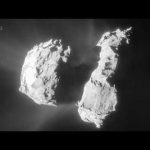
    Rosetta has another three months of science to collect before its historic mission comes to an end. But the mission is not resting on its laurels. It has just broken a new record by flying an orbit 7 kms from the comet’s centre – just 5 kms from the surface – and there are more breathtaking manoeuvres to come.

    This film describes the orbits that Rosetta will undertake around comet 67P/Churyumov-Gerasimenko, the changes in the amount of gas coming off the comet, and examines the importance of finding phosphorus and glycine – an amino acid that is essential for life.

    It also discusses the mission’s most recent discoveries of Xenon and Krypton, together with most of their isotopes. These noble gases were detected by the ROSINA instrument during the period when Rosetta was flying extremely close to the comet. More important science is expected to be released during the next few months.

    More about Rosetta:
    http://blogs.esa.int/rosetta

  • Rosetta Philae landing: one year

    Rosetta Philae landing: one year

    It’s been an extraordinary year for the Rosetta comet mission since Philae landed on the surface of Comet 67P/Churyumov-Gerasimenko on 12 November 2014.

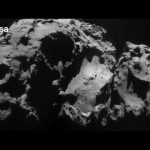
    Continual data from the orbiter, together with information collected over several days from the lander, is providing a comprehensive picture of a remnant from our Solar System.

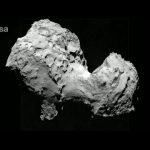
    This film covers the most recent science news from the Rosetta mission, as well as selected scientific highlights from the last year. It includes the comet’s unusual surface terrace structure, its formation from two colliding objects producing the unusual rubber duck shape, how water is transported from inside the comet towards the surface, and the surprising detection of molecular oxygen – familiar on Earth but not on a comet.

    Find out more about the Rosetta mission: http://rosetta.esa.int/

  • Rosetta update

    Rosetta update

    The Rosetta spacecraft is still orbiting comet 67P/Churyumov-Gerasimenko while it now approaches the Sun. Six months ago Rosetta made history by delivering its Philae lander onto a comet’s surface – something no other space mission has done before.

    This video covers the mission’s highlights so far: from its launch in 2004; its journey across the solar system and waking up after deep space hibernation ten years later, its arrival at the selection of a landing site and Philae’s unexpected multiple landings on the comet. It also reviews what we have learnt about the comet to this point.

    Credit: ESA, with footage by DLR, licenced under CC-BY 3.0 DE