Tag: ESTEC

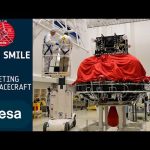
  • Completing the spacecraft – Let’s Smile (episode 2)

    Completing the spacecraft – Let’s Smile (episode 2)

    Smile is a brand-new space mission currently in the making. It will study space weather and the interaction between the solar wind and Earth’s magnetic environment.

    At the European Space Agency’s technical heart in the Netherlands, engineers have spent the last five months unboxing and testing different elements of the spacecraft, and joining the two main parts together. Due to launch by the end of 2025, Smile is now well on its way to being ready for space.

    This video provides a glimpse into what we’ve been up to recently. It is the second episode in a series of short videos, and includes interviews with Adriana González Castro (ESA Smile Project Controller), Walfried Raab (ESA Smile Lead Payload Engineer), Sylvain Vey (ESA Smile Instrument and Operations Interface Engineer), Li Jing (CAS Smile Project Manager), Benjamin Vanoutryve (Smile AIT/AIV and Launcher Interface Principal Engineer), and José Ignacio Maestra Onteniente (Airbus Smile AIT Manager).

    Credit: ESA/Lightcurve Films

    Acknowledgment: Direction, main camera, sound, editing, post-production by Lightcurve Films. Original music by William Zeitler. Drone footage is by The Postboat Dronedepartment.

    ★ Subscribe: http://bit.ly/ESAsubscribe and click twice on the bell button to receive our notifications.

    Check out our full video catalog: http://bit.ly/SpaceInVideos
    Follow us on Twitter: http://bit.ly/ESAonTwitter
    On Facebook: http://bit.ly/ESAonFacebook
    On Instagram: http://bit.ly/ESAonInstagram
    On LinkedIn: https://bit.ly/ESAonLinkedIn
    On Pinterest: https://bit.ly/ESAonPinterest
    On Flickr: http://bit.ly/ESAonFlickr

    We are Europe’s gateway to space. Our mission is to shape the development of Europe’s space capability and ensure that investment in space continues to deliver benefits to the citizens of Europe and the world. Check out https://www.esa.int/ to get up to speed on everything space related.

    Copyright information about our videos is available here: https://www.esa.int/ESA_Multimedia/Terms_and_Conditions

    #ESA #Smile #Documentary
  • SPACE ROCKS: Live from ESA Open Day 2024 at ESTEC

    SPACE ROCKS: Live from ESA Open Day 2024 at ESTEC

    Live interviews and highlights from the ESA Open Day at ESTEC, featuring ESA astronauts Andreas Mogensen and André Kuipers, NASA astronaut Anna Fisher, The Expanse actor Steven Strait and more.

    The ESA Open Day is an annual event where ESA opens the doors of the European Space Research and Technology Centre in the Netherlands to the public.

    For more information on the ESA Open Day at ESTEC head to https://www.esa.int/About_Us/ESTEC/ESA_Open_Days_2024
    For more information on Space Rocks, head to www.spacerocksofficial.com

    —————————————————

    ★ Subscribe: http://bit.ly/ESAsubscribe and click twice on the bell button to receive our notifications.

    Check out our full video catalog: http://bit.ly/SpaceInVideos
    Follow us on Twitter: http://bit.ly/ESAonTwitter
    On Facebook: http://bit.ly/ESAonFacebook
    On Instagram: http://bit.ly/ESAonInstagram
    On LinkedIn: https://bit.ly/ESAonLinkedIn
    On Pinterest: https://bit.ly/ESAonPinterest
    On Flickr: http://bit.ly/ESAonFlickr

    We are Europe’s gateway to space. Our mission is to shape the development of Europe’s space capability and ensure that investment in space continues to deliver benefits to the citizens of Europe and the world. Check out https://www.esa.int/ to get up to speed on everything space related.

    Copyright information about our videos is available here: https://www.esa.int/ESA_Multimedia/Terms_and_Conditions

    #ESA #SpaceRocks #OpenDay

  • Open doors for the ESA-ESTEC Open Day

    Open doors for the ESA-ESTEC Open Day

    On Saturday 7 and Sunday 8 October 2023, the European Space Agency opened the doors to the European Space Research and Technology Centre, ESTEC, in the Netherlands. Where science meets science fiction, the theme of this year’s open day was ‘Science Fiction Gets Real’, highlighting how science fiction has inspired scientists and engineers to join ESA, and turn once imaginary concepts into science fact. The single largest ESA establishment invited the public to meet astronauts, view spacecraft – including a rare chance to view ESA’s asteroid mission Hera as it undergoes testing – and peer behind the scenes of Europe’s space adventure, along with a full schedule of events and talks from Space Rocks, celebrating the art and culture of science and space.

    0:30 – NL Space Tent, showcasing the Netherlands in space, organised by the Netherlands Space Office, NSO
    1:00 – ESA Earth Observation Stand in the Rainbow Corridor
    1:08 – Dutch ESA astronaut André Kuipers takes to the Space Rocks stage to announce that the annual Association of Space Explorers ASC Planetary Congress will take place at ESTEC in 2024
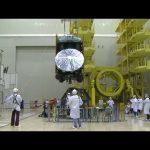
    1:21 – Spanish ESA astronaut Pedro Duque joins the Mayor of Noordwijk Wendy Verkeij; ESA Director of Technology, Engineering and Quality and Head of ESTEC Dietmar Pilz; ESA Director General Josef Aschbacher; NSO Director Harm van de Wetering; a Moonshots NL 24 student, André Kuipers on a panel discussing the ASE Planetary Congress in 2024
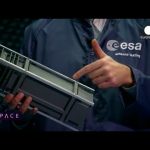
    1:24 – John McFall, member of ESA’s Astronaut Reserve
    1:46 – The ESTEC Test Centre, Europe’s largest satellite testing facility
    1:51 – ESTEC’s Erasmus Innovation Centre, including a showcase on human spaceflight
    2:00 – The formal opening of the new Earth to Space exhibit at ESTEC’s visitor centre Space Expo wth Dietmar Pilz; Space Expo Director Barbara Hoppel and Josef Aschbacher

    Credits: ESA – European Space Agency

    ★ Subscribe: http://bit.ly/ESAsubscribe and click twice on the bell button to receive our notifications.

    Check out our full video catalog: http://bit.ly/SpaceInVideos
    Follow us on Twitter: http://bit.ly/ESAonTwitter
    On Facebook: http://bit.ly/ESAonFacebook
    On Instagram: http://bit.ly/ESAonInstagram
    On LinkedIn: https://bit.ly/ESAonLinkedIn
    On Pinterest: https://bit.ly/ESAonPinterest
    On Flickr: http://bit.ly/ESAonFlickr

    We are Europe’s gateway to space. Our mission is to shape the development of Europe’s space capability and ensure that investment in space continues to deliver benefits to the citizens of Europe and the world. Check out https://www.esa.int/ to get up to speed on everything space related.

    Copyright information about our videos is available here: https://www.esa.int/ESA_Multimedia/Terms_and_Conditions

    #ESA
    #ESTEC
    #OpenDay

  • ESA Open Day | ESTEC 2022 Highlights

    ESA Open Day | ESTEC 2022 Highlights

    The 11th annual ESA Open Day at ESTEC took place on Sunday 2 October 2022, opened by ESA Director General Josef Aschbacher and Head of ESTEC and ESA Director of Technology, Engineering and Quality Torben Henriken with ESA astronauts Matthias Mauruer and André Kuipers. Visitors were able to meet space scientists and engineers and see and learn all about the work carried out at Europe’s largest space establishment.

    ★ Subscribe: http://bit.ly/ESAsubscribe and click twice on the bell button to receive our notifications.

    Check out our full video catalog: http://bit.ly/SpaceInVideos
    Follow us on Twitter: http://bit.ly/ESAonTwitter
    On Facebook: http://bit.ly/ESAonFacebook
    On Instagram: http://bit.ly/ESAonInstagram
    On LinkedIn: https://bit.ly/ESAonLinkedIn
    On Pinterest: https://bit.ly/ESAonPinterest
    On Flickr: http://bit.ly/ESAonFlickr

    We are Europe’s gateway to space. Our mission is to shape the development of Europe’s space capability and ensure that investment in space continues to deliver benefits to the citizens of Europe and the world. Check out https://www.esa.int/ to get up to speed on everything space related.

    Copyright information about our videos is available here: https://www.esa.int/ESA_Multimedia/Terms_and_Conditions

    #ESA
    #ESTEC
    #OpenDay2022

  • Europe ready for Artemis

    Europe ready for Artemis

    ESA and NASA are working hand in hand before the first Artemis mission to the Moon through a series of joint mission simulations. Teams based at the Erasmus Support Facility (ESF) at ESA’s ESTEC facility in The Netherlands, the German Space Operations Centre at ESA’s Columbus Control Centre in Oberphfaffenhofen and NASA’s Johnson Space Center in Houston are combining their expertise in a series of exercises to ensure a successful launch.

    When it comes to simulations, it’s important that not everything goes perfectly right as it recreates – in real time – different stages of the mission to monitor the spacecraft’s position, propulsion, power, avionics and thermal properties. The European team, consisting of 40 people from ESA and industry, apply their considerable expertise from working on the European Service Module (ESM) to any unexpected problems. The ESM will provide power for the Orion spacecraft and propel it along its orbit to the Moon.

    Learn more about Artemis: https://bit.ly/Artemis1ESA

    ★ Subscribe: http://bit.ly/ESAsubscribe and click twice on the bell button to receive our notifications.

    Check out our full video catalog: http://bit.ly/SpaceInVideos
    Follow us on Twitter: http://bit.ly/ESAonTwitter
    On Facebook: http://bit.ly/ESAonFacebook
    On Instagram: http://bit.ly/ESAonInstagram
    On Flickr: http://bit.ly/ESAonFlickr

    We are Europe’s gateway to space. Our mission is to shape the development of Europe’s space capability and ensure that investment in space continues to deliver benefits to the citizens of Europe and the world. Check out https://www.esa.int/ to get up to speed on everything space related.

    Copyright information about our videos is available here: https://www.esa.int/ESA_Multimedia/Terms_and_Conditions

    #ESA
    #Orion
    #Artemis

  • Spreading EarthCARE’s solar wing

    Spreading EarthCARE’s solar wing

    ESA’s EarthCARE satellite mission will soon be launched to answer some critical scientific questions related to the role that clouds and aerosols play in reflecting incident solar radiation back out to space and trapping infrared radiation emitted from Earth’s surface. As engineers are preparing EarthCARE for its life in orbit, the satellite is being put through its paces at ESA testing facilities in the Netherlands – the largest satellite test facility in Europe, equipped to simulate every aspect of the space environment.
    One of the first tests involved the deployment of the satellite’s 11 metre solar wing from its folded stowed configuration, which allows it to fit in the rocket fairing, to its fully deployed configuration as it will be in orbit around Earth.
    This timelapse video shows this deployment test from various angles.

    Read full story: EarthCARE takes a big stretch https://www.esa.int/Applications/Observing_the_Earth/FutureEO/EarthCARE/EarthCARE_takes_a_big_stretch

    Credit: ESA–M. Cowan

    ★ Subscribe: http://bit.ly/ESAsubscribe and click twice on the bell button to receive our notifications.

    Check out our full video catalog: http://bit.ly/SpaceInVideos
    Follow us on Twitter: http://bit.ly/ESAonTwitter
    On Facebook: http://bit.ly/ESAonFacebook
    On Instagram: http://bit.ly/ESAonInstagram
    On LinkedIn: https://bit.ly/ESAonLinkedIn
    On Pinterest: https://bit.ly/ESAonPinterest
    On Flickr: http://bit.ly/ESAonFlickr

    We are Europe’s gateway to space. Our mission is to shape the development of Europe’s space capability and ensure that investment in space continues to deliver benefits to the citizens of Europe and the world. Check out https://www.esa.int/ to get up to speed on everything space related.

    Copyright information about our videos is available here: https://www.esa.int/ESA_Multimedia/Terms_and_Conditions

    #ESA
    #EarthCARE
    #Engineering

  • Juice takes the heat

    Juice takes the heat

    ESA’s Jupiter Icy moons Explorer, Juice, has successfully completed rigorous thermal tests simulating the extreme coldness of space and the warmth of the Sun at ESA’s test centre ESTEC, in The Netherlands.

    The spacecraft underwent a month of round-the-clock testing and monitoring in the Large Space Simulator, which recreates the vacuum of space and is able to simulate both hot and cold space environments. The spacecraft was subjected to temperatures ranging from 250 degrees to minus 180 degrees Celsius, showing that it can survive its journey in space.

    Juice will launch in 2022 to our Solar System’s largest planet. It will spend over four years studying Jupiter’s atmosphere, magnetosphere and its icy moons Europa, Callisto and Ganymede, investigating whether the moons’ subsurface oceans are habitable for life.

    Learn more about Juice: https://bit.ly/JuiceESAScience

    ★ Subscribe: http://bit.ly/ESAsubscribe and click twice on the bell button to receive our notifications.

    Check out our full video catalog: http://bit.ly/SpaceInVideos
    Follow us on Twitter: http://bit.ly/ESAonTwitter
    On Facebook: http://bit.ly/ESAonFacebook
    On Instagram: http://bit.ly/ESAonInstagram
    On Flickr: http://bit.ly/ESAonFlickr

    We are Europe’s gateway to space. Our mission is to shape the development of Europe’s space capability and ensure that investment in space continues to deliver benefits to the citizens of Europe and the world. Check out https://www.esa.int/ to get up to speed on everything space related.

    Copyright information about our videos is available here: https://www.esa.int/ESA_Multimedia/Terms_and_Conditions

    #ESA
    #JuiceMission
    #InTheCleanRoom

  • The making of Juice

    The making of Juice

    The ESA Jupiter Icy Moons Explorer (Juice) team has been working very hard to prepare the spacecraft for the first test in the one-year long environmental test campaign. This is the so-called Thermal Balance Thermal Vacuum (TBTV) test.

    Juice is in the Large Space Simulator (LSS), a unique facility in Europe (run by the European Test Center, at ESA/ESTEC in the Netherlands) that can simulate the vacuum and cold and hot temperature conditions in space, and also the Sun itself!

    The TBTV started on 17 June with the closure of the LSS and the “pumping-down”, meaning the removal of air within the chamber to a pressure level of 10nbar (1/100 000 000th of the outside air pressure). This is the closest Juice will come to space conditions while on Earth. It will undergo 24/7 testing, ending on 16 July 2021.

    In this episode this process is followed and several team members comment on the different moments.

    Produced for ESA by Lightcurve Films.
    GoPro footage by ESA.
    Original music by William Zeitler.

    ★ Subscribe: http://bit.ly/ESAsubscribe and click twice on the bell button to receive our notifications.

    Check out our full video catalog: http://bit.ly/SpaceInVideos
    Follow us on Twitter: http://bit.ly/ESAonTwitter
    On Facebook: http://bit.ly/ESAonFacebook
    On Instagram: http://bit.ly/ESAonInstagram
    On Flickr: http://bit.ly/ESAonFlickr

    We are Europe’s gateway to space. Our mission is to shape the development of Europe’s space capability and ensure that investment in space continues to deliver benefits to the citizens of Europe and the world. Check out https://www.esa.int/ to get up to speed on everything space related.

    Copyright information about our videos is available here: https://www.esa.int/ESA_Multimedia/Terms_and_Conditions

    #ESA
    #JuiceMission
    #InTheCleanRoom

  • Ultra-cool test of Jupiter instrument

    Ultra-cool test of Jupiter instrument

    An instrument destined for Jupiter orbit undergoes eight days of cryogenic radio-frequency testing using a new test facility at ESA’s ESTEC technical centre in the Netherlands. The Submillimetre Wave Instrument of ESA’s Juice mission will survey the churning atmosphere of Jupiter and the scanty atmospheres of its Galilean moons.

    Testing took place in ESA’s custom-built Low-temperature Near-field Terahertz chamber, or Lorentz. The first chamber of its kind, the 2.8-m diameter Lorentz chamber can perform high-frequency radio-frequency testing in realistic space conditions, combining space-quality vacuum with ultra-low temperatures.

    ★ Subscribe: http://bit.ly/ESAsubscribe and click twice on the bell button to receive our notifications.

    Check out our full video catalog: http://bit.ly/SpaceInVideos
    Follow us on Twitter: http://bit.ly/ESAonTwitter
    On Facebook: http://bit.ly/ESAonFacebook
    On Instagram: http://bit.ly/ESAonInstagram
    On Flickr: http://bit.ly/ESAonFlickr

    We are Europe’s gateway to space. Our mission is to shape the development of Europe’s space capability and ensure that investment in space continues to deliver benefits to the citizens of Europe and the world. Check out https://www.esa.int/ to get up to speed on everything space related.

    Copyright information about our videos is available here: https://www.esa.int/ESA_Multimedia/Terms_and_Conditions

    #ESA
    #JuiceMission
    #InTheCleanRoom

  • 19 things about ESTEC

    19 things about ESTEC

    Produced for our online ESA Open Day 2020, a 19-part whistle-stop tour around ESA’s largest establishment and technical heart: ESTEC, the European Space Research and Technology Centre, in Noordwijk, the Netherlands.

    Learn more about ESTEC: https://www.esa.int/About_Us/ESTEC

    ★ Subscribe: http://bit.ly/ESAsubscribe and click twice on the bell button to receive our notifications.

    Check out our full video catalog: http://bit.ly/SpaceInVideos
    Follow us on Twitter: http://bit.ly/ESAonTwitter
    On Facebook: http://bit.ly/ESAonFacebook
    On Instagram: http://bit.ly/ESAonInstagram
    On Flickr: http://bit.ly/ESAonFlickr

    We are Europe’s gateway to space. Our mission is to shape the development of Europe’s space capability and ensure that investment in space continues to deliver benefits to the citizens of Europe and the world. Check out http://www.esa.int/ESA to get up to speed on everything space related.

    Copyright information about our videos is available here: http://www.esa.int/spaceinvideos/Terms_and_Conditions

    #ESA
    #ESAOpenDay
    #ESTEC

  • ESA Open Day in the Netherlands 2019

    ESA Open Day in the Netherlands 2019

    With over 14 000 registrations for ESA’s Open Day in the Netherlands on 6 October 2019 another attendance record was achieved. People from all over Europe and the world met astronauts, space experts and saw behind the scenes of Europe’s space adventure at ESA’s largest establishment.

    The theme of 2019 was ‘ESA to the Moon’. Dutch ESA astronaut André Kuipers was joined by pioneering Apollo astronauts Walt Cunningham, who flew on the first crewed Apollo mission, and Rusty Schweickart, who was the first person to fly the Lunar Module and use an Apollo lunar spacesuit for a spacewalk.

    With areas for children organised by ESA education, and the NL Space Tent to meet with Dutch space professionals. ESA’s open days are the opportunity to come nose to nose with space hardware, hear where we’re going next and meet Europe’s space agents – space scientists, engineers and mission designers.

    Talks and events were organised with astronauts, space experts and celebrities such as Scott Manley.

    ESA hosts the annual open day at ESA’s technical centre ESTEC where new missions are designed, their industrial development is managed and the resulting satellites are tested for flight in space.

    ★ Subscribe: http://bit.ly/ESAsubscribe and click twice on the bell button to receive our notifications.

    Check out our full video catalog: http://bit.ly/SpaceInVideos
    Follow us on Twitter: http://bit.ly/ESAonTwitter
    On Facebook: http://bit.ly/ESAonFacebook
    On Instagram: http://bit.ly/ESAonInstagram
    On Flickr: http://bit.ly/ESAonFlickr

    We are Europe’s gateway to space. Our mission is to shape the development of Europe’s space capability and ensure that investment in space continues to deliver benefits to the citizens of Europe and the world. Check out http://www.esa.int/ESA to get up to speed on everything space related.

    Copyright information about our videos is available here: http://www.esa.int/spaceinvideos/Terms_and_Conditions

    #ESA
    #ESAOpenDay
    #TheNetherlands

  • Earth from Space: The Netherlands

    Earth from Space: The Netherlands

    The Copernicus Sentinel-2 mission takes us over part of the Netherlands for an ESA open day, in this week’s edition of the Earth from Space programme.

    Download the image: https://www.esa.int/spaceinimages/Images/2019/10/The_Netherlands

    ★ Subscribe: http://bit.ly/ESAsubscribe and click twice on the bell button to receive our notifications.

    Check out our full video catalog: http://bit.ly/SpaceInVideos
    Follow us on Twitter: http://bit.ly/ESAonTwitter
    On Facebook: http://bit.ly/ESAonFacebook
    On Instagram: http://bit.ly/ESAonInstagram
    On Flickr: http://bit.ly/ESAonFlickr

    We are Europe’s gateway to space. Our mission is to shape the development of Europe’s space capability and ensure that investment in space continues to deliver benefits to the citizens of Europe and the world. Check out http://www.esa.int/ESA to get up to speed on everything space related.

    Copyright information about our videos is available here: http://www.esa.int/spaceinvideos/Terms_and_Conditions

    #ESA
    #EarthFromSpace
    #TheNetherlands

  • How to survive on another planet with Lucie Poulet | Space Bites

    How to survive on another planet with Lucie Poulet | Space Bites

    Plans for human space exploration in the next decades are to leave Earth orbit and go to destinations such as the Moon and Mars. But what are the challenges associated with human survival in space and what kind of research is needed to address these challenges?

    Life-support systems expert Lucie Poulet participated in four Mars analogue missions as a crew member and has over eight years of experience working on regenerative life-support systems with various groups such as the Micro-Ecological Life-Support System Alternative (MELiSSA) project and the German Aerospace Center, DLR, in Bremen, Germany.

    Space Bites hosts the best talks on space exploration from the most inspiring and knowledgeable speakers from the field. Held at the technical heart of the European Space Agency in The Netherlands, the lectures illustrate challenges of space.

    To know more about the exploration of the Moon visit http://lunarexploration.esa.int

    ★ Subscribe: http://bit.ly/ESAsubscribe and click twice on the bell button to receive our notifications.

    Check out our full video catalog: http://bit.ly/SpaceInVideos
    Follow us on Twitter: http://bit.ly/ESAonTwitter
    On Facebook: http://bit.ly/ESAonFacebook
    On Instagram: http://bit.ly/ESAonInstagram
    On Pinterest: https://bit.ly/ESAonPinterest
    On Flickr: http://bit.ly/ESAonFlickr

    We are Europe’s gateway to space. Our mission is to shape the development of Europe’s space capability and ensure that investment in space continues to deliver benefits to the citizens of Europe and the world. Check out https://www.esa.int/ to get up to speed on everything space related.

    Copyright information about our videos is available here: https://www.esa.int/ESA_Multimedia/Terms_and_Conditions

    #ESA
    #SpaceBites
    #MELiSSA

  • Meet SpaceBok

    Meet SpaceBok

    Astronauts on the Moon found themselves hopping around, rather than simply walking. Switzerland’s SpaceBok planetary exploration robot has followed their example, launching all four legs off the ground during tests at our technical heart.

    SpaceBokis a quadruped robot designed and built by a Swiss student team from ETH Zurich and ZHAW Zurich, currently being tested using Automation and Robotics Laboratories (ARL) facilities at our technical centre in the Netherlands. The robot is being used to investigate the potential of ‘dynamic walking’ and jumping to get around in low gravity environments.

    SpaceBok could potentially go up to 2 m high in lunar gravity, although such a height poses new challenges. Once it comes off the ground the legged robot needs to stabilise itself to come down again safely – like a mini-spacecraft.So, like a spacecraft. SpaceBok uses a reaction wheel to control its orientation

    Learn more: http://bit.ly/JumpingSpaceRobotFliesLikeASpacecraft

    Credit: ETH Zurich/ZHAW Zurich/ESA

    ★ Subscribe: http://bit.ly/ESAsubscribe and click twice on the bell button to receive our notifications.

    Check out our full video catalog: http://bit.ly/SpaceInVideos
    Follow us on Twitter: http://bit.ly/ESAonTwitter
    On Facebook: http://bit.ly/ESAonFacebook
    On Instagram: http://bit.ly/ESAonInstagram
    On Flickr: http://bit.ly/ESAonFlickr

    We are Europe’s gateway to space. Our mission is to shape the development of Europe’s space capability and ensure that investment in space continues to deliver benefits to the citizens of Europe and the world. Check out http://www.esa.int/ESA to get up to speed on everything space related.

    Copyright information about our videos is available here: http://www.esa.int/spaceinvideos/Terms_and_Conditions

    #ESA
    #SpaceBok
    #Robotics

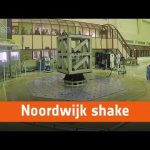
  • Noordwijk shake

    Noordwijk shake

    ESA’s Test Centre based in Noordwijk, the Netherlands, simulates every aspect of space for satellite testing – including recreating the equivalent vibration of a rocket launch. This is ESA’s most powerful shaker: the Hydra hydraulic shaker, able to generate vibration equivalent to a 7.5 Richter scale  earthquake.

    Find out more about the test centre: http://www.esa.int/Our_Activities/Space_Engineering_Technology/Test_centre

    ★ Subscribe: http://bit.ly/ESAsubscribe

    Check out our full video catalog: http://bit.ly/SpaceInVideos
    Follow ESA on Twitter: http://bit.ly/ESAonTwitter
    On Facebook: http://bit.ly/ESAonFacebook
    On Instagram: http://bit.ly/ESAonInstagram
    On Flickr: http://bit.ly/ESAonFlickr

    ESA is Europe’s gateway to space. Our mission is to shape the development of Europe’s space capability and ensure that investment in space continues to deliver benefits to the citizens of Europe and the world. Check out http://www.esa.int/ESA to get up to speed on everything space related.

    Copyright information about our videos is available here: http://www.esa.int/spaceinvideos/Terms_and_Conditions

  • ESA Open Day, ESTEC, 2018

    ESA Open Day, ESTEC, 2018

    The date is fixed: you are invited to the annual ESA Open Day at ESTEC, ESA’s technical heart in the Netherlands, on Sunday, 7 October.

    The theme this year is ‘A voyage through space with Europe’. We’ll have all ESA establishments represented on site, either with speakers giving talks or live link-ups to the different centres. You’ll be able to meet astronauts, scientists and engineers, plus some special guests. You’ll see how we design space missions, how we develop the technologies needed to go into space and how we simulate space on the ground. With the help of our colleagues from the other ESA centres, we’ll complete the life-cycle of a mission and see how it is launched and controlled once in space!

    Find out more: http://bit.ly/ESAOpenDay2018

    ★ Subscribe: http://bit.ly/ESAsubscribe

  • Resources beyond Earth with Angel Abbud Madrid | Space Bites

    Resources beyond Earth with Angel Abbud Madrid | Space Bites

    Humans will have to breath, drink and eat while living on the Moon. They will need energy to perform tasks using their robotic companions and materials to build structures. For a sustainable approach to space exploration these resources cannot be carried from Earth but have to be found on the Moon itself.

    Angel Abbud Madrid is the Director of the Center for Space Resources at the Colorado School of Mines (CSM), where he leads a multidisciplinary research programme on the human and robotic exploration of space and the utilisation of its resources. He is also the Director of the CSM Space Resources Program, the first academic programme in the world focused on educating scientists, engineers, economists, entrepreneurs and policymakers in the developing field of space resources.

    Space Bites hosts the best talks on space exploration from the most inspiring and knowledgeable speakers from the field. Held at the technical heart of the European Space Agency in the Netherlands, the lectures are now also available on YouTube. If you want to know about the present and future challenges of ESA, stay tuned for more.

    To know more about the exploration of the Moon visit http://lunarexploration.esa.int

    ★ Subscribe: http://bit.ly/ESAsubscribe and click twice on the bell button to receive our notifications.

    Check out our full video catalog: http://bit.ly/SpaceInVideos
    Follow us on Twitter: http://bit.ly/ESAonTwitter
    On Facebook: http://bit.ly/ESAonFacebook
    On Instagram: http://bit.ly/ESAonInstagram
    On Pinterest: https://bit.ly/ESAonPinterest
    On Flickr: http://bit.ly/ESAonFlickr

    We are Europe’s gateway to space. Our mission is to shape the development of Europe’s space capability and ensure that investment in space continues to deliver benefits to the citizens of Europe and the world. Check out https://www.esa.int/ to get up to speed on everything space related.

    Copyright information about our videos is available here: https://www.esa.int/ESA_Multimedia/Terms_and_Conditions

    #ESA
    #SpaceBites
    #SpaceResources

  • ESA Euronews: Gaia’s revolution in astronomy

    ESA Euronews: Gaia’s revolution in astronomy

    Astronomy is undergoing a revolution with the release of precision data on 1.7 billion stars in our galaxy from the Gaia space telescope. We head to the historic Observatory of Paris and ESA’s ESTEC base in the Netherlands to find out more.

    It’s fair to say that science has been waiting for centuries, or even millennia for such a detailed survey of the Milky Way, and right now star-gazers are swamped with fresh, high-quality data that they can use to answer every question about the galaxy they ever wanted to ask.

    This video is also available in the following languages:
    German: https://youtu.be/I7EHdEnXGi4
    French: https://youtu.be/dJRPGaS3VB4
    Italian: https://youtu.be/hyOdUHRCDYA
    Spanish: https://youtu.be/BCP4xg6sGeY
    Portuguese: https://youtu.be/OeBMRQmojXc
    Greek: https://youtu.be/Ra0BOhFJ4NU
    Hungarian: https://youtu.be/-PYmrCk1iwM

    ★ Subscribe to our channel: http://bit.ly/ESAsubscribe

    Learn more: http://bit.ly/GaiaRickestStarMap

  • ESA Euronews: Revolução de Gaia na astronomia

    ESA Euronews: Revolução de Gaia na astronomia

    Nesta edição de “Space”, a partir do Observatório de Paris, vamos encontrar-nos com astrónomos que trabalham numa missão especial do telescópio Gaia, que tem vigiado mais de mil milhões de estrelas da nossa galáxia, tentando dar resposta a alguns dos mistérios da Via Láctea.

    ★ Inscreva-se no nosso canal: http://bit.ly/ESAsubscribe

    Saber mais: http://www.esa.int/por/ESA_in_your_country/Portugal/Gaia_cria_o_mapa_estelar_mais_completo_da_nossa_Galaxia_-_e_mais_alem

  • ESA Euronews: Az űrhajósoknak is fáj a háta

    ESA Euronews: Az űrhajósoknak is fáj a háta

    Az űrorvostudomány eredményei segíthetnek a földi betegségekben szenvedőknek is. Ami jó a Nemzetközi Űrállomáson, az segíthet a Newcastle-i nyugdíjasokon is.

    Az űrhajósoknak földöntúli munkájuk van. A hajnalt és a naplementét naponta 16-szor látják, és az űrben töltött hetek és hónapok alatt a testük kívül-belül átalakul. Izmaik és csontjaik tömegükből veszítenek, és egészségi állapotuk is megváltozik. Így az asztronauták testüket is a tudomány szolgálatába állítják.

    A nemzetközi űrállomáson zajló kutatások nem csak abban segítenek, hogy jobban megismerjük az emberi testet, hanem abban is, hogy olyan hétköznapi problémákra találjunk új megoldást, mint például a hátfájás. A Space márciusi adásában az űrmedicináról lesz szó.

  • Christina’s experience as an ESA Young Graduate Trainee

    Christina’s experience as an ESA Young Graduate Trainee

    Christina, a physicist from Denmark, shares her experience as a Young Graduate Trainee. In ESA she is working in the Education Office, and in this video she talks about a project she is part of there, the AstroPi challenge, and what motivates her to work on educational material in the European Space Agency.

    Apply now for new Young Graduate Trainee opportunities:
    http://www.esa.int/About_Us/Careers_at_ESA/Apply_now_for_new_Young_Graduate_Trainee_opportunities

  • Stella’s experience as an ESA Young Graduate Trainee

    Stella’s experience as an ESA Young Graduate Trainee

    Stella, an astrophysicist from Estonia, shares her experience as a YGT at ESA working with data provided by the Gaia mission’s team to model the movements of stars.

    Apply now for new Young Graduate Trainee opportunities:
    http://www.esa.int/About_Us/Careers_at_ESA/Apply_now_for_new_Young_Graduate_Trainee_opportunities

  • ESA Euronews: Space debris

    ESA Euronews: Space debris

    Space debris has become a pressing issue, with objects in orbit flying out of control, posing a risk to satellites and to astronauts. We attended a meeting of space debris experts at ESA’s ESTEC technology base in the Netherlands to find out more about what can be done to deal with the problem.

    This video is also available in the following languages:
    German: https://www.youtube.com/watch?v=cQAje74nQuI
    French: https://www.youtube.com/watch?v=fXcrMQ5WjFI
    Italian: https://www.youtube.com/watch?v=Jp26l0PnMzo
    Spanish: https://www.youtube.com/watch?v=j7XXKHKlBPo
    Portuguese: https://www.youtube.com/watch?v=K_NIAMWBofk
    Greek: https://www.youtube.com/watch?v=F4cl5p2kpKA
    Hungarian: https://www.youtube.com/watch?v=4N4bfQSHTbM

  • ESA Euronews: Lixo espacial

    ESA Euronews: Lixo espacial

    O lixo espacial é um problema premente na órbita da Terra. Existem milhões de objetos a voar pelo espaço, descontrolados, colocando em perigo satélites e astronautas.

    Em busca de uma solução para evitar uma colisão trágica para lá da última fronteira ou, quem sabe, o infortúnio de um qualquer detrito cair e atingir alguém na Terra, cerca de 200 cientistas reúnem-se todos os anos na Holanda, na base da Agência Espacial Europeia (ESA, na sigla original), para debater a limpeza do espaço e confrontar ideias sobre o desenvolvimento, por exemplo, de satélites mais seguros no fim de vida.

    Existem quase 8000 toneladas de lixo espacial em órbita, incluindo cerca 29.000 objetos com mais de dez centímetros e mais de um milhão pequenos demais para poderem ser seguidos.

    As colisões acontecem e todos os pedaços, mesmo os mais pequenos de apenas um milímetro, revelam-se perigosos, sublinha a diretora do gabinete da ESA para a limpeza do espaço.

  • ESA Euronews: I detriti spaziali

    ESA Euronews: I detriti spaziali

    I detriti spaziali sono un problema sempre più urgente. In orbita ci sono circa 8mila tonnellate di detriti spaziali: 29mila oggetti di oltre 10 centimetri e più di un milione di frammenti troppo piccoli per essere tracciati. Sono un pericolo per i satelliti e per gli astronauti. Le collisioni sono possibili, perciò ogni detrito rappresenta un pericolo.

    Ogni anno 200 esperti in materia di spazzatura spaziale si riuniscono nella sede dell’Esa per affrontare la questione. Tra loro ci sono i rappresentanti delle agenzie spaziali e delle aziende che producono satelliti e razzi.

  • ESA Euronews: Mit kezdjünk az űrtörmelékkel?

    ESA Euronews: Mit kezdjünk az űrtörmelékkel?

    Körülbelül 8 000 tonna törmelék kering az űrben. 29 000 10 cm méretű, és több mint egymillió darab ennél is kisebb tárgy.

    Az ütközések megtörténnek, és minden törmelék veszélyt jelent. Ezen a ponton még egy nagyon kicsi törmelék is jelentős, mert a sebessége, amivel utazik, ha egy másik testet vagy műholdat elér, felrobbanthatja azt, így még a legapróbb törmelékeknek is fontos a szerepük.

    Minden évben 200 európai űrkutatási szakember találkozik az Európai Űrügynökség, az ESA hollandiai technológiai központjában, hogy megvitassák a fontos kérdéseket.

    Ők képviselik a fontosabb szereplőket, és mindannyian egyetértenek abban, hogy mit kell tenniük.

  • ESA Euronews: «διαστημικά σκουπίδια»

    ESA Euronews: «διαστημικά σκουπίδια»

    Καλωσήλθατε στην εκπομπή Space. Ας ρίξουμε μια προσεκτική ματιά στο πιεστικό πρόβλημα των «διαστημικών σκουπιδιών». Υπάρχουν εκατομμύρια τέτοια αντικείμενα στο διάστημα εκτός ελέγχου. Ενέχουν κινδύνους για τους δορυφόρους και τους αστροναύτες. Τι μπορεί να γίνει; Βρισκόμαστε στη βάση του Ευρωπαϊκού Οργανισμού Διαστήματος στην Ολλανδία.

    Υπάρχουν περίπου 8.000 τόνοι διαστημικών σκουπιδιών σε τροχιά — 29.000 αντικείμενα εντοπισμένα μεγέθους πάνω από 10 εκατοστά και πάνω από ένα εκατομμύριο μικρά «διαστημικά σκουπίδια .

  • ESA Euronews: Débris spatiaux

    ESA Euronews: Débris spatiaux

    Dans ce numéro de Space, Jeremy Wilks s’est penché sur l’épineuse question des débris spatiaux, avec les experts du centre européen de technologie spatiale de l’Agence Spatiale Européenne, aux Pays-Bas.

  • ESA Euronews: Los desechos espaciales

    ESA Euronews: Los desechos espaciales

    Este mes estamos observando de cerca el apremiante problema de los desechos espaciales. Literalmente hay millones de objetos en órbita volando fuera de control. ¿Qué se puede hacer?.
    Estamos en el Centro Europeo de Investigación y Tecnología Espacial de los Países Bajos para averiguarlo.
    Se estima que hay 8.000 toneladas de desechos espaciales orbitando: 29.000 objetos rastreados de más de 10 centímetros de tamaño y más de un millón de fragmentos demasiado pequeños para poder seguir.

    Haz colisiones y cada pedazo de escombro es un peligro.

  • BepiColombo prepares for Mercury

    BepiColombo prepares for Mercury

    ESA’s first mission to Mercury, BepiColombo, is now set for final thermal tests before launching to the hottest planet in our Solar System in October 2018. Europe said farewell to the spacecraft in July when it was at the European Space Research and Technology Centre (ESTEC) in Noordwijk, the Netherlands, in its launch configuration.

    BepiColombo is a joint mission to Mercury between the ESA and the Japan Aerospace Exploration Agency (JAXA) and consists of two science orbiters: ESA’s Mercury Planetary Orbiter and JAXA’s Mercury Magnetospheric Orbiter.

    More about BepiColombo:
    http://www.esa.int/Our_Activities/Space_Science/BepiColombo_overview2

  • ESA’s ESTEC Open Day 2017

    ESA’s ESTEC Open Day 2017

    The date is fixed: you are invited to visit ESA’s technical heart in the Netherlands for its annual Open Day on Sunday, 8 October.

    The theme this year is Bringing Space to Earth. Visit us to meet astronauts and mission experts, see how we simulate space on the ground, and discover the knowledge and technologies brought back to Earth from space.

    For now, please save the date. You can register to attend #OpenESTEC from 3 July.

    In place for more than half a century, the ESTEC European Space Research and Technology Centre in Noordwijk on the North Sea coast is ESA’s largest establishment, focused on developing technology, planning missions and testing satellites.The hub of our continent’s space effort, this is where the majority of European space projects are born, developed and tested in advance of their flights into orbit.

    Find out more: http://www.esa.int/estec

  • Making moves on MetOp

    Making moves on MetOp

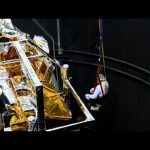
    It’s known colloquially as a ‘flying Dutchman’ operation: lowering an engineer down into ESA’s Large Space Simulator to make adjustments on the test item within; in this case the payload module of the newest in the MetOp series of weather satellites. The LSS is the largest vacuum chamber in Europe, based at ESA’s Test Centre in Noordwijk, the Netherlands.

    MetOp is a set of three polar-orbiting satellites whose temperature and humidity observations from a relatively close 800 km-altitude orbit have sharpened the accuracy of weather forecasting. Procured by ESA for Eumetsat, the European Organisation for the Exploitation of Meteorological Satellites, MetOp-A was launched in 2006 and MetOp-B in 2012, with MetOp-C due to follow next year.

    The 2.1 tonne module carries a suite of meteorology and climatology instruments, variously procured by ESA or sourced from Eumetsat, France’s CNES space agency and the US National Oceanic and Atmospheric Administration. Once testing is complete, MetOp-C’s payload module will travel to the Airbus Defence and Space facility in Toulouse, France, to be integrated with its service module – the segment of the satellite providing attitude and orbit control, electrical power and communications, and hosting the main computer. The launch of MetOp-C by Soyuz from Europe’s Spaceport in French Guiana is scheduled for October 2018.

  • BepiColombo status

    BepiColombo status

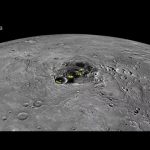
    BepiColombo, Europe’s first mission to Mercury, is currently being put through its paces at ESA’s European Space Research and Technology Centre (ESTEC) in the Netherlands. Mechanical and vibration tests will get underway in April with a view to a launch in October 2018. BepiColombo will arrive at Mercury, the smallest planet in our Solar System, in December 2025.

    The ESA-led joint European and Japanese mission consists of two spacecraft – the Mercury Planetary Orbiter (MPO) and the Mercury Magnetospheric Orbiter (MMO) – as well as a sunshield and a Mercury Transfer Module, which will power its seven year journey using its solar electric propulsion engine. It will be a mission of further discovery after NASA’s Messenger spacecraft uncovered a number of surprises – including evidence of water ice at the closest planet to the Sun and a magnetic dipole field.

    This video covers the mission status as well and its plan to follow up on Mercury’s unexpected features and properties. It includes an interview with Johannes Benkhoff, ESA BepiColombo project scientist.

    More about BepiColombo on our website: http://www.esa.int/Our_Activities/Space_Science/BepiColombo_overview2

  • Large antenna deployment

    Large antenna deployment

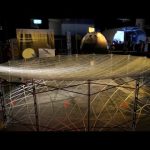
    A 5 m-diameter antenna reflector, designed for orbital operations, seen during a test deployment during ESA’s latest Large Deployable Antenna Workshop.

    Large-scale antenna reflectors are increasingly required for telecommunications, science and Earth observation missions.

    This metal mesh reflector has a ‘double pantograph’ design to form a deployable ring. Once deployed it tensions two opposing, but connected, parabolic shaped nets, one on the top and one on the bottom.

    Read more here: http://www.esa.int/spaceinimages/Images/2016/11/Large_antenna_deployment

  • ESTEC Open Day 2016

    ESTEC Open Day 2016

    In place for more than half a century, the complex ESTEC in Noordwijk is ESA’s single largest establishment, focused on developing technology, planning missions and testing satellites. More than 8700 visitors at the Open Day on 2 October 2016 were able to wander around the sprawling facility at their own pace, meeting astronauts, scientists and mission designers while seeing special exhibits and actual space hardware.  

    The theme of this year’s Open Day was “Breath of Life” – the ExoMars orbiter, currently nearing Mars, will be searching out methane and associated rare gases in the thin alien atmosphere as evidence of either surviving Mars microbes or a different kind of ‘life’ – subsurface volcanic activity, which would mean the planet remains geologically active.

  • Clean Space: Netting a satellite

    Clean Space: Netting a satellite

    ESA’s proposed e.Deorbit mission plans to demonstrate the retrieval and disposal of a derelict satellite from low-Earth orbit. The mission needs to capture a massive, drifting object left in an uncertain state, which may well be tumbling rapidly. Several capture mechanisms are being studied in parallel – including casting a net.

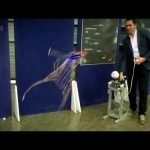
    Polish company SKA Polska won this new ESA Member State’s first competitive contract to design a prototype net gun that could be tested in microgravity on a parabolic flight. Wojtek Gołebiowski of SKA Polska brought it along to the Industry Days of ESA’s Clean Space initiative – tasked with safeguarding both terrestrial and orbital environments – in May 2016. The net gun is comparatively low power (because it was designed for weightlessness) but here he demonstrates how it works on some low-flying drones. Results from firing the net, which is multi-coloured to make it easier to track by cameras, are being used to sharpen the fidelity of software models of net behaviour.

  • ExoMars prepares for launch

    ExoMars prepares for launch

    The ExoMars 2016 spacecraft – consisting of the Trace Gas Orbiter (TGO) and the Schiaparelli entry, descent and landing demonstrator – is in Baikonur, Kazakhstan, preparing for its mid-March launch on a Russian Proton rocket.

    This joint European and Russian mission will test key exploration technologies and search for evidence of methane and other rare gases in the martian atmosphere. These gases could result from geological processes or they could be signatures of current biological activity on the planet. Three days before reaching Mars in October, Schiaparelli will separate from the orbiter and coast towards the planet in hibernation mode to reduce power consumption.

    This video covers the journey, the orbit of the Trace Gas Orbiter, the separation of the Schiaparelli lander and its 20 000 km/hour descent and eventual landing. It also contains filming at ESA’s European Space and Technology Centre (ESTEC) Mars Yard in the Netherlands. 

    Learning more about Mars’ water and environment will shed further light on this planet – while knowing the origin of its methane could finally answer the exciting question of whether there is life on Mars.

    Read more about ExoMars:
    http://www.esa.int/exomars

  • ESA Euronews: CubeSat, a satellite in a shoe box

    ESA Euronews: CubeSat, a satellite in a shoe box

    Tiny satellites the size of a small cube, jam-packed with the most advanced nanotechnologies: is this the future of Space missions?

    To find out, ESA Euronews went to Tallin, Estonia, where students at the Mektory Space Centre are preparing the launch of their first nanosatellite.

    Nanosatellites – tiny cubes of 10cm x 10cm x 10cm, full of nanotechnologies — are going to be more and more important in the future of space exploration, from Mars missions, to the surveillance of asteroids, which could potentially be dangerous for our planet.

    Also known as ‘CubeSats’ these tiny satellites open up a whole world of possibilities for those who want to explore space.

    This video is also available in the following languages:
    French: https://www.youtube.com/watch?v=RFVJ0ZGW2nI
    German: https://www.youtube.com/watch?v=rOdjO5bhoiU
    Italian: https://www.youtube.com/watch?v=5cP0baTNDYo
    Spanish: https://www.youtube.com/watch?v=NlZSt0WfMTo
    Portuguese: https://www.youtube.com/watch?v=6tM5AXZtY18
    Greek: https://www.youtube.com/watch?v=WIIVLxcOlT0
    Hungarian: https://www.youtube.com/watch?v=XAlfhpzadWc

  • ESA Euronews: De mi az a nanoműhold?

    ESA Euronews: De mi az a nanoműhold?

    A nanoműholdak egyre fontosabbak lesznek az űrkutatásban, a Mars megfigyelésétől a Földre veszélyt jelentő aszteroidák felkutatásáig. A bennük rejlő potenciált mindenki igyekszik kiaknázni, a nagy űrügynökségektől a tudományos diákkörökig. Ez a helyzet a Mektory Űrközpontban, az észt főváros, Talinn műszaki egyetemén, ahol a diákok az első nanoműholdjuk Föld körüli pályára állítását készítik elő.

    – Azt hittem, soha nem fogok műholdat építeni, hiszen ilyesmit csak a NASA-nál csinálnak. Most meg műholdat építek az egyetemi laborban – hitetlenkedett az Euronewsnak Marta Hang, az űrközpont programasszisztense.

    A Mektory nanoműhold-programja egy nemzetközi egyetemi kezdeményezés, amelyben az oktatók és a hallgatók együttműködnek az űrkutatásban érdekelt és más technológiai cégekkel. A cél az, hogy felkészítsék a hallgatókat arra, hogy az űriparban helyezkedjenek el. A csapat jelenleg az első űrküldetését tervezi.

    – Egy kockaműholdat fejlesztünk, amely egy egységből áll, és távérzékelési célokat szolgál, vagyis képeket készít majd a Földről – magyarázza a Mektory Űrközpont igazgatója, Mart Vihmand.

  • ESA for students and young graduates

    ESA for students and young graduates

    Discover how you can participate in ESA programmes as a student, and learn about your entry options once you’ve got your Masters degree. ESA recruitment and education colleagues share some valuable info with you.