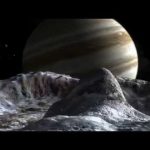
NASA is set to launch the Europa Clipper spacecraft to explore Europa, an ocean moon orbiting Jupiter.
Europa Clipper’s launch period opens on Thursday, Oct. 10, 2024. Liftoff on Oct. 10, 2024 is slated for 12:31 p.m. EDT (1631 UTC). The spacecraft, the largest NASA has ever built for a planetary mission, will launch on a SpaceX Falcon Heavy rocket from Launch Complex 39A at NASA’s Kennedy Space Center in Florida.
Europa is one of the most promising places in our solar system to find an environment suitable for life beyond Earth. Evidence suggests that the ocean beneath Europa’s icy surface could contain the ingredients for life — water, the right chemistry, and energy. While Europa Clipper is not a life-detection mission, it will answer key questions about the moon’s potential habitability.
Our solar system has a number of worlds with water, but is Earth the only one with the right environment to support life? That’s the question NASA’s Europa Clipper aims to answer.
Europa Clipper is the first mission dedicated to studying Jupiter’s moon Europa, which scientists believe has a salty ocean under its icy shell. While not designed to detect life, the spacecraft is equipped with nine science instruments and a gravity experiment, which will all help determine whether this moon could be habitable. Europa Clipper will orbit Jupiter and make 49 flybys of Europa, taking detailed measurements and high-resolution pictures.
Europa Clipper is set to launch in October 2024 from NASA’s Kennedy Space Center in Florida, arriving at Jupiter in 2030. Watch it lift off live: https://plus.nasa.gov
Live from the South by Southwest conference in Austin, Texas, U.S. Poet Laureate Ada Limón and NASA’s Dr. Lori Glaze engage in a compelling discussion about NASA’s tradition of sending inspirational messages into space. They delve into Ada Limón’s poetic contributions to the NASA Europa Clipper mission, exploring the intersection of curiosity and exploration in both the arts and sciences.
The conversation highlights the upcoming 2024 launch of the Europa Clipper and the unique blend of science and art that it represents. Dr. Glaze unveils the design of the Europa Clipper’s vault plate—a triangular metal piece engraved with Ada Limón’s poem, the waveforms of more than 100 human voices, and other markings that celebrate our shared human connections.
Learn more about Europa Clipper and the vault plate at go.nasa.gov/MakeWaves.
Participants: Ada Limón, U.S. Poet Laureate Dr. Lori Glaze, Director of NASA’s Science Mission Directorate’s Planetary Science Division
U.S. Poet Laureate Ada Limón wrote an original poem dedicated to NASA’s Europa Clipper mission to Jupiter’s moon Europa, which is believed to harbor a vast ocean beneath its icy surface.
Narrated by Limón herself, the poem is entitled “In Praise of Mystery: A Poem for Europa” and it connects two water worlds — Earth, yearning to reach out and understand what makes a world habitable, and Europa, waiting with secrets yet to be explored. The poem will be engraved on a plaque carried aboard the Europa Clipper spacecraft.
The commissioned work was released on June 1, 2023, for NASA’s “Message in a Bottle” campaign, which invites people around the world to sign their names to the poem that will journey to another world. Participants’ names will travel 1.8 billion miles, or 2.89 billion kilometers, aboard the Europa Clipper spacecraft on its voyage to Jupiter and its moons.
The mission is set to launch from NASA’s Kennedy Space Center in October 2024, and reach orbit around Jupiter by 2030. Over several years, it will conduct multiple flybys of Europa, gathering detailed measurements to determine if the moon has conditions suitable for life.
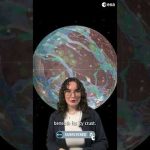
Juice will complete two flybys of Europa in July 2032, approaching the moon at a closest approach of 400 km. During these close encounters, Juice will explore the geology, surface, subsurface, activity and environment of the moon, which appears to have a young, active, colourful and distinctively marked surface.
The mission will characterise the composition and chemistry of Europa’s surface, hunting for substances that are essential to support life and determining the source of the moon’s material. Europa may vent water vapour to space via ‘plumes’ and geysers; Juice will search for pockets of water in the moon’s shallow subsurface using unprecedented ice-penetrating radar, and reveal locations where the transfer of material between subsurface, surface and space may be especially intense.
Juice will complete its first flyby of Callisto in June 2032; the spacecraft will complete a total of 21 flybys of this moon from 2032–2034 (both to explore the moon and to adjust the energy and orientation of Juice’s orbit), coming as close as 200 km from Callisto at nearest approach.
Callisto is also the least geologically evolved Galilean satellite, and therefore offers a unique glimpse into the environment around early Jupiter. As the moon does not seem to have evolved much over time, it stands to reveal unique information about how it initially formed, and about the origin of the wider Jupiter system.
📹 @EuropeanSpaceAgency
★ Subscribe: http://bit.ly/ESAsubscribe and click twice on the bell button to receive our notifications.
We are Europe’s gateway to space. Our mission is to shape the development of Europe’s space capability and ensure that investment in space continues to deliver benefits to the citizens of Europe and the world. Check out https://www.esa.int/ to get up to speed on everything space related.
When a spacecraft launches on a mission to another planet it must first break free of the Earth’s gravitational field. Once it has done that, it enters interplanetary space, where the dominant force is the gravitational field of the Sun.
The spacecraft begins to follow a curving orbit, around the Sun, which is similar to the orbit of a comet. When this orbit brings it close to its target destination the spacecraft must fire a retrorocket to slow down and allow itself to be captured by the gravitational field of its target. The smaller the target, the more the spacecraft must slow down.
Sometimes passing a planet can result in the spacecraft being accelerated, even without the spacecraft firing any of its thrusters. This is known as the ‘slingshot’ effect. Such ‘gravity assist’ manoeuvres are now a standard part of spaceflight and are used by almost all our interplanetary missions. They take advantage of the fact that the gravitational attraction of the planets can be used to change the trajectory and speed of a spacecraft.
The amount by which the spacecraft speeds up or slows down is determined by whether it is passing behind or in front of the planet as the planet follows its orbit. When the spacecraft leaves the influence of the planet, it follows an orbit on a different course than before.
📹 @EuropeanSpaceAgency
★ Subscribe: http://bit.ly/ESAsubscribe and click twice on the bell button to receive our notifications.
We are Europe’s gateway to space. Our mission is to shape the development of Europe’s space capability and ensure that investment in space continues to deliver benefits to the citizens of Europe and the world. Check out https://www.esa.int/ to get up to speed on everything space related.
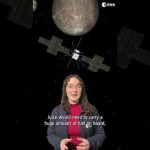
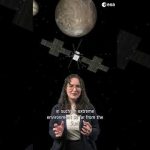
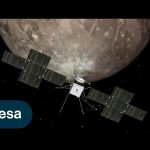
Our Jupiter Icy Moons Explorer, Juice, will make detailed observations of the giant gas planet and its three large ocean-bearing moons – Ganymede, Callisto and Europa – with a suite of remote sensing, geophysical and in situ instruments. The mission will characterise these moons as both planetary objects and possible habitats, explore Jupiter’s complex environment in depth, and study the wider Jupiter system as an archetype for gas giants across the Universe.
Juliet will be taking us to Jupiter and its moons in the coming weeks. So stay tuned for more!
📹 @europeanspaceagency
★ Subscribe: http://bit.ly/ESAsubscribe and click twice on the bell button to receive our notifications.
We are Europe’s gateway to space. Our mission is to shape the development of Europe’s space capability and ensure that investment in space continues to deliver benefits to the citizens of Europe and the world. Check out https://www.esa.int/ to get up to speed on everything space related.
ESA’s Juice mission has entered its final phase of development, with the spacecraft moving to an @Airbus Defence and Space facility in Toulouse, France, for the next round of testing. The spacecraft has been fully integrated, and these tests will be done in full flight configuration, as Juice is scheduled for launch from Europe’s Spaceport in Kourou, French Guiana, in April 2023.
The Juice mission is a perfect example of collaboration between several national space agencies and European industry. Its objective is to explore the gas giant Jupiter, its environment, and three of its moons: Europa, Callisto and Ganymede. By studying this planetary system, ESA hopes to learn more about the icy worlds around Jupiter and the origins and possibility of life in our Universe
We are Europe’s gateway to space. Our mission is to shape the development of Europe’s space capability and ensure that investment in space continues to deliver benefits to the citizens of Europe and the world. Check out https://www.esa.int/ to get up to speed on everything space related.
ESA’s Jupiter Icy Moons Explorer, Juice, is set to embark on an eight-year cruise to Jupiter starting April 2023. The mission will investigate the emergence of habitable worlds around gas giants and the Jupiter system as an archetype for the numerous giant planets now known to orbit other stars.
This animation depicts Juice’s journey to Jupiter and highlights from its foreseen tour of the giant planet and its large ocean-bearing moons. It depicts Juice’s journey from leaving Earth’s surface in a launch window 5–25 April 2023 and performing multiple gravity assist flybys in the inner Solar System, to arrival at Jupiter (July 2031), flybys of the Jovian moons Europa, Callisto and Ganymede, orbital insertion at Ganymede (December 2034), and eventual impact on this moon’s surface (late 2035).
An Ariane 5 will lift Juice into space from Europe’s Spaceport in Kourou. A series of gravity assist flybys of Earth, the Earth-Moon system and Venus will set the spacecraft on course for its July 2031 arrival at Jupiter. These flybys are shown here in order – Earth-Moon (August 2024), Venus (August 2025), Earth (September 2026, January 2029) – interspersed by Juice’s continuing orbits around the Sun. Juice’s flyby of the Earth-Moon system, known as a Lunar-Earth gravity assist (LEGA), is a world first: by performing this manoeuvre – a gravity assist flyby of the Moon followed just 1.5 days later by one of Earth – Juice will save a significant amount of propellant on its journey.
Juice will start its science mission about six months prior to entering orbit around Jupiter, making observations as it approaches its destination. Once in the Jovian system, a gravity assist flyby of Jupiter’s largest moon Ganymede – also the largest moon in the Solar System – will help Juice enter orbit around Jupiter, where the spacecraft will spend four years observing the gas giant and three of its moons: Ganymede, Callisto and Europa.
Juice will make two flybys of Europa (July 2032), which has strong evidence for an ocean of liquid water under its icy shell. Juice will look at the moon’s active zones, its surface composition and geology, search for pockets of liquid water under the surface, and study the plasma environment around Europa, also exploring the moon’s tiny atmosphere and hunting for plumes of water vapour (as have been previously detected erupting to space).
A sequence of Callisto flybys will be used to study this ancient, cratered world that may too harbour a subsurface ocean, also changing the angle of Juice’s orbit with respect to Jupiter’s equator, making it possible to explore Jupiter’s higher latitudes (2032–2034).
A sequence of Ganymede and Callisto flybys will adjust Juice’s orbit – properly orienting it while minimising the amount of propellant expended – so that it can enter orbit around Ganymede in December 2034, making it the first spacecraft to orbit another planet’s moon. Juice’s initial elliptical orbit will be followed by a 5000 km-altitude circular orbit, and later a 500 km-altitude circular orbit.
Ganymede is the only moon in the Solar System to have a magnetosphere. Juice will investigate this phenomenon and the moon’s internal magnetic field, and explore how its plasma environment interacts with that of Jupiter. Juice will also study Ganymede’s atmosphere, surface, subsurface, interior and internal ocean, investigating the moon as not only a planetary object but also a possible habitat.
Over time, Juice’s orbit around Ganymede will naturally decay due to lack of propellant, and it will make a grazing impact onto the surface (late 2035).
The Juice launch itself will be a historical milestone for more reasons than one. It will be the final launch for Ariane 5, ending the launcher’s nearly three-decade run as one of the world’s most successful heavy-lift rockets. Its duties are being taken over by Ariane 6.
We are Europe’s gateway to space. Our mission is to shape the development of Europe’s space capability and ensure that investment in space continues to deliver benefits to the citizens of Europe and the world. Check out https://www.esa.int/ to get up to speed on everything space related.
Aici vedem sateliții Io și Europa orbitand în jurul lui Jupiter. Io este mai departe de noi și Europa mai aproape. În spate se vede Marea Pată Roșie, care este o furtună violentă ce durează de peste două sute de ani pe Jupiter și este mai mare decât Pământul (nu e clar daca Galileo a vazut-o, pe la 1830 apar primele desene). Videoul a fost realizat de Kevin M. Gill de la NASA, care a combinat imagini ale sondei Cassini.
Listen to the full episode of this podcast and subscribe at: https://www.nasa.gov/gravityassist
For decades, moons of the outer solar system have proven fascinating subjects for scientists interested in the search for life. Forty years ago this year, NASA’s Voyager 1 spacecraft flew by Saturn’s moon Titan and took the first close images, revealing a thick orange-colored atmosphere that is the most Earth-like in the solar system. NASA’s Cassini probe then dropped off a lander at Titan called Huygens in 2004, and studied Titan in detail during its 13 years at Saturn. Now, NASA is preparing to launch the rotorcraft mission Dragonfly to Titan in the 2020s. But Titan is just one interesting moon. The European Space Agency’s upcoming JUpiter ICy moons Explorer (JUICE) mission will study Ganymede, Europa, and another moon of Jupiter called Callisto. Meanwhile, NASA’s Europa Clipper mission will provide complementary observations of Europa.
As we explore Mars and other places in the solar system that might have life, scientists who work in Planetary Protection are busy making sure that we don’t contaminate them. While engineers prepare the Perseverance Rover for launch, Lisa Pratt, NASA’s Planetary Protection Officer, is making sure that it’s not carrying too many spores — cells that could re-activate and transport Earthly bacteria to Mars. It’s especially important to keep Perseverance clean because it will collect samples on Mars that will one day return to Earth. Learn what your hand sanitizer has in common with NASA’s clean rooms, and how scientists are thinking about protecting Mars in terms of future human missions.
Is there life beyond Earth? How did life get started on Earth anyway? This season of NASA’s Gravity Assist podcast is about the origins of life on Earth and the search for life elsewhere. Subscribe at https://www.nasa.gov/gravityassist. See all NASA podcasts: www.nasa.gov/podcasts
Hosted by NASA’s Chief Scientist Jim Green, each episode features a conversation with a scientist who has researched some aspect of these questions. We’ll talk about the search for life on Mars, what kind of life might survive on Saturn’s moon Titan, and much more.
New data from the Copernicus Sentinel-5P satellite reveal the decline of air pollution, specifically nitrogen dioxide emissions, over Italy. This reduction is particularly visible in northern Italy which coincides with its nationwide lockdown to prevent the spread of the coronavirus.
The animation shows the fluctuation of nitrogen dioxide emissions across Europe from 1 January 2020 until 11 March 2020, using a 10-day moving average. These data are thanks to the Tropomi instrument on board the Copernicus Sentinel-5P satellite which maps a multitude of air pollutants around the globe.
Claus Zehner, ESA’s Copernicus Sentinel-5P mission manager, comments, “The decline in nitrogen dioxide emissions over the Po Valley in northern Italy is particularly evident.
“Although there could be slight variations in the data due to cloud cover and changing weather, we are very confident that the reduction in emissions that we can see, coincides with the lockdown in Italy causing less traffic and industrial activities.”
Josef Aschbacher, ESA’s Director of Earth Observation Programmes, says, “Copernicus Sentinel-5P Tropomi is the most accurate instrument today that measures air pollution from space. These measurements, globally available thanks to the free and open data policy, provide crucial information for citizens and decision makers.”
The coronavirus disease (COVID-19) was recently declared a pandemic by the World Health Organisation, with more than 125 000 current cases of the disease reported globally. In Italy, the number of coronavirus cases drastically soared making it the country with the largest number of cases outside of China.
In an attempt to reduce the spread of the disease, Italy’s Prime Minister Giuseppe Conte announced a lockdown of the entire country – closing schools, restaurants, bars, museums and other venues across the country.
The Sentinel-5 Precursor – also known as Sentinel-5P – is the first Copernicus mission dedicated to monitoring our atmosphere. The satellite carries the Tropomi instrument to map a multitude of trace gases such as nitrogen dioxide, ozone, formaldehyde, sulphur dioxide, methane, carbon monoxide and aerosols – all of which affect the air we breathe and therefore our health, and our climate.
Given the growing importance and need for the continuous monitoring of air quality, the upcoming Copernicus Sentinel-4 and Sentinel-5 missions, as part of the EU’s Copernicus programme, will monitor key air quality trace gases and aerosols. These missions will provide information on air quality, stratospheric ozone and solar radiation, as well as climate monitoring.
Credits: contains modified Copernicus Sentinel data (2020), processed by ESA, CC BY-SA 3.0 IGO
★ Subscribe: http://bit.ly/ESAsubscribe and click twice on the bell button to receive our notifications.
We are Europe’s gateway to space. Our mission is to shape the development of Europe’s space capability and ensure that investment in space continues to deliver benefits to the citizens of Europe and the world. Check out http://www.esa.int/ESA to get up to speed on everything space related.
Jetzt kannst Du alle Deine Fragen zum Thema Weltraum und Raumfahrt stellen!
Nimm an einem der Europäischen Space Talks in Deinem Land teil und erfahre, wie die Raumfahrt deinen Alltag beeinflusst und dazu beiträgt, einige der großen Fragen der Menschheit zu beantworten.
We are Europe’s gateway to space. Our mission is to shape the development of Europe’s space capability and ensure that investment in space continues to deliver benefits to the citizens of Europe and the world. Check out http://www.esa.int/ESA to get up to speed on everything space related.
Camargue, no sul de França, é uma região famosa pelas paisagens e vida selvagem, mas também um lugar seriamente ameaçado pelas alterações climáticas, por causa da subida do nível do mar.
Os muros de rochas ao longo da costa foram construídos nos anos 80, num esforço fracassado para travar o mar Mediterrâneo. Naquela época, o nível do mar subia apenas alguns milímetros por ano. Agora, os satélites descobriram que as águas estão a subir muito mais rápido do que antes, alimentadas pelo degelo das calotas glaciares e pelo aumento das temperaturas.
Os cientistas estão a usar satélites para compreender melhor o que está a acontecer em regiões como esta e em todo o planeta.
★ Subscribe: http://bit.ly/ESAsubscribe and click twice on the bell button to receive our notifications.
ESA is Europe’s gateway to space. Our mission is to shape the development of Europe’s space capability and ensure that investment in space continues to deliver benefits to the citizens of Europe and the world. Check out http://www.esa.int/ESA to get up to speed on everything space related.
A klímaváltozás hatásainak felmérésében és megértésében egyre nagyobb szerepet játszanak a műholdak. A Space stábja ebben a hónapban az Európai Űrügynökség Róma melletti megfigyelőközpontjába, valamint Dél-Franciaországba utazott, hogy bemutassa a klímaváltozás hatásait, és a témával foglalkozó kutatókat.
ESA, Európai Űrügynökség, Űr, Euronews, Univerzum, Kozmosz, Űrtudomány, Tudomány, Űrkutatás, Technika, Föld a térből, Föld megfigyelése, Föld megfigyelése, Earth Explorer, műholdas kép, Copernicus, Sentinel, klímaváltozás, klímaváltozás, tengerszint emelkedés, Camargue, Franciaország, Európa
★ Subscribe: http://bit.ly/ESAsubscribe and click twice on the bell button to receive our notifications.
ESA is Europe’s gateway to space. Our mission is to shape the development of Europe’s space capability and ensure that investment in space continues to deliver benefits to the citizens of Europe and the world. Check out http://www.esa.int/ESA to get up to speed on everything space related.
Nella puntata di Space di questo mese abbiamo la chance unica di visitare questo posto alle mie spalle, l’azienda aerospaziale Avio a Colleferro, in provincia di Roma, dove un team di ingegneri sta lavorando alla nuova generazione europea di lanciatori in fibra di carbonio. E’ una cosa rara poter filmare dentro luoghi simili. Entriamo, quindi, incontriamo il team e scopriamo cosa c’è di nuovo.
Questa è una delle poche aziende del settore in Europa. Qui è nato il lanciatore leggero Vega. E qui saranno creati i razzi spaziali del futuro.
Our astronauts doing work outside the space station, an agencywide town hall with our new administrator, and old data provide new insight about Jupiter’s moon Europa – a few of the stories to tell you about – This Week at NASA!
This video is available for download from NASA’s Image and Video Library: https://images.nasa.gov/details-NHQ_2018_0518_Astronauts%20Working%20Outside%20the%20Space%20Station%20on%20This%20Week%20@NASA%20%E2%80%93%20May%2018,%202018.html
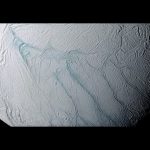
Two long-running NASA missions are providing new details about ocean bearing moons of Jupiter and Saturn – further heightening scientific interest in these and other “ocean worlds” in our solar system and beyond. The details – discussed during an April 13 NASA science briefing – include the announcement by the Cassini mission that a key ingredient for life has been found in the ocean on Saturn’s moon Enceladus. Meanwhile, researchers using the Hubble Space Telescope observed a probable plume erupting from the surface of Jupiter’s moon Europa, at the same location where Hubble saw evidence of a plume in 2014. Researchers say this could be circumstantial evidence of water erupting from the moon’s interior. Hubble’s monitoring of plume activity on Europa and Cassini’s long-term investigation of Enceladus are laying the groundwork for NASA’s Europa Clipper mission, which is being planned for launch in the 2020s. Also, Expedition 50 Returns Home Safely, Next Space Station Crew at Launch Site, Student Launch Event, Groundbreaking for New Lab, and Yuri’s Night, First Space Shuttle Mission Celebrated!
During a NASA science briefing on April 13, representatives from the agency discussed new results about ocean worlds in our solar system based on data gathered by NASA’s Cassini spacecraft and the Hubble Space Telescope.
The two veteran missions are providing tantalizing new details about icy, ocean-bearing moons of Jupiter and Saturn, further enhancing the scientific interest of these and other “ocean worlds” in our solar system and beyond.
New research from Cassini indicates that hydrogen gas, which could potentially provide a chemical energy source for life, is pouring into the ocean of Saturn’s icy moon Enceladus from hydrothermal vents in the seafloor. The Cassini spacecraft detected the hydrogen in the plume of gas and icy material spraying from Enceladus during its deepest dive through the plume on Oct. 28, 2015.This means that ocean microbes — if any exist there — could use the hydrogen to produce energy
NASA’s Hubble Space Telescope saw a probable plume of material erupting from the moon’s surface on 2016, at the same location where Hubble saw evidence of a plume in 2014. These images bolster evidence that the Europa plumes could be a real phenomenon, flaring up intermittently in the same region on the moon’s surface.
Both Cassini and Hubble investigations are laying the groundwork for NASA’s Europa Clipper mission, which is being planned for launch in the 2020s.
A new NASA mission to investigate the habitability of Jupiter’s ocean moon Europa has moved from the concept phase to the development phase known as formulation, after successfully completing its first major review by the agency. Europa is considered to be one of the best places in the solar system to search for signs of present-day life beyond Earth. Plans for the mission call for a spacecraft to be launched to the Jupiter system sometime in the 2020s. Also, Seeking other worlds suitable for life, Agreements advance Mars exploration, Asteroid exploration update, Newman visits Langley, Rainfall spacecraft re-enters over tropics and Sample Robot Return Challenge!
NASA announced May 26, it has selected nine science instruments for a mission to Jupiter’s moon Europa to investigate whether the icy moon has conditions suitable for life. The instruments, targeted for launch aboard a robotic probe in the 2020s, include cameras and spectrometers to collect high-resolution imagery; an ice penetrating radar to measure surface thickness and look for subsurface lakes; and a magnetometer to measure the strength and direction of the moon’s magnetic field, and allow scientists to determine the depth and salinity of the moon’s ocean. The mission will collect data during a series of close flybys of Europa during a three-year period. Also, Commercial Crew update, Space station module relocated, Bolden visits space companies, SLS engine test, Supersonic vehicle test and more!
NASA and its international partners are making changes to the International Space Station’s schedule of arriving and departing spacecraft, following the Russian Federal Space Agency’s preliminary findings on its recent loss of the Progress 59 cargo craft. Exact dates will be announced in the coming weeks, with a Roscosmos update about the Progress 59 investigation expected May 22. The schedule adjustments mean NASA’s Terry Virts and Expedition 43 crewmates, Samantha Cristoforetti of ESA and Russian cosmonaut Anton Shkaplerov – now will return to Earth in June instead of May. NASA’s Kjell Lindgren, who is conducting pre-flight training in Russia with the other members of Expedition 44, now will launch to the station in July. Also, Small satellite launch services, Latest images of Ceres, Europa’s sea salt? Antarctica Ice Shelf Nearing Its Final Act and No major U.S. hurricanes in nine years!
Where is the best place to find living life beyond Earth? It may be a small, ice-covered moon of Jupiter or Saturn that harbors some of the most habitable real estate in our Solar System. Life loves liquid water and these moons have lots of it! Dr.Kevin Hand, Deputy Chief Scientist for Solar System Exploration at NASA’s Jet Propulsion Laboratory explains the science behind how these oceans exist and what we know about the conditions on these worlds. Dr. Hand focuses on Jupiter’s moon Europa, which is a top priority for future NASA missions and shows how the exploration of Earth’s ocean is helping our understanding of the potential habitability of worlds.