We are Europe’s gateway to space. Our mission is to shape the development of Europe’s space capability and ensure that investment in space continues to deliver benefits to the citizens of Europe and the world. Check out https://www.esa.int/ to get up to speed on everything space related.
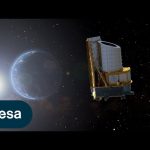
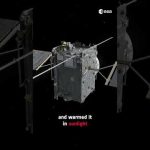
ESA’s wind mission Aeolus is coming home. After five years of improving weather forecasts, the satellite will return in a first-of-its-kind assisted reentry. At ESA’s Space Operations Centre in Germany, mission control will use the satellite’s remaining fuel to steer Aeolus during its return to Earth.
Find out more about the mission, its successes and how Aeolus is paving the way for safe reentries. 👉 https://www.esa.int/Aeolus
Credits: ESA – European Space Agency
★ Subscribe: http://bit.ly/ESAsubscribe and click twice on the bell button to receive our notifications.
We are Europe’s gateway to space. Our mission is to shape the development of Europe’s space capability and ensure that investment in space continues to deliver benefits to the citizens of Europe and the world. Check out https://www.esa.int/ to get up to speed on everything space related.
Scientists may have found the solution to creating oxygen in space with artificial photosynthesis!
They are creating devices that mimic plant photosynthesis, to turn sunlight and water into oxygen without the need for electricity.
These devices produce oxygen from water and sunlight using semiconductor materials coated with metallic catalysts.
Scientists believe artificial photosynthesis could even work on Mars, where sunlight is weaker, by using simple solar mirrors to concentrate sunlight and boost oxygen production.
These devices could not only help us explore space but could also bring us closer to meeting our green energy and sustainability goals here on Earth. 🌍💚
📹 ESA – European Space Agency
★ Subscribe: http://bit.ly/ESAsubscribe and click twice on the bell button to receive our notifications.
We are Europe’s gateway to space. Our mission is to shape the development of Europe’s space capability and ensure that investment in space continues to deliver benefits to the citizens of Europe and the world. Check out https://www.esa.int/ to get up to speed on everything space related.
This video takes the viewer on a journey through space to the Rho Ophiuchi cloud complex.
From our cosmic backyard in the Solar System to distant galaxies near the dawn of time, the NASA/ESA/CSA James Webb Space Telescope has delivered on its promise of revealing the Universe like never before in its first year of science operations. To celebrate the completion of a successful first year, a new Webb image has been released of a small star-forming region in the Rho Ophiuchi cloud complex. While the region is relatively quiet, its proximity at 390 light-years makes for a highly detailed close-up, with no foreground stars in the intervening space.
Credits: ESA/Webb, NASA, ESA, CSA, JPL-Caltech/Harvard-Smithsonian CfA, DSS2, N. Bartmann (ESA/Webb), E. Slawik, N. Risinger, D. de Martin, M. Zamani (ESA/Webb), K. Pontoppidan (STScI), A. Pagan (STScI)
Music: Tonelabs – The Red North
★ Subscribe: http://bit.ly/ESAsubscribe and click twice on the bell button to receive our notifications.
We are Europe’s gateway to space. Our mission is to shape the development of Europe’s space capability and ensure that investment in space continues to deliver benefits to the citizens of Europe and the world. Check out https://www.esa.int/ to get up to speed on everything space related.
ESA’s Earth Explorer Aeolus satellite was launched in August 2018 on a trailblazing mission to show how profiling Earth’s winds from space can improve weather forecasts and climate models. Data from its pioneering wind-mapping laser, which at one stage was thought a nigh-impossible feat of engineering, has been used by leading weather forecasting services throughout Europe.
Marking the end of Aeolus’ remarkable mission, ESA worked with composer Jamie Perera to create a woodwind piece from data that spans the lifetime of the satellite’s life in orbit around Earth.
In the resulting orchestral piece, every second is a day in the life of Aeolus, with data represented by the following instruments:
Piccolo: Rayleigh Top Altitude (the tops of clouds) Flute: Rayleigh Observation Type (density of clouds) Oboe: Rayleigh Reference Temperature (wind temperature) Clarinet 1: Rayleigh Wind Velocity (wind velocity) Clarinet 2: Rayleigh Wind Reference Pressure (air pressure) Bassoon/Bass Clarinet: Rayleigh Bottom Altitude (Earth’s surface) Ambient Synth: Validity Flag 0 (Aeolus downtime)
You can also hear landmark events such as volcanic eruptions represented by drums, hurricanes represented by wind sound effects, and the Coronavirus pandemic represented by a pulsing synth.
We are Europe’s gateway to space. Our mission is to shape the development of Europe’s space capability and ensure that investment in space continues to deliver benefits to the citizens of Europe and the world. Check out https://www.esa.int/ to get up to speed on everything space related.
If you think its only possible be held in orbit around a central body of mass – say a planet or a star – you’d be wrong. It is in fact possible to orbit around an invisible point, an oasis of forces, infinitesimal in size. ESA’s Euclid mission was launched on 1 July 2023 to uncover the secrets of the dark universe. Its destination? Like many astronomy missions before it, Lagrange point 2.
‘L2’ is an ideal location for astronomy missions because they can keep the Sun, Earth and Moon behind them at all times, so they don’t interfere with observations, while at the same time getting a clear view of deep space and pointing an antenna back to Earth to remain in close communication. The permanent sunlight on Euclid at L2 also keeps the telescope thermally stable, allowing for the extremely high stability required for the instrument’s long exposure observations. Euclid’s orbit around Lagrange point 2 is big. In terms of distance, the ‘radius’ of Euclid’s orbit varies from about 400 000 kilometres at its closest to the centre, and up to 800 000 kilometres at its furthest. By the time Euclid has completed one full revolution around L2, the Moon will have circled the Earth six times.
The reason for this large orbit is that it is almost free, in terms of fuel, to get there. The better the accuracy of the rocket that launches a mission into such a large halo orbit around L2, the less fuel that’s needed to perform correction manoeuvres – and Euclid only required a tiny correction manoeuvre after its near-perfect launch on a Space X Falcon 9.
This animation, created using “Gaia Sky”, shows Euclid’s path from Earth to this unique and useful position in space. Located about 1.5 million kilometres from Earth in the opposite direction from the Sun, the second Lagrange point (or Libration point) is about four times further away than our Moon.
Euclid will spend about a month getting to ‘L2’ followed by a planned six years in orbit, from where it will study the mysterious nature of dark matter and dark energy, that make up 95% of our Universe, but about which very little is known.
Credits: ESA/Gaia/DPAC, CC BY-SA 3.0 IGO
★ Subscribe: http://bit.ly/ESAsubscribe and click twice on the bell button to receive our notifications.
We are Europe’s gateway to space. Our mission is to shape the development of Europe’s space capability and ensure that investment in space continues to deliver benefits to the citizens of Europe and the world. Check out https://www.esa.int/ to get up to speed on everything space related.
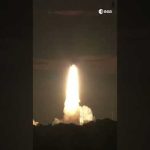
The Ariane 5 launch vehicle liftoff for flight VA261 from Europe’s Spaceport in French Guiana on 5 July at 23:00 BST (6 July at 00:00 CEST). Flight VA261 carried two payloads into space – the German space agency DLR’s experimental communications satellite Heinrich Hertz and the French communications satellite Syracuse 4b. The flight was the 117th and final mission for Ariane 5, a series which began in 1996.
Credits: ESA/CNES/Arianespace
★ Subscribe: http://bit.ly/ESAsubscribe and click twice on the bell button to receive our notifications.
We are Europe’s gateway to space. Our mission is to shape the development of Europe’s space capability and ensure that investment in space continues to deliver benefits to the citizens of Europe and the world. Check out https://www.esa.int/ to get up to speed on everything space related.
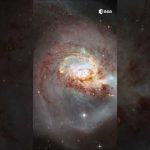
This video takes the viewer on a journey through space to the peculiar galaxy NGC 3256.
This distorted galaxy is the wreckage of a head-on collision between two spiral galaxies which likely occurred 500 million years ago, and it is studded with clumps of young stars which were formed as gas and dust from the two galaxies collided.
We are Europe’s gateway to space. Our mission is to shape the development of Europe’s space capability and ensure that investment in space continues to deliver benefits to the citizens of Europe and the world. Check out https://www.esa.int/ to get up to speed on everything space related.
Discover the first results from Europe’s first Lightning Imager onboard the Meteosat Third Generation. The Lightning Imager can continuously detect rapid flashes of lighting in Earth’s atmosphere whether day or night from a distance of 36 000 km.
This is the first time a geostationary weather satellite has the capability to detect lightning across Europe, Africa and the surrounding waters. Each camera can capture up to 1000 images per second and will continuously observe lightning activity from space. The data will give weather forecasters greater confidence in their predictions of severe storms.
We are Europe’s gateway to space. Our mission is to shape the development of Europe’s space capability and ensure that investment in space continues to deliver benefits to the citizens of Europe and the world. Check out https://www.esa.int/ to get up to speed on everything space related.
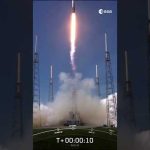
ESA’s latest astrophysics mission, Euclid, lifted off on a Space X Falcon 9 from Cape Canaveral in Florida, USA, at 17:12 CEST on 1 July 2023.
Euclid has now started its month-long journey to Sun-Earth Lagrange point L2, located 1.5 million kilometres from Earth, in the opposite direction from the Sun.
The telescope will survey one third of the sky with unprecedented accuracy and sensitivity. By observing billions of galaxies out to 10 billion light-years, it will create the most extensive 3D-map of the Universe, with the third dimension representing time.
ESA’s Euclid mission is designed to explore the composition and evolution of the dark Universe. Euclid will chart how the Universe has expanded and how large-scale structure is distributed across space and time, revealing more about the role of gravity and the nature of dark energy and dark matter.
Four weeks after launch, Euclid will enter its orbit around L2. Once in orbit, mission controllers will start the activities to verify all functions of the spacecraft, check out the telescope and finally turn the instruments on. Following this, scientists and engineers will be engaged in an intense two-month phase of testing and calibrating Euclid’s scientific instruments, and preparing for routine observations. The telescope begins its early phase of the survey of the Universe three months after launch.
We are Europe’s gateway to space. Our mission is to shape the development of Europe’s space capability and ensure that investment in space continues to deliver benefits to the citizens of Europe and the world. Check out https://www.esa.int/ to get up to speed on everything space related.
ESA’s latest astrophysics mission, Euclid, lifted off on a Space X Falcon 9 from Cape Canaveral in Florida, USA, at 17:12 CEST on 1 July 2023.
Euclid has now started its month-long journey to Sun-Earth Lagrange point L2, located 1.5 million kilometres from Earth, in the opposite direction from the Sun.
The telescope will survey one third of the sky with unprecedented accuracy and sensitivity. By observing billions of galaxies out to 10 billion light-years, it will create the most extensive 3D-map of the Universe, with the third dimension representing time.
ESA’s Euclid mission is designed to explore the composition and evolution of the dark Universe. Euclid will chart how the Universe has expanded and how large-scale structure is distributed across space and time, revealing more about the role of gravity and the nature of dark energy and dark matter.
Four weeks after launch, Euclid will enter its orbit around L2. Once in orbit, mission controllers will start the activities to verify all functions of the spacecraft, check out the telescope and finally turn the instruments on. Following this, scientists and engineers will be engaged in an intense two-month phase of testing and calibrating Euclid’s scientific instruments, and preparing for routine observations. The telescope begins its early phase of the survey of the Universe three months after launch.
We are Europe’s gateway to space. Our mission is to shape the development of Europe’s space capability and ensure that investment in space continues to deliver benefits to the citizens of Europe and the world. Check out https://www.esa.int/ to get up to speed on everything space related.
Watch a replay of the launch broadcast for ESA’s Euclid.
ESA’s Euclid mission was launched into space on a SpaceX Falcon 9 from Cape Canaveral in Florida, USA, on 1 July 2023. It is now on its way to Sun-Earth Lagrange point L2.
By observing billions of galaxies out to 10 billion light-years, the space telescope will create the most detailed 3D-map of the Universe, with time as the third dimension.
The launch broadcast programme includes live segments from the launch site and ESA’s European Spacecraft Operations Centre (ESOC) in Darmstadt, Germany.
Credits: ESA/SpaceX
00:00 – 45:35 Pre-launch programmes 45:35 – 55:00 Lift-off 55:00 – 01:27:00 Booster landing in the ocean 01:27:00 – 01:31:00 Euclid space craft separation 01:31:00 – 01:42:29 Acquisition of Signal (AOS)
★ Subscribe: http://bit.ly/ESAsubscribe and click twice on the bell button to receive our notifications.
We are Europe’s gateway to space. Our mission is to shape the development of Europe’s space capability and ensure that investment in space continues to deliver benefits to the citizens of Europe and the world. Check out https://www.esa.int/ to get up to speed on everything space related.
ESA’s Euclid space telescope is nearly ready for launch. The spacecraft arrived in Florida on 30 April for final tests and checks, and now being integrated with the SpaceX Falcon 9 rocket that will carry it into space.
For the team at ESA’s European Space Operations Centre (ESOC) in Darmstadt, Germany, this means that the most intense phase of their work is about to begin. To prepare themselves, the team has simulated the launch operations, tackling issues ranging from team members falling ill to a computer mouse being taped over.
Euclid is ESA’s space telescope designed to explore the dark Universe. The mission will create the largest, most accurate 3D map of the Universe ever produced across 10 billion years of cosmic time. Euclid will explore how the Universe has expanded and how large-scale structure is distributed across space and time, revealing more about the role of gravity and the nature of dark energy and dark matter.
Euclid is targeted to launch on a SpaceX Falcon 9 rocket from Cape Canaveral in Florida, USA, at 11:11 local time / 16:11 BST / 17:11 CEST on Saturday 1 July 2023. A back-up launch date of Sunday 2 July 2023 is foreseen.
Credit: ESA – European Space Agency
★ Subscribe: http://bit.ly/ESAsubscribe and click twice on the bell button to receive our notifications.
We are Europe’s gateway to space. Our mission is to shape the development of Europe’s space capability and ensure that investment in space continues to deliver benefits to the citizens of Europe and the world. Check out https://www.esa.int/ to get up to speed on everything space related.
This is ESA WebTV, ESA’s digital channel, packed with original programmes on all things space related.
Stories about space and climate change, astronauts, rovers on faraway planets, space debris, new rockets, satellite operations, exploration of our universe, live launches – you name it, we’ve got it!
We are Europe’s gateway to space. Our mission is to shape the development of Europe’s space capability and ensure that investment in space continues to deliver benefits to the citizens of Europe and the world. Check out https://www.esa.int/ to get up to speed on everything space related.
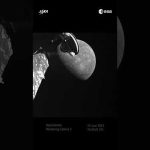
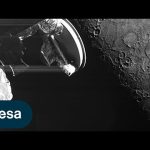
Watch Mercury appear from the shadows as the ESA/JAXA BepiColombo spacecraft sped by the planet’s night side during its 19 June 2023 close flyby, and enjoy a special flyover of geologically rich terrain.
Credits: Image: ESA/BepiColombo/MTM, CC BY-SA 3.0 IGO; Music composed by ILĀ. Shape from shading processing and animation (using Unity) by K. Wohlfarth and M. Tenthoff (TU Dortmund), based on techniques described by Tenthoff et al. (2020) and Domingue et al. (2015) with a global terrain model from Becker et al. (2016).
Music: Tim Garland – Moonlight Mystery
★ Subscribe: http://bit.ly/ESAsubscribe and click twice on the bell button to receive our notifications.
We are Europe’s gateway to space. Our mission is to shape the development of Europe’s space capability and ensure that investment in space continues to deliver benefits to the citizens of Europe and the world. Check out https://www.esa.int/ to get up to speed on everything space related.
On 22 June 2023 at Europe’s Spaceport in French Guiana, engineers rolled back the mobile gantry protecting Ariane 6 on its launch pad. The exercise helped validate ground systems and prepare for a series of engine fire tests.
Credits: ESA ; S. Corvaja, ESA/M. Pédoussaut, Zetapress
★ Subscribe: http://bit.ly/ESAsubscribe and click twice on the bell button to receive our notifications.
We are Europe’s gateway to space. Our mission is to shape the development of Europe’s space capability and ensure that investment in space continues to deliver benefits to the citizens of Europe and the world. Check out https://www.esa.int/ to get up to speed on everything space related.
30 June marks Asteroid Day, which aims to emphasise the importance of asteroids –their role in the formation of our Solar System, their impact in space resources and the importance of defending our planet from future impacts.
This year we are celebrating along with @universalpictures and @focusfeatures for the release of Wes Anderson’s new movie @AsteroidCity to bring you all the information you need to know about asteroids and how we protect our planet from them.
Credits: ESA – European Space Agency
★ Subscribe: http://bit.ly/ESAsubscribe and click twice on the bell button to receive our notifications.
We are Europe’s gateway to space. Our mission is to shape the development of Europe’s space capability and ensure that investment in space continues to deliver benefits to the citizens of Europe and the world. Check out https://www.esa.int/ to get up to speed on everything space related.
ESA DG Josef Aschbacher, accompanied by TAS CEO Hervé Derrey, Airbus DS EVP Jean-Marc Nasr and OHB Board Member Lutz Bertling, among others, will unveil the Zero Debris Charter initiative, an ambitious drive towards European leadership in space debris mitigation and remediation.
★ Subscribe: http://bit.ly/ESAsubscribe and click twice on the bell button to receive our notifications.
We are Europe’s gateway to space. Our mission is to shape the development of Europe’s space capability and ensure that investment in space continues to deliver benefits to the citizens of Europe and the world. Check out https://www.esa.int/ to get up to speed on everything space related.
Watch Mercury appear from the shadows as the ESA/JAXA BepiColombo spacecraft sped by the planet’s night side during its 19 June 2023 close flyby, and enjoy a special flyover of geologically rich terrain.
The first part of the movie is composed of 217 images captured by BepiColombo’s monitoring camera M-CAM3. The image sequence starts from 19:46:25 UTC on 19 June 2023, at an altitude of 1 789 km above the planet’s surface, and ends at 20:34:25 UTC on 20 June 2023, when BepiColombo was 331 755 km away. The image cadence was roughly once per minute around closest approach, but much slower in the later phases.
The second part of the movie cuts to a flyover of a special region of interest, rotating around features such as the 600 km-long Beagle Rupes curved escarpment and the elongated Sveinsdóttir impact crater that it cuts through. It also features the 218 km-wide Manley Crater and the straight Challenger Rupes scarp. At the end, the animated topography fades out and the projected image used for 3D reconstruction appears. Regions like these will be important for BepiColombo’s main science mission, to learn more about Mercury’s geological history.
Music was composed for the sequence by ILĀ, with the assistance of AI tools developed by the Machine Intelligence for Musical Audio (MIMA) group, University of Sheffield.
Credits: Image: ESA/BepiColombo/MTM, CC BY-SA 3.0 IGO; Music composed by ILĀ. Shape from shading processing and animation (using Unity) by K. Wohlfarth and M. Tenthoff (TU Dortmund), based on techniques described by Tenthoff et al. (2020) and Domingue et al. (2015) with a global terrain model from Becker et al. (2016).
★ Subscribe: http://bit.ly/ESAsubscribe and click twice on the bell button to receive our notifications.
We are Europe’s gateway to space. Our mission is to shape the development of Europe’s space capability and ensure that investment in space continues to deliver benefits to the citizens of Europe and the world. Check out https://www.esa.int/ to get up to speed on everything space related.
Watch the replay of the live session from the Paris Air Show 2023 to watch the press briefing on space transportation. Speakers will share the current status of the Ariane 6 programme, and the next key milestones towards the inaugural flight.
★ Subscribe: http://bit.ly/ESAsubscribe and click twice on the bell button to receive our notifications.
We are Europe’s gateway to space. Our mission is to shape the development of Europe’s space capability and ensure that investment in space continues to deliver benefits to the citizens of Europe and the world. Check out https://www.esa.int/ to get up to speed on everything space related.
We are Europe’s gateway to space. Our mission is to shape the development of Europe’s space capability and ensure that investment in space continues to deliver benefits to the citizens of Europe and the world. Check out https://www.esa.int/ to get up to speed on everything space related.
Watch the recording of the live session from the Paris Air Show 2023 for a conference examining Europe’s aspirations in human and robotic space exploration. Speakers include ESA Director General Josef Aschbacher, CNES CEO Philippe Baptiste, Director General of the German Space Agency Walther Pelzer, and President of the Italian Space Agency (ASI) Teodoro Valente. ESA astronauts Thomas Pesquet, Samantha Cristoforetti, and Matthias Maurer will provide their perspectives.
★ Subscribe: http://bit.ly/ESAsubscribe and click twice on the bell button to receive our notifications.
We are Europe’s gateway to space. Our mission is to shape the development of Europe’s space capability and ensure that investment in space continues to deliver benefits to the citizens of Europe and the world. Check out https://www.esa.int/ to get up to speed on everything space related.
Experience the thrill of the Paris Air Show 2023 with our 360VR tour! Join ESA astronaut Matthias Maurer as he guides you through the ESA pavilion, showcasing the Euclid satellite and the incredible journey of Juice to Jupiter. Immerse yourself in the excitement and mysteries of the universe. Don’t miss the chance to join us in person during the public days this weekend and get ready for an unforgettable adventure!
★ Subscribe: http://bit.ly/ESAsubscribe and click twice on the bell button to receive our notifications.
We are Europe’s gateway to space. Our mission is to shape the development of Europe’s space capability and ensure that investment in space continues to deliver benefits to the citizens of Europe and the world. Check out https://www.esa.int/ to get up to speed on everything space related.
By using concrete examples of the water and carbon cycles, the speakers in this session will focus on the grand science questions before us and how we can turn them into answers and solutions most useful to decision-makers at the front line of the climate crisis. Earth is a highly dynamic system where the transport and exchanges of energy and matter are influenced by a multitude of processes and feedback mechanisms. Untangling these complex processes to better understand how Earth works as a system is a major challenge; a challenge that satellites, with their global view, are ideally positioned to tackle. While each mission gives us unique insights, it is by combining their data that makes scientific findings shine the brightest. This, in turn, puts European and international collaboration at the heart of Earth observation today.
★ Subscribe: http://bit.ly/ESAsubscribe and click twice on the bell button to receive our notifications.
We are Europe’s gateway to space. Our mission is to shape the development of Europe’s space capability and ensure that investment in space continues to deliver benefits to the citizens of Europe and the world. Check out https://www.esa.int/ to get up to speed on everything space related.
ESA’s Euclid mission is designed to bring the dark side of the Universe to light. Based on the way galaxies rotate and orbit one another, and the way in which the Universe is expanding, astronomers believe that two unseen entities dominate the composition of our cosmos. They call these mysterious components dark matter and dark energy, yet to date we have not been able to detect either of them directly, only inferring their presence from the effects they have on the Universe at large.
To better understand what dark matter and dark energy may be, we need a mission that can more closely reveal what effects they have had on galaxies, galaxy clusters and the expansion of the Universe itself. Euclid is that mission.
ESA’s Euclid mission will create a 3D-map of the Universe, with the third dimension representing time itself. The further away a galaxy is located, the longer its light has taken to reach us and so the earlier in cosmic history we will see it. By observing billions of galaxies out to a distance of 10 billion light-years, scientists will be able to chart the position and velocity of galaxies over immense distances and through most of cosmic history, and trace the way the Universe has expanded during that time. Euclid’s extraordinary optics will also reveal subtle distortions in the appearance of galaxies.
From this wealth of new data, astronomers will be able to infer the properties of dark energy and dark matter more precisely than ever before. This will help theorists pin down the nature of these mysterious components and develop a refined understanding of how gravity behaves at the largest distances.
Credit: ESA – European Space Agency
★ Subscribe: http://bit.ly/ESAsubscribe and click twice on the bell button to receive our notifications.
We are Europe’s gateway to space. Our mission is to shape the development of Europe’s space capability and ensure that investment in space continues to deliver benefits to the citizens of Europe and the world. Check out https://www.esa.int/ to get up to speed on everything space related.
The 30th June marks Asteroid Day, which aims to emphasise the importance of asteroids –their role in the formation of our solar system, their impact in space resources and the importance of defending our planet from future impacts. This year we are celebrating along with @UniversalPictures for the release of Wes Anderson’s new movie Asteroid City to bring you all the information you need to know about asteroids and how we protect our planet from them. #AsteroidCityxAsteroidDay #AsteroidDay2023
📹 @EuropeanSpaceAgency
★ Subscribe: http://bit.ly/ESAsubscribe and click twice on the bell button to receive our notifications.
We are Europe’s gateway to space. Our mission is to shape the development of Europe’s space capability and ensure that investment in space continues to deliver benefits to the citizens of Europe and the world. Check out https://www.esa.int/ to get up to speed on everything space related.
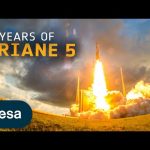
For a quarter century, Ariane 5 has been Europe’s heavy-lift workhorse. Flying from Europe’s Spaceport in French Guiana, Ariane 5 has carried to space a long series of commercial and scientific missions. Notable payloads include ESA’s comet-chasing Rosetta, a dozen of Europe’s Galileo navigation satellites – orbited with just three launches – the NASA/ESA/CSA James Webb Space Telescope and, in April 2023, ESA’s Juice mission to Jupiter.
Ariane 5 more than doubled the mass-to-orbit capacity of its predecessor, Ariane 4, which flew from 1988 until 2003 as a favourite of the telecommunications industry with its need to put large payloads into very high geosynchronous orbits. Ariane 5’s capacity enabled it to orbit two large telecommunications satellites on a single launch, or to push very large payloads into deep space.
After 117 flights, Ariane 5 is being replaced by an all-new launch vehicle, Ariane 6.
★ Subscribe: http://bit.ly/ESAsubscribe and click twice on the bell button to receive our notifications.
We are Europe’s gateway to space. Our mission is to shape the development of Europe’s space capability and ensure that investment in space continues to deliver benefits to the citizens of Europe and the world. Check out https://www.esa.int/ to get up to speed on everything space related.
Our #Gaia spacecraft has captured a huge dark blob, 800 times more massive than our Sun which seems to be squeezed into a surprisingly small volume of space suggesting it could be an intermediate-mass black hole.
We are Europe’s gateway to space. Our mission is to shape the development of Europe’s space capability and ensure that investment in space continues to deliver benefits to the citizens of Europe and the world. Check out https://www.esa.int/ to get up to speed on everything space related.
The level of practical expertise, technical and operational expertise required to operate in such a fast-paced, rapidly changing environment such as space needs to be permanently developed and improved to maintain the technical excellence at the right level. But the constant improvement of the technical and operational knowledge is an exciting journey. Nicolas has experienced this first-hand since he joined the European Space Agency Operation Centre as Ground Station Engineer. As a young engineer at ESA, you can gain extremely valuable expertise through launch campaigns, test and validation campaigns, time at the console in the operation control room together with your team, witnessing and learning from the whole life cycle of a real satellite mission, one impossible thing at the time.
With 35 years of experience at ESA, Nicolas Bobrinsky is the former Head of Ground Systems Engineering & Innovation Department. He initiated and further managed the Space Situational Awareness and later the ESA Space Safety Programme.
In four episodes of this new series of ESA Masterclass, Nicolas takes us through major events in his career at ESA, covering cornerstone missions, first attempts, overcoming technical challenges, leading diverse teams and solving the unexpected problems that are part of any space endeavour.
★ Subscribe: http://bit.ly/ESAsubscribe and click twice on the bell button to receive our notifications.
We are Europe’s gateway to space. Our mission is to shape the development of Europe’s space capability and ensure that investment in space continues to deliver benefits to the citizens of Europe and the world. Check out https://www.esa.int/ to get up to speed on everything space related.
Imagine you are singing in a choir. You are doing your best, just like everybody else. Suddenly, somebody turns to you and points out that you are not singing the right note. If you are told off in a harsh way, you may feel bad about it, and if this happens too often you might not only feel upset about the choir but might even leave it for good. Eventually, the whole choir could end if everybody just leaves.
It is the duty of the choir conductor (the ESA team head) to be able to address every single situation in the right way, to make everyone feel heard and encouraged.
In the third video of this new series of ESA Masterclass, Nicolas shares some lessons learned in his decades as a team leader on what it takes to keep a team together through mutual trust and recognition and make all members work in a harmonious way, like singers of a well-tuned choir.
With 35 years of experience at ESA, Nicolas Bobrinsky is the former Head of Ground Systems Engineering & Innovation Department. He initiated and further managed the Space Situational Awareness and later the ESA Space Safety Programme.
In four episodes of this new series of ESA Masterclass, Nicolas takes us through major events in his career at ESA, covering cornerstone missions, first attempts, overcoming technical challenges, leading diverse teams and solving the unexpected problems that are part of any space endeavour.
★ Subscribe: http://bit.ly/ESAsubscribe and click twice on the bell button to receive our notifications.
We are Europe’s gateway to space. Our mission is to shape the development of Europe’s space capability and ensure that investment in space continues to deliver benefits to the citizens of Europe and the world. Check out https://www.esa.int/ to get up to speed on everything space related.
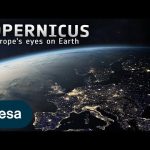
25 years ago, Copernicus set out to transform the way we see our planet. It is the largest environmental monitoring programme in the world. Learn more about the Copernicus programme and the Sentinel satellite missions developed by ESA. 👉 https://www.esa.int/Applications/Observing_the_Earth/Copernicus
Credits: ESA
★ Subscribe: http://bit.ly/ESAsubscribe and click twice on the bell button to receive our notifications.
We are Europe’s gateway to space. Our mission is to shape the development of Europe’s space capability and ensure that investment in space continues to deliver benefits to the citizens of Europe and the world. Check out https://www.esa.int/ to get up to speed on everything space related.
Satellites in orbit underpin our modern lives. They are used in many areas and disciplines, including space science, Earth observation, meteorology, climate research, telecommunication, navigation and human space exploration. However, as space activities have increased, a new and unexpected hazard has started to emerge: space debris.
If space debris – uncontrolled human-made objects such as spent upper stages of rockets and pieces of satellites – hits a satellite, it could cause serious damage, which can even end a mission (as has happened in the past). If debris crashes on Earth’s surface, it could potentially hit populated areas.
In this second video, Nicolas looks back on the first key steps taken at ESA to develop the Space Safety Programme, devoted to the detection, prevention and mitigation of threats originating from space. This includes not just space debris but also asteroids and space weather. The latter is an intense, occasional energetic storm of particles and material emitted by the Sun. Mitigating these hazards protects our planet, society and economically-important infrastructure on Earth and in orbit.
A key element for the forecasting and prevention of space weather is to observe the Sun from the side. Discover more in this second video of the ESA Masterclass with Nicolas Bobrinsky. With 35 years of experience at ESA, Nicolas Bobrinsky is the former Head of Ground Systems Engineering & Innovation Department. He initiated and further managed the Space Situational Awareness and later the ESA Space Safety Programme.
In four episodes of this new series of ESA Masterclass, Nicolas takes us through major events in his career at ESA, covering cornerstone missions, first attempts, overcoming technical challenges, leading diverse teams and solving the unexpected problems that are part of any space endeavour.
★ Subscribe: http://bit.ly/ESAsubscribe and click twice on the bell button to receive our notifications.
We are Europe’s gateway to space. Our mission is to shape the development of Europe’s space capability and ensure that investment in space continues to deliver benefits to the citizens of Europe and the world. Check out https://www.esa.int/ to get up to speed on everything space related.
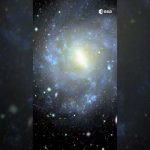
This video takes the viewers on a journey to the barred spiral galaxy NGC 5068, whose bright central bar is visible in the upper left of this image. NGC 5068 lies around 17 million light-years from Earth in the constellation Virgo.
With its ability to peer through the gas and dust enshrouding newborn stars, the NASA/ESA/CSA James Webb Space Telescope is the perfect telescope to explore the processes governing star formation. Stars and planetary systems are born amongst swirling clouds of gas and dust that are opaque to visible-light observatories like Hubble or the VLT. The keen vision at infrared wavelengths of two of Webb’s instruments — MIRI and NIRCam — allowed astronomers to see right through the gargantuan clouds of dust in NGC 5068 and capture the processes of star formation as they happened. This image combines the capabilities of these two instruments, providing a truly unique look at the composition of NGC 5068.
Credit: ESA/Webb, NASA, CSA, J. Lee and the PHANGS-JWST Team, Dark Energy Survey/DOE/FNAL/NOIRLab/NSF/AURA, DSS, N. Bartmann (ESA/Webb), E. Slawik, N. Risinger, D. de Martin (ESA/Webb), M. Zamani (ESA/Webb)
Music: Tonelabs – The Red North
★ Subscribe: http://bit.ly/ESAsubscribe and click twice on the bell button to receive our notifications.
We are Europe’s gateway to space. Our mission is to shape the development of Europe’s space capability and ensure that investment in space continues to deliver benefits to the citizens of Europe and the world. Check out https://www.esa.int/ to get up to speed on everything space related.
Innovation is triggered by many drivers. One of these is the constant need for ESA to develop innovative solutions,such asuniquespacecrafttechnologies.
In this first video, Nicolas recalls how he and his team had to think outside the box to find a solution for ESA to communicate with Ulysses. Thespacecraft was flyingaround the north pole of the Sun,which ismuch fartherin deep spacethan satellites had beenlaunched up to that point.
The success of this solution motivated the decision to build ESA’sfirst deep-space communications antennas in New Norcia, in Australia, thus enabling many ESA scientific firstsin deep-space exploration.
The antennas would, some decades after, be critically important receivers forthe messages sent by the very distant Rosetta probe, on its quest to find and land on the comet 67P/Churyumov–Gerasimenko, and other ESA science and exploration missions such as Mars Express, Venus Expressand Cassini-Huygens.
With 35 yearsof experience at ESA, Nicolas Bobrinsky is the former Head of Ground Systems Engineering & Innovation Department. He initiated and further managed the Space Situational Awareness and later the ESA Space Safety Programme.
In four episodes of this new series of ESA Masterclass, Nicolas takes us through major events in his career at ESA, covering cornerstone missions, first attempts, overcoming technical challenges, leading diverse teamsand solving the unexpected problems that are part of any space endeavour.
★ Subscribe: http://bit.ly/ESAsubscribe and click twice on the bell button to receive our notifications.
We are Europe’s gateway to space. Our mission is to shape the development of Europe’s space capability and ensure that investment in space continues to deliver benefits to the citizens of Europe and the world. Check out https://www.esa.int/ to get up to speed on everything space related.
Detect, fetch and collect. A seemingly easy task is being tested to find the best strategy to collect samples on the martian surface, some 290 000 million km away from home.
Testing technologies for Mars exploration is part of the daily job of Laura Bielenberg, an ESA graduate trainee for the Mars Sample Return campaign.
The test takes place at the rock-strewn recreation of the Red Planet at ESA’s ESTEC technical centre in Noordwijk, the Netherlands. The nickname of this test site is the ‘Mars Yard’ and is part of the Planetary Robotics Laboratory.
The tube is a replica of the sample caches that NASA’s Perseverance rover is leaving on Mars hermetically sealed with precious martian samples inside. They are called RSTA, an acronym of Returnable Sample Tube Assembly, and to most people on Earth they look like lightsabers. Laura is investigating sample tube collection strategies, from autonomous detection to pose estimation of sample tubes on Mars, with a testbed called the RABBIT (RAS Bread Boarding In-house Testbed).
The Sample Transfer Arm will need to load the tubes from the martian surface for delivery towards Earth. ESA’s robotic arm will collect them from the Perseverance rover, and possibly others dropped by sample recovery helicopters as a backup.
Besides cameras and sensors, the team relies on neural networks to detect the tubes and estimate their pose. Inspired by the way the human brain works, neural networks mimic the way biological neurons signal to one another.
We are Europe’s gateway to space. Our mission is to shape the development of Europe’s space capability and ensure that investment in space continues to deliver benefits to the citizens of Europe and the world. Check out https://www.esa.int/ to get up to speed on everything space related.
Lying in bed for a full 60 days – with one shoulder always touching the mattress – might sound like bliss, but add cycling, spinning and constant medical tests to the equation and it becomes a challenging experience for the sake of human space exploration.
A group of 12 volunteers are bracing themselves for a bedridden journey that put them into a compulsory reclined lifestyle. Participants are kept in beds tilted 6 degrees below the horizontal with their feet up – meals, showers and toilet breaks included.
As blood flows to the head and muscle is lost from underuse, researchers are charting how their bodies react. Bedrest studies offer a way of testing measures to counter some of the negative aspects of living in space.
During space missions, astronauts’ bodies go through a wide array of changes due to lack of gravity – everything from their eyes to their heart is affected, and muscles and bones start to waste away.
📹 @EuropeanSpaceAgency 📷 ESA/CNES/MEDES-IMPS
★ Subscribe: http://bit.ly/ESAsubscribe and click twice on the bell button to receive our notifications.
We are Europe’s gateway to space. Our mission is to shape the development of Europe’s space capability and ensure that investment in space continues to deliver benefits to the citizens of Europe and the world. Check out https://www.esa.int/ to get up to speed on everything space related.
Enjoy a sneak peek of ESA’s new documentary that looks at fire in all its fury – and how satellite technology is helping to mitigate this consequence of climate change. Join us on this journey as we meet the firefighter who fought one of the largest wildfires in his career, climate scientists working with satellite data, and the people on the frontline using these data to aid those affected. The full documentary will be released this summer.
★ Subscribe: http://bit.ly/ESAsubscribe and click twice on the bell button to receive our notifications.
We are Europe’s gateway to space. Our mission is to shape the development of Europe’s space capability and ensure that investment in space continues to deliver benefits to the citizens of Europe and the world. Check out https://www.esa.int/ to get up to speed on everything space related.
We are Europe’s gateway to space. Our mission is to shape the development of Europe’s space capability and ensure that investment in space continues to deliver benefits to the citizens of Europe and the world. Check out https://www.esa.int/ to get up to speed on everything space related.
The name of Andreas’s second mission to the Space Station is ‘Huginn’. Inspired by Norse mythology, the name is taken from one of two ravens who serve the god Odin. Called Huginn and Muninn, these two birds sit on Odin’s shoulders and are sent flying across the world at dawn. They return at night to inform him of the many events they have seen and heard. In Old Norse, ‘Huginn’ means ‘thought’ and ‘Muninn’ means ‘mind’ or ‘memory’.
ESA astronaut Andreas Mogensen is going on his first long-duration mission to the International Space Station. Andreas will be the pilot on the SpaceX Crew Dragon that will carry him and the rest of Crew-7 to the Space Station – a first for a European! Representing Europe in space, Andreas will carry out science throughout his mission and bring back the knowledge to Earth, for the benefit of humankind.
Visit esa.int/huginn for more information on the Huginn mission.
★ Subscribe: http://bit.ly/ESAsubscribe and click twice on the bell button to receive our notifications.
We are Europe’s gateway to space. Our mission is to shape the development of Europe’s space capability and ensure that investment in space continues to deliver benefits to the citizens of Europe and the world. Check out https://www.esa.int/ to get up to speed on everything space related.
As global temperatures increase, the melting of the massive ice sheets that blanket Antarctica and Greenland has accelerated, making a significant contribution to sea-level rise. In total, Earth is losing around a trillion tonnes of ice each year – which is not being replenished.
Andrew Shepherd of the University of Leeds is a leading climate scientist working with ESA and @NASA. Join Andrew as he discusses how long-term satellite observations from ESA’s Climate Change Initiative are key in monitoring changes in ice sheets over decades.
We are Europe’s gateway to space. Our mission is to shape the development of Europe’s space capability and ensure that investment in space continues to deliver benefits to the citizens of Europe and the world. Check out https://www.esa.int/ to get up to speed on everything space related.