¿Existe la vida en Marte? La misión ExoMars intenta responder a esta pregunta. Aquí, en el Cosmódromo de Baikonur, en Kazajistán, nos reunimos con los científicos que trabajan en este proyecto. El cohete de la misión ExoMars se dirige hacia el planeta rojo para buscar buscar potenciales pruebas de actividad biológica.
Tag: ExoMars
-
ESA Euronews: alla ricerca di tracce di vita su Marte
Al cosmodromo di Bajkonur, in Kazakhstan, euronews ha seguito l’avvio di ExoMars,missione sviluppata dall’ESA, l’Agenzia Spaziale Europea ESA e da Roscosmos, Agenzia Spaziale Russa.
L’obiettivo di ExoMars è lo studio dell’ambiente biologico della superficie del pianeta ma anche la ricerca di eventuali tracce di vita, passata o presente.
-
ESA Euronews: Elindult az ExoMars-kaland
Bajkonur, a Csillagváros a kazah sztyeppéken, az űrkutatás történelmi helyszíne, ahonnan az első ember felszállt az űrbe – itt kezdődik az Exomars-kaland.
A megfigyelőplatform három kilométerre van a kilövőállástól. Európai és orosz mérnökök figyelik, hogyan indulnak el az általuk éveken át tervezett és épített műszerek a Marsra.
-
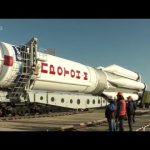
ExoMars 2016 rollout
The Proton rocket that will launch the ExoMars 2016 spacecraft during rollout to the launch pad where it was moved into a vertical position.
Launch is scheduled for 09:31 GMT/10:31 CET on 14 March from Baikonur, Kazakhstan.
Watch the launch via the ESA website from 08:30 GMT/09:30 CET: http://www.esa.int
Credit: ESA/Roscosmos/ExoMars
-
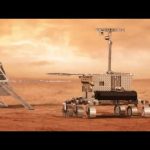
ExoMars – building on past missions to Mars
The ExoMars 2016 spacecraft will build on past missions to Mars. From the pioneering Viking missions onwards, our knowledge of Mars has been transformed and we now have an extraordinarily detailed picture of the planet. There are dust storms, polar ice caps and four distinct seasons. Mars has the largest volcanic mountain in our solar system and a canyon stretching over 5000 kilometres.
This film covers what we have learnt in particular from Europe’s Mars Express mission. Since its arrival in 2003, it has found evidence of water on Mars, discovered methane in the planet’s atmosphere, mapped the structure and composition of the south polar ice cap, discovered auroras and made the closest ever flybys of Phobos, one of Mars’ two moons. Mars Express also helped scientists select the landing site for the NASA Mars Curiosity rover, which arrived in Gale crater in 2012.
More remains to be learnt from Mars. Not least, whether the methane results from geological activity or past or present life.
Read more about ExoMars:
http://www.esa.int/exomars -
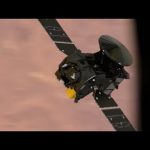
ExoMars science
On 14 March at 09:31 GMT ExoMars 2016 will be launched from Baikonur onboard a Proton rocket.
The joint European and Russian ExoMars mission will test key exploration technologies and search for evidence of methane and other rare gases in the Martian atmosphere. These gases could result from geological processes or they could be signatures of current biological activity on the planet.
This film examines the two European science instruments on the ExoMars Trace Gas Orbiter (TGO) – CaSSIS and NOMAD. The high-resolution CaSSIS (Colour and Stereo Surface Imaging System) acts as the orbiter’s scientific eye. It is a telescope with a sophisticated detector that can provide colour and stereo images over a nine and a half kilometre wide strip. CaSSIS will examine recurring slope linea – dark lines on the surface of Mars at different times of the day over the planet’s seasons. These linea are believed to be associated with liquid brine. They increase in size during the Martian spring and summer and fade away during autumn and winter.
NOMAD (Nadir and Occultation for MArs Discovery) will be the first high resolution instrument of its kind around the planet. It will observe information about Mars’ atmosphere by looking at the Sun during sunsets and sunrises. It contains three spectrometers – two working in the infrared and one in ultraviolet – and can identify trace gases in the atmosphere, such as methane. The presence of methane in Mars’ atmosphere could result from simple life forms like microbes.
-
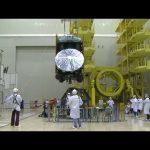
ExoMars prepares for launch
The ExoMars 2016 spacecraft – consisting of the Trace Gas Orbiter (TGO) and the Schiaparelli entry, descent and landing demonstrator – is in Baikonur, Kazakhstan, preparing for its mid-March launch on a Russian Proton rocket.
This joint European and Russian mission will test key exploration technologies and search for evidence of methane and other rare gases in the martian atmosphere. These gases could result from geological processes or they could be signatures of current biological activity on the planet. Three days before reaching Mars in October, Schiaparelli will separate from the orbiter and coast towards the planet in hibernation mode to reduce power consumption.
This video covers the journey, the orbit of the Trace Gas Orbiter, the separation of the Schiaparelli lander and its 20 000 km/hour descent and eventual landing. It also contains filming at ESA’s European Space and Technology Centre (ESTEC) Mars Yard in the Netherlands.
Learning more about Mars’ water and environment will shed further light on this planet – while knowing the origin of its methane could finally answer the exciting question of whether there is life on Mars.
Read more about ExoMars:
http://www.esa.int/exomars -
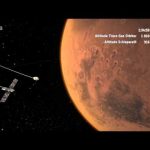
ExoMars 2016 arriving at Mars
The paths of the ExoMars 2016 Trace Gas Orbiter (TGO) and the Schiaparelli entry, descent and landing demonstrator module arriving at Mars on 19 October (right and left, respectively). The counter begins at the start of a critical engine burn that TGO must conduct in order to enter Mars orbit. The altitude above Mars is also indicated, showing the arrival of Schiaparelli on the surface and the subsequent trajectory of TGO. The orbiter’s initial 4-day orbit will be about 250 x 100 000 km. Starting in December 2016, the spacecraft will perform a series of aerobraking manoeuvres to steadily lower it into a circular, 400 km orbit (not shown here).
More about the ExoMars mission:
http://www.esa.int/exomarsCredits: ESA/ATG medialab
-
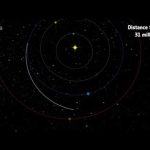
ExoMars 2016 journey to Mars
The journey that the ExoMars 2016 spacecraft will take from Earth to Mars. ‘Distance to Mars’ is the straight-line distance between the spacecraft and Mars, and not the actual distance that the spacecraft will travel.
The mission is scheduled for launch in the 14–25 March window. The Trace Gas Orbiter and the Schiaparelli entry, descent and landing demonstrator module will separate on 16 October. Schiaparelli is set to enter the martian atmosphere on 19 October, while TGO will enter orbit around Mars.
More about the ExoMars mission:
http://www.esa.int/exomarsCredits: ESA/ATG medialab
-
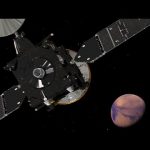
ExoMars 2016: launch to Mars
Animation visualising milestones during the launch of the ExoMars 2016 mission and its cruise to Mars. The mission comprises the Trace Gas Orbiter and an entry, descent and landing demonstrator module, Schiaparelli, which are scheduled to be launched on a four-stage Proton-M/Breeze-M rocket from Baikonur during the 14–25 March 2016 window.
About ten-and-a-half hours after launch, the spacecraft will separate from the rocket and deploy its solar wings. Two weeks later, its high-gain antenna will be deployed. After a seven-month cruise to Mars, Schiaparelli will separate from TGO on 16 October. Three days later it will enter the martian atmosphere, while TGO begins its entry into Mars orbit.
-

ExoMars
The ExoMars spacecraft is almost complete. A joint mission between ESA and Roscosmos, it begins with the launch of the ExoMars orbiter in 2016 and carries an aerodynamically designed capsule containing a robotic lander.
Getting to Mars, landing there safely and searching for life is a huge scientific and technical challenge. ExoMars 2016 will send back information about the Martian atmosphere and the lander’s findings. These will inform the second part of the mission, in 2018, when a European rover will drill into the Martian surface, up to two metres down. The rover will be trying to detect traces of organic molecules that indicate the presence of past or present life on Mars.
This video includes interviews with Jorge Vago, ExoMars Project Scientist, ESA and Pietro Baglioni, ExoMars Rover Manager, ESA. It shows ExoMars 2016 nearing construction in its clean room at Thales Alenia Space in France and a prototype ExoMars rover in the ExoMars test yard at ESA’s ESTEC facility in the Netherlands.
-
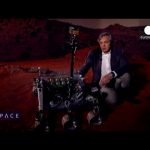
ESA Euronews: Mars mystery – ExoMars mission
The ExoMars 2016 mission will try to answer one of the toughest and most intriguing questions in our Solar System: is there, or has there ever been, life on Mars?
Getting to Mars, landing there safely, and then beginning the search for life is a huge scientific and technical challenge for the large team behind ExoMars, a joint ESA and Roscosmos project to search for life on Mars. It is the world’s biggest ever mission to the red planet.The ExoMars mission could reveal if there is, or has ever been, life on Mars by the end of the decade.
More about ExoMars: http://exploration.esa.int/mars/
This video is also available in the following languages:
Italian: https://www.youtube.com/watch?v=1upALskwxD8
Greek: https://www.youtube.com/watch?v=zfk3oC1Gios
French: https://www.youtube.com/watch?v=p8ZSihhWImg
Hungarian: https://www.youtube.com/watch?v=j0be4f-PPNk
Portuguese: https://www.youtube.com/watch?v=X50TMG0vSnU
German: https://www.youtube.com/watch?v=1wTsARN4Di8
Spanish: https://www.youtube.com/watch?v=6ExT47YH_kU -
ESA Euronews: ExoMars – L’esplorazione di Marte
Maurizio Capuano e Richard Bessudo fanno il conto alla rovescia per il lancio di una delle più grandi missioni al mondo sul Pianeta Rosso. Fanno parte del team di ExoMars, un progetto congiunto di ESA e di Roscosmos che intende cercare segni di vita su Marte. La prima astronave è quasi pronta.
Maurizio Capuano, manager del programma ExoMars 2016, ThalesAleniaSpace: “Questo è Exomars 2016 che l’anno prossimo arriverà sul pianeta rosso. La parte bassa si metterà in orbita marziana aprendo i suoi pannelli solari per prendere l’energia dal sole, la parte superiore è il cosiddetto lander che atterrerà direttamente sulla superficie marziana completamente autonomo”.
ExoMars è composto da due missioni, che saranno lanciate rispettivamente nel 2016 e nel 2018. Al ThalesAleniaSpace nel sud della Francia, la navicella spaziale è sottoposta a un rigoroso programma di test, visto che le finestre di lancio non sono frequenti, come spiega Richard Bessudo, manager del programma ExoMars Trace Gas Orbiter. “Per andare su Marte occorre ottenere le condizioni favorevoli di congiunzione tra Terra e Marte. Tenuto conto delle orbite dei due pianeti, le congiunzioni favorevoli si riproducono soltanto ogni 26 mesi”.
Una volta su Marte, l’astronave si separa in due parti. Il satellite resta in orbita e il lander si dirige sulla superficie. L’ESA spera che questa capsula porterà a termine il primo atterraggio controllato europeo su Marte.
-

ESA Euronews: Rockets, Mars and Europe’s future in space
In the afterglow of the Rosetta mission’s success in landing on a comet, the member states of ESA met in Luxembourg in early December to look forward to future challenges. Among the priorities is the development and construction of the new rocket, Ariane 6, which is seen as essential to maintaining Europe’s lead in the launcher market. Then there’s the ExoMars mission to further explore the ‘Red Planet’ and look for signs of life. But it’s not just about probes – ESA’s manned spaceflight programme also has momentum, with new astronauts currently in training and due to fly in 2015 and 2016. So, as the agency marks a half century of Europe’s space sector, it’s onwards and upwards for the next 50 years.
This video is also available in the following languages:
French: http://youtu.be/eq32fl5H0m8
German: http://youtu.be/hBLpzhgAmtU
Hungarian: http://youtu.be/4Snqq5VXGyg
Italian: http://youtu.be/If6JOY9mBy4
Greek: http://youtu.be/MyPvRhylA6M
Portuguese: http://youtu.be/wUzDxKetGWk
Spanish: http://youtu.be/15EAFYXl3N0 -

ESA Euronews: Mit hoz a jövő az űrben?
Izgalmas időket élünk az űrben – új űrhajósok, új missziók és új rakéták indulnak a világűrbe. Az európai űrszektor vezetőivel arra keressük a választ, hogy mi lesz az űrkutatás jövője Európában. 2014 rendkívüli év volt a naprendszerünkben. Sikerült leszállni egy üstökösön, új űrhajósok mentek föl az űrbe, és kölönféle missziókat terveznek. Merre is tartunk? Mi a jövője az űrkutatásnak Európában?
-

ESA Euronews: The real-life space cadets: Abbie, Marc and Maria
Meet the space cadets, three young engineers with enviable jobs that are quite literally out of this world. This edition of Space focuses on three professionals who’ve turned their dreams of working in space into real down-to- Earth careers.
In the UK, 26-year-old Abbie Hutty, a spacecraft structures engineer at Astrium, is a proud member of the ExoMars team. She is developing the structure of the mission’s rover, ensuring that the actual body of the vehicle and other components are all structurally strong enough to withstand the launch from Earth, and landing on Mars.
Twenty-seven-year-old Marc Costa Sitjà, Science Operations Engineer at the European Space Agency, uses the huge antenna at Cebreros, west of Madrid, to ‘drive’ ESA’s Venus Express spacecraft around the planet. Every day he sends commands and receives data to and from the spacecraft from the agency’s ESAC facility near the Spanish capital.
Maria Komu, a 27-year-old researcher at the Finnish Meteorological Institute, works on Finnish mini satellite Aalto-1, and has a hands-on role developing a weather instrument for ESA’s ExoMars EDM mission.
Space is a childhood dream turned reality for all three. For Abbie the realisation that space wasn’t just science fiction came when she was still at school and she heard of the Beagle 2 mission to Mars, a lander that was developed in the UK by British engineers. Maria tells the story of a book about a school visit around the solar system that enchanted her as a young girl. Meanwhile Marc cites a vivid blue image of Venus as an inspiration to his career.
Abbie, Marc and Maria are all educated to masters level, while Maria continues studying towards a doctorate. They’re on the first steps of the career ladder, and that means plenty of learning ‘on-the-job’. Maria had to master soldering, programming, and testing, Marc developed his skills by creating software that helped a mission to better fulfill its purpose, while Abbie had to understand better the behaviour of particular materials in the cold vacuum of space.
The excitement of working in space is summed up by Abbie: “I think the space industry is quite a privileged industry to work in, because whilst you are still managing projects and meeting schedules and deadlines, and creating a product, at the end of the day that requires a certain amount of processes down on it, you can also come down to the clean rooms and look through the window and see your part of a spaceship, and think ‘that’s going to Mars, and I did that bit’, and you don’t get that anywhere else.”
-
ESA Euronews: Δουλεύοντας στο διάστημα… από τη Γη
Η Μαρία, ο Μαρκ και η Άμπι είναι τρεις νέοι μηχανικοί κι έχουν τρεις διαφορετικές ιστορίες, αλλά με ένα κοινό γνώρισμα. Η δουλειά τους είναι στη Γη, αλλά φεύγει από τα όριά της. Και οι τρεις πραγματοποίησαν το όνειρό τους: δουλεύουν στη διαστημική βιομηχανία. Και δηλώνουν ευτυχισμένοι γι’αυτό.
Λίγο μετά τα είκοσί τους χρόνια, ήδη έχουν σημαντικές ευθύνες.
Η Μαρία εργάζεται σε έναν φινλανδικό μίνι δορυφόρο και σε εργαλεία πρόγνωσης καιρού για την αποστολή ExoMars της ESA. Η Άμπι αναπτύσσει τη δομή του οχήματος της αποστολής. Ο Μαρκ σχεδιάζει τις επιχειρήσεις του δορυφόρου Venus Express της ESA.
Η Άμπι και ο Μαρκ έχουν μεταπτυχιακές σπουδές, ενώ η Μαρία είναι υποψήφια διδάκτωρ. Και οι τρεις λένε πως εμπνεύστηκαν από την ιδέα της εξερεύνησης του ηλιακού μας συστήματος.
Πλοήγηση δορυφόρων, κατασκευή διαστημικών οχημάτων και μετεωρολογικών σταθμών για τον Άρη. Όλα αυτά απαιτούν δεξιότητες, γνώση και αφοσίωση.
Δυσκολίες υπάρχουν σίγουρα. Όμως κανείς εκ των τριών δεν χάνει από το βλέμμα του τη μοναδική φύση μιας καριέρας στο διάστημα.
-
ESA Euronews: La nouvelle génération de l’espace
L’espace fascine bon nombre d’entre nous, mais bien peu ont la chance de travailler dans le domaine de la recherche spatiale. Nous avons rencontré trois jeunes ingénieurs qui ont entamé une carrière, la tête dans les étoiles et les pieds sur Terre.
A Helsinki, Maria Komu nous fait découvrir son lieu de travail : l’Institut météorologique finlandais qui dispose d’un laboratoire spatial. “Il y a à peine cinq ans, mon plus grand rêve, c’était simplement de pouvoir toucher quelque chose qui allait dans l’espace,” nous confie la jeune femme. “Aujourd’hui, je conçois des instruments qui vont dans l’espace, c’est incroyable !” s’enthousiasme-t-elle. Maria travaille sur un mini-satellite et des instruments météo pour le démonstrateur EDM de la mission ExoMars de l’Agence spatiale européenne (ESA).
Au nord de Londres, découvrons à présent, l’univers d’Abbie Hutty, ingénieur spatial structures chez Astrium. Son travail qui d’ailleurs, la passionne : s’assurer que “le corps du rover ExoMars est assez solide pour pouvoir supporter notamment le lancement, l’arrivée au sol et l’entrée dans l’atmosphère,” nous explique-t-elle.
En Espagne, à Cebreros, près de Madrid, Marc Costa Sitjà nous présente l’antenne à gain élevé qui permet à son équipe de communiquer avec le satellite Venus Express (ESA) pour gérer son pilotage. La parabole permet aux scientifiques d’envoyer des ordres de commande à l’engin et de recevoir des données en sa provenance comme une image de Vénus unique qu’ils ont réussi à constituer à partir de toute une série d’observations.
Nos trois jeunes ingénieurs ont choisi ces métiers pour explorer notre système solaire et peut-être éclaircir ses mystères. Une motivation qui les anime parfois depuis l’enfance. Chacun reconnaît avoir de la chance de mener une vie professionnelle dans un secteur qui les fascine. La Finlandaise Maria Komu aimerait poursuivre son rêve éveillé en visitant “d’immenses chambres à vide et peut-être des simulateurs solaires :c’est ce que je préfèrerais,” nous lance-t-elle avant de conclure : “et bien sûr, si je pouvais assister en vrai au lancement d’une fusée, ce serait vraiment cool !”
-
ESA Euronews: Los detectives de Marte
Marte sigue intrigando a los científicos. Hay robots que se han enviado para que vuelen sobre Marte, para que se desplacen por el planeta e incluso para perforen y recojan muestras. Todo, para buscar señales y saber si alguna vez, quizá hace mucho tiempo, hubo algún tipo de vida. Encontrar cualquier evidencia equiere la habilidad de los mejores detectives: científicos, robots y satélites que estudian el planeta con todo detalle.
“Si ha habido vida más allá de la Tierra el destino ideal sería Marte”, dice el cientifico de la ESA Olivier Witasse. Un destino ideal pero también un rompecabezas que los investigadores están empezando a reconstruir.
Las primeras fotos de Marte las tomó la sonda Mariner 4 en 1965. Estas imágenes alimentaron las especulaciones sobre la existencia de agua y vida. En los años 70 se continuó investigando el planeta con las misiones Viking. Luego llegaron los vehículos exploradores. El año pasado aterrizó el robot Curiosity de la Nasa. Pesa 900 kilos y es capaz de recoger rocas y analizarlas. Curiosty no busca restos de vida, sino signos de habitabilidad. El robot tiene un potente láser diseñado por ingenieros estadounidenses y franceses. Su potente luz es capaz de convertir una roca o partes de una roca en una bola de fuego para analizar los elementos de los que está compuesta.
La búsqueda que ha hecho Curiosity ha tenido éxito. De hecho, en el lugar donde aterrizó hubo alguna vez agua a una temperatura adecuada, con niveles de acidez apropiados para la formación de la vida. Pero hace unos tres mil millones de años todo cambió, porque el campo magnético de Marte se desvaneció y gran parte de la atmófera se perdió.
La sonda Mars Express también ha encontrado depósitos de hielo debajo de la superficie del planeta, que están ocultos por el polvo. Y también descubrió algo más misterioso e intrigante: metano. El programa europeo ExoMars lanzará en 2016 un satélite para examinar este gas. Y dos años después un robot recorrerá el planeta rojo. Será la primera misión que busque directamente señales de vida ahora y en el pasado. Todavía no se sabe dónde aterrizará el robot ExoMars porque los científicos no se han puesto de acuerdo, de momento. Se cree que pudo existir algún tipo de vida hace unos 4.000 millones de años. Y las mejores localizaciones son los valles antiguos donde había agua.
Los secretos de Marte se esconden a menudo debajo del polvo del planeta. Sin embargo, se están haciendo progresos de forma muy rápida para unir las piezas del rompecabezas. Y puede que tambien estos descubrimientos den alguna respuesta sobre nuestro origen en la Tierra.
-
ESA Euronews: Vida em Marte: Segredos do Planeta Vermelho
Criámos missões científicas para percorrerem Marte e, dentro em breve, explorarem o subsolo, de forma a suplantar vários desafios. Mas a pergunta maior para a qual procuramos uma resposta é a seguinte: alguma vez houve vida neste planeta? “Se já existiu vida fora da Terra, então Marte é a hipótese mais óbvia”, afirma Olivier Witasse, da Agência Espacial Europeia (ESA).
A Mars Express tem-nos ajudado a avançar consideravelmente no conhecimento deste planeta. A sonda acaba de celebrar dez anos em órbita – a missão inicial da ESA estava programada para dois. Os dados que tem recolhido permitem criar mapas a 3 dimensões da superfície marciana e sinalizar locais onde podem existir minerais. Segundo Witasse, “houve muitas descobertas nestes últimos dez anos: a deteção dos minerais hidratados, por exemplo, que foram formados na presença de água, diz-nos que existiu realmente água em Marte durante vários milhões de anos.”
Já as primeiras fotografias de Marte a partir da sonda Mariner 4, em 1965, começaram a alimentar as especulações prolongadas na década seguinte com as missões Viking. O ano passado, a NASA fez aterrar o robô Curiosity no Planeta Vermelho. Um verdadeiro laboratório científico capaz de efetuar recolhas e análises. O objetivo anunciado não é tanto procurar sinais de vida, mas sim condições de habitabilidade.
A cabeça do robô integra um laser conhecido por ChemCam, que foi concebido e desenvolvido por um grupo de engenheiros em Toulouse, em França. A sua função é disparar sobre rochas, fragmentando-as, para depois as analisar e revelar a sua composição. No local onde o Curiosity aterrou já terá havido água a uma temperatura adequada para a habitabilidade, com a acidez apropriada e durante um longo período de tempo. Mas, há 3 mil milhões de anos, tudo isso mudou: a alteração do campo magnético do planeta parece ter dissipado a atmosfera. Anouck Ody, investigadora da Universidade de Lyon, realça que “a atmosfera de Marte tem uma pressão demasiada fraca para que a água líquida se estabilize à superfície. No entanto, é possível encontrar água na atmosfera e, em forma de gelo, nas calotas polares, tanto a norte, como a sul.”
A Mars Express revelou enormes depósitos de gelo debaixo da superfície. E descobriu outra coisa ainda mais intrigante: a existência de metano. “Em 2004, logo no início da missão, a Mars Express encontrou pequenas quantidades de metano na atmosfera. É uma descoberta cuja autenticidade ainda é motivo de debate. No entanto, se houver mesmo metano, é preciso explicar como é que ele se dissolve na atmosfera, e o que é que o está constantemente a gerar. Há muitas discussões sobre o assunto. Pode tratar-se de atividade geológica – uma reação entre as rochas do subsolo e a água líquida, o que significaria que Marte é um planeta ativo geologicamente. Ou então, o metano está a ser produzido por uma atividade biológica,” aponta Olivier Witasse.
A missão europeia Exomars promete esclarecer grande parte destes mistérios. A partir de 2016, uma sonda vai começar a monitorizar a órbita marciana; dois anos mais tarde, um novo veículo robotizado irá percorrer o planeta com uma importante inovação: será capaz de recolher amostras a dois metros de profundidade.
-
ESA Euronews: Υπάρχει ζωή στον Άρη; Έρχεται η οριστική απάντηση
Είναι ο άνθρωπος μόνος του στο σύμπαν; Στο υπαρξιακό αυτό ερώτημα προσπαθεί να απαντήσει η διαστημική τεχνολογία. Ρομποτικά οχήματα έχουν αποσταλεί εδώ και πολλά χρόνια στον Άρη, για να αναζητήσουν αποδείξεις ύπαρξης ζωής στον κόκκινο πλανήτη.
Σύμφωνα με τους επιστήμονες, αν υπήρχε ζωή μακριά από τη Γη, ο Άρης θα ήταν η πιο προφανής επιλογή. Η στοιχειοθέτηση ωστόσο των αποδείξεων είναι μια υπόθεση εξαιρετικά δύσκολη. Μοιάζει με ένα παζλ, που μόλις ολοκληρωθεί θα μας δώσει μια πλήρη εικόνα αυτού που ονομάζουμε «ζωή στο σύμπαν». Τα κομμάτια του μόλις έχουν αρχίσει να τοποθετούνται.
Η ανακάλυψη στοιχείων που αποδεικνύουν την ύπαρξη ζωής στον Άρη απαιτεί την αξιοποίηση της τελευταίας τεχνολογίας και τη στενή συνεργασία των κορυφαίων επιστημόνων.
Η αποστολή Mars Express της Ευρωπαϊκής Υπηρεσίας Διαστήματος συνέβαλε τα μέγιστα στην αλματώδη πρόοδο της εξερεύνησης του Άρη. Ο δορυφόρος παραμένει εδώ και σχεδόν μια δεκαετία σε τροχιά γύρω από τον κόκκινο πλανήτη. Συλλέγει στοιχεία που επιτρέπουν στους επιστήμονες να δημιουργήσουν τρισδιάστατους χάρτες της επιφάνειας και να εντοπίσουν που βρίσκονται ακριβώς βασικά μέταλλα και άλλα στοιχεία, πολύτιμα για την έρευνα.
«Η σπουδαιότερη ανακάλυψη είναι η ανίχνευση των λεγόμενων ένυδρων ορυκτών. Πρόκειται για ορυκτά που σχηματίστηκαν με την παρουσία νερού και αποδεικνύουν την ύπαρξη νερού στην επιφάνεια του Άρη για αρκετά εκατομμύρια χρόνια», αναφέρει ο Ολιβιέ Βιτάς, επιστήμονας του προγράμματος ExoMars.Η ανακάλυψη ένυδρων ορυκτών σε διάφορες περιοχές στον Άρη, έχει προκαλέσει το ενδιαφέρον των επιστημόνων. Τώρα προσπαθούν να εντοπίσουν τα σημεία όπου υπάρχουν υπολείμματα αργίλου ή θειικών αλάτων. Αν τα καταφέρουν θα ξέρουν πού ακριβώς υπήρχε κάποτε νερό.
«Ο άργιλος ή πηλός προέρχεται απο μια ένωση που απαιτεί την παρουσία νερού . Χρειάζεται αρκετός χρόνος για να μετατραπεί ένα πέτρωμα σε άργιλο. Τα θειικά άλατα σχηματίζονται ταχύτερα και είναι παρόμοια με αυτά που υπάρχουν σε λίμνες με αλμυρό νερό στη Γη. Εκεί βρίσκουμε μεταλλικό νερό. Όταν αυτό εξατμίζεται, τα μέταλλα μένουν στην επιφάνεια των ιζημάτων» υποστηρίζει ο Νταμιέν Λοιζό, ερευνητής του πανεπιστημίου της Λιόν.
Οι πρώτες εικόνες του κόκκινου πλανήτη από το διαστημόπλοιο Μάρινερ 5, τροφοδότησαν μια έντονη συζήτηση για την ύπαρξη νερού και άρα ζωής στον Άρη. Ακολούθησαν οι αποστολές του Βίκινγκ, τη δεκαετία του ’70 και ύστερα μια σειρά μικρών οχημάτων που πάτησαν το έδαφος του Άρη.
Πέρυσι, η ΝΑΣΑ κατάφερε να προσεδαφίσει το ρομποτικό όχημα Curiosity στον κόκκινο πλανήτη. Πρόκειται για ένα κινητό επιστημονικό εργαστήριο, βάρους 900 κιλών, με δυνατότητα να συλλέγει και να αναλύει πετρώματα.
-
ESA Euronews: C’è vita su Marte? Nuove apparecchiature sono pronte a scoprirlo
Esattamente dieci anni fa cominciava l’avventura di Mars Express, la missione dell’Agenzia Spaziale Europea (ESA) sull’enigmatico pianeta rosso.
Marte è l’ultima frontiera dell’esplorazione spaziale. La comunità scientifica è a caccia di prove dell’esistenza di vita — presente o passata — tra le speranze di molti che vorrebbero che questo fosse un pianeta abitabile.
Ma trovare vita su Marte è come mettere insieme i pezzi di un puzzle, un’avventura affascinante che abbiamo appena cominciato.Le sfide sono molte. “La cosa più frustrante è la quantità di polveri in certe regioni, che non ci permettono di avere accesso alla superficie sottostante, sia con una rover che dall’orbita.” dice Anouck Ody, Ricercatrice dell’Università di Lione.
Le nostre conoscenze sul pianeta Marte hanno fatto grossi balzi negli ultimi dieci anni, grazie alla missione Mars Express. Il satellite ha raccolto dati che hanno permesso agli scienziati di creare mappe in 3D della superficie del pianeta rosso, studiare i minerali che la compongono e la sua atmosfera. “In dieci anni abbiamo fatto molte scoperte. Se dovessi evidenziarne alcune comincerei con l’individuazione di quelli che chiamiamo “minerali idrati”, che si sono formati in presenza di acqua e che quindi ci mostrano che su Marte per milioni di anni c’è stata acqua” spiega Olivier Witasse, scienziato di Mars Express, ESA.
Le prime foto di Marte, scattate dalla sonda americana Mariner 4 nel 1965 mostrarono un pianeta arido ed inospitale, ma le ricerche di acqua — e di vita — continuarono negli anni Settanta con il programma Viking della Nasa ed il primo atterraggio morbido delle sue due sonde su terra rossa. Da allora ad aprirsi strada sul pianeta sono state le rover, ultimo l’atterraggio spettacolare dello scorso anno di Curiosity ( Mars Science Laboratory) il laboratorio scientifico da 900 kg della Nasa in grado di scavare ed analizzare rocce, per studiare non solo le possibilili tracce di vita, ma anche dell’abilitabilità del pianeta.
La testa di Curiosity è il ChemCam, un laser infrarosso, che ha il compito di sparare raggi sulle rocce marziane e poi analizzare il plasma incandescente e lo spettro di luce emessa per capirne la composizione.
ChemCam può sparare raggi laser e colpire bersagli ad una distanza di 6 metri. Se dalle analisi questi risultano interessanti dal punto di vista scientifico, la rover si avvicina e perfora la superficie per raccogliere un piccolo campione da analizzare. “Siamo andati in un bacino che assomiglia ad un antico lago. Questo ci ha permesso di porci la domanda sull’abilitabilità di quest’area. Se le condizioni che un giorno hanno portato alla formazione di vita sulla terra, si ricreassero in un altro posto, potrebbe sorgervi vita?” si chiede Olivier Gasnault, ChemCam Co-ricercatore, CNRS.
Curiosity ha portato ad un’importante scoperta. I ciottoli levigati vicino al sito in cui la sonda è atterrata sarebbero la prova che sulla superficie del pianeta sia scorsa acqua, per molti anni, alla temperatura e acidità giuste da renderlo un pianeta abitabile. Circa 3 miliardi di anni fa però i campi magnetici si affievolirono e l’atmosfera divenne rarefatta.
“Marte oggi ha un’atmosfera troppo rarefatta e una pressione troppo bassa perchè sulla superficie possa esserci acqua in forma liquida. Ma è stata trovata nell’atmosfera e in forma di ghiaccio, principalmente nelle calotte polari” ci mostra Anouck Ody, dell’Università di Lione
Mars Express ha mostrato che ci sono depositi di ghiaccio sotto la superficie del pianeta, nascosti dalle polveri. Ma ha fatto anche un’altra scoperta, forse ancora più misteriosa ed intrigante: il metano. “Mars Express nel 2004, appena all’inizio della sua missione ha rivelato la presenza di metano nell’atmosfera in quantità molto piccole. — Olivier Witasse, scienziato di Mars Express, ESA — Ci sono ancora dibattiti sulla veridicità di questa osservazione ma se il metano fosse davvero presente servirebbe una spiegazione: Questo gas si distrugge nell’atmosfera, dunque dovrebbe esserci una fonte che continua ad emetterlo. Ci sono molte discussioni su quale possa essere questa fonte, potrebbe essere prodotto da attività geologica, dalla reazione tra rocce sotterranee e acqua liquida. Per generare metano Marte dovrebbe essere geologicamente attivo o potrebbe essere attività biologica a produrre il gas”.
-
ESA Euronews: The Mars detectives
Europe’s off to Mars. Again. We have sent robots to fly over Mars, crawl over Mars and soon to dig down into Mars – searching for signs that once, perhaps deep in the past, this planet may have been home to life. It might be an obvious choice, but still a puzzle, and one that we’re only just beginning to piece together. And finding evidence of life will require the skill of the finest detectives.
This is a mystery that Europe’s ExoMars mission is ready to solve. In 2016 it will have a satellite in orbit around Mars, designed to test for methane, and by 2018 this rover will be rolling around the Red Planet. The mission will be the first to set out with the direct intention of finding signs of life, now, and in the past.
-
ESA Euronews: Europe and space exploration (Português)
Space exploration is a major global issue and Europe wants to be in the driving seat. It therefore needs to develop a global vision and a strategic action plan.
-
ESA Euronews: Europe and space exploration (Italiano)
Space exploration is a major global issue and Europe wants to be in the driving seat. It therefore needs to develop a global vision and a strategic action plan.
-
ESA Euronews: Europe and space exploration (Français)
Space exploration is a major global issue and Europe wants to be in the driving seat. It therefore needs to develop a global vision and a strategic action plan.
-
ESA Euronews: Europe and space exploration (Deutsch)
Space exploration is a major global issue and Europe wants to be in the driving seat. It therefore needs to develop a global vision and a strategic action plan.
-

ESA Euronews: Europe and space exploration
Space exploration is a major global issue and Europe wants to be in the driving seat. It therefore needs to develop a global vision and a strategic action plan.
-

Traces of Martian life: Valles Marineris
Valles Marineris, the ‘Grand Canyon’ of Mars, a huge canyon system around 4000 km long, up to 240 km wide and 6.5 km deep, where water is believed to have flowed many thousands of years ago. The geological history of Valles Marineris still remains a mystery.
-
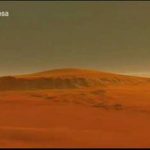
Traces of life on Mars: Olympus Mons
Olympus Mons is the highest volcano on Mars, and in our Solar System, towering 26 km above the surrounding plains.