Tag: highlights

  • Vega-C and Sentinel-1C launch highlights

    Vega-C and Sentinel-1C launch highlights

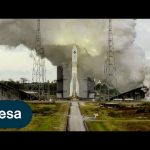
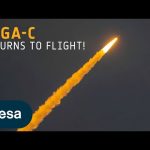
    The third Copernicus Sentinel-1 satellite, Sentinel-1C, has launched aboard a Vega-C rocket, flight VV25, from Europe’s Spaceport in French Guiana. The rocket lifted off on 5 December 2024 at 22:20 CET (18:20 local time).

    Sentinel-1C extends the legacy of its predecessors, delivering high-resolution radar imagery to monitor Earth’s changing environment, supporting a diverse range of applications and advance scientific research. Additionally, Sentinel-1C introduces new capabilities for detecting and monitoring maritime traffic.

    The launch also marks Vega-C’s ‘return to flight’, a key step in restoring Europe’s independent access to space. Vega-C is the evolution of the Vega family of rockets and delivers increased performance, greater payload volume and improved competitiveness.

    Credits: ESA/CNES/Arianespace

    ★ Subscribe: http://bit.ly/ESAsubscribe and click twice on the bell button to receive our notifications.

    Check out our full video catalog: http://bit.ly/SpaceInVideos
    Follow us on Twitter: http://bit.ly/ESAonTwitter
    On Facebook: http://bit.ly/ESAonFacebook
    On Instagram: http://bit.ly/ESAonInstagram
    On LinkedIn: https://bit.ly/ESAonLinkedIn
    On Pinterest: https://bit.ly/ESAonPinterest
    On Flickr: http://bit.ly/ESAonFlickr

    We are Europe’s gateway to space. Our mission is to shape the development of Europe’s space capability and ensure that investment in space continues to deliver benefits to the citizens of Europe and the world. Check out https://www.esa.int/ to get up to speed on everything space related.

    Copyright information about our videos is available here: https://www.esa.int/ESA_Multimedia/Terms_and_Conditions

    #ESA #Sentinel-1 C #Rocket

  • Proba-3 launch highlights

    Proba-3 launch highlights

    Proba-3 lifted off on its PSLV-XL rocket from Satish Dhawan Space Centre in Sriharikota, India, on Thursday, 5 December, at 11:34 CET (10:34 GMT, 16:04 local time). The mission was launched using this Indian launcher because it needed to be placed in a highly elliptical orbit extending more than 60 500 km from the ground.

    After integration and testing was completed at Redwire Space in Belgium, Proba-3 was transported to India to be prepared for launch.
    The latest member of ESA’s family of in-orbit demonstration missions, Proba-3 is in fact two spacecraft being launched together, which will separate in orbit to begin performing precise formation flying, precise to a single millimetre, about the thickness of an average fingernail. To prove their performance, Proba-3 has been devoted to an ambitious scientific goal. The pair will line up precisely with the Sun 150 m apart so that one casts a precisely controlled shadow onto the other.

    By blocking out the fiery disc of the Sun, Proba-3’s ‘Occulter’ spacecraft will mimic a terrestrial total solar eclipse, to open up views of the Sun’s faint surrounding atmosphere, or ‘corona’, which is a million times fainter than its parent star. Proba-3’s second ‘Coronagraph’ spacecraft hosts the optical instrument that will observe the solar corona.
    If Proba-3’s initial commissioning phase goes to plan then the spacecraft pair will be separated early in the new year to begin their individual check-outs. The operational phase of the mission, including the first observations of the corona through active formation flying, should begin in about four months.

    Proba-3 was led for ESA by Sener in Spain, overseeing a consortium of 14 ESA Member States and Canada including Airbus Defence and Space in Spain manufacturing the spacecraft and Redwire Space in Belgium responsible for the spacecraft avionics, assembly and operations. CSL in Belgium produced Proba-3’s ASPIICS coronagraph Spacebel in Belgium developed the onboard and ground segment software with GMV responsible for the formation flying system and flight dynamics.

    Credits: ESA/ISRO – NSIL

    ★ Subscribe: http://bit.ly/ESAsubscribe and click twice on the bell button to receive our notifications.

    Check out our full video catalog: http://bit.ly/SpaceInVideos
    Follow us on Twitter: http://bit.ly/ESAonTwitter
    On Facebook: http://bit.ly/ESAonFacebook
    On Instagram: http://bit.ly/ESAonInstagram
    On LinkedIn: https://bit.ly/ESAonLinkedIn
    On Pinterest: https://bit.ly/ESAonPinterest
    On Flickr: http://bit.ly/ESAonFlickr

    We are Europe’s gateway to space. Our mission is to shape the development of Europe’s space capability and ensure that investment in space continues to deliver benefits to the citizens of Europe and the world. Check out https://www.esa.int/ to get up to speed on everything space related.

    Copyright information about our videos is available here: https://www.esa.int/ESA_Multimedia/Terms_and_Conditions

    #ESA #Proba-3 #Rocket
  • A year in training: ESA’s new astronauts graduate

    A year in training: ESA’s new astronauts graduate

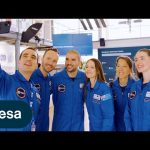
    ESA’s newly graduated astronauts reach the end of one year of rigorous basic astronaut training. Discover the journey of Sophie Adenot, Rosemary Coogan, Pablo Álvarez Fernández, Raphaël Liégeois, Marco Sieber, and Australian Space Agency astronaut candidate Katherine Bennell-Pegg. Selected in November 2022, the group began their training in April 2023.

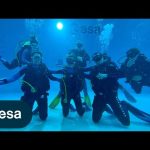
    Basic astronaut training provides the candidates with an overall familiarisation and training in various areas, such as spacecraft systems, spacewalks, flight engineering, robotics and life support systems as well as survival and medical training. They received astronaut certification at ESA’s European Astronaut Centre on 22 April 2024.

    Following certification, the new astronauts will move on to the next phases of pre-assignment and mission-specific training – paving the way for future missions to the International Space Station and beyond.

    Credits:
    Video: ESA – European Space Agency
    ISS and EVA footage: ESA/NASA

    Music: Scorekeepers

    ★ Subscribe: http://bit.ly/ESAsubscribe and click twice on the bell button to receive our notifications.

    Check out our full video catalog: http://bit.ly/SpaceInVideos
    Follow us on Twitter: http://bit.ly/ESAonTwitter
    On Facebook: http://bit.ly/ESAonFacebook
    On Instagram: http://bit.ly/ESAonInstagram
    On LinkedIn: https://bit.ly/ESAonLinkedIn
    On Pinterest: https://bit.ly/ESAonPinterest
    On Flickr: http://bit.ly/ESAonFlickr

    We are Europe’s gateway to space. Our mission is to shape the development of Europe’s space capability and ensure that investment in space continues to deliver benefits to the citizens of Europe and the world. Check out https://www.esa.int/ to get up to speed on everything space related.

    Copyright information about our videos is available here: https://www.esa.int/ESA_Multimedia/Terms_and_Conditions

    #ESA #Astronaut #Training

  • Highlights from ESA basic astronaut training

    Highlights from ESA basic astronaut training

    ESA’s newly graduated astronauts reach the end of one year of rigorous basic astronaut training. Watch the key moments during the journey of Sophie Adenot, Rosemary Coogan, Pablo Álvarez Fernández, Raphaël Liégeois, Marco Sieber, and Australian Space Agency astronaut candidate Katherine Bennell-Pegg. Selected in November 2022, the group began their training in April 2023.

    Basic astronaut training provides the candidates with an overall familiarisation and training in various areas, such as spacecraft systems, spacewalks, flight engineering, robotics and life support systems as well as survival and medical training. They received astronaut certification at ESA’s European Astronaut Centre on 22 April 2024.

    Following certification, the new astronauts will move on to the next phases of pre-assignment and mission-specific training – paving the way for future missions to the International Space Station and beyond.

    Credits:
    ESA – European Space Agency
    ESA/NASA
    NASA
    ESA/Royal Netherlands Air Force

    ★ Subscribe: http://bit.ly/ESAsubscribe and click twice on the bell button to receive our notifications.

    Check out our full video catalog: http://bit.ly/SpaceInVideos
    Follow us on Twitter: http://bit.ly/ESAonTwitter
    On Facebook: http://bit.ly/ESAonFacebook
    On Instagram: http://bit.ly/ESAonInstagram
    On LinkedIn: https://bit.ly/ESAonLinkedIn
    On Pinterest: https://bit.ly/ESAonPinterest
    On Flickr: http://bit.ly/ESAonFlickr

    We are Europe’s gateway to space. Our mission is to shape the development of Europe’s space capability and ensure that investment in space continues to deliver benefits to the citizens of Europe and the world. Check out https://www.esa.int/ to get up to speed on everything space related.

    Copyright information about our videos is available here: https://www.esa.int/ESA_Multimedia/Terms_and_Conditions

    #ESA #Astronaut #ESAastro2022

  • December sky highlights ✨ #shorts

    December sky highlights ✨ #shorts

    – Mercury’s beauty at greatest eastern elongation (4 December)

    – New Moon (12 December): Great for capturing Star Trails.

    – Geminids Meteor Shower (14-15 December): without any moonlight interference.

    – Moon-Mercury Conjunction (14 November): A cosmic rendezvous.

    – Solstice (22 December at 4:27 CET): Sol Invictus

    – Full Moon (27 December): A glowing spectacle in the heavens.

    Don’t miss these celestial events in this month!

    📹 ESA – European Space Agency
    📸 EUMETSAT

    #ESA
    #NightSky
    #AstroHighlights

  • Ariane 6 hot-fires: the highlights

    Ariane 6 hot-fires: the highlights

    Cinq, quatre, trois, deux, un. Allumage Vulcain! This is the moment Ariane 6’s main engine was sparked into life, and the entire main stage of the new rocket and the many parts of the launch pad in Kourou, French Guiana, practised for the full duration of a launch. Of course, as planned, the test model did not leave the ground.

    Without its boosters, instead of piercing the clouds Ariane 6’ created its own on Earth: a clean byproduct of the Vulcain 2.1 engine’s oxygen and hydrogen propellants, which came together to send out impressive swirls of H2O.

    After the almost 150 tonnes of propellant was burnt through and the clouds dispersed, the curtains closed on the successful rehearsal. The data from thousands of monitors around the rocket will be crunched in the coming weeks to learn all that’s needed for Ariane’s next, real, flight.

    Credits: ESA – European Space Agency

    ★ Subscribe: http://bit.ly/ESAsubscribe and click twice on the bell button to receive our notifications.

    Check out our full video catalog: http://bit.ly/SpaceInVideos
    Follow us on Twitter: http://bit.ly/ESAonTwitter
    On Facebook: http://bit.ly/ESAonFacebook
    On Instagram: http://bit.ly/ESAonInstagram
    On LinkedIn: https://bit.ly/ESAonLinkedIn
    On Pinterest: https://bit.ly/ESAonPinterest
    On Flickr: http://bit.ly/ESAonFlickr

    We are Europe’s gateway to space. Our mission is to shape the development of Europe’s space capability and ensure that investment in space continues to deliver benefits to the citizens of Europe and the world. Check out https://www.esa.int/ to get up to speed on everything space related.

    Copyright information about our videos is available here: https://www.esa.int/ESA_Multimedia/Terms_and_Conditions

    #ESA
    #Ariane6
    #Rocket
  • Our 2022 highlights 🗓️ #shorts

    Our 2022 highlights 🗓️ #shorts

    2022 was a year of many ‘firsts’ for space in Europe, seeing the first European female International Space Station commander, the launch of the first Vega-C rocket, the launch of the first Artemis mission working to bring humans back to the Moon, and first images from the James Webb Space Telescope among many other success stories and lessons learned.

    ★ Subscribe: http://bit.ly/ESAsubscribe and click twice on the bell button to receive our notifications.

    Check out our full video catalog: http://bit.ly/SpaceInVideos
    Follow us on Twitter: http://bit.ly/ESAonTwitter
    On Facebook: http://bit.ly/ESAonFacebook
    On Instagram: http://bit.ly/ESAonInstagram
    On LinkedIn: https://bit.ly/ESAonLinkedIn
    On Pinterest: https://bit.ly/ESAonPinterest
    On Flickr: http://bit.ly/ESAonFlickr

    We are Europe’s gateway to space. Our mission is to shape the development of Europe’s space capability and ensure that investment in space continues to deliver benefits to the citizens of Europe and the world. Check out https://www.esa.int/ to get up to speed on everything space related.

    Copyright information about our videos is available here: https://www.esa.int/ESA_Multimedia/Terms_and_Conditions

    #ESA
    #YearInReview
    #2022Highlights

  • ESA Highlights 2022

    ESA Highlights 2022

    2022 was a year of many ‘firsts’ for space in Europe, seeing the first European female ISS commander, the launch of the first Vega-C rocket, Solar Orbiter’s first close encounter with our home star, the launch of the first Artemis mission working to bring humans back to the Moon, and first images from the James Webb Space Telescope.

    Let’s take a look at the highlights and accomplishments of the European Space Agency during 2022.

    ★ Subscribe: http://bit.ly/ESAsubscribe and click twice on the bell button to receive our notifications.

    Check out our full video catalog: http://bit.ly/SpaceInVideos
    Follow us on Twitter: http://bit.ly/ESAonTwitter
    On Facebook: http://bit.ly/ESAonFacebook
    On Instagram: http://bit.ly/ESAonInstagram
    On LinkedIn: https://bit.ly/ESAonLinkedIn
    On Pinterest: https://bit.ly/ESAonPinterest
    On Flickr: http://bit.ly/ESAonFlickr

    We are Europe’s gateway to space. Our mission is to shape the development of Europe’s space capability and ensure that investment in space continues to deliver benefits to the citizens of Europe and the world. Check out https://www.esa.int/ to get up to speed on everything space related.

    Copyright information about our videos is available here: https://www.esa.int/ESA_Multimedia/Terms_and_Conditions

    #ESA
    #Highlights
    #EuropeanSpaceAgency

  • Highlights From the First 13 Days of NASA’s Artemis I Moon Mission

    Highlights From the First 13 Days of NASA’s Artemis I Moon Mission

    On Monday, Nov. 28, 2022, Artemis I reached the halfway point of its 26-day mission around the Moon, flying roughly 270,000 miles (434,000 km) from the Earth—farther from our home planet than any spacecraft designed to send humans to space and back has gone before.

    From Artemis I’s launch at NASA’s Kennedy Space Center, to its first “Earthrise”, to close-up views of the lunar surface, take a look back at some of the highlights from the first half of this mission.

    Artemis I is an uncrewed test of our Space Launch System rocket and Orion spacecraft for future Artemis missions—which will send humans to the lunar surface, develop a long-term, sustainable presence on and around the Moon, and pave the way for humanity to set foot on Mars.

    More about Artemis: https://www.nasa.gov/specials/artemis-i/

    Credit: NASA

    #NASA #Artemis #Moon

  • Mission Highlights | Cosmic Kiss

    Mission Highlights | Cosmic Kiss

    ESA astronaut Matthias Maurer returned from his first mission to the International Space Station, known as ‘Cosmic Kiss’, on Friday 6 May 2022. Revisit some of the highlights of his first stay in orbit with us.
    During his mission, Matthias became the 600th person in space, conducted his first spacewalk, and supported over one hundred cutting-edge scientific experiments – the findings of which will improve life back here on Earth.

    More info on Cosmic Kiss here: https://bit.ly/ESACosmicKiss

    Follow Matthias: https://twitter.com/astro_matthias

    ★ Subscribe: http://bit.ly/ESAsubscribe and click twice on the bell button to receive our notifications.

    Check out our full video catalog: http://bit.ly/SpaceInVideos
    Follow us on Twitter: http://bit.ly/ESAonTwitter
    On Facebook: http://bit.ly/ESAonFacebook
    On Instagram: http://bit.ly/ESAonInstagram
    On LinkedIn: https://bit.ly/ESAonLinkedIn
    On Pinterest: https://bit.ly/ESAonPinterest
    On Flickr: http://bit.ly/ESAonFlickr

    We are Europe’s gateway to space. Our mission is to shape the development of Europe’s space capability and ensure that investment in space continues to deliver benefits to the citizens of Europe and the world. Check out https://www.esa.int/ to get up to speed on everything space related.

    Copyright information about our videos is available here: https://www.esa.int/ESA_Multimedia/Terms_and_Conditions

    #ESA
    #CosmicKiss
    #MatthiasMaurer

  • Highlights of the inaugural Vega-C launch

    Highlights of the inaugural Vega-C launch

    ESA’s new Vega-C rocket lifted off for its inaugural flight VV21 at 15:13 CEST/13:13 UTC/10:13 local time from Europe’s Spaceport in French Guiana. With new first and second stages and an uprated fourth stage, Vega-C increases performance to about 2.3 t in a reference 700 km polar orbit, from the 1.5 t capability of its predecessor, Vega. For flight VV21, Vega-C’s payload is LARES-2, a scientific mission of the Italian space agency ASI and six research CubeSats from France, Italy and Slovenia.

    Learn more about Vega-C: https://bit.ly/VegaCSuccessfullyCompletesInaugalFlight

    ★ Subscribe: http://bit.ly/ESAsubscribe and click twice on the bell button to receive our notifications.

    Check out our full video catalog: http://bit.ly/SpaceInVideos
    Follow us on Twitter: http://bit.ly/ESAonTwitter
    On Facebook: http://bit.ly/ESAonFacebook
    On Instagram: http://bit.ly/ESAonInstagram
    On LinkedIn: https://bit.ly/ESAonLinkedIn
    On Pinterest: https://bit.ly/ESAonPinterest
    On Flickr: http://bit.ly/ESAonFlickr

    We are Europe’s gateway to space. Our mission is to shape the development of Europe’s space capability and ensure that investment in space continues to deliver benefits to the citizens of Europe and the world. Check out https://www.esa.int/ to get up to speed on everything space related.

    Copyright information about our videos is available here: https://www.esa.int/ESA_Multimedia/Terms_and_Conditions

  • Vega-C inaugural launch: mission highlights

    Vega-C inaugural launch: mission highlights

    This animated preview of flight VV21 illustrates gantry rollout and liftoff from Europe’s Spaceport in French Guiana, stage and fairing separations, and deployment of the Italian Space Agency’s LARES-2 scientific payload and six research CubeSats. Vega-C represents a dramatic capability boost compared to its predecessor, Vega, which has flown since 2012. With new first and second stages and an uprated fourth stage, Vega-C increases performance from Vega’s 1.5 t to about 2.2 t in a reference 700 km polar orbit and handles larger payloads.

    Learn more about Vega-C: https://bit.ly/VegaRocketESA

    ★ Subscribe: http://bit.ly/ESAsubscribe and click twice on the bell button to receive our notifications.

    Check out our full video catalog: http://bit.ly/SpaceInVideos
    Follow us on Twitter: http://bit.ly/ESAonTwitter
    On Facebook: http://bit.ly/ESAonFacebook
    On Instagram: http://bit.ly/ESAonInstagram
    On Flickr: http://bit.ly/ESAonFlickr

    We are Europe’s gateway to space. Our mission is to shape the development of Europe’s space capability and ensure that investment in space continues to deliver benefits to the citizens of Europe and the world. Check out https://www.esa.int/ to get up to speed on everything space related.

    Copyright information about our videos is available here: https://www.esa.int/ESA_Multimedia/Terms_and_Conditions

    #ESA
    #VegaC
    #SpaceRockets

  • ESA highlights 2021

    ESA highlights 2021

    We’re almost ready to say goodbye to 2021, a year in which ESA once more succeeded in continuing operations in a challenging global situation, and creating some important milestones in the field of European spaceflight. As always, ESA has been at the forefront of science, with several science missions en route to their destinations or being prepared for flight, such as BepiColombo, Solar Orbiter, JUICE and ExoMars, and not least rounding off the year with the impending launch of the James Webb Space Telescope. Europe’s Copernicus programme continues to be the largest Earth observation system in the world, and ESA is even preparing more Earth observation missions. In 2021, ESA astronaut Thomas Pesquet carried out his Alpha mission to the Space Station, and Matthias Maurer began his Cosmic Kiss mission, continuing into 2022. As we said farewell to Prof. Jan Wörner, a new Director General took the helm of ESA and we welcomed Dr Josef Aschbacher with his ambition to accelerate the use of space in Europe. Meanwhile, the latest Vega rocket flight has paved the way for the transition to Vega-C, and the new Ariane 6 launchpad was inaugurated.

    ★ Subscribe: http://bit.ly/ESAsubscribe and click twice on the bell button to receive our notifications.

    Check out our full video catalog: http://bit.ly/SpaceInVideos
    Follow us on Twitter: http://bit.ly/ESAonTwitter
    On Facebook: http://bit.ly/ESAonFacebook
    On Instagram: http://bit.ly/ESAonInstagram
    On LinkedIn: https://bit.ly/ESAonLinkedIn
    On Pinterest: https://bit.ly/ESAonPinterest
    On Flickr: http://bit.ly/ESAonFlickr

    We are Europe’s gateway to space. Our mission is to shape the development of Europe’s space capability and ensure that investment in space continues to deliver benefits to the citizens of Europe and the world. Check out https://www.esa.int/ to get up to speed on everything space related.

    Copyright information about our videos is available here: https://www.esa.int/ESA_Multimedia/Terms_and_Conditions

    #ESA
    #Highlight2021
    #SpaceHighlights

  • #Tokyo2020: Highlights from the first-ever space Olympics!

    #Tokyo2020: Highlights from the first-ever space Olympics!

    To celebrate the Summer Games in Tokyo, astronauts and cosmonauts held the very first-ever space games aboard the International Space Station. Team Soyuz took on Team Dragon in a friendly competition of synchronized floating, no-hand ball, and more!

    The station’s Expedition 65 crew split up into teams based on which spacecraft they took to the orbiting laboratory. NASA astronaut Mark Vande Hei and cosmonauts Oleg Novitskiy and Pyotr Dubrov of the Russian space agency Roscosmos were on Team Soyuz. NASA astronauts Shane Kimbrough and Megan McArthur, JAXA (Japan Aerospace Exploration Agency) astronaut Akihiko Hoshide, and ESA (European Space Agency) astronaut Thomas Pesquet were on Team Dragon for the SpaceX Crew Dragon spacecraft. Both spacecraft arrived in April to deliver the seven-member crew for a six-month science mission in microgravity.

    Involving the U.S., Russia, Canada, Japan, and the participating countries of ESA, people have been living and working aboard the International Space Station for more than 20 years in one of the most ambitious international collaborations ever attempted. People from 19 countries have visited the unique microgravity laboratory, which has hosted more than 3,000 research investigations from scientists, researchers, and students from more than 108 countries and areas.

    Learn more at https://www.nasa.gov/station

    Follow Team ISS on Twitter @Space_Station and Instagram and Facebook @ISS.

    Download Link: https://images.nasa.gov/details-Tokyo2020%20Highlights%20from%20the%20first%20ever%20space%20Olympics

    Video Producer: Sonnet Apple
    Music: Universal Production Music

    #ISS #Olympics

  • ESA highlights 2020

    ESA highlights 2020

    2020 has been another year of progress for ESA. The launch and commissioning of Solar Orbiter heralded a new era of space science, whilst Eutelsat Konnect revolutionised telecommunications. The new Vega SSMS began a cost-effective new launch system for small satellites, deploying exciting new technologies such as PhiSat and ESAIL. ESA’s Earth Observation activities were also showcased, with the launch of Sentinel-6 and an international effort to monitor the environmental and economic impact of COVID-19. Gaia and Cheops yielded new findings about our universe; ESA astronaut Luca Parmitano returned successfully from orbit. With a lunar programme agreement signed and new steps being taken to control debris, ESA is set to begin 2021 at the forefront of space exploration.

    ★ Subscribe: http://bit.ly/ESAsubscribe and click twice on the bell button to receive our notifications.

    Check out our full video catalog: http://bit.ly/SpaceInVideos
    Follow us on Twitter: http://bit.ly/ESAonTwitter
    On Facebook: http://bit.ly/ESAonFacebook
    On Instagram: http://bit.ly/ESAonInstagram
    On Flickr: http://bit.ly/ESAonFlickr

    We are Europe’s gateway to space. Our mission is to shape the development of Europe’s space capability and ensure that investment in space continues to deliver benefits to the citizens of Europe and the world. Check out https://www.esa.int/ to get up to speed on everything space related.

    Copyright information about our videos is available here: https://www.esa.int/ESA_Multimedia/Terms_and_Conditions

    #ESA
    #Space
    #2020Highlights

  • ESA highlights 2019

    ESA highlights 2019

    As the year comes to a close, it is once again time to look back and reflect on some of the achievements and highlights of European spaceflight. The new Gaia star catalogue and the launch of Cheops are keeping ESA at the forefront of space science, as will Solar Orbiter, being prepared for launch next year. The Copernicus programme continues to be the largest Earth observation programme in the world, with ESA preparing even more missions. On the Space Station, Luca Parmitano became the third European to command an ISS expedition. During his second mission, he made some of the space programme’s most complex and demanding spacewalks. At the end of 2019, the ESA Space19+ ministerial conference agreed to give ESA its largest budget ever and expressed continued support for Europe’s independent access to space with Ariane 6 and Vega-C.

    ★ Subscribe: http://bit.ly/ESAsubscribe and click twice on the bell button to receive our notifications.

    Check out our full video catalog: http://bit.ly/SpaceInVideos
    Follow us on Twitter: http://bit.ly/ESAonTwitter
    On Facebook: http://bit.ly/ESAonFacebook
    On Instagram: http://bit.ly/ESAonInstagram
    On Flickr: http://bit.ly/ESAonFlickr

    We are Europe’s gateway to space. Our mission is to shape the development of Europe’s space capability and ensure that investment in space continues to deliver benefits to the citizens of Europe and the world. Check out http://www.esa.int/ESA to get up to speed on everything space related.

    Copyright information about our videos is available here: http://www.esa.int/spaceinvideos/Terms_and_Conditions

    #ESA
    #2019Highlights
    #Space

  • Flying under Aeolus

    Flying under Aeolus

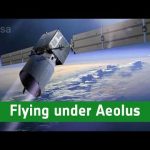
    Following the launch of Aeolus on 22 August 2018, scientists have been busy fine-tuning and calibrating this latest Earth Explorer satellite. Aeolus carries a revolutionary instrument, which comprises a powerful laser, a large telescope and a very sensitive receiver. It works by emitting short, powerful pulses – 50 pulses per second – of ultraviolet light from a laser down into the atmosphere. The instrument then measures the backscattered signals from air molecules, dust particles and water droplets to provide vertical profiles that show the speed of the world’s winds in the lowermost 30 km of the atmosphere. These measurements are needed to improve weather forecasts. As part of the working being done to calibrate this novel mission, scientists have been taking similar measurements from an aircraft carrying an airborne version of Aeolus’ instrument. The pilot flies the plane under the satellite as it orbits above so that measurements of wind can be compared.

    Learn more about Aeolus: http://bit.ly/AeolusESA

    ★ Subscribe: http://bit.ly/ESAsubscribe and click twice on the bell button to receive our notifications.

    Check out our full video catalog: http://bit.ly/SpaceInVideos
    Follow ESA on Twitter: http://bit.ly/ESAonTwitter
    On Facebook: http://bit.ly/ESAonFacebook
    On Instagram: http://bit.ly/ESAonInstagram
    On Flickr: http://bit.ly/ESAonFlickr

    ESA is Europe’s gateway to space. Our mission is to shape the development of Europe’s space capability and ensure that investment in space continues to deliver benefits to the citizens of Europe and the world. Check out http://www.esa.int/ESA to get up to speed on everything space related.

    Copyright information about our videos is available here: http://www.esa.int/spaceinvideos/Terms_and_Conditions

    #Aeolus
    #Satellite
    #EarthObservation

  • ESA highlights 2018

    ESA highlights 2018

    ESA can look back at a fulfilling year. It has been a year marked by new Earth Observation missions to analyse and protect our planet, in particular the completion of the first wave of Copernicus Sentinel satellites and the launch of Aeolus. Galileo also reached an important milestone – there are now 26 satellites in orbit. Other achievements include the October launch of BepiColombo, the ESA-JAXA mission to study Mercury, and the almost continuous presence of ESA astronauts on the International Space Station.

    What was your favourite moment? Tell us in the comment section.

    ★ Subscribe: http://bit.ly/ESAsubscribe and click twice on the bell button to receive our notifications.

    Check out our full video catalog: http://bit.ly/SpaceInVideos
    Follow ESA on Twitter: http://bit.ly/ESAonTwitter
    On Facebook: http://bit.ly/ESAonFacebook
    On Instagram: http://bit.ly/ESAonInstagram
    On Flickr: http://bit.ly/ESAonFlickr

    ESA is Europe’s gateway to space. Our mission is to shape the development of Europe’s space capability and ensure that investment in space continues to deliver benefits to the citizens of Europe and the world. Check out http://www.esa.int/ESA to get up to speed on everything space related.

    Copyright information about our videos is available here: http://www.esa.int/spaceinvideos/Terms_and_Conditions

  • Horizons mission time-lapse – highlights

    Horizons mission time-lapse – highlights

    Experience magical moments from ESA astronaut Alexander Gerst’s Horizons mission in this time-lapse of highlights from space.

    Combining thousands of images taken by Alexander over more than six months, this Ultra High Definition video provides a glimpse into spacecraft operations and the beauty of Earth as seen from the International Space Station.

    Marvel at orbital sunrises, dancing auroras, city lights, oceans, clouds, the Milky Way, the release of cargo vehicles, a Soyuz launch and more against the thin band of atmosphere that surrounds our planet.

    Watch in 4K resolution for the best effect and find even more of Alexander’s images on Flickr at https://www.flickr.com/photos/astro_alex/

    Music is Quantum and Time by Igor Dvorkin, Duncan Pittock and Ellie Kidd sourced from the Audio Network library.

    Follow Alexander and the #Horizons mission on social media via http://bit.ly/AlexanderGerstESA and on http://bit.ly/HorizonsBlogESA

    ★ Subscribe: http://bit.ly/ESAsubscribe and click twice on the bell button to receive our notifications.

    Check out our full video catalog: http://bit.ly/SpaceInVideos
    Follow ESA on Twitter: http://bit.ly/ESAonTwitter
    On Facebook: http://bit.ly/ESAonFacebook
    On Instagram: http://bit.ly/ESAonInstagram
    On Flickr: http://bit.ly/ESAonFlickr

    ESA is Europe’s gateway to space. Our mission is to shape the development of Europe’s space capability and ensure that investment in space continues to deliver benefits to the citizens of Europe and the world. Check out http://www.esa.int/ESA to get up to speed on everything space related.

    Copyright information about our videos is available here: http://www.esa.int/spaceinvideos/Terms_and_Conditions

  • BepiColombo launch highlights

    BepiColombo launch highlights

    Highlights from the days up to and including the exciting launch of the ESA-JAXA BepiColombo mission to Mercury.

    BepiColombo launched at 01:45 GMT from Europe’s Spaceport in Kourou, French Guiana. It will make a seven year cruise to Mercury, flying by Earth once, Venus twice and Mercury six times before entering orbit.

    It is the first European mission to Mercury, the smallest and least explored planet in the inner Solar System, and the first to send two spacecraft to make complementary measurements of the planet and its dynamic environment at the same time. The mission comprises two science orbiters: ESA’s Mercury Planetary Orbiter (MPO) and JAXA’s Mercury Magnetospheric Orbiter (MMO). The ESA-built Mercury Transfer Module (MTM) will carry the orbiters to Mercury using a combination of solar electric propulsion and gravity assist flybys.

    Learn more about #BepiColombo: http://bit.ly/ESAsBepiColombo

    ★ Subscribe: http://bit.ly/ESAsubscribe

    Check out our full video catalog: http://bit.ly/SpaceInVideos
    Follow ESA on Twitter: http://bit.ly/ESAonTwitter
    On Facebook: http://bit.ly/ESAonFacebook
    On Instagram: http://bit.ly/ESAonInstagram
    On Flickr: http://bit.ly/ESAonFlickr

    ESA is Europe’s gateway to space. Our mission is to shape the development of Europe’s space capability and ensure that investment in space continues to deliver benefits to the citizens of Europe and the world. Check out http://www.esa.int/ESA to get up to speed on everything space related.

    Copyright information about our videos is available here: http://www.esa.int/spaceinvideos/Terms_and_Conditions

  • Sentinel-3B highlights

    Sentinel-3B highlights

    The Copernicus Sentinel-3B satellite spent six weeks at the Plesetsk cosmodrome in Russia being carefully prepared for liftoff. After being shipped from France to the launch site, the satellite was tested, joined to the rocket launch adapter, sealed from view in the fairing and taken by train to the launch pad. Sentinel-3B lifted off on 25 April 2018 at 17:57 GMT (19:57 CEST).

    It joins its twin, Sentinel-3A, in orbit. The pairing of identical satellites provides the best coverage and data delivery for Europe’s Copernicus programme – the largest environmental monitoring programme in the world. The satellites carry the same suite of cutting-edge instruments to measure oceans, land, ice and atmosphere. While these data are fed primarily into the Copernicus Marine Environment Monitoring Service, all the Copernicus services benefit to produce knowledge and information products in near-real time for a wide range of applications. The Sentinel-3 mission is essential for applications for ocean and coastal monitoring, numerical weather and ocean prediction, sea-level change and sea-surface topography monitoring, ocean primary production estimation and land-cover change mapping.

    ★ Subscribe: http://bit.ly/ESAsubscribe

  • ESA highlights 2017

    ESA highlights 2017

    With 2018 approaching rapidly and 2017 coming to a close, ESA can look back on a fruitful year. It has been a year dominated by the ESA astronaut missions to the International Space Station, the launch of more Sentinel satellites and the first launch of a small Geo satellite.

    This video looks back at the highlights of 2017 for ESA.

    More about ESA: http://www.esa.int

  • Tim’s spacewalk highlights

    Tim’s spacewalk highlights

    On 15 January ESA astronaut Tim Peake and NASA astronaut Tim Kopra stepped outside of the International Space Station to replace a failed power regulator and install cabling.

    The meticulously planned and executed sortie was stopped early after Tim Kopra reported a small amount of water building up in his helmet. The two Tims worked in close cooperation with each other to return to the Space Station, with NASA commander Scott Kelly and cosmonaut Sergei Volkov waiting inside to help them out of their suits.

    They left the confines of the weightless research laboratory at 12:48 GMT after their five-hour preparations to don their spacesuits and purge their bodies of nitrogen to avoid decompression sickness.

    Tim Kopra went first to the far end of the Station’s starboard truss, with Tim Peake following with the replacement Sequential Shunt Unit. Swapping the suitcase-sized box was a relatively simple task but one that needed to be done safely while the clock was ticking.

    With their main task complete, the Tims separated for individual jobs for the remainder of their time outside but was told by Mission Control to return to the airlock earlier than planned.

    The 4 hour 43 minute spacewalk was the first for a British astronaut. The spacewalk officially ended at 17:31 GMT when the Tims began the repressurisation of the Quest airlock.

  • Principia launch highlights

    Principia launch highlights

    ESA astronaut Tim Peake, NASA astronaut Tim Kopra and commander Yuri Malenchenko were launched into space 15 Decemeber 11:03 GMT from Baikonur cosmodrome, Kazakhstan.

    The launch marks the start of Tim Peake’s six-month Principia mission on the International Space Station running over 30 scientific experiments for ESA.

    Follow Tim Peake via http://timpeake.esa.int and follow the whole mission on ESA’s Principia blog: http://blogs.esa.int/principia.

    Full launch replay here:
    http://www.esa.int/spaceinvideos/Videos/2015/12/Principia_launch

  • Soyuz TMA-15M landing – highlights

    Soyuz TMA-15M landing – highlights

    ESA astronaut Samantha Cristoforetti, NASA astronaut Terry Virts and Russian commander Anton Shkaplerov landed in the Kazakh steppe after a three-hour ride in their Soyuz spacecraft 11 June 2015. They left the International Space Station at 10:20 GMT at the end of their six-month stay on the research complex.

    Soyuz TMA-15M braked from the Station’s cruising speed of almost 28 800 km/h and entered the atmosphere six hours later. The small descent module separated as planned and parachutes deployed to slow the vehicle down even more.

    The module fired retrorockets moments before landing and springs in the moulded seats reduced the impact of hitting the steppe at 13:44 GMT. Teams were on hand within minutes to help them out.

  • Blue Dot mission summary

    Blue Dot mission summary

    ESA astronaut Alexander Gerst spent 166 days in space with NASA astronaut Reid Wiseman and Roscosmos commander Max Suraev in 2014.

    This ten-minute video shows highlights of his Blue Dot mission, from docking spacecraft to science and spacewalks Alexander worked to improve the International Space Station and life on Earth.

    From launch to landing, look at the experiments and beautiful images Alexander shared with us.

    For more about the Blue Dot mission go to:
    http://www.esa.int/Our_Activities/Human_Spaceflight/Blue_dot

    Connect with Alexander at http://alexandergerst.esa.int

  • Philae landing: touchdown highlights

    Philae landing: touchdown highlights

    Highlights from coverage of ESA’s Rosetta mission soft-landing its Philae probe on a comet, the first time in history that such an extraordinary feat has been achieved.

    After a tense wait during the seven-hour descent to the surface of Comet 67P/Churyumov–Gerasimenko, the signal confirming the successful touchdown arrived on Earth at 16:03 GMT (17:03 CET).

    More about Rosetta at:
    http://www.esa.int/rosetta

  • NASA Highlights James Webb Space Telescope Progress

    NASA Highlights James Webb Space Telescope Progress

    NASA Administrator Charles Bolden and Senator Barbara Mikulski of Maryland participated in a news conference Feb. 3 at NASA’s Goddard Space Flight Center in Greenbelt, Md., to discuss the status of the agency’s flagship science project, the James Webb Space Telescope (JWST). Bolden and Mikulski congratulated the JWST team for the integration at Goddard of all the telescope’s flight instruments and primary mirrors.

    The most powerful space telescope ever built, Webb will be the premiere observatory of the next decade, serving thousands of astronomers worldwide. It will study every phase in the history of our universe, including the first luminous glows after the big bang, the formation of solar systems capable of supporting life on planets similar to Earth, and the evolution of our own solar system.

  • ESA 2012 Highlights

    ESA 2012 Highlights

    2012 has been a very busy and fruitful year for ESA.

    In particular it will remain as a historical year for European launchers since it saw the successful qualification flight of the new Vega from Kourou and the birth of Ariane 6 which was decided at the Ministerial Council in Napoli last November.

    This video proposes to look back at 2012 with an overview of ESA missions and events.

  • Kuipers landing highlights

    Kuipers landing highlights

    On 1 July 2012, ESA astronaut André Kuipers, NASA astronaut Don Pettit and Russian Cosmonaut Oleg Kononenko returned to Earth in their Soyuz capsule. It marks the end of PromISSe, the fourth ESA long-duration mission aboard the International Space Station.

  • STS-134: Space Shuttle Endeavour’s last Mission

    STS-134: Space Shuttle Endeavour’s last Mission

    The best of the best, it’s a compilation of the featured moments captured by NASA Television during the mission of Endeavour and its six-man crew to the International Space Station.

  • Newly-Discovered Sun-Like System Highlights This Week @ NASA

    Newly-Discovered Sun-Like System Highlights This Week @ NASA

    The continuous monitoring of more than 156,000 stars for subtle brightness changes has led to the discovery by NASA’s Kepler Mission of the first confirmed system outside our own that has more than one planet transiting the same star. Also, researchers head north to “Mars on Earth;” “Avatar” director and film’s imagery featured in NASA Earth science public service campaign; Mary J. Blige encourages students “to reach for the stars;” NASA helps celebrate “Star Wars;” and more.

  • Launch Tops STS-132 Crews First Day in Space

    Launch Tops STS-132 Crews First Day in Space

    The liftoff and eight-and-a-half minute ascent of shuttle Atlantis into space is among the highlights of STS-132’s first flight day of its 12-day mission. The six-member crew of Commander Ken Ham, Pilot Tony Antonelli and Mission Specialists Garrett Reisman, Steve Bowen, Mike Good and Piers Sellers is delivering to the ISS a cargo carrier filled with spare parts and Rassvet, the Russian Mini Research Module-1.

  • ESA highlights online games as key future technology

    ESA highlights online games as key future technology

    Video gaming has become one of the globes most popular pastimes. Fans say games are often educational, their detractors answer they are anything but. Might ESA have something to learn from gaming? A new Agency study says the answer is yes.
    http://www.esa.int/esaCP/SEMHGBFKZ6G_index_0.html

  • NASA STS-129 Mission Highlights

    NASA STS-129 Mission Highlights

    Astronaut Nicole Stott returned to Earth aboard shuttle Atlantis on Nov. 27 after 91 days in space. She had spent 87 days aboard the International Space Station and 80 days as an Expedition 20/21 flight engineer. She is the last astronaut who will be transported to or from the space station by a space shuttle. Atlantis landed at NASA’s Kennedy Space Center, Fla., to end its STS-129 mission to the station.

    For more info: www.nasa.gov/shuttle