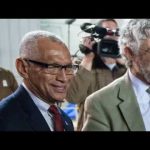
During an event at NASA Headquarters in Washington Thursday, NASA Administrator Bill Nelson and U.S. Department of Health and Human Services (HHS) Secretary Xavier Becerra united to note progress their respective agencies are making in space and on Earth toward President Biden and First Lady Jill Biden’s Cancer Moonshot initiative.
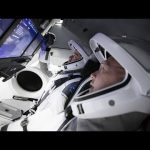
Also participating in the event was Dr. W. Kimryn Rathmell, director of the National Cancer Institute, as well as NASA astronauts Stephen Bowen and Frank Rubio, both of whom each recently served extended science missions 250 miles off Earth aboard the International Space Station where they conducted cancer-related research.
The Copernicus Anthropogenic Carbon Dioxide Monitoring (CO2M) mission will be the first satellite mission to measure how much carbon dioxide is released into the atmosphere through human activity.
CO2M isn’t just a mission; it’s a crucial step in our commitment to understanding and mitigating climate change. It will offer unprecedented precision in monitoring carbon dioxide emissions from the combustion of fossil fuel at national and regional scales.
Its data will provide the EU with a unique and independent source of information to assess the effectiveness of policy measures and to track their impact towards decarbonising Europe ahead of the next Global Stocktake set to place in 2028.
The video features interviews with Valerie Fernandez, CO2M Mission Project Manager, Yannig Durand, CO2M Payload Manager and Yasjka Meijer, CO2M Mission Scientist.
We are Europe’s gateway to space. Our mission is to shape the development of Europe’s space capability and ensure that investment in space continues to deliver benefits to the citizens of Europe and the world. Check out https://www.esa.int/ to get up to speed on everything space related.
We asked our followers on social media to send in questions they would like to ask the ESA HR Department. This is your opportunity to hear the answers first hand. Have fun learning more about careers and recruitment here at ESA!
0:00-0:21 Introduction 0:21-1:08 What does a typical job interview at ESA look like? 1:08-2:00 How many careers paths can one start at ESA? 2:00- 3:02 I’m a girl and my dream is to become an astronaut. Is this possible? 3:02- 3:27 Do you respond to all applications? 3:27-4:02 How long does an application usually take to process? 4:02-4:26 Any jobs for space enthusiasts over the age of 40? 4:26-5:33 Do you really accept all ages? 5:33-6:52 Can I get into ESA without a background in space? 6:52-8:12 I’m puzzled by the ESA pay scale, are salaries negotiable? 8:12-9:16 What skillset and qualifications does a successful ESA applicant possess? 9:16-10:08 What is your funniest interview experience? 10:08- 10:54 is it hard to get a job at ESA? 10:54-12:11 What kind of benefits do ESA staff get? 12:11-12:58 Anything like free massages? 12:58- 14:06 Why is a masters degree required? 14:06- 15:01 How do you filter candidates? 15:01- 16:17 Do unsuccessful applicants go into a careers black hole? 16:17-16:52 Join us at ESA!
We are Europe’s gateway to space. Our mission is to shape the development of Europe’s space capability and ensure that investment in space continues to deliver benefits to the citizens of Europe and the world. Check out https://www.esa.int/ to get up to speed on everything space related.
Sixty years ago, on May 5, 1961, NASA astronaut Alan Shepard Jr. launched on the Freedom 7 mission, powered by a Mercury-Redstone rocket to become the first American in space. Shepard’s flight lasted 15 minutes, 22 seconds. He later made it to the Moon on Apollo 14.
A touch of history for our first asteroid sample return mission, a safe return from the International Space Station, and a big move in preparation for Artemis I … a few of the stories to tell you about – This Week at NASA!
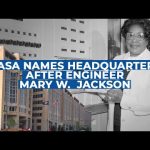
NASA Administrator Jim Bridenstine announced on Wednesday, June 24, 2020, the agency’s headquarters building in Washington, D.C., will be named after Mary W. Jackson, the first African American female engineer at NASA.
Jackson started her NASA career in the segregated West Area Computing Unit of the agency’s Langley Research Center in Hampton, Virginia. Jackson, a mathematician and aerospace engineer, went on to lead programs influencing the hiring and promotion of women in NASA’s science, technology, engineering, and mathematics careers. In 2019, she was posthumously awarded the Congressional Gold Medal.
“Mary W. Jackson was part of a group of very important women who helped NASA succeed in getting American astronauts into space. Mary never accepted the status quo, she helped break barriers and open opportunities for African Americans and women in the field of engineering and technology,” said Bridenstine. “Today, we proudly announce the Mary W. Jackson NASA Headquarters building. It appropriately sits on ‘Hidden Figures Way,’ a reminder that Mary is one of many incredible and talented professionals in NASA’s history who contributed to this agency’s success. Hidden no more, we will continue to recognize the contributions of women, African Americans, and people of all backgrounds who have made NASA’s successful history of exploration possible.”
The work of the West Area Computing Unit caught widespread national attention in the 2016 Margot Lee Shetterly book “Hidden Figures: The American Dream and the Untold Story of the Black Women Mathematicians Who Helped Win the Space Race.” The book was made into a popular movie that same year and Jackson’s character was played by award-winning actress Janelle Monáe.
“We are honored that NASA continues to celebrate the legacy of our mother and grandmother Mary W. Jackson,” said, Carolyn Lewis, Mary’s daughter. “She was a scientist, humanitarian, wife, mother, and trailblazer who paved the way for thousands of others to succeed, not only at NASA, but throughout this nation.”
Jackson was born and raised in Hampton, Virginia. After graduating high school, she graduated from Hampton Institute in 1942 with a dual degree in math and physical sciences, and initially accepted a job as a math teacher in Calvert County, Maryland. She would work as a bookkeeper, marry Levi Jackson and start a family, and work a job as a U.S. Army secretary before her aerospace career would take off.
In 1951, Jackson was recruited by the National Advisory Committee for Aeronautics, which in 1958 was succeeded by NASA. She started as a research mathematician who became known as one of the human computers at Langley. She worked under fellow “Hidden Figure” Dorothy Vaughan in the segregated West Area Computing Unit.
After two years in the computing pool, Jackson received an offer to work in the 4-foot by 4-foot Supersonic Pressure Tunnel, a 60,000 horsepower wind tunnel capable of blasting models with winds approaching twice the speed of sound. There, she received hands-on experience conducting experiments. Her supervisor eventually suggested she enter a training program that would allow Jackson to earn a promotion from mathematician to engineer. Because the classes were held at then-segregated Hampton High School, Jackson needed special permission to join her white peers in the classroom.
Jackson completed the courses, earned the promotion, and in 1958 became NASA’s first Black female engineer. For nearly two decades during her engineering career, she authored or co-authored research numerous reports, most focused on the behavior of the boundary layer of air around airplanes. In 1979, she joined Langley’s Federal Women’s Program, where she worked hard to address the hiring and promotion of the next generation of female mathematicians, engineers and scientists. Mary retired from Langley in 1985.
Counting down to the return of human spaceflight from Florida, a successful space station resupply mission, and a virtual tool to help develop lunar landers … a few of the stories to tell you about – This Week at NASA!
This video is available for download from NASA’s Image and Video Library: https://images.nasa.gov/details-Countdown%20To%20Return%20of%20Human%20Spaceflight%20from%20Florida%20on%20This%20Week%20@NASA%20%E2%80%93%20May%2015,%202020
Machine learning is the scientific study of algorithms and statistical models that computer systems use to perform a specific task without using explicit instructions, relying on patterns and inference instead. It is seen as a subset of artificial intelligence
Subscribe to TV5 Tech Alert : http://bit.ly/2MMvBpN
Like Us on Facebook : www.facebook.com/TV5TechAlert
An update on development of a human lunar landing system, the final four sites selected for our first asteroid sample return mission, and our Parker Solar Probe prepares for another close encounter … a few of the stories to tell you about – This Week at NASA!
This video is available for download from NASA’s Image and Video Library: https://images.nasa.gov/details-NHQ_2019_0816_Marshall%20to%20Lead%20Human%20Landing%20System%20Development%20on%20This%20Week%20@NASA%20%E2%80%93%20August%2016,%202019.html
I had the honor and priviledge to be able to sit down with Nick Redfern and interview him in person for the second time! This was a 2 part discussion starting off with big brother, propaganda, artificial intelligence and mind control. We end with part 2 connecting the dots of the first part with the UFOs, and the Artificial Alien Threat.
PART 1
Elite Bloodlines
Illuminati
New World Order
Orchestrated Events
Big Brother the Orwellian Society
Surveillance through Social Media
Propaganda through Television and Mainstream Media
Mind Control and Dumbing Down the Masses
GMOs in Food and Pharmaceutical Drugs as a Weapon for the Elite
Black Budget Operations and Programs
Artificial Intelligence
Virtual Reality
Technology is great but can easily be abused
Post 9/11 World
DARPA and Microchip Implants
Low Frequency Weapon
Georgia Guide Stones
Depopulation Agendas
PART 2 CONNECTING THE DOTS WITH PART 1
Ronald Reagans Alien Threat Speech
Project Bluebeam and the Fake Alien Threat
Advanced Holographic Technologies
Bob Lazar, Area 51, and Alien Technologies
Black Triangle UFO’s
Fabricated Events
The Orchestration of the Second Coming of Christ
Are Governments of the World working alongside ET’s
Project Serpo and Eisenhower
Disinformation
Dulce Underground Wars
Phil Schneider
Are ET’s traveling here? Are they already here possibly underground or hollow earth?
Underground Top Secret Facilities
Underground Submersive Objects
A challenge for the next generation of explorers, an eye-popping virtual tour of the Moon, and introducing the public to a universe of discovery – a few of the stories to tell you about – This Week at NASA!
This video is available for download from NASA’s Image and Video Library: https://images.nasa.gov/details-NHQ_2018_0413_Human%20Exploration%20Rover%20Challenge%20on%20This%20Week%20@NASA%20%E2%80%93%20April%2013,%202018.html
Visions and clips from ESA’s future for human spaceflight and robotic exploration. Exploring is about visiting new places and coming back with new experiences and knowledge to help us on Earth.
Our strategy includes three destinations where humans will work with robots to gather new knowledge: low-Earth orbit on the International Space Station, the Moon – our closest neighbour, and our third destination Mars.
The exploration programme includes Europe’s service module for NASA’s Orion spacecraft around the Moon, a landing on the Moon with Roscomos’ Luna lander and ESA’s Exomars rover on Mars.
A deep-space gateway farther afield than the International Space Station is considered as a springboard for exploration beyond the Moon.
ESA’s vision for human spaceflight and robotic exploration is part of humanity’s road to the stars. Exploring is about visiting new places and coming back with new experiences and knowledge to help us on Earth.
Our strategy includes three destinations where humans will work with robots to gather new knowledge: low-Earth orbit on the International Space Station, the Moon – our closest neighbour, and our third destination Mars.
The exploration programme includes Europe’s service module for NASA’s Orion spacecraft around the Moon, a landing on the Moon with Roscomos’ Luna lander and ESA’s Exomars rover on Mars.
A deep-space gateway farther afield than the International Space Station is considered as a springboard for exploration beyond the Moon.
An Oct. 11 opinion article written by President Barack Obama and published by CNN, outlined a vision for the future of space exploration. In it, the president echoed the words in his 2015 State of the Union address about the importance of sending humans on a roundtrip mission to Mars by the 2030s, and developing technology to help us stay on the Red Planet for an extended time. That same day in a blog post, NASA Administrator Charlie Bolden and John Holdren, assistant to the President for Science and Technology, discussed two NASA initiatives that build on the president’s vision and use public-private partnerships to enable humans to live and work in space in a sustainable way. The first was the selection of six companies to develop habitation systems as part of the agency’s Next Space Technologies for Exploration Partnerships or “NextSTEP” program, designed to lay the groundwork for deep space missions. And this fall as part of the second initiative, NASA will start the process of providing companies with a potential opportunity to add their own modules and other capabilities to the International Space Station. The move is in-line with NASA’s plan to support and foster the growing community of scientists and entrepreneurs conducting research and growing businesses in space. Also, White House Frontiers Conference, Kennedy Reopens After Hurricane Matthew, Orion Service Module Vibration Tests, SLS Liquid Hydrogen Fuel Tank Completed, and Aviation Safety Reporting System Turns 40!
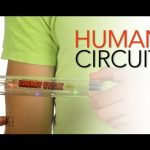
The Energy Stick makes quite the “buzz” when you’re using it. To the untrained eye, it appears to be a plastic tube with a jumble of wires inside and two silver bands at each end. Well, those silver bands are actually electrodes. All the wires on the inside? They’re a solid state sensing circuit, tone generator, sound transducer, battery power supply, and LED lights. The perfect use for the Energy Stick is as a simple, yet fun, tool for learning about continuity and circuits. So… how do you turn it on?
An early look at artificial Intelligence. Guests includes Edward Feigenbaum of Stanford University, Nils Nilsson of the AI Center at SRI International, Tom Kehler of Intellegenetics, Herb Lechner of SRI, and John McCarthy of Stanford. Featured demonstrations include Inferential Knowledge Engineering and the programming language LISP. Originally broadcast in 1984.
Q. What is artificial intelligence?
A. It is the science and engineering of making intelligent machines, especially intelligent computer programs. It is related to the similar task of using computers to understand human intelligence, but AI does not have to confine itself to methods that are biologically observable.
Q. Yes, but what is intelligence?
A. Intelligence is the computational part of the ability to achieve goals in the world. Varying kinds and degrees of intelligence occur in people, many animals and some machines.
Q. Isn’t there a solid definition of intelligence that doesn’t depend on relating it to human intelligence?
A. Not yet. The problem is that we cannot yet characterize in general what kinds of computational procedures we want to call intelligent. We understand some of the mechanisms of intelligence and not others.
Q. Is intelligence a single thing so that one can ask a yes or no question “Is this machine intelligent or not?”?
A. No. Intelligence involves mechanisms, and AI research has discovered how to make computers carry out some of them and not others. If doing a task requires only mechanisms that are well understood today, computer programs can give very impressive performances on these tasks. Such programs should be considered “somewhat intelligent”.
Q. Isn’t AI about simulating human intelligence?
A. Sometimes but not always or even usually. On the one hand, we can learn something about how to make machines solve problems by observing other people or just by observing our own methods. On the other hand, most work in AI involves studying the problems the world presents to intelligence rather than studying people or animals. AI researchers are free to use methods that are not observed in people or that involve much more computing than people can do.
Q. What about IQ? Do computer programs have IQs?
A. No. IQ is based on the rates at which intelligence develops in children. It is the ratio of the age at which a child normally makes a certain score to the child’s age. The scale is extended to adults in a suitable way. IQ correlates well with various measures of success or failure in life, but making computers that can score high on IQ tests would be weakly correlated with their usefulness. For example, the ability of a child to repeat back a long sequence of digits correlates well with other intellectual abilities, perhaps because it measures how much information the child can compute with at once. However, “digit span” is trivial for even extremely limited computers.
Hosted by Stewart Cheifet, Computer Chronicles was the world’s most popular television program on personal technology during the height of the personal computer revolution. It was broadcast for twenty years from 1983 – 2002. The program was seen on more than 300 television stations in the United States and in over 100 countries worldwide, with translations into French, Spanish, Chinese, and Arabic. The series had a weekly television broadcast audience of over two million viewers.
Many of the series programs are distributed on video to corporations and educational institutions for use in computer training. Computer Chronicles program segments have also been bundled with various computer text books by major publishers.
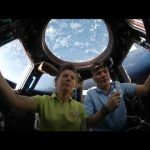
The crew of STS-135, the final space shuttle mission, talks about the vibrancy of the International Space Station as a stepping stone for NASA’s plans for future human exploration beyond low-Earth orbit.
ESA’s Director of Human Spaceflight Simonetta Di Pippo together with ESA’s astronaut Paolo Nespoli introduce the MagISStra mission which is going to be launched in December 2010 from Baikonur Cosmodrome, Kazakhstan. This is the third six-month duration mission a European astronaut takes part to.
Steve Spangler and his three boys bring a little science twist into the holiday cheer. demonstrating how to light up the Christmas tree using the family to conduct the electricity. All you need are a few friends, a few light bulbs, a basic understanding of simple circuits and 50,000 volts of electricity.
Capturing the excitement of three highlights of European manned spaceflight in 2007 and 2008, these clips feature Paolo Nespoli’s STS-120 flight, the Columbus laboratory, and finally the ATV Jules Verne, Europe’s first space ferry.